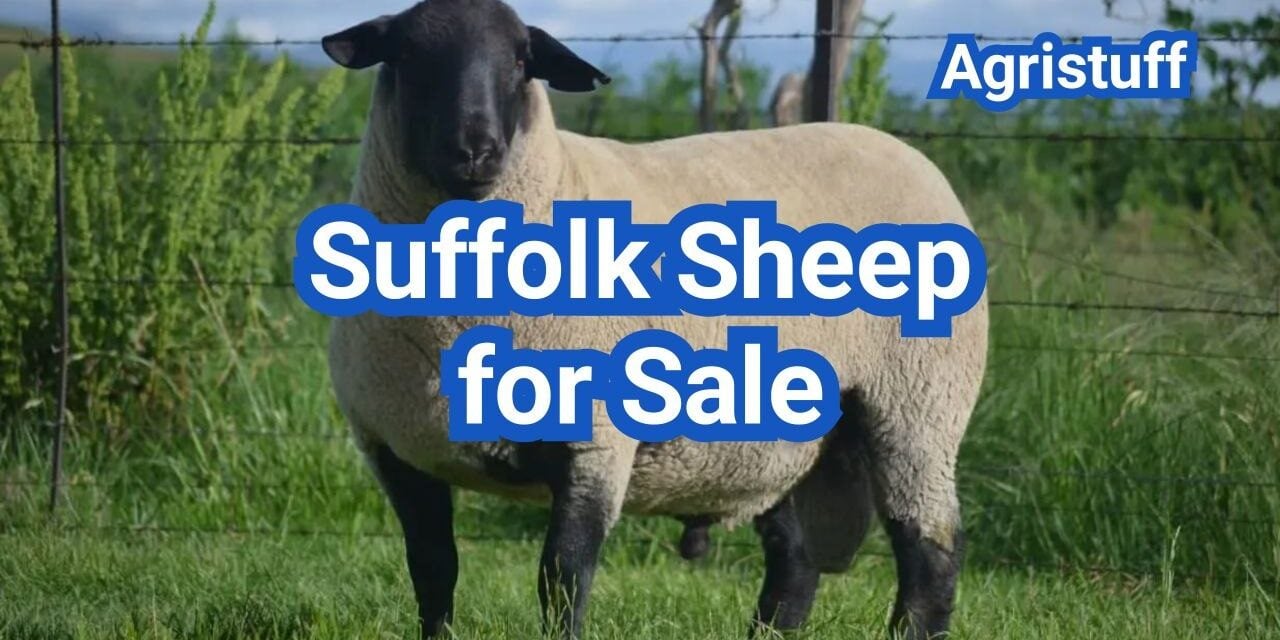
Quick Answer: Suffolk Sheep for Sale commonly require different budgets for commercial ewes, registered breeding females, and proven rams, with practical planning ranges often starting around $250–$500 for commercial ewes and extending beyond $2,000 for premium breeding animals. The best purchase depends on verified registration, soundness, health records, local market conditions, transportation requirements, and a 30-day quarantine plan. USDA Agricultural Marketing Service sheep-market reports.
Finding quality Suffolk Sheep for Sale requires more than comparing advertisements or choosing the lowest asking price. A productive purchase depends on matching the animal to your flock goals, verifying the seller and breed paperwork, checking reproductive and physical soundness, and calculating the complete cost of bringing the sheep home. This buyer-focused guide explains U.S. price benchmarks, registered versus commercial animals, inspection steps, interstate paperwork, scam prevention, and practical post-purchase biosecurity. United Suffolk Sheep Association.
Key Takeaways
- Commercial Suffolk ewes may fit a $250–$500 planning budget, while registered breeding ewes and rams can cost substantially more.
- USDA replacement-sheep prices describe the broader market and should not be confused with registered Suffolk sale averages.
- The United Suffolk Sheep Association recognizes percentage registrations and considers animals reaching 94% or 15/16 eligible for purebred status within its program.
- A black face alone does not establish registered Suffolk ancestry, ownership, or breeding value.
- Check teeth, feet, movement, body condition, reproductive soundness, vaccination records, and parasite-management history before paying.
- Confirm official scrapie identification, applicable veterinary documents, and destination-state import rules before interstate transport.
- Calculate total landed cost and isolate newly purchased animals from the resident flock for at least 30 days.
Suffolk Sheep for Sale: Define the Animal and Production Goal
The most suitable Suffolk Sheep for Sale depends on whether you need a breeding female, future replacement, flock sire, youth-project animal, or commercial market lamb. A ewe is a female sheep, a ram is an intact male, a lamb is a young sheep, and a wether is a castrated male that cannot be used for breeding. University of California Agriculture and Natural Resources sheep terminology.
Choose Between a Suffolk Ewe, Ewe Lamb, Ram, Ram Lamb, or Wether
For most first-time buyers, Suffolk Sheep for Sale should be evaluated by production stage rather than appearance alone. Mature ewes may offer earlier lamb production, ewe lambs require additional development before breeding, established rams can introduce immediate genetics, and ram lambs often need more time and management before serving a flock. South Dakota State University Extension guidance on breeding ewe lambs.
- Ewe lamb: A younger female purchased as a future breeding replacement.
- Open ewe: A female not represented as pregnant at the time of sale.
- Bred ewe: A female represented as pregnant; request breeding dates and pregnancy documentation.
- Proven ewe: A mature female with recorded lambing, mothering, or offspring performance.
- Ram lamb: A younger male that may provide a lower-cost entry into breeding genetics.
- Breeding ram: An intact male purchased for reproduction and flock improvement.
- Wether: A castrated male appropriate for certain market-lamb, youth, or companion purposes.
Match the Animal to a Commercial, Club-Lamb, or Seedstock Program
Commercial buyers seeking Suffolk Sheep for Sale usually emphasize functional health, lamb growth, reproductive performance, and affordable ownership. Club-lamb projects may prioritize show suitability, while seedstock programs require verified registration, documented pedigrees, and genetics aligned with a clearly defined breeding objective. United Suffolk Sheep Association breed-improvement guidance.
Current U.S. Suffolk Sheep Prices and Cost Ranges
Use USDA Replacement-Sheep Prices as a Commercial Benchmark
A useful benchmark for evaluating Suffolk Sheep for Sale appears in the USDA National Monthly Replacement Sheep Report for July 2026. Young replacement ewes aged two to four years averaged $371.06 per head, while middle-aged replacement ewes aged five to six years averaged $262.74 per head; these figures represent broader replacement-sheep categories rather than registered Suffolk-specific prices. USDA National Monthly Replacement Sheep Report.
Registered Suffolk Sheep for Sale can command higher prices because breed-association events attract buyers looking for documented ancestry and breeding potential. Official National Suffolk Sale information reports that 39 animals averaged $1,160 in 2024 and 44 animals averaged $985 in 2025, while its 2026 sale rules specified a $400 minimum bid; none of these figures establishes a guaranteed nationwide price. United Suffolk Sheep Association National Suffolk Sale rules and historical averages.
Compare Practical Price Ranges by Animal Class
The following planning ranges for Suffolk Sheep for Sale combine broader commercial benchmarks, official registered-sale averages, and reasonable differences among animal classes. These are illustrative shopping estimates, not official breed-specific USDA quotations, and actual offers change with region, age, pregnancy status, registration, genetics, and seller reputation. USDA National Direct Sheep Report.
| Animal Class | Typical Registration Status | Practical U.S. Planning Range | What Buyers Should Verify |
|---|---|---|---|
| Commercial ewe | Usually unregistered | $250–$500 per head | Age, soundness, health history, and production records. |
| Registered ewe lamb | Registered or registration eligible | $400–$900 per head | Birth date, registry status, sire, dam, and development. |
| Registered or proven ewe | Registered breeding stock | $500–$1,500 or more | Registration, lambing history, pregnancy status, and udder health. |
| Ram lamb | Commercial or registered | Approximately $500–$1,200 | Age, pedigree, structural soundness, and breeding readiness. |
| Registered breeding ram | Registered breeding stock | $750–$2,500 or more | Fertility, ownership transfer, offspring records, and genetic data. |
| Elite show or seedstock animal | Typically registered | Potentially above $2,000 | Documented pedigree, market demand, performance, and sale terms. |
Understand Why Age, Genetics, Season, and Condition Change the Price
The advertised price of Suffolk Sheep for Sale increases when an animal has verified parentage, strong production records, desirable estimated breeding values, successful offspring, or documented pregnancy. Condition also matters because a sheep that is too thin, overconditioned, lame, or approaching the end of its useful breeding life may require additional expenses after purchase. Oregon State University Extension sheep body-condition scoring guidance.
Seasonal demand for Suffolk Sheep for Sale may change around breeding periods, youth shows, regional sales, and the availability of replacement females. Compare animals offered during the same period and through similar sales channels rather than assuming that an auction average applies equally to a proven registered ram, an open commercial ewe, and a feeder lamb. United Suffolk Sheep Association show and sale results.
Where to Find Suffolk Sheep for Sale in the United States

Search Official Suffolk Breeder Directories and Association Classifieds
A reliable place to locate registered Suffolk Sheep for Sale is the United Suffolk Sheep Association breeder directory. Contact breeders directly to confirm flock location, available animals, current prices, registration numbers, birth dates, pedigrees, vaccination practices, and whether ownership can be transferred through the association. United Suffolk Sheep Association breeder directory.
The association’s classified marketplace also displays Suffolk Sheep for Sale from individual breeders and provides a useful starting point for identifying available animals. Treat every listing as an invitation to verify details rather than proof that the sheep is currently available, healthy, correctly identified, or suitable for your specific breeding plan. United Suffolk Sheep Association marketplace and classified listings.
Find Suffolk Sheep for Sale Near You
To find Suffolk Sheep for Sale nearby, define a realistic driving radius and compare local breeders, county Extension contacts, state sheep-producer organizations, and scheduled regional sales. A nearby purchase can reduce hauling costs and simplify in-person inspection, but a more distant animal may still offer better value if its records, health, and genetics justify the additional expense. United Suffolk Sheep Association event calendar.
Regional livestock-market reports help buyers compare Suffolk Sheep for Sale with local commercial activity without mistaking general auction prices for registered breeding-stock values. Review the sale location, reporting date, animal classification, weight, and whether the report covers feeder, slaughter, or replacement sheep before using it as a price reference. USDA Agricultural Marketing Service regional sheep auction reports.
Compare Private Breeders, Registered Sales, Auctions, and Online Listings
Farm-direct Suffolk Sheep for Sale usually provide the best opportunity to see management conditions, inspect related animals, and ask detailed questions about flock history. Breed-specific sales allow comparison across multiple consignors, while general livestock auctions may offer lower prices but less information about individual pedigrees, reproductive records, and health backgrounds. United Suffolk Sheep Association National Suffolk Sale information.
Online Suffolk Sheep for Sale should include a current location, real seller contact information, recent images or video, animal identification, age, sex, and a clear explanation of registration status. A complete listing may also describe birth type, current weight, vaccination history, pasture exposure, and whether the animal is already registered or merely represented as registration eligible. United Suffolk Sheep Association registered ewe-lamb classified listing.
Registered, Purebred, Percentage, and Commercial Suffolk Sheep
Registered vs. Unregistered Purebred Sheep
Registered Suffolk Sheep for Sale should have an identifiable breed-association record connecting the animal to its ownership, pedigree, and registration status. An animal described as purebred but lacking completed paperwork may still have Suffolk ancestry, but buyers should not pay a registered-animal premium without confirming the certificate, ownership, and transfer process. United Suffolk Sheep Association registration guidance.
Percentage, Crossbred, and Commercial Listings
Some Suffolk Sheep for Sale qualify for the association’s Percentage Program, which documents animals with less than purebred Suffolk status. The United Suffolk Sheep Association states that percentage-registered animals reaching 15/16, or approximately 94%, are considered purebred within the program and receive purebred registration paperwork, while lower-percentage animals retain percentage certificates. United Suffolk Sheep Association Percentage and Genetic Acquisition programs.
- Registered purebred: The animal has an association-recognized purebred registration record.
- Percentage registered: The animal carries documented Suffolk influence under the association’s percentage program.
- Unregistered purebred: The seller claims Suffolk ancestry, but registration and transfer must be independently verified.
- Crossbred: The animal combines Suffolk genetics with another breed and may serve commercial production goals.
- Commercial: The animal is sold primarily for practical flock performance rather than registered seedstock marketing.
Why a Black Face Does Not Prove Registered Suffolk Status
A black-faced animal advertised among Suffolk Sheep for Sale should never be assumed to have verified Suffolk ancestry solely because of its appearance. Confirm the registration certificate, ear tag or tattoo, recorded sire and dam, and seller identity because other sheep breeds and crossbred animals can also show dark facial markings. United Suffolk Sheep Association buyer and breed-evaluation resources.
Choosing a Suffolk Ewe, Lamb, Ram, or Ram Lamb
When a Suffolk Ewe Is the Best Foundation-Flock Purchase
For a beginner, mature Suffolk Sheep for Sale with clear lambing records, functional udders, sound feet, and manageable temperaments can provide a more predictable starting point than very young replacements. Bred ewes may offer earlier lamb production, but the purchase premium only makes sense when breeding dates, pregnancy status, and expected lambing requirements are clearly documented. Oregon State University Extension sheep reproduction and flock productivity.
When Suffolk Lambs or Ram Lambs Make Sense
Younger Suffolk Sheep for Sale may fit buyers who want time to develop animals under their own management conditions and cannot justify the price of proven breeding stock. Ask whether lambs are fully weaned, eating independently, appropriately vaccinated, and growing consistently, because a lower purchase price can disappear quickly if intensive feeding or veterinary care is needed. University of Maine Cooperative Extension guidance on young-lamb care.
When to Buy a Proven Suffolk Breeding Ram
A proven ram among Suffolk Sheep for Sale becomes more practical when the buyer has enough compatible ewes, separate ram housing, safe handling facilities, and a defined breeding season. A mature sire may contribute immediate genetics, whereas a ram lamb can cost less initially but requires time to mature and should not be selected without evaluating reproductive soundness. South Dakota State University Extension ram breeding readiness and management.
Step-by-Step: Set a Budget and Shortlist Suitable Listings
Step 1: Define Your Flock Size and Production Objective
Before searching for Suffolk Sheep for Sale, calculate how many animals your available forage, water access, handling facilities, quarantine area, and winter-feed supply can realistically support. Stocking capacity depends on pasture productivity and local conditions, so buyers should avoid relying on a universal sheep-per-acre figure that ignores rainfall, season, soil, and grazing management. University of Wisconsin–Madison Extension grazing carrying-capacity guidance.
Step 2: Separate Animal Price From Total Purchase Budget
A realistic budget for Suffolk Sheep for Sale should distinguish the advertised price from transportation, veterinary examinations, registration transfers, official identification, quarantine supplies, and initial feed. Establish a maximum total expenditure before contacting sellers, but avoid assuming that one fixed percentage will cover logistics because expenses differ substantially by location and transaction. Sustainable Agriculture Research and Education farm-enterprise budgeting guidance.
Step 3: Filter by Location, Age, Sex, Registration, and Purpose
Shortlist Suffolk Sheep for Sale according to production purpose, distance, age, sex, registration class, breeding status, and available health documentation. A buyer seeking commercial lamb production should not automatically pay show-stock premiums, while a seedstock buyer should not accept missing registration or uncertain parentage simply because the advertised price appears attractive. United Suffolk Sheep Association registered breeding-stock sale guidance.
Step-by-Step: Contact Sellers and Verify the Listing
Request Current Photos, Video, Identification, and Management Details
Before traveling to inspect Suffolk Sheep for Sale, request recent photographs, a short video showing natural movement, the animal’s official identification, birth date, current weight, sex, birth type, and physical location. Ask whether the sheep was raised on pasture, supplemented with grain, recently weaned, or managed with other sheep so you can anticipate its transition to your farm. South Dakota State University Extension pasture and sheep-feeding considerations.
Confirm Registration Papers, Seller Ownership, and Transfer Terms
Ask the seller of registered Suffolk Sheep for Sale to provide the animal’s registration number, recorded owner, sire, dam, and expected ownership-transfer arrangements before discussing a deposit. Confirm whether the quoted price includes transfer fees and request written clarification when the seller says registration is pending, paperwork will arrive later, or the animal is only eligible for registration. United Suffolk Sheep Association Digital Suffolk registration and transfer information.
Recognize Online Livestock-Scam Warning Signs
Question advertisements for Suffolk Sheep for Sale when the seller refuses a phone conversation, avoids showing the actual animal, cannot provide matching identification, or pressures you to send an immediate deposit. The Federal Trade Commission advises buyers to evaluate seller contact information, listing details, payment protections, and marketplace policies before completing an online transaction. Federal Trade Commission online-marketplace buying guidance.
Do not assume that Suffolk Sheep for Sale are legitimate simply because an advertisement includes professional photographs, a copied farm name, or an unusually attractive price. Sellers who insist on gift cards, cryptocurrency, wire transfers, or other difficult-to-recover payments should be treated as a significant warning sign until their identity and the transaction can be independently verified. Federal Trade Commission online-shopping and payment-safety recommendations.
Step-by-Step: Inspect Physical Soundness Before Purchase

Evaluate Body Condition, Frame, Muscling, and Movement
A practical inspection of Suffolk Sheep for Sale starts with observing the animal walking freely on a level surface. Look for balanced movement, adequate muscling, alert behavior, and an appropriate body condition, and avoid confusing an overfed presentation animal with one that can remain productive under your normal flock-management conditions. South Dakota State University Extension sheep body-condition management guide.
Check Feet, Pasterns, Legs, Hocks, Mouth, and Teeth
Inspect the feet and legs of Suffolk Sheep for Sale for overgrown hooves, swelling, abnormal pasterns, reluctance to bear weight, or signs of chronic lameness. Examine the teeth and jaw as well, because dental condition helps estimate age and affects the animal’s ability to graze efficiently and maintain productive condition. South Dakota State University Extension sheep dental and age-assessment guidance.
Look for Red Flags Before Agreeing to Purchase
Potential health warnings in Suffolk Sheep for Sale include persistent coughing, nasal discharge, diarrhea, swollen joints, severe itching, unusual isolation, poor appetite, unexplained weight loss, or visible abscesses. If any issue appears significant, postpone the purchase and request a veterinary assessment rather than assuming the problem will resolve after transport. University of Wisconsin–Madison Extension healthy-sheep management guidance.
Inspect the lips and mouth of Suffolk Sheep for Sale for sores, particularly when handling animals from unfamiliar flocks. Orf, also called contagious ecthyma or sore mouth, affects sheep and goats and can spread to people through contact with lesions, making gloves and careful hand hygiene sensible during inspections. Centers for Disease Control and Prevention information on orf in sheep and goats.
Step-by-Step: Check Reproductive Fitness and Breeding Records
Inspect Ewe Udders, Teats, Lambing History, and Pregnancy Claims
Breeding ewes offered as Suffolk Sheep for Sale should have functional udders, usable teat placement, a sound body condition, and documented lambing history when available. For an allegedly bred ewe, request the breeding date, sire identity, expected lambing window, and any pregnancy confirmation instead of assuming that body shape alone proves pregnancy. Oregon State University Extension ewe pregnancy and nutritional-risk guidance.
Ask whether breeding Suffolk Sheep for Sale have previously experienced difficult lambing, poor milk production, abortion, or repeated reproductive problems. A written production history is more useful than unsupported statements about fertility, especially when the asking price includes a premium for pregnancy, proven maternal performance, or future replacement females. University of Maine Cooperative Extension sheep and goat reproductive-health guidance.
Evaluate Ram Soundness, Fertility, and Previous Offspring
Rams presented among Suffolk Sheep for Sale should move comfortably, maintain suitable breeding condition, and have no obvious reproductive abnormalities or injuries. For a high-value or mature sire, ask about previous breeding success and discuss a veterinary breeding-soundness examination when the purchase depends on reliable fertility. Oregon State University Extension livestock productivity and breeding-soundness guidance.
Review Lambing Rates, Weaning Weights, and Progeny Performance
Documented offspring performance makes Suffolk Sheep for Sale easier to compare than descriptions based only on size or show-ring appearance. Ask how many lambs were born and raised, whether previous offspring grew consistently, and whether recorded weaning weights or other performance measurements align with your intended commercial or breeding market. South Dakota State University Extension lamb-growth and finish-weight calculations.
Step-by-Step: Verify Pedigree, Registration, EBVs, and DNA Records
Match the Animal, Ear Tag, Pedigree, and Recorded Owner
For registered Suffolk Sheep for Sale, compare the physical animal with its ear tag or tattoo, recorded birth information, registration certificate, and seller identity. Any mismatch involving identification numbers, ownership, sire, dam, or registration class should be resolved with the seller and breed association before payment or transportation. USDA APHIS sheep and goat identification reference guide.
Use Estimated Breeding Values for Relevant Production Traits
Estimated breeding values can help compare Suffolk Sheep for Sale using recorded genetic predictions rather than visual impressions alone. Depending on your production goals, relevant traits may include weaning weight, post-weaning growth, maternal performance, carcass characteristics, reproductive output, or parasite resistance. National Sheep Improvement Program estimated breeding values guide.
When performance-recorded Suffolk Sheep for Sale are available, ask how the breeder participates in the National Sheep Improvement Program and whether values can be tied to the correct animal. The Suffolk association has supported submission of flock-performance information, helping breeders connect registry information with economically relevant selection data. United Suffolk Sheep Association National Sheep Improvement Program initiative.
Ask About Scrapie Genotype, Spider Syndrome, and Dwarf-Gene Declarations
Buyers evaluating premium Suffolk Sheep for Sale may also request documented genetic information when it is relevant to their breeding plan. Official National Suffolk Sale materials ask consignors to declare available information related to scrapie, spider syndrome, and dwarf genes, but buyers should verify actual test records and avoid treating a seller’s verbal statement as a laboratory result. United Suffolk Sheep Association National Suffolk Sale DNA-declaration form.
Step-by-Step: Review Health, Vaccination, and Parasite History
Request Vaccination, Treatment, Illness, and Veterinary Records
Before buying Suffolk Sheep for Sale, ask for written vaccination dates, previous medical treatments, relevant disease testing, hoof-health concerns, and known flock problems. CD/T vaccination history, recent veterinary examinations, and any written health guarantees should be reviewed alongside the animal’s current condition rather than accepted as substitutes for inspection. USDA APHIS sheep and goat animal-health resources.
Check Parasite Monitoring and Deworming Decisions
Ask how Suffolk Sheep for Sale were monitored for internal parasites, whether the breeder used fecal egg counts, and which animals required repeated treatments. Poor growth, pale eyelids, chronic diarrhea, and inadequate pasture management can indicate parasite risks that should be investigated before an animal enters your flock. University of Wisconsin–Madison Extension sheep fecal-egg-count guidance.
Recently dewormed Suffolk Sheep for Sale are not automatically safer than animals managed through targeted testing and veterinary advice. Effective parasite control considers clinical signs, fecal results, grazing conditions, and resistance risks, so avoid purchasing on the assumption that frequent routine medication guarantees flock health. University of Wisconsin–Madison Extension parasite-management guidance.
Ask About Abscesses, Chronic Disease, and Previous Flock Problems
Visible abscesses or a poorly explained chronic-disease history should prompt additional questions before purchasing Suffolk Sheep for Sale. Conditions such as caseous lymphadenitis can affect small-ruminant flocks, so discuss suspicious swellings, past diagnostic results, and practical risk-reduction measures with a veterinarian familiar with sheep. University of Maine Cooperative Extension caseous lymphadenitis guidance.
Step-by-Step: Confirm Scrapie Identification and Interstate Transport
Verify Official Sheep Identification Before Departure
Many Suffolk Sheep for Sale need approved official identification under federal scrapie and livestock-traceability rules, particularly when moving through commerce or crossing state lines. USDA APHIS explains approved sheep and goat identification options, flock identification, and procedures for obtaining official tags. USDA APHIS official sheep and goat identification guidance.
Scrapie identification associated with Suffolk Sheep for Sale supports animal tracing and disease-control investigations but should not be described as a lifetime disease-free certificate. Buyers should confirm which identification method applies to the animal, movement, ownership record, and destination rather than assuming every transaction follows identical requirements. USDA APHIS scrapie disease and prevention information.
Check Destination-State Rules, Veterinary Certificates, and Ram Testing
Interstate purchases of Suffolk Sheep for Sale may require official identification, a certificate of veterinary inspection, an owner-hauler statement, destination-state permits, or additional disease testing depending on the circumstances. Contact the destination state’s animal-health authority and an accredited veterinarian before arranging pickup because federal and state movement requirements can vary. USDA APHIS interstate livestock-movement reference guide.
For breeding rams offered as Suffolk Sheep for Sale, ask specifically whether the destination state requires testing related to Brucella ovis or other health conditions. Minnesota’s sheep and goat guidance illustrates how official identification, import standards, and disease-control requirements should be confirmed with the relevant state authority instead of inferred from another state’s rules.
Arrange Clean, Ventilated, Appropriate Transportation
Transportation for Suffolk Sheep for Sale should be planned around clean bedding, appropriate ventilation, safe footing, adequate space, and protection from severe weather. Avoid overcrowding, coordinate pickup times carefully, and confirm who is responsible for loading, hauling, insurance, and animal condition during the trip. USDA APHIS animal-welfare and livestock-transport planning guidance.
Step-by-Step: Complete the Purchase and Calculate Total Landed Cost
Inspect the Actual Animal and Document Any Defects
Before paying for Suffolk Sheep for Sale, compare the actual animal with the advertisement, registration documents, official identification, health records, and agreed physical condition. Photograph relevant identification, record visible defects, confirm any pregnancy claims, and document whether the seller has promised registration transfer or additional veterinary paperwork. USDA APHIS animal-disease traceability guidance.
Use a Written Bill of Sale and Clear Payment Terms
A written agreement for Suffolk Sheep for Sale should identify the buyer, seller, animal, purchase price, deposit, payment deadline, pickup arrangements, registration-transfer responsibilities, and any agreed health or pregnancy representations. Specify refund conditions when a deposit is involved, and avoid relying entirely on informal messages or verbal assurances. Federal Trade Commission guidance on marketplace seller transparency.
Add Hauling, Registration, Veterinary, Feed, and Quarantine Expenses
The total landed cost of Suffolk Sheep for Sale includes the purchase amount plus fuel or professional hauling, veterinary examinations, required certificates, registration transfers, identification expenses, quarantine supplies, and initial feed. Optional costs such as insurance, auction buyer premiums, or diagnostic testing depend on the specific transaction and should be confirmed before the purchase is finalized. South Dakota State University Extension livestock ownership and non-feed cost calculations.
| Purchase Expense | What to Ask Before Paying | Why It Changes the Final Cost |
|---|---|---|
| Animal purchase price | Is the price per head, per pair, or for a group? | Defines the initial cash commitment. |
| Registration transfer | Who submits and pays for the ownership transfer? | May add association fees or processing delays. |
| Veterinary paperwork | Does the destination state require a certificate or testing? | Can add examination, laboratory, and documentation costs. |
| Transportation | Is hauling included, shared, or billed separately? | Distance, fuel, trailer availability, and professional transport affect the total. |
| Quarantine | Are separate housing, equipment, bedding, and feed ready? | A 30-day isolation period requires space, labor, and supplies. |
| Initial care | What feed, minerals, health monitoring, or follow-up are needed? | Transition needs and veterinary support differ among animals. |
Step-by-Step: Quarantine Newly Purchased Suffolk Sheep

Prepare a Separate Quarantine Area Before Arrival
New Suffolk Sheep for Sale should enter a separate area that prevents direct contact with the resident flock and uses dedicated feed containers, water, equipment, and handling routines. USDA APHIS recommends purchasing healthy animals, considering recent veterinary inspection, and keeping incoming sheep separate for at least 30 days. USDA APHIS sheep and goat biosecurity recommendations.
Monitor Appetite, Breathing, Manure, Mobility, and Parasite Signs
During the isolation period, monitor Suffolk Sheep for Sale for poor appetite, diarrhea, coughing, nasal discharge, skin lesions, lameness, unusual behavior, and signs of internal parasites. University of Wisconsin–Madison Extension also recommends a 30-day separation period before new sheep or goats join the original flock. University of Wisconsin–Madison Extension incoming-sheep biosecurity guidance.
Use Veterinary Guidance for Testing, Deworming, and Diet Changes
Health decisions for recently purchased Suffolk Sheep for Sale should be based on observed symptoms, veterinary advice, relevant diagnostic testing, and the animal’s documented treatment history. Avoid automatic antibiotic use or indiscriminate deworming, and change feed gradually to reduce digestive stress during the transition to your farm. University of Wisconsin–Madison Extension deworming and parasite-resistance guidance.
Provide new Suffolk Sheep for Sale with appropriate forage, clean water, and mineral products intended for sheep rather than assuming cattle supplements are suitable. Sheep can be sensitive to excessive copper, and nutritional requirements change with age, pregnancy, lactation, and the feeding program used before purchase. University of Minnesota Extension sheep mineral and multispecies-grazing guidance.
Quick Checklist

- Identify whether you need a commercial ewe, registered ewe, ewe lamb, ram lamb, proven ram, or wether.
- Set both a maximum purchase price and a complete landed-cost budget.
- Check current USDA replacement-sheep reports and comparable registered Suffolk sale information.
- Verify the breeder, seller contact information, farm location, and animal availability.
- Request the animal’s birth date, sex, weight, official identification, and current photos or video.
- Confirm whether the animal is registered purebred, percentage registered, unregistered, crossbred, or commercial.
- Match the animal’s ear tag or tattoo to its pedigree, recorded ownership, and registration papers.
- Inspect teeth, feet, pasterns, legs, mobility, eyes, breathing, body condition, and overall behavior.
- Review ewe pregnancy or lambing records, or discuss breeding-soundness information for rams.
- Ask about vaccinations, previous illness, abscesses, fecal egg counts, and parasite-treatment history.
- Check estimated breeding values and relevant DNA records when purchasing premium breeding stock.
- Confirm destination-state requirements, veterinary documents, transportation costs, and the 30-day quarantine plan.
Common Mistakes to Avoid
- Using general USDA ewe prices as registered Suffolk valuations: Compare commercial replacements with commercial replacements and registered stock with comparable registered sales.
- Assuming a black face proves purebred status: Verify the registration certificate, pedigree, percentage classification, and seller ownership.
- Paying a pregnancy premium without evidence: Request breeding dates, sire details, and any available pregnancy-confirmation records.
- Selecting a ram by appearance alone: Review movement, condition, reproductive soundness, previous offspring, and relevant genetic information.
- Ignoring feet, teeth, or chronic lameness: Inspect the actual animal and request veterinary input when physical problems are present.
- Confusing scrapie identification with a disease-free guarantee: Understand that official tags support traceability and do not certify lifelong health.
- Assuming interstate paperwork is identical everywhere: Confirm current destination-state rules before arranging pickup.
- Sending unsecured deposits to unverified sellers: Confirm identity, animal identification, written terms, and safer payment options.
- Moving new sheep directly into the established flock: Maintain separate housing and monitor animals throughout a 30-day quarantine.
- Budgeting only for the advertised sale price: Include hauling, veterinary documents, registration, feed, labor, quarantine, and unexpected care.
Costs and ROI Snapshot
Understand Ongoing Cost Drivers
The initial price of Suffolk Sheep for Sale is only one element of ownership. South Dakota State University Extension cites a 2021 U.S. average direct cost of $135 per ewe as a historical benchmark, but present-day costs vary with forage prices, purchased feed, labor, veterinary care, reproductive performance, and regional market conditions. South Dakota State University Extension sheep-enterprise cost benchmarks.
Feed and forage expenses affect the long-term value of Suffolk Sheep for Sale because nutrition influences ewe condition, lamb performance, and overall flock productivity. A healthy, productive animal with manageable input requirements can provide stronger returns than a cheaper sheep requiring repeated treatments, heavy supplementation, or premature replacement. South Dakota State University Extension ewe nutrition and lamb-performance guidance.
Example: Small Starter-Flock Purchase Budget
One illustrative budget for Suffolk Sheep for Sale includes four commercial ewes at $450 each, one breeding ram at $1,200, $200 for transportation, $150 for veterinary or identification expenses, $150 for quarantine supplies, and $250 for initial hay and mineral. The total is $3,750 before fencing, shelter, ongoing feed, labor, additional veterinary needs, or losses, and all amounts should be replaced with current local quotes. South Dakota State University Extension sheep mineral and input-cost considerations.
Calculate Breeding Cost Per Exposed Ewe
A $1,500 ram purchased among Suffolk Sheep for Sale represents $60 in initial ram cost per ewe when used with 25 females, compared with $30 per ewe when spread across 50 females. This simplified comparison excludes fertility, feed, veterinary costs, working lifespan, transport, and replacement expenses, but it illustrates why flock scale affects breeding economics. South Dakota State University Extension flock budgeting and partial-budget considerations.
- Main cost drivers: Purchase price, registration, pedigree, transportation, veterinary requirements, facilities, feed, labor, and health management.
- Factors that increase cost: Proven genetics, pregnancy premiums, long-distance hauling, professional transport, specialized testing, and purchased winter forage.
- Factors that improve return: Sound breeding animals, strong lamb survival, efficient feeding, useful genetic records, and a dependable market outlet.
- Commonly underestimated expenses: Registration transfers, emergency veterinary care, separate ram housing, quarantine supplies, predator protection, and daily labor.
- When the purchase makes sense: When the animal matches the production objective, facilities are ready, financing is realistic, and the farm can support ongoing ownership.
FAQ
How much does a Suffolk sheep cost in the United States?
Commercial Suffolk Sheep for Sale often cost approximately $250–$500 per head, while registered ewe lambs may range from $400–$900 and registered breeding rams from $750–$2,500 or more. These figures are practical planning estimates because age, pedigree, reproductive history, location, and registration status influence the final price. For comparison, USDA’s July 2026 replacement-sheep report listed young ewes at $371.06 per head and middle-aged ewes at $262.74, although these figures represent the broader sheep market rather than Suffolk-specific prices. USDA Agricultural Marketing Service National Monthly Replacement Sheep Report.
Where can I find Suffolk sheep for sale near me?
The most reliable places to find Suffolk Sheep for Sale near you include United Suffolk Sheep Association breeder resources, Digital Suffolk’s searchable breeder database, association classifieds, and regional livestock auctions. Search by state, city, or flock name, then compare nearby breeders based on available animals, health records, registration status, and transportation costs. Before sending a deposit, confirm the seller’s identity and arrange an in-person inspection or live video showing the actual animal. Digital Suffolk breeder, flock, and registered-animal search tools.
Should I buy a registered or commercial Suffolk sheep?
Choose registered Suffolk Sheep for Sale when you need verified ancestry, transferable registration papers, documented breeding records, or eligibility for specific purebred programs and livestock shows. Commercial animals are often more practical for buyers focused on producing market lambs without paying additional premiums for pedigree documentation. The best option depends on your breeding goals, budget, intended market, and whether official registration will provide measurable value to your operation. United Suffolk Sheep Association registration and junior-show eligibility requirements.
What documents should come with a Suffolk sheep purchase?
Transactions involving Suffolk Sheep for Sale should include a written bill of sale identifying the buyer, seller, animal, purchase price, and agreed terms. Buyers should also request official identification details, vaccination and treatment records, registration certificates and ownership-transfer documentation when applicable, plus breeding or pregnancy records for animals represented as bred. Interstate transportation may require a Certificate of Veterinary Inspection and additional destination-state documentation, so confirm the applicable requirements before collecting the sheep. USDA APHIS interstate animal-movement documentation guidance.
What should I inspect before buying a Suffolk ram or ewe?
Before purchasing Suffolk Sheep for Sale, inspect the animal’s movement, feet, hooves, body condition, eyes, breathing, teeth, and general alertness. Breeding ewes should have functional udders and suitable teat placement, while breeding rams need sound legs, normal testicular development, and reliable fertility information when available. Avoid sheep showing persistent lameness, coughing, diarrhea, severe dental problems, hard udder tissue, or unexplained weight loss, and consider a veterinary breeding-soundness examination for higher-value animals. Alabama Cooperative Extension System sheep-selection and breeding-soundness guidance.
Do newly purchased Suffolk sheep need to be quarantined?
Yes, animals purchased through Suffolk Sheep for Sale listings should generally be quarantined for approximately 30 days before joining an established flock. Keep new arrivals in separate housing with dedicated feeding equipment and water containers, prevent nose-to-nose contact, and monitor daily for lameness, respiratory symptoms, diarrhea, parasites, and other signs of illness. Consult a veterinarian about fecal testing, vaccination timing, targeted deworming, and whether any health concerns justify extending the isolation period. North Carolina Cooperative Extension guidance on livestock quarantine and post-purchase biosecurity.
Final Thought
The best Suffolk Sheep for Sale is the animal whose health, registration, physical soundness, breeding potential, paperwork, and total cost fit your actual flock goals. Compare credible U.S. market benchmarks, confirm the seller and identification, inspect the sheep directly, document every promise, and complete a 30-day quarantine before introducing the purchase to your resident flock. University of Maine Cooperative Extension flock-biosecurity recommendations.
Sources & References
- United Suffolk Sheep Association: Official Suffolk Breed Information
- United Suffolk Sheep Association: 2026 Suffolk Event and Historical Sale Averages
- United Suffolk Sheep Association: National Suffolk Event
- USDA Agricultural Marketing Service: Kalona Sheep and Goat Auction Report
- USDA Agricultural Marketing Service: Columbia Graded Sheep and Goat Sale
- USDA APHIS: Interstate Animal-Movement Regulations
- USDA APHIS: Scrapie Control and Eradication Reference Guide
- South Dakota State University Extension: Sheep and Goat Show and Sale Requirements
- South Dakota State University Extension: Defending Your Flock Against Scrapie
- Oregon State University Extension: Nutrition and Feeding for Sheep and Goats
- Oregon State University Extension: Mineral Requirements of Sheep and Goats
- Oregon State University Extension: Sheep and Goat Production Resources
- University of Wisconsin–Madison Extension: Small Ruminant Education and Genetics
- University of Wisconsin–Madison Extension: Lamb Yield and Marketing Considerations
- Centers for Disease Control and Prevention: Farm-Animal Health and Safety
- Centers for Disease Control and Prevention: Hygiene Practices Around Animals
- Federal Trade Commission: Wire-Transfer Scam Prevention
- University of Wisconsin–Madison Extension: Youth Sheep-Project Resources