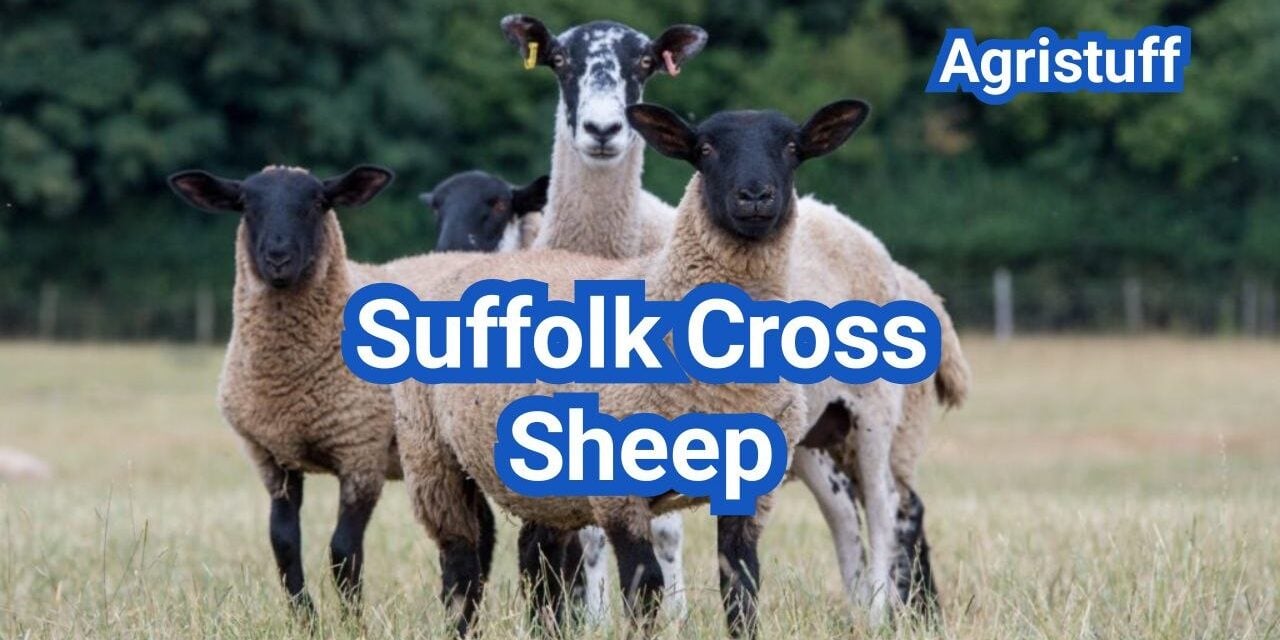
Quick Answer: Suffolk Cross Sheep combine the growth and muscling of a Suffolk sire with the maternal strengths of breeds such as Dorset, Polypay, Katahdin, Rambouillet, or Dorper. In a terminal-sire system, the resulting lambs are raised for the meat market, while replacement ewes are produced separately or purchased from another flock. United Suffolk Sheep Association breed information.
Suffolk Cross Sheep give commercial producers a practical way to combine the growth and muscling of Suffolk genetics with the maternal strengths, environmental adaptability, or grazing efficiency of another breed. In the United States, the most useful crosses are not created by choosing the biggest ram available; they are designed around the ewe flock, target lamb market, available feed, and whether replacement females must be retained. Oklahoma State University Suffolk breed profile.
Suffolk Cross Sheep are offspring produced when Suffolk genetics are combined with another sheep breed, most commonly by breeding a Suffolk ram to maternal-breed ewes. A terminal-sire plan uses that ram specifically to produce market lambs, while replacement ewes come from a separate maternal breeding group or an outside source. Oklahoma State University sheep crossbreeding guidance.
Key Takeaways
- A Suffolk terminal sire is most effective when paired with mature, productive ewes that supply mothering ability, fertility, and local adaptation.
- Dorset, Polypay, Katahdin, Rambouillet, Targhee, Dorper, Hampshire, and Texel crosses have different maternal, growth, fleece, parasite, and carcass tradeoffs.
- A true terminal system sells the resulting lambs and obtains replacement ewes from a separate maternal group or a trusted outside flock.
- Ram selection should include structural soundness, breeding soundness, birth-weight suitability, and relevant estimated breeding values.
- Crossbred lamb performance should be evaluated using survival, average daily gain, pounds marketed per ewe exposed, carcass suitability, and net return.
- A 2026 USDA Suffolk genetics study highlights the importance of protecting maternal traits when selection emphasizes growth and muscling.
- Hair-sheep crosses may not shed reliably, and parasite resistance must be evaluated using actual records rather than breed assumptions.
What Makes Suffolk Cross Sheep Valuable in Commercial Flocks?
Suffolk Cross Sheep are valuable because the two sides of the mating can perform different jobs: the ewe supplies fertility, milk production, mothering ability, and local adaptation, while the Suffolk sire contributes growth potential and market-lamb characteristics. This division of responsibilities is called breed complementarity, and it is especially useful when selling lambs is more important than maintaining a purebred flock. USDA Agricultural Research Service terminal-sire evaluation.
Suffolk Cross Sheep can also benefit from heterosis, or hybrid vigor, although the result depends on the breeds involved, the existing genetic makeup of the ewe flock, and the traits being measured. Crossbreeding does not automatically fix poor nutrition, weak feet, parasite problems, or inadequate mothering; its advantage comes from combining appropriate genetics with disciplined flock management. USDA research on breed effects and heterosis in sheep.
Terminal, Rotational, and Maternal Sheep Breeding Systems Compared
Suffolk Cross Sheep are produced within a terminal system when a Suffolk ram is used to create slaughter or feeder lambs and none of those lambs is automatically retained as a replacement. USDA research describes terminal crossbreeding as a way to combine a productive maternal ewe foundation with a separate sire line selected for market-lamb performance. USDA research summary on crossbred ewes and terminal-sire systems.
Suffolk Cross Sheep can also appear in rotational or composite programs, but those systems have different goals because replacement daughters remain part of future mating decisions. A rotational system alternates sire breeds across generations, while a maternal program emphasizes fertility, mothering, longevity, and environmental fitness before prioritizing terminal growth. Virginia Cooperative Extension guidance on breed selection and reproductive performance.
- Terminal system: Breed maternal ewes to a market-lamb sire and sell the resulting offspring.
- Rotational system: Retain selected daughters and alternate sire breeds according to a planned sequence.
- Maternal system: Produce replacement females selected primarily for reproduction, mothering, durability, and flock adaptation.
- Split-flock system: Maintain one maternal breeding group for replacements and another group for terminal market lambs.
What Does U.S. Research Show About Suffolk-Sired Lambs?

Suffolk Cross Sheep have been studied under western U.S. rangeland conditions using mature Rambouillet ewes and Suffolk, Columbia, Texel, and composite sires. In a three-year USDA study involving 574 adult ewes and 1,834 lambs, Suffolk-sired lambs averaged approximately 12.1 pounds at birth and 88.8 pounds at weaning, while sire breed did not consistently reduce ewe fertility or lamb survival. USDA study of terminal-sire effects on survival and preweaning growth.
Suffolk Cross Sheep in that broader research program gained approximately 3 to 6 additional pounds before weaning and finished a postweaning feedlot trial approximately 10 to 16 pounds heavier than comparison groups. Researchers also reported 5% to 8% less feed required per unit of gain under the study conditions, but those figures describe a specific research comparison and should not be treated as guaranteed results on every farm. USDA Agricultural Research Service report on terminal-sire performance.
Suffolk Cross Sheep are most likely to justify a terminal-sire program when buyers reward additional saleable weight, desirable carcass composition, or faster turnover. The advantage becomes less certain when forage is limited, the operation sells very lightweight lambs, or larger-framed offspring require more feeding time than the market will pay for. USDA research on postweaning lamb growth and feed efficiency.
When Is a Suffolk Terminal Sire Suitable or Unsuitable?
Suffolk Cross Sheep are usually a sensible commercial choice when the farm has mature, structurally sound ewes; enough feed to support rapid growth; adequate lambing supervision; and buyers who reward the intended finish weight. A flock selling market lambs rather than building a low-input replacement population can benefit from keeping the terminal sire’s job separate from the maternal flock’s job. Virginia Tech research comparing Suffolk and composite terminal-sire programs.
Suffolk Cross Sheep may be less appropriate when ewes are undersized, labor is unavailable during lambing, forage is scarce, parasite pressure is poorly controlled, or the farm depends on easy-shedding replacements. Heat stress also reduces feed intake and productive performance, so a ram selected for growth alone may be a poor fit for an operation lacking adequate shade, water, and climate-specific management. South Dakota State University guidance on heat stress in sheep and goats.
Best Breed Pairings for Suffolk Cross Sheep
Dorset Suffolk Cross Sheep: Maternal Performance and Flexible Lambing
Suffolk Cross Sheep produced from Dorset ewes are a strong choice for farms that want maternal ability, useful milk production, and flexibility around the breeding season alongside growth-oriented lambs. Dorset females can bring a broader seasonal breeding window than many traditional wool breeds, although an individual Suffolk ram may still show stronger breeding performance during the normal fall season than during spring or early summer. Oklahoma State University Dorset breed characteristics.
Suffolk Cross Sheep from this pairing fit Midwest and Northeastern flocks that lamb indoors or on managed pasture and sell conventional feeder or finished lambs. A producer should prioritize proven Dorset maternal records and a moderate-birth-weight Suffolk sire rather than assuming that a larger ram will always create a more profitable cross. USDA research on muscle and fat traits in terminally sired lambs.
Suffolk × Polypay: A Practical Terminal Cross for Prolific Ewe Flocks
Suffolk Cross Sheep from Polypay ewes combine a growth-focused sire with a maternal composite developed from Finnsheep, Rambouillet, Targhee, and Dorset genetics. The pairing can work well when the ewe flock is selected for prolificacy, productive mothering, and efficient lamb output, but higher litter sizes also increase the need for nutrition, close observation, and realistic labor planning. Oklahoma State University Polypay breed profile.
Suffolk Cross Sheep from productive Polypay females should be evaluated by pounds of lamb weaned per ewe exposed, not simply by the weight of the largest individual lamb. A flock producing frequent twins or triplets can lose its apparent genetic advantage if inadequate late-gestation feeding, limited milk supply, or preventable newborn losses reduce the number of lambs actually marketed. South Dakota State University guidance on ewe nutrition and lamb performance.
Suffolk × Katahdin: Faster-Growing Lambs With a Hair-Coat Tradeoff
Suffolk Cross Sheep from Katahdin ewes can appeal to pasture-based operations seeking more growth or carcass weight while preserving the maternal flock’s adaptability. However, a first-generation wool-breed-by-hair-breed cross frequently develops a mixed fleece containing wool and hair, so producers should not assume these lambs or retained daughters will shed like purebred Katahdins. Oklahoma State University guidance on Katahdin crossbreeding and coat type.
Suffolk Cross Sheep from a Katahdin-based system should also be assessed for actual parasite performance instead of being described as automatically resistant. USDA research shows that parasite-resistance breeding values in sires can influence infection levels in offspring, making fecal egg counts, selective treatment, and locally relevant performance records more useful than breed-label assumptions. USDA study of sire parasite-resistance breeding values in Katahdin lambs.
Suffolk × Rambouillet and Other Western Range Ewes
Suffolk Cross Sheep from mature Rambouillet ewes are one of the best-supported terminal-cross examples in U.S. research. The Rambouillet side contributes adaptation to western range conditions and an established maternal base, while the Suffolk side can increase lamb growth and carcass potential when nutrition and market timing support the larger-framed offspring. Oklahoma State University Rambouillet breed profile.
Suffolk Cross Sheep can also be produced from Targhee or comparable western white-faced ewes when the management objective is market-lamb production rather than maximizing white wool purity in the offspring. Producers who sell breeding females or valuable fleeces should evaluate whether dark facial characteristics, black fibers, or mixed wool traits could create marketing disadvantages. Oklahoma State University Targhee breed characteristics.
Suffolk Cross Sheep should not be assumed to outperform every alternative on every western ranch simply because Suffolk genetics excelled in a particular trial. Drought pressure, pasture availability, lambing supervision, predator exposure, finishing resources, and the buyer’s preferred weight range all determine whether additional growth becomes additional net income. South Dakota State University guidance for drought-stressed range flocks.
Dorper Suffolk Cross Sheep: Meat Production in Warm or Dry Regions
Suffolk Cross Sheep produced from Dorper ewes can combine maternal adaptability and meat-oriented genetics with additional Suffolk growth potential. This pairing may interest producers in Texas, the Southwest, and other warm regions, but individual coat type, heat tolerance, and lambing suitability must be evaluated rather than assumed from breed names alone. Oklahoma State University Dorper breed profile.
Suffolk Cross Sheep in hot or humid environments need particular attention to shade, clean water, parasite pressure, and the physical suitability of heavily muscled or darker-coated animals. University of Florida guidance emphasizes that breed choice should reflect local climate, disease pressure, and practical production goals rather than relying exclusively on growth potential. University of Florida guidance on selecting meat sheep breeds.
Suffolk × Hampshire or Texel: When Additional Terminal Genetics Make Sense
Suffolk Cross Sheep involving Hampshire genetics can produce growth-oriented market lambs, but the pairing combines two breeds commonly associated with terminal performance rather than clearly separating maternal and sire roles. It can be appropriate for specialized market-lamb production, yet maintaining large-framed replacement females may increase annual feed requirements if the flock keeps daughters. Oklahoma State University Hampshire breed profile.
Suffolk Cross Sheep involving Texel genetics may be attractive when a producer wants to balance growth with muscularity and carcass shape. USDA research indicates that Texel-sired lambs can show substantial loin muscling at comparable harvest weights, so the better option depends on whether the buyer values heavier finished lambs, earlier finishing, or specific carcass characteristics. Oklahoma State University Texel breed characteristics.
Hampshire Suffolk Cross Sheep vs. Suffolk Hampshire Cross Sheep
Suffolk Cross Sheep described as Hampshire Suffolk cross sheep or Suffolk Hampshire cross sheep generally contain both breeds, but the wording alone does not reliably identify which breed supplied the ram or ewe. Because reciprocal crosses can differ in maternal environment, birth management, replacement suitability, and flock objectives, producers should request the actual sire and dam identities instead of assuming that the first breed named always identifies the father. USDA research on reciprocal sheep crosses and terminal-sire effects.
Suffolk Cross Sheep with Hampshire influence may suit a buyer seeking muscular market lambs, but the best sire choice still depends on finishing age, fat cover, ewe size, and available feed. USDA research involving Hampshire-Suffolk-derived composites demonstrates why breed combinations should be evaluated through documented offspring performance rather than a marketing label alone. USDA Agricultural Research Service background on Hampshire-Suffolk terminal composites.
What Does Suffolk Mule Sheep Mean?
Suffolk Cross Sheep marketed as Suffolk Mule sheep may refer to lambs produced when a Suffolk terminal sire is bred to a Mule-type maternal ewe. In traditional British sheep terminology, a Mule ewe is a crossbred female typically produced by a Bluefaced Leicester ram and a hardy hill-breed ewe; it is not a cross between a sheep and an equine mule. Bluefaced Leicester Sheep Breeders’ Association explanation of Mule sheep.
Suffolk Cross Sheep involving Mule-type ewes follow the same basic principle as other three-breed terminal programs: the maternal cross supplies milk, fertility, and adaptation, while the Suffolk sire produces market lambs. Because Mule terminology is more established in British production than in typical U.S. flock descriptions, American producers should verify the ewe’s actual parentage, mature size, health records, and market suitability. UK government guide to Mule ewes and terminal-sire breeding.
How Do You Choose the Right Suffolk Cross for Your Farm?

Suffolk Cross Sheep should be matched to a clearly defined production problem instead of being selected only for appearance or breed popularity. A farm needing stronger maternal performance has a different breeding objective from a feedlot-oriented operation seeking additional carcass weight or a Gulf Coast flock trying to preserve parasite tolerance. New Mexico State University guidance on sheep breeds and climate suitability.
- Best for balanced farm-flock production: Suffolk ram × Dorset ewes.
- Best for productive maternal composites: Suffolk ram × Polypay ewes.
- Best for western range-based market lambs: Suffolk ram × mature Rambouillet or Targhee ewes.
- Best for testing added growth in hair-sheep systems: Suffolk ram × Katahdin ewes, with a clear plan for fleece and parasite management.
- Best for warm-region meat production: Suffolk ram × well-adapted Dorper ewes, provided heat and lambing risks are managed.
- Best for specialized carcass goals: Selected Suffolk-Texel or Suffolk-Hampshire genetics when the market specifically rewards those traits.
How to Build a Suffolk Terminal-Sire Plan Step by Step
Suffolk Cross Sheep programs become more predictable when the breeding objective, ewe groups, sire requirements, replacement policy, and marketing endpoint are established in a defined sequence. USDA systems research on maternal crosses and terminal sires supports treating the ewe flock and market-lamb sire as connected but distinct parts of the same production plan. USDA Agricultural Research Service project on maternal crosses and terminal-sire systems.
- Step 1: Define the commercial objective. Identify the intended buyer, target sale weight, desired lambing season, and acceptable finishing costs.
- Step 2: Sort the ewe flock. Separate mature, productive females suited to terminal breeding from smaller ewe lambs and animals needed for replacement production.
- Step 3: Set a replacement policy. Decide whether maternal replacements will be purchased, raised in a separate group, or deliberately selected from an alternative breeding system.
- Step 4: Select the Suffolk ram. Evaluate breeding soundness, structural correctness, relevant estimated breeding values, lambing suitability, and verified offspring performance.
- Step 5: Match breeding groups to resources. Adjust group size and timing according to pasture availability, labor, weather, and the ram’s proven capacity.
- Step 6: Record results. Measure lambing assistance, survival, growth, ewe productivity, carcass outcomes, and net revenue before repeating the mating.
Terminal-Sire Plan 1: One Suffolk Ram Over an Established Maternal Flock
Suffolk Cross Sheep are easiest to manage in a simple terminal system where an unrelated Suffolk ram breeds mature maternal-breed ewes and every resulting lamb enters the market channel. The farm purchases replacement ewes separately or maintains an unrelated supplier relationship, allowing each breeding decision to focus on market-lamb performance rather than producing future breeding females. USDA research on terminal-sire breeds and crossbred lamb performance.
Suffolk Cross Sheep from this system are especially practical for a small flock with one breeding group, limited fencing, and dependable access to healthy maternal replacements. The principal limitation is replacement dependency: if suitable ewes become difficult to source, the operation may be tempted to retain terminal-cross daughters without a long-term genetic or feeding plan. University of Wisconsin sheep enterprise planning tool.
Terminal-Sire Plan 2: Maternal-Cross Ewes Bred to a Suffolk Ram
Suffolk Cross Sheep can be produced through a three-breed structure in which the ewe herself comes from two complementary maternal breeds and is then bred to a Suffolk terminal sire. For example, a Dorset-Rambouillet or Polypay-based maternal flock can contribute mothering ability and adaptation, while the Suffolk ram adds market-lamb growth without becoming the primary source of replacement-female genetics. USDA research comparing Suffolk and composite terminal sires.
Suffolk Cross Sheep from a three-breed terminal program can deliver a strong combination of maternal and individual crossbreeding advantages, but the system requires records, separate breeding decisions, and reliable maternal replacements. It generally fits operations large enough to organize ewe groups or work with a dedicated maternal-flock supplier. USDA study of carcass outcomes from Suffolk and composite terminal sires.
Terminal-Sire Plan 3: A Split Flock That Produces Its Own Replacements
Suffolk Cross Sheep can be generated in a split-flock system by assigning one ewe group to a maternal ram for replacement daughters and another group to a Suffolk ram for terminal market lambs. This structure protects the maternal foundation while allowing most mature, well-sized ewes to produce growth-oriented lambs for sale. Oklahoma State University profile of maternal and dual-purpose Columbia sheep.
Suffolk Cross Sheep should be identified clearly at birth so terminal daughters are not retained accidentally and maternal replacements are not sold with slaughter lambs. Separate breeding pens, ram-control fencing, ewe identification, and accurate lambing records are necessary because a split system only works when parentage and replacement decisions remain clear. USDA APHIS guidance on official sheep identification.
Can Suffolk-Cross Ewe Lambs Be Kept as Replacements?
Suffolk Cross Sheep females can be retained when their actual mothering ability, mature size, feed requirements, feet, fertility, and environmental adaptation fit the farm. However, retaining daughters changes a terminal program into a different breeding system, and breeding those daughters back to the same ram introduces an avoidable inbreeding risk. USDA evaluation of wool and hair breed crosses for productive traits.
Suffolk Cross Sheep daughters from hair-breed dams deserve additional scrutiny because retaining them can introduce mixed fleece, shearing obligations, and less predictable shedding into a flock originally designed around low-maintenance hair sheep. The appropriate choice depends on documented lifetime productivity, not on whether a crossbred ewe looks impressive as a lamb. USDA research on balancing productivity and parasite resistance in hair sheep.
How Should You Select a Suffolk Terminal Sire?
Suffolk Cross Sheep benefit most when the ram is selected using structural soundness, fertility, relevant performance records, and estimated breeding values rather than show-ring appearance alone. Useful records may include birth weight, weaning weight, postweaning weight, loin-muscle measurements, fat depth, and a terminal index when comparable evaluations are available. Virginia Tech explanation of terminal-sire performance indexes.
How to Use NSIP Records and Suffolk Sheep EBVs
Suffolk Cross Sheep selection becomes more reliable when a producer understands how the National Sheep Improvement Program generates estimated breeding values from pedigree and performance information. South Dakota State University explains that participating breeds are evaluated separately and that contemporary groups help compare animals raised under similar conditions, making breed context and data quality essential when interpreting records. South Dakota State University explanation of NSIP and sheep breeding values.
Suffolk Cross Sheep breeding plans should also consider the tradeoff between aggressive terminal selection and future maternal performance. A 2026 USDA-associated study analyzed more than 70,000 pedigree records and 48,000 performance records from U.S. Suffolk sheep, finding sustained genetic progress in growth and muscling alongside warning signs of declining maternal genetic merit. USDA Agricultural Research Service 2026 study of genetic trends in U.S. Suffolk sheep.
Ram Soundness, Ewe Size, and Breeding-Soundness Examinations
Suffolk Cross Sheep should be produced from a ram whose birth-weight profile and physical size fit the age and pelvic capacity of the ewes being bred. South Dakota State University advises that ewe lambs should reach approximately 65% to 75% of their expected mature body weight before breeding, and a terminal sire suitable for mature Rambouillet or Dorset ewes may still be inappropriate for small first-time mothers. South Dakota State University guidance on breeding ewe lambs.
Suffolk Cross Sheep production also depends on a fertile, physically capable ram, so schedule a breeding soundness examination early enough to address problems before turnout. South Dakota State University recommends fit rather than overconditioned rams and notes that an animal failing an examination may need 30 to 60 days before retesting. South Dakota State University ram preparation and breeding soundness guidance.
Suffolk Cross Sheep sire inspections should include feet, legs, body condition, mobility, testicular development, mouth structure, and willingness to work across the intended breeding area. A ram with attractive growth records still represents a poor investment if excessive weight, lameness, or inadequate physical condition prevents effective service. Oregon State University guidance on evaluating sheep body condition.
How Many Ewes Can One Suffolk Ram Breed?
Suffolk Cross Sheep programs often use approximately 25 to 50 mature ewes per proven adult ram under favorable conditions, while younger ram lambs usually require smaller breeding groups. New Mexico State University notes that low-rainfall range conditions, heat, body condition, season, and ram libido can reduce practical coverage, so a single universal ratio is unreliable. New Mexico State University sheep reproduction and ram-to-ewe guidance.
Suffolk Cross Sheep breeding groups should become smaller when ewes are synchronized, paddocks are large, temperatures are high, or a new ram has no proven service history. Marking harnesses, observation of repeat breeding activity, and a backup sire reduce the financial risk of discovering an infertile or injured ram after the breeding season has ended. Virginia Cooperative Extension preparation for the sheep breeding season.
Breeding Calendar, Ewe Condition, and Pregnancy Management
Suffolk Cross Sheep breeding plans should begin several weeks before ram turnout by checking ewe body condition, hooves, teeth, udder history, vaccinations, available forage, and mineral access. South Dakota State University recommends breeding animals around a body condition score of 3 to 3.5 and describes targeted nutritional support before and after breeding when appropriate. South Dakota State University breeding-season nutrition recommendations.
Suffolk Cross Sheep pregnancies can be managed more precisely when ultrasound identifies open ewes and distinguishes animals carrying single lambs from those carrying multiples. Separating nutritional groups helps prevent underfeeding highly productive females while avoiding excessive conditioning in ewes that do not need the same ration. South Dakota State University guide to pregnancy scanning in sheep.
Suffolk Cross Sheep born during hot-weather lambing seasons may face added challenges if pregnant ewes experience sustained heat stress, reduced feed intake, or poorer colostrum production. Farms using Dorset, Dorper, or other extended-season maternal lines should confirm that their facilities, water systems, and labor arrangements support the actual lambing date. South Dakota State University guidance on heat stress in pregnant ewes.
Lambing Difficulty, Colostrum, and Early Survival
Suffolk Cross Sheep can be heavier at birth than some alternative crosses, making ewe maturity, ram selection, and observation essential parts of the breeding plan. Both unusually low and unusually high birth weights can reduce survival, so producers should monitor individual flock outcomes without assuming that every Suffolk mating inevitably causes difficult delivery. South Dakota State University research summary on birth weight and lamb survival.
Suffolk Cross Sheep newborns need rapid access to adequate colostrum, especially after difficult deliveries, multiple births, or cold-weather lambing. South Dakota State University recommends approximately 1 to 2 ounces of colostrum per pound of birth weight within the first 12 hours, while emphasizing that antibody absorption falls sharply as the newborn ages. South Dakota State University newborn lamb care recommendations.
Parasite Control, Grazing, and Regional Adaptation
Suffolk Cross Sheep raised in the Southeast, humid Midwest, or irrigated pasture systems should be managed for barber pole worm exposure based on actual environmental pressure and individual animal performance. Rotational grazing, fecal egg counts, targeted treatment, and avoiding overgrazing are more reliable than assuming that one maternal hair-sheep cross automatically eliminates parasite problems. University of Minnesota guidance on managing barber pole worms.
Suffolk Cross Sheep breeding decisions can include parasite-resistance information when relevant estimated breeding values or well-documented fecal egg count records are available. USDA research identifies postweaning fecal egg count as an indicator used in hair-sheep genetic evaluations, but parasite resistance should be balanced with fertility, growth, mothering ability, and local farm conditions. USDA research on parasite-resistance breeding objectives for hair sheep.
Suffolk Cross Sheep grazing alongside cattle must still receive minerals formulated appropriately for sheep because excessive copper can create serious health risks. Grazing plans should also consider fencing, guardian animals, pasture rest, shade, and whether larger-framed crossbred lambs can meet growth targets from available forage. University of Minnesota multi-species grazing and sheep mineral guidance.
How to Measure Lamb Growth Rate and Compare Mating Groups
Suffolk Cross Sheep performance should be tracked using birth weight, weaning weight, postweaning weight, days on feed, and average daily gain rather than visual size alone. Oklahoma State University calculates preweaning average daily gain by subtracting birth weight from actual weaning weight and dividing the difference by the lamb’s age in days. Oklahoma State University guide to ram selection and adjusted lamb growth measurements.
Suffolk Cross Sheep averaging 12 pounds at birth and 84 pounds at 90 days have gained 72 pounds, producing an illustrative average daily gain of 0.80 pounds per day. The calculation is useful for comparing lambs, but the groups should be similar in age, sex, litter size, ewe age, feeding program, parasite pressure, and measurement timing. Utah State University sheep weight and average daily gain calculator.
Suffolk Cross Sheep growth differences cannot be interpreted fairly when one sire group receives higher-quality forage or supplemental feed while another group remains under different management. South Dakota State University explains that creep feeding can accelerate rumen development and early lamb growth, illustrating why genetic comparisons should use matched contemporary groups whenever possible. South Dakota State University guidance on creep feeding and lamb growth.
Market Weight, Carcass Goals, and Selling Channels

Suffolk Cross Sheep should be bred for the weight and finish preferred by the actual buyer, whether that buyer purchases feeder lambs, conventional slaughter lambs, or locally processed freezer lamb. South Dakota State University describes a starting estimate that averages mature sire and dam weights and multiplies the result by 0.64, but carcass condition, sex, feeding system, and customer preference must still guide the final decision. South Dakota State University method for estimating lamb finishing weight.
Suffolk Cross Sheep producers can compare current local prices through USDA Agricultural Marketing Service sheep auction reports instead of relying on outdated nationwide averages. A heavy lamb is not automatically more profitable if local buyers discount its weight class or if extra feed costs exceed the value of the additional pounds. USDA Agricultural Marketing Service sheep auction reports.
Suffolk Cross Sheep sold directly as packaged meat require a different calculation because slaughter fees, processing charges, packaging, transportation, marketing, and unsold cuts affect the true return. South Dakota State University’s lamb pricing calculator can help translate production expenses into an estimated retail breakeven rather than confusing live-animal revenue with packaged-meat profit. South Dakota State University lamb cut pricing calculator.
How Do You Evaluate Dressing Percentage and Carcass Yield?
Suffolk Cross Sheep carcass performance should be evaluated using hot carcass weight, dressing percentage, fat cover, muscling, and the requirements of the intended processor or buyer. Dressing percentage equals hot carcass weight divided by live weight, multiplied by 100; for example, a 130-pound lamb producing a 65-pound carcass has a 50% dressing percentage before further cutting losses. Oregon State University resources on finishing, slaughter, and meat processing.
Suffolk Cross Sheep should not be compared solely by dressing percentage because loin area, leg muscling, fat distribution, carcass maturity, and market specifications also influence commercial value. Virginia Tech reports that hair- and wool-breed crosses can differ in carcass weight and fat thickness even when other carcass measurements appear broadly similar. Virginia Cooperative Extension review of carcass traits in sheep breed crosses.
Quick checklist
Suffolk Cross Sheep planning works best when breeding, lambing, marketing, and replacement decisions are settled before the ram enters the flock. Use a written checklist so the genetic strategy remains connected to available labor, pasture capacity, animal health, and the intended sales channel. South Dakota State University annual sheep body-condition guidance.
- Define whether the objective is feeder-lamb growth, finished-lamb weight, carcass quality, or direct-to-consumer meat sales.
- Choose Dorset, Polypay, Katahdin, Rambouillet, Targhee, Dorper, or another maternal base according to local conditions.
- Confirm that mature ewe size and lambing history match the selected ram’s birth-weight profile.
- Review available breeding values, adjusted weights, structural soundness, and previous offspring records.
- Schedule a ram breeding soundness examination before the breeding season.
- Decide whether replacements will be purchased, produced in a separate maternal group, or intentionally retained.
- Set an appropriate ram-to-ewe ratio and arrange a backup sire when the breeding window is limited.
- Prepare pregnancy scanning, late-gestation feeding groups, lambing supplies, and colostrum support.
- Create a parasite-monitoring and sheep-appropriate mineral plan suited to the farm’s region.
- Check USDA market reports and confirm buyer specifications before selecting target finish weights.
- Maintain flock identification, breeding records, and applicable animal-movement documentation.
Common mistakes to avoid
Suffolk Cross Sheep programs lose profitability when growth-oriented genetics are added without matching ewe capacity, feed resources, or market requirements. Preventing the following errors protects animal welfare and makes the terminal-sire strategy easier to measure objectively. Oregon State University sheep nutrient requirement guidance.
- Breeding undersized ewe lambs to an oversized ram: Use mature, appropriately sized females or choose a sire with a safer documented birth-weight profile.
- Keeping terminal-cross daughters without a plan: Decide in advance how replacements will be sourced and avoid mating daughters back to their sire.
- Assuming Katahdin crosses will shed automatically: Budget for mixed-fleece management or sell first-generation terminal lambs before coat management becomes a problem.
- Ignoring parasite pressure: Monitor fecal egg counts, use targeted treatment, and manage pasture rather than relying on breed stereotypes.
- Selecting a ram only for size: Check feet, testicles, fertility, temperament, birth-weight history, and relevant growth or carcass records.
- Overloading one breeding ram: Adjust ewe numbers for age, weather, pasture size, synchronized breeding, and proven performance.
- Chasing heavier lambs without checking buyers: Confirm the preferred local weight range and calculate the extra feed cost of delayed marketing.
- Underfeeding prolific ewes: Group pregnant females by body condition and litter size when practical.
- Mixing cattle minerals with sheep: Provide minerals suitable for sheep and review copper levels with a qualified adviser.
- Skipping official identification and health checks: Verify scrapie identification requirements and review movement rules with the appropriate authorities.
Costs and ROI snapshot
Suffolk Cross Sheep economics depend on ram ownership, replacement females, pasture or purchased feed, fencing, veterinary work, parasite control, lambing labor, marketing, and death loss. South Dakota State University reports that a historical 2021 U.S. benchmark was approximately $135 in direct cost per ewe and 160% lambs weaned per ewe exposed; those figures are dated benchmarks, not reliable estimates of today’s costs on an individual farm. South Dakota State University sheep enterprise benchmark analysis.
Suffolk Cross Sheep sire costs are best evaluated per marketable lamb rather than by purchase price alone. For an illustrative example, a $1,500 ram used across 30 ewes for three breeding seasons and producing 1.4 marketed lambs per ewe would spread its purchase cost across approximately 126 lambs, or about $11.90 per lamb before ram feed, housing, veterinary care, depreciation differences, and salvage value. University of Nebraska sheep enterprise budget resources.
Suffolk Cross Sheep can generate a positive return when additional sale weight, improved carcass premiums, or reduced finishing time exceed the extra costs created by the sire and his offspring. As a scenario rather than a price forecast, 8 additional saleable pounds valued at $2.50 per pound create $20 of added gross revenue per lamb; if added feed, ram allocation, health, and marketing expenses total $13, the estimated improvement is $7 before overhead and taxes. University of Wisconsin guidance on sheep cost-of-production budgeting.
Suffolk Cross Sheep become less attractive when the sire covers too few ewes, lamb losses increase, replacement females require higher maintenance, or local markets penalize the resulting finish weight. Beginners frequently underestimate winter feed, fencing repairs, shearing obligations in hair-by-wool crosses, emergency veterinary expenses, and the cost of keeping an unproductive ram between breeding seasons. University of Nebraska guidance on sheep enterprise revenues and expenses.
- Main cost drivers: Feed, ewe maintenance, breeding ram ownership, replacement females, health management, labor, and marketing.
- What increases cost: Purchased forage, low ewe numbers per ram, difficult births, parasite problems, excessive finishing time, and weak lamb survival.
- What improves return: More lambs marketed per ewe exposed, efficient gain, appropriate buyer premiums, useful carcass traits, and strong maternal performance.
- What beginners underestimate: Year-round ram expenses, mixed-fleece management, backup breeding arrangements, processing fees, and replacement-ewe sourcing.
- When the investment makes sense: The selected cross fits the ewe flock, verified buyer demand, available feed, and a measurable cost-per-lamb budget.
Health Records, Official Identification, and Biosecurity
Suffolk Cross Sheep moving through breeding, auction, or commercial marketing channels may be subject to official identification and state-specific animal-movement requirements. USDA APHIS guidance on scrapie explains why sheep traceability matters, but producers should confirm current rules with their veterinarian, state animal health office, and receiving market before transporting animals. USDA APHIS scrapie disease and sheep traceability guidance.
Suffolk Cross Sheep breeding records should connect each ewe and lamb to the sire, birth type, lambing assistance, survival, treatment history, weaning weight, and final sale outcome. Those records show whether a cross is genuinely improving pounds sold per ewe and net return, rather than merely producing a few visually impressive lambs. University of Wisconsin livestock enterprise decision tools.
Suffolk Cross Sheep evaluation should also track lambs born, lambs weaned, and total marketable lamb weight for every ewe exposed to the ram. New Mexico State University emphasizes the importance of early-life management, making survival and effective mothering critical measures alongside the terminal sire’s contribution to growth. New Mexico State University guidance on sheep production from birth to weaning.
Final Thought
Suffolk Cross Sheep are most effective when Suffolk genetics serve a clearly defined purpose inside a complete breeding and marketing plan. Choose maternal breeds according to climate, replacement strategy, and ewe productivity; select a sound sire using meaningful performance information; and measure success by healthy lambs marketed, buyer suitability, and profit per ewe rather than size alone. USDA Agricultural Marketing Service sheep market information.
FAQ About Suffolk Cross Sheep
What is a Suffolk cross sheep?
Suffolk Cross Sheep are the offspring of a Suffolk sheep bred with another breed, typically a Suffolk terminal sire mated to maternal-breed ewes. This crossbreeding strategy combines Suffolk growth and muscling with the dam’s fertility, mothering ability, or adaptation to local farm conditions. United Suffolk Sheep Association.
What is the best breed to cross with a Suffolk ram?
The best breed depends on the farm’s breeding goals, climate, and existing ewe flock. Dorset and Polypay ewes are practical maternal options, Rambouillet ewes suit many western range operations, and Katahdin ewes can fit pasture-based meat production. Successful Suffolk Cross Sheep pairings should account for ewe size, lambing conditions, parasite pressure, and whether replacement females will be retained. Oklahoma State University Extension.
Are Suffolk cross sheep good for meat production?
Yes, Suffolk Cross Sheep are well suited to meat production because Suffolk terminal sires can contribute faster lamb growth, strong muscling, and desirable carcass traits. USDA research involving adult Rambouillet ewes found that Suffolk-sired lambs achieved heavier weaning weights than lambs sired by the other breeds evaluated under the same rangeland conditions. USDA Agricultural Research Service.
Can Suffolk-cross ewe lambs be kept as replacements?
Yes, Suffolk Cross Sheep ewe lambs can be retained as replacements when their mature size, fertility, mothering ability, feed requirements, and local adaptation fit the flock’s long-term goals. However, keeping daughters changes a strictly terminal breeding system, and recent USDA research highlights the importance of monitoring maternal traits alongside growth and muscling. USDA Agricultural Research Service Suffolk genetics research.
Do Suffolk and Katahdin cross lambs shed their coats?
Not reliably, because Suffolk Cross Sheep produced from Katahdin ewes and wool-bearing Suffolk rams often inherit a mixed hair-and-wool coat. Oklahoma State University explains that first-generation crosses between Katahdin and wool sheep usually develop wool fleeces with hair mixed in, so buyers should not assume these lambs will shed like purebred Katahdins. Oklahoma State University Katahdin breed profile.
How many ewes can one Suffolk ram breed?
A healthy, mature Suffolk ram can typically breed approximately 25 to 50 ewes, while a well-developed ram lamb generally covers about 15 to 30 ewes. Suffolk Cross Sheep breeding plans should reduce these numbers when heat, large pastures, poor body condition, difficult terrain, or a shortened breeding season limit ram performance. New Mexico State University sheep reproduction guidance.
Sources & References
- USDA Agricultural Research Service: Postfabrication carcass traits from terminal-sire breed comparisons.
- USDA Agricultural Research Service: Harvest weight and terminal-sire carcass performance.
- USDA Agricultural Research Service: Extensive rangeland terminal-sire evaluation.
- USDA Agricultural Research Service: Live and carcass leg characteristics in terminally sired lambs.
- USDA Agricultural Research Service: Terminal-sire carcass and production characteristics.
- Virginia Tech research: Preweaning performance of lambs sired by Suffolk and composite terminal breeds.
- New Mexico State University: Sheep production, breed selection, and flock management.
- Oklahoma State University: St. Croix hair sheep characteristics and maternal suitability.
- Oklahoma State University: White Suffolk breed characteristics and terminal-sire background.
- Oklahoma State University: South Suffolk breed characteristics and sire applications.
- Utah State University Extension: Body condition scoring for productive sheep.
- University of Georgia Extension: Sheep and goat parasite management.
- University of Georgia Extension: Grazing practices for internal parasite control.
- University of Georgia Extension: Selective parasite control in small ruminants.
- USDA APHIS: Sheep and goat disease prevention and health resources.
- USDA Agricultural Marketing Service: National Direct Sheep Report.
- USDA Agricultural Marketing Service: Standards for lamb and mutton carcasses.
- South Dakota State University Extension: Sheep body-condition scoring reference.
- University of Nebraska: Example enterprise budget for a 250-ewe sheep operation.