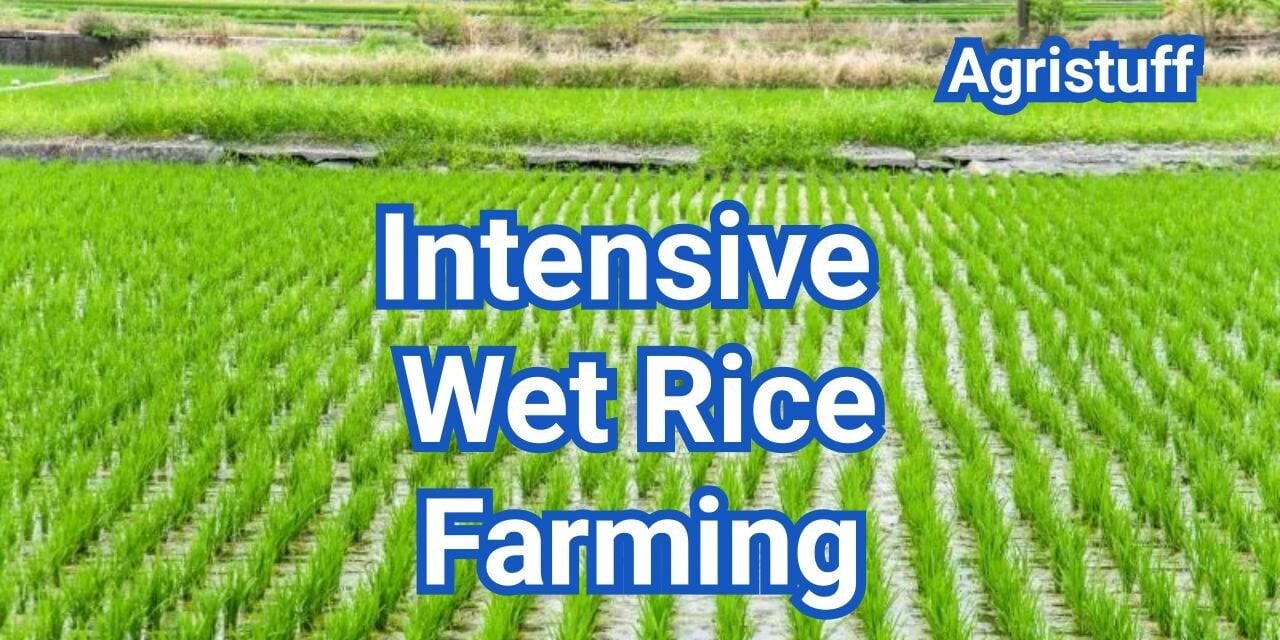
Intensive Wet Rice Farming represents a highly productive agricultural system designed to maximize yields from limited land. By utilizing small, flooded plots, this method supports the dense populations found throughout many parts of Asia.
This approach relies heavily on family labor and precise water management to ensure consistent harvests. It transforms landscapes into productive paddies, balancing subsistence goals with the need for high output per acre.
Beyond basic cultivation, the process involves complex stages like seedling transplanting and seasonal irrigation. Understanding intensive rice farming requires looking at how geography and human effort intersect to sustain millions. Whether through traditional techniques or modern water-saving strategies, wet rice farming remains a cornerstone of global food security.
Quick answer: Intensive Wet Rice Farming means growing rice on a relatively small area while concentrating labor, water control, field preparation, seed, nutrients, and crop management on that land. Farmers commonly use paddies with bunds, transplant seedlings or sow pre-germinated seed, control shallow water through the season, and drain before harvest. Flooding is a management tool rather than a requirement to keep rice under deep water continuously.
Key Takeaways
- High productivity is achieved through labor-intensive methods on small land plots.
- Water management and flooded paddies are essential for successful crop growth.
- The system is deeply rooted in the social and physical geography of Asian regions.
- Techniques include careful seedling transplanting and efficient irrigation cycles.
- Modern innovations are helping to improve sustainability in traditional paddy systems.
What Is Intensive Wet Rice Farming?
At its core, what is intensive wet rice farming? It is a highly sophisticated system of land and water management designed to maximize crop yields on limited plots of land. The definition of intensive wet rice farming centers on the deliberate use of flooded fields to create an ideal environment for rice plants to thrive.
Definition of intensive wet rice farming
Intensive Wet Rice Farming is used for high-output cultivation of lowland rice, usually Oryza sativa, on land designed to retain and regulate water. “Intensive” describes the high use of labor or managed inputs per unit of land; “wet” describes a lowland water regime, not a permanently submerged crop. U.S. students often encounter the concept in agriculture and rural land-use studies.
Core features of wet rice cultivation
A primary characteristic of wet rice cultivation is the use of puddled soil. Farmers plow and saturate the field until the earth becomes a soft, muddy consistency that prevents water from draining away too quickly. This process is often followed by the transplanting of seedlings that have been carefully raised in a separate nursery.
The system requires significant human labor to manage the irrigation and maintain the field structure. Because the land is used so intensively, farmers often produce multiple harvests within a single year. This high level of input ensures that even small family farms can produce enough food to support large populations.
How flooded paddy farming differs from general rice production
While general rice production can occur in dry or upland conditions, flooded paddy farming is a specialized technique. It requires a permanent water supply and specific soil preparation that dry-land farming does not demand. The following table highlights the key differences between these two approaches.
| Feature | Wet Rice Farming | Dry Rice Farming |
|---|---|---|
| Water Source | Controlled Irrigation | Rain-fed |
| Soil State | Puddled/Saturated | Well-drained |
| Labor Intensity | Very High | Moderate |
| Yield Potential | High/Consistent | Variable |
Why the System Is Considered Intensive

Why is it considered intensive? The answer lies in the high level of inputs applied to a specific area of land rather than the total size of the farm. In flooded paddy farming, success depends on how effectively a farmer manages every square inch of their plot. This approach ensures that why the system is considered intensive becomes clear through the constant human intervention required to maintain the crop.
High labor input on limited farmland
The foundation of this method is labor-intensive rice production. Farmers must dedicate significant time to tasks like puddling the soil, transplanting delicate seedlings, and managing complex irrigation networks. Because the plots are often small, workers focus their energy on manual weeding and precise water control to ensure the plants thrive.
Multiple crop cycles and double-cropping rice
To maximize output, many regions utilize multiple crop cycles and double-cropping rice. This strategy allows farmers to harvest two or even three crops from the same field within a single year. By using double-cropping rice, producers significantly increase their annual yield without needing to acquire more land, though it requires a very rapid transition between the harvest and the next planting cycle.
Careful use of water, nutrients, and field space
Efficiency is the hallmark of this agricultural system. Farmers carefully monitor water levels to prevent waste while ensuring the roots remain submerged. They also apply nutrients with extreme precision to avoid runoff and maximize plant uptake. Every inch of the field is utilized, leaving almost no space wasted during the growing season.
Why intensive systems can produce high yields per unit of land
These systems are highly productive because they concentrate resources where they are needed most. By combining intensive rice cultivation with improved seed varieties, farmers can achieve massive harvests from small plots. This high yield per unit of land is essential for supporting large rural populations in many parts of the world.
| Input Type | Low Intensity | High Intensity |
|---|---|---|
| Labor | Minimal | Very High |
| Water | Rain-fed | Controlled Irrigation |
| Crop Cycles | Single | Multiple |
| Land Use | Extensive | Concentrated |
Where Intensive Wet Rice Farming Is Practiced
Where is it most commonly practiced? The answer is found across the vast, monsoon-fed landscapes of Asia, where the climate and topography align to support high-yield agriculture. These major regions in east, south, and southeast asia have developed sophisticated water management techniques over centuries to sustain dense populations.
East Asian wet-rice-dominant regions
In countries like China, Japan, and South Korea, wet-rice-dominant regions are characterized by highly organized irrigation networks. Farmers in these areas utilize advanced water control to manage the growth cycles of rice. This precision allows for multiple harvests even in temperate zones where the growing season is shorter.
South Asian rice-growing regions
South Asia, particularly India and Bangladesh, relies heavily on the seasonal monsoon rains to flood the vast plains. These asian rice farming systems are deeply integrated into the river basins of the Ganges and Brahmaputra. The fertile alluvial soil deposited by these rivers provides the necessary nutrients for continuous, intensive cultivation.
Southeast Asian lowlands and river deltas
The Mekong and Chao Phraya deltas serve as the heart of rice production in Southeast Asia. These low-lying areas are naturally prone to flooding, which farmers harness to create ideal conditions for paddy fields. The abundance of water in these deltas supports some of the highest rice yields in the world.
Rice terraces in upland and mountainous areas
In rugged terrains, farmers have engineered rice terraces to transform steep slopes into productive farmland. By carving level steps into mountainsides, they effectively trap water and prevent soil erosion. This remarkable adaptation allows for intensive cultivation in areas that would otherwise be unsuitable for agriculture.
| Region | Primary Landscape | Water Source |
|---|---|---|
| East Asia | River Valleys | Managed Irrigation |
| South Asia | Alluvial Plains | Monsoon & Rivers |
| Southeast Asia | River Deltas | Seasonal Flooding |
| Upland Areas | Mountain Slopes | Rainfall & Springs |
Climate, Land, Water, and Labor Requirements

To achieve high yields, farmers must understand the specific climate, land, water, and labor requirements of this agricultural system. When asking what environmental conditions does it require?, one must look at the delicate balance between natural geography and human intervention.
Warm temperatures and a sufficiently long growing season
Rice is a tropical plant that thrives in heat. It requires consistent warmth throughout the germination and maturation phases to reach its full potential. A long, frost-free growing season is essential to ensure the grain develops properly before the onset of colder weather.
Level fields, fertile soils, and reliable water supplies
The landscape must be carefully modified to support flooded conditions. Farmers typically select level land or construct terraces on hillsides to prevent water runoff. Fertile, clay-heavy soils are preferred because they hold water effectively, preventing the moisture from draining away too quickly.
Labor requirements for planting, weeding, and harvesting
This system is incredibly labor-intensive, especially in regions where mechanization is limited. Families and local communities must coordinate to complete the back-breaking tasks of transplanting seedlings, removing weeds, and harvesting the crop by hand. These peak periods demand significant physical effort to ensure the survival of the rice plants.
How rainfall patterns and seasonal flooding affect production
While monsoon rains provide the bulk of the necessary moisture, timing is everything. Farmers use a complex network of bunds, canals, and dikes to manage water levels across their fields. Even in wet climates, long dry spells can force farmers to rely on stored water or irrigation systems to keep the paddies submerged.
Intensive Wet Rice Farming and Subsistence Agriculture
The distinction between subsistence goals and intensive methods is vital for grasping global food systems. While the term “intensive” refers to the high level of labor and inputs applied to a plot, “subsistence” describes the primary economic purpose of the harvest. Many Asian rice farming systems are defined by this relationship to subsistence farming, where the main goal is to feed the family unit.
Why the system is often classified as subsistence farming
You might wonder, why is it often classified as subsistence agriculture? The answer lies in the focus on household self-sufficiency. In these systems, farmers prioritize growing enough grain to sustain their families throughout the year rather than producing for distant export markets.
This approach relies on meticulous management of small landholdings. By applying intensive labor to every square inch, families ensure their survival even on limited acreage. This creates a cycle where the land is worked to its maximum potential to secure basic food needs.
Household food security and local rice consumption
Food security remains the primary driver for these smallholder operations. Because rice is a staple, having a reliable harvest directly protects the household from market price volatility. Families often store a significant portion of their yield in traditional granaries to ensure a steady supply of food during the off-season.
How surplus rice enters regional markets
While the primary goal is consumption, these farms are rarely isolated from the broader economy. When a harvest exceeds the family’s immediate needs, the surplus rice enters regional markets to be sold or traded. This small-scale commerce provides the cash necessary to purchase essential goods like tools, medicine, or clothing.
Differences between subsistence-oriented and commercial wet rice farms
It is important to distinguish between these family-managed plots and large-scale commercial operations. Commercial farms are designed for profit, utilizing heavy machinery and standardized inputs to supply wholesalers and international exporters. In contrast, subsistence-oriented farms focus on resilience and stability, often using traditional knowledge passed down through generations to maintain soil health and water efficiency.
| Feature | Subsistence Farm | Commercial Farm |
|---|---|---|
| Primary Goal | Family Consumption | Market Profit |
| Scale | Small Plots | Large Acreage |
| Labor | Manual/Family | Mechanized/Hired |
How to Prepare the Paddy Field and Establish a Nursery

The foundation of high-yield rice farming lies in the meticulous preparation of the paddy and the nursery. Understanding how are wet rice fields prepared and planted? is the first step toward ensuring a successful growing season. This phase requires careful attention to detail to set the stage for healthy plant development.
Step 1: Select and assess the field
Farmers must first evaluate the land to ensure it is suitable for flooded paddy farming. Key factors include the field slope, which should be relatively level to maintain uniform water depth. Proper drainage and access to reliable irrigation are also critical for managing water levels throughout the crop cycle.
The condition of the bunds, or earthen embankments, must be checked to prevent water leakage. Soil texture is another vital consideration, as it determines the field’s ability to hold water. Assessing these elements early prevents significant challenges during the later stages of growth.
Step 2: Plow, puddle, and level the soil
Once the site is chosen, the soil undergoes plowing and puddling to create a soft, uniform seedbed. Puddling is essential because it reduces water percolation, allowing the field to hold shallow water effectively. A well-leveled field ensures that all seedlings receive equal access to nutrients and moisture.
However, farmers must avoid excessive wet tillage during this process. Over-working the soil can restrict root penetration and degrade important soil aggregates. Maintaining a balance is key to promoting long-term soil health and productivity.
Step 3: Establish a rice seedling nursery
Concentrated seedling production is a hallmark of efficient wet rice cultivation. By starting plants in a dedicated nursery, farmers can monitor their growth closely before moving them to the main field. This organized approach makes the eventual transplanting process much more manageable and efficient.
The nursery provides a controlled environment where young plants can develop strong root systems. This early protection significantly increases the survival rate of the crop once it is moved to the paddy. Proper field preparation and nursery establishment ultimately serve as the backbone of a productive harvest.
How to Plant Rice Through Transplanting or Direct Seeding
Establishing a healthy rice crop requires choosing between traditional rice seedling transplanting and modern direct seeding methods. Each approach offers distinct advantages depending on local labor availability, water control, and soil conditions. Understanding the nuances of transplanting and direct seeding is essential for optimizing early crop development.
Step 4: Raise and prepare seedlings for transplanting
The process begins in a dedicated nursery where seeds are sown in nutrient-rich soil. Farmers carefully monitor these young plants for several weeks to ensure they develop strong roots and healthy leaves. Before moving them to the main field, the seedlings are often hardened to withstand the transition to the flooded environment.
Step 5: Transplant seedlings into the flooded paddy
Once the seedlings reach the ideal height, they are moved into the prepared, water-covered fields. Many growers often ask, why is transplanting labor intensive? The answer lies in the manual nature of the work, as each cluster of plants must be placed individually at precise intervals to ensure optimal growth.
This method requires a significant workforce to complete the task within a narrow seasonal window. Despite the high labor demand, this technique provides a competitive advantage against weeds, as the established seedlings have a head start over competing vegetation.
Step 6: Use direct-seeded rice where conditions permit
Alternatively, direct-seeded rice involves sowing seeds directly into the soil rather than using a nursery. This method significantly reduces the labor required for moving plants, making it an attractive option for larger operations. However, it demands excellent water management and effective weed control strategies to succeed.
Successful direct-seeded rice production relies on uniform seed placement and consistent moisture levels during the germination phase. When managed correctly, this approach can simplify the establishment phase while maintaining high yield potential.
How to Manage Flooding and Paddy Field Irrigation
Proper water management serves as the backbone of productive wet rice cultivation. Effective flood and irrigation management ensures that the crop receives consistent hydration while preventing the waste of precious resources. By controlling the water depth, farmers can create an environment that suppresses weeds and promotes healthy root development.
Step 7: Establish shallow water after planting
Immediately after transplanting, maintain a shallow water layer of about two to three centimeters. This depth protects young seedlings from extreme temperatures and wind damage. Keeping the water shallow encourages the plants to establish a strong root system in the soil.
Step 8: Adjust irrigation during tillering and flowering
As the rice enters the tillering stage, you should gradually increase the water depth to roughly five centimeters. This level helps suppress weed growth and provides the necessary nutrients for rapid vegetative development. During the flowering stage, consistent water levels are critical to ensure successful pollination and grain filling.
Step 9: Apply alternate wetting and drying
Many modern farmers now utilize alternate wetting and drying to improve water efficiency. This technique involves allowing the field to dry out until the soil surface shows hairline cracks before re-flooding. This cycle strengthens the roots and reduces the amount of water needed for the entire season.
| Growth Stage | Water Depth | Primary Goal |
|---|---|---|
| Establishment | 2-3 cm | Seedling protection |
| Tillering | 5 cm | Weed suppression |
| Flowering | 5 cm | Pollination support |
| Ripening | Drained | Grain maturation |
Implementing these paddy field irrigation strategies helps lower pumping costs and protects local groundwater supplies. By monitoring your field conditions closely, you can adapt your water schedule to match local rainfall patterns and soil texture. This precision approach leads to more sustainable and profitable farming outcomes.
How to Maintain the Crop During the Growing Season

Effective crop maintenance is the backbone of productive rice farming. Learning how to maintain the crop during the growing season ensures that your hard work during planting translates into a successful harvest. This phase of intensive rice cultivation focuses on protecting the canopy and grain from external threats.
Step 10: Control weeds in transplanted and direct-seeded rice
Weed management strategies differ significantly based on how the crop was established. Transplanted rice generally has a head start, as the seedlings are already established when they enter the flooded field.
In contrast, direct-seeded rice faces stronger early competition from weeds. Farmers must be vigilant in these fields, often using selective herbicides or manual weeding to ensure the young rice plants receive adequate sunlight and nutrients.
Step 11: Manage nutrients for vigorous growth
Balanced nutrition is vital for supporting the rapid development of the rice plant. Relying on soil testing helps farmers apply the exact amount of fertilizer needed for their specific field conditions.
It is important to avoid excessive nitrogen application. Too much nitrogen can lead to weak stems and environmental issues, such as runoff into local groundwater supplies.
Step 12: Monitor pests, diseases, and lodging
Regular scouting is a hallmark of labor-intensive rice production. Farmers should walk their fields frequently to identify early signs of insect infestations or fungal diseases.
Monitoring also helps prevent lodging, which occurs when the stalks become too heavy or weak and fall over. By maintaining a healthy, balanced crop, you protect the integrity of the grain and ensure the highest possible yield at the end of the season.
How to Harvest Rice and Plan Multiple Cropping
Efficient harvesting and multiple cropping are essential strategies for maximizing farm productivity. These practices define the final stages of the season and set the stage for future yields. By carefully managing the transition between cycles, farmers can significantly boost their annual output.
Step 13: Identify crop maturity and drain the field
Recognizing the right time to harvest is critical for grain quality. Farmers look for the golden-yellow color of the panicles, which indicates that the grains are fully developed and firm. At this stage, the moisture content of the grain typically drops to around 20% to 25%.
Once maturity is confirmed, the field must be drained to facilitate the harvest. Draining the paddy allows the soil to firm up, which is necessary for the movement of machinery or manual labor. This step is a vital part of labor-intensive rice production, as it prepares the ground for efficient cutting.
Step 14: Harvest, thresh, dry, and store the grain
The harvest process involves cutting the stalks and separating the grain from the straw. Threshing follows immediately to ensure the grain is removed without damage. Proper handling at this stage prevents unnecessary loss and maintains the market value of the crop.
“The secret to high-quality rice lies in the drying process; moisture must be reduced uniformly to prevent spoilage and ensure long-term storage stability.”
After threshing, the grain must be dried to a moisture level of approximately 14%. This prevents mold growth and insect infestation during storage. Farmers often use the following methods to preserve their harvest:
- Sun drying: Spreading grain on mats or concrete surfaces.
- Mechanical drying: Using heated air systems for faster results.
- Proper storage: Keeping grain in cool, dry, and airtight containers.
Step 15: Prepare for a second rice crop
To maximize land use, many farmers engage in double-cropping rice. This requires shortening the turnaround time between the harvest of the first crop and the planting of the next. Speed is essential to take full advantage of the remaining growing season.
Preparation involves immediate land clearing, plowing, and puddling to reset the field. While this approach increases total yield, it also demands high labor input during peak periods. Successful harvesting and multiple cropping require precise coordination to ensure the soil remains fertile and ready for the next cycle.
Wet Rice Farming vs. Dry Rice Farming

When comparing wet rice vs. dry rice farming, the primary distinction lies in how water is managed throughout the growing cycle. While both methods aim to produce high-quality grain, the environmental requirements and infrastructure needed for each vary significantly.
Differences in field conditions and irrigation
Wet systems rely on the ability to maintain standing water, which requires leveled fields surrounded by bunds. This controlled flooding acts as a natural barrier against weeds and helps regulate soil temperature. In contrast, dry systems depend on natural rainfall or supplemental irrigation without the need for standing water.
Flooded paddy farming compared with upland rice production
Many people ask, how is wet rice farming different from dry rice farming? The answer often starts with the landscape. Flooded paddy farming is typically practiced in low-lying areas or terraced hillsides where water retention is possible. Upland rice, however, thrives in well-drained soils where saturation would actually damage the root system.
Labor, machinery, and weed-control differences
The labor intensity of these two systems is quite distinct. Wet systems often require manual transplanting and constant water monitoring, whereas dry systems can be more easily mechanized. Weed control in flooded fields is largely handled by the water itself, while dry fields require more frequent mechanical or chemical intervention.
| Feature | Wet Rice | Dry Rice |
|---|---|---|
| Water Needs | High (Standing) | Moderate (Rain-fed) |
| Weed Control | Water submersion | Mechanical/Chemical |
| Mechanization | Limited/Specialized | High |
Yield potential and risks in wet rice and dry rice farming
The wet rice farming vs. dry rice farming debate often highlights yield stability. Wet systems generally offer higher yield potential per unit of land due to consistent nutrient availability. However, they also carry risks like methane emissions and high water demand. Dry rice farming provides a more flexible alternative in water-scarce regions, though it remains vulnerable to unpredictable rainfall patterns and drought stress.
How Intensive Wet Rice Farming Produces High Yields From Small Plots

The secret to feeding large populations on limited acreage lies in the efficiency of intensive wet rice farming. By focusing on productivity per unit of land, farmers can extract maximum caloric value from even the smallest fields. Understanding how does it generate high yields from small plots? requires looking at the synergy between human labor and natural resources.
Improving productivity per unit of land
Farmers maximize their output by ensuring that every square inch of the paddy is utilized. They carefully level the ground to maintain uniform water depth, which prevents nutrient loss and promotes even growth. This meticulous approach ensures that the soil remains highly productive throughout the entire growing season.
Using dense planting and coordinated crop timing
Intensive rice farming relies on high-density planting to crowd out weeds and maximize the number of stalks per acre. By coordinating the timing of transplanting, farmers can optimize the use of sunlight and seasonal rainfall. In many regions, the practice of double-cropping rice allows for two full harvests within a single year, effectively doubling the annual output of the same plot.
Combining irrigation, soil fertility, and improved varieties
Success depends on the integration of reliable irrigation and consistent soil management. Farmers often use organic fertilizers or precise nutrient applications to keep the soil rich and fertile. When combined with modern, high-yielding rice varieties, these inputs create a robust environment that supports rapid plant development.
Why small plots can support large rural populations
The ability to produce massive amounts of grain on small, family-managed plots is why this system has sustained dense populations for centuries. Because the labor is concentrated on a small area, families can manage their crops with extreme precision. This high level of care ensures that food security is maintained even when land availability is restricted.
| Factor | Impact on Yield | Management Level |
|---|---|---|
| Water Control | High | Daily Monitoring |
| Plant Density | Medium | Seasonal Planning |
| Soil Fertility | High | Continuous |
| Crop Cycles | Very High | Annual Strategy |
Labor and Water Challenges in Intensive Rice Production
The future of high-yield rice farming depends on overcoming persistent labor and water challenges. While these systems are highly productive, they rely on a delicate balance of inputs that are increasingly difficult to maintain in a changing global economy.
Peak-season labor demands for transplanting and harvesting
Intensive rice cultivation requires massive amounts of human effort during very specific windows of time. Transplanting seedlings and harvesting mature grain are labor-intensive tasks that must be completed quickly to ensure optimal yields. Because these activities cannot be easily spread out over a long season, farmers often face extreme pressure to find enough help during these critical weeks.
Rising wages, migration, and farm labor shortages
Many rural areas are experiencing significant demographic shifts as younger generations move to cities for industrial work. This migration creates a vacuum in the agricultural sector, leading to farm labor shortages that drive up operational costs. As wages rise, smallholder farmers often struggle to remain profitable while maintaining the high standards required for intensive production.
Competition for irrigation water
Water is the lifeblood of the paddy, yet it is becoming an increasingly scarce resource. Farmers must compete with growing urban centers and industrial zones for access to reliable water supplies. In many regions, groundwater levels are dropping, making it harder to sustain the flooded conditions necessary for traditional rice growth.
Risks from droughts, floods, salinity, and unreliable infrastructure
Farmers frequently ask, what are its main water and environmental challenges? Beyond simple scarcity, the system is highly vulnerable to extreme weather events. Unpredictable rainfall patterns, combined with aging irrigation canals and pumps, can lead to crop failure. Furthermore, rising salinity levels in coastal deltas threaten to ruin fertile soil, forcing producers to seek expensive solutions to protect their harvests.
| Challenge Type | Primary Impact | Risk Level |
|---|---|---|
| Labor Shortage | Delayed planting/harvesting | High |
| Water Scarcity | Reduced crop yield | Critical |
| Soil Salinity | Degraded land quality | Moderate |
| Infrastructure Failure | Increased production costs | High |
Methane, Water Use, and Other Environmental Considerations

While rice is a staple food, its production involves complex methane and environmental considerations. As global demand for grain rises, farmers must balance high yields with the need to protect local water quality and soil health. Understanding these ecological trade-offs is vital for the future of sustainable agriculture.
Why continuously flooded soils produce methane
Flooded paddy fields create an environment where oxygen cannot reach the soil. This lack of oxygen triggers anaerobic decomposition of organic matter by specific bacteria. These microorganisms release methane, a potent greenhouse gas, as a byproduct of their metabolic processes.
The duration of flooding directly correlates with the volume of gas released. Because rice fields remain submerged for long periods, they become significant sources of agricultural emissions. Managing these anaerobic conditions is a primary focus for researchers aiming to lower the carbon footprint of rice.
How alternate wetting and drying can reduce emissions
The practice of alternate wetting and drying (AWD) offers a practical solution to this issue. By periodically draining the field, farmers reintroduce oxygen into the soil profile. This simple shift interrupts the anaerobic cycle and significantly lowers methane production.
Beyond lowering emissions, this method also improves water efficiency. It reduces the total volume of water required for paddy field irrigation without sacrificing crop yields. Many farmers find that this technique also encourages deeper root growth, which strengthens the plant against lodging.
Water quality, fertilizer runoff, and pesticide concerns
Intensive rice systems often face challenges regarding nutrient management and chemical runoff. Nitrogen leaching can contaminate local groundwater supplies if fertilizers are applied in excess. Furthermore, pesticide residues may move from the field into nearby streams during heavy rainfall or drainage events.
Maintaining high water quality requires precise application of inputs. Farmers are increasingly adopting integrated pest management to reduce their reliance on synthetic chemicals. These strategies help protect aquatic ecosystems while ensuring that nutrients remain available for the rice crop.
Effects of rice terraces, bunds, and habitat management
Rice terraces and earthen bunds serve as essential infrastructure for water control. When maintained properly, these structures prevent soil erosion and help manage the flow of water across sloped landscapes. They also create unique habitats that support local biodiversity, including beneficial insects and amphibians.
However, neglected bunds can lead to water loss and increased sediment runoff. Regular maintenance is necessary to ensure these systems function as intended. By managing these field habitats carefully, growers can enhance the environmental sustainability of their land.
| Environmental Factor | Impact | Mitigation Strategy |
|---|---|---|
| Methane Emissions | High (Anaerobic) | Alternate Wetting and Drying |
| Water Usage | High (Continuous) | Precision Irrigation |
| Nutrient Runoff | Moderate | Integrated Nutrient Management |
| Soil Erosion | Low to Moderate | Terrace Maintenance |
How Modern Methods Are Changing Wet Rice Cultivation
The traditional landscape of rice farming is undergoing a significant transformation as producers adopt new technologies to improve efficiency. Farmers are moving away from labor-intensive manual practices toward systems that prioritize precision and resource management. Understanding how are modern methods changing the system? requires looking at how technology reduces the physical burden on workers while increasing overall output.
Direct-seeded rice as an alternative to transplanting
Many growers are shifting toward direct-seeded rice to bypass the time-consuming process of raising and transplanting seedlings. This method involves sowing seeds directly into the field, which significantly lowers labor costs and establishment time. By eliminating the nursery phase, farmers can reduce their reliance on seasonal manual labor during peak planting periods.
Mechanized land preparation, planting, and harvesting
Mechanization has become a cornerstone of modern rice production, allowing for larger areas to be managed with greater speed. Tractors equipped with laser-leveling technology ensure that fields are perfectly flat, which promotes uniform water distribution. Automated planters and combine harvesters further streamline operations, ensuring that crops are managed at the optimal time for maximum yield.
Improved varieties, precision irrigation, and digital monitoring
The integration of high-yielding rice varieties has allowed farmers to produce more grain on the same amount of land. Digital monitoring tools, such as soil moisture sensors and satellite imagery, provide real-time data on crop health and nutrient needs. These precision agriculture techniques help growers apply fertilizers only where necessary, reducing waste and environmental impact.
Using alternate wetting and drying in water-efficient systems
Water scarcity is driving the adoption of alternate wetting and drying, a practice that allows the soil to dry out periodically rather than remaining continuously flooded. This approach requires careful coordination and monitoring to ensure that rice plants receive adequate moisture during critical growth stages. When implemented correctly, the combination of direct-seeded rice and alternate wetting and drying creates a highly efficient system that conserves water and lowers methane emissions.
| Method | Primary Benefit | Labor Requirement | Water Usage |
|---|---|---|---|
| Traditional Transplanting | High yield stability | Very High | High |
| Direct Seeding | Lower establishment cost | Low | Moderate |
| Precision Irrigation | Resource efficiency | Moderate | Low |
| Mechanized Harvesting | Speed and timeliness | Very Low | N/A |
Traditional Asian Systems Compared With Mechanized U.S. Rice Production
Many people wonder, is this system practiced in the United States? The answer is yes, though the operational approach varies greatly from the methods found in other parts of the world. The difference between traditional asian systems and mechanized u.s. commercial rice production highlights how geography, history, and technology shape agricultural output.
Smallholder rice terraces and family-managed paddy fields in Asia
In many parts of Asia, rice cultivation is deeply rooted in centuries-old traditions. Farmers often manage small, labor-intensive plots, including iconic rice terraces carved into mountainsides. These systems rely heavily on manual labor and family participation to ensure food security for local communities.
Large-scale commercial rice farms in the United States
Conversely, rice farming in the United States is characterized by large-scale commercial operations. Farmers in states like Arkansas, California, and Louisiana manage thousands of acres using advanced technology. These farms are highly integrated into global supply chains rather than focusing solely on local subsistence.
Differences in landholding, machinery, labor, and market orientation
The scale of landholding is perhaps the most striking contrast between these two regions. While Asian smallholders often work on plots measured in fractions of a hectare, American farmers utilize massive fields designed for heavy machinery. This shift toward mechanization reduces the need for manual labor during planting and harvesting cycles.
Flood irrigation and precision water management in U.S. rice regions
Water management also differs significantly due to infrastructure investments. U.S. producers frequently employ precision water management to optimize irrigation efficiency and reduce waste. By using laser-leveled fields and automated sensors, they maintain the necessary flooded conditions while minimizing environmental impact.
| Feature | Asian Smallholder System | U.S. Commercial System |
|---|---|---|
| Primary Labor | Manual/Family | Mechanized/Contract |
| Field Size | Small/Terraced | Large/Flat |
| Market Focus | Subsistence/Local | Export/Global |
| Technology | Traditional Tools | Precision/Digital |
Quick checklist
Before attempting Intensive Wet Rice Farming in the United States, verify agronomy, infrastructure, regulation, and marketing together. A small demonstration plot can teach water control, but it does not reproduce the economics or compliance needs of a commercial rice enterprise. Use the checklist below with a local Extension rice specialist and compare it with the production topics in the Arkansas Rice Production Handbook.
- Confirm that the climate and planting date fit an available rice variety.
- Test soil and evaluate percolation, salinity, pH, and field-leveling needs.
- Document the irrigation source, pumping capacity, water cost, and legal access.
- Design independent inlets, outlets, levees, and safe tailwater handling.
- Choose transplanting, water-seeding, drill-seeding, or another locally supported method.
- Build a weed plan before seeding; do not wait for escapes to dominate the field.
- Budget seed, fertilizer, crop protection, labor, fuel, pumping, drying, and interest.
- Arrange scouting, harvest equipment, transport, drying, storage, and a buyer.
- Review pesticide labels, worker protection, water-quality duties, and state rules.
- Set measurable targets for yield, water use, grain quality, and break-even price.
Common mistakes to avoid
The most damaging errors in Intensive Wet Rice Farming usually begin before symptoms are obvious: uneven fields create mixed water depths, weak outlets delay drainage, late weed control raises costs, and poorly timed nitrogen can be lost or feed weeds. Prevention depends on field mapping, calibrated equipment, frequent scouting, written records, and locally approved pesticide programs. California’s integrated guidance demonstrates why establishment method, irrigation, and herbicide strategy must be coordinated in UC IPM rice recommendations.
- Poor leveling: Survey and level before planting so water depth is uniform.
- Assuming deeper water is better: Match depth to crop stage, soil, and weed strategy.
- Weak bunds or blocked outlets: Inspect structures before the first irrigation.
- Late weed action: Use a preventive program and scout during early competition.
- Copying another farm’s fertilizer rate: Use soil tests and state-specific guidance.
- Ignoring seed quality: Start with adapted, tested seed and verify germination.
- No harvest-to-dryer plan: Reserve equipment and drying capacity before maturity.
- Budgeting only visible inputs: Include interest, repairs, depreciation, land, labor, and risk.
Costs and ROI snapshot
For U.S. planning, Intensive Wet Rice Farming should be budgeted as commercial irrigated rice rather than priced from labor-based Asian case studies. Illustrative 2025 Arkansas projections placed direct operating cost near $846 per acre for a conventional variety and about $970 per acre for a hybrid, before every ownership, land, and management charge; actual figures change with seed technology, irrigation, rent, fuel, and pest pressure. These are planning estimates, not guaranteed costs, from the University of Arkansas rice update.
- Main annual costs: Seed, fertilizer, herbicides, fungicides, insecticides, labor, fuel, pumping energy, scouting, harvest, hauling, and drying.
- Fixed and often missed costs: Land rent, irrigation infrastructure, pumps, wells, levees, machinery depreciation, repairs, insurance, and interest.
- What increases cost: Replanting, resistant weeds, uneven fields, excess pumping, high drying moisture, custom-work delays, and low equipment use.
- What improves return: An adapted variety, uniform stand, timely operations, measured water use, protected grain quality, and a secured market.
- Useful calculation: Break-even yield equals total cost per acre divided by the expected net price per unit of sale.
- When investment makes sense: The farm has suitable land, reliable water, enough scale or custom-service access, and conservative margins under several price and yield scenarios.
Positive yield does not guarantee positive ROI from Intensive Wet Rice Farming because price, rent, interest, and fixed machinery costs can erase the margin above operating expenses. A 2025 University of Arkansas analysis projected a loss of about $259 per acre for long-grain rice under its stated yield, price, cost, and rent assumptions, showing why sensitivity tests are essential. Beginners should model a poor, expected, and strong season and avoid investing unless the operation can withstand the poor case, based on the risk discussion from University of Arkansas Extension.
FAQ
What is intensive wet rice farming?
Intensive wet rice farming is a highly productive agricultural system where rice is grown in flooded fields, known as paddies. It is defined by high inputs of labor, water, and careful land management relative to the size of the farm. This method, often called wet rice cultivation, relies on a controlled aquatic environment to maximize the output of grain from relatively small plots of land.
Why is the system considered intensive?
The system is considered intensive because it focuses on achieving the maximum possible productivity per unit of land. Unlike extensive farming, which uses large tracts of land with minimal oversight, intensive rice cultivation requires constant human intervention for puddling, weeding, and paddy field irrigation. Additionally, many farmers practice double-cropping rice, planting and harvesting two or even three times a year on the same plot to increase annual yields.
Why is it often classified as subsistence agriculture?
It is frequently classified as subsistence farming because the primary goal for many households in wet-rice-dominant regions is to provide enough food for the family. While surplus grain may be sold in local markets, the small size of the landholdings and the focus on a staple crop for local consumption distinguish these Asian rice farming systems from large-scale, export-oriented commercial wet rice operations.
Where is it most commonly practiced?
This system is most prevalent in the densely populated regions of East, South, and Southeast Asia. Major production zones include the river deltas of the Mekong and Ganges, the floodplains of the Yangtze, and the mountainous areas of the Philippines and Indonesia, where rice terraces are carved into hillsides to create level, water-retaining fields.
Is wet rice kept flooded for the entire season?
No. Intensive Wet Rice Farming may use continuous, delayed, or intermittent flooding, and fields are normally drained before harvest; direct-seeded fields may remain unflooded during establishment. The correct schedule depends on soil, growth stage, weed control, rainfall, and local recommendations, as shown by current work on tailwater and changing irrigation systems.
Is intensive wet rice the same as subsistence farming?
No. Intensive Wet Rice Farming describes how land and water are managed, while subsistence describes the farm’s economic purpose and how much production the household consumes. Traditional small farms may fit both categories, but irrigated rice can also be market-oriented or fully commercial, a distinction supported by FAO’s discussion of subsistence rice producers.
Is intensive wet rice farming used in the United States?
Yes in a technical sense, but U.S. producers usually call it irrigated or flooded rice rather than Intensive Wet Rice Farming. American production is commercial and highly mechanized, with regional differences in grain type, seeding method, irrigation, and ratoon cropping; nearly all production is concentrated in the Grand Prairie, Mississippi Delta, Gulf Coast, and Sacramento Valley, according to the USDA Economic Research Service.
Can alternate wetting and drying reduce yield?
It can if Intensive Wet Rice Farming is allowed to become too dry at a sensitive stage or if field variability prevents uniform rewetting. Safe AWD uses a measured threshold, maintains adequate water around flowering, and follows local soil and variety guidance; USDA recognizes intermittent flooding as a climate-smart insurable practice in specified hybrid seed-rice areas.
What is the most important beginner decision?
The first decision in Intensive Wet Rice Farming is whether the site can provide uniform, controllable water without creating an unaffordable pumping, drainage, or compliance problem. Variety, planting method, weeds, and nutrients all depend on that answer, so a beginner should consult the local land-grant Extension service and USDA office before moving soil or buying equipment. NRCS provides one-on-one local conservation assistance through the Conservation Technical Assistance program.
What environmental conditions does it require?
Wet rice farming requires warm temperatures (typically above 70°F), a long growing season, and a massive, dependable supply of water. While high rainfall from monsoons is critical, farmers also use bunds, canals, and dikes to manage water. The soil must be able to hold water, which is why clay-rich soils in lowlands and floodplains are ideal.
How are wet rice fields prepared and planted?
Preparation begins with field assessment and the repair of bunds. The soil is then plowed and puddled—a process of tilling the soil while saturated to create an impermeable layer that keeps water from seeping away. Most systems involve nursery establishment, where seeds are grown in a small, protected area before the rice seedling transplanting process begins in the main field.
Why is rice seedling transplanting so labor intensive?
Rice seedling transplanting is a labor-intensive rice production task because each seedling must be hand-pulled from a nursery and manually pushed into the muddy soil of the flooded paddy. This requires a large workforce to complete the task quickly within the optimal seasonal window, ensuring uniform spacing and healthy crop establishment.
How is wet rice farming different from dry rice farming?
The primary difference in wet rice vs. dry rice farming is water management. Wet rice grows in flooded paddies with standing water, which helps suppress weeds and provides a stable environment. Dry rice (or upland rice) is grown in well-drained soil, similar to wheat or corn. While dry rice requires less infrastructure, flooded paddy farming generally offers significantly higher yields and greater food security.
How does it generate high yields from small plots?
High yields are achieved through dense planting, precise nutrient management, and the use of improved varieties like those developed by the International Rice Research Institute (IRRI). By combining irrigation with constant weeding and pest monitoring, farmers can support large rural populations on small family-managed plots that produce multiple harvests per year.
What are its main water and environmental challenges?
One of the biggest concerns is methane emissions; flooded, oxygen-poor soils are a significant source of greenhouse gases. Additionally, intensive rice farming faces challenges like high irrigation demand, which can lead to groundwater depletion. Runoff containing fertilizers and pesticides can also impact local water quality and biodiversity.
How are modern methods changing the system?
To save labor and water, many farmers are shifting toward direct-seeded rice (DSR), which skips the transplanting stage. Another major innovation is alternate wetting and drying (AWD), a technique where fields are allowed to dry periodically. This reduces methane emissions and water consumption without sacrificing the productivity per unit of land.
Is this system practiced in the United States?
Yes, but it looks very different. In states like Arkansas, Louisiana, and California, rice is grown using mechanized U.S. commercial rice production methods. Unlike the labor-heavy Asian systems, U.S. farms use large-scale machinery for planting and harvesting, and they employ precision water management and GPS-guided leveling to manage massive fields for the global market.
Final Thought
Intensive Wet Rice Farming is best understood as precise management of scarce land and controlled water, not simply as planting rice in a flooded field. Its strongest modern form matches the production method to local labor, machinery, soil, water, market, and environmental limits while protecting yield and grain quality. U.S. producers can also explore conservation support for irrigation and methane-reduction practices through NRCS climate-smart mitigation activities.
Sources & References
- USDA Farm Service Agency: Rice Program
- USDA Agricultural Marketing Service: Rice and Pulses Standards
- USDA NASS: U.S. Rice Stocks and Acreage Reporting
- USDA Risk Management Agency: Margin Coverage Option
- University of Arkansas: Crop Enterprise Budgets
- UC Davis: Rice Production Workshop Manual
- FAO: Irrigated Rice Systems and Water Management
- World Bank: Climate-Resilient Rice Production
- U.S. EPA: Methane Emissions
- USDA NRCS: Alternate Wetting and Drying Enhancement