Definition: Food Security and Population Growth
Food security exists when people consistently have physical and economic access to enough safe, nutritious food for an active and healthy life. Population growth is an increase in the number of people in a population. The two are connected because a larger population raises total demand for food, water, land, transport, storage, and household income—but food insecurity develops only when these systems fail to keep pace.
Quick Answer: Population growth affects food security by raising food demand, increasing competition for land and water, straining agricultural inputs and infrastructure, accelerating urban demand, and making low-income households more vulnerable to higher prices and supply disruptions. However, population growth does not automatically cause hunger; the outcome depends on agricultural productivity, household incomes, trade, storage, distribution, and social protection.
Population growth does not automatically cause hunger, but it increases the number of people that farms, markets, and food-distribution systems must serve. When food production, water supplies, infrastructure, and household incomes fail to keep pace, food can become less available and less affordable.
This guide explains the main effects of population growth on food security, how rising demand changes food production and urban food access, when population pressure can contribute to famine, and which practical responses can reduce the risk.
What Are Food Security and Population Growth?
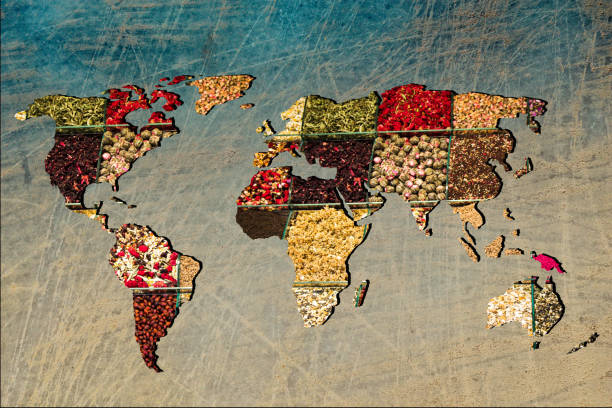
Food security has four widely recognized dimensions: food availability, economic and physical access, proper utilization, and stability over time. A country may produce enough food nationally and still experience food insecurity if households cannot afford nutritious food, reach markets, store food safely, or maintain access during a crisis.
Food availability refers to whether sufficient food is produced, imported, or stored. Food access concerns whether households can physically reach and economically afford that food. Utilization includes food safety, nutritional quality, clean water, sanitation, and the ability of the body to absorb nutrients. Stability means that availability, access, and utilization must continue over time rather than disappearing during a seasonal shortage or sudden crisis.
Population growth means an increase in the number of people living in a country, region, or the world. According to the United Nations World Population Prospects 2024, the global population reached about 8.2 billion in 2024 and is projected to approach 9.7 billion by 2050. Growth is not occurring at the same rate everywhere, and its food-security impact depends heavily on local resources, incomes, infrastructure, agricultural productivity, and government capacity.
A larger population therefore increases the scale of the food-security challenge, but it does not determine the outcome by itself. Well-managed food systems can support population growth, while weak systems may struggle even where population growth is relatively slow.
How Does Population Growth Affect Food Security?
The relationship between population growth and food security has often been discussed through Malthusian theory. This theory suggested that human populations could grow faster than food production, eventually leading to shortages, poverty, and famine. Modern agricultural technology, international trade, higher crop yields, and improved transportation have prevented this prediction from occurring in a simple or universal way.
However, the theory still highlights an important risk: when food production, infrastructure, household income, and access fail to improve as quickly as population demand, food insecurity can become more severe.
Population growth affects food security through seven main channels:
- Higher Food Demand
More people require a larger and more reliable supply of grains, vegetables, fruit, dairy products, meat, and other foods. Demand may rise faster than domestic production in countries with limited farmland, water, agricultural investment, or import capacity.
Rising incomes and urbanization may also change diets. Consumers often demand more animal protein, processed foods, fruit, vegetables, and convenience products, increasing pressure on farming, processing, storage, and transportation systems.
- Greater Pressure on Farmland
Expanding cities, roads, housing, and industry may compete with agriculture for productive land. In densely populated rural areas, farms may also become divided into smaller plots that are harder to operate efficiently.
Attempting to expand agricultural land without careful planning can contribute to deforestation, habitat loss, soil degradation, and declining long-term productivity. Protecting productive farmland and improving output on existing farms are therefore essential.
- Increased Competition for Water
A growing population raises water demand from households, farms, industry, and energy production. Agriculture is especially exposed because irrigation depends on reliable freshwater supplies.
Water scarcity can restrict planting decisions, reduce crop yields, increase livestock costs, and make farmers more dependent on rainfall. Excessive groundwater pumping may temporarily support production but weaken future water security.
- Heavier Pressure on Food Infrastructure
Higher demand requires more storage facilities, processing capacity, refrigerated transport, roads, wholesale markets, and retail outlets. When infrastructure does not expand, food losses and distribution bottlenecks can increase.
A country may produce enough food at the farm level but still experience local shortages if crops cannot be dried, stored, processed, transported, or delivered to consumers efficiently.
- Greater Risk of Food-Price Pressure
When food supplies, imports, and distribution fail to keep pace with demand, prices may rise. Low-income households are affected first because they spend a larger share of their income on food.
Higher prices may force families to purchase smaller quantities, choose less nutritious foods, reduce dietary diversity, or sacrifice other necessities such as housing, healthcare, and education.
- Faster Urban Food Demand
Urban population growth concentrates large numbers of consumers who depend on purchased food rather than producing it themselves. This increases the importance of reliable supply chains, affordable markets, and household purchasing power.
Urban consumers may be especially vulnerable to inflation, fuel-price increases, transportation disruptions, unemployment, or interruptions affecting wholesale and retail markets.
- Greater Vulnerability to Shocks
Population growth can magnify the effects of drought, flooding, conflict, crop disease, inflation, or trade disruption when food reserves and emergency systems are already weak.
A shock that might otherwise cause a temporary shortage can develop into a serious food-security crisis when a large population depends on limited suppliers, crowded markets, weak infrastructure, or unaffordable imports.
These effects are not unavoidable. Countries can reduce them by improving farm productivity, protecting land and water, reducing food loss, diversifying imports, strengthening infrastructure, and helping households maintain access to affordable food.
How Does Population Growth Affect Food Production?
Population growth can affect food production positively or negatively. Rising demand may encourage investment in irrigation, agricultural research, machinery, improved seeds, processing, and transportation. It can also create larger markets for farmers.
However, problems develop when demand grows faster than productive capacity. Expanding settlements may convert farmland to nonfarm uses, small farms may become increasingly fragmented, and heavier water use may deplete rivers and groundwater. Farmers may also face higher costs for land, labor, energy, fertilizer, feed, and transportation.
The key comparison is between population growth and growth in food output. If agricultural production rises more slowly than the population, the amount of domestically produced food available per person may decline unless imports or food reserves close the gap. If yields, water productivity, storage, trade, and loss reduction improve faster than demand, a growing population can remain food secure.
Land and water management are especially important. Agriculture already accounts for more than 70% of global freshwater withdrawals, while much of the world’s agricultural land is affected by human-induced degradation. Producing more food therefore requires improving output per unit of land and water rather than relying only on agricultural expansion.
Challenges of Food Production in Developing Countries
The effects of population growth can be especially difficult to manage in developing countries where many farmers operate small farms and have limited access to credit, irrigation, machinery, improved seeds, storage, insurance, and reliable transportation.
Rapid population growth may divide farms into increasingly small holdings while expanding cities compete for productive land. Weak roads and storage systems can cause food to be lost after harvest, even when farms produce adequate quantities.
Developing countries may also depend heavily on imported fertilizer, fuel, machinery, animal feed, or staple foods. Currency depreciation and global price increases can therefore raise both farming costs and consumer food prices.
Agricultural development in these countries requires support for small-scale farmers, better rural infrastructure, improved access to markets and finance, agricultural extension services, secure land rights, and technologies that match local conditions.
Can Population Growth Cause Famine?
Population growth can increase pressure on a vulnerable food system, but it does not cause famine by itself. Famine occurs when people experience an extreme collapse in access to food, often because of conflict, displacement, crop failure, blocked trade or humanitarian aid, severe economic shocks, or a combination of these factors.
A larger population can intensify the damage when food reserves, incomes, transport systems, and government responses are already weak. More households may compete for limited supplies, prices may rise rapidly, and emergency assistance may become harder to deliver. However, a country can also produce enough food overall while some communities still face hunger because they cannot afford or physically obtain it.
Population growth is therefore best understood as a pressure multiplier rather than a direct cause of famine. Conflict, extreme weather, economic shocks, forced displacement, and severe interruptions to food access are usually the immediate drivers of famine and acute food insecurity.
Population Growth, Urbanization, and Food Access
Urban population growth changes both food demand and the way people obtain food. Rural households may produce part of what they eat, while most urban households depend on wages, retailers, and continuous market access. As a result, food prices, transportation costs, and household income become central to urban food security.
Rapid urban expansion may also convert productive farmland near cities into housing, roads, and commercial development. Longer supply chains then require reliable highways, wholesale markets, processing facilities, cold storage, and last-mile distribution. Weak infrastructure can increase food losses and make fresh, nutritious foods more expensive.
Urbanization can also create opportunities. Dense markets may support efficient distribution, food processing, digital ordering, and investment in storage. Cities can improve food security through careful land-use planning, accessible food markets, better public transportation, cold-chain infrastructure, food-waste reduction, and peri-urban agriculture where it is practical.
The effects of urbanization extend beyond the amount of food required. Urban lifestyles can change consumer preferences toward processed foods, meat, dairy products, prepared meals, and year-round access to perishable products. Food systems must adapt to these changes without making healthy diets less affordable.
Climate Change and Population Growth: Combined Pressure on Food Security
Population growth and climate change create a combined food-security challenge: demand increases while the reliability of production may decline. Heat, drought, flooding, changing rainfall, wildfire, and new pest pressures can reduce yields, damage livestock, interrupt transportation, and make harvests less predictable.
The greatest risk occurs where rapidly growing populations depend on rain-fed agriculture, degraded soils, scarce water, or a narrow range of crops. Low-income households are especially vulnerable because even a modest harvest loss or price increase can reduce their ability to buy nutritious food.
Climate change may also intensify soil degradation, water scarcity, livestock heat stress, crop diseases, and competition for productive land. Repeated weather shocks can prevent farming households from rebuilding savings, replacing livestock, purchasing inputs, or investing in future production.
Climate-resilient responses include drought- and heat-tolerant crops, improved soil management, efficient irrigation, diversified farm production, better weather information, crop insurance, and storage systems that protect supplies after harvest. These measures improve food-system stability rather than merely increasing production in a single season.
Climate-smart agriculture can also include agroforestry, conservation agriculture, water harvesting, soil conservation, integrated crop and livestock systems, and farming practices that reduce erosion and improve soil moisture.
Dietary diversity is another part of resilience. Depending heavily on one crop can expose consumers and farmers to disease, weather, or market shocks. A broader mix of crops and food sources can strengthen nutritional and economic resilience.
Global Trade and Food-Supply Dependence
Global trade can improve food security by allowing food-surplus regions to supply countries with limited land, water, or domestic production. Imports can also help stabilize supplies after droughts, floods, or poor harvests.
Trade gives consumers access to a wider variety of foods throughout the year and allows agricultural producers to reach larger markets. It can also help countries balance seasonal differences in production and obtain products that cannot be grown efficiently under local conditions.
However, excessive dependence on a small number of suppliers, shipping routes, or imported commodities creates risk. Currency depreciation, export restrictions, conflict, port disruptions, and higher transportation costs can quickly raise domestic food prices.
Globalization can also affect control over farmland and agricultural resources. Large-scale land acquisitions may provide investment and infrastructure, but weak safeguards can displace local farmers or reduce community access to productive land and water.
Small-scale farmers may struggle to compete with large producers or imported food unless they have access to finance, technology, storage, transportation, fair markets, and reliable information.
Fair trade practices, transparent contracts, secure land rights, and policies that protect farmers from unfair market power can improve the benefits of globalization. Gender-sensitive policies are also important because women play major roles in farming, food processing, marketing, and household nutrition but may have less access to land, credit, training, and technology.
Food security does not require every country to produce every food domestically. A more resilient approach combines productive local agriculture with diversified import sources, adequate reserves, dependable infrastructure, transparent trade rules, and support for households during price shocks.
Solutions: How Food Systems Can Meet Growing Demand
Meeting the food needs of a growing population requires more than producing additional calories. Food systems must also keep nutritious food affordable, reduce losses, protect natural resources, and remain reliable during climate, economic, and political shocks.
The most practical responses include:
- Raising Sustainable Farm Productivity
Agricultural research, farmer training, improved seeds, better animal health, precision agriculture, and appropriate mechanization can increase output without requiring the same rate of expansion in farmland.
Investment in agricultural research and development can produce higher-yielding, disease-resistant, drought-tolerant, and climate-resilient crops. Agricultural extension services are needed to help farmers use these technologies effectively.
- Improving Water and Soil Management
Efficient irrigation, soil conservation, crop rotation, cover crops, and better nutrient management help protect the resources on which future production depends.
Farmers can also use water monitoring, drip irrigation, conservation tillage, agroforestry, organic amendments, and improved drainage to maintain productivity while reducing pressure on natural resources.
- Reducing Food Loss and Waste
Better harvesting, drying, storage, refrigeration, processing, packaging, and transportation can increase the amount of food reaching consumers without increasing planted area.
Reducing losses is particularly important in areas where farmers lack suitable storage or cold chains. At the consumer and retail levels, improved planning, labeling, donation systems, and waste management can reduce unnecessary disposal.
- Strengthening Food Infrastructure
Roads, ports, wholesale markets, cold chains, processing facilities, and reliable energy systems help move food from farms to consumers efficiently and safely.
Infrastructure investments can also connect small-scale farmers with profitable markets and reduce regional shortages by allowing supplies to move more quickly between surplus and deficit areas.
- Protecting Food Affordability
Employment, adequate incomes, targeted food assistance, school meals, and temporary support during price shocks help households maintain access to nutritious food even when supplies are available but expensive.
Policies should consider the cost of a healthy diet rather than focusing only on the availability of staple calories. Nutrition programs can help protect children, pregnant women, older adults, and other vulnerable groups.
- Diversifying Production and Trade
A diverse mix of crops, suppliers, transport routes, and import markets reduces dependence on a single harvest, country, or commodity.
Countries can combine domestic production, regional trade, strategic reserves, and diversified international suppliers rather than relying entirely on either food self-sufficiency or imports.
- Using Technology Where It Solves a Specific Problem
Vertical farming, protected agriculture, genetically modified crops, precision farming, biotechnology, digital advisory services, lab-grown food, and controlled-environment systems may help address particular production challenges.
However, these technologies should be evaluated according to cost, energy use, water savings, nutritional value, accessibility, and local farming conditions. No single technology can solve every food-security problem.
- Supporting Small-Scale Farmers and Women
Small-scale farmers need access to land, credit, insurance, training, inputs, storage, cooperatives, and markets. Supporting them can strengthen local production, rural incomes, and community food security.
Women should have equal access to agricultural resources, finance, extension services, education, technology, and decision-making. Removing these barriers can improve farm productivity and household nutrition.
- Preparing for Climate and Market Shocks
Governments can strengthen early-warning systems, crop insurance, emergency food reserves, market monitoring, disaster planning, and social-protection programs.
These measures help prevent droughts, floods, price increases, or supply disruptions from developing into severe food-security emergencies.
- Improving Long-Term Population and Development Planning
Governments can improve long-term planning through education, healthcare, reliable population data, and voluntary reproductive-health services.
These measures can help households make informed decisions and allow governments to plan for future needs in food, housing, employment, education, infrastructure, and healthcare. However, they cannot replace investment in agriculture, affordability, and resilient food systems.
Conclusion: Population Growth Does Not Have to Mean Hunger
Population growth is a pressure multiplier, not a guarantee of food scarcity. Food insecurity develops when production, affordability, access, and stability fail to keep pace with demand.
The challenge is not limited to producing more food. Food must also be nutritious, affordable, safely stored, efficiently distributed, and consistently accessible to households. Conflict, climate change, poverty, weak infrastructure, market disruption, and unequal access to resources can all turn population pressure into a food-security crisis.
Food systems can support growing populations when countries raise productivity sustainably, protect soil and water, reduce losses, strengthen transportation and storage, diversify trade, support small-scale farmers, and protect household purchasing power.
Innovation, international cooperation, inclusive policies, and continued agricultural development can help ensure that population growth does not lead to widespread hunger. The central challenge is whether food systems can deliver enough safe, nutritious, and affordable food to everyone consistently.