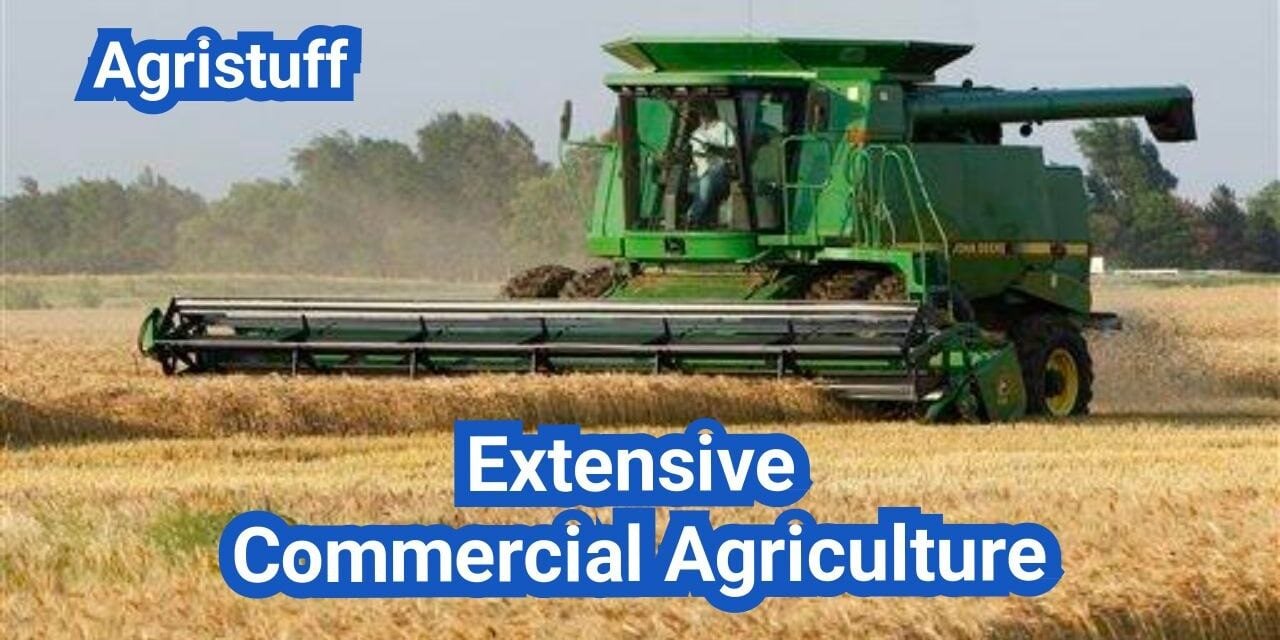
Modern food production relies on diverse methods to feed a growing population. One primary system involves managing vast tracts of land with minimal labor and input per acre. This farming model prioritizes total output over high yields on small plots, making it a vital component of the United States food supply chain.
Understanding the meaning of extensive commercial agriculture requires looking at how large-scale grain production and livestock ranching function. Farmers in the Great Plains often utilize heavy machinery to cover massive areas, balancing low costs against risks like drought or market price shifts. This approach differs significantly from intensive methods that focus on maximizing production through high chemical or labor density.
By examining how this system works, we can better appreciate the balance between sustainable land management and economic profitability. Whether dealing with soil quality or transportation logistics, these operations remain essential for global stability.
Key Takeaways
- This method focuses on large land areas rather than high-intensity inputs.
- Mechanization plays a critical role in managing vast fields with limited labor.
- Profitability depends on balancing low costs against environmental and market risks.
- The U.S. Great Plains serves as a primary example of large-scale grain production.
- Sustainable management is necessary to maintain soil health over long periods.
What is Extensive Commercial Agriculture?
At its heart, extensive commercial agriculture relies on vast acreage rather than intensive labor. This system prioritizes large-scale land use to generate significant output for national and global markets. Understanding the meaning of extensive commercial agriculture involves recognizing how farmers balance low input levels with massive spatial reach.
Core Concepts and Scope
The primary goal of this farming model is to produce commodities efficiently across expansive fields. Unlike small-scale operations, this approach minimizes the use of chemical fertilizers and manual labor per acre. Instead, it leverages the sheer size of the property to achieve consistent production levels.
This method is distinct from subsistence farming, which focuses on local survival. Extensive commercial agriculture is strictly market-driven, aiming to supply industries with grains, livestock, or raw materials. By spreading costs over a larger area, producers maintain viability even when profit margins per unit are thin.
The Economic Philosophy of Extensive Farming
The economic backbone of this system is the concept of economies of scale. Rather than trying to squeeze every possible ounce of yield from a small plot, farmers focus on total aggregate output. This strategy allows for lower overhead costs relative to the total land managed.
The following table highlights the fundamental differences between various agricultural approaches to help clarify the operational focus of this system.
| Feature | Extensive Farming | Intensive Farming |
|---|---|---|
| Land Size | Very Large | Small to Medium |
| Labor Input | Low per Acre | High per Acre |
| Primary Goal | Total Volume | Yield per Unit |
| Capital Focus | Machinery/Land | Chemicals/Labor |
By prioritizing efficiency through scale, extensive commercial agriculture remains a cornerstone of modern food security. It allows for the mass production of essential crops in regions where land is abundant but labor or water resources might be limited.
Key Characteristics of the Farming System

Geographic scale and resource allocation define the core nature of Extensive Commercial Agriculture. This model thrives in regions where land is abundant and relatively inexpensive, allowing for operations that span thousands of acres. By focusing on vast territories, producers can achieve economies of scale that are impossible in smaller, more confined settings.
Spatial Distribution and Land Use
The primary spatial requirement for this system is access to large, flat, or gently rolling terrain. These landscapes are ideal for the deployment of heavy machinery, which is essential for managing such expansive fields. Topography plays a critical role in determining the efficiency of planting and harvesting cycles across these massive properties.
Land use in this context is defined by several distinct factors:
- Low population density: Farms are often located in remote areas where land is not competing with urban development.
- Mechanization-friendly terrain: Flat plains allow tractors and combines to operate in long, uninterrupted rows.
- Climate compatibility: Large tracts are typically situated in regions with predictable weather patterns suitable for monoculture.
Capital Intensity and Labor Ratios
A defining feature of the key characteristics of the farming system is the low ratio of labor and capital investment per acre. While the total investment in machinery is high, the cost is spread across such a vast area that the per-acre burden remains low. This efficiency allows farmers to remain profitable even when market prices for commodities fluctuate.
“The strength of extensive farming lies in the ability to maximize output through technology rather than manual labor, ensuring that every acre contributes to the bottom line without excessive overhead.”
— Agricultural Economics Review
Because these operations are highly automated, they require fewer workers compared to intensive farming methods. This lean labor model is a strategic choice that helps maintain the financial viability of large-scale grain and livestock production. By prioritizing machinery over human intervention, producers can manage thousands of acres with a surprisingly small, highly skilled team.
How Extensive Commercial Agriculture Works
To grasp how extensive commercial agriculture works, one must examine the systematic approach used to manage vast tracts of land. This farming model relies on a precise sequence of planning and execution phases to maintain productivity across thousands of acres. By prioritizing efficiency, farmers can optimize their output while keeping labor and input costs relatively low.
Step 1: Assessing Land Suitability
The first phase involves a rigorous evaluation of the terrain and soil quality. Farmers must ensure the land can support heavy-duty machinery, which is essential for large-scale operations. Proper drainage and soil composition are critical factors that determine whether a specific plot is viable for long-term cultivation.
Step 2: Establishing Operational Scale
Once the land is deemed suitable, the focus shifts to defining the operational scale. Extensive Commercial Agriculture requires a massive footprint to be economically viable, as profit margins per acre are often thin. Operators must calculate the exact acreage needed to justify the high capital investment in specialized equipment and technology.
Step 3: Managing Seasonal Cycles
Effective management of seasonal cycles is the heartbeat of this agricultural system. These cycles dictate the precise windows for planting, grazing, and harvesting, ensuring that resources are used at peak efficiency. By aligning farm activities with local climate patterns, producers can mitigate risks and maximize their total harvest.
| Operational Phase | Primary Focus | Key Objective |
|---|---|---|
| Land Assessment | Soil and Terrain | Machinery Compatibility |
| Scale Planning | Acreage Allocation | Economic Viability |
| Seasonal Management | Timing Cycles | Yield Optimization |
Evaluating Land, Soil, Climate, and Rainfall Requirements

Extensive commercial agriculture relies heavily on the careful assessment of local environmental conditions. Because these operations cover vast areas, farmers must work in harmony with the natural landscape rather than trying to force high-intensity changes upon it. Understanding the specific land, soil, climate, and rainfall requirements of a region is the foundation of long-term operational success.
Soil Quality and Nutrient Management
In large-scale farming, maintaining soil health is often achieved through natural processes rather than heavy chemical intervention. Farmers prioritize soil structure and organic matter to ensure the land remains productive over many decades. By rotating crops and utilizing fallow periods, they allow the earth to recover its nutrient profile naturally.
Monitoring nutrient levels is a critical task for any manager overseeing expansive acreage. Instead of relying on synthetic fertilizers, many producers use precision testing to identify specific deficiencies. This strategic approach minimizes costs while protecting the long-term viability of the soil.
Climate Constraints and Precipitation Needs
The success of an operation is often dictated by the local climate and rainfall requirements. In regions where water is scarce, farmers must carefully select drought-resistant crop varieties or adjust their livestock density to match the available forage. Water management becomes the primary driver of profitability in these arid or semi-arid environments.
Seasonal weather patterns determine the timing of planting and harvesting cycles. Producers must remain flexible, as unpredictable precipitation can significantly impact total output. By aligning their farming schedule with historical weather data, they mitigate the risks associated with environmental variability.
Managing Large Farm Sizes and Low Input per Acre
Achieving profitability in modern farming often involves mastering the art of large farm sizes and low input per acre. This approach allows producers to maintain a competitive edge by focusing on operational scale rather than maximizing yield on every single square foot. By utilizing Extensive Commercial Agriculture, farmers can effectively manage vast geographic areas while keeping overhead costs under strict control.
Strategies for Managing Vast Acreage
Managing thousands of acres requires a shift toward precision technology and streamlined workflows. Modern operators rely heavily on GPS-guided machinery to ensure that every pass across the field is optimized for fuel and time efficiency. This reduces the need for constant human oversight, allowing a small team to cover significant territory during critical planting and harvesting windows.
Furthermore, farmers often implement rotational grazing or fallow periods to maintain soil health without the need for excessive chemical fertilizers. By working with the natural rhythm of the land, managers can reduce the frequency of intervention. This strategic patience is a hallmark of successful large-scale operations in the United States.
The Economics of Low-Input Farming
The economic logic behind this model is simple: lower costs per acre lead to higher resilience against market volatility. When input costs are kept at a minimum, the farm remains profitable even during years with lower commodity prices or moderate weather challenges. This financial buffer is essential for the long-term sustainability of Extensive Commercial Agriculture.
Efficiency is gained by spreading fixed costs, such as machinery maintenance and land taxes, across a much larger production base. This scale-based advantage ensures that the business remains viable even when profit margins per unit are relatively thin. The following table highlights the primary differences between management styles.
| Management Factor | Low-Input Approach | High-Input Approach |
|---|---|---|
| Primary Focus | Operational Scale | Yield per Acre |
| Capital Intensity | Moderate | Very High |
| Labor Requirement | Low | High |
| Risk Profile | Market-Driven | Input-Cost Driven |
Ultimately, the ability to balance large farm sizes and low input per acre defines the success of modern agricultural enterprises. By prioritizing efficiency and scale, producers can navigate the complexities of the global market while maintaining a stable and productive operation.
Optimizing Machinery, Labor, and Mechanization

The backbone of modern agricultural productivity is the seamless synergy between heavy machinery and skilled labor. In the context of Extensive Commercial Agriculture, the ability to cover vast landscapes efficiently determines the overall success of the operation. Farmers must carefully align their mechanical assets with their specific land requirements to ensure maximum output.
“Efficiency is doing things right; effectiveness is doing the right things,” noted management expert Peter Drucker. This principle applies perfectly to the field, where choosing the correct tools prevents waste and boosts long-term profitability.
Selecting Heavy-Duty Agricultural Equipment
Selecting the right equipment is a critical investment for any large-scale farm. Modern operations rely on high-capacity tractors, combines, and seeders that can handle thousands of acres within narrow planting or harvesting windows. These machines are often equipped with GPS-guided precision technology to minimize overlap and reduce fuel consumption.
Durability remains a top priority when selecting heavy-duty gear. Because these machines operate under intense conditions for long hours, they must be built to withstand significant wear and tear. Investing in high-quality, reliable brands ensures that downtime is kept to an absolute minimum during peak seasons.
Labor Efficiency in Large-Scale Operations
The integration of machinery, labor, and mechanization allows a small team to manage massive landholdings effectively. By automating repetitive tasks, farm owners can significantly reduce their reliance on a large manual workforce. This shift not only lowers overhead costs but also increases the precision of field operations.
The following table illustrates how modern mechanization impacts operational efficiency compared to traditional methods:
| Metric | Traditional Farming | Mechanized Farming |
|---|---|---|
| Labor Requirement | High | Low |
| Operational Speed | Slow | Very Fast |
| Precision Level | Manual/Variable | High/GPS-Guided |
Ultimately, the goal of Extensive Commercial Agriculture is to leverage technology to achieve higher yields with fewer inputs. By focusing on the strategic deployment of machinery, labor, and mechanization, producers can maintain a competitive edge in a global market. This approach ensures that even the largest farms remain sustainable and profitable for years to come.
Analyzing Commercial Grain Production in the U.S. Great Plains
Few regions demonstrate the power of Extensive Commercial Agriculture as clearly as the American Great Plains. This vast expanse of land serves as a primary example of how geography and technology combine to support global food security.
By utilizing massive tracts of land, farmers in this region have turned the heart of the country into the world’s primary breadbasket. These operations rely on high-efficiency systems that maximize output while managing the unique environmental challenges of the plains.
Historical Context of the Great Plains
The transformation of the Great Plains began in the late 19th century as settlers moved westward. Initially, the region was dominated by native grasses, but the introduction of mechanized plows and hardy wheat varieties changed the landscape forever.
This shift marked the birth of large-scale farming in the United States. Over time, the region evolved from small homesteads into the highly organized, commercial grain production in the u.s. great plains that we recognize today.
Modern Wheat and Corn Production Cycles
Modern farming in the plains follows a strict seasonal rhythm designed to optimize growth. Winter wheat is typically planted in the fall, allowing it to establish roots before entering dormancy during the colder months.
In contrast, corn production requires a spring planting schedule to take advantage of the summer heat and moisture. These cycles are carefully managed through precision agriculture, ensuring that every acre reaches its full potential.
| Metric | Historical Farming | Modern Farming |
|---|---|---|
| Primary Tool | Horse-drawn Plow | GPS-Guided Tractor |
| Labor Needs | High Manual Input | Low Labor, High Tech |
| Output Scale | Subsistence Level | Global Export Level |
| Efficiency | Low | Very High |
The integration of these cycles into an Extensive Commercial Agriculture framework allows producers to remain profitable despite market volatility. By balancing these seasonal demands, the Great Plains continue to provide a stable supply of essential grains to the global market.
Exploring Extensive Crop Farming and Livestock Ranching Examples

Practical extensive crop farming and livestock ranching examples reveal the efficiency of large-scale land management. These systems rely on vast tracts of land to maintain profitability through low-input methods. By observing these operations, we can better understand how Extensive Commercial Agriculture adapts to diverse environmental conditions.
Case Study: Large-Scale Wheat Farming
In the high plains of the United States, wheat farming serves as a primary model for extensive operations. Farmers manage thousands of acres by utilizing high-capacity machinery to minimize labor costs per bushel. Logistical precision is essential here, as planting and harvesting must occur within narrow seasonal windows to ensure success.
The reliance on heavy-duty equipment allows a small crew to oversee massive fields effectively. This approach highlights the scalability of modern grain production. By focusing on total acreage rather than maximum yield per square foot, these farms remain economically viable despite fluctuating market prices.
Case Study: Cattle Ranching in Arid Regions
Cattle ranching in arid environments provides another clear look at Extensive Commercial Agriculture in practice. In regions where rainfall is scarce, vegetation is often sparse and spread thin across the landscape. Ranchers must move their herds across expansive territories to ensure animals have access to sufficient forage.
This rotational grazing strategy prevents overgrazing and promotes long-term land health. It is a dynamic process that requires constant monitoring of water sources and pasture quality. These extensive crop farming and livestock ranching examples demonstrate that success in challenging climates depends on working with the natural limitations of the land rather than fighting against them.
Comparing Yield per Acre Versus Total Farm Output
Extensive Commercial Agriculture relies on a unique economic model that prioritizes total volume over density. While many observers focus on how much a single acre produces, successful operators look at the bigger picture. Understanding the relationship between these metrics is essential for grasping how massive agricultural enterprises remain profitable.
Why Yield per Acre is Lower
In this farming system, the yield per acre is intentionally lower compared to intensive methods. Farmers manage vast tracts of land where applying high levels of fertilizer or labor to every square foot is not cost-effective. This approach accepts lower density to keep operational expenses manageable across thousands of acres.
By spreading resources thin, producers avoid the diminishing returns that often plague high-intensity plots. The focus remains on efficiency of scale rather than maximizing the output of a small, localized area. Consequently, the gap in yield per acre versus total farm output becomes a strategic choice rather than a failure of production.
The Importance of Aggregate Farm Output
For large-scale operations, aggregate output serves as the true measure of success. Even if a single acre produces less grain, the massive total acreage ensures that the final harvest volume is substantial. This high volume allows farmers to compete effectively in global commodity markets.
Economies of scale play a critical role in this financial strategy. When fixed costs like machinery and land taxes are spread over a larger total output, the cost per unit of production drops significantly. This makes the business model highly resilient, even when market prices fluctuate.
Ultimately, the goal is to maximize the total profit generated by the entire farm. By prioritizing aggregate volume, producers can sustain long-term growth and maintain profitability across diverse environmental conditions. This shift in perspective is what defines the success of modern, large-scale agricultural enterprises.
Distinguishing Extensive vs. Intensive Commercial Agriculture

The distinction between extensive vs. intensive commercial agriculture shapes the global food supply chain and dictates how farmers manage their resources. While both systems aim for profitability, they rely on vastly different strategies to achieve their production goals.
Understanding these differences is essential for any producer looking to optimize their land use. By analyzing how capital, labor, and technology interact, we can better appreciate the unique requirements of each farming model.
Input-Output Ratios Explained
In intensive systems, the primary goal is to maximize yield per acre through high levels of input. This often involves significant investments in fertilizers, pesticides, and specialized labor to ensure every square foot of land is productive.
Conversely, Extensive Commercial Agriculture focuses on maximizing total output across vast tracts of land. Rather than pushing the soil to its absolute limit, this method relies on economies of scale and lower inputs per unit of area.
- Intensive: High labor and capital investment per acre.
- Extensive: Lower labor and capital investment per acre.
- Technology: Intensive uses precision tools; extensive uses large-scale machinery.
When to Choose Extensive Over Intensive Methods
Choosing the right system depends heavily on local economic and environmental conditions. Farmers must evaluate their specific constraints before committing to a long-term strategy.
Land cost is often the deciding factor. In regions where land is abundant and inexpensive, Extensive Commercial Agriculture is usually the most viable path. However, in areas with high land prices and limited space, intensive methods become necessary to justify the investment.
| Feature | Extensive Farming | Intensive Farming |
|---|---|---|
| Land Requirement | Very Large | Small to Medium |
| Capital Intensity | Low per Acre | High per Acre |
| Labor Needs | Minimal | High |
| Primary Goal | Total Farm Output | Yield per Acre |
Calculating Production Costs and Profitability Factors
Achieving long-term success in agriculture depends on balancing high initial investments with unpredictable market returns. Farmers must master the art of financial planning to ensure their operations remain viable over time. Understanding production costs and profitability factors is the first step toward building a resilient business model.
Fixed Costs in Large-Scale Operations
Fixed costs represent the foundational investment required to launch and maintain a farm. These expenses remain constant regardless of the actual harvest volume or seasonal output. Land acquisition and the purchase of heavy-duty machinery are the most significant components of this category.
Because these assets require substantial capital, farmers often rely on long-term financing or debt servicing. Managing these fixed obligations is critical, as they do not fluctuate with the success of a single growing season. Maintaining a healthy debt-to-equity ratio helps stabilize the operation against lean years.
Variable Costs and Market Volatility
In contrast to fixed expenses, variable costs shift based on the scale of production and current market conditions. These include essential inputs such as fuel, fertilizers, seeds, and seasonal labor. In the context of Extensive Commercial Agriculture, even small changes in input prices can significantly impact the bottom line.
Farmers must also contend with the inherent volatility of global commodity markets. Prices for wheat, corn, and other staples often fluctuate due to international trade policies and global supply chain shifts. Careful monitoring of these market-driven inputs allows producers to adjust their strategies in real-time to protect their profit margins.
| Cost Category | Primary Examples | Impact on Profit |
|---|---|---|
| Fixed Costs | Land, Tractors, Combines | High long-term pressure |
| Variable Costs | Fuel, Seeds, Fertilizer | Direct seasonal influence |
| Market Risks | Commodity Price Swings | High revenue uncertainty |
Costs and ROI snapshot
Land is a major cost driver in Extensive Commercial Agriculture, but U.S. averages hide enormous regional differences. In 2025, USDA reported average cropland value of $5,830 per acre, pasture value of $1,920, non-irrigated cropland cash rent of $147, and pasture cash rent of $15.50; local productivity, water, access, improvements, and development pressure can move actual figures far above or below those benchmarks USDA NASS 2025 land values and cash rents.
Crop budgets show why low-input-per-acre does not mean cheap production in Extensive Commercial Agriculture. One 2025 south-central Kansas non-irrigated wheat illustration estimated about $413 per acre in direct expenses and $184 in fixed expenses, or $595 total; that example is not a national quote, but it shows how machinery ownership, land, interest, labor, seed, fertilizer, chemicals, insurance, and harvest costs can exceed crop revenue in a weak margin year Kansas State University wheat budget illustration.
Livestock costs in Extensive Commercial Agriculture vary with herd size, land arrangement, winter length, forage quality, replacement rate, purchased feed, veterinary program, and family labor. A USDA-based historical benchmark discussed by Oklahoma State University placed total economic cow-calf cost from $910 per cow for operations with 500 or more cows to $2,099 for herds of 20–49 cows; producers should treat those 2018 estimates as evidence of scale effects, not as current price quotes Oklahoma State University cow-calf cost analysis.
ROI in Extensive Commercial Agriculture improves when the operation raises saleable output without degrading the resource, reduces unnecessary passes or feed waste, spreads truly fixed costs, captures quality premiums, and markets deliberately. Calculate break-even price as total economic cost divided by expected units sold, include unpaid labor and owned-land opportunity cost, and compare scenarios using regional commodity cost-and-return data rather than relying on gross revenue alone USDA ERS commodity costs and returns.
Mitigating Drought, Transportation, and Commodity-Price Risks

Operating a large-scale farm requires more than just planting seeds; it demands a sophisticated approach to risk management. Extensive Commercial Agriculture is inherently exposed to external factors that can disrupt production cycles and erode profit margins. Producers must adopt proactive strategies to safeguard their assets against these unpredictable variables.
Managing Environmental and Climatic Risks
Water scarcity remains one of the most significant threats to large-scale operations. Prolonged drought conditions can devastate crop yields and deplete soil moisture levels across vast acreages. Farmers often mitigate this by investing in drought-resistant seed varieties and precision irrigation systems that maximize water efficiency.
Diversification of crop types also serves as a vital buffer against localized weather events. By spreading risk across different fields and planting schedules, operators ensure that a single dry spell does not result in total crop failure. Soil conservation techniques, such as no-till farming, further help retain moisture during critical growth stages.
Logistics and Transportation Challenges
Moving massive volumes of grain or livestock from remote fields to global markets presents significant transportation hurdles. The sheer distance involved in large-scale operations often leads to bottlenecks in the supply chain. Efficient logistics networks are essential to ensure that products reach buyers before quality degrades or market windows close.
Many successful operations invest in on-site storage facilities to gain better control over the timing of shipments. By holding inventory, farmers can bypass immediate post-harvest congestion at local elevators. This strategic autonomy allows for better coordination with rail and trucking partners to optimize delivery schedules.
Hedging Against Commodity Price Fluctuations
Market volatility is a constant concern for producers who operate on thin margins. Managing commodity-price risks requires a deep understanding of financial instruments like futures contracts and options. These tools allow farmers to lock in prices for their harvest well before the actual sale occurs.
By utilizing these hedging strategies, agricultural businesses can protect themselves against sudden market downturns. This financial stability is crucial for planning future investments in machinery and land. Ultimately, the ability to navigate these complex economic landscapes is what separates sustainable operations from those vulnerable to market shifts.
Implementing Environmental Effects and Sustainable Land Management

Extensive commercial agriculture requires a careful balance between high production and environmental stewardship. While these large-scale systems often operate with lower inputs per acre than intensive models, they still carry a significant ecological footprint. Farmers must prioritize environmental effects and sustainable land management to ensure their operations remain productive for decades to come.
Addressing Soil Erosion and Degradation
Soil is the most valuable asset in any farming operation. In regions where vast acreage is exposed to the elements, wind and water erosion pose a constant threat to topsoil integrity. Preventing degradation is not just an ecological goal; it is a financial necessity for maintaining yield consistency.
Many producers now utilize conservation tillage to keep the soil structure intact. By leaving crop residue on the surface, farmers can significantly reduce the impact of wind shear across open plains. These methods help retain moisture and prevent the loss of vital nutrients that are difficult to replace once depleted.
Sustainable Practices for Long-Term Viability
The long-term success of Extensive Commercial Agriculture depends on how well producers integrate natural cycles into their business models. Preserving native grasslands serves as a natural buffer against erosion and supports local biodiversity. These areas act as carbon sinks and provide essential habitat for pollinators and beneficial wildlife.
Water resource management is another critical pillar of sustainability. Implementing precision irrigation and monitoring groundwater levels helps prevent the depletion of local aquifers. By adopting sustainable land management, farmers can mitigate the risks associated with climate variability. Investing in these practices today ensures that the land remains a viable resource for future generations of agricultural producers.
Quick checklist
- Map soils, slopes, water sources, access roads, field distances, and sensitive areas.
- Confirm that the selected crop or livestock class fits the local climate and market.
- Use county-level yield, rent, and forage data rather than national averages alone.
- Build enterprise budgets with variable, fixed, opportunity, and financing costs.
- Calculate machinery capacity for planting, spraying, harvest, feeding, and emergencies.
- Set conservative yield or stocking assumptions and create a drought response plan.
- Price storage, trucking, basis, commissions, shrink, and quality discounts.
- Verify crop insurance, liability coverage, livestock coverage, and lease requirements.
- Schedule soil, forage, water, crop, and animal-health monitoring.
- Protect residue, riparian zones, native vegetation, and high-erosion areas.
- Define expansion triggers based on cash flow and return, not acreage alone.
Common mistakes to avoid
- Confusing low input per acre with low total cost: multiply every expense across the full acreage before committing.
- Buying a complete machinery fleet too early: compare ownership with custom hire, leasing, and sharing.
- Using average stocking rates blindly: base livestock numbers on site-specific usable forage and seasonal conditions.
- Ignoring field distance: include travel time, fuel, service vehicles, and delayed response in the budget.
- Leaving soil bare: retain residue and use rotations or cover where agronomically and economically suitable.
- Expanding during one strong price year: test debt service under normal and poor market scenarios.
- Depending on one outlet: understand alternative buyers, grades, delivery windows, and transportation constraints.
- Underestimating drought feed costs: identify reserve forage, destocking rules, and sale triggers before a shortage.
- Tracking yield but not profit: measure return per acre, per head, per labor hour, and on total invested capital.
Final thought
Extensive Commercial Agriculture works best when abundant land is paired with disciplined management rather than simply more acreage. Producers who match stocking or crop intensity to local resources, protect soil and forage, control fixed costs, monitor risk, and budget for full economic cost are better positioned to turn modest returns per acre into a resilient commercial farm or ranch USDA ERS report on the economics of soil-health and conservation practices.
FAQ
What is the primary meaning of extensive commercial agriculture?
The meaning of extensive commercial agriculture refers to a system of crop cultivation or livestock raising that uses small amounts of labor and capital relative to the high total area of land being farmed. It is a market-oriented system that relies on the natural fertility of the soil and favorable climates to produce large volumes of commodities for sale.
What are the key characteristics of the farming system?
The key characteristics of the farming system include massive farm sizes, a high level of machinery and mechanization, and low inputs of labor and fertilizers per acre. These farms are typically located in regions with low population density where land is relatively inexpensive, such as the U.S. Great Plains or the steppes of Central Asia.
Is extensive farming the same as primitive farming?
No. Extensive Commercial Agriculture may use sophisticated machinery, genetics, remote sensing, financial risk tools, and conservation planning even though inputs per acre are relatively low. Modern zero-till and diversified cereal systems demonstrate that reduced soil disturbance can involve advanced equipment and management rather than outdated technology USDA NRCS zero-till systems publication.
Which crops are most associated with this system?
Wheat, grain sorghum, barley, canola, sunflower, cotton, and some large-scale corn or soybean systems can fit Extensive Commercial Agriculture when they are produced over broad areas with comparatively low input intensity per acre. The actual crop mix depends on rainfall, heat units, soil, rotation needs, equipment, crop insurance availability, and nearby buyers USDA ERS agricultural production and price statistics.
How many acres does a farm need to be considered extensive?
There is no universal acreage minimum for Extensive Commercial Agriculture because carrying capacity and yield potential differ sharply by region. A ranch in an arid county may need many acres per animal, while a rain-fed grain farm can be extensive on a smaller footprint; acreage should therefore be interpreted alongside input intensity, output per acre, climate, and enterprise type USDA ERS farming and farm-income statistics.
Does extensive production automatically protect the environment?
No. Extensive Commercial Agriculture may maintain permanent grass cover and use fewer inputs per acre, but poor grazing, excessive tillage, nutrient loss, pesticide runoff, habitat conversion, and erosion can still occur. Environmental performance depends on site-specific practices, monitoring, legal compliance, and whether production stays within soil, vegetation, and water limits U.S. EPA agricultural nonpoint-source guidance.
Can a family farm operate at an extensive commercial scale?
Yes. Extensive Commercial Agriculture can be organized as a family farm, partnership, limited-liability company, or other legal form, and large acreage does not by itself identify who owns or manages the business. Large U.S. farms are frequently family-operated businesses that combine family management with hired labor, contracted services, rented land, or specialized ownership structures USDA ERS overview of family farming in the United States.
How does extensive commercial agriculture work on a daily basis?
Knowing how extensive commercial agriculture works involves seasonal cycles where technology replaces manual labor. Farmers use high-capacity equipment like John Deere tractors to seed and harvest thousands of acres quickly, focusing on total aggregate volume rather than the intensive care of individual plants.
What are the specific land, soil, climate, and rainfall requirements?
These systems have specific land, soil, climate, and rainfall requirements, often thriving in semi-arid or temperate regions with flat terrain. Because irrigation is often too costly for such large areas, these farms rely on natural precipitation patterns, making them sensitive to climate shifts and drought.
Why is there a focus on large farm sizes and low input per acre?
The focus on large farm sizes and low input per acre allows for significant economies of scale. By minimizing the cost of seeds, chemicals, and labor for every acre, the farmer can remain profitable even if the market price for the commodity is low, provided the total output is high enough.
How do machinery, labor, and mechanization drive this system?
In extensive farming, machinery, labor, and mechanization are the backbone of the operation. One operator using a modern combine harvester can do the work of hundreds of manual laborers, which is essential when managing the vast distances of a commercial grain operation.
Can you provide extensive crop farming and livestock ranching examples?
Common extensive crop farming and livestock ranching examples include the massive wheat farms in Western Canada and the sheep stations in Australia. In the United States, the cattle ranches of Wyoming and the wheat fields of Kansas are classic examples of this low-input, high-acreage model.
What is the difference between yield per acre versus total farm output?
When comparing yield per acre versus total farm output, extensive farms often have lower yields per individual acre than intensive farms. However, because they farm so much more land, their total farm output is often much higher, making them major players in the global food supply chain managed by firms like Cargill.
How do you compare extensive vs. intensive commercial agriculture?
Comparing extensive vs. intensive commercial agriculture centers on the ratio of inputs. Intensive agriculture uses high labor and capital on small plots (like a greenhouse), while extensive agriculture uses low labor and capital on massive plots (like a 5,000-acre grain farm).
What are the main production costs and profitability factors?
The main production costs and profitability factors include fuel for machinery, land taxes, and transportation. Profitability is often determined by the global market price of commodities like wheat or corn, which is why many farmers use the Chicago Board of Trade to manage financial risk.
How are drought, transportation, and commodity-price risks managed?
To mitigate drought, transportation, and commodity-price risks, farmers often use crop insurance and diversified planting schedules. Logistics are handled by specialized transport networks like Union Pacific rail lines to ensure products reach international markets efficiently.
What are the environmental effects and sustainable land management practices?
The environmental effects and sustainable land management in extensive farming focus on preventing soil erosion and exhaustion. Practices such as “no-till” farming and rotational grazing help maintain the ecological balance and ensure the long-term viability of the land.
Sources & References
- USDA Census of Agriculture
- USDA NASS Cash Rents Survey
- USDA Agricultural Resource Management Survey uses and publications
- USDA NRCS National Range and Pasture Manual
- USDA NRCS Prescribed Grazing conservation standard
- USDA NRCS Grazing Management and Soil Health
- USDA ARS adaptive strategies for U.S. grazing-land managers
- USDA Southern Plains Climate Vulnerability Assessment
- USDA Wind Erosion Prediction System technical documentation
- University of Nebraska crop budgets
- Oklahoma State University crop and livestock sample budgets
- USDA Federal Grain Inspection Service
- U.S. Geological Survey grassland management and restoration research
- University of Minnesota Extension economics of tillage
- USDA official grain inspection certificates
- USDA FSA guaranteed farm loan program