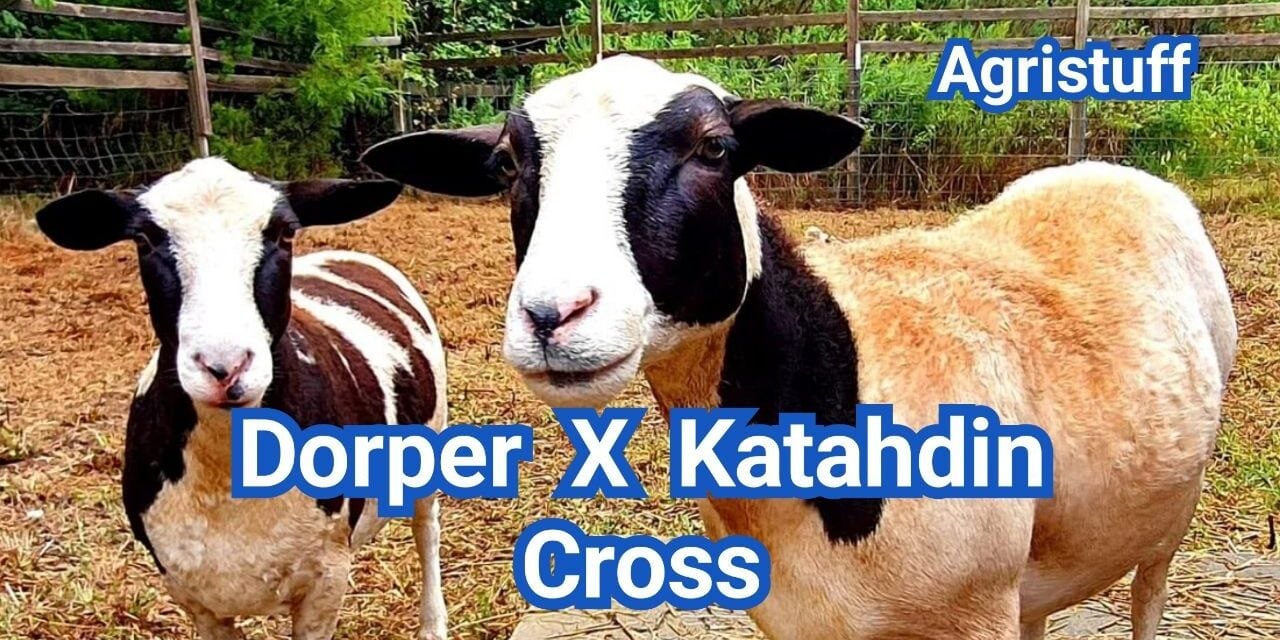
Many livestock producers in the United States seek animals that combine efficiency with low-maintenance care. The dorper katahdin cross has emerged as a top choice for those wanting productive hair breeds. These animals offer a unique blend of rapid weight gain and excellent maternal instincts.
By choosing a dorper–katahdin cross sheep, farmers often see improved parasite tolerance alongside superior meat quality. This katahdin dorper sheep hybrid thrives in diverse climates, making it a versatile asset for modern pastures. It balances the muscular build of one parent with the hardiness of the other.
However, results can vary based on individual genetics and local management styles. While this dorper katahdin cross sheep is highly regarded, success depends on proper nutrition and environmental conditions. Understanding these traits helps you make informed decisions for your flock.
Key Takeaways
- These hybrids provide a balance of rapid growth and maternal efficiency.
- Producers benefit from increased parasite resistance in various environments.
- Meat quality remains a primary advantage for commercial operations.
- Management practices significantly influence the performance of these animals.
- Genetic diversity ensures that flocks adapt well to local farm conditions.
What Is the Dorper Katahdin Cross?
The Dorper–Katahdin cross represents a strategic intersection of two popular hair sheep breeds. By merging these distinct genetic lines, producers aim to capture the best qualities of both parents in a single, efficient animal. This cross has become a cornerstone for many operations across the United States looking to improve overall flock productivity.
Definition of the Dorper–Katahdin Cross
An F1 Dorper–Katahdin cross is defined as the first-generation offspring resulting from a purebred Dorper parent and a purebred Katahdin parent. This specific mating is designed to leverage the unique strengths of each breed. Producers often choose this path to create a more versatile animal that thrives in diverse environmental conditions.
When working with dorper and katahdin sheep, the goal is to balance the heavy muscling of the Dorper with the maternal efficiency of the Katahdin. This combination creates a foundation for a highly functional commercial flock. It is a deliberate choice made by farmers who prioritize both meat production and ease of management.
How F1 Crossbred Lambs Differ From Purebred Sheep
It is important to recognize that dorper x katahdin lambs do not always look or perform exactly like their parents. Because these lambs receive a unique combination of genes, littermates can display significant variation in their physical appearance and growth rates. Some individuals may lean more toward the Dorper phenotype, while others will favor the Katahdin side.
“The true value of crossbreeding lies in the expression of hybrid vigor, which often results in performance levels that exceed the average of the two parent breeds.”
This genetic diversity is a natural outcome of the cross. While some variation is expected, the overall dorper katahdin cross traits generally provide a reliable boost in performance. Understanding this variability helps farmers manage their expectations and select the best animals for their specific needs.
Common Goals for Dorper and Katahdin Sheep Producers
Most producers utilize this cross to achieve specific production milestones. Whether the focus is on rapid market lamb growth or maintaining a low-input, parasite-resistant flock, the cross offers a flexible solution. The following table highlights the primary differences that drive these breeding decisions.
| Feature | Dorper Influence | Katahdin Influence |
|---|---|---|
| Primary Focus | Carcass and Muscling | Maternal and Hardiness |
| Growth Rate | High/Rapid | Moderate/Efficient |
| Parasite Tolerance | Lower | Higher |
| Dorper vs Katahdin traits | Meat Quality | Shedding Ability |
Ultimately, the pursuit of hybrid vigor in sheep is the primary driver for this cross. By carefully selecting parents, farmers can produce lambs that grow faster and survive better than purebreds in challenging environments. This strategic approach allows for a more profitable and sustainable sheep enterprise.
Why Producers Cross Dorper and Katahdin Sheep
Why do so many successful American sheep farmers turn to the Dorper-Katahdin cross? The primary motivation is to balance the unique strengths of two distinct breeds to optimize production. By utilizing a terminal sire system, producers can leverage the rapid growth of the Dorper, while a maternal ewe flock provides the essential hardiness and fertility needed for long-term sustainability.
Combining Growth, Muscling, Shedding, and Maternal Function
The goal of this cross is to produce high-quality animals that thrive in diverse environments. Dorper genetics contribute superior muscling and rapid weight gain, which are vital for meat production. Meanwhile, the Katahdin influence ensures the flock maintains excellent maternal instincts and the ability to shed winter coats effectively.
When these traits align, the resulting f1 crossbred lambs often exhibit better overall performance than either parent breed alone. This combination allows producers to meet market demands for heavy, well-muscled carcasses without sacrificing the ease of management associated with hair sheep.
Parent-Breed Complementarity in Commercial Flocks
Complementarity is the cornerstone of a successful crossbreeding program. It involves selecting parents that compensate for each other’s weaknesses. For instance, if a producer has ewes that are excellent mothers but lack growth speed, introducing a terminal sire can bridge that gap.
This strategy results in crossbred market lambs that reach target weights faster and more efficiently. By focusing on the specific strengths of each breed, farmers can create a more profitable and resilient commercial operation. It is about building a system where the sum is truly greater than its parts.
Hybrid Vigor in Sheep and Its Practical Limits
Hybrid vigor, or heterosis, refers to the boost in performance seen in crossbred offspring compared to the average of their parents. This phenomenon often manifests as improved lamb survival rates, faster growth, and increased fertility. However, it is not a magic solution for every problem.
Heterosis cannot overcome the negative impacts of poor nutrition, inadequate parasite control, or subpar management practices. Even the most genetically gifted animals will struggle if their environment does not meet their basic needs. Successful producers understand that hybrid vigor works best when supported by sound animal husbandry and a commitment to high-quality forage management.
Dorper vs. Katahdin Traits: A Concise Parent-Breed Comparison
Understanding the distinct genetic contributions of Dorper and Katahdin sheep is essential for any successful breeding program. Producers often look to these breeds to balance meat production with environmental adaptability. By analyzing their specific traits, you can better align your flock with your long-term goals.
Dorper Traits: Growth, Muscling, Carcass Shape, and Shedding
The Dorper breed is widely recognized for its exceptional growth rates and superior carcass conformation. These sheep typically provide a deep, well-muscled frame that is highly desirable in the meat market. Their ability to put on weight quickly makes them a top choice for terminal sire systems.
While many Dorpers are known for their shedding ability, this trait can vary significantly between individual animals. Consistency in shedding is often a primary focus for breeders working to maintain a low-maintenance flock. When selecting for these traits, keeping accurate lamb growth records helps ensure that the sire is meeting your production targets.
Katahdin Traits: Maternal Ability, Hair Coat, and Parasite Tolerance
Katahdin sheep are celebrated for their hardiness and maternal instincts. They are frequently utilized as the foundation for a parasite-resistant hair sheep flock, as they have been bred specifically for resilience in diverse climates. Their natural ability to thrive on forage makes them an efficient choice for many producers.
“The goal of any breeding program should be to match the animal’s genetic potential to the environment in which it must perform.”
— Livestock Management Principles
It is important to remember that parasite tolerance is a population-level trait rather than a guarantee for every individual. Effective replacement ewe selection requires observing how these animals perform under local grazing conditions. By prioritizing maternal function, you build a more sustainable and profitable operation.
Choosing Complementary Strengths Rather Than Assuming Breed Superiority
No single breed is superior in every environment, which is why a well-structured sheep crossbreeding plan is vital. Instead of assuming one breed will solve all production challenges, focus on how the strengths of the Dorper and Katahdin can complement each other. This approach allows you to leverage hybrid vigor while maintaining the specific traits your market demands.
Ultimately, your decisions should be based on measurable performance data rather than breed reputation alone. By tracking how your crossbred lambs perform, you can refine your breeding strategy over time. Strategic selection remains the most reliable path to achieving a balanced and productive flock.
Dorper Katahdin Cross Traits in F1 Lambs

The F1 generation of a definition of the dorper–katahdin cross represents a strategic blend of two distinct sheep breeds. By leveraging parent-breed complementarity, producers can often achieve a balance that neither breed provides alone. This approach allows farmers to target specific market needs while maintaining a resilient flock.
Expected Growth Rate, Muscling, and Market-Lamb Performance
F1 lambs typically exhibit a noticeable increase in growth rate compared to purebred hair sheep. The infusion of Dorper genetics generally improves carcass muscling and overall frame size. Market-lamb performance is often enhanced, leading to faster finishing times on pasture or grain.
However, it is important to recognize hybrid vigor and its limitations. While the first generation often shows superior growth, this advantage does not guarantee uniform results across every individual lamb. Producers should focus on consistent nutrition to support the genetic potential of these crossbred animals.
Lamb Vigor, Survival, Fertility, and Maternal Ability
One of the primary benefits of this cross is the improvement in early-life vitality. Lambs often display stronger vigor at birth, which contributes to higher survival rates in challenging environments. This hardiness is a hallmark of the cross, making it a popular choice for commercial operations.
Maternal ability remains a critical factor for long-term success. When selecting for replacement ewes, producers should prioritize fertility and milk production. While the F1 generation is highly productive, individual performance will still depend heavily on the quality of the parent stock and the management practices in place.
Shedding Variability in Dorper x Katahdin Lambs
Shedding is a trait that often causes confusion among new breeders. Because both breeds have different genetic backgrounds regarding hair and wool, the F1 generation can show significant variability in their coats. Some lambs may shed completely, while others might retain a small amount of woolly fiber.
This inconsistency is a natural outcome of crossbreeding. It is essential to monitor individual animals and select for those that demonstrate the desired shedding characteristics. Providing one concise dorper vs katahdin comparison helps producers set realistic expectations for their breeding program.
| Trait | Dorper Influence | Katahdin Influence | F1 Expected Outcome |
|---|---|---|---|
| Growth Rate | High | Moderate | Improved/High |
| Muscling | Excellent | Moderate | Superior |
| Parasite Tolerance | Moderate | High | High |
| Shedding | Variable | High | Variable |
Dorper Ram × Katahdin Ewe or the Reverse Mating?
Deciding between a dorper ram × katahdin ewe and the reverse mating requires careful planning to align with your specific production goals. The direction of the cross influences everything from the physical structure of the lambs to the management requirements of the ewe flock. Producers must weigh the immediate market benefits against the long-term sustainability of their breeding program.
Using a Dorper Ram on Katahdin Ewes
When you place a Dorper ram over Katahdin ewes, the primary objective is often to boost expected f1 growth and muscling in the resulting lamb crop. Dorper sires are renowned for their ability to pass on superior carcass conformation and rapid weight gain. This combination allows producers to capitalize on the hardy, maternal nature of the Katahdin ewe while producing a market-ready lamb with more depth and width.
This mating strategy is highly effective for terminal production systems. The Katahdin ewe provides excellent mothering and milk production, ensuring the lambs get a strong start. However, it is important to remember that the sire’s influence on growth does not override the environmental factors that dictate overall performance.
Using a Katahdin Ram on Dorper Ewes
Utilizing a Katahdin ram on Dorper ewes shifts the focus toward enhancing maternal traits and hardiness within the flock. This approach is often chosen by breeders who want to improve the parasite tolerance and overall structural longevity of their replacement ewes. The Katahdin breed is widely recognized for its ability to thrive in diverse environments with minimal intervention.
While this cross can produce very functional offspring, it may result in slightly less muscling compared to the reverse mating. Producers should evaluate whether their primary goal is maximizing terminal weight or building a more resilient, self-sustaining maternal line. Balancing these traits is essential for long-term success.
Comparing Dam Line, Ram Line, Birth Ease, and Flock Resources
Selecting the right mating direction involves more than just looking at breed averages. You must consider the physical size of the dam to ensure birth ease, especially when using a larger-framed sire. A mismatch in size can lead to unnecessary complications during the lambing season, which impacts both ewe and lamb survival.
Furthermore, producers should be aware of shedding variability in these crosses. While both breeds are hair sheep, the inheritance of shedding traits is complex and not always uniform. Similarly, while these crosses are often touted for their health, parasite resistance and why it is not guaranteed remains a critical reality for managers to understand.
Success depends on your ability to monitor individual animal performance rather than relying on breed stereotypes. Always prioritize structural soundness and udder quality when selecting your breeding stock. By keeping detailed records, you can determine which mating direction best serves your specific farm resources and market demands.
Build a Sheep Crossbreeding Plan Before Breeding
Successful sheep production relies on a well-defined roadmap that guides your breeding decisions from start to finish. Without a clear strategy, it is easy to lose sight of your long-term goals and drift away from your intended production outcomes.
A solid plan helps you manage resources effectively while improving the overall quality of your herd. By setting specific targets, you can ensure that every breeding decision contributes to the success of your operation.
Step 1: Define the Flock’s Market and Production Objective
Before you select any animals, you must determine exactly what you want to produce. Are you focusing on high-volume meat production for the commercial market, or are you aiming to sell high-quality breeding stock?
Your objective dictates every other choice you make on the farm. Clearly defining your goals allows you to prioritize traits that matter most to your bottom line, such as growth rates or carcass quality.
Step 2: Choose a Terminal Sire System or a Maternal Ewe Flock
Deciding between terminal-cross vs replacement-ewe plans is a critical turning point for any producer. A terminal system focuses on maximizing the growth and marketability of every lamb produced.
Alternatively, a maternal focus prioritizes the longevity and productivity of the ewes in your flock. You must decide if you are buying replacements or raising your own to maintain your desired herd size.
Step 3: Set Mating Groups, Lambing Targets, and Culling Rules
Efficiency improves significantly when you focus on selecting sires and dams by records rather than appearance. Visual appeal can be misleading, whereas performance data provides a reliable indicator of future success.
Establish strict culling rules to remove animals that fail to meet your performance standards. By tracking lambing targets, you can identify which groups are performing well and which ones require adjustments to their management or nutrition.
Step 4: Identify Which Lambs Will Be Retained, Sold, or Recorded
Your plan should clearly outline the future of every lamb born on the farm. You must evaluate maternal ability, lamb vigor and fertility to decide which females have the potential to become productive replacements.
Understanding f1, backcross and multigeneration systems will help you maintain the right balance of genetics in your flock. Keeping detailed records ensures that you do not accidentally retain animals that do not align with your long-term production strategy.
Terminal Cross or Replacement Ewes?
Deciding between a terminal crossbreeding program and maintaining a replacement ewe flock is a pivotal choice for any sheep producer. This decision dictates your daily management practices, your long-term genetic goals, and your overall profitability. Before committing to a specific path, you must weigh the benefits of simplicity against the potential for herd improvement.
When a Terminal Sire System Is the Better Fit
A terminal sire system is often the most efficient choice for producers who want to maximize market lamb production. In this model, all offspring are sold for meat, which simplifies your management because you do not need to worry about selecting future mothers. This approach allows you to focus entirely on growth and carcass quality.
However, you must remain aware of the registration and marketing limitations for crossbred stock. Because these animals are not purebred, they often cannot be registered, which may restrict your ability to sell them as breeding stock to other producers. If your primary goal is to supply the meat market, this limitation is rarely a concern.
Risks of Keeping F1 Females as Replacements
Retaining F1 females for your breeding flock can be tempting, but it carries significant risks if you lack verified performance data. Without a rigorous selection process, you may inadvertently introduce undesirable traits into your herd. It is essential to monitor your animals closely for shedding, feet, udder and structural soundness before deciding to keep them.
Furthermore, you should maintain detailed health records to ensure your replacements are truly resilient. Relying on fecal egg counts, famacha and treatment history is the only way to confirm that your potential replacements possess the parasite resistance you desire. Ignoring these metrics can lead to a decline in flock health over time.
Evaluating Maternal Performance Before Expanding a Crossbred Ewe Group
If you choose to build a maternal ewe flock, you must move beyond simple observation. You need to track specific birth weight, weaning weight, lamb survival and growth records. These data points provide the objective evidence required to identify your most productive ewes.
Before expanding your crossbred group, consider the following criteria for your replacements:
- Consistent fertility: Does the ewe lamb easily and raise her offspring without assistance?
- Udder health: Is the udder free of defects that could hinder milk production?
- Growth efficiency: Do her lambs reach market weight within your target timeframe?
By focusing on these metrics, you ensure that your flock remains productive and profitable. Careful selection is the foundation of a sustainable sheep operation, regardless of the breed cross you choose.
F1, Backcross, and Multigeneration Breeding Systems

Your choice of breeding program dictates the consistency and performance of your future lamb crops. Understanding what is a dorper–katahdin cross? helps you decide if a simple terminal system or a more complex rotational plan suits your goals. Each generation shifts the genetic balance, which directly impacts the traits you see in the pasture.
Managing a Two-Breed F1 Cross
The F1 cross is the most straightforward method for producers. You simply mate a purebred Dorper ram to purebred Katahdin ewes, or vice versa. This system maximizes hybrid vigor in the first generation, resulting in lambs that often show superior growth and hardiness.
Many farmers ask why do producers cross these two breeds? The primary reason is to combine the rapid growth and muscling of the Dorper with the parasite resistance and maternal instincts of the Katahdin. This balance creates a highly productive market lamb that thrives in diverse environments.
Backcrossing Dorper–Katahdin Females to One Parent Breed
Backcrossing involves mating your F1 ewes back to a ram of one of the original parent breeds. This strategy is useful if you want to emphasize specific traits, such as increasing the muscling of your flock by using a Dorper ram. However, you must be aware that this reduces the level of heterosis compared to the initial F1 cross.
A common concern for new breeders is whether do the lambs shed completely? In backcrosses, the shedding ability can become less predictable. If you backcross to a breed with a less consistent coat, you may see an increase in woolly patches or fiber retention in the offspring.
Rotational and Multigeneration Crossbreeding Options
Rotational systems involve alternating the breed of ram used on your ewe flock every few years. This approach allows you to maintain a higher level of hybrid vigor across multiple generations without needing to purchase new replacement females constantly. It requires careful record-keeping to ensure you know which ram to use on which group of ewes.
- Maintain consistency: Use clear ear tags to track generations.
- Monitor performance: Keep records of growth rates and parasite resistance.
- Plan ahead: Rotate rams to avoid inbreeding and maintain genetic diversity.
Matching System Complexity to Flock Size and Labor Capacity
Small flocks often thrive with a simple F1 system because it requires less management and fewer separate breeding groups. Larger operations with more labor and record-keeping capacity can handle the complexity of rotational breeding. You must evaluate your own resources before committing to a multi-year plan.
Ultimately, you must decide when purebred katahdin or purebred dorper may be the better choice. If your environment is extremely harsh and parasite pressure is high, a purebred Katahdin flock might offer more stability. Conversely, if your primary goal is maximizing carcass weight for a specific market, a purebred Dorper system or a terminal cross might be the most profitable path forward.
Select Rams and Ewes by Records Rather Than Appearance
Building a profitable flock requires looking past the surface to find true genetic potential. While a sheep might look muscular or well-proportioned, visual appraisal often fails to reveal hidden traits like parasite tolerance or reproductive efficiency. Successful producers rely on objective data to ensure long-term sustainability.
Evaluating Sires for Growth, Soundness, and Lambing Ease
When choosing a sire, you must consider the specific goals of your operation. You might wonder, how fast do they grow? By reviewing weaning and post-weaning weight records, you can identify rams that pass on superior growth genetics to their offspring.
Many producers ask, should a dorper ram be used on katahdin ewes? This cross is common, but success depends on selecting a ram that offers structural soundness and ensures easy lambing. A sire with a history of producing vigorous lambs that hit the ground running is far more valuable than one that simply looks impressive in the pasture.
Evaluating Dams for Fertility, Udder Function, and Mothering
The maternal side of your flock dictates your annual profit margins. When deciding if should f1 females be kept as replacements?, you must prioritize ewes that demonstrate high fertility and consistent milk production. A ewe that consistently raises twins without needing extra intervention is a keeper.
Focus on these key maternal indicators:
- Consistent annual lambing intervals.
- Strong maternal instincts and protective behavior.
- Healthy, functional udders that support rapid lamb growth.
Using Shedding, Feet, Udder, and Structural Soundness as Selection Criteria
Physical soundness is the foundation of a long-lived, productive sheep. You should prioritize animals that exhibit natural shedding ability, as this reduces the need for manual shearing and improves heat tolerance. Furthermore, sound feet and legs are non-negotiable for sheep that must forage efficiently across varied terrain.
Some buyers often ask, are crossbred lambs more parasite resistant? While crossbreeding can improve vigor, resistance is not guaranteed. You must select breeding stock that shows natural resilience to internal parasites, rather than relying on chemical treatments to mask underlying weaknesses.
Removing Animals With Repeated Performance or Health Problems
Culling is a vital tool for genetic improvement. If an animal requires repeated medical attention, it is likely a liability to your bottom line. You should remove individuals that show signs of:
- Chronic parasite susceptibility or poor FAMACHA scores.
- Structural defects like prolapse or poor hoof conformation.
- Failure to shed their winter coat completely.
- Poor mothering or repeated lambing difficulties.
By strictly culling animals that do not meet your performance standards, you ensure that only the most efficient genetics remain in your flock. This disciplined approach leads to a more resilient and profitable operation over time.
Measure Dorper x Katahdin Lamb Performance
To truly understand if your breeding program is working, you must implement a rigorous data collection system. Many producers ask what records prove that the cross is performing, and the answer lies in consistent, daily management. By tracking specific biological markers, you can identify which ewes and rams are contributing the most value to your operation.
Record Birth Weight and Lamb Survival
The foundation of your data set begins at birth. You should record the individual identification of the lamb, the date of birth, and the birth weight. Tracking litter size and survival rates helps you determine the maternal efficiency of your ewes.
High survival rates are a key indicator of a healthy, productive flock. If you notice significant losses, these records will help you pinpoint whether the issue stems from environmental factors or genetic traits.
Track Weaning Weight and Preweaning Growth
Weaning weight serves as a critical milestone for evaluating the milk production of the dam and the growth potential of the lamb. You should weigh lambs at a consistent age, typically between 60 and 90 days, to calculate their average daily gain.
This preweaning growth data provides a clear picture of how well your crossbred lambs are utilizing their nutrition. It allows you to compare the performance of different sire groups under similar pasture conditions.
Standardize Lamb Growth Records for Fair Comparisons
Raw weights can be misleading if you do not account for external variables. To make fair comparisons, you must standardize your records by adjusting for factors such as sex, age of the dam, and litter size.
For example, a single-born ram lamb will naturally grow faster than a twin ewe lamb. By using standardized formulas, you ensure that your selection decisions are based on genetic potential rather than just environmental advantages.
Connect Growth Records to Sale Weight, Carcass Value, and Feed Use
Ultimately, your records must connect biological performance to your bottom line. You need to analyze whether your current strategy is profitable by comparing feed costs against the final sale weight and carcass quality of the lambs.
Many producers wonder is the cross best used as a terminal system? and the data will provide the answer. If you are considering the future of your herd, remember that what disadvantages or inconsistencies should producers expect? is a question best answered by your own historical data. Furthermore, while some ask can dorper–katahdin sheep be registered?, remember that performance records are often more valuable for commercial success than registry status alone.
| Metric | Purpose | Frequency |
|---|---|---|
| Birth Weight | Assess lamb vigor | At birth |
| Weaning Weight | Measure growth rate | 60-90 days |
| Survival Rate | Evaluate maternal health | At weaning |
| Feed Efficiency | Calculate profit margin | Per cycle |
Shedding and Parasite Resistance: What Is Not Guaranteed

While crossbreeding offers many benefits, it is not a magic wand for parasite resistance or perfect shedding. Many producers wonder why producers cross dorper and katahdin sheep, often hoping for a low-maintenance animal that thrives without intervention. However, biology is rarely that simple, and genetic expression varies significantly between individual animals.
Why Hair Sheep Do Not All Shed Completely
When evaluating what traits can f1 lambs inherit?, it is important to recognize that shedding is a polygenic trait. This means multiple genes influence how well a sheep sheds its winter coat. Even when crossing two hair breeds, some offspring may retain patches of wool or develop a thick undercoat during colder months.
Environmental factors also play a major role in coat shedding. Nutrition, day length, and local climate conditions can trigger or delay the shedding process. Producers should not expect every lamb to have a slick, clean coat year-round simply because of their parentage.
Understanding Parasite-Resistant Hair Sheep Without Overpromising
It is a mistake to market crossbred stock as entirely parasite-proof. While dorper vs katahdin parent traits often include higher natural tolerance to internal parasites, this is not an absolute immunity. Genetic resistance is a relative trait that functions best when combined with proactive management.
Overpromising on parasite resistance can lead to significant losses if a producer neglects basic health monitoring. Relying solely on breed genetics ignores the reality that parasite loads vary based on pasture density and weather patterns. Always prioritize a balanced approach to flock health.
Use Fecal Egg Counts, FAMACHA, and Treatment History
To maintain a healthy flock, you must use objective data rather than assumptions. Fecal egg counts provide a clear snapshot of the parasite burden within your herd. This data allows you to identify which individuals are shedding the most eggs and require targeted attention.
The FAMACHA system is another essential tool for assessing anemia caused by Haemonchus contortus. By checking the color of the lower eyelid, you can quickly determine if a sheep needs immediate deworming. Keeping detailed treatment history records helps you cull animals that consistently require medical intervention.
Combine Grazing Management, Nutrition, Monitoring, and Selective Treatment
Success in achieving consistent growth, muscling and market-lamb performance requires a holistic strategy. You cannot rely on genetics alone to keep your animals healthy and productive. A robust management plan integrates several key pillars to ensure long-term viability.
Effective grazing management, such as rotational stocking, prevents sheep from grazing too close to the ground where parasite larvae congregate. Proper nutrition strengthens the immune system, making the animals more resilient to stress. By combining these practices with selective treatment, you create a sustainable environment for your flock.
| Monitoring Tool | Primary Purpose | Frequency |
|---|---|---|
| FAMACHA Scoring | Detecting anemia | Every 2-4 weeks |
| Fecal Egg Counts | Measuring parasite load | Seasonal/As needed |
| Body Condition Score | Assessing nutritional status | Monthly |
| Treatment Records | Tracking genetic resistance | Ongoing |
Limitations, Marketing, Registration, and Choosing the Right Cross
While crossbreeding offers many benefits, it is important to understand the inherent limitations of mixing Dorper and Katahdin genetics. Producers must realize that shedding and parasite resistance: what is not guaranteed, as genetic expression can vary significantly between individual animals.
When planning your operation, you should carefully consider whether a terminal cross or replacement ewes? strategy aligns with your long-term goals. Each approach carries distinct risks regarding flock uniformity and future performance.
Expected Inconsistency in Growth, Shedding, and Mature Size
One of the primary challenges with crossbreeding is the lack of uniformity in the offspring. You may notice significant variation in mature body size, growth rates, and the quality of the hair coat.
Some lambs may shed perfectly, while others might retain a coarse winter coat. This inconsistency can complicate management, especially when you are trying to maintain a standard market weight or a uniform appearance in your flock.
Registration and Marketing Limitations for Crossbred Stock
Marketing crossbred animals requires a clear understanding of breed association rules. Most purebred registries do not accept crossbred offspring, which limits your ability to sell animals as registered breeding stock.
If you are using backcross and multigeneration breeding plans, you must keep meticulous records to prove parentage. Buyers often prioritize documented performance data over breed purity, so focus on tracking growth and health metrics to add value to your sales.
When Purebred Katahdin May Be the Better Choice
A purebred Katahdin flock is often the superior choice for producers focusing on low-input systems. These sheep are renowned for their exceptional maternal instincts and natural resilience in challenging environments.
If your primary goal is to minimize medical interventions and maximize parasite tolerance, the purebred route provides more predictable results. You will benefit from a more uniform flock that is well-adapted to grazing-based production.
When Purebred Dorper May Be the Better Choice
Deciding on a dorper ram × katahdin ewe or the reverse? is a common dilemma, but purebred Dorpers remain the gold standard for meat production. If your operation prioritizes rapid growth and superior carcass muscling, purebred Dorpers are hard to beat.
These animals are specifically bred for terminal performance and heavy weaning weights. For producers who have the resources to provide high-quality nutrition, the purebred Dorper offers the most consistent path to achieving premium market-ready carcasses.
Quick checklist
- Write one measurable goal for the cross, such as fewer days to market weight.
- Decide whether all F1 lambs will be terminal or whether daughters may be retained.
- Select the Dorper ram with performance data, structural soundness, and a passed breeding exam.
- Select Katahdin ewes for maternal records, shedding, feet, udder quality, and parasite performance.
- Quarantine every incoming animal and coordinate testing with the flock veterinarian.
- Record sire, dam, birth type, assistance, birth weight, weaning weight, and treatments.
- Use the same weighing schedule for all lambs in a comparison group.
- Match supplement decisions to forage tests and stage of production.
- Use sheep-specific minerals and clean, dependable water.
- Inspect shedding after winter and before retaining replacement animals.
- Market according to weight, finish, buyer preference, and cost of additional gain.
- Review margin per ewe exposed after every lamb crop.
Common mistakes to avoid
- Crossing without a goal: name the trait and benchmark that must improve.
- Assuming all F1 lambs are superior: compare complete contemporary groups and keep the failures in the data.
- Buying only by appearance: demand health, fertility, growth, and family-performance information.
- Expecting guaranteed parasite resistance: use fecal testing, FAMACHA, selective treatment, and genetic records.
- Expecting every lamb to shed cleanly: inspect mature seasonal coats before keeping replacements.
- Retaining daughters without a system: monitor mature size, lambing ease, udders, feet, treatments, and lifetime output.
- Overfeeding for maximum weight: calculate cost per pound of gain and sell before inefficient fat deposition erodes margin.
- Using cattle mineral: provide a sheep-formulated mineral to reduce copper-toxicity risk.
- Skipping quarantine: isolate new stock and avoid shared equipment, water, or fence-line contact.
- Ignoring the local buyer: learn preferred live weight, finish, season, and lot size before breeding.
Costs and ROI snapshot
The major cost drivers for a Dorper Katahdin Cross program are breeding stock, feed and stored forage, fencing and water, predator control, health services, mineral, labor, equipment, losses, and marketing. A higher-priced ram can be economical if he sires many live, fast-growing, marketable lambs, but purchase price alone does not establish value. Build a whole-enterprise budget and charge homegrown forage, owner labor, facilities, and replacement animals at realistic economic values University of Wisconsin sheep-budget guidance.
One 2026 North Dakota range-sheep example projected about $295 in gross receipts, $245 in variable costs, and $35 in fixed costs per ewe, leaving roughly $16 for management and overhead. Those figures are an illustration, not a forecast for a Dorper Katahdin Cross in another state; feed system, lamb crop, death loss, sale weight, price, and unpaid labor can change the result dramatically. The useful lesson is that a small production change can determine whether the enterprise clears its full costs North Dakota State University sheep cost-and-return example.
- What increases cost: purchased feed, oversized replacement ewes, weak fences, chronic parasites, long finishing periods, and low conception.
- What improves return: more lambs weaned per ewe exposed, higher survival, efficient gain, uniform sale groups, and lower treatment frequency.
- What beginners underestimate: winter feed, water systems, predator losses, quarantine space, labor at lambing, and market transportation.
- When the investment makes sense: the sire addresses a documented bottleneck and enough ewes are bred to spread his annual cost.
- Best comparison: net margin per ewe exposed and per acre, not the top lamb’s sale price.
Revenue planning for a Dorper Katahdin Cross should use the actual outlet the farm can access—local auction, graded sale, direct freezer trade, ethnic market, breeding-stock buyer, or contract buyer. Check recent regional weight classes and prices, subtract commission, shrink, hauling, processing, and selling labor, then test several price scenarios. USDA reports are useful market references, but the farm’s received price and specifications remain the numbers that belong in its budget USDA Agricultural Marketing Service sheep auction reports.
FAQ
Is a Dorper–Katahdin cross a hair sheep?
A Dorper Katahdin Cross is generally managed as a shedding meat sheep, but its covering may contain both hair and wool fibers. Some individuals shed cleanly, while others retain patches and may need attention; evaluate the adult spring coat before selecting no-shear replacement stock UF/IFAS Extension sheep-breed guidance.
Which breed should be the sire?
For terminal lamb production, a Dorper ram over Katahdin ewes is usually the most straightforward Dorper Katahdin Cross because the ewe flock supplies maternal performance and the sire targets growth and carcass traits. The correct direction still depends on available genetics, mature size, birth-weight history, and whether daughters will be retained Ohio State University crossbreeding discussion.
Does the cross eliminate deworming?
No, a Dorper Katahdin Cross does not eliminate parasite monitoring or treatment. Genetic resistance can lower risk, but climate, pasture contamination, age, nutrition, and individual genetics still matter; use fecal records and targeted selective treatment rather than assuming every crossbred animal is protected SARE hair-sheep parasite research.
What is a good growth rate for the lambs?
A good Dorper Katahdin Cross growth rate is one that reaches the buyer’s preferred finish on time and at an acceptable cost under the farm’s own feeding system. Calculate average daily gain from actual weights, compare lambs raised together, and investigate low gain before applying a generic breed target Washington State University lamb-growth guidance.
Can crossbred ewe lambs be kept as replacements?
Yes, a Dorper Katahdin Cross ewe lamb can be retained when she meets defined standards for growth, shedding, feet, health, maternal family, and parasite performance. Keep enough records to compare lifetime pounds weaned with maintenance cost, and avoid retaining every large ewe lamb simply because she grew quickly University of Kentucky flock-record guidance.
Why Hair Sheep Do Not All Shed Completely?
Shedding is a complex trait. Even in a dorper x katahdin lambs crop, some individuals will look like pure hair sheep while others look “shaggy.” Constant selection is required to maintain a clean-shedding flock.
When Purebred Katahdin May Be the Better Choice?
In extremely wet, high-parasite environments where labor is minimal, the purebred Katahdin is often the superior choice due to its proven resilience and low-input nature.
When Purebred Dorper May Be the Better Choice?
If you are selling into a high-end “hot house” lamb market where carcass conformation is the only thing that matters, and you are willing to provide more intensive management, the purebred Dorper may be more profitable.
What is a dorper–katahdin cross?
A dorper–katahdin cross is the first-generation (F1) offspring of a purebred Dorper and a purebred Katahdin. This hybrid vigor in sheep results in a meat-focused animal that retains much of the hardiness and maternal ability of its parent breeds.
Why do producers cross these two breeds?
Producers use dorper and katahdin sheep together to create crossbred market lambs that have more muscle than a typical Katahdin and better parasite tolerance than a typical Dorper. This parent-breed complementarity helps balance meat production with low-maintenance traits.
Do the lambs shed completely?
Shedding variability is common in the dorper x katahdin lambs. While many will shed their coats, some may retain patches of woolly fiber (carpet coat) because the Dorper parent often carries more wool-producing genetics than the Katahdin.
Are crossbred lambs more parasite resistant?
Parasite-resistant hair sheep traits are inherited primarily from the Katahdin side. While the cross is often hardier than a pure Dorper, it is not “parasite-proof.” Producers must still use FAMACHA scoring and fecal egg counts to monitor health.
How fast do they grow?
The dorper katahdin cross traits typically include a faster growth rate than pure Katahdins. By tracking lamb growth records, producers often find these lambs reach market weight several weeks earlier than purebred maternal lines.
Should a dorper ram be used on katahdin ewes?
Yes, using a dorper ram × katahdin ewe is a popular terminal sire system. It utilizes the Katahdin ewe’s excellent mothering and easy lambing while the Dorper ram provides the muscling and carcass quality for the offspring.
Should f1 females be kept as replacements?
Keeping f1 crossbred lambs as replacement ewe selection candidates can be beneficial for hybrid vigor, but it can lead to more variation in the next generation’s coat type and size. Selection should be based on strict culling rules for shedding and udder health.
Is the cross best used as a terminal system?
Many producers find the terminal sire system most efficient, where every crossbred lamb is sold for meat. This allows the producer to maintain a stable, high-performance maternal ewe flock of purebred Katahdins.
Can dorper–katahdin sheep be registered?
Generally, katahdin dorper sheep cannot be registered as purebreds in either the Katahdin Hair Sheep International (KHSI) or the American Dorper Sheep Breeders’ Society (ADSBS). They are strictly commercial livestock.
What records prove that the cross is performing?
Essential lamb growth records include birth weight, weaning weight, and preweaning average daily gain. Comparing these to the parent breeds helps determine if the cross is meeting your production goals.
What disadvantages or inconsistencies should producers expect?
The primary disadvantage of the dorper katahdin cross sheep is a lack of uniformity. You may see a mix of sizes, coat types, and varying levels of parasite tolerance within the same group of lambs, which can complicate marketing and management.
Final Thought
A Dorper Katahdin Cross is most valuable as a planned production tool, not as a shortcut around selection and management. Use a proven sire to address a measured weakness, protect the maternal strengths of the Katahdin base, market F1 lambs to a clear specification, and let multi-year records decide whether the cross earns a permanent place in the flock USDA Agricultural Research Service hair-breed evaluation.
Sources & References
- Dorper Sheep Breeders’ Society of South Africa: Breed Characteristics
- Oklahoma State University: Katahdin Sheep
- Oklahoma State University: Dorper Sheep
- Frontiers in Animal Science: Hair Sheep in the Americas
- Peer-Reviewed Study: Parasite Resistance in Katahdin Breeding Objectives
- Penn State Extension: Using EBV Data for Parasite Resistance
- North Dakota State University: Managing Rams for Reproductive Success
- South Dakota State University: Mineral Considerations for Sheep
- South Dakota State University: Ewe Nutrition and Lamb Performance
- South Dakota State University: Clostridial Disease and Vaccination
- USDA APHIS: Scrapie Information for Sheep and Goat Owners
- USDA AMS: Slaughter Lamb Grades and Standards
- USDA ERS: U.S. Sheep, Lamb, and Mutton Market Outlook
- Iowa State University: Estimated Costs for Livestock Fencing
- Utah State University: Sheep Weight and Average Daily Gain Calculator