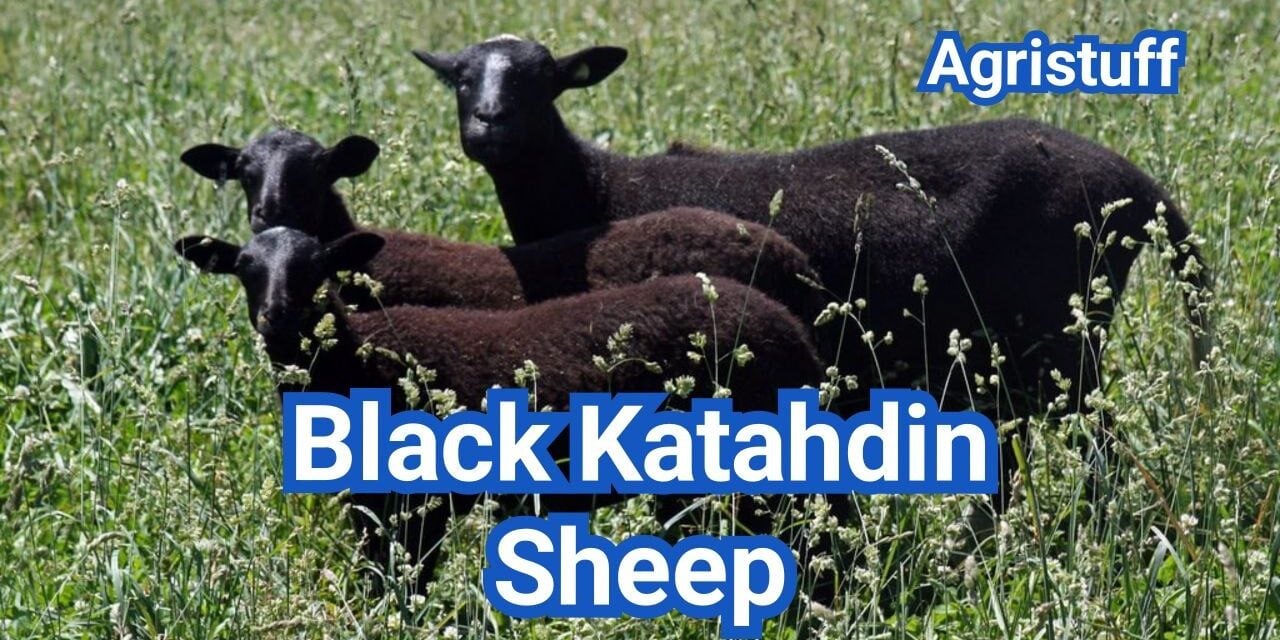
Quick answer: Black Katahdin Sheep are fully acceptable under the Katahdin Hair Sheep International breed standard because the organization permits any coat color or pattern and makes no color-based discrimination. A black coat does not establish purity by itself; pedigree, permanent identification, registration eligibility, sound structure, and a naturally shedding hair coat are the deciding factors Katahdin Hair Sheep International breed standard.
Black Katahdin Sheep attract attention because they look different from the white animals often pictured in commercial flocks, yet they retain the same basic purpose: efficient meat production without routine shearing. This guide explains what the official standard says, how dark pigmentation can be inherited, why lamb color is not always predictable, and how U.S. buyers can select colored breeding stock without sacrificing health or performance Oklahoma State University Katahdin profile.
Key takeaways
- Black is an accepted Katahdin color, not a defect or a separate breed.
- Color alone cannot prove that an animal is purebred or registered.
- ASIP and MC1R are major pigmentation genes in sheep, but additional genes and patterns can modify the result.
- Black inheritance may be recessive in one genetic background and dominant in another.
- Performance records, shedding ability, conformation, health, and pedigree should rank ahead of color.
- A dark coat may sun-bleach or look different after seasonal shedding without changing the animal’s identity.
What does the Katahdin breed standard say about black color?
Black Katahdin Sheep meet the color portion of the official standard because KHSI explicitly states that no discrimination is made according to color on any part of the body. The standard instead describes a medium-sized, muscular meat sheep with sound feet and legs, a correct mouth, functional reproductive organs, and a coat composed preferably of hair rather than persistent woolly fibers KHSI registration application and instructions.
For Black Katahdin Sheep, “breed standard” therefore means much more than matching a visual color preference. A sound black animal can be appropriate breeding stock, while an attractive black animal with an undershot jaw, weak pasterns, defective udder, abnormal testicles, poor shedding, or weak performance should not be retained merely for appearance University of Arkansas at Pine Bluff hair-sheep selection guidance.
Can a black animal be registered as a purebred Katahdin?
Black Katahdin Sheep can be registered when they satisfy KHSI pedigree and registry requirements; black color neither qualifies nor disqualifies them. Under current KHSI instructions, a purebred animal eligible for registration must be the offspring of two KHSI-registered parents, and the owner must be a current member to submit registrations or transfers KHSI Register Sheep portal.
Unpapered Black Katahdin Sheep cannot become registered simply because they look like the breed. KHSI does maintain an open flock book for structured upgrading: percentage animals may be recorded through successive generations, and animals reaching at least 87.5% Katahdin ancestry may become eligible after the required yearling hair-coat inspection and an A or B coat classification KHSI upgrading and recording FAQ.
Are black Katahdins a separate type of Katahdin?

Black Katahdin Sheep are not a separate official variety, and KHSI does not divide the breed into black and white registry sections. The modern breed traces to Michael Piel’s development program in Maine and was organized around an easy-care, shedding meat sheep; color diversity remained acceptable while production, adaptability, and functional type defined the breed University of Maine history of the Katahdin breed.
How does black coat color genetics work in sheep?
Black Katahdin Sheep display a phenotype produced by pigment cells called melanocytes. Eumelanin creates black-to-brown shades, whereas pheomelanin contributes red-to-yellow shades; the amount, type, placement, and timing of pigment in the hair determine what the breeder sees peer-reviewed research on sheep pigmentation genes.
Two major genes help explain Black Katahdin Sheep: melanocortin 1 receptor, abbreviated MC1R, and agouti signaling protein, abbreviated ASIP. MC1R signaling promotes dark eumelanin, while ASIP can alter or restrict that signaling; mutations, gene expression, and interactions between these loci have been associated with black and other coat colors in several sheep breeds Journal of Animal Breeding and Genetics study of ASIP and MC1R.
The appearance of Black Katahdin Sheep may also be influenced by pigmentation genes beyond ASIP and MC1R, including TYRP1, TYR, KIT, and MITF, as well as regulatory regions that affect spotting, pigment intensity, and distribution. This polygenic background is one reason a simple visual label such as “solid black” does not reveal the animal’s complete color genotype peer-reviewed sheep melanin research.
Is black color dominant or recessive in Katahdin sheep?
Black Katahdin Sheep should not be assigned one universal dominant-or-recessive rule without genotype and family evidence. Research in other sheep populations has found black associated with recessive ASIP variants in some breeds and dominant MC1R variants in others, showing that similar-looking dark phenotypes can arise through different genetic routes Animal Genetics research on dominant and recessive black in sheep.
A breeder might use a 25% black-lamb expectation only in a simplified single-gene recessive model when both parents are confirmed carriers; that percentage is not a general prediction for Black Katahdin Sheep. Spotting, masking, additional alleles, uncertain parent genotypes, and the breed’s genetic diversity can change the visible result, so several lamb crops and accurate pedigrees are more informative than one mating review of the genetic background of coat color in sheep.
Commercial DNA services can verify parentage and test certain inherited conditions, but breeders should confirm exactly what a laboratory assay measures before using it to predict Black Katahdin Sheep. A parentage panel proves or excludes proposed parents; it does not automatically identify every color allele or guarantee that future lambs will be black UC Davis Veterinary Genetics Laboratory sheep tests.
What black colors and patterns can occur?

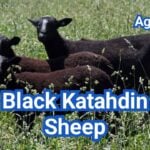
Black Katahdin Sheep may appear nearly solid, black with white spotting, black with lighter facial or leg markings, or very dark brown under certain lighting. These descriptions are useful for flock records and sales photos, but they are not separate KHSI breed classes; the official standard accepts any color or pattern and evaluates the functional hair coat instead KHSI Guide to Katahdin Hair Sheep.
- Photograph both sides, the face, legs, belly, and tail area at birth.
- Record whether the lamb is solid, spotted, or has lighter points.
- Repeat photographs after the winter coat sheds.
- Use neutral daylight and avoid filters that change black or brown tones.
- Keep color notes separate from official identification and performance records.
Can a black Katahdin’s coat fade or change?
Black Katahdin Sheep can look rust-brown at exposed hair tips because sunlight can bleach natural fibers, and seasonal shedding may reveal a darker new coat underneath. Age-related graying or changes in pattern contrast may also occur, so a photograph taken at birth should not be treated as a permanent color guarantee Colorado State University wool and fiber glossary.
A color shift does not by itself mean Black Katahdin Sheep are crossbred, nutritionally deficient, or failing the hair-coat standard. Evaluate the animal after normal seasonal shedding, look at hair near the skin, compare dated photographs, and ask a veterinarian about abrupt hair loss, skin lesions, or unusual coat changes rather than diagnosing the cause from color alone KHSI hair-coat inspection resources.
Does black color predict growth, parasite resistance, or meat quality?
Black Katahdin Sheep are not automatically faster growing, more parasite resistant, more fertile, or better muscled than white or spotted flockmates. Those economically relevant traits must be measured through birth and weaning records, litter performance, fecal egg counts, reproductive history, structural evaluation, and—where available—Estimated Breeding Values rather than inferred from pigment NC State Extension genetic-improvement guidance.
For performance-minded owners, Black Katahdin Sheep should be compared with their contemporary group and selected using balanced goals. KHSI highlights National Sheep Improvement Program data and genomic-enhanced EBVs for Katahdins, allowing breeders to assess traits such as growth, maternal performance, and parasite resistance while still using visual appraisal for soundness KHSI National Sheep Improvement Program resources.
Do black Katahdins need extra care in hot climates?

Black Katahdin Sheep retain the heat-adapted advantages of a shedding hair breed, but dark coats can absorb more solar radiation during intense sunshine. In hot and humid U.S. regions, provide unrestricted clean water, accessible shade, airflow, low-stress handling during cooler hours, and closer observation for rapid breathing or open-mouth panting instead of assuming breed or color makes an animal heat-proof Alabama Cooperative Extension heat-stress guidance.
How should breeders select for black color responsibly?
When breeding Black Katahdin Sheep, define color as a secondary selection goal after survival, soundness, maternal ability, shedding, growth, parasite resistance, and temperament. Start with unrelated or appropriately related animals that already meet production goals, then retain black offspring only when their records are competitive with the rest of the lamb crop Alabama Extension sheep-selection principles.
Accurate records make Black Katahdin Sheep more predictable over time. Record sire, dam, birth type, birth color and pattern, color after shedding, adjusted weights, health treatments, fecal egg counts, structural notes, and reproductive outcomes; these records reveal whether a color-focused family is also improving or quietly losing economically important traits Penn State Extension guidance on parasite-resistance EBVs.
Quick checklist
- Verify the KHSI registration certificate and match it to the animal’s permanent ID.
- Confirm sire and dam registration numbers instead of relying on appearance.
- Inspect the mouth, feet, legs, back, udder or testicles, and body condition.
- Ask whether the adult coat sheds cleanly without routine shearing.
- Review birth type, weaning weight, growth, and lamb-survival records.
- Request fecal egg count history or relevant NSIP EBVs when available.
- Compare birth photos with post-shedding photos to assess color stability.
- Ask how many black lambs the sire and dam produced in previous matings.
- Check flock health practices, vaccination history, and disease-testing policy.
- Plan quarantine, transport, shade, fencing, and feed before purchase.
- Write the return, fertility, and registration terms on the bill of sale.
This checklist keeps Black Katahdin Sheep purchases centered on verifiable identity and productive value. Color can narrow the final choice between otherwise comparable animals, but it should not override a weak pedigree, poor structure, incomplete health information, or missing performance data USDA APHIS sheep identification guidance.
Common mistakes to avoid
- Assuming black proves purity: require registration and pedigree documentation.
- Using one universal Punnett square: establish the family’s inheritance pattern first.
- Selecting only for color: rank functional and economic traits ahead of appearance.
- Calling sun bleaching a new genotype: inspect fresh hair near the skin after shedding.
- Ignoring persistent wool: evaluate natural shedding separately from pigmentation.
- Buying from a photograph: inspect structure, identification, health, and temperament.
- Paying a large color premium without a market: identify real buyers before breeding more animals.
- Skipping biosecurity: isolate arrivals and agree on pre-purchase testing with a veterinarian.
The costliest error with Black Katahdin Sheep is retaining a visually striking animal that has heritable defects or repeatedly needs extra labor and treatment. Breeding decisions should remove severe structural and reproductive faults, while good records help identify family patterns before they spread through the flock New Mexico State University guidance on sheep selection and genetic defects.
Costs and ROI snapshot
U.S. asking prices for Black Katahdin Sheep vary by age, sex, region, registration, reproductive proof, health program, and performance data, and a black coat has no standard national premium. As a current market illustration rather than a national appraisal, August 2026 KHSI classifieds included registered ewes at $325–$375, yearling rams at $225–$275, lambs at $250, commercial rams at $400–$600, and proven registered rams around $550 KHSI sheep classifieds.
Administrative costs for Black Katahdin Sheep are modest compared with feed, fencing, breeding-stock purchase, transport, and animal-health expenses. Effective February 1, 2026, KHSI listed voting membership at $45, online registration or transfer at $8 for animals under two years and $16 for older animals, with paper processing generally $10 or $20; breeders should verify the latest schedule before budgeting 2026 KHSI work order and fee schedule.
- Main cost drivers: breeding stock, feed or pasture, fencing, predator control, transport, veterinary care, parasite monitoring, and labor.
- What increases cost: buying distant animals, keeping low-performing color lines, excessive supplementation, disease introduction, and maintaining too many sires.
- What improves return: more pounds of healthy lamb weaned per exposed ewe, lower avoidable treatment costs, sound replacements, reliable records, and a proven direct-market niche.
- What beginners underestimate: quarantine space, handling facilities, ram management, losses, winter feed, and the time needed to establish predictable color families.
- When color selection makes sense: only when buyers demonstrably value it and the flock’s core productivity remains competitive.
Return on investment from Black Katahdin Sheep should be calculated for the whole enterprise, not from a hoped-for color premium. Track total pounds of lamb sold, replacement sales, annual cost per ewe, death loss, veterinary and parasite-control expense, and labor; then compare the colored line with the rest of the flock using the same budget assumptions University of Wisconsin sheep enterprise budget tool.
How should buyers evaluate black Katahdins for sale?
Before buying Black Katahdin Sheep ( black Katahdins sale ), ask for current photographs, registration documents, parent information, health and treatment records, reproductive history, and performance data, then inspect the animal in person or by live video. Agree in writing on any pre-purchase tests and isolate arrivals from the home flock for a veterinarian-approved quarantine period because an appealing coat cannot reveal infection or parasite risk Cornell Cooperative Extension buying and quarantine guidance.
Permanent identification for Black Katahdin Sheep must also be checked before movement or transfer. U.S. scrapie rules require official identification in many commerce and interstate-movement situations, so buyers should confirm the flock ID, official tag or approved identification method, registration transfer, and any destination-state entry requirements before transport USDA APHIS scrapie-tag resources.
FAQ
Are black Katahdin sheep rare?
Black Katahdin Sheep may be less common than white animals in a particular region or flock, but KHSI does not define black as a rare-breed category. Local availability depends on breeder selection and family genetics, so rarity claims should be supported with actual flock and market evidence rather than used automatically to justify a premium KHSI online registry and database information.
Will two black Katahdins always produce black lambs?
No, two Black Katahdin Sheep should not be assumed to produce an all-black lamb crop unless the relevant inheritance in that family is understood and the parents breed true for the necessary alleles. Sheep pigmentation can involve ASIP, MC1R, and additional modifying genes, so mating records across multiple lamb crops provide better evidence than coat appearance alone peer-reviewed review of ASIP and MC1R pigmentation.
Do black Katahdins need to be sheared?
Healthy Black Katahdin Sheep that meet the breed’s hair-coat objective should shed their seasonal coat naturally and should not require routine shearing. Persistent unshed woolly fibers are a coat-type issue, not a black-color issue, and should be evaluated separately when choosing registered or upgrading animals UF/IFAS Extension overview of Katahdin sheep.
Are black Katahdins suitable for hot U.S. regions?
Black Katahdin Sheep can perform in hot U.S. regions because Katahdins are a heat-adapted hair breed, but individuals still need shade, clean water, ventilation, and heat-stress monitoring. Dark color may increase solar heat gain, so management should respond to weather, humidity, body condition, health, and each animal’s behavior University of Maryland Extension heat-stress management.
Are black Katahdins worth more than white Katahdins?
Black Katahdin Sheep are worth more only when a specific buyer values the color and the animal also offers strong pedigree, soundness, health, and production evidence. Mainstream sheep markets report animals primarily by class, weight, grade, and use rather than Katahdin coat color, so a breeder should confirm a repeatable niche before paying or charging a large premium USDA Agricultural Marketing Service sheep auction reports.
Final Thought
Black Katahdin Sheep are legitimate, standard-accepted members of the breed, but their lasting value comes from what they produce and how efficiently they remain healthy—not from pigment alone. Select black animals with the same disciplined use of pedigree, structural appraisal, flock records, and genetic performance tools applied to every serious Katahdin breeding decision South Dakota State University NSIP guidance.
Sources & References
- KHSI KatPlus Commercial Ewe Program
- South Dakota State University: Sheep Water Requirements and Quality Testing
- University of Nebraska–Lincoln: Managing Sheep and Goats for Heat Stress
- USDA APHIS: Biosecurity for Sheep and Goat Producers
- USDA APHIS: Registry Tattoos Approved for the Scrapie Program
- NC State Extension: Using Estimated Breeding Values
- Ohio State University: Breeding Goals and Genetic Selection
- Montana State University: Sheep Selection and Recordkeeping
- Mississippi State University: Small Ruminant Budgeting and Marketing
- USDA Agricultural Marketing Service Sheep Reports
- UF/IFAS Extension: Selection of Sheep Meat Breeds
- University of Arkansas Extension: Five-Year Flock Genetic Improvement Plan