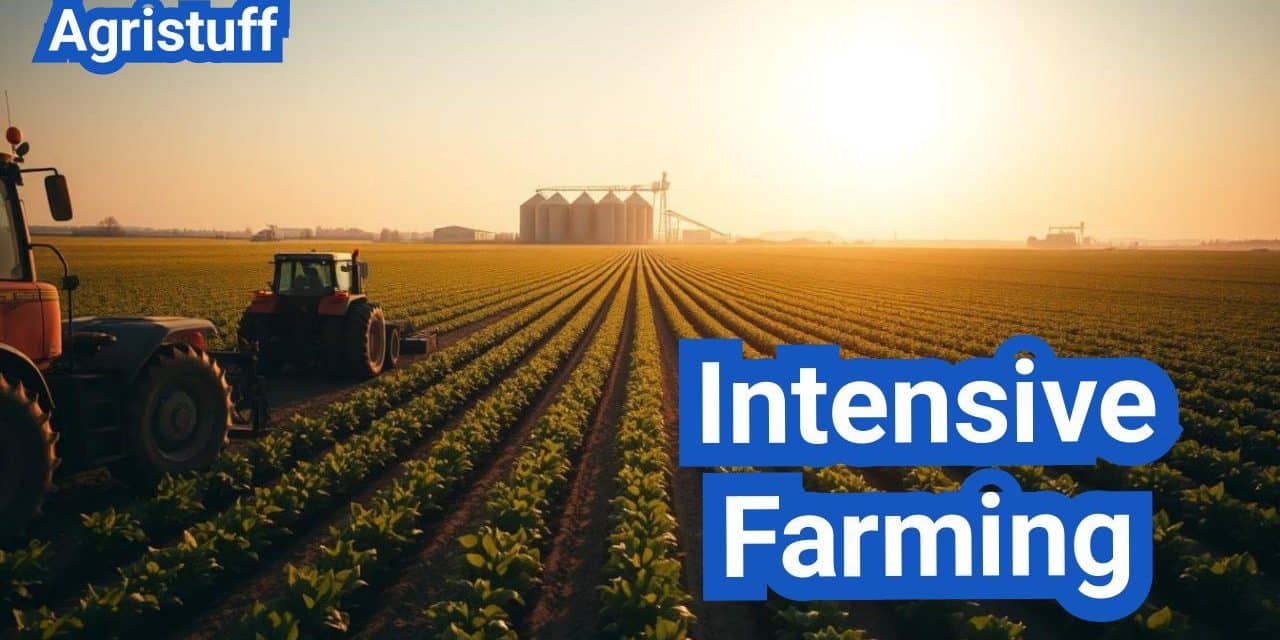
Quick Answer: Intensive farming in the U.S. means using concentrated resources and close management to produce more crops or livestock from each acre, barn, greenhouse, or animal unit. Its main benefit is higher productivity from limited space, while its main risks include soil stress, water pollution, nutrient runoff, and animal-welfare concerns when management is poor.
Intensive farming is one of the most important production models in modern U.S. agriculture because it helps explain how farms raise output when land, labor, water, or space are limited. This guide explains how intensive farming works in crops and livestock, how it differs from extensive farming, and why its benefits must be weighed against environmental and animal-welfare concerns.
Key Takeaways
- Intensive farming is a high-input farming system that aims to produce more crops or livestock output from limited land or space.
- It usually relies on higher levels of labor, capital, technology, feed, fertilizer, irrigation, or management per acre than extensive farming.
- Intensive farming and intensive agriculture are closely related terms, although agriculture is often used as the broader umbrella concept.
- The main goal of intensive farming is to increase productivity per acre or per unit of space, not simply to operate on more land.
- Common intensive farming systems include crop-based, livestock-based, greenhouse, and controlled-environment production models.
- The main advantages of intensive farming include higher output and more efficient land use, while the main concerns include environmental pressure and animal-welfare challenges.
What Is Intensive Farming?
The concept of intensive farming revolves around the efficient use of resources to achieve higher yields on limited land. This agricultural practice has been pivotal in meeting the world’s increasing food demands.
Definition and Core Concepts
Intensive farming is characterized by its high input of resources such as labor, capital, and technology to maximize output. The core concept is to optimize the use of land, making it highly productive. Key elements include high-yielding crop varieties, advanced irrigation systems, and the use of fertilizers and pesticides. This method contrasts with extensive farming, where larger areas are cultivated with lower inputs.
Historical Development of Agricultural Intensification
Intensive farming has its roots in ancient civilizations, where populations began to grow and agricultural productivity became crucial. Over time, advancements in technology, such as mechanization and the development of synthetic fertilizers, have driven the intensification of agriculture. The Green Revolution of the 20th century marked a significant turning point, introducing high-yielding crop varieties that further boosted productivity.
| Period | Key Developments | Impact |
|---|---|---|
| Ancient Times | Initial intensification through simple tools and irrigation | Increased food production for growing populations |
| Industrial Revolution | Mechanization and introduction of synthetic fertilizers | Significant increase in productivity and efficiency |
| 20th Century | The Green Revolution | High-yielding crop varieties, further boosting productivity |
Understanding the historical context and core concepts of intensive farming is essential for appreciating its role in modern agriculture. As the global population continues to grow, the importance of intensive farming practices will only continue to increase.
Is Intensive Farming the Same as Intensive Agriculture?
Intensive farming and intensive agriculture are closely related terms, and many sources use them interchangeably. The USDA National Agricultural Library lists intensive agriculture as a synonym of intensive farming, while Britannica defines intensive agriculture as a system that uses large amounts of labor and capital relative to land area. In simple terms, both expressions usually describe high-input production systems designed to increase output from limited land or space.
That said, the two terms are not always framed in exactly the same way. Agriculture is a broader concept that includes cultivating soil, growing crops, and raising livestock. Because of that, some articles use intensive agriculture as the wider umbrella term, while intensive farming is used more directly for farm-level production practices and systems. In this article, intensive farming is explained from that more practical, farm-centered angle.
So, if you see the two terms used as near-equivalents, that is normal. The important point is not the label alone, but the production model behind it: high inputs, tighter management, and greater output per acre or per unit of space compared with extensive systems.
What Is Another Name for Intensive Farming?
Another common name for intensive farming is intensive agriculture. In many educational and agricultural sources, the two terms are used interchangeably to describe high-input production systems that rely on more labor, capital, technology, and management per acre to produce more food from limited land.
However, American readers should know there can be a slight difference in how the terms are framed. Agriculture is the broader umbrella term because it includes cultivating soil, growing crops, and raising livestock. That is why some sources use intensive agriculture for the wider production model, while intensive farming is often used more directly for practical farm-level methods and systems.
So, if you come across phrases like intensive agriculture, high-input farming, or in some livestock discussions even industrial farming, they may overlap with intensive farming depending on the context. The key idea stays the same: producing higher output from a relatively small area through concentrated inputs and tighter management.
Intensive Farming vs. Extensive Farming

Intensive farming and extensive farming represent two distinct approaches to agricultural production, each with its own set of characteristics and implications. While intensive farming focuses on maximizing output from a given area of land through high inputs of resources and advanced technology, extensive farming takes a more traditional approach, relying on natural resources and covering larger areas.
Land Use and Productivity Differences
One of the primary differences between intensive and extensive farming lies in land use and productivity. Intensive farming is characterized by high yields from a relatively small area of land, achieved through the use of advanced agricultural techniques and technology. In contrast, extensive farming covers larger areas but typically results in lower yields per hectare due to its reliance on natural rainfall and soil fertility.
Resource and Labor Requirements
The resource and labor requirements for intensive and extensive farming also differ significantly. Intensive farming requires substantial inputs of capital, labor, and resources, including fertilizers, pesticides, and irrigation systems. Extensive farming, on the other hand, relies more on natural resources and tends to have lower labor requirements per unit of land.
Economic and Environmental Considerations
Economic and environmental considerations play a crucial role in determining the viability of intensive and extensive farming practices. Intensive farming can offer higher economic returns due to its high productivity, but it also poses significant environmental risks, such as soil degradation and water pollution. Extensive farming, while potentially more environmentally friendly, may not be as economically viable due to its lower productivity.
In conclusion, the choice between intensive and extensive farming depends on a variety of factors, including land availability, economic conditions, and environmental concerns. Understanding the differences between these two approaches is essential for developing sustainable agricultural practices that balance productivity with environmental stewardship.
What Do Intensive Farming Systems Mean? Main System Types Explained
Intensive farming systems are production systems designed to generate more output from a limited amount of land or space by using higher levels of labor, capital, technology, feed, fertilizer, irrigation, housing, and day-to-day management. In simple terms, the phrase refers to organized farming methods built around maximizing productivity per acre, per building, or per animal unit rather than relying mainly on large land area.
For U.S. readers, the word systems matters because intensive farming is not just one method. It is a broader farm-management approach that can appear in different crop and livestock operations depending on the enterprise, the local market, available infrastructure, and production goals. That is why people often ask what intensive farming systems mean: they are the main practical models farmers use when they want higher output through more concentrated inputs and tighter control.
The main system types usually include intensive crop farming, where yield is pushed through irrigation, fertilizer, crop protection, and close field management; intensive livestock farming, where animals are raised in more controlled and higher-density systems; greenhouse production, where temperature, water, and nutrients are managed more precisely; and controlled-environment systems such as hydroponic or indoor production, where farmers rely heavily on technology to manage growing conditions.
Understanding these system types helps separate the big idea from the individual examples. So when a reader searches for the meaning of intensive farming systems, the best answer is this: it refers to the major high-input production models used to raise crops or livestock more intensively than in extensive farming systems.
Intensive Commercial Farming Operations
Intensive commercial farming operations are large-scale agricultural enterprises focused on producing high volumes of crops or livestock for market. These operations typically employ advanced technology, including precision agriculture techniques and mechanized equipment, to maximize efficiency and reduce labor costs. High-yielding crop varieties and specialized livestock breeds are often used to enhance productivity.
Intensive Subsistence Farming in Developing Regions
In contrast to commercial operations, intensive subsistence farming is practiced in many developing regions where farmers rely heavily on their produce for food security. These farming systems are characterized by high labor input and efficient use of small landholdings. Techniques such as intercropping and crop rotation are commonly used to maximize yields on limited land.
Intensive Factory Farming and Industrial Agriculture
Intensive factory farming, also known as industrial agriculture, involves the large-scale production of livestock or crops using industrial methods. This type of farming is characterized by confined animal feeding operations (CAFOs) for livestock and monoculture cropping systems for crops. The focus is on maximizing output while minimizing costs, often through the use of specialized equipment and technology.
Bio-Intensive and Biointensive Permaculture Methods
Bio-intensive farming methods focus on sustainable practices that enhance soil health and biodiversity while maintaining high productivity. Techniques include composting, polyculture, and minimal external input. Biointensive permaculture takes this a step further by designing farming systems that mimic natural ecosystems, promoting ecological balance and resilience.
The diversity of intensive farming systems reflects the complexity of global agricultural needs and practices. Understanding these different approaches is crucial for addressing food security challenges and promoting sustainable agriculture.
How to Implement Intensive Crop Production

Intensive crop production involves a series of strategic practices to enhance crop yields. This approach is crucial for maximizing productivity on limited land, ensuring food security, and maintaining economic viability for farmers.
Selecting Suitable Crops for Intensive Cultivation
Choosing the right crops is fundamental to successful intensive farming. High-yielding varieties that are resistant to pests and diseases should be prioritized. Crops such as maize, wheat, and soybeans are commonly used in intensive farming due to their high productivity and market demand.
Implementing Effective Crop Rotation Strategies
Crop rotation is essential for maintaining soil health and reducing pest and disease pressure. Rotating crops like legumes with cereals can enhance soil fertility and structure. A well-planned rotation can also improve crop yields and reduce the need for chemical inputs.
Optimizing Fertilization and Nutrient Management
Effective fertilization is critical for intensive crop production. Soil testing should be conducted regularly to determine nutrient levels and pH. Based on these tests, farmers can apply the appropriate type and amount of fertilizers to meet the crop’s nutritional needs.
Developing Irrigation and Water Management Systems
Adequate water supply is vital for intensive farming. Irrigation systems should be designed to deliver water efficiently, minimizing waste and ensuring that crops receive the right amount of moisture. Techniques such as drip irrigation can significantly reduce water usage while maintaining high yields.
By implementing these strategies, farmers can achieve higher productivity and sustainability in their intensive crop production systems.
Intensive Livestock Production Techniques
The global demand for meat, dairy, and aquaculture products has led to the development of intensive livestock production techniques. These methods are designed to maximize efficiency and productivity while minimizing environmental impact.
Setting Up Concentrated Animal Feeding Operations (CAFOs)
Concentrated Animal Feeding Operations (CAFOs) are large-scale facilities that house a significant number of animals in a confined area. CAFOs are designed to optimize feeding efficiency, animal health, and waste management. Efficient waste management is crucial in CAFOs to prevent environmental pollution.
The setup of CAFOs involves careful planning, including the selection of suitable locations, design of facilities, and implementation of feeding and waste management systems.
Managing Intensive Dairy Farming Systems
Intensive dairy farming systems focus on maximizing milk production per cow through advanced breeding programs, nutrition management, and health care. These systems often incorporate technology such as automated milking systems and data analytics to monitor cow health and productivity.
“The use of technology in dairy farming has revolutionized the industry, enabling farmers to produce high-quality milk while improving cow welfare.” – Dairy Farmer
Implementing Intensive Aquaculture Methods
Intensive aquaculture involves the cultivation of fish and other seafood in controlled environments, such as recirculating aquaculture systems (RAS). These systems allow for precise control over water quality, temperature, and feeding, resulting in high productivity and reduced environmental impact.
| Method | Description | Benefits |
|---|---|---|
| CAFOs | Large-scale animal feeding operations | Efficient waste management, optimized feeding |
| Intensive Dairy Farming | Maximizing milk production per cow | Advanced breeding, nutrition management |
| Intensive Aquaculture | Cultivation in controlled environments | Precise control over water quality, high productivity |
By adopting these intensive livestock production techniques, farmers can improve productivity, reduce environmental impact, and meet the growing demand for animal products.
Modern Technologies Transforming Intensive Farming

Technological advancements are at the forefront of intensive farming’s evolution, driving innovation and efficiency. The integration of modern technologies is revolutionizing the way farmers cultivate crops and raise livestock, making intensive farming more productive and sustainable.
Applying Precision Agriculture Techniques
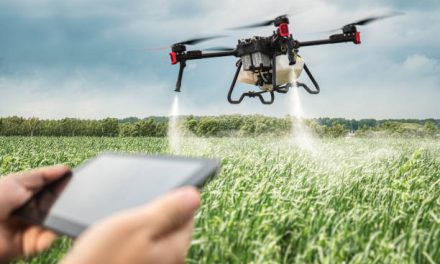
Precision agriculture is a key component of modern intensive farming. By utilizing GPS, sensors, and drones, farmers can optimize crop yields, reduce waste, and minimize environmental impact. Precision agriculture techniques enable farmers to make data-driven decisions, improving crop management and resource allocation.
Integrating Automation and Robotics
Automation and robotics are transforming intensive farming by increasing efficiency and reducing labor costs. Automated systems can monitor and manage crops, detect issues, and apply precise amounts of water and fertilizers. Robotic farming equipment is also being used for tasks such as pruning, harvesting, and weeding, further reducing the need for manual labor.
“The use of automation and robotics in farming is not just about increasing efficiency; it’s also about improving crop quality and reducing environmental impact.”
Utilizing Data Analytics and Smart Farming Solutions
Data analytics plays a crucial role in intensive farming, enabling farmers to analyze data from various sources, including weather stations, soil sensors, and crop monitoring systems. By leveraging data analytics and smart farming solutions, farmers can gain valuable insights into their operations, making informed decisions to optimize production and reduce costs.
| Technology | Application | Benefits |
|---|---|---|
| Precision Agriculture | Crop monitoring, yield optimization | Increased efficiency, reduced waste |
| Automation and Robotics | Task automation, labor reduction | Improved productivity, reduced labor costs |
| Data Analytics | Data-driven decision making | Optimized production, cost reduction |
In conclusion, modern technologies are transforming intensive farming practices, enhancing efficiency, productivity, and sustainability. By embracing these technologies, farmers can improve crop yields, reduce environmental impact, and contribute to a more food-secure future.
Soil Health Management in Intensive Farming

Soil health management plays a vital role in ensuring the sustainability of intensive farming systems. It involves a combination of practices that help maintain or improve the soil’s physical, chemical, and biological properties.
Building and Maintaining Soil Organic Matter
Soil organic matter is crucial for maintaining soil structure, facilitating water infiltration, and supporting soil biota. To build and maintain soil organic matter, farmers can incorporate cover crops into their rotation, apply organic amendments such as compost or manure, and minimize tillage to reduce soil disturbance.
- Incorporating cover crops to enhance soil organic matter
- Applying organic amendments like compost or manure
- Reducing tillage to minimize soil disturbance
Implementing Biological Intensive Nutrient Management
Biological intensive nutrient management involves using microorganisms and other biological processes to optimize nutrient availability for crops. This can include practices such as inoculating seeds with beneficial microbes and using organic fertilizers that support soil biota.
- Inoculating seeds with beneficial microbes to enhance nutrient uptake
- Using organic fertilizers that promote soil biological activity
Conducting Regular Soil Testing and Monitoring
Regular soil testing is essential for understanding soil health and making informed management decisions. By monitoring soil pH, nutrient levels, and soil structure, farmers can identify potential issues early and take corrective action.
Effective soil health management is a cornerstone of sustainable intensive farming. By focusing on building soil organic matter, implementing biological intensive nutrient management, and conducting regular soil testing, farmers can improve crop yields, reduce environmental impacts, and ensure the long-term viability of their operations.
Greenhouse and Controlled-Environment Farming

The use of greenhouses and controlled environments is becoming increasingly important in modern agriculture. This method allows for the precise control of growing conditions, resulting in higher yields and more efficient use of resources.
Efficient Growing Structures
Designing efficient growing structures is crucial for greenhouse and controlled environment agriculture. This involves selecting materials that provide optimal insulation and light transmission, as well as configuring the layout to maximize space and promote air circulation. Efficient design can significantly reduce energy costs and improve crop health.
Climate Control Systems
Implementing climate control systems is vital for maintaining optimal growing conditions. These systems regulate temperature, humidity, and light levels, ensuring that crops receive the best possible conditions for growth. Advanced climate control systems can be integrated with sensors and automation technology to optimize performance.
Hydroponic and Aeroponic Systems
Setting up hydroponic and aeroponic systems allows for the precise delivery of nutrients to crops. Hydroponics involves growing plants in a nutrient-rich solution rather than soil, while aeroponics uses a fine mist to deliver nutrients. Both methods can significantly increase crop yields and reduce water usage.
Energy Efficiency Measures
Optimizing energy efficiency measures is critical for reducing the environmental impact of greenhouse and controlled environment agriculture. This can be achieved through the use of LED grow lights, renewable energy sources, and advanced insulation materials. By minimizing energy consumption, growers can reduce their operational costs and environmental footprint.
By combining these elements, greenhouse and controlled environment agriculture can provide a highly productive and sustainable method for crop production. As the global demand for food continues to grow, these systems will play an increasingly important role in meeting future agricultural needs.
What Are the Advantages of Intensive Farming?

The main advantages of intensive farming are higher output per acre, more efficient use of limited land, and greater ability to produce a steady food supply through tighter management, technology, and concentrated inputs. In practical terms, intensive farming is designed to help farmers get more production from a smaller area than extensive systems typically allow.
Maximizing Food Production and Yields
One of the primary benefits of intensive farming is its ability to maximize food production and yields. By utilizing advanced technology, high-yielding crop varieties, and optimized farming techniques, farmers can significantly increase their output. This not only helps to meet the growing demand for food but also contributes to food security, particularly in regions with high population densities.
Generating Economic Benefits and Profitability
Intensive farming also generates substantial economic benefits and profitability for farmers. By adopting intensive farming methods, farmers can improve their crop yields, reduce production costs, and increase their overall revenue. This, in turn, can have a positive impact on the local economy, creating jobs and stimulating economic growth.
Enabling Year-Round Production Capabilities
Another significant advantage of intensive farming is its ability to enable year-round production capabilities. Through the use of controlled environment agriculture, greenhouses, and other advanced farming techniques, farmers can produce crops throughout the year, regardless of the season or weather conditions. This helps to ensure a consistent food supply, which is essential for meeting the demands of a growing global population.
Environmental Challenges of Intensive Farming

Intensive farming, while productive, poses significant environmental challenges that need to be addressed. The high demand for resources and the intensive use of land can lead to various environmental issues.
Addressing Water Usage and Pollution Concerns
Intensive farming often requires substantial water resources, leading to potential water scarcity issues. Moreover, the use of fertilizers and pesticides can result in water pollution, affecting both surface and groundwater quality.
Mitigating Biodiversity Loss and Habitat Destruction
The expansion of intensive farming can lead to habitat destruction and loss of biodiversity as natural ecosystems are converted into agricultural land. This not only affects wildlife but also reduces ecosystem services that are crucial for long-term agricultural productivity.
Reducing Greenhouse Gas Emissions
Intensive farming practices can contribute to greenhouse gas emissions through the use of machinery, fertilizers, and other inputs. Strategies to reduce these emissions include improving energy efficiency and adopting practices that enhance soil carbon sequestration.
Preventing Chemical Runoff and Contamination
The use of chemicals in intensive farming can lead to runoff and contamination of soil and water. Implementing integrated pest management strategies and using more targeted and efficient application methods can help mitigate these issues.
Intensive Farming Facts at a Glance

Here are a few quick intensive farming facts that help explain the term in a simple, practical way:
- Intensive farming is a farming system that uses relatively high levels of labor, inputs, or capital per acre to increase output from limited land.
- Intensive agriculture is a common related term, and many sources use it as a near-equivalent or synonym of intensive farming.
- Intensive farming can apply to both crop production and livestock production, not just one side of agriculture.
- The main goal of intensive farming is to produce more food, fiber, or animal output per unit of land or space than extensive systems usually do.
- Intensive farming is commonly contrasted with extensive farming, which uses fewer inputs or less labor per acre and typically operates over larger areas.
- Supporters often point to higher productivity and more efficient land use as major strengths of intensive farming.
- Critics often focus on environmental pressure, input dependence, and animal-welfare concerns when intensive farming systems are poorly managed.
Animal Welfare Considerations in Intensive Farming

As intensive farming continues to grow, so does the importance of addressing animal welfare considerations. Intensive farming systems, characterized by high stocking densities and specialized production systems, can pose significant challenges to animal welfare.
Common Welfare Concerns
Intensive farming raises several animal welfare concerns, including confinement, feeding practices, and health issues. For instance, high stocking densities can lead to stress and increased susceptibility to diseases among animals.
Regulatory Frameworks and Standards
Understanding regulatory frameworks and standards is crucial for addressing animal welfare concerns. Various countries have established guidelines and laws to protect animal welfare in intensive farming operations.
| Country | Regulatory Framework | Key Provisions |
|---|---|---|
| United States | Animal Welfare Act | Sets standards for animal care in research, exhibition, and transport |
| European Union | EU Animal Welfare Directives | Covers welfare standards for farm animals, including housing and transport conditions |
Welfare-Focused Management Practices
Implementing welfare-focused management practices is essential for improving animal welfare in intensive farming. This includes providing adequate housing, ensuring proper nutrition, and implementing health management strategies.
Responding to Consumer Awareness and Market Pressure
Consumer awareness and market pressure play a significant role in shaping animal welfare standards in intensive farming. Producers are increasingly adopting welfare-friendly practices in response to consumer demand for higher welfare standards.
In conclusion, addressing animal welfare considerations in intensive farming requires a multifaceted approach that includes understanding welfare concerns, adhering to regulatory frameworks, implementing welfare-focused management practices, and responding to consumer awareness and market pressure.
Sustainable Approaches to Intensive Farming
As the world grapples with food security challenges, sustainable intensive farming has emerged as a crucial strategy. This approach involves integrating practices that not only maximize yields but also minimize environmental impact.
Integrating Regenerative Agriculture Principles
Regenerative agriculture focuses on enhancing soil health, biodiversity, and ecosystem services. By adopting regenerative practices, intensive farming can become more sustainable and resilient. This includes techniques like cover cropping, reduced tillage, and organic amendments.
Adopting Integrated Pest Management Strategies
Integrated Pest Management (IPM) is a holistic approach that combines physical, cultural, biological, and chemical controls to manage pests. IPM reduces the reliance on chemical pesticides, minimizing environmental pollution and promoting ecosystem balance.
Implementing Water Conservation Techniques
Water conservation is critical in intensive farming. Techniques such as drip irrigation, mulching, and precision agriculture help reduce water waste and optimize water use. These methods not only conserve water but also reduce the energy required for water pumping and treatment.
Incorporating Renewable Energy Solutions
The use of renewable energy in intensive farming can significantly reduce the carbon footprint of agricultural operations. Solar-powered irrigation systems, wind energy for farm operations, and bioenergy from agricultural waste are examples of renewable energy solutions that can be integrated into intensive farming practices.
By adopting these sustainable approaches, intensive farming can become more environmentally friendly, economically viable, and socially responsible. It’s a step towards ensuring food security while preserving natural resources for future generations.
The Future of Intensive Farming
The future of intensive farming is closely tied to its ability to adopt sustainable practices that balance high productivity with environmental stewardship. As the global population continues to grow, intensive farming practices will play a crucial role in meeting the increasing demand for food.
Sustainable intensive farming methods, such as regenerative agriculture and integrated pest management, can help mitigate the environmental challenges associated with intensive farming. By incorporating these approaches, farmers can reduce their reliance on chemical inputs, conserve water, and promote biodiversity.
The adoption of advanced technologies, including precision agriculture and data analytics, will also be essential in shaping the future of intensive farming. These innovations can help farmers optimize resource use, improve crop yields, and minimize environmental impacts.
Ultimately, the success of intensive farming in the future will depend on its ability to strike a balance between productivity and sustainability. By embracing sustainable intensive farming practices, the agricultural sector can ensure a food-secure future while protecting the environment.
FAQ
What is intensive farming?
Intensive farming is a farming system that uses relatively high levels of labor, capital, technology, feed, fertilizer, irrigation, or other inputs per acre to produce more output from limited land or space. In simple terms, intensive farming focuses on maximizing production through tighter control and more concentrated management than extensive farming systems usually require.
What are the advantages of intensive farming?
The main advantages of intensive farming include higher output per acre, more efficient use of limited land, and the ability to maintain a more consistent supply of crops or animal products. Intensive farming can also help farmers increase productivity through better infrastructure, closer management, and more targeted use of inputs and technology.
Is intensive farming the same as intensive agriculture?
Intensive farming and intensive agriculture are closely related terms, and many sources use them in similar ways. However, agriculture is the broader term because it includes growing crops and raising livestock as part of the overall agricultural system, while intensive farming is often used more directly for practical farm-level production methods. In everyday use, the two terms often overlap, but the context of the article or source still matters.
What are the main characteristics of intensive farming?
Intensive farming is characterized by high input of resources and capital, maximized land productivity and yields, advanced technology implementation, and specialized production systems.
How does intensive farming differ from extensive farming?
Intensive farming involves high-input, high-yield practices on a smaller land area, whereas extensive farming uses larger land areas with lower input and yield per unit.
What are the different types of intensive farming?
The major types of intensive farming include intensive commercial farming, intensive subsistence farming, factory farming, and bio-intensive methods.
How can intensive farming be made more sustainable?
Sustainable approaches to intensive farming include integrating regenerative agriculture principles, adopting integrated pest management strategies, implementing water conservation techniques, and incorporating renewable energy solutions.
What are the environmental impacts of intensive farming?
Intensive farming can lead to water usage and pollution, biodiversity loss, greenhouse gas emissions, and chemical runoff, but strategies can be implemented to mitigate these challenges.
How does intensive farming contribute to food security?
Intensive farming helps meet growing global food demand, improves food distribution systems, and builds resilience to climate change, thus contributing to food security.
What are the concerns regarding animal welfare in intensive farming?
Common welfare concerns in intensive farming include confinement, lack of access to natural environments, and stress, which can be addressed through welfare-focused management practices and regulatory frameworks.
What role does technology play in intensive farming?
Modern technologies such as precision agriculture, automation, and data analytics are transforming intensive farming by improving efficiency, productivity, and sustainability.
How can soil health be managed in intensive agriculture?
Soil health management in intensive farming involves building and maintaining soil organic matter, implementing biological intensive nutrient management, and conducting regular soil testing and monitoring.
What is the significance of greenhouse and controlled environment agriculture?
Greenhouse and controlled environment agriculture enable year-round production, improve crop yields, and reduce environmental impacts through optimized growing conditions and climate control.
What are the benefits of intensive farming practices?
Intensive farming practices maximize food production and yields, generate economic benefits and profitability, and enable year-round production capabilities, contributing to food security and economic development.
Conclusion of: Intensive Farming
Intensive farming, often referred to as industrial agriculture, is a modern farming practice designed to maximize production by using significant inputs such as chemical fertilizers, pesticides, advanced technology, and high-yield crop varieties. The primary aim of intensive farming is to produce the maximum possible yield from a minimum amount of land. This approach has been central to meeting the global food demands of an ever-growing population.
What is Intensive Farming?
Intensive farming is a method of agricultural production characterized by a high input of resources relative to the land area. This farming technique heavily depends on chemical fertilizers, pesticides, mechanization, and other resources aimed at maximizing yield. It can be practiced on both crop cultivation and animal farming, leading to significantly higher productivity compared to traditional methods.
Types of Intensive Farming
Intensive farming practices include crop production and livestock farming. Crop production involves cultivating high-yield varieties with the intensive application of fertilizers, pesticides, and irrigation. Livestock farming under intensive systems involves high-density animal housing with regular use of antibiotics and growth hormones.
Methods of Intensive Farming
Common methods used in intensive farming include monoculture, hydroponics, vertical farming, and factory farming. Monoculture involves growing a single type of crop extensively, hydroponics refers to growing plants without soil, vertical farming is a practice of growing crops in vertically stacked layers, and factory farming pertains to raising large numbers of livestock in confined spaces.
Benefits of Intensive Farming
Intensive farming significantly increases food production, enabling food security and stable food prices. By maximizing the yield from limited land resources, intensive farming reduces the pressure to clear more land for agriculture, thus protecting forests and biodiversity. Additionally, modern techniques such as vertical farming allow for urban agricultural practices.
Challenges and Criticism of Intensive Farming
Despite its benefits, intensive farming is not without criticism. Environmental concerns include soil degradation, water pollution from chemical runoff, and loss of biodiversity. There are also concerns about animal welfare due to confined living conditions in intensive livestock operations. Moreover, excessive use of antibiotics in animal farming has led to growing antimicrobial resistance.
More comprehensive details about these challenges can be accessed from this resource.
Environmental Impact of Intensive Farming
Intensive farming has profound environmental impacts, including significant contributions to greenhouse gas emissions, soil erosion, and chemical runoff leading to water pollution. The heavy reliance on chemical inputs can adversely affect ecosystems and biodiversity, resulting in ecological imbalances.
Intensive Farming and Sustainability
As sustainability becomes increasingly important, intensive farming practices are evolving. Innovations like precision agriculture, integrated pest management (IPM), and organic farming methods aim to reduce environmental impacts while maintaining high productivity levels. These methods incorporate technological advancements and more sustainable resource management practices.
Additional sustainable intensive farming practices can be explored here.
Intensive Farming and Technology
Technological advancements have revolutionized intensive farming, making it more efficient and productive. Precision agriculture uses GPS technology, drones, and data analytics to optimize resource use, significantly reducing waste and environmental damage. Automated machinery and robotics further improve operational efficiency.
Learn more about technology in intensive farming here.
Future of Intensive Farming
The future of intensive farming looks promising with continued innovation. Technological advancements, coupled with growing awareness of environmental sustainability, are likely to lead to improved methods that mitigate negative impacts. Emphasis on sustainable practices and technological integration will continue to shape the future of intensive farming.
Intensive Farming vs. Extensive Farming
Intensive farming differs significantly from extensive farming, where extensive farming relies on larger land areas with minimal inputs, leading to lower yields but fewer environmental impacts. Intensive farming, conversely, focuses on high production outputs from limited land through substantial input use.
Intensive Farming Regulations
Intensive farming practices are subject to regulations designed to mitigate environmental impacts and safeguard animal welfare. Regulatory frameworks vary globally but generally focus on sustainable resource use, chemical restrictions, waste management, and animal welfare standards.
For detailed regulatory information, you can explore this resource.
Intensive Farming Examples
Examples of intensive farming include large-scale poultry farms, monoculture plantations such as corn and soybeans, and advanced urban vertical farms. Each of these examples demonstrates the high-yield potential of intensive farming methods.
Explore more intensive farming examples here.
Final Thought
Intensive farming has dramatically transformed global agriculture, offering significant benefits in food production. However, it is essential to address its environmental and ethical concerns through sustainable innovations and regulated practices to ensure a balanced and sustainable future.
Sources & References
- USDA National Agricultural Library — Intensive Farming
- Britannica — Intensive Agriculture
- Britannica — Extensive Agriculture
- National Geographic — The Art and Science of Agriculture
- U.S. EPA — Animal Feeding Operations (AFOs)
- U.S. EPA — Animal Feeding Operations: Regulations, Guidance, and Studies
- FAO — Sustainable Crop Production Intensification in FAO
- Britannica — Intensive Animal Farming