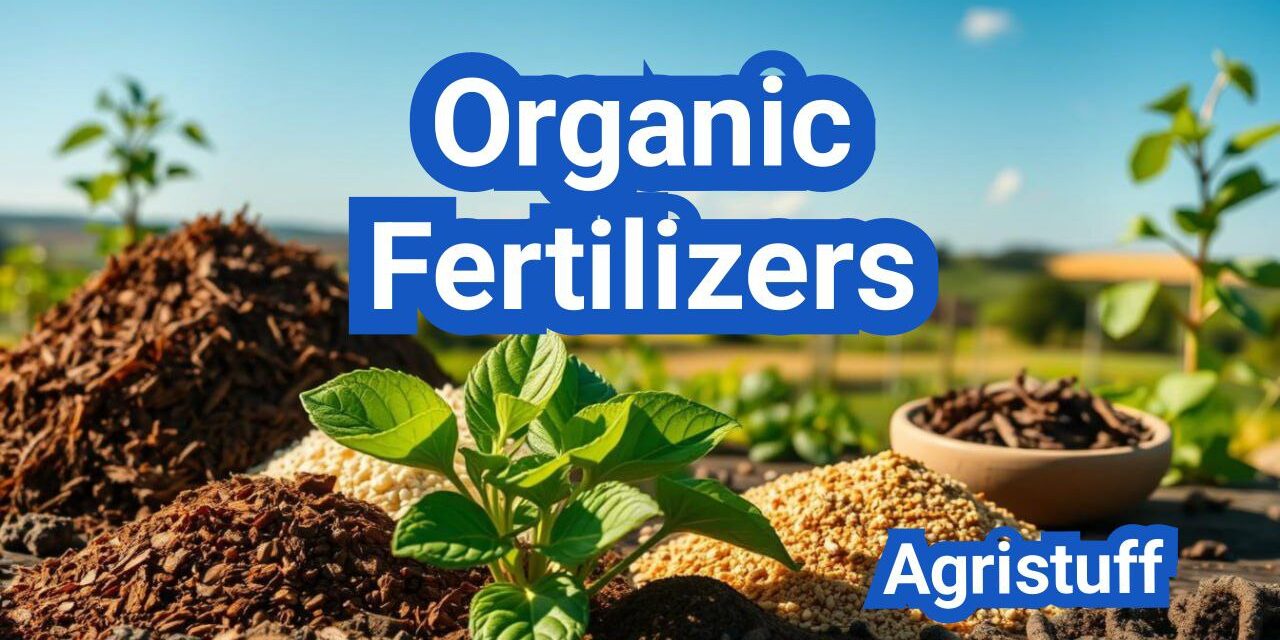
Organic fertilizers are natural materials used to feed plants and improve soil, including compost, manure, bone meal, fish emulsion, and plant-based meals.
In this guide, organic fertilizers are explained in a practical way, covering the main types, real examples, key benefits, and how to choose the right option for vegetables, lawns, flowers, and broader garden or farm use.
Key Takeaways
- Definition and importance of organic fertilizers
- Types and examples of organic fertilizers
- Advantages of using organic fertilizers
- Uses of organic fertilizers in gardening and agriculture
- Benefits of organic fertilizers for soil health and the environment
What Are Organic Fertilizers?
At the heart of organic gardening and farming lies the use of organic fertilizers, derived from natural sources. Organic fertilizers are substances that are used to improve the fertility and health of the soil, promoting plant growth without the use of synthetic chemicals.
Definition and Basic Principles
Organic fertilizers are defined by their natural origin, including materials such as animal waste, plant waste, and minerals. The basic principle behind their use is to work in harmony with nature, enhancing soil health and fertility over time.
Key characteristics of organic fertilizers include:
- Derived from natural sources
- Promote soil health and structure
- Release nutrients slowly
- Support beneficial microbial activity
How Organic Fertilizers Work
Organic fertilizers work by providing essential nutrients to plants, improving soil structure, and promoting beneficial microbial activity. As they break down, they release nutrients that are absorbed by plants, supporting healthy growth and development.
The process of nutrient release is often slow, providing a steady supply of nutrients to plants over time. This slow release mechanism helps to prevent the over-fertilization that can occur with synthetic fertilizers.
The Importance of Organic Matter in Soil Health
Organic matter is crucial for maintaining soil health. It improves soil structure, allowing for better water retention and aeration. This, in turn, supports the diverse microbial communities that are essential for nutrient cycling and plant health.
“The soil is a living system, and the addition of organic matter is crucial for maintaining its health and fertility.”
A comparison of different organic fertilizers based on their nutrient content is shown in the table below:
| Fertilizer Type | Nitrogen (N) | Phosphorus (P) | Potassium (K) |
|---|---|---|---|
| Compost | 1-2% | 0.5-1% | 1-2% |
| Manure | 3-4% | 2-3% | 2-3% |
| Fish Emulsion | 5% | 2% | 2% |
Understanding the composition and benefits of different organic fertilizers can help gardeners and farmers make informed decisions about their use, ultimately contributing to more sustainable agricultural practices.
Organic Fertilizer Examples at a Glance
Organic fertilizer examples include compost, animal manure, bone meal, blood meal, fish emulsion, fish meal, kelp meal, seaweed extract, alfalfa meal, cottonseed meal, and cover crops that are turned into the soil as green manures. This quick overview helps readers see that organic fertilizer is not one single product category, but a broad group of natural inputs used for different plant and soil goals.
Some organic fertilizer examples are chosen mainly to improve soil structure and long-term soil health, while others are used to supply nutrients more directly during the growing season. In practical terms, compost and well-managed manure are often used for overall soil building, while materials like blood meal, bone meal, fish-based fertilizers, and kelp products are often selected when a gardener or grower wants a more targeted organic fertilizer option.
- Compost: A classic organic fertilizer and soil amendment used to improve soil texture, water-holding capacity, and gradual nutrient release.
- Animal manure: A widely used organic fertilizer source that can add nitrogen, phosphorus, potassium, and organic matter when properly handled and applied.
- Bone meal: An organic fertilizer example often chosen when phosphorus is needed, especially for root development and planting situations.
- Blood meal: A stronger nitrogen-focused organic fertilizer that is often used when plants need a quicker boost in leafy growth.
- Fish emulsion and fish meal: Popular organic fertilizer products used for fast or moderate nutrient availability, especially in vegetables and garden crops.
- Kelp meal and seaweed extract: Organic fertilizer examples commonly used when growers want potassium and trace minerals in addition to general plant support.
- Alfalfa meal and cottonseed meal: Plant-based organic fertilizer materials often used in garden beds and specialty growing systems.
- Cover crops and green manures: Living organic fertilizer examples such as clover, vetch, peas, rye, or buckwheat that are grown and then incorporated into the soil to recycle nutrients and build organic matter.
At a glance, the best organic fertilizer example depends on the goal: compost and green manures are excellent for building healthier soil over time, manure can add broader fertility, bone meal is more phosphorus-focused, blood meal is more nitrogen-focused, and fish or seaweed products are often used when a more flexible organic fertilizer input is needed during active growth.
The Science Behind Organic Fertilizers

The science underlying organic fertilizers involves intricate interactions between soil microorganisms, organic matter, and plant roots. To fully understand how organic fertilizers work, it’s essential to delve into the processes that govern their effectiveness.
Nutrient Mineralization Process
Nutrient mineralization is the process by which organic nutrients are converted into inorganic forms that plants can absorb. This process is mediated by soil microorganisms that break down organic matter into simpler compounds. The rate of mineralization depends on factors such as temperature, moisture, and the type of organic matter present.
As microorganisms decompose organic materials, they release nutrients like nitrogen, phosphorus, and potassium. These nutrients are then available for plant uptake, supporting healthy growth and development.
Carbon to Nitrogen (C:N) Ratio
The C:N ratio is a critical factor in determining the rate of nutrient release from organic fertilizers. It represents the balance between carbon-rich materials (like straw or sawdust) and nitrogen-rich materials (such as manure or blood meal). A C:N ratio between 20:1 and 30:1 is generally considered optimal for most agricultural applications.
| C:N Ratio | Effect on Decomposition | Nutrient Release |
|---|---|---|
| High C:N (>30:1) | Slow decomposition | Nitrogen immobilization |
| Optimal C:N (20:1 – 30:1) | Balanced decomposition | Steady nutrient release |
| Low C:N ( | Rapid decomposition | Quick nutrient release, potential loss |
Soil Microbiology and Organic Fertilizers
Soil microbiology plays a vital role in the decomposition of organic fertilizers. Microorganisms such as bacteria and fungi are responsible for breaking down complex organic compounds into simpler forms that plants can utilize. A diverse and thriving microbial community is essential for maintaining soil health and fertility.
Organic fertilizers support soil microbiology by providing a food source for beneficial microorganisms. As these microbes feed on organic matter, they produce enzymes and other compounds that help to solubilize nutrients, making them more available to plants.
By understanding the science behind organic fertilizers, including the nutrient mineralization process, the importance of the C:N ratio, and the role of soil microbiology, farmers and gardeners can make informed decisions about how to use these products effectively.
Types of Organic Fertilizers
Understanding the different types of organic fertilizers is crucial for effective soil management and sustainable agriculture. Organic fertilizers are derived from natural sources and can be categorized based on their origin and composition.
Plant-Based Organic Fertilizers
Plant-based organic fertilizers are made from various plant materials. These can include compost made from decomposed plant matter, green manure from leguminous crops, and cover crops that are incorporated into the soil.
- Compost: Rich in nutrients and improves soil structure.
- Green manure: Adds nitrogen and organic matter to the soil.
- Cover crops: Enhances soil health and prevents erosion.
Animal-Based Organic Fertilizers
Animal-based organic fertilizers are derived from animal products. These include manure from various livestock, bone meal, and fish emulsion. These fertilizers are rich in nutrients and improve soil fertility.
- Manure: Provides a broad spectrum of nutrients.
- Bone meal: High in phosphorus, promoting root development.
- Fish emulsion: Rich in nitrogen, supporting leafy growth.
Mineral-Based Organic Fertilizers
Mineral-based organic fertilizers are derived from natural mineral deposits. Examples include limestone, gypsum, and rock phosphate. These fertilizers improve soil structure and provide essential micronutrients.
- Limestone: Adjusts soil pH and adds calcium.
- Gypsum: Improves soil structure and reduces soil compaction.
- Rock phosphate: Natural source of phosphorus.
Biofertilizers and Microbial Inoculants
Biofertilizers contain living microorganisms that promote plant growth by increasing the supply of nutrients. Rhizobia for legumes and mycorrhizal fungi are examples of biofertilizers that enhance nutrient uptake and improve soil health.
- Rhizobia: Fixes atmospheric nitrogen for legumes.
- Mycorrhizal fungi: Enhances nutrient and water uptake for plants.
Comprehensive List of Organic Fertilizers

Organic fertilizers come in various forms, including animal by-products, plant-derived materials, and mineral sources, each offering unique benefits. Understanding these different types is crucial for selecting the most appropriate fertilizer for specific agricultural or gardening needs.
Animal By-Products
Animal by-products are rich in nutrients and have been used for centuries to improve soil fertility. Some common examples include:
- Manure: Rich in nitrogen, phosphorus, and potassium, manure is one of the most widely used organic fertilizers.
- Bone Meal: High in phosphorus, bone meal promotes root development and flowering.
- Fish Emulsion: A liquid fertilizer made from fish waste, it’s rich in nitrogen and micronutrients.
- Blood Meal: An excellent source of nitrogen, blood meal is often used to boost leaf growth.
These animal-derived products not only provide essential nutrients but also improve soil structure and support beneficial microbial activity.
Plant-Derived Materials
Plant-derived materials are another vital category of organic fertilizers. They include:
- Compost: Made from decomposed plant matter, compost is a rich source of nutrients and improves soil’s water-holding capacity.
- Green Manure: Cover crops that are incorporated into the soil while still green, adding organic matter and nutrients.
- Alfalfa Meal: Rich in nitrogen, alfalfa meal is used to promote healthy plant growth.
- Cottonseed Meal: A good source of nitrogen and other micronutrients, often used in organic farming.
These materials help in maintaining soil health, reducing erosion, and supporting biodiversity.
Mineral Sources
Mineral sources are naturally occurring substances that provide essential nutrients to plants. Some examples include:
- Rock Phosphate: A natural source of phosphorus, used to promote root development.
- Langbeinite: A mineral that provides potassium, magnesium, and sulfur, essential for plant growth.
- Gypsum: Used to improve soil structure and provide calcium and sulfur.
- Epsom Salt: Rich in magnesium and sulfur, often used to correct magnesium deficiencies.
These mineral sources are crucial for maintaining nutrient balance in the soil and supporting overall plant health.
| Type of Organic Fertilizer | Key Nutrients | Benefits |
|---|---|---|
| Manure | N, P, K | Improves soil fertility and structure |
| Bone Meal | P | Promotes root development and flowering |
| Compost | Varied | Enhances soil health and water retention |
| Rock Phosphate | P | Natural source of phosphorus |
Popular Organic Fertilizer Examples and Their Uses
When it comes to nourishing your garden, several popular organic fertilizer examples stand out for their effectiveness. Organic fertilizers come in various forms, each tailored to meet the specific needs of different plants and soil conditions.
Compost: The Universal Organic Fertilizer
Compost is often considered the cornerstone of organic farming and organic gardening. It’s a rich source of nutrients, improves soil structure, and supports beneficial microbial activity. By incorporating compost into your soil, you can enhance its fertility and overall health.
To make the most of compost, it’s essential to understand how to use it effectively. This includes knowing the right amount to apply and how to mix it into the soil.
Manure Management and Applications
Manure is another valuable organic fertilizer, rich in nutrients that can significantly improve soil fertility. However, it’s crucial to manage manure properly to avoid potential issues such as pathogen contamination.
Proper manure management involves aging or composting the manure to kill off pathogens, making it safe to use. This process can also enhance its nutrient content.
Fish Emulsion: Benefits and Usage
Fish emulsion is a liquid organic fertilizer made from the remains of fish. It’s an excellent source of nitrogen, phosphorus, and potassium, making it a well-rounded fertilizer for promoting plant growth.
To use fish emulsion effectively, dilute it according to the manufacturer’s instructions and apply it during the growing season when plants need a nutrient boost.
Bone Meal vs. Blood Meal: When to Use Each
Bone meal and blood meal are both organic fertilizers derived from animal products, but they serve different purposes. Bone meal is high in phosphorus, making it ideal for promoting root development and flower production.
Blood meal, on the other hand, is rich in nitrogen, making it suitable for leafy green plants that require a lot of nitrogen to thrive. Understanding the nutrient needs of your plants will help you decide which fertilizer to use.
Advantages of Using Organic Fertilizers

One of the most significant benefits of organic fertilizers is their ability to improve soil structure, enhance nutrient release, and promote environmental sustainability. Organic fertilizers work in harmony with the soil’s ecosystem, providing a natural and sustainable way to promote plant growth.
Soil Structure Improvement
Organic fertilizers significantly improve soil structure by increasing its water-holding capacity and aeration. This is achieved through the addition of organic matter, which acts as a sponge, holding water and nutrients that plants need to thrive. Improved soil structure also enhances root growth, allowing plants to absorb nutrients more efficiently.
Sustainable Nutrient Release
Unlike synthetic fertilizers that release nutrients quickly, often leading to over-fertilization, organic fertilizers provide a sustainable release of nutrients. This gradual release ensures that plants receive a steady supply of nutrients, promoting healthy growth and development.
Environmental Benefits
The use of organic fertilizers has numerous environmental benefits. They reduce the risk of water pollution by minimizing nutrient runoff into water bodies. Additionally, organic fertilizers promote soil biota, enhancing biodiversity and contributing to a healthier ecosystem.
Reduced Chemical Dependency
By adopting organic fertilizers, farmers and gardeners can significantly reduce their dependency on chemical fertilizers. This shift not only improves soil health but also contributes to a safer environment for wildlife and human consumption.
In conclusion, the advantages of using organic fertilizers are multifaceted, offering benefits that range from improving soil structure and promoting sustainable nutrient release to enhancing environmental sustainability and reducing chemical dependency.
Organic Fertilizers vs. Chemical Fertilizers

Organic and chemical fertilizers have distinct characteristics that impact soil health and plant growth differently. Understanding these differences is essential for making informed decisions in agricultural practices.
Nutrient Content and Availability
Organic fertilizers typically have a slower release of nutrients compared to chemical fertilizers. This slow release promotes sustainable nutrient uptake by plants and reduces the risk of over-fertilization.
Chemical fertilizers, on the other hand, provide immediate nutrient availability but can lead to soil degradation over time due to their high salt content and potential for leaching.
Environmental Impact Comparison
The environmental impact of organic versus chemical fertilizers is a significant consideration. Organic fertilizers tend to have a lower environmental footprint due to their biodegradable nature and the promotion of soil health.
Chemical fertilizers can contribute to water pollution through runoff and leaching, posing risks to aquatic ecosystems and human health.
Cost Analysis: Short-term vs. Long-term
In the short term, chemical fertilizers may appear more cost-effective due to their immediate nutrient availability and often lower upfront costs.
However, long-term use of organic fertilizers can lead to cost savings through improved soil health, reduced need for additional fertilizers, and potential increases in crop yields.
Effect on Soil Health Over Time
Organic fertilizers contribute to soil structure improvement and promote a diverse soil microbiome, enhancing overall soil health over time.
In contrast, the prolonged use of chemical fertilizers can result in soil degradation, reducing its fertility and affecting its ability to support plant growth.
How to Choose the Right Organic Fertilizer

The key to successful organic gardening lies in understanding how to choose the right organic fertilizer for your specific needs. With the variety of organic fertilizers available, making an informed decision can significantly impact soil health and plant productivity.
Understanding Your Soil Needs
Before selecting an organic fertilizer, it’s crucial to understand your soil’s nutrient requirements. Different soils have varying levels of nutrients, and adding the wrong type or amount of fertilizer can be detrimental.
Soil nutrient content is a critical factor. Soils can be deficient in nitrogen, phosphorus, or potassium, among other micronutrients. Understanding these deficiencies is the first step in choosing the right fertilizer.
Soil Testing for Organic Gardens and Farms
Soil testing is a vital step in determining the nutrient needs of your soil. By analyzing your soil’s pH and nutrient levels, you can make informed decisions about which organic fertilizers to use.
A comprehensive soil test can reveal deficiencies in key nutrients. For instance, a soil test might show that your soil is lacking in nitrogen, indicating the need for a nitrogen-rich organic fertilizer like manure or blood meal.
| Soil Test Parameter | Interpretation | Recommended Action |
|---|---|---|
| pH Level | Indicates soil acidity or alkalinity | Adjust pH if necessary using lime or sulfur |
| Nitrogen (N) Level | Essential for leaf growth | Apply nitrogen-rich fertilizers like manure or blood meal |
| Phosphorus (P) Level | Critical for root development and flowering | Use bone meal or rock phosphate |
Matching Fertilizers to Plant Requirements
Different plants have different nutrient requirements. For example, leafy greens require more nitrogen, while fruiting plants need more phosphorus.
By understanding the specific needs of your plants, you can choose an organic fertilizer that provides the necessary nutrients. This targeted approach ensures that your plants receive exactly what they need for optimal growth.
Reading Organic Fertilizer Labels
Understanding the information on organic fertilizer labels is crucial for making informed decisions. Labels typically provide details on the fertilizer’s nutrient content, application rates, and any additional ingredients.
When reading labels, look for the N-P-K ratio, which indicates the fertilizer’s nitrogen, phosphorus, and potassium content. This ratio can help you choose a fertilizer that matches your soil’s needs.
By carefully selecting the right organic fertilizer based on your soil’s needs, the specific requirements of your plants, and the information provided on fertilizer labels, you can enhance soil health and promote sustainable gardening practices.
DIY Organic Fertilizers: Make Your Own at Home

Making your own organic fertilizers is not only environmentally friendly but also enhances soil health. By utilizing materials readily available at home, gardeners can create effective fertilizers that promote healthy plant growth without the use of synthetic chemicals.
Homemade Compost: A Step-by-Step Guide
Composting is a natural process that involves breaking down organic materials into a nutrient-rich soil amendment. To make homemade compost, start by collecting organic materials such as kitchen scraps, leaves, and grass clippings. Layer these materials in a compost bin, ensuring a mix of “green” (nitrogen-rich) and “brown” (carbon-rich) materials.
- Green materials: Kitchen scraps, grass clippings, manure
- Brown materials: Dried leaves, straw, shredded newspaper
Maintain the compost pile by regularly turning it and ensuring it remains moist. The compost is ready when it is dark and crumbly, typically after several months.
Compost Tea: Preparation and Application
Compost tea is a liquid solution made by steeping compost in water. It’s an effective way to deliver beneficial microbes to plants. To prepare compost tea, place a quantity of compost in a porous bag and submerge it in a bucket of water. Aerate the mixture for 24-48 hours to promote microbial growth.
To apply compost tea, dilute it with water (typically 1:10) and use it as a foliar spray or soil drench. This method provides plants with a boost of beneficial microbes, enhancing their ability to absorb nutrients.
Kitchen Waste Fertilizers
Kitchen waste can be repurposed as fertilizers. Vegetable peels, tea bags, and coffee grounds are rich in nutrients. These materials can be added directly to the soil or incorporated into the compost pile.
| Kitchen Waste | Nutrient Content | Application Method |
|---|---|---|
| Vegetable Peels | Rich in N, P, K | Direct burial or composting |
| Coffee Grounds | High in N, some P and K | Mix into soil or compost |
| Eggshells | Rich in Ca | Crush and mix into soil |
Coffee Grounds and Eggshells as Fertilizers
Coffee grounds are a good source of nitrogen, while eggshells provide calcium, both of which are beneficial for plant growth. Coffee grounds can be mixed into the soil or added to the compost pile. Eggshells should be crushed before being mixed into the soil to prevent them from deterring pests.
By incorporating these DIY organic fertilizers into your gardening routine, you can improve soil health, reduce waste, and promote sustainable gardening practices.
Application Methods for Organic Fertilizers

Organic fertilizers can be applied in various ways, each with its own advantages and suitable scenarios. The choice of application method depends on factors such as the type of crop, soil characteristics, and the specific nutrients required.
Broadcast Application
Broadcast application involves spreading the organic fertilizer evenly over the soil surface. This method is particularly effective for maintaining soil fertility over a large area and is often used in pasture management and lawn care.
Advantages: Easy to implement, covers large areas efficiently.
Considerations: May require incorporation into the soil to prevent nutrient loss.
Side-Dressing Techniques
Side-dressing involves applying the fertilizer to the soil alongside the plants, typically during the growing season. This method is useful for providing a nutrient boost to crops that need it most.
Benefits: Targets nutrients directly to the root zone, reducing waste.
Fertigation with Organic Inputs
Fertigation is the process of applying fertilizers through irrigation systems. When using organic inputs, it’s essential to ensure that the materials are fully soluble and won’t clog the irrigation system.
Key considerations: Requires careful planning to avoid system clogging and ensure uniform distribution.
Foliar Application of Organic Nutrients
Foliar application involves spraying the fertilizer directly onto the leaves of the plants. This method can provide a quick nutrient boost and is particularly useful for correcting micronutrient deficiencies.
Advantages: Rapid uptake by plants, effective for correcting deficiencies.
Seasonal Guide to Organic Fertilization

Understanding the seasonal nuances of organic fertilization is crucial for maximizing crop yield and maintaining soil health. Different seasons require tailored strategies to optimize plant growth and soil fertility.
Spring Fertilization Strategies
Spring is a critical time for fertilization as plants begin their growth cycle. Using organic fertilizers like compost or manure can provide essential nutrients. “Starting with a strong foundation in spring sets the stage for a healthy growing season,” as noted by organic farming experts.
Applying fertilizers that promote leafy growth, such as those high in nitrogen, can be particularly beneficial. It’s also a good time to assess soil health and make necessary adjustments.
Summer Maintenance Fertilization
During the summer, maintenance fertilization focuses on sustaining plant health and supporting fruiting or flowering. Organic fertilizers like fish emulsion or compost tea can be used to provide a nutrient boost.
It’s essential to monitor soil moisture and adjust fertilization accordingly, as dry conditions can impact nutrient availability.
Fall Preparations for Winter
Fall is a crucial time for preparing the soil for the next growing season. Adding organic matter like compost or well-rotted manure can enhance soil structure and fertility.
Cover cropping is another effective strategy for improving soil health during the fall. It helps in reducing erosion and adding nutrients back into the soil.
Winter Composting and Preparation
Winter is an ideal time for composting and preparing for the upcoming growing season. Collecting kitchen scraps and other organic materials to create compost can provide a nutrient-rich fertilizer for spring.
Planning for the next season, including ordering organic fertilizers and preparing the soil, can ensure a smooth start come spring.
By adopting a seasonal approach to organic fertilization, gardeners and farmers can improve soil health, boost crop yields, and contribute to a more sustainable agricultural practice.
Best Organic Fertilizer for Vegetables, Flowers, Lawns, and Trees

Different plants have unique nutritional needs, and organic fertilizers can be tailored to meet these requirements for optimal growth. Understanding the specific needs of various crops is essential for effective fertilization.
Vegetables and Fruits
Vegetables and fruits are among the most demanding crops in terms of nutrient requirements. High-quality compost or well-rotted manure can provide the necessary nutrients for healthy growth. For instance, tomatoes and peppers benefit from fertilizers high in phosphorus to promote fruiting.
“The use of organic fertilizers in vegetable production not only enhances yield but also improves the nutritional quality of the produce,” according to a study on sustainable agriculture practices.
Flowering Plants and Ornamentals
Flowering plants and ornamentals require fertilizers that promote blooming and overall plant health. Organic fertilizers high in potassium, such as kelp meal or wood ash, can enhance flower production and plant vigor.
- Kelp meal: Rich in micronutrients and potassium
- Wood ash: High in potassium, use sparingly to avoid altering soil pH
Organic Lawn Care
Lawn care often involves the use of fertilizers to maintain a lush, green appearance. Organic lawn fertilizers can provide a slow release of nutrients, promoting healthy grass growth without the environmental risks associated with synthetic fertilizers.
For lawns, a combination of compost and fish emulsion can be particularly effective, providing both immediate and long-term benefits.
Trees and Shrubs
Trees and shrubs have different fertilization needs compared to annual crops. Slow-release organic fertilizers like bone meal or alfalfa meal can provide nutrients over an extended period, supporting the long-term health of these plants.
It’s also important to consider the soil conditions around trees and shrubs, as mulching can help retain moisture and reduce the need for frequent fertilization.
Legume Cover Crops and Green Manures
Legume cover crops, known for their nitrogen-fixing abilities, play a vital role in maintaining soil health and reducing the need for synthetic fertilizers. These crops are an integral part of sustainable agricultural practices, offering a natural and effective way to enhance soil fertility.
Nitrogen Fixation Benefits
The primary benefit of legume cover crops lies in their ability to fix atmospheric nitrogen into a form that is readily available to plants. This process, facilitated by symbiotic bacteria in the soil, enriches the soil with nitrogen, reducing the need for external nitrogen inputs. As noted by the USDA Natural Resources Conservation Service, “Legume cover crops can fix significant amounts of nitrogen, improving soil health and reducing the environmental impact of synthetic fertilizers.”
“Legumes are the backbone of sustainable agriculture, providing a natural source of nitrogen that enhances soil fertility and promotes ecosystem health.”
Popular Cover Crop Options
Several legume species are commonly used as cover crops, each with its unique characteristics and benefits. Some of the most popular options include:
- Clover (Trifolium spp.): Known for its rapid growth and nitrogen-fixing capabilities.
- Hairy Vetch (Vicia villosa): A cold-hardy legume that thrives in cooler climates.
- Alfalfa (Medicago sativa): A deep-rooted perennial legume that improves soil structure and fertility.
- Cowpea (Vigna unguiculata): A warm-season legume that is drought-tolerant and ideal for warmer climates.
Implementation and Management
Successfully integrating legume cover crops into agricultural systems requires careful planning and management. Factors such as climate, soil type, and the specific needs of the subsequent crop must be considered when selecting a legume cover crop. Proper management practices, including timely planting, mowing, and incorporation into the soil, are crucial for maximizing the benefits of these crops.
Incorporating Cover Crops into Soil
The method of incorporating legume cover crops into the soil can significantly impact their effectiveness. Techniques such as tillage, mowing, or using a roller-crimper can be employed to terminate the cover crop and incorporate it into the soil. The choice of method depends on the specific cover crop, soil conditions, and the equipment available.
By understanding the benefits and management requirements of legume cover crops, farmers and gardeners can harness their potential to improve soil health, reduce chemical inputs, and promote sustainable agricultural practices.
Best Organic Fertilizer Products and Brands
As the demand for organic produce continues to rise, so does the need for high-quality organic fertilizers. The market is now flooded with various commercial organic fertilizer products, each with its unique characteristics and benefits.
OMRI Listed Products: What It Means
OMRI (Organic Materials Review Institute) listed products are those that have been certified to meet the standards for organic production. These products are rigorously tested to ensure they comply with the USDA’s National Organic Program (NOP) standards. Choosing OMRI listed fertilizers guarantees that you are using products that are safe for the environment and compliant with organic farming practices.
“The use of OMRI listed products simplifies the process of maintaining organic integrity on farms and gardens,” says an expert in organic farming.
“It’s a mark of quality that farmers and gardeners can trust.”
Top Organic Fertilizer Brands
Several top brands have emerged in the market for commercial organic fertilizers. These include:
- Espoma Organic
- Miracle-Gro Organic Choice
- Neptune’s Harvest
- Alaska Fish Fertilizer
These brands offer a range of products catering to different needs, from general-purpose fertilizers to specialized formulas for specific plants.
Specialized Products for Different Needs
Different crops and plants have varying nutrient requirements. Specialized organic fertilizer products are designed to meet these specific needs. For example, fish emulsion is high in nitrogen and is ideal for leafy greens, while bone meal is rich in phosphorus and promotes root development and flowering.
Cost-Effectiveness Analysis
When choosing commercial organic fertilizer products, cost-effectiveness is a crucial factor. While some organic fertilizers may be more expensive upfront, they often provide long-term benefits such as improved soil health and reduced environmental impact. A cost-effectiveness analysis should consider not just the initial cost, but also the yield improvement and potential savings from reduced chemical use.
| Fertilizer Type | Cost per Unit | Nutrient Content | Overall Effectiveness |
|---|---|---|---|
| Fish Emulsion | $15/gallon | 5-2-2 NPK | High in Nitrogen |
| Bone Meal | $10/lb | 3-15-0 NPK | High in Phosphorus |
Troubleshooting Common Issues with Organic Fertilizers
Effective use of organic fertilizers requires understanding and mitigating potential issues. While these natural products offer numerous benefits for soil health and plant growth, their improper application can lead to problems such as nutrient deficiencies, environmental pollution, and decreased soil fertility.
Addressing Nutrient Deficiencies
Nutrient deficiencies can significantly impact plant health and productivity. To address this issue, it’s crucial to conduct regular soil testing to determine nutrient levels and pH. Based on test results, you can choose the appropriate organic fertilizer to correct deficiencies.
- For nitrogen deficiencies, consider using blood meal or fish emulsion.
- For phosphorus deficiencies, bone meal or rock phosphate can be effective.
- For potassium deficiencies, kelp meal or greensand can provide the necessary nutrients.
Managing Nitrate Leaching and Phosphorus Runoff
Nitrate leaching and phosphorus runoff are environmental concerns associated with fertilizer use. To manage these issues, proper application rates and timing are crucial. Additionally, incorporating cover crops into your rotation can help absorb excess nutrients and reduce erosion.
Preventing Over-Fertilization
Over-fertilization can harm plants and the environment. To prevent this, it’s essential to follow recommended application rates and monitor plant responses. Using slow-release organic fertilizers can also help provide a steady supply of nutrients without overloading the soil.
Adjusting pH with Organic Methods
Soil pH affects nutrient availability and microbial activity. To adjust pH organically, you can use materials like limestone to raise pH or peat moss to lower it. Regular monitoring is necessary to maintain optimal pH ranges for your crops.
“The key to successful organic farming is understanding the complex relationships between soil, plants, and microorganisms.” –
Unknown
Final Thoughts on Organic Fertilizers
Organic fertilizers play a vital role in sustainable gardening by promoting soil health, reducing environmental impact, and fostering eco-friendly practices. As discussed, various types of organic fertilizers, including plant-based, animal-based, and mineral-based options, offer a range of benefits for gardeners and farmers.
By understanding the science behind organic fertilizers and their application methods, individuals can make informed decisions about their gardening practices. The use of organic fertilizers contributes to improved soil structure, sustainable nutrient release, and reduced chemical dependency, ultimately supporting a healthier environment.
As the demand for eco-friendly gardening practices continues to grow, the importance of organic fertilizers cannot be overstated. By adopting these natural and sustainable methods, gardeners can contribute to a more environmentally conscious approach to gardening, aligning with the principles of sustainable gardening.
FAQ
What are organic fertilizers?
Organic fertilizers are derived from natural sources such as plants, animals, and minerals, and are used to promote plant growth and soil health.
What are the benefits of using organic fertilizers?
Organic fertilizers improve soil structure, promote sustainable nutrient release, reduce chemical dependency, and provide environmental benefits.
What are the different types of organic fertilizers?
Organic fertilizers can be categorized into plant-based, animal-based, mineral-based, biofertilizers, and microbial inoculants.
How do I choose the right organic fertilizer for my plants?
To choose the right organic fertilizer, understand your soil needs through soil testing, match fertilizers to plant requirements, and read organic fertilizer labels carefully.
Can I make my own organic fertilizer at home?
Yes, you can make your own organic fertilizer at home using kitchen waste, coffee grounds, eggshells, and by creating homemade compost and compost tea.
What are the advantages of using compost as an organic fertilizer?
Compost is a universal organic fertilizer that improves soil structure, increases nutrient content, and supports beneficial microbial activity.
How do I apply organic fertilizers effectively?
Organic fertilizers can be applied through broadcast application, side-dressing techniques, fertigation with organic inputs, and foliar application, depending on the specific needs of your plants.
What are legume cover crops and green manures, and how do they benefit soil health?
Legume cover crops and green manures are plants grown to improve soil health through nitrogen fixation, adding organic matter, and reducing erosion.
What is the difference between organic and chemical fertilizers?
Organic fertilizers release nutrients slowly, improve soil health, and are environmentally friendly, whereas chemical fertilizers provide quick but potentially harmful nutrient release and can degrade soil health over time.
How can I troubleshoot common issues with organic fertilizers?
Common issues with organic fertilizers can be addressed by managing nutrient deficiencies, preventing over-fertilization, adjusting soil pH using organic methods, and mitigating nitrate leaching and phosphorus runoff.
Are commercial organic fertilizer products effective?
Commercial organic fertilizer products can be effective if chosen based on the specific needs of your plants and soil, and if they are OMRI listed, ensuring they meet organic standards.
Can organic fertilizers be used for all types of plants?
Yes, organic fertilizers can be used for a wide range of plants, including vegetables, fruits, flowering plants, and lawns, by selecting the appropriate type and application method.
Conclusion of Organic Fertilizers
Organic fertilizers—definition and why they matter
Organic fertilizers are nutrient sources derived from plant, animal, and naturally mined materials that release nutrients gradually while building soil organic matter, structure, and biological life. Because Organic fertilizers feed both crops and microbes, they help U.S. farms improve water-holding capacity, reduce crusting, and increase resilience under stress—benefits that synthetic salts alone cannot offer. For ranking in the USA, clearly defining Organic fertilizers and their soil-first value sets the stage for practical decisions that protect yields and the environment. Colorado State University – Fertilizer definitions and labeling
Organic fertilizers vs. synthetic fertilizers (how they work)
Organic fertilizers release nutrients through microbial mineralization, so temperature, moisture, and the carbon-to-nitrogen (C:N) ratio drive availability; synthetics, by contrast, are water-soluble salts that act quickly but don’t add carbon. This means Organic fertilizers are best for building long-term fertility and buffering pH and salinity, while synthetics are useful for rapid, targeted corrections. The smartest programs blend both timing and biology to match crop demand with steady release from Organic fertilizers. Michigan State University Extension – What organic fertilizers mean to plants and soil
Regulatory basics in the U.S. (what the rules say about Organic fertilizers)
In certified organic systems, the USDA National Organic Program (NOP) requires that fertility be managed to maintain or improve soil’s physical, chemical, and biological condition. Organic fertilizers fit this mandate when they complement rotations, cover crops, and compost. Even for non-certified farms, these rules outline good stewardship for using Organic fertilizers without polluting water. eCFR – §205.203 Soil fertility and crop nutrient management
Allowed and prohibited inputs (getting “Organic fertilizers” right)
Not everything labeled “organic” is permitted in certified production: for example, sewage sludge (biosolids) is prohibited, while many mined or naturally derived inputs can be allowed with restrictions. Before applying Organic fertilizers, confirm the exact material and use conditions with your certifier. eCFR – §205.105 Allowed and prohibited substances
How to vet products—OMRI Listed® and labeling for Organic fertilizers
To quickly check compliance, look for the OMRI Listed® seal and verify the product name in the OMRI database. “OMRI Listed” indicates suitability for organic production when used as directed and documented in your Organic System Plan—an essential step when sourcing packaged Organic fertilizers. OMRI – About OMRI Listed® products
Main categories of Organic fertilizers (animal, plant, mineral)
Organic fertilizers commonly fall into three groups: animal-based (composted manure, bone, feather, fish), plant-based (alfalfa, cottonseed, soybean meal, seaweed/kelp), and mineral-based (rock phosphate, sulfate of potash magnesia/langbeinite). Each class of Organic fertilizers differs in N-P-K, speed of release, and side effects (e.g., pH shifts), so match sources to soil test needs. Clemson Extension – Understanding organic fertility
Manures and composts as Organic fertilizers (the 90/120-day harvest rule)
Raw manures are potent Organic fertilizers but carry food-safety risk; the NOP requires 120 days between application and harvest where edible portions contact soil, and 90 days when they do not. Properly made composts are considered lower risk and are not subject to those waiting periods, making compost a reliable backbone for Organic fertilizers programs. USDA AMS – Soil building, manures, and composts
Processed and heat-treated manures (safer, more uniform Organic fertilizers)
Pelletized or heat-treated manure products offer more consistent analyses and lower pathogen risk than raw manure, making them convenient Organic fertilizers for side-dressing and precision spreading. Always check label guarantees and follow guidance for processed manure under organic rules. USDA NOP 5006 – Processed animal manures guidance (PDF)
Plant-based meals as Organic fertilizers (alfalfa, cottonseed, soybean)
Plant meals supply steady nitrogen and potassium while feeding microbes with carbon, so they are staple Organic fertilizers for horticulture and broadacre systems. Alfalfa meal (often ~2-0-2) is biologically active; cottonseed meal provides N but slightly acidifies soil; soybean meal offers relatively higher N but needs careful rate management. University of Arizona – Organic fertilizers overview (PDF)
Liquid Organic fertilizers (fish and plant hydrolysates for fertigation)
Liquid Organic fertilizers, including fish hydrolysates and plant extracts, are valuable for in-season feeding and drip systems because they supply quicker nitrogen than bulky materials. To prevent emitter clogging when using Liquid Organic fertilizers, follow filtration recommendations and strain products before injection. UC ANR – Estimating N availability from organic amendments
Seaweed/kelp inputs (biostimulants alongside Organic fertilizers)
Kelp meals and seaweed extracts are typically low in N-P-K, so they function as biostimulants and micronutrient sources rather than standalone Organic fertilizers. When paired with balanced Organic fertilizers, kelp may support stress tolerance and rooting in vegetables and perennials. Colorado State University – Seaweed products (GardenNotes 234)
Mineral sources used as Organic fertilizers (P and K examples)
Some mined minerals are acceptable in organic production when used appropriately. Rock phosphate supplies phosphorus slowly; potassium sulfate or langbeinite provides potassium and magnesium with lower chloride than KCl. Verify that mineral-based Organic fertilizers meet “natural deposit” requirements and do not include prohibited synthetics. USDA NOP 5034-1 – Materials for organic crop production (PDF)
Cover crops as “living” Organic fertilizers (N credits and scavenging)
Legume covers fix atmospheric nitrogen, while grasses and brassicas scavenge residual nitrate, making cover crops effective living Organic fertilizers. By timing termination to crop demand, you synchronize nutrient release and reduce leaching—an essential tactic in any Organic fertilizers plan. SARE – Building soil fertility with cover crops
Why carbon-to-nitrogen ratio (C:N) governs Organic fertilizers’ release
The C:N ratio predicts whether microbes will immobilize or mineralize nitrogen. High-C materials (e.g., straw, sawdust) can temporarily tie up N; mature composts near 10–15:1 tend to release nutrients. Choosing Organic fertilizers with appropriate C:N helps avoid early-season N deficits. Cornell – C:N ratio guidance
Reading labels and doing N-P-K math for Organic fertilizers
All bags list guaranteed analysis (e.g., 6-12-0). Percentages are by weight, so 100 lb of 6-12-0 contains 6 lb N and 12 lb P₂O₅. Use this math to size rates for Organic fertilizers based on soil tests and realistic yield goals—then adjust for expected mineralization in season. Oregon State University Extension – Understanding fertilizer numbers
Soil, compost, and manure testing before picking Organic fertilizers
Testing soil and amendments drives better choices and prevents over- or under-application of Organic fertilizers. Manure and compost tests reveal total N, ammonium, nitrate, phosphorus, potassium, salts, and moisture—allowing accurate nutrient budgets and salinity management. USDA NRCS – Nutrient management (soil and manure testing)
Cost per pound of nutrient (compare Organic fertilizers economically)
Analyses vary widely, so compare Organic fertilizers on a $/lb nutrient basis. Divide product price by pounds of N (or P₂O₅/K₂O) delivered at field moisture. This normalizes decisions across pellets, meals, and liquids and helps design cost-effective blends of Organic fertilizers. New Mexico State University – Calculating fertilizer costs
Application strategy for Organic fertilizers (the 4Rs/SMART framework)
Apply the 4Rs—Right source, Right rate, Right time, Right place—to Organic fertilizers. Incorporate bulky materials pre-plant; side-dress or fertigate liquids in season; and band or place near roots to reduce losses. Align Organic fertilizers with crop uptake curves and irrigation schedules. USDA NRCS – SMART nutrient management (4Rs)
How fast will Organic fertilizers release? (availability and timing)
First-season nitrogen availability differs by source: many liquids and fish products release quickly; pelletized meals release over weeks; and manure-based composts may release only a fraction in year one. Build a realistic plan so Organic fertilizers meet peak demand without excess. UC ANR – First-season N availability from organics
Food safety considerations when Organic fertilizers include manure
To reduce risk with manure-based Organic fertilizers, avoid applications close to harvest, incorporate promptly, and use verified composting or processing steps. Following NOP’s 90/120-day intervals protects consumers and maintains certification integrity for Organic fertilizers programs. USDA AMS – Manure use timelines
Environmental stewardship: limiting leaching and runoff with Organic fertilizers
Even with Organic fertilizers, excess nitrogen can leach beyond the root zone and phosphorus can move off fields attached to sediment. Calibrated rates, cover crops, residue cover, and buffer strips keep Organic fertilizers working for the crop—not in waterways. Penn State Extension – Nitrogen efficiency and environmental loss
Field-level practices to protect water while using Organic fertilizers
Incorporate manures when feasible, avoid saturated or frozen soils, keep setbacks from wells and waterways, and use tools like the P-Index to evaluate field risk. These low-tech steps raise the ROI of Organic fertilizers while safeguarding local water quality. University of Minnesota Extension – Reducing water-quality risks from manure
Typical analyses from common Organic fertilizers (real-world ranges)
Representative numbers help with planning Organic fertilizers: feather meal ~7–12-0 (slow N), fish emulsion ~2-4-1 (quicker N), steamed bone meal ~1–2-11 to 15 (P & Ca), and worm castings ~2-1.5-1.5 (mild, microbe-rich). Always verify your product’s guaranteed analysis for Organic fertilizers. Clemson Extension – Example analyses and release rates
Green manures as in-place Organic fertilizers (credit your N)
Legume cover crops can contribute tens to 100+ lb N/acre depending on biomass, species, and termination timing. Crediting that N reduces purchased Organic fertilizers while maintaining yield goals and improving soil. SARE – Legume cover crops and N contributions
Compatibility, mixing, and storage for Organic fertilizers
When mixing Organic fertilizers, avoid combining calcium-rich materials with phosphates in concentrated solutions, strain liquids before injection, and store in cool, dry areas to protect microbial activity and prevent caking. Good housekeeping keeps Organic fertilizers uniform and application equipment reliable. Oregon State University Extension – Handling and compatibility basics
Compliance details for potassium sources in Organic fertilizers
Potassium chloride (muriate of potash) is allowed only if from a mined source and used to minimize chloride accumulation; potassium sulfate must be from natural deposits or brines. Always confirm these details for potassium-bearing Organic fertilizers with your certifier and product documentation. LII – §205.601 & §205.602 potassium allowances and restrictions
A simple planning workflow for Organic fertilizers (step-by-step)
Start with soil tests and a yield target; credit cover crops and compost; select compliant sources of Organic fertilizers to meet the remaining need; compare options on $/lb nutrient; schedule pre-plant incorporation and in-season feeding; and document everything for traceability and continuous improvement. USDA NRCS – Nutrient management planning steps
Final thought
Used thoughtfully, Organic fertilizers don’t just “feed the crop”—they build living soil that keeps feeding the farm for years. By testing, budgeting, and timing Organic fertilizers to plant demand—and by following U.S. stewardship and organic rules—you can raise yields, protect water, and improve long-term profitability with confidence. USDA NOP – Fertility principles and soil health
Sources & References
- eCFR – §205.203 Soil fertility & crop nutrient management
- eCFR – §205.105 Allowed and prohibited substances
- USDA AMS – Soil building with manures and composts
- OMRI – About OMRI Listed® products
- Colorado State University – Fertilizer definitions and labeling
- SARE – Building soil fertility with cover crops
- Cornell – Carbon-to-nitrogen ratio guidance
- USDA NRCS – SMART/4R nutrient management
- USDA NRCS – Soil and manure testing
- Penn State Extension – Nitrogen efficiency and losses
- University of Minnesota Extension – Reducing water-quality issues from manure
- USDA NOP 5006 – Processed animal manure guidance (PDF)
- USDA NOP 5034-1 – Materials for organic crop production (PDF)
- Oregon State University Extension – Understanding fertilizer numbers
- Michigan State University Extension – Organic fertilizers & soil biology
- Colorado State University – Seaweed/kelp products (GardenNotes 234)
- New Mexico State University – Calculating fertilizer costs
- University of Arizona – Organic fertilizers overview (PDF)
- Legal Information Institute – §205.601/§205.602 potassium allowances