A successful orchard starts with decisions about the land and the buyer, long before the first tree goes in. Apple farming is a long-term business, so your climate, land, intended customers, available labor, and time to establish a crop all matter. The scion is the upper, fruit-producing part of a grafted tree that determines the apple variety.
There is no reliable national startup-cost estimate or current state-production ranking to use as a shortcut. Your own plan needs to fit the property and the people who will buy its fruit. That takes careful preparation before you commit to a planting.
Quick answer: How do you start an apple farm?
To start Apple Farming in the United States, identify your buyers, evaluate the land and water supply, and select locally adapted varieties on suitable rootstocks. Prepare the site before planting, arrange compatible pollination, and install the irrigation and support systems your orchard design requires. Start with an area you can manage well, and budget for establishment and maintenance before dependable commercial harvests develop. Penn State Extension: Planning and Planting an Orchard.
Key Takeaways
- Confirm that customers have a reason to buy your planned crop.
- Screen land for sunlight, drainage, soil, and access.
- Choose compatible fruiting varieties and rootstocks for the site.
- Compare traditional planting with a high-density system.
- Budget for years of establishment before crops become marketable.
- Plan care, harvest, storage, and sales before planting.
The sections ahead take you from market fit and site selection through planting, care, costs, harvest, and sales.
What is apple farming?
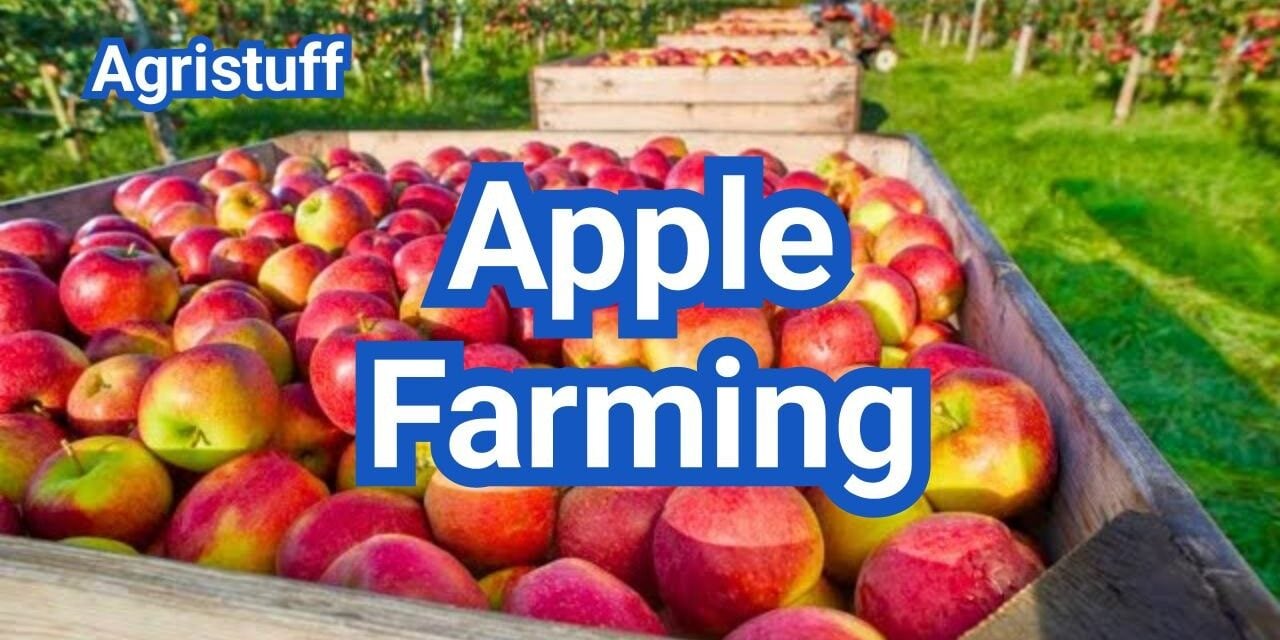
Apple Farming is the cultivation and management of apple trees, usually Malus domestica, to produce fruit for fresh consumption or processing. It combines a perennial orchard with recurring work such as pruning, pollination management, irrigation, crop protection, and harvesting. The trees remain in place for many seasons, so early decisions about their location and growing requirements have lasting consequences. NC State Extension: Apple Plant Profile.
Is an Apple Orchard a Good Fit for Your Market?
A farm is a better fit when its likely customers and sales route are clear before planting begins. Start by learning what local buyers want, then shape the crop and daily work around those needs. Customer fit matters before a single variety is ordered.
Choose a sales model that matches both the crop and the labor you can provide. Pick-your-own relies on visitors coming to the orchard and needs a safe, welcoming experience. Wholesale supply involves meeting buyer expectations for volume, timing, and fruit quality.
Choose a sales model that matches both the crop and the labor you can provide.
Check who will buy and what they value
Ask prospective customers and buyers about the apples they use, the qualities they notice, and the forms they want. A grocery store buyer may have different size and quality standards than a family picking fruit for fresh eating. A processor may want fruit suited to cider or baking.
Those preferences shape the planned crop, the labor needed, and the way you handle fruit after picking. A business serving visitors also needs staff for customer questions and orchard access. Your plan should reflect real conversations, not assumptions about what people will buy.
Match the farm plan to a sales model
Pick-your-own brings customers to the farm, so you need a site and schedule that can accommodate visitors. Wholesale sales to grocery stores or processors focus on supplying buyers with the fruit and quantities they accept. Neither route guarantees profit.
Farmers markets let you sell directly to local shoppers and explain the fruit in person. That direct contact takes time at the market, while wholesale work calls for buyer communication and dependable supply. Your marketing should fit the chosen route instead of stretching a small crew across every channel.
There are no established demand figures or typical profit margins to treat as a promise. Find out what buyers value and what work each sales model requires before committing to a crop. Move from a promising business idea to the question of whether a particular property can support it.
How Do You Choose Land for Apple Farming?

Before evaluating a tree order, spend time on the property after a rain and during a sunny part of the day. Apple trees need at least 8 hours of direct sunlight during the growing season, and they can grow in many soil types if water does not stand. Choose a site where water drains away rather than lingering for several hours after rain.
Drainage and fertility are separate questions. A soil test can show pH and soil conditions before you decide whether to amend the land. Aim for a soil pH between 6 and 7, but do not assume that correcting pH will fix a place where water stays pooled.
Walk the site at different times and note shade from buildings, trees, and hills. Consider whether the property offers enough room for your chosen tree size, equipment access, and future work. A spot that looks open in winter may receive less growing-season sunlight once nearby trees leaf out.
Use these checks before you commit to a property or prepare it for planting:
- Hours of direct sun during the growing season.
- Standing water several hours after rain.
- Soil test results for pH and soil conditions.
- Room for the chosen tree size and access.
A soil test does not replace observing the site after wet weather. If water remains in place, pH amendments alone will not make the drainage problem disappear. The available facts do not establish one ideal U.S. climate zone or a nationwide temperature range, so assess regional conditions locally.
Ask a local nursery or extension office how growers in your area handle the conditions you observed. Keep notes on shade, wet areas, and practical access while you compare properties. Once the property passes these checks, choose trees suited to its conditions and your intended crop.
Which Apple Varieties and Rootstocks Fit Your Site?
Choose apple varieties that suit local conditions, buyer preferences, and a compatible pollen source. Most apple varieties need pollen from a different compatible variety to set fruit. Rootstock choice also changes tree size, bearing time, anchorage, and management.
Plan for a compatible pollen source within 100 feet of the trees that need it. A grafted tree combines the scion, which determines the fruiting cultivar, with the rootstock, which controls much of the tree’s size and growth habit.
How Are Apples Pollinated?
Insects, including bees and flies, carry pollen between apple flowers. Most varieties need pollen from a different compatible variety, so check bloom timing and compatibility when planning the orchard. A nearby crabapple may provide pollen if it blooms at a suitable time.
The 100-foot target is a useful planning distance, not a guarantee of compatibility. Ask a local nursery or extension office which varieties bloom together in your region. A tree can flower well and still set poorly if compatible pollen is missing.
Match the fruiting variety and rootstock to your goals
Standard or seedling rootstocks can grow 20 feet or taller and may take 8 or more years to bear fruit. Standard trees can produce up to 10 bushels. Dwarfing rootstocks can make trees about 8, 12, or 15 feet tall, may bear in 3 to 4 years, and can produce 2 to 3 bushels.
| Rootstock | Approximate mature size | Bearing time | Support or management trade-off |
|---|---|---|---|
| Seedling or standard | 20 feet or taller | 8 or more years | May produce up to 10 bushels |
| MM.111 | About 80% of standard height | Not specified | Well anchored; more tolerant of dry soil |
| M.9 | About 40-50% of standard height | Fruits early; exact time not specified | Needs lifelong staking; very susceptible to fire blight |
| M.26 | About 8-10 feet | Can fruit within 3 years | Needs staking early, or longer on windy sites; especially susceptible to fire blight |
Use local hardiness, disease susceptibility, bloom compatibility, and buyer preference to narrow your fruiting varieties. Minnesota rootstock examples do not serve as universal U.S. recommendations. The holy grail of apples is a subjective label, not an established single best variety.
Ask which cultivar fits your market and region rather than choosing by reputation alone. Confirm the rootstock’s mature size and support needs before ordering trees. With the variety and rootstock chosen, work out the planting layout and the establishment method.
How Should You Lay Out and Plant an Orchard?

The planting system determines how much land, support, and hands-on management each tree will need. Traditional plantings use wider spacing, while a high-density system places trees close together and trains them on trellises. More trees per acre can mean earlier fruit, but the setup calls for more investment and work.
High-density orchards can begin producing fruit in as little as three years, but cost much more to establish. They need more pruning, training, and management. Traditional trees can take upwards of eight years to produce quantities growers can harvest and sell.
Use mature tree size to plan spacing, rather than crowding young trees because they look small. Suggested spacing is 20 to 25 feet for standard trees, 12 to 15 feet for semi-dwarf trees, and 6 to 8 feet for dwarf trees. A practical rule is to allow horizontal room at least equal to expected tree height.
Planting depth matters at the graft union, where the scion and rootstock join. Keep that union about 4 inches above the soil line. If it sits at or below soil level, the scion can root and produce a full-size tree instead of keeping the intended rootstock effect.
Use this planting checklist for each young tree:
- Mark spacing for the mature tree size.
- Dig a hole twice as wide as the root ball, but no deeper.
- Straighten or cut circling container roots; remove J-shaped or encircling bare roots.
- Set the graft union about 4 inches above the soil.
- Backfill with mostly excavated soil, tamp gently, and water thoroughly.
Do not put fertilizer into the planting hole. A hole that is too deep can settle and bury the graft union, so measure against the root ball before backfilling. Give the roots room to spread sideways instead of bending them to fit.
Trellis support and close spacing suit growers prepared for hands-on training and management. Traditional layouts take longer to produce saleable quantities but avoid the more expensive high-density setup. After planting, consistent care protects the investment while the trees establish.
What Does It Cost to Start an Apple Farm?

The largest startup costs depend on the scale and sales plan, so a single budget number would be misleading. A small orchard selling directly may need different tools than a larger wholesale operation. Build your budget around the actual property, production plan, and market route.
There is no reliable U.S. dollar estimate or profit margin that applies to every new orchard. Land purchase or lease, site preparation, trees and rootstocks, trellis and stakes, and irrigation all belong in the startup plan.
Include tools or machinery, labor, pest management, harvest containers, and storage or sorting needs. Add costs that arise as trees establish, since years may pass before crops reach a marketable level. A cash-flow plan should account for that gap rather than treating planting as the finish line.
Equipment depends on orchard size and sales model. Hand tools may serve a small pick-your-own orchard. Larger wholesale operations may need tractors, sprayers, and sorting machinery to manage production and fruit quality.
Storage and sorting needs also depend on what you plan to sell and how you handle the crop. A grower selling freshly picked fruit may have different needs from one who stores and grades apples before delivery. Ask local suppliers and service providers for quotes that match your scale.
No supported figure promises a startup total or a return. Avoid building a business plan around an assumed national average. Use local quotes and a farm-specific cash-flow plan to test whether your available funds can cover establishment and ongoing work.
How profitable is apple farming? Profitability depends on establishment costs, time to marketable crops, yields, fruit quality, labor, storage, and sales channel. Estimate each factor for your own farm instead of relying on a universal profit claim.
Build room into the plan for years with low or unsold crops, as well as the work needed to maintain tree health. Review the budget with someone familiar with local orchard operations before making large commitments. Once the budget accounts for establishment and operating needs, plan how to keep the trees productive year after year.
How Do You Care for Apple Trees Through the Season?

A steady care routine matters more than reacting only when a tree looks stressed. Track water, growth, weeds, fruit load, pests, and diseases through the season. Regular observation helps you catch problems while they are easier to address.
From May through October, rainfall plus irrigation should ideally provide about 1 inch of water a week. During a dry spell, water the root zone thoroughly rather than wetting only the soil surface.
Manage water, weeds, and nutrition
Remove grass and weeds within about 3 feet of young trees for the first 3 to 5 years. Keep mulch a few inches away from the trunk so it does not rest against the bark. Check the root zone during dry weather and water deeply when rainfall falls short.
Established trees on favorable, prepared sites usually need little fertilizer. Nitrogen is normally the main nutrient added, but use growth as a guide rather than applying compost automatically. Non-bearing young trees normally grow 12 to 18 inches a year; bearing trees grow 8 to 12 inches.
Excess growth can point to too much nitrogen. It can reduce fruit development and increase susceptibility to fire blight. Adjust compost and fertilizer to the tree’s growth instead of feeding by habit.
Prune and thin for a reliable crop
Prune annually before growth begins, after the coldest weather has passed. Good pruning helps airflow through the canopy and makes it easier to inspect the fruit. Remove weak or crowded growth with the tree’s shape and age in mind.
When apples are marble-sized, usually in late June or early July, thin to 1 or 2 fruits per cluster or about 4 to 6 inches between fruits. Hand thinning reduces overcrowding and supports larger fruit. It can also lower the risk that a heavy crop will be followed by a poor one.
An excessive crop can contribute to biennial bearing, when a tree produces heavily one year and poorly the next. Thin fruit by hand while it is still small enough to remove easily. Make space for the apples you want to mature, not just the ones that set.
Watch for apple scab and other problems
Apple scab, powdery mildew, apple maggots, and codling moths are potential orchard problems. Regular inspection helps you notice signs early. Look over leaves, fruit, and trunks rather than waiting for damage to spread.
Remove fallen leaves and fruit, and keep good airflow through the canopy. These steps support prevention, though they do not guarantee that diseases or pests will stay away. Ask a local extension office for guidance that fits your region and the problems you observe.
Keep brief notes on growth, watering, and pest signs so patterns are easier to spot next season. A tree that grows far beyond its normal range may need a closer look at nitrogen and vigor. Seasonal care sets up a healthy crop, and the next decision is when to pick it and how to protect its quality.
When Are Apples Ready to Harvest and Store?
A fully colored apple may still be unripe, so check more than its red or green skin. Harvest time varies by variety and region. In Minnesota, August through October is a general example, not a national schedule.
Use background color, flavor, and fruit size together because color alone cannot confirm ripeness. Ripe apples have aromatic flavor; unripe fruit can taste starchy and leave a sticky film.
Check apples more than once because fruit on a tree may mature at different times. A tree can need several picks over a week or two. Lift and twist each apple gently instead of pulling it straight down, which can remove the fruiting spur that bears future fruit.
Use these checks as you prepare to harvest:
- Background color changing from green toward greenish-yellow.
- Taste and aroma, not skin color alone.
- Repeated checks for apples maturing at different times.
- Lift-and-twist picking without pulling off the spur.
For home storage, aim for about 33 to 38 degrees Fahrenheit and roughly 85 percent humidity. Near 33 degrees, apples may last up to 10 times longer than at room temperature. A refrigerator can work when you protect fruit from drying out.
If refrigerator humidity is low, use a perforated bag or a loosely covered container. That helps limit moisture loss without sealing the apples in a fully closed bag. Check stored fruit and remove any damaged apples.
Apples begin freezing around 28 to 28.5 degrees Fahrenheit. If fruit freezes on the tree, let it thaw before picking because frozen apples bruise easily. Once the crop is picked and protected, choose how it will reach buyers.
How Can You Sell Your Crop?

The best route to customers depends on whether the farm sells an experience, bulk supply, or fruit directly. Pick-your-own, wholesale, and farmers markets bring different customer contact and promotional needs. Match the channel to the way you can handle and sell the crop.
Sort fruit by quality so premium fresh-market apples and lower-quality fruit go to suitable uses. Lower-quality fruit may suit cider or baking, but sorting does not promise a particular return.
Sort fruit by quality so premium fresh-market apples and lower-quality fruit go to suitable uses.
Choose the channel that fits your operation
Pick-your-own sells an on-farm experience to families and visitors. Wholesale sales serve grocery stores and processors through business-to-business relationships. Farmers markets bring local shoppers to your stand for direct conversation about the fruit.
| Channel | Likely customer | Useful promotional or relationship action | Customer interaction |
|---|---|---|---|
| Pick-your-own | Families and visitors | Social media promotion | On-farm experience |
| Wholesale | Grocery stores and processors | Build buyer relationships | Business-to-business sales |
| Farmers market | Local shoppers | Samples and recipe cards | Direct conversation and farm story |
A channel’s customer contact affects the work you do to support it. Farm visitors need clear information about the on-farm experience. Wholesale buyers need reliable communication, while market shoppers can ask questions and hear what makes a variety useful.
Build customer relationships and promote the harvest
Keep marketing practical and connected to what you can deliver. Use these actions to help customers understand the crop and when it is available:
- Share harvest updates through the channel’s appropriate promotion.
- Use samples or recipe cards where direct selling allows.
- Communicate clearly about variety, availability, and intended use.
Clear details help buyers plan around your crop and help shoppers choose fruit for fresh eating, cider, or baking. Avoid promoting a variety or quantity you cannot supply. Consistent updates give customers a reason to check in as harvest approaches.
Sorting also gives you a way to match fruit quality with its intended use. Keep buyer conversations specific about varieties, timing, and the supply you can offer. Take one practical next step, such as requesting local nursery quotes or mapping a first-year planting plan.
Quick checklist
- Identify a primary sales channel and ask prospective buyers about varieties, grades, packaging, and delivery.
- Visit nearby commercial orchards and discuss your proposed site with a local Extension specialist.
- Check sunlight, cold-air drainage, soil drainage, and access for equipment.
- Test soil before ordering amendments or finalizing the planting plan.
- Confirm an adequate irrigation source and any applicable water-use requirements.
- Select the fruit variety, rootstock, planting density, and training system together.
- Map compatible pollen sources with overlapping bloom periods.
- Get current quotes for trees, trellis materials, irrigation, fencing, and planting labor.
- Plan seasonal labor for pruning, thinning, pest monitoring, harvest, and sales.
- Budget for crop losses, nonbearing years, cold storage, marketing, and owner labor.
Costs and ROI snapshot
Apple Farming startup costs vary with planting density, site preparation, infrastructure, and equipment already available. For a dated benchmark, the University of Missouri’s 2025 high-density budget assumes 1,210 trees per acre at $11.50 per tree, which calculates to $13,915 per acre for trees alone. That excludes trellis, irrigation, fencing, planting labor, machinery, land, and subsequent maintenance; it is a published planning assumption, not a current nursery quote or total establishment estimate.
- Main establishment costs: Site work, grafted trees, support structures, irrigation, wildlife exclusion, and planting labor.
- Factors that raise the bill: A new water source, difficult terrain, major drainage work, costly tree combinations, and purchasing equipment for a small acreage.
- Recurring expenses: Pruning, thinning, pest management, irrigation, mowing, repairs, picking, storage, packing, and selling.
- Frequently underestimated costs: Owner labor, replacement trees, financing, rejected fruit, storage losses, and the years before adequate sales develop.
- Factors that improve returns: A reliable market, efficient labor, appropriate crop loads, and a higher proportion of harvested apples sold at the intended grade.
A useful Apple Farming break-even calculation divides the annual cost assigned to an acre by the pounds actually sold from that acre. For illustration only, assume 20,000 pounds sold and $14,000 in annual costs, including owner labor, marketing, land charges, and annualized establishment and equipment costs. The break-even price would be $0.70 per pound; the scenarios below use hypothetical inputs to show sensitivity, not to forecast a farm’s yield, costs, or returns. University of Maryland Extension: Enterprise Budgeting.
| Illustrative scenario | Pounds sold per acre | Average selling price | Gross revenue | Result after assumed $14,000 annual cost |
|---|---|---|---|---|
| Base example | 20,000 | $0.80/lb | $16,000 | $2,000 surplus |
| 20% fewer pounds sold | 16,000 | $0.80/lb | $12,800 | $1,200 loss |
| 20% lower selling price | 20,000 | $0.64/lb | $12,800 | $1,200 loss |
Investment planning for Apple Farming also needs a multiyear cash-flow projection, because a profitable mature season does not mean the original investment has been recovered. The simplified table holds costs constant; actual harvesting and selling expenses may change with volume. Proceed when local quotes, realistic sales, available labor, and adequate reserves support the project under conservative scenarios, and assess capital recovery separately from annual operating performance. Penn State Extension: Budgeting for Agricultural Decisions.
Common mistakes to avoid
- Planting before confirming demand: Speak with buyers and calculate selling costs before committing to a large variety block.
- Choosing a variety only by popularity: Check regional performance, maturity season, disease pressure, and market fit.
- Ignoring the rootstock: Confirm the named rootstock and match spacing, support, and irrigation to its characteristics.
- Overlooking pollination compatibility: Verify bloom overlap and suitable pollen sources before placing the nursery order.
- Planting in a frost pocket or wet ground: Investigate the site carefully and resolve major limitations before establishment.
- Keeping every young fruit: Regulate crop load to protect tree development, fruit size, and return bloom.
- Copying a fixed spray or watering calendar: Use local weather, monitoring, labels, and site conditions to guide decisions.
- Counting harvested pounds as sold pounds: Allow for culls, storage losses, and unsold fruit in revenue estimates.
- Treating family labor as free: Include production, administration, marketing, and selling time when assessing profitability.
FAQ
Are apple farms profitable?
Apple farms can be profitable, but returns depend on saleable yield, prices, establishment costs, and ongoing expenses. In Apple Farming, strong fruit production alone cannot compensate for an unsuitable market or consistently high costs. Evaluate the business with a site-specific budget and realistic losses rather than a promised national profit per acre. University of Kentucky: Apple Economics.
How long does it take for an apple to grow?
Dwarf apple trees can begin bearing about 2 to 3 years after planting, while standard-size trees may take up to eight years. In Apple Farming, this refers to the wait for initial fruit, not full production or financial break-even. Once a tree is bearing, fruit develops from spring flowers to its cultivar-specific harvest season. University of Minnesota Extension: Apple Bearing and Harvest Basics.
What are the top five states that produce apples?
Washington, New York, Michigan, Pennsylvania, and California were the five leading states by total commercial apple production in USDA’s 2025 estimates, published in May 2026. These rankings describe production volume, not which location is best for a new Apple Farming business. Site quality, local buyers, water, and management capacity still determine an individual orchard’s suitability. USDA NASS: Noncitrus Fruits and Nuts 2025 Summary.
Why do some growers find Honeycrisp difficult to manage?
Honeycrisp can be challenging because of bitter pit and storage disorders, including soft scald, that require careful management. For Apple Farming businesses, its market appeal must be weighed against potential quality losses and cultivar-specific handling needs. It is inaccurate to assume all growers dislike Honeycrisp; the practical issue is whether its production risks fit the orchard and market. Penn State Extension: Managing Honeycrisp Storage Disorders.
Can you start a commercial orchard from apple seeds?
Planting seeds will not reliably reproduce a named apple variety, so commercial Apple Farming normally starts with grafted nursery trees. Seedlings vary genetically and cannot be assumed to deliver the same fruit as the parent apple. Use seed growing for experimentation rather than as the basis for a uniform commercial planting. Iowa State University Extension: Growing Apples from Seed.
Why don’t Farmers like honeycrisp apples?
It is not accurate to say farmers generally dislike Honeycrisp apples. Growers weigh market fit, local growing conditions, disease susceptibility, and management needs when choosing varieties. There is no established basis here for assigning Honeycrisp-specific growing drawbacks. A variety that suits one farm’s buyers and region may not fit another operation’s labor or sales plan.
Which state grows the most Honeycrisp apples?
No leading state can be named without dated, state-level production data specific to Honeycrisp apples. A current ranking also needs a clear measure, such as acreage or harvested volume. General apple production figures do not establish which state grows the most of one variety. Treat claims about a leading state cautiously unless the year and measure are clear.
What is the tastiest apple in the world?
There is no single objectively tastiest apple because taste depends on personal preference and intended use. Some people favor sweetness, while others prefer tartness or a crisp, firm texture. An apple that tastes good fresh may not be the best choice for baking or cider. Try different varieties and judge them by the qualities you enjoy.
What two apples make a Honeycrisp?
Honeycrisp’s parentage is Keepsake and MN 1627, a University of Minnesota selection. That parentage describes the variety’s breeding background, not a recipe growers can repeat by planting those two trees together. Cross-pollination may produce seeds, but the resulting seedlings are not automatically Honeycrisp. To grow Honeycrisp fruit, you need a tree of that named cultivar.
Why is Honeycrisp difficult to grow?
There is no established basis here for naming Honeycrisp-specific growing problems. Growers should choose varieties according to local climate, disease susceptibility, and market needs. Those factors help determine whether any apple cultivar fits a particular orchard. Ask a regional nursery or extension office about local performance and management before ordering trees.
Final Thought
The strongest start in Apple Farming is a well-matched combination of market, site, trees, infrastructure, and management capacity. Before placing a large tree order, turn those choices into a planting plan and a budget reviewed with local specialists. Expand when your orchard records and sales demonstrate that the next block makes sense. Penn State Extension: Decisions Before Planting Tree Fruits.
Sources & References
- USDA Agricultural Research Service: Plant Hardiness Zone Map
- USDA NRCS: Web Soil Survey
- NC State Extension: High-Density Apple Orchard Management
- Penn State Extension: Nutritional Requirements of Apples
- Penn State Extension: Apple Maturity and Optimal Harvest Date
- University of California IPM: Apple Maggot Management
- University of California IPM: Apple Pest Monitoring Periods
- Iowa State University Extension: Grafting Apple Trees
- Washington State University: Orchard Soils and Nutrition Resources
- Penn State Extension: Apple Tree Spacing by Rootstock