
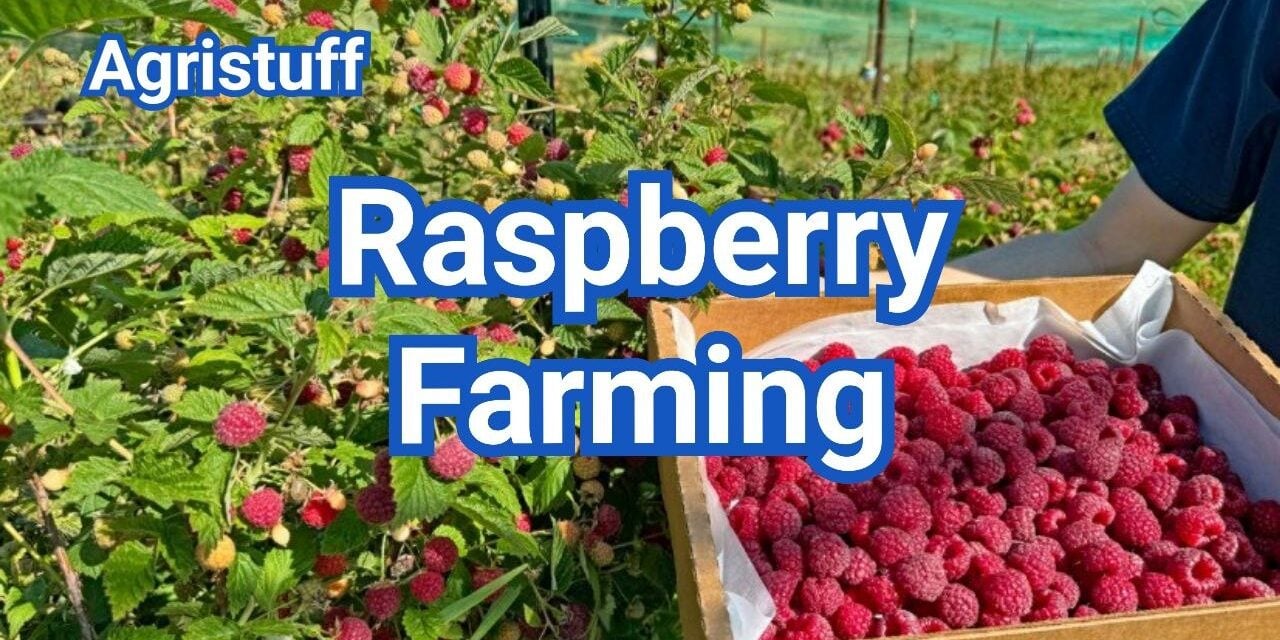
A small raspberry planting can be a manageable first fruit-growing project when you plan it well. With a suitable garden site and steady care, you can work toward a dependable crop without needing a large area or complicated equipment.
A primocane is a first-year raspberry cane that grows vegetatively and can bear fruit in the same year for primocane-fruiting varieties. This guide follows your decisions from choosing a site through bringing ripe berries indoors, with practical steps at each stage.
Quick answer: For beginners, raspberry farming starts with locally adapted nursery plants, a sunny site with good drainage, dependable irrigation, and a pruning plan matched to the fruiting type. A fall-only crop can simplify pruning where the growing season is long enough, while summer-bearing cultivars may suit locations with short autumns. Start with a manageable trial planting before committing to a larger commercial block. Utah State University’s raspberry management guide.
Key Takeaways
- Choose a sunny site with well-drained soil before ordering plants.
- Match fruiting type and cultivar to your local season.
- Plant healthy canes with good root contact and suitable support.
- Keep moisture steady and weeds under control.
- Prune according to the fruiting habit and crop you want.
- Pick ripe berries gently and chill them while dry.
Your first decision is where to plant and how to prepare the soil. A little attention to the site now can prevent problems that are hard to fix once the canes begin spreading.
What is raspberry farming?
Simply put, raspberry farming is the cultivation of raspberry plants for fresh fruit or processing. Raspberries belong to the genus Rubus and have perennial roots and crowns, while individual canes normally live for two growing seasons. Understanding that difference explains why an established planting can keep producing even though its fruiting canes must be renewed. University of Minnesota guidance on raspberry growth.
What Does Raspberry Farming Require Before Planting?
The best starting site is sunny and free-draining, with soil that does not stay wet after rain. Raspberry farming for beginners starts by checking the land, because poor drainage and unsuitable previous crops can undermine a planting before canes go in.
Test the soil before planting: raspberries prefer pH 6.0-6.5, and standing water is a warning even on a slope. A sloped site can still have a low, waterlogged pocket, so watch the ground after rain rather than judging drainage by slope alone.
Choose sunny ground that drains freely, and test its pH before planting. Standing water signals a drainage problem, even on sloped land.
Choose a Sunny, Well-Drained Site
Use this five-point checklist before you order plants:
- Sunlight: choose a site with full sun for strong growth and fruit production.
- Drainage: avoid areas where water ponds or soil remains saturated.
- Soil test and pH: aim for a measured pH of 6.0-6.5.
- Slope: keep field production slopes at or below 12 percent; high-tunnel slopes at or below 5 percent.
- Site history: check whether sod or susceptible crops grew there recently.
Prepare the Ground and Plan the Rotation
Do not plant raspberries after sod or crops susceptible to Verticillium, including tomatoes, potatoes, peppers, eggplant, and strawberries. Land used for those crops needs 5-8 years in non-susceptible crops before raspberries. That rotation reduces the risk of carrying soil problems into a new crop.
A year of rye or sudangrass cover cropping before planting can help suppress weeds and add organic matter. Correct site and rotation problems first; they are harder to solve after the rows are established. Once the ground is suitable, choose a fruiting type and variety that fits your local season.
Which Raspberry Types and Varieties Match Your Climate?
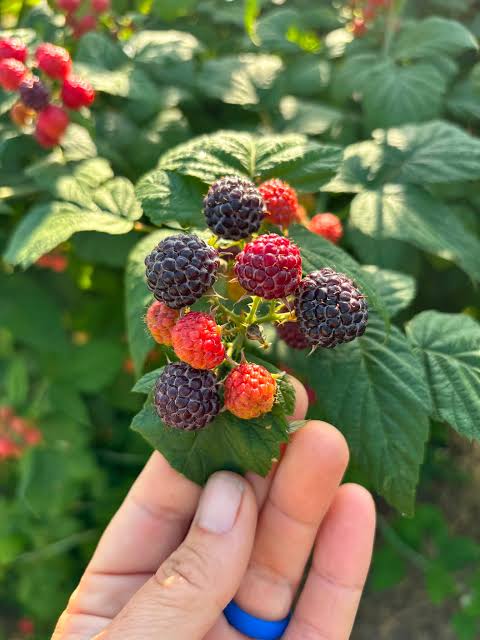
Summer-bearing raspberries fruit on second-year canes, usually in mid-summer; primocane-fruiting raspberries can fruit on first-year canes, commonly starting in late summer in field plantings. That timing determines which types can ripen in your season and how you manage the canes.
Cold winters and short seasons limit some varieties in colder regions, while a high tunnel can extend the season for later fruit. Check local suitability rather than choosing a raspberry by berry color alone.
Choose Summer-Bearing or Primocane-Fruiting Plants
Summer-bearing, or floricane-fruiting, plants rely on canes grown the previous year and usually produce their crop in mid-summer. Primocane-fruiting plants can produce on first-year canes, with field crops commonly beginning in late summer. A high tunnel may help later varieties ripen by extending the season.
Match Cultivars to Your Season and Region
Red and black are the two basic raspberry types. Yellow berries are mutations of red or black raspberries, while purple raspberries are crosses of red and black. These examples show how fruiting type, color, and season vary among varieties:
| Cultivar | Berry color | Fruiting type | Season or regional fit |
|---|---|---|---|
| Prelude | Red | Summer-bearing | Early season |
| Nova | Red | Summer-bearing | Mid-season |
| Heritage | Red | Primocane-fruiting | Crop begins in early September |
| Caroline | Red | Primocane-fruiting | Starts in mid-to-late August |
| Jewel | Black | Summer-bearing | Suited to warmer areas |
Prelude and Nova are red summer-bearers; Caroline and Heritage are red primocane-fruiting varieties. Jewel is a black summer-bearer. Hand off from variety choice to planting canes at suitable distances, so each row has room to grow.
How Do You Plant Canes in Rows or Pots?
Field rows suit a production planting, while containers work for a few plants in a small space. For larger, less hands-on production, raspberries generally grow better in the ground, where roots have more room and soil moisture is easier to manage.
Buy disease-free nursery stock and set each plant so its roots have firm contact with moist soil. Raspberry plants for sale should come from a reputable nursery. Support canes with a trellis or wires where their growth habit needs it.
Plant Canes in Prepared Ground
Plant tissue-cultured plants in May, after the danger of hard frost has passed. Nursery-matured plants can go in as soon as the soil is workable. Red raspberries are typically spaced 24 inches apart within rows; black raspberries need about 30 inches. Field rows are usually 8-12 feet apart, compared with 7-8 feet in a high tunnel.
Follow these steps for how to grow raspberry bushes from nursery plants:
- Prepare the row or pot with suitable, well-drained soil.
- Spread the roots gently, without bending or crowding them.
- Set the plant at the proper depth for its nursery root crown.
- Firm soil around the roots to remove large air pockets.
- Water the planting and add a 4-inch layer of clean straw mulch.
Can You Plant Raspberry Canes in Pots?
Planting raspberry canes in pots can work where garden ground is limited. As a general container rule, choose a pot at least 18 inches wide and deep, with drainage holes. Containers restrict root space and dry out faster than rows, so they need closer water checks.
Field rows are the more practical choice for a production planting. In a pot, keep the plant where you can check its moisture easily, especially during warm or windy weather. Once plants establish, shift to recurring care that supports growth and limits competition.
What Routine Keeps Raspberry Plants Productive?

Consistent moisture and weed control matter more than occasional rescue care. Even watering helps raspberry plants keep growing through fruit production, while weeds compete with their shallow roots for water and nutrients.
About 1 inch of water per week from spring through after harvest is a general guide, adjusted for rainfall and soil. Drip irrigation sends water to the root zone without wetting fruit. Overhead watering can leave berries damp, which favors fruit problems.
Manage Water, Nutrients, and Weeds
Check soil moisture rather than following a rigid schedule: dry weather may call for more water, while rainfall may make extra irrigation unnecessary. Keep weeds in check within and between rows. Fertilizer is generally unnecessary in the planting year, and soil and tissue tests every two years help guide later decisions.
Nitrogen commonly starts at 20-40 pounds per acre the year after planting and can rise to roughly twice that amount by the third year. Split applications between budbreak and 4-6 weeks later. Test results help you avoid guessing and applying more nutrients than the plants need.
What to Do With Raspberry Suckers
Raspberry suckers are new shoots that emerge from the roots or spread beyond the planned row. Remove shoots outside the row to contain growth. Healthy suckers can be transplanted, giving you a way to expand the planting without letting the original row become crowded.
Use this short checklist during regular visits:
- Soil moisture: check whether the root zone is drying out.
- Weeds: look within and between rows.
- Plant vigor: notice weak or unusually slow growth.
- Row boundaries: remove canes spreading beyond the planned area.
Once water, weeds, and spreading growth are under control, make annual pruning choices based on the variety’s fruiting habit.
How Should You Prune Summer and Fall Crops?

A cane that has finished fruiting should be removed, while a young cane may need to stay for next year’s crop. The fruiting type tells you which canes to keep and when to cut them.
Raspberries are not all cut down every year; the right method depends on fruiting type and whether you want one crop or two. Summer-bearing canes fruit in their second year, then die after harvest. Dormant pruning is usually done in late winter.
Prune Summer-Bearing Canes After Fruiting
After harvest, remove spent floricanes so they do not crowd the new growth. Keep the young canes that will carry the next summer’s fruit. In late winter, thin floricane-fruiting red raspberries to 4-6 canes per linear foot of row.
Black raspberries use a different thinning measure: keep 5-7 canes per plant. Removing weak or excess canes helps keep the row open. The new canes are not spent floricanes, so leave them in place for the next fruiting year.
Choose One or Two Crops From Primocane-Fruiting Plants
For a simpler fall-only crop, cut primocane-fruiting canes to ground level in spring. The plants will send up new primocanes that can fruit later that season. This method means you do not keep canes for a second crop the following summer.
If you want a smaller summer crop as well, retain primocanes that fruited in fall. In late winter, cut their dead tips back to a visible fruiting node. Those canes can then produce on the lower portion, while new growth supports the fall crop. With the canopy managed, turn to pest and disease checks before fruit ripens.
Which Pests and Diseases Threaten a Raspberry Crop?

A raspberry can look nearly ripe while harboring spotted wing drosophila larvae. Scout the fruit and canes regularly, because early signs help you respond before pests and diseases spread through a crop.
Integrated pest management begins with clean plants, suitable sites, crop rotation, and regular scouting. Spotted wing drosophila is a major limiting pest in raspberry production. It lays eggs in fruit, where small white larvae may appear. Bees also support raspberry yield and quality, so pest management should account for pollinators.
| Problem | Where to look | Clue | First response |
|---|---|---|---|
| Spotted wing drosophila | Fruit | Small white larvae | Remove infested fruit; seek locally appropriate control advice |
| Gray mold | Fruit | Soft, rotting berries | Improve airflow; remove affected fruit |
| Root rot | Roots and lower canes | Decline in poorly drained heavy soil | Correct drainage; seek a diagnosis |
| Cane diseases | Canes | Lesions or dieback | Remove affected canes; keep rows open |
Japanese beetles, two-spotted spider mites, and cane borers are other pests to watch for. Anthracnose, cane blight, and spur blight can affect canes; Phytophthora root rot is more likely in heavy soils. Raspberries do not have to be organic to grow successfully, but growers selling them as organic must follow applicable USDA organic requirements.
When Are Raspberries Ready to Harvest and Store?
A ripe raspberry comes away easily rather than needing to be tugged. Pick by hand when berries are fully colored, and place them gently in shallow containers to avoid crushing the soft fruit.
A field-grown summer-bearing planting usually gives its first significant crop in the third year after planting, though some plants fruit earlier. During ripening, check the rows every couple of days so you catch berries at their best.
Ripe berries should release easily, and dry fruit keeps better. Handle each harvest gently and refrigerate the berries while they are still dry.
Raspberries have a short shelf life. Refrigerated dry, they can keep for about five days. Use this simple harvest-and-storage routine:
- Pick berries when they are dry.
- Check the rows every couple of days during ripening.
- Refrigerate berries dry, without washing them first.
- Freeze surplus in a single layer before bagging.
For a practical first step toward a planting, start with the ground you plan to use and arrange a soil test.
Quick checklist
- Confirm that the cultivar suits local winter conditions, summer temperatures, and frost dates.
- Choose a market and a planting size that available labor can serve.
- Test soil and irrigation water before ordering a commercial quantity of plants.
- Correct drainage problems and persistent weeds before establishment.
- Buy healthy, correctly labeled plants from a reputable nursery.
- Leave enough space for mature canes, harvesting, mowing, and equipment access.
- Install drip irrigation and appropriate support before they become difficult to add.
- Write down the pruning method for each cultivar and cropping system.
- Prepare SWD monitoring, sanitation, and a locally suitable pest-management plan.
- Arrange harvest containers, cooling, sales, and backup picking help before ripening begins.
- Track saleable yield, labor, rejected fruit, and actual receipts throughout the season.
Common mistakes to avoid
- Buying by fruit size alone: Check regional adaptation, ripening time, disease susceptibility, and customer needs.
- Planting into a wet site: Resolve drainage before establishment instead of relying on fertilizer to improve weak plants.
- Mowing every cultivar to the ground: Preserve the replacement canes needed by summer-bearing varieties.
- Allowing rows to become a thicket: Keep canes accessible for harvesting, scouting, and removal.
- Waiting for obvious fruit infestation: Begin SWD monitoring before harvest and follow local management guidance.
- Delaying cooling: Move picked fruit into suitable refrigeration promptly.
- Counting every harvested pound as revenue: Subtract grading losses, spoilage, unsold stock, and other non-saleable fruit.
- Treating family labor as free: Assign a labor value before comparing returns with other crops or jobs.
- Expanding after one promising harvest: Evaluate production, sales, and workload over a meaningful trial period.
Costs and ROI snapshot

The cost of raspberry farming depends on the production system, existing infrastructure, labor arrangement, and route to market. Separate establishment spending from annual operating costs, and include the years before the planting reaches its intended production level. A budget for an open-field planting cannot be transferred unchanged to a high tunnel, and a retail selling price cannot be treated as farm profit. Iowa State University’s raspberry enterprise-budget resource.
| Cost group | Include in your estimate | What can increase the cost? |
|---|---|---|
| Site establishment | Testing, preparation, drainage work, plants, and planting labor. | Poor drainage, difficult weeds, unsuitable soil, or replacement plants. |
| Infrastructure | Trellis, irrigation, fencing where needed, and optional tunnels. | A new water supply, exposed sites, or intensive production systems. |
| Crop management | Pruning, nutrients, scouting, pest control, and irrigation operation. | High pest pressure, tangled rows, or repeated equipment repairs. |
| Harvest and handling | Picking, containers, grading, cooling, and rejected fruit. | Slow picking, fragile fruit, or insufficient refrigeration. |
| Selling and overhead | Transport, selling time, fees, insurance, land, and equipment ownership. | Long market trips, low sales per trip, or facilities used below capacity. |
Evaluate raspberry farming with an enterprise budget that uses your own quotations, labor rates, and conservative sales assumptions. The example below is illustrative arithmetic, not a regional cost estimate or yield forecast: it assumes an established quarter-acre block, annual costs of $7,000 including valued labor and allocated ownership costs, and 1,000 pounds actually sold. Replace every assumption with farm-specific figures before using the result to make an investment decision. Iowa State University’s fruit and vegetable budgeting tools.
| Illustrative calculation | Result |
|---|---|
| Break-even price: $7,000 annual cost ÷ 1,000 pounds sold | $7.00 per pound |
| Gross sales at $8.00 per pound | $8,000 |
| Return above the costs included in this example | $1,000 |
| If sales fall to 800 pounds at the same price and assumed total cost | $6,400 revenue; $600 loss |
| Break-even price at 800 pounds sold | $8.75 per pound |
- What improves returns: Better saleable packout, efficient picking, reliable repeat customers, and fewer unsold berries.
- What beginners underestimate: Harvest supervision, selling time, refrigeration, packaging, and the value of their own labor.
- When investment makes sense: Conservative sales cover operating and ownership costs, and projected cash flow can support establishment and replacement spending.
- How to measure ROI: Divide consistently defined annual net return by total capital invested; keep this separate from gross revenue and a single year’s cash balance.
- How to evaluate payback: Compare the initial cash investment with cumulative future net cash inflows, including lower-output establishment years.
FAQ
How many years does it take for raspberries to produce fruit?
Some primocane-bearing raspberries can produce fruit during the planting year, while ordinary summer-bearing starts generally begin cropping the following year. In raspberry farming, first fruit and full production are different milestones, and establishment conditions can delay either one. Keep early revenue expectations modest until the plants develop a productive stand. Oregon State University’s guide to raspberry fruiting habits.
Do you cut raspberries down every year?
Raspberries need annual pruning, but cutting every cane to the ground is appropriate for a fall-only primocane system. In summer-bearing raspberry farming, remove spent canes and preserve healthy replacements for next year’s fruit. Two-crop systems require selective pruning to retain the cane sections that will produce the summer harvest. University of Maryland’s bramble pruning guidance.
Which berries are the most profitable to grow?
No berry is consistently the most profitable for every farm. Assess raspberry farming alongside other suitable berry crops using local selling prices, saleable yield, labor needs, establishment costs, and customer demand. The strongest choice is the crop and sales system that fit your resources and produce an acceptable return under conservative assumptions. SARE’s guidance on evaluating farm business alternatives.
Where does the U.S. get most of its raspberries?
Mexico is the principal foreign source of fresh raspberries for the U.S. market, while California and Washington are major domestic producers. For raspberry farming market research, distinguish fresh-market supply from berries destined for processing or sold frozen. A country’s share of imports is not the same as its share of all raspberries consumed in the United States. U.S. International Trade Commission analysis of raspberry supply.
How to care for raspberries?
Keep raspberry plants evenly moist, control weeds, support canes where needed, prune for their fruiting type, and scout for pests. About 1 inch of water per week is a general guide, adjusted for rainfall and soil. Regular checks help you spot dry ground, spreading canes, and early pest signs before they affect much fruit.
Do raspberries grow better in pots or ground?
Raspberries generally grow better in the ground for production and easier moisture management. Pots suit a small space, but choose one at least 18 inches wide and deep with drainage holes. Containers restrict root space and dry out faster than garden rows, so you will need to check their moisture more closely.
What should not be planted near raspberries?
Avoid planting raspberries beside wild-growing berries, and do not use land recently occupied by sod or susceptible crops without a suitable rotation. Susceptible crops include tomatoes, potatoes, peppers, eggplant, and strawberries. Give land used for those crops 5-8 years in non-susceptible crops before planting raspberries there.
How many raspberries will I get from one plant?
A mature, well-cared-for raspberry plant may yield about 1-2 quarts in a season. The amount varies with cultivar, weather, spacing, and care, so use that as a broad expectation rather than a guarantee. Young plants may produce less as they establish, and a poor season can reduce the crop from mature plants.
Final Thought
A manageable planting, a suitable cultivar, and a dependable harvest routine give raspberry farming a sound starting point. Keep records of what the crop costs, how much fruit you actually sell, and where time or berries are lost. Expand when those records show that the production system and market can support the next step. SARE’s farm business planning guide.
Sources & References
- USDA Agricultural Research Service: Plant Hardiness Zone Map
- USDA NASS: Noncitrus Fruits and Nuts 2024 Summary
- USDA Foreign Agricultural Service: Mexico Berry Annual Voluntary, March 2026
- Oregon State University: Raspberry Cultivars for the Pacific Northwest
- University of Arkansas: Raspberry Production in the Home Garden
- NC State Extension: Caneberry Water Management
- NC State Extension: Integrated Pest Management and Pollination
- University of Minnesota Extension: Raspberry Cane Diseases
- University of Minnesota Extension: Non-Pest Problems in Raspberries
- FDA: FSMA Final Rule on Produce Safety