
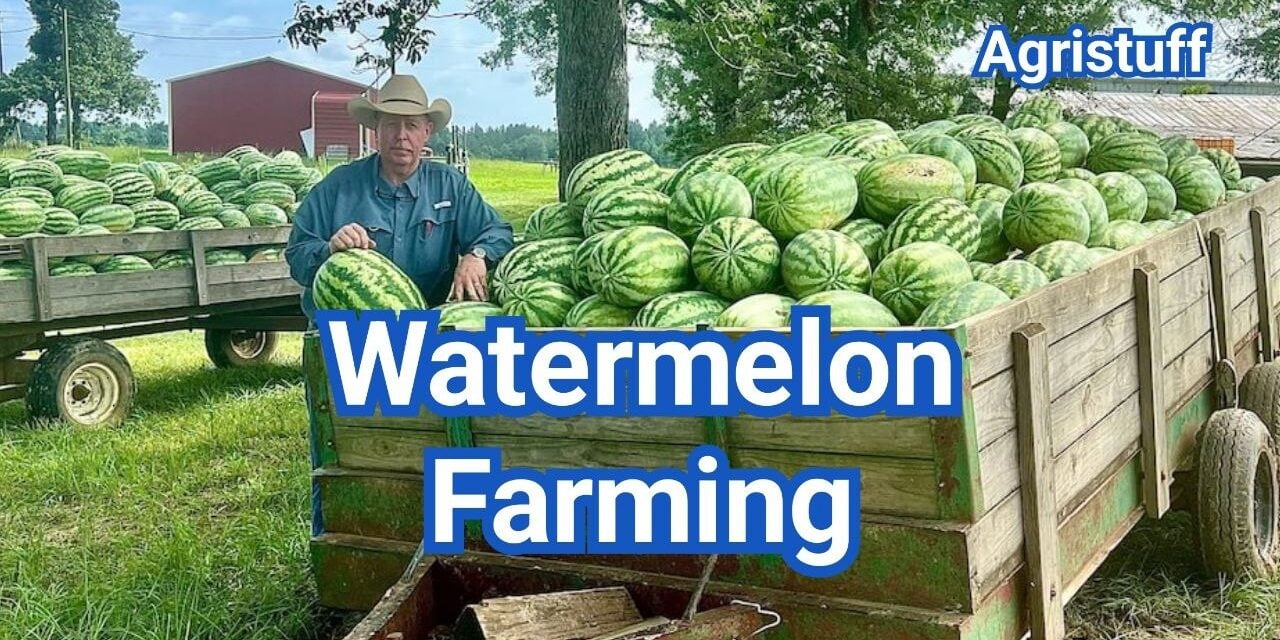
A backyard watermelon harvest starts with choosing a warm, sunny place and planning for the vines to spread. In a small home garden, space and season matter as much as care. A larger harvest depends on matching a variety to the room you have and keeping soil moisture steady, not simply adding more fertilizer.
Watermelons reward patience, but the work is manageable when you plan before planting. The vines need room, roots need suitable soil, and developing fruit responds best to steady conditions. A triploid watermelon is a seedless watermelon type with three chromosome sets that needs pollen from a seeded variety to set fruit.
Quick answer: For productive watermelon farming at home, provide 8–10 hours of direct sunlight, well-drained soil with a pH around 6.0–7.0, enough room for vines, and reliable moisture. Plant after frost danger has passed and soil temperatures reach about 65–70°F, then protect flowers and developing fruit from avoidable stress. A locally suitable variety and a correctly timed harvest matter more than chasing unusually large fruit. University of Georgia home garden recommendations.
Key Takeaways
- Choose a warm site with direct sun and soil that drains well.
- Match the variety’s maturity time and vine length to your garden.
- Keep moisture consistent, especially during flowering and fruit growth.
- Use soil-test results to guide fertilizer choices instead of guessing.
- Check more than one maturity sign before picking a melon.
- Start with one suitable variety, then adjust your approach next season.
You can follow a clear path from choosing a site to picking ripe fruit. First, check whether your garden offers the conditions this warm-season crop needs.
What is Watermelon Farming?
watermelon farming is the cultivation of Citrullus lanatus, a warm-season annual vine grown for its sweet, edible fruit. It ranges from a few plants in a sunny backyard to commercial fields, but every scale requires suitable growing conditions and careful crop management. University of Florida watermelon overview.
Is Your Yard Warm and Sunny Enough?
A sunny garden that warms early and drains after rain gives watermelon vines a better start than a shaded, soggy corner. Warmth and sun support steady growth, while standing water can stress roots. For watermelon farming for beginners, the best site is one that meets these basic needs without major fixes.
Watermelons are warm-season plants and are sensitive to cold. Average growing-season temperatures of 65-95°F suit production, while temperatures below 50°F or above 95°F can slow growth and maturation. Choose a spot with at least 6-8 hours of direct sunlight each day, not just bright shade.
Choose a warm, sunny site that drains after rain. Temperatures below 50°F or above 95°F can slow watermelon growth and maturation.
Check the ground after a heavy rain. Water that lingers around the roots signals poor drainage, and a low spot often stays wet longer than the rest of the yard. Heavy or poorly drained soil is a good reason to consider a raised bed rather than planting in a soggy corner.
Suitable soil is well drained, with a pH around 5.8-6.8. A simple soil test can tell you whether the garden is close to that range. Room matters, too: vines can spread across paths and neighboring beds, so consider where they will grow before choosing a planting location.
Cold nights and a short warm season can limit fruit development even in a sunny yard. If your site warms slowly, wait until conditions improve instead of trying to hurry plants into cold ground. Once the site looks suitable, the next choice is a variety that fits the season and available room.
Which Watermelon Varieties Fit Your Garden?

A compact fruit that ripens in time for your local season may be a better home-garden choice than the biggest melon available. Choose for fit, weighing maturity time, expected fruit size, and whether you want seeded or seedless melons. Watermelon fruit ranges from about 5 to 30 pounds, depending on variety.
Pick a variety whose maturity window and vine habit suit your garden, rather than choosing by fruit size alone. Seeded types are a familiar option for home growing. Seedless types can also work, but a triploid watermelon needs pollen from a seeded variety nearby for fruit to set.
Seeded varieties for familiar garden growing
Yellow Doll produces small, yellow-fleshed fruit and reaches maturity in about 68 days. Its 5-7-pound melons are easier to manage in a compact garden than a large-fruited type. Crimson Sweet takes about 85 days and commonly produces 15-25-pound fruit, so allow for a longer season and heavier harvests.
Sangria is another seeded option, with fruit averaging 22-26 pounds and about 87 days to maturity. These figures are useful for comparing varieties, not a promise for every garden. Days and fruit size vary with growing conditions, including temperatures and the length of the season.
Seedless varieties and their pollinator needs
Millennium is a seedless variety that matures in about 78 days and averages 16-20 pounds per fruit. Its larger melons may suit a gardener who wants fewer, substantial fruits. Plan for a seeded variety as a pollen source; without compatible pollen, the seedless plant may flower without setting fruit.
Quality also depends on growing conditions. A melon that has time to mature in warm weather is often a better choice than a large variety that runs out of season before its fruit ripens. If you are comparing options depending variety, check both the stated maturity time and the fruit size.
Match fruit size and maturity to your space
Small-fruited types can be easier to carry, store, and fit into a shorter growing season. Larger fruit needs more time and can take up more room as vines spread. Think about how many melons your household can use, along with how much garden area you can give the plants.
Varieties differ in vine length as well as fruit size, so read the seed packet for growth habits before buying. A seedless choice also needs a compatible pollen source, so include a seeded variety in your plan. With the variety selected, you can prepare a bed that supports healthy roots.
How to Prepare the Soil and Planting Bed
Before sowing, loosen the planting area and deal with drainage and weeds while the vines are still out of the way. Start with the soil, not a bag of fertilizer: a test can show pH and nutrient needs. Good land preparation helps roots grow through the bed and lets water soak in evenly.
Remove weeds before planting and use test results to guide soil changes. Finished compost can add organic matter where soil needs it, but it does not replace a soil test. If rain leaves the bed soggy, a raised bed or mound can improve drainage.
Check and improve the soil
Test the soil before adding lime or fertilizer. The results help you avoid changing pH or nutrient levels without a reason. Remove weeds, especially perennial weeds, before they become tangled among the vines and difficult to pull without disturbing roots.
Use these practical land preparation steps:
- Clear weeds, stones, and plant debris from the planting area.
- Take a soil sample and review its pH and nutrient results.
- Work finished compost into soil that needs more organic matter.
- Loosen compacted soil without working it when it is wet.
- Build a raised bed or mound where drainage remains poor.
Choose a bed, mound, or raised bed
A level bed works well when water drains freely. A mound lifts the planting area slightly, while a raised bed creates more separation from wet, heavy ground. Make the structure wide enough for roots and vines, and keep paths clear so you can reach plants without stepping on the bed.
Weeds are easier to remove before seedlings emerge, so clear the whole planting area rather than only the exact seed spot. Avoid digging wet soil, which can press it into clods and make it harder for roots to spread. With the bed ready, you can choose when to sow and whether to start seeds outdoors or indoors.
How to Start Watermelon Farming at Home

If the soil is still cold, wait rather than rushing seeds into a bed that is ready only on the surface. Warm soil matters for reliable emergence. Planting time depends on your local last-frost date and warm soil, so there is no single best month across the United States.
For direct sowing, wait until soil is about 70°F or warmer, then plant seeds about 1 inch deep. You can also start seeds indoors and transplant them carefully. Choose the approach that fits your season and your ability to move young plants without disturbing their roots.
| Approach | Best fit | Main tradeoff |
|---|---|---|
| Direct sowing | Warm soil and a long enough season | Seeds wait for suitable outdoor conditions |
| Indoor transplanting | A shorter season or a head start indoors | Young roots need careful handling when moved |
How do I grow watermelon? Follow a simple sequence: wait for safe planting conditions, sow or transplant, keep the seedbed from drying, then thin seedlings after they establish. Planting too early can leave seeds sitting in cold soil, while a gentle transplant helps limit root disturbance.
Use this short sowing checklist:
- Check the local last-frost timing before setting a planting date.
- Confirm that the soil has warmed to about 70°F for direct sowing.
- Sow seeds about 1 inch deep, or transplant indoor starts carefully.
- Keep the soil from drying while seedlings emerge and establish.
- Thin extra seedlings once the strongest plants are growing.
Seedlings may emerge at different times, so wait until you can identify the stronger plants before thinning. If you start indoors, avoid letting seedlings become crowded or root-bound. After seedlings establish, give each vine enough space to grow without competing with its neighbors.
How Much Space Do Watermelons Need?

A watermelon vine can cover more ground than a new gardener expects, so leave room before planting. Space each plant about 3-5 feet from its neighbors and leave 6-8 feet between rows. Those measurements equal roughly 0.9-1.5 meters between plants and 1.8-2.4 meters between rows.
Use the wider end of those ranges for varieties with longer vines. Compact or bush varieties can need less room, depending on their growth habit. Check the seed packet and consider the shape of your garden before laying out rows or planting spots.
Crowded plants have less airflow, and leaves can overlap until it becomes hard to spot fruit or reach weeds. A tight layout also makes routine care awkward: you may step over vines or accidentally damage stems while looking for a melon. Plan walking space at the edges of the bed.
Home gardeners do not need to plan by the acre as a commercial field manager might. Focus instead on the length and spread of each variety, the number of plants you can care for, and where the vines can run without blocking paths.
If you have limited ground, train vines toward open space or choose a compact type, but do not crowd fruiting plants together to fit more in. A smaller number of healthy plants can be easier to manage than a tangled bed. Once the layout is settled, steady water becomes the main day-to-day support for fruit development.
How to Water Watermelons Without Splitting Fruit
Water deeply enough to moisten the root zone, then check the soil before watering again. Steady moisture supports vines through flowering and fruit development. Water stress during these stages can reduce yield, while excess water as fruit approaches maturity can contribute to cracking.
Avoid sharp changes between dry soil and heavy watering, especially as fruit nears maturity. Check moisture below the surface rather than judging from dry-looking soil on top. If the soil feels dry several inches down, water the root area; if it remains moist, wait and check again.
Keep moisture steady as vines grow
Watermelons need a consistent supply of moisture through the growing season. A quick surface sprinkle may wet leaves and soil crust without reaching the deeper root zone. Push a finger into the soil near the plant, away from the stem, and check below the top layer.
Rainfall, soil texture, and container use all change how quickly the bed dries. Keep an eye on the root zone after hot, windy days and after rain. Do not rely on a fixed schedule if the soil still feels moist below the surface.
Choose an irrigation method
Drip irrigation sends water near the roots and keeps leaves drier, which can make watering more targeted. A soaker hose can work well in a small garden, while careful hand watering lets you direct water to the soil. Overhead watering wets foliage and can make water use less precise.
| Method | Where water goes | Main tradeoff |
|---|---|---|
| Drip irrigation | Near the root zone | Needs tubing and setup |
| Soaker hose | Along the bed at soil level | Water spread can vary by hose placement |
| Overhead watering | Across leaves and soil surface | Foliage gets wet and water may miss roots |
In a small plot, move a hand-held hose slowly so water soaks in rather than running off the bed. Keep the hose close to the soil and avoid washing soil against the stem. Drip irrigation is useful when you want to water several plants with less wet foliage.
Ease back as fruit ripens
As fruit approaches maturity, avoid adding a large amount of water after a dry spell. A sudden increase can contribute to cracking. Do not let plants wilt severely, either; aim for steady soil moisture rather than alternating drought and saturation.
Use these cues when deciding whether to water:
- Check below the dry surface before adding water.
- Water the root zone when soil several inches down feels dry.
- Recheck after rain instead of following the usual routine automatically.
- Watch for wilt during flowering and fruit development.
Good watering keeps moisture swings smaller, but it cannot make a cracked melon whole again. Adjusting when the root zone is dry is more useful than reacting to the leaves alone. With moisture managed, use soil-test guidance and restrained feeding to support vine and fruit growth.
What Fertilizer Helps Watermelons Grow?

A soil test is a better starting point than guessing at fertilizer from the color of the leaves alone. Test before feeding so fertilizer selection and application match the soil. Leaf color can change for several reasons, so it does not reliably show which nutrient is missing.
Use soil-test results to guide fertilizer type and amount, and avoid excess nitrogen. Compost can improve soil structure and add organic matter. Phosphorus and potassium needs depend on the test, so do not add them automatically.
Start with soil-test results
A test can show soil pH and nutrient levels, helping you decide whether a fertilizer application is needed. Follow the test recommendations and product directions for the planting area. Adding extra fertilizer “just in case” can upset nutrient balance without improving fruit quality.
Finished compost is useful where soil needs organic matter, but it is not a complete substitute for a nutrient plan. If you already added compost, include that in your soil-care decisions. A soil test helps you avoid piling one amendment on top of another without knowing what the bed needs.
Feed without overdoing nitrogen
Nitrogen supports leafy growth, but too much can favor long vines over fruiting. A lush plant is not automatically a productive plant. Keep fertilizer application restrained, and do not assume that more feeding will produce more or larger melons.
Use these fertilizer checks before applying a product:
- Review the soil test for pH and nutrient needs.
- Choose a product that matches the test recommendations.
- Account for compost already added to the bed.
- Follow the fertilizer label rather than increasing the amount.
If growth looks weak, check soil moisture and other growing conditions as well as nutrients. A fertilizer product cannot fix every problem, and excess can create new ones. Once feeding is planned, successful fruit set depends on pollination as well as plant nutrition.
How Pollination Affects Fruit Set

A vine can flower abundantly and still set little fruit if pollen does not reach the female flowers. Pollination must happen for fruit to develop. Individual watermelon plants produce both male and female flowers, and honeybees and other pollinators move pollen between them.
Seedless varieties need a seeded pollinator variety nearby to set fruit. A male flower has a slender stalk, while a female flower has a small, rounded swelling beneath its petals. That swelling is the part that can grow into a melon after successful pollination.
Flowers do not all open at once, so seeing many blooms does not guarantee that enough pollen reached the female flowers. If a female flower drops without developing, poor pollination may be one cause. Seedless growers should plan their seeded pollinator variety before plants begin flowering.
Protect pollinators while flowers are open. Avoid pesticide applications that harm bees and other pollinators during bloom. If a treatment is necessary, follow current U.S. product labels and local extension guidance, and take care not to expose active pollinators.
Healthy fruit set comes from flowers receiving pollen at the right time, not from adding more fertilizer. A garden that supports bees and other pollinators gives flowers a better chance to set well-shaped fruit. After pollination, mulch and thoughtful neighboring plants can help the garden stay manageable without crowding the vines.
What to Mulch With and Plant Nearby

A thin, clean mulch can make a watermelon bed easier to weed and help keep developing fruit from sitting on wet ground. Clean straw or dry leaves can conserve moisture and suppress weeds. A dry barrier also protects the fruit from direct contact with damp soil.
Put clean straw or a dry board under developing fruit to keep it off wet ground. The barrier reduces contact with damp soil, but it does not replace steady watering. Fruit still needs consistent moisture through the root zone as it develops.
Use mulch to protect the bed and fruit
Spread a light layer of clean straw or dry leaves around the bed, keeping material from piling against plant stems. Mulch can make hand weeding easier by covering bare soil. Keep it loose enough for air to move around the plants and fruit.
As fruit develops, slide a dry board or a small amount of straw beneath it without lifting the stem or forcing the melon into a new position. Check that the support stays dry and does not trap water against the rind. A wet, packed layer can defeat the purpose.
Choose companions without crowding vines
Bush beans, lettuce, and radishes can fit near bed edges if they do not shade or crowd spreading vines. Keep companions low or place them where watermelon leaves will not cover them. A plant is not helpful if it blocks airflow or competes for the path you need to reach the bed.
Think about mature size before planting a companion. A neat row of lettuce at the edge may be manageable early, but it should not become a shaded tangle under the vines. Leave the central space for fruit and leaves to grow without rubbing against neighboring plants.
Keep mulch and companion plants out of the way of stems and developing melons. The aim is a bed that stays easier to weed while giving the vines room to spread. As vines spread, you can decide whether to thin growth or fruit for the size and number of melons you want.
Should You Prune Watermelon Vines?
A healthy watermelon vine usually does not need regular pruning to produce fruit. Leave healthy growth alone in most home gardens, where extra vine length is not a problem. Routine cutting can reduce leaf area without guaranteeing better fruit or a larger harvest.
Remove dead or diseased growth, but do not treat cutting healthy vines as a way to increase yield. Clearing damaged material is different from pruning healthy stems to control growth. If space is tight, guide vines gently rather than cutting them back without a clear reason.
Thinning excess fruit is another choice. A plant carrying more fruit than it can support may produce smaller melons, so some gardeners remove a few to favor size. That choice trades fruit count for size; it does not promise more total production.
Consider what matters most before thinning: a greater number of smaller fruits or fewer larger ones. The variety, growing conditions, and plant vigor all affect the result. Avoid removing fruit simply because several set at once, especially when you have room to let the plant develop.
Pruning can also expose fruit that leaves once shaded. Keep that risk in mind before cutting back healthy foliage. Whether or not vines are pruned, regular scouting helps catch pests and disease before damage spreads.
How to Prevent Pests and Diseases

Look at the undersides of leaves and the newest growth before small patches of damage become a larger problem. Scout early for aphids, spider mites, and melon-fly damage. Small changes are easier to assess before leaves curl, discolor, or lose strength.
Start with scouting, clean-up, airflow, and crop rotation before reaching for a pesticide. Downy mildew can cause yellow patches on leaves, followed by browning and loss of foliage. Keep notes about where symptoms appear so you can tell whether they are spreading.
Scout for insect damage early
Aphids often gather on tender growth and leaf undersides. Spider mites can cause fine stippling or a dull, damaged look on leaves. Melon-fly damage may appear on affected fruit, so inspect the rind as well as the foliage when checking plants.
Look closely at a few leaves from different parts of the plant. If you find a problem, note its location and check again soon to see whether it is spreading. Remove badly damaged material when appropriate, and keep weeds and plant debris from providing shelter for pests.
Recognize downy mildew and other disease signs
Downy mildew often starts as yellow patches on leaves, then affected areas turn brown and foliage can be lost. Fusarium wilt is a different problem that can cause plants to wilt and decline. Symptoms can overlap with other stresses, so note how quickly damage develops and where it begins.
| Problem | Visible sign | First response |
|---|---|---|
| Aphids | Clusters on tender growth or leaf undersides | Scout new growth and remove heavily affected leaves |
| Spider mites | Fine stippling on leaves | Check leaf undersides and track spread |
| Downy mildew | Yellow patches that brown and thin foliage | Remove affected debris and improve airflow |
| Fusarium wilt | Wilting and declining plants | Rotate crops and choose resistant varieties |
Use a simple prevention routine:
- Inspect leaf undersides and new growth regularly.
- Remove plant debris that can harbor disease.
- Leave enough space for airflow through the foliage.
- Rotate away from the same crop family where possible.
When pesticide use is needed, follow current U.S. product labels and local extension guidance. Do not apply a product in a way that harms pollinators visiting open flowers. Good scouting protects the plant through the growing season, and knowing the growth stages makes changes in care easier to time.
What Are the Watermelon Growing Stages?

Watermelon development follows a clear sequence, even though the number of days each stage takes changes with variety and weather. Watch the plant as it moves from emergence to fruit maturity. Local temperatures affect the pace, so a calendar alone cannot tell you what a particular vine is doing.
The main stages are seedling establishment, vine growth, flowering and pollination, fruit enlargement, and maturity. A watermelon growing stages pictures guide can help you recognize changes in leaves, flowers, and fruit, but the timing still depends on local conditions.
Germination begins when a seed takes up moisture and sends out a root and shoot. The seedling then establishes leaves and a stronger root system. Early growth can be slow if temperatures are cool, even when the seed has emerged.
During vine growth, stems lengthen and leaves spread across the bed. Flowering follows as plants develop male and female blooms. Pollination can then start fruit development, though not every flower will produce a melon.
After fruit sets, the melon enlarges as the plant continues growing. The fruit eventually approaches maturity, with its development shaped by the variety and weather. Looking at watermelon growing stages pictures may help you compare a young, expanding fruit with one nearing its final size.
Keep track of when flowers appear and when fruit begins to enlarge. Those observations help you understand how your own garden’s season is progressing. When fruit reaches its final stage, use several maturity clues rather than relying on calendar days alone.
How to Tell When a Watermelon Is Ripe

A dry tendril near the fruit stem and a creamy ground spot are more useful together than a calendar estimate by itself. Use several clues because one sign alone can mislead you. A ripe melon often has a dull rather than shiny surface, too.
Check the ground spot, nearby tendril, and rind surface together before picking. A watermelon harvested immature does not gain sweetness after picking. When the signs point to maturity, cut it cleanly and handle it gently to protect quality.
Check several maturity signs together
Use this maturity checklist:
- Look for a creamy-yellow ground spot where the melon rested.
- Check whether a tendril near the fruit stem is brown and dry.
- Look for a dull surface rather than a shiny rind.
- Compare several signs instead of trusting one clue alone.
The ground spot is the patch of rind that touched the soil. A pale or white spot can signal that the fruit is not ready. Tendrils can dry for reasons unrelated to fruit maturity, so combine that clue with the ground spot and rind appearance.
Cut, carry, and store fruit carefully
Use a clean, sharp knife to cut the stem, leaving a short stem attached if practical. Do not yank or twist the melon from the vine. Carry it with both hands and avoid dropping it, since bruises can shorten its useful storage life.
Under controlled storage conditions of 47-55°F and 85-90% humidity, watermelons can retain good quality for about 21-28 days. Those conditions are not the same as a typical home counter or refrigerator. Cut fruit needs prompt refrigeration at home.
Keep whole fruit from being knocked or pressed against hard edges during transport. If a melon is cut, cover the exposed surface and refrigerate it promptly. For gardeners without a yard bed, the same maturity cues apply, but container size and variety choice become especially important.
How to Grow Watermelon in Pots
A patio watermelon is possible, but a small pot can dry out quickly and leave too little room for roots. Choose a large container and one compact or bush-type plant. A container around 20 gallons per plant is a practical rule of thumb, and larger pots are easier to keep evenly moist.
Use a container with drainage holes, quality potting mix, and about 20 gallons of space per plant. A larger container gives roots more room and holds moisture more evenly than a small pot. Check that excess water can drain instead of collecting at the bottom.
Choose a large container and compact variety
Pick one compact or bush-type plant for the container. More plants would compete for root space and make moisture harder to manage. Use a sturdy potting mix made for containers, not soil dug from the garden, which can become dense in a pot.
Place the container where the plant gets the sunlight it needs, and make sure you can reach it to check moisture. Pots can heat and dry faster than garden soil, especially during warm weather. Feel the mix regularly rather than assuming the surface tells the whole story.
Support vines, water, and fruit
Water when the potting mix below the surface begins to dry, and check more often during hot or windy conditions. A container can go from damp to dry more quickly than a garden bed. Do not let the plant wilt repeatedly, since uneven moisture can stress growth and fruit.
A trellis can save floor space, but use one only for a variety and fruit load it can safely support. Secure the structure before vines get heavy. Cradle each developing melon in a strong sling attached to the trellis, so the fruit does not pull the vine down.
If you let vines trail over a patio, keep the fruit from resting where people walk or doors swing. Give stems enough room to bend without sharp turns. Whether grown in a pot or a bed, problems such as cracking or poor fruit set are easier to correct when their causes are understood.
How to Fix Common Watermelon Growing Problems

A split melon often points to a sudden change in water availability rather than a lack of care throughout the season. Prevent the swing by keeping soil moisture steadier through dry spells and heavy rain. Once a fruit cracks, watering changes will not repair it.
Steady watering is more useful than trying to fix cracked fruit after it splits. Cracking can follow a dry period and then excessive rain or irrigation. Blossom-end rot is linked to moisture stress and inadequate calcium reaching the fruit, not automatically to a shortage of fertilizer in the soil.
Prevent sudden moisture changes to reduce cracking. A cracked melon cannot be repaired by changing how you water afterward.
Prevent cracking and watery fruit
Check the root zone after dry weather and after rain, then adjust watering to avoid big swings. Do not leave plants very dry and then soak them heavily. Watery or weak-tasting fruit can also reflect conditions during development, so avoid assuming one extra feeding will solve it.
Sunscald can damage rind exposed to strong sun. Keep enough foliage to shade developing melons, and use clean straw if fruit is exposed against the soil. Do not cut healthy leaves just to open up the plant, since those leaves can protect the fruit.
Diagnose poor fruit shape or blossom-end rot
Misshapen fruit can result from incomplete pollination, which leaves parts of the fruit developing unevenly. Blossom-end rot is a separate problem that appears as a damaged area at the blossom end. Check where the damage sits and how the fruit formed before deciding what to change.
Moisture stress can limit calcium movement into developing fruit, so keep soil conditions more even. A single fertilizer product is not a guaranteed cure for blossom-end rot or poor pollination. Review the growing conditions and avoid adding nutrients without a clear reason.
Make a note of when cracking, sunscald, or poor fruit shape appears. That record can help you connect damage to weather or changes in care. Use these observations to estimate what the garden can produce and what to change next season.
Can Watermelon Farming Be Profitable at Home?
A home watermelon crop is most predictably worthwhile when the household values the fruit and keeps growing costs in view. Start with what you will use, not a commercial yield estimate. Seeds or transplants, soil amendments, containers, and irrigation supplies all affect what growing costs you take on.
Acreage yields and commercial returns do not translate directly to a backyard plot. A home garden has different space, costs, and harvest amounts from a commercial field. Before selling fruit, consider whether local buyers want it and whether the likely harvest justifies the work.
Backyard results do not follow commercial acreage estimates. Judge the project by household use, actual costs, and realistic local demand.
For a household crop, count what you spend on seed or transplants, soil amendments, containers, and irrigation supplies. Also consider how much fruit your household can eat or share. A successful harvest can be valuable without producing cash profit.
If you plan to sell, begin with local demand and a realistic estimate of how many melons your garden might produce. Consider transport, time spent caring for plants, and how you will handle fruit after picking. Those costs and tasks matter even when the growing area is small.
Production can vary from one garden to another, so a single result should not be treated as a promise for next season. Track expenses and harvests before expanding. A small selling project can teach you whether buyers want your fruit and whether the time fits your plans.
Do not judge a backyard crop by yield per acre or commercial market returns. Those figures describe a different scale of land and production. Test one suitable variety in a sunny bed before scaling up.
Quick checklist
- Choose a cultivar that can mature within your local warm season.
- Confirm mature vine spread as well as fruit weight before ordering seed.
- Select a sunny site with good drainage and convenient water access.
- Test the soil and follow the crop-specific amendment recommendations.
- Wait for suitable soil warmth and the end of frost danger.
- Plant at the recommended spacing and protect young root systems.
- Install irrigation and control weeds before vines spread.
- Provide a compatible pollenizer if growing seedless plants.
- Open flowering plants to bees and avoid exposing pollinators to sprays.
- Inspect leaves, stems, and developing fruit regularly.
- Combine maturity indicators before cutting fruit from the vine.
- Record expenses, usable yield, and cultivar performance.
Common mistakes to avoid
- Planting into cold soil: check soil temperature instead of relying on one warm day.
- Crowding the patch: follow cultivar spacing and thin excess seedlings early.
- Choosing fruit size without considering vine size: verify both traits before planting a small bed.
- Applying fertilizer by guesswork: use the soil report, measured bed area, and product analysis.
- Allowing repeated drought and soaking: monitor root-zone moisture and adjust irrigation to rainfall.
- Forgetting the seeded pollenizer: include one when the main crop is seedless.
- Leaving row covers on during flowering: provide access for pollinating insects.
- Stripping healthy foliage from fruit: preserve leaf cover that helps protect melons from sunburn.
- Harvesting from one clue alone: combine ground-spot color, tendril condition, and varietal maturity information.
- Confusing gross revenue with profit: count labor, equipment, losses, and selling costs.
Costs and ROI snapshot
The economics of home watermelon farming depend heavily on what you already own. An existing sunny bed and reusable irrigation can keep added spending modest, while new raised beds, purchased growing media, fencing, and trellises can dominate the first-season cost. Gardening can provide fresh food and enjoyment even when the first crop does not repay the setup expense. Iowa State University analysis of garden savings.
- Main recurring costs: seeds or transplants, water, necessary fertilizer, mulch replacement, and crop protection.
- Costs that raise the starting bill: bed construction, irrigation hardware, substantial soil replacement, and animal exclusion.
- Frequently underestimated costs: watering time, harvest labor, unsuccessful plants, and fruit that is never eaten or sold.
- Ways to improve value: reuse suitable equipment, correct the main production constraint, and grow fruit sizes your household can use.
- When investment makes sense: the site suits the crop, the equipment will serve several seasons, and you have time to manage the planting.
For an illustrative watermelon farming calculation, assume a four-plant patch incurs $60 in additional seasonal cash expenses and delivers 8–12 usable melons. The cash cost would be $5–$7.50 per melon, excluding your labor and any allocation for existing equipment; these are planning assumptions, not quoted prices or guaranteed yields. Compare the result with actual local purchase prices, and include equipment costs when evaluating the full return. University of Delaware enterprise budgeting principles.
Commercial watermelon farming requires a separate budget rather than a scaled-up backyard estimate. Alabama Extension’s sample lists approximately $5,982 per acre in production costs and leaves land ownership uncharged, illustrating why a published total needs careful interpretation. Update input prices, labor, equipment, marketing, and expected saleable yield before using any sample to judge your own farm. Alabama Extension sample watermelon enterprise budget.
FAQ
How many months does watermelon take to grow?
Many varieties take about 80–100 days, or roughly three months, although cultivar and weather affect the schedule. In watermelon farming, check whether the stated maturity period begins at sowing or transplanting, and leave room for cool weather or establishment delays. Iowa State University vegetable maturity guide.
How many watermelons will come from one plant?
About two to three harvestable melons per plant is a useful general expectation, not a promise for every garden. Results in watermelon farming vary with cultivar, season length, pollination, and plant health; the fruit must mature on the vine because its sugar content does not increase after harvest. National Watermelon Promotion Board cultivation information.
Do watermelon farmers make money?
They can, but profit requires sales revenue to exceed the full cost of growing and marketing the crop. For commercial watermelon farming, evaluate realistic saleable yield, selling price, labor, irrigation, equipment, and crop losses, then test how lower prices or yields change the result. University of Georgia agricultural enterprise budgets.
How much watermelon can one acre produce?
There is no single yield for every location, but USDA reported a Florida average of 380 hundredweight per harvested acre in 2025, equivalent to 38,000 pounds or 19 U.S. tons. That is a commercial watermelon farming benchmark for one state and year, not a backyard target or a guarantee of saleable production. USDA NASS 2025 Florida agriculture overview.
What are the best companion plants for watermelon?
Bush beans, lettuce, and radishes can work near bed edges when they do not shade or crowd spreading vines. Choose low-growing plants and keep paths open so you can reach the melons. A companion is useful only if it fits the layout; a tall or dense neighbor can compete for light and make the bed harder to manage.
Do coffee grounds help watermelon plants?
Coffee grounds are not a complete fertilizer and are not a reliable way to change soil pH. Adding a small amount to compost is a reasonable way to use them, but do not rely on grounds as a treatment for poor growth. A soil test gives you better guidance about pH and nutrient needs than adding coffee grounds by guesswork.
What month do you plant watermelon?
Plant watermelon after frost danger has passed and the soil has warmed; the month varies by local climate. Across the United States, spring arrives at different times, so a single month does not suit every garden. For direct sowing, wait for soil around 70°F or warmer, and use your local last-frost timing to plan.
What cannot be planted near watermelon?
There is no universal forbidden neighbor for watermelon, but avoid crowding vines or blocking their light and airflow. Rotate away from other cucurbits, such as squash or cucumber, to reduce shared disease pressure in the same soil. Keep companion plants at the bed edge if they fit without competing for room or making fruit difficult to reach.
What do you put under watermelons when growing?
Put clean straw or a dry board under a developing melon to keep it off damp soil. Leave enough airflow around the fruit, and check that the support stays dry rather than trapping moisture against the rind. This barrier helps protect the fruit from wet ground, but it does not replace steady water at the roots.
What is the best partner for watermelon?
No single companion plant is best in every garden. Choose a low-growing plant that will not shade or crowd the vines, such as bush beans or lettuce at a bed edge. For a seedless watermelon, a seeded pollinator variety is a necessary partner because it supplies pollen for fruit set.
Can I plant watermelon and cantaloupe in the same area?
Yes, watermelon and cantaloupe can grow nearby if you give both enough room for their vines. They do not cross-pollinate because they are different species, so nearby plants will not change the fruit type. Avoid crowding them together, and rotate away from cucurbits in later seasons to reduce shared disease pressure.
Final Thought
Start watermelon farming with a manageable planting, a suitable variety, and a clear plan for water, space, and harvest. Measure what you actually use, record what limits production, and improve the next season from those observations. A reliable supply of ripe fruit is a more useful goal than a crowded patch you cannot manage well. University of Maryland vegetable garden planning guidance.
Sources & References
- University of Georgia: Commercial Watermelon Production
- Seed Savers Exchange: Growing Guide—Watermelons
- University of Maryland: Vegetable Plant Pollination in a Changing Climate
- Iowa State University: Reasons for Poor Fruiting of Vine Crops
- Utah State University: Vegetable Irrigation Management
- University of Minnesota: Gummy Stem Blight and Black Rot
- Iowa State University: Harvesting and Storing Vine Crops
- FDA: 7 Tips for Cleaning Fruits and Vegetables
- USDA NASS: Vegetables 2025 Summary
- USDA Economic Research Service: U.S. Watermelon Production in 2025