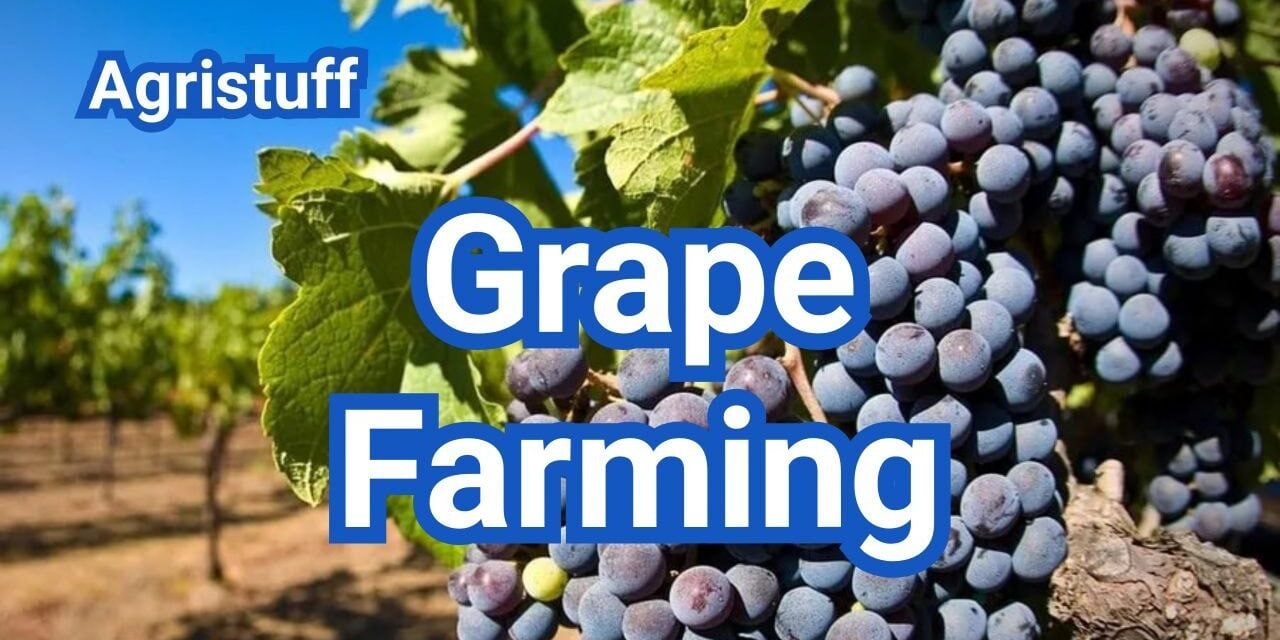
The term grape farming means cultivating and managing grapevines to produce fruit for fresh eating, juice, wine, or drying into raisins. The cultivation of grapes is called viticulture, and a planting of grapevines is a vineyard. Vineyard work includes establishing vines, training and pruning their growth, managing water and pests, and harvesting fruit at suitable maturity. UC Davis: viticulture and grape-growing information.
Quick answer: To start grape farming, decide how you will use or sell the fruit, confirm that your site suits the crop, and select locally adapted varieties before ordering plants. Prepare the soil, arrange irrigation, establish a suitable trellis, and prioritize healthy roots and vine structure during the early seasons. For a commercial vineyard, begin planning well ahead of planting; Cornell recommends starting the process at least two years in advance. Cornell Cooperative Extension: new vineyard timeline.
A first-time grower can make the project manageable by deciding what the grapes are for before choosing where to plant. Grapevines are woody perennials, so your first choices shape care for many years. A cordon is a permanent woody arm extending from the trunk that carries fruiting canes or spurs.
Your local climate sets the growing season and shifts the timing of care. In some regions, early spring is the main planting window; in others, winter protection or a longer season matters more. Start with a realistic goal, then let your conditions guide the choices that follow.
Key Takeaways
- Choose a purpose and scale before buying vines.
- Use local climate and soil conditions to narrow your choices.
- Set up sturdy support before the vine grows.
- Plan on regular seasonal care, not a one-time planting.
- Check ripeness by tasting berries, not color alone.
You do not need a vineyard to begin. A few well-placed vines can supply fruit or shade, while a commercial planting calls for a larger plan. The following steps take you from choosing a growing goal to planting, training, and harvesting grapes.
How Do You Plan Grape Farming Around Your Goals?
A grower who wants a shaded pergola needs a different plan from someone aiming for wine grapes. Begin by deciding whether you want shade, fresh table grapes, fruit for juice or jelly, or grapes for wine. Your purpose influences the type of vine, support, and seasonal care that will suit you.
Home grape farming is manageable with regular seasonal attention, while commercial growing requires continuous planning and management. A few backyard vines need space, support, and routine care; a commercial planting adds equipment, row layout, ongoing labor, and access to buyers. Those demands change the scale of the project from the start.
Choose the harvest you want first. A backyard arbor and a commercial wine-grape block call for very different plans.
For fresh eating, choose grapes meant to be eaten from the vine, with berries and clusters that suit your preferences. Juice and jelly grapes are selected for processing and can also be enjoyed fresh. Wine grapes are chosen for the style of wine you want to make as well as their fit with local conditions.
Wine varieties are not interchangeable. The growing conditions help determine whether a variety can ripen well, while the intended wine style influences which grapes make sense. If your aim is wine, think about both before choosing vines, rather than treating wine grapes as a single type.
Your starting scale affects the time and care you can give the plants. A few vines are a practical way to learn seasonal tasks and observe how a grapevine performs in your yard. Commercial production involves more moving parts, from arranging rows and equipment to finding a market for the crop.
Consider what you can tend throughout the growing season, not only what you hope to harvest. Grapevines need support and annual attention, and their growth continues beyond the first year. A manageable project gives you room to learn without taking on more vines than you can care for.
Once the purpose and scale are clear, check the proposed site and soil before narrowing your variety choices.
Where Should You Plant Grapevines and What Soil Do They Need?

A sunny patch that stays soggy after rain is a poor starting point for a productive vine. Look for full sun, good drainage, and ground deep enough for roots to spread. At least seven hours of direct sunlight daily is a practical target for ripening fruit.
Deep, loose, well-drained soil with a pH of 5.5-6.5 gives a grapevine a useful starting range. A soil test can show pH and other soil conditions before you commit to planting. Grapevine roots can extend at least 36 inches into deep soil, so shallow or compacted ground can restrict root growth.
Find a sunny, well-drained site
Choose a place where sunlight reaches the leaves and clusters for much of the day. In the United States, a south-facing slope can improve sun exposure. On flat ground, allow enough open space for light and airflow instead of planting close to buildings, dense shrubs, or trees.
Water that stands on the ground can point to poor drainage, which leaves roots with too much moisture. Check the site after rain: note whether water drains away or remains pooled at the surface. A low, wet spot may be a poor fit even if it looks sunny during dry weather.
In a home garden, allow about six feet between vines. That spacing gives each plant room to grow and helps keep the area around the leaves open. Also consider how the support structure will fit without crowding nearby plants or blocking access for care.
Check soil depth, drainage, and pH
Grapevines do best when roots can move through soil rather than stopping at a hard layer or shallow bedrock. Dig or probe the ground to understand its depth and texture. Loose soil supports root growth, while compacted ground can slow it and hold excess water.
A soil test is more useful than guessing from the surface. It identifies whether the pH falls near the 5.5-6.5 target and can help flag conditions that need attention. Avoid adding soil products based only on appearance; a test gives you a clearer basis for decisions.
| Site factor | Target | How to check |
|---|---|---|
| Sun | At least 7 hours daily | Track direct sun through the day |
| Drainage | Water drains after rain | Look for standing water after rain |
| pH | 5.5-6.5 | Use a soil test |
These site checks help you rule out poor locations before spending money on vines. Use the conditions you found to narrow the variety choices that follow.
Which Grape Varieties Suit Your Climate and Intended Use?
A variety suited to a cold winter may not be the best choice for a warm site or a particular wine style. Start by matching the grape type to your harvest goal and local growing conditions. Cold hardiness matters, but so does whether you want fresh fruit, juice, jelly, or wine.
Table grapes are bred for fresh eating, while juice and jelly grapes are suited to processing. Wine grapes often have higher acidity, more sugar, a higher skin-to-pulp ratio, and more seeds than table or juice grapes. Choose for both climate and use, since one trait cannot stand in for the other.
Match the grape type to the harvest
Think about what you will do with the fruit after picking. Fresh-eating grapes should fit the experience you want at the table. Juice and jelly grapes need to suit processing, and wine grapes should match both the local climate and the intended wine style.
Concord is a familiar example used for juice and also eaten fresh. It can help you picture the difference between fruit chosen for processing and fruit selected mainly for fresh eating. Still, familiarity does not guarantee that a variety will grow well in your region.
Check local suitability before buying. Regional conditions affect whether a grape can ripen and whether it can handle winter. Minnesota examples offer helpful comparisons for cold climates, but they are not guarantees for every state or growing site.
Compare cold-hardy examples
The varieties below illustrate different uses and cold-climate notes documented for Minnesota. Use them as examples to guide your questions about local growing conditions, not as a universal ranking. A variety’s harvest detail matters alongside its ability to grow in a given zone.
| Variety | Primary use | Berry or harvest detail | Cold-climate note |
|---|---|---|---|
| Bluebell | Juice and jelly | Fruit for processing | Zone 4; also grows well in zone 3 |
| Frontenac | Wine | Late ripening | Very good in zone 4; does well in zone 3 |
| Edelweiss | Fresh eating | Fresh-eating grape | Does well in zone 4; acceptable in zone 3 |
| Mars | Fresh eating | Blue, seedless berries | Tested for reliable growth in zone 4 |
| Somerset Seedless | Fresh eating | Pink-red berries | Hardiest of the tested seedless varieties |
A cold-climate note reflects the Minnesota examples, not a promise about performance elsewhere. Local growing conditions and the variety’s intended use still matter. Move from this shortlist to buying and planting healthy vines.
How Do You Plant and Support Grapevines?

A bare-root vine can dry out while waiting, so prepare its hole and support before it arrives. In northern climates, spring planting gives vines time to establish before winter. Keep bare roots cool and moist until planting, and do not leave them exposed to drying air.
Before you plant, make sure a sturdy support is ready. Grapevines become heavy as they grow, so use a strong fence, posts, an arbor, or a trellis that can hold mature growth. A support added early is easier to work around than one fitted after shoots spread.
Plant dormant nursery vines correctly
For bare-root stock, soak the roots in water for 3-4 hours before planting. Keep the roots damp while you work, and trim any damaged sections. Dig a hole wide enough to spread the roots without bending them sharply against its sides.
Set the vine so its lowest bud sits just above the soil surface. Spread the roots through the hole, cover them fully, and water thoroughly after planting. Remove all canes except the strongest at planting, then secure the vine to its support without tightening the tie around the trunk.
Use this checklist as you plant:
- Soak bare roots for 3-4 hours.
- Trim damaged roots.
- Spread roots in the hole.
- Set the lowest bud just above soil.
- Water thoroughly after planting.
Set up sturdy support before growth
A fence, posts, an arbor, or a trellis can guide vines as they grow. Choose support that can hold the increasing weight of woody stems and fruit, and leave room to reach the vine for care. A support that wobbles or sags can become a problem as the plant matures.
Attach the young vine gently so its trunk can grow without being pinched. Support helps you guide growth along a planned path and keeps the plant from sprawling across nearby ground. Match the support to the available space and the way you expect to use the harvest.
Can You Plant Grapes From Seeds or Cuttings?
You can grow grapes from seed, but the process is slow and the new plant does not reliably reproduce the parent fruit. Cuttings are a more direct way to propagate a grapevine. Dormant hardwood cuttings can be taken in late fall or winter, while softwood cuttings can be taken from late spring to mid-summer.
Commercial vineyards commonly use grafted vines. For a home grower, the main choice is whether to start with a nursery vine or try propagation. A nursery vine gives you a more direct start with a selected variety, while seed-grown plants may differ from the fruit you expected.
Can You Grow Grapes in Pots?
A pot can make grape growing possible where ground space is limited. Use a large, well-drained container and provide a sturdy support for the vine. Container plants need closer attention to watering and establishment than vines planted in the ground.
Choose a location where the pot can stay in place and the vine can receive the care it needs. The confined root space makes watering especially important while the plant establishes. Once the vine is planted, help it establish through its first growing seasons with attentive care.
How Much Water and Fertilizer Do Young Grapevines Need?
Young vines need steady root-zone moisture, but an established vine is not automatically a weekly watering project. During the first two growing seasons, young vines generally need 0.5-1 inch of water per week, depending on rainfall. Soak the roots, rather than wetting foliage.
Five gallons over a 3-by-3-foot area supplies about one inch of water. Check the soil and rainfall before adding more, since the weekly range includes water from rain. Established vines usually need little extra water unless the soil drains very freely or drought lasts.
Apply water to the ground around the vine so it reaches the root zone. Potted vines need closer monitoring until they establish, because the container limits the soil available to roots. Reduce watering in fall to help young canes harden before winter.
For young vines, compost is a modest feeding option in early spring during the first 2-3 years. Spread it around the plant without piling it against the trunk. Routine fertilizer is not needed when growth is already vigorous, and too much feeding can push excess growth.
If you suspect a nutrient problem, use a soil test or local advice before adding fertilizer. That helps you respond to a real need instead of guessing. The right care depends on what the soil and vine show, not on a fixed fertilizer routine.
Mulch advice varies with climate and soil. A 2-3-inch organic layer may help retain moisture and suppress weeds in some settings, but thick mulch can keep cold-climate grape soil too cool. Keep mulch away from the trunk.
Once moisture and feeding are in hand, training and pruning can direct growth toward a healthy structure.
How Do You Train and Prune Grapevines Each Year?

A heavily pruned dormant vine can look severe, even though the cuts prepare it for the next crop. Annual pruning is important, usually in late winter or early spring before leaves emerge. Prune with purpose, rather than leaving excess growth simply because the vine looks bare.
An average vineyard may remove 80-90% of the previous season’s new growth. Fruit grows on new shoots that emerge from buds on last year’s wood, so pruning guides how much fruiting growth remains. Heavy, purposeful pruning generally favors better-quality fruit than light pruning that leaves too many clusters.
Build a trunk and cordons in the first years
In year one, focus on roots and a straight trunk rather than a crop. Select a strong, healthy cane and tie the chosen trunk to its support. Keep the young trunk growing upright so it can form a sound framework for later growth.
In the second summer, train lateral shoots along the support to form cordons. A cordon is a permanent woody arm extending from the trunk that carries fruiting canes or spurs. These arms give you a structure to manage as the vine matures.
Let the vine build its framework before expecting it to carry a full crop. Each growing season adds shoots, but not every shoot belongs in the permanent structure. A clear trunk and well-placed arms make later pruning easier to judge.
Prune mature vines while dormant
Prune while the vine is dormant, in late winter or early spring before leaves emerge. Fruit comes from new shoots that grow from buds on last year’s wood, not directly from old, unpruned growth. Keep suitable fruiting canes or spurs that carry those buds.
After pruning, table, juice, and jelly vines may retain 40-60 buds, while wine vines may retain 20-30. These are useful ranges, not a substitute for learning how your own vine grows. Too many buds can leave the vine with too many clusters to support well.
Use this sequence for dormant pruning:
- Identify the trunk and cordons.
- Keep suitable fruiting canes or spurs.
- Remove weak, misplaced, and excess growth.
- Clear prunings away from the vine.
Removing cuttings from the vine’s base keeps the area clear and makes it easier to see the structure you kept. Routine pruning is one part of prevention; sanitation and regular monitoring also help reduce problems that can affect a crop.
How Can You Prevent Grape Pests, Diseases, and Winter Injury?
A few minutes spent inspecting leaves and clusters can reveal trouble before damage spreads. Look for changes in leaves, shoots, and fruit, and act on problems while they are still limited. Early checks matter because fungal diseases and pests can affect both growth and harvest.
Powdery mildew can appear as a white, powdery coating on leaves or fruit. Good air circulation, removal of diseased shoots, and clearing plant debris help reduce conditions that let disease persist. Fallen leaves, fruit, and cuttings should not collect under the vine.
Spot pest and disease damage early
Japanese beetles can leave grape leaves with lace-like feeding damage. They are most active from late June or early July through August. Check vines at least twice a week during this period, and knock beetles into soapy water as a home-garden control.
Also check for a white powdery coating or other discolored patches on leaves and fruit. Birds can damage ripening clusters, and netting can protect fruit. Look closely at the berries as they develop so you can spot trouble before it affects a larger part of the crop.
Keep the canopy open and the ground clean
Open growth helps air move through the leaves and clusters. Remove diseased shoots, then clear fallen leaves, fruit, and cuttings from beneath the vine. A clean area makes it easier to inspect the plant and reduces the debris left around it.
Lawn herbicide drift can injure grapevines. Products containing 2,4-D and dicamba can move through the air, deform grape leaves, or cause flower clusters to fall. Avoid applying these products near vines, and consider discussing drift risk with neighbors or lawn-care services.
Respond to winter injury without rushing
Severe winter injury can kill much of a vine, but new canes may regrow from low on the trunk. Do not rush to remove living growth after winter damage. Wait until you can assess which parts remain alive before cutting them away.
Cold injury can make a vine look worse than it is at first glance. Give it time to show where growth resumes, then judge the damage. A living section may still help the plant recover, while a dead part can be handled after you have a clearer picture.
Use this four-point inspection during the growing season:
- Check leaf undersides and shoots.
- Look for powdery or discolored patches.
- Remove fallen leaves and fruit.
- Check ripening clusters for bird or insect damage.
Once the vines are healthy and fruit develops, turn to how to judge ripeness and pick it carefully.
When Should You Harvest Grapes?

A richly colored bunch can still taste underripe, so do not judge readiness by appearance alone. Taste several berries to assess ripeness, since grapes can change color before they are ready. Taste is the better test when color gives you an uncertain signal.
Harvest timing depends on the variety and local weather. In Minnesota, grapes are commonly harvested in September and October, but that timing does not apply everywhere. Use taste and local conditions together to decide when to pick your clusters.
Clip full clusters with pruning shears or heavy scissors. Handle the bunches carefully so you do not bruise the berries, and remove damaged fruit after picking. Put the grapes in a refrigerator soon after harvest to help preserve their quality.
Most grapes keep in a refrigerator for about one to two weeks. Avoid squeezing or dropping clusters as you move them, since bruised berries can lose quality sooner. Whether you plan to eat or process the crop, careful picking protects the fruit you worked through the growing season to produce.
Color can change before grapes are ripe. Taste several berries, then clip full clusters carefully and cool them soon after picking.
Your first harvest gives you a practical starting point for the next growing season: note how the fruit tasted and when it ripened, then use that experience to guide your next step.
Quick checklist
- Choose a clear purpose: household use, fresh sales, wine, juice, or raisins.
- Confirm demand and buyer specifications before making a commercial planting.
- Review winter temperatures, frost exposure, and the season available for ripening.
- Test the soil and correct drainage or compaction problems before planting.
- Select locally adapted varieties and verify any pollination requirements.
- Confirm nursery health documentation and the appropriate rootstock choice.
- Draw the row layout and budget for trellising, irrigation, and wildlife protection.
- Arrange enough time or labor for annual pruning and growing-season management.
- Prepare harvest containers, cooling arrangements, and a sales or delivery plan.
- Build a cash-flow budget covering establishment and years with limited production.
Common mistakes to avoid
- Buying a familiar variety without checking adaptation: Confirm local winter survival, ripening, and disease performance first.
- Planting before identifying customers: Ask buyers which grapes they need, in what quantities, and at what quality.
- Using a weak or unsuitable trellis: Design for mature vines, fruit weight, weather exposure, and pruning access.
- Ignoring soil problems until after planting: Investigate drainage and compaction while the site remains easy to work.
- Overcropping young vines: Build roots and structure before expecting substantial harvests.
- Skipping annual pruning: Learn the correct method for the variety and training system.
- Applying fertilizer without diagnosis: Use testing, growth observations, and regional recommendations.
- Budgeting every harvested pound as sold fruit: Allow for sorting losses, spoilage, unsold inventory, and delivery costs.
Costs and ROI snapshot

Startup costs for grape farming vary widely with location, planting density, site condition, and production system. As a regional reference, Cornell Cooperative Extension’s Suffolk County guidance states that site preparation, vines, and trellis installation generally exceed $20,000 per acre, excluding land; irrigation and deer fencing add further costs. Use this to understand the scale of investment, then obtain local quotations rather than treating the figure as a national price or complete project budget. Cornell Cooperative Extension: vineyard establishment costs.
- Initial investment: Site preparation, drainage work, plants, posts, wire, anchors, irrigation, and fencing.
- Annual operating expenses: Pruning, canopy work, pest management, mowing, water, repairs, harvesting, and insurance.
- Marketing expenses: Packaging, cooling, delivery, market fees, and time spent selling.
- Often underestimated: Owner labor, replacement vines, machinery ownership, financing, and maintaining vines before substantial sales begin.
- Higher-cost situations: Difficult terrain, major drainage work, dense plantings, intensive hand labor, and expensive wildlife exclusion.
A useful grape farming calculation is annual break-even price: total annual cost divided by saleable production. In an illustrative example using assumed figures, $12,000 in annual costs and 4 tons sold require an average price of $3,000 per ton to break even. If sales fall to 3 tons while costs remain $12,000, the required price rises to $4,000 per ton; include owner labor and appropriate annual ownership costs in your cost figure. These assumed numbers demonstrate the calculation only, so replace them with local estimates using an enterprise-budget framework. Oregon State University: enterprise budgets for estimating costs and returns.
- What improves returns: Suitable varieties, consistent fruit quality, dependable buyers, efficient labor, and reduced losses.
- When investment makes sense: Conservative sales projections cover realistic costs, the site suits the crop, and cash reserves support establishment.
- How to evaluate payback: Track cumulative cash flow from the initial investment onward; one profitable harvest does not prove the vineyard has repaid its startup costs.
- Before expanding: Recalculate results under lower yields, lower selling prices, and higher labor costs.
FAQ
What is a grape farmer called?
A person who grows grapes is commonly called a grape grower or winegrower. A viticulturist specializes in grape cultivation, including how vines grow and produce fruit. The word winegrower often fits someone raising grapes for wine, while grape grower can describe someone producing fruit for fresh eating or other uses. UC Davis: the role of a viticulturist.
How many years does it take for a grape vine to fruit?
For grape farming planning, a modest crop around the third growing season is a reasonable starting expectation, although some vines can form fruit earlier. Early clusters may need removal so roots and vine structure develop properly, and substantial production comes later as the planting matures. Timing depends on plant condition, variety, climate, and management. University of Georgia Extension: establishing and cropping bunch grapes.
Is it hard to farm grapes?
Small-scale grape farming is learnable, but maintaining healthy, productive vines requires regular attention and practical skills. The biggest beginner challenges include choosing a suitable site and cultivar, learning pruning, and managing pests before they damage the crop. Commercial production adds business planning, labor coordination, and marketing responsibilities. University of Georgia: resources for new vineyard growers.
Do I need two grape vines to produce grapes?
Most cultivated bunch grapes are self-fruitful, so grape farming with a single suitable bunch-grape vine can produce a harvest. Muscadines require closer attention: a self-fertile cultivar can fruit alone, but a female-flowered cultivar needs a compatible pollen-producing muscadine nearby. Check the cultivar’s flower type before purchasing plants. University of Georgia Extension: muscadine pollination requirements.
Is it profitable to grow grapes?
Grape growing can be profitable, but returns depend on the variety, climate, yield, labor, establishment costs, and whether you sell fresh fruit or processed products. A commercial vineyard also needs buyers and a plan for ongoing costs. Those factors vary widely, so a crop’s potential revenue should not be treated as a guaranteed return.
How many bottles of wine will 1 acre of grapes produce?
A rough planning rule is about 600-700 standard 750-mL bottles per ton of wine grapes. An acre’s bottle total varies with the grape yield and the losses that occur during winemaking. The estimate is a conversion from tons of grapes, not a fixed number of bottles guaranteed from every acre.
Do you need two grapevines to get fruit?
No, most grape varieties are self-fertile, so one vine usually fruits on its own. Self-fertile flowers can produce fruit without a second grapevine nearby. Check the requirements of the variety you choose, since growing needs can vary. If you plant more than one vine, spacing and support still matter for healthy growth.
How much money does an acre of grapes make?
There is no single dependable amount an acre of grapes earns. Revenue depends on the region, yield, grape type, sale price, and production costs. A grower selling fresh grapes faces different costs and buyers than one producing wine grapes. Estimate both income and expenses for the specific market and crop you plan to grow.
Will grape vines come back every year?
Yes, grapevines are woody perennials and usually regrow each year. Severe winter injury can kill part or much of a vine, so the amount of new growth may vary. A damaged vine may send new canes from low on the trunk. Wait to assess what remains alive before removing growth after a harsh winter.
What not to plant near grape vines?
Keep grass and competing plants from growing under grapevines, where they can compete for space and resources. There is no universal list of plants that cannot grow nearby. Focus on keeping the root area and the space around the vine from becoming crowded, and leave enough room to reach the plant for routine care.
Final Thought
The strongest start in grape farming is a planting you can manage well, on a suitable site, with varieties chosen for a clear purpose. Learn the essential vineyard tasks, budget for the establishment period, and expand when your growing results and market justify it. Local Extension guidance can help turn those decisions into a workable plan. Oregon State University Extension: vineyard establishment resource guide.
Sources & References
- USDA NRCS: Web Soil Survey.
- USDA Agricultural Research Service: Plant Hardiness Zone Map.
- National Clean Plant Network: clean grapevine material.
- Utah State University Extension: grape varieties and adaptation.
- NC State Extension: vineyard floor management.
- Oregon State University Extension: wine-grape tissue nutrient guidelines.
- UC IPM: powdery mildew management in grapes.
- UC IPM: vineyard sanitation.
- UC IPM: managing bird damage in vineyards.
- Iowa State University Extension: fruit-crop pollination requirements.