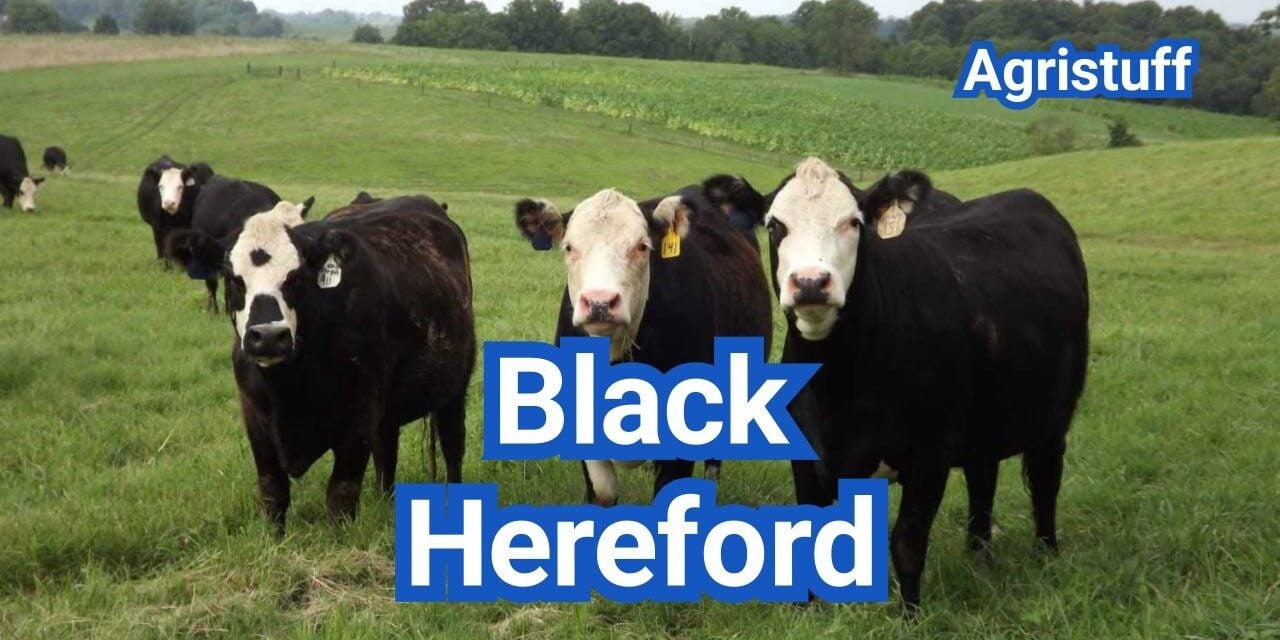
Many producers often wonder what black hereford cattle are and how they differ from traditional stock. These animals represent a unique genetic blend, combining the hardy nature of the Angus breed with the iconic white-faced markings of their counterparts.
It is vital to distinguish these animals from the common Black Baldy. While both share similar coat patterns, registered genetics set this specific breed apart in terms of performance and consistency. Understanding these differences helps ranchers make better decisions for their herds.
This guide explores the foundation of black herefords, covering everything from registration standards to growth traits. Whether you are looking to improve your operation or simply curious about the breed, we provide the insights needed to evaluate these animals effectively.
Key Takeaways
- These animals are a specialized crossbreed featuring Angus and white-faced genetics.
- They differ from Black Baldy stock due to specific registration and breed standards.
- The breed is prized for combining maternal traits with high-quality meat production.
- Understanding genetic lineage is essential for successful herd management.
- Performance data helps producers determine if this breed fits their specific environment.
What Black Hereford Cattle Are and How the Breed Developed
Modern cattle production saw a significant shift when breeders in Kansas started experimenting with new genetic combinations in 1994. This initiative aimed to capture the superior traits of two legendary breeds within a single, functional animal. By focusing on specific phenotypic goals, these early pioneers laid the groundwork for what would eventually become a standardized, recognized breed.
How the American Black Hereford Began in Kansas in 1994
The kansas development beginning in 1994 marked the official start of a focused breeding program. Breeders sought to create an animal that retained the docile nature and foraging ability of the Hereford while incorporating the black coat and marbling potential of the Angus. This vision required years of careful planning and strict adherence to specific breeding standards.
The Registered Hereford × Angus Foundation Cross
The foundation of the breed relied heavily on the registered hereford × angus foundation cross. By utilizing purebred parents, breeders ensured that the resulting offspring possessed the necessary genetic diversity to thrive. This initial crossing was not random; it was a calculated move to stabilize the desired white-face pattern on a black hide.
How F1 Females, Backcrossing, and Selection Built the Breed
The process relied on the strategic use of f1 females to refine the herd. Through backcrossing and breed development, producers were able to fix the traits that define the modern animal. This rigorous selection process ensured that only the most consistent performers remained in the breeding pool, gradually moving the population toward a uniform type.
Is a Black Hereford a Recognized Breed or Only a Cross?
Many producers often ask, is a black hereford a recognized breed or only a cross? While it originated from a crossbreeding program, the american black hereford achieved official status as a distinct breed in 2003. It is no longer viewed as a simple commercial cross, but as a stabilized genetic line with its own registry and performance standards.
| Feature | Hereford Influence | Angus Influence |
|---|---|---|
| Coat Color | Red/White Pattern | Solid Black |
| Temperament | Docile/Calm | Alert/Adaptable |
| Carcass | Yield Potential | Marbling Quality |
| Breed Status | Established | Established |
The black hereford breed continues to grow in popularity across the United States. By maintaining strict registration requirements, the association ensures that the integrity of the breed remains intact for future generations of cattlemen.
Black Hereford Genetics Behind the Coat, Face, and Horn Status

Genetics serve as the primary blueprint for the Black Hereford, dictating everything from the iconic white face to the polled trait. By understanding black hereford genetics, producers can make informed decisions that improve herd uniformity and marketability. This scientific approach moves beyond visual guessing, allowing for predictable results in every calf crop.
Black Coat Genetics From Angus Influence
The distinct dark color of the breed originates from the Angus influence. In cattle, the black coat color is a dominant trait, which makes it highly reliable when crossing with other breeds. When breeders focus on black coat and polled genetics, they ensure that the dark pigment remains a consistent feature across generations.
White-Face Genetics From Hereford Influence
The signature white face is a hallmark of the Hereford breed and remains a dominant characteristic in the Black Hereford. This trait is genetically independent of the coat color, meaning it can be passed down even when the body color is black. This unique combination creates the recognizable look that buyers often associate with hybrid vigor and hardiness.
Black Hereford Genetics for Polled Cattle
Polled genetics, or the absence of horns, is a highly sought-after trait in modern beef production. By selecting for polled animals, breeders reduce the need for physical dehorning, which improves animal welfare and lowers labor costs. This genetic trait is dominant, meaning that if a calf inherits the polled gene from at least one parent, it will likely be born without horns.
What Homozygous Black and Homozygous Polled Mean
Understanding the difference between homozygous vs heterozygous black is vital for breeding success. A homozygous black hereford carries two copies of the black gene, ensuring that all offspring will be black regardless of the mate. In contrast, a heterozygous animal carries one black gene and one red gene, which can lead to red calves if bred to another carrier.
“Genetics is the foundation of progress in the cattle industry, turning random chance into a predictable science for the modern producer.”
— Anonymous Breeder
So, what do homozygous black and homozygous polled mean? Being homozygous for these traits means the animal is genetically pure for those specific characteristics. When you use a bull that is homozygous for both black and polled traits, you gain the highest level of certainty that your calves will consistently display these desired features.
Step 1: Identify the Breed Type and Percentage of Hereford Blood
The foundation of any quality breeding program starts with identifying the specific breed type and percentage of Hereford blood. Accurate identification is essential for maintaining the integrity of your cattle operation and ensuring long-term genetic progress.
How a Black Hereford Is Created Through Planned Crossbreeding
To understand how is a Black Hereford created?, one must look at the intentional crossing of registered Hereford and Angus cattle. This process begins by combining the distinct traits of both breeds to produce offspring that carry the desired black coat and white-face pattern.
Breeders use specific mating strategies to stabilize these traits over several generations. By selecting for both color and performance, they ensure the resulting animals meet the standards required for the breed registry.
Calculating the Percentage Black Hereford
Calculating the percentage black hereford involves tracking the ancestry of an animal through its sire and dam. Each generation contributes a specific portion of genetic material from the foundation breeds.
For example, an F1 cross between a purebred Hereford and a purebred Angus results in a 50% Hereford animal. Subsequent backcrossing to a registered Black Hereford increases the percentage of Hereford blood, moving the animal closer to purebred status.
Percentage Animals Versus Purebred Black Herefords
When discussing percentage vs purebred registration, it is important to note that the American Black Hereford Association (ABHA) maintains strict guidelines. A purebred animal must meet specific genetic thresholds established by the registry.
Understanding what is the difference between percentage and purebred animals? is vital for buyers. While percentage animals are valuable for commercial production, purebreds are often sought after for their predictable genetic consistency and registration eligibility.
Why Coat Color Alone Does Not Prove Breed Status
Many new producers mistakenly believe that a black coat and white face are enough to identify a Black Hereford. However, these physical traits can appear in various crossbred cattle that lack the necessary documented parentage.
Registration papers serve as the only reliable proof of an animal’s true genetic background. Relying on appearance alone can lead to poor breeding decisions and may disqualify an animal from official breed programs.
Step 2: Understand ABHA Registration Categories and Eligibility

The evolution of the American Black Hereford Association (ABHA) registry has created a clear path for breeders to track their animals’ lineage. Since the first registrations in 1997 and the implementation of advanced registry software in 2000, the system has provided a reliable framework for genetic improvement. Understanding these categories is vital for anyone looking to maintain a registered Black Hereford herd.
ABHA Registration for Percentage and Purebred Animals
The ABHA manages a tiered system that accounts for both percentage animals and the purebred Black Hereford. This structure allows breeders to grade up their cattle over several generations. By documenting each cross, the association ensures that the breed maintains its desired traits while expanding its genetic base.
The 62.5% Registration Threshold
Many new breeders often ask, what percentage is required for registration? The baseline for entry into the registry is generally set at 62.5%. This threshold ensures that the animal possesses a significant enough influence from the foundation breeds to be considered part of the program. Meeting this mark is the first step toward building a recognized herd.
The 87.5% Registration Threshold and Higher-Percentage Cattle
As breeders continue to refine their lines, they often aim for the 87.5% registration threshold. Cattle reaching this level are considered closer to the ideal breed standard. These higher-percentage animals are highly valued for their consistency and performance in commercial operations. Maintaining accurate records at this stage is crucial for long-term success.
Registered Black Hereford Records Required for Ownership Transfer
Proper documentation is the backbone of the industry. When you sell or purchase an animal, the ABHA registration papers must be transferred to the new owner to maintain the integrity of the herd book. Without these records, an animal loses its official status, which can significantly impact its market value.
| Registration Tier | Percentage Requirement | Status |
|---|---|---|
| Foundation | Below 62.5% | Not Eligible |
| Percentage | 62.5% to 87.4% | Eligible |
| Purebred | 87.5% and above | Eligible |
By adhering to these 62.5% and 87.5% registration thresholds, you ensure that your investment remains protected. Always verify that the purebred Black Hereford or percentage animal you are buying has the correct paperwork. This diligence prevents future headaches and keeps your breeding program on the right track.
Step 3: Evaluate the Black Hereford Bull, Cow, and Calf
Success in cattle production starts with a careful assessment of every animal in the pasture. Rather than viewing the herd as a uniform group, you should focus on the specific bull, cow and calf characteristics that drive profitability. This systematic approach helps you identify which animals contribute to your long-term goals.
Black Hereford Bull Characteristics
When selecting a black hereford bull, prioritize structural soundness and athletic ability. A high-quality sire must possess excellent feet and leg structure to cover ground effectively during the breeding season. Look for a bull with a calm disposition, as temperament is a highly heritable trait that impacts safety and ease of handling.
Muscling and frame size are also critical indicators of future performance. A superior bull should show balanced muscling across the loin and round, indicating potential for high-quality beef production. Always verify his performance data against his physical appearance to ensure he meets your specific herd requirements.
Black Hereford Cow Characteristics
The ideal black hereford cow is defined by her maternal efficiency and longevity. You should inspect the udder for proper teat size and placement, which is vital for calf nursing success. A productive cow must also demonstrate the ability to maintain body condition while raising a calf on forage alone.
Calving ease is another non-negotiable trait for your breeding females. Selecting cows with a history of unassisted births reduces labor costs and improves overall herd health. Consistent performance in these areas ensures that your investment remains profitable year after year.
Black Hereford Calf Characteristics
Evaluating a black hereford calf requires looking for signs of early vigor and rapid growth. A healthy calf should be active, alert, and quick to stand after birth. These early indicators often predict how well the animal will perform during the weaning and finishing phases.
Monitor the development of the calf to ensure it meets age-appropriate growth milestones. While visual appraisal is helpful, remember that genetic potential is often hidden. Use performance records to supplement your observations, ensuring that your selection process is backed by both data and physical inspection.
Step 4: Compare Typical Size, Beef Performance, and Production Traits

When integrating new genetics, analyzing the typical size and beef performance of your animals is a critical step for long-term success. Producers must evaluate how these cattle function within their specific forage and management systems to ensure maximum profitability.
Expected Mature Size and Frame Variation
The breed offers a wide range of frame sizes, allowing producers to select animals that match their local environment. Smaller to moderate-framed cattle often thrive in limited-forage areas, while larger frames may be preferred in high-input systems.
Consistency in frame score is a hallmark of well-managed herds. By focusing on moderate-framed genetics, you can often improve the overall efficiency of your cow herd without sacrificing the weight of your calf crop.
Growth, Feed Efficiency, Carcass Quality, and Beef Performance
These cattle are known for their ability to convert grass into high-quality protein efficiently. The black white-face cattle combine the growth potential of their ancestors with the hardiness required for diverse climates.
Carcass quality remains a top priority for modern producers. Many animals in this breed demonstrate excellent marbling and ribeye area, which are essential for meeting the demands of premium beef markets.
Maternal Productivity and Calf-Crop Uniformity
Maternal traits are vital for the longevity of any commercial operation. These cows typically exhibit strong milking ability and excellent mothering instincts, which directly contribute to higher weaning weights.
Uniformity is another significant advantage when marketing your calves. A consistent calf crop often commands a premium price at auction, as buyers prefer groups that perform predictably in the feedlot.
Why Individual EPDs Matter More Than Breed Averages Alone
While breed averages provide a baseline, Black Hereford EPDs offer a much more precise tool for selection. These data points allow you to predict the performance of specific offspring with greater accuracy.
Relying on individual measurements helps you avoid the pitfalls of broad generalizations. By using specific genetic data, you can tailor your breeding program to address your herd’s unique strengths and weaknesses.
| Trait Category | Performance Focus | Management Impact |
|---|---|---|
| Growth Rate | High Weaning Weight | Increased Revenue |
| Feed Efficiency | Lower Input Costs | Higher Profit Margin |
| Carcass Quality | Marbling & Yield | Market Premium |
| Maternal Ability | Calf Survivability | Herd Sustainability |
Step 5: Read Black Hereford EPDs and Select a Herd Sire
Selecting the right herd sire is a critical decision for any cattle producer looking to improve their bottom line. Beyond visual appeal, you must rely on objective data to ensure your breeding program moves in the right direction. By focusing on measurable traits, you can minimize risks and maximize the genetic potential of your calf crop.
Important Black Hereford EPDs for Commercial Herds
When evaluating potential sires, abha registration and epds provide the roadmap for your herd’s future. Expected Progeny Differences (EPDs) allow you to predict how a bull’s offspring will perform in specific areas. You should prioritize calving ease if you are breeding heifers, as this reduces labor and veterinary costs during the spring.
Growth traits, such as weaning weight and yearling weight, are essential for producers selling calves by the pound. Furthermore, carcass merit EPDs help you track marbling and ribeye area, which are vital for meeting market demands. Consistency in these traits is what ultimately drives profitability in a commercial operation.
Approved Herd Sire Requirements
To maintain the integrity of the breed, the American Black Hereford Association (ABHA) enforces strict standards for bulls used in registered programs. These approved herd sire requirements ensure that every bull meets the necessary percentage of Hereford and Angus bloodlines. Breeders must verify that the animal is properly recorded in the association database before finalizing a purchase.
Beyond the paperwork, a high-quality sire must pass a physical soundness examination. This includes checking for structural correctness, fertility, and overall health. A bull that meets the registry criteria but lacks physical vigor will not provide the return on investment that a commercial producer needs.
Can an F1 Black Hereford bull be registered as a breeding sire?
A common question among new breeders is: can an f1 black hereford bull be registered as a breeding sire? The answer depends entirely on the specific rules set by the ABHA regarding ancestry and percentage thresholds. While an F1 animal is a cross between a purebred Hereford and a purebred Angus, it does not automatically qualify for registration as a breeding bull.
Registration eligibility is determined by the documented lineage and the percentage of breed composition. You must consult the official registry records to confirm if a specific bull meets the minimum requirements for the desired registration category. Relying on coat color alone is a mistake; always verify the pedigree to ensure the animal qualifies for your specific breeding goals.
Black Hereford vs Black Baldy: Coat, Genetics, and Registration

While they may look similar in the pasture, the Black Hereford and the Black Baldy represent two different paths in cattle production. Many producers find themselves weighing the black hereford vs black baldy debate when planning their next herd improvement strategy.
It is important to recognize that visual traits alone do not tell the whole story of an animal’s genetic potential. Understanding how does a black hereford differ from a black baldy? requires looking beyond the white face and black coat to the underlying breeding history.
How Black Herefords and Black Baldies Are Produced
A Black Baldy is typically the result of a first-generation (F1) cross between a purebred Angus and a purebred Hereford. This commercial cross is prized for its hybrid vigor and consistent phenotype.
In contrast, the Black Hereford is a developed breed. It is created through a structured program of crossing and backcrossing to fix specific traits within a registered population.
Black Hereford Versus Black Baldy Appearance
Both types of cattle often display the iconic white face and black body. However, the Black Hereford has been selected for specific structural traits that align with the breed’s established standards.
While a Black Baldy can vary significantly depending on the quality of the parent stock, the Black Hereford offers greater uniformity. This consistency is a direct result of generations of selective breeding.
Black Hereford Genetics Versus the Typical Angus × Hereford Cross
The primary difference lies in genetic predictability. A Black Baldy is an F1 animal, meaning its offspring will show a wide range of variation if kept for breeding.
Black Herefords are bred to be homozygous for black color and often for polled traits. This makes them a more reliable choice for producers who want to maintain specific characteristics in their future calf crops.
Registration and Breed-Identity Differences
Registration is the final, defining factor in this comparison. A Black Hereford can be registered with the American Black Hereford Association (ABHA) if it meets specific percentage and pedigree requirements.
A Black Baldy, regardless of its quality, remains a commercial cross. It lacks the documented pedigree and performance data that come with a registered Black Hereford, making the latter a more secure investment for long-term genetic planning.
Black Hereford vs Traditional Red Hereford Cattle
When evaluating the black hereford vs traditional red hereford, it is essential to look beyond simple color preferences. While both breeds share a common ancestry, their distinct visual profiles cater to different segments of the beef industry. Understanding these differences allows producers to align their breeding programs with specific market targets.
Black Coat Versus the Traditional Red-and-White Pattern
The most obvious difference lies in the hide color. Traditional Herefords are famous for their iconic red bodies and white faces, which have served as a hallmark of the breed for centuries. In contrast, the Black Hereford displays a solid black coat while retaining the signature white face and markings of its Hereford heritage.
This color difference is not merely cosmetic. The black coat is a result of introducing Angus genetics, which fundamentally alters the visual identity of the animal. While the red-and-white pattern remains a symbol of classic cattle production, the black coat offers a modern aesthetic that appeals to specific commercial supply chains.
Shared Hereford Traits in Black and Red Cattle
Despite the difference in color, both types share the core performance traits that made the Hereford breed famous. Both are recognized for their exceptional docility, which makes them easier to handle in a pasture setting. Furthermore, they both exhibit strong maternal instincts and high fertility rates.
Feed efficiency remains a consistent strength across both groups. Whether you choose the traditional red or the black variety, you are investing in cattle that are highly adaptable to various climates. These shared characteristics ensure that producers do not have to sacrifice performance for the sake of color.
Differences in Buyer Demand, Crossbreeding Options, and Marketing
Market demand often dictates the choice between these two types. In the United States, many feedlots and packers show a strong preference for black-hided cattle due to perceived uniformity in the beef supply chain. This black hide premium can sometimes make the Black Hereford a more attractive option for commercial producers looking to maximize their sale price.
Crossbreeding options also differ significantly. The Black Hereford provides a unique way to introduce Hereford traits into an existing black-hided herd without losing the desired solid-black appearance. This flexibility allows for a more seamless integration into programs that prioritize uniform calf crops.
When a Black Hereford May Be Preferable to a Red Hereford
A Black Hereford may be the superior choice when your primary goal is to capture the benefits of Hereford heterosis while maintaining a black-hided herd. If your local market consistently discounts non-black cattle, the Black Hereford offers a strategic advantage by providing the best of both worlds.
However, if you are operating in a niche market that values the traditional red-and-white look, the classic Hereford remains the gold standard. Ultimately, the decision should be based on your specific herd goals and the requirements of your target buyers. By analyzing the black hereford vs traditional red hereford comparison, you can select the breed that best supports your long-term profitability.
Commercial Uses, Advantages, and Limitations of Black Herefords

Many producers are exploring the practical commercial uses, advantages and limitations of the Black Hereford breed to optimize their herds. Integrating these cattle into a commercial operation requires a clear understanding of how their unique genetics influence performance in the field. By aligning management strategies with the specific traits of the breed, ranchers can effectively enhance their overall productivity.
Commercial Cow-Calf and Terminal-Cross Applications
In a commercial cow-calf system, Black Herefords serve as excellent foundation stock for producing high-quality replacement females. Their ability to thrive in diverse environments makes them a versatile choice for producers who prioritize maternal longevity and fertility. Strategic crossbreeding allows managers to leverage the breed’s docile temperament and structural soundness.
For terminal-cross programs, these cattle provide the necessary growth and carcass merit to meet modern beef industry standards. Producers often utilize separate breeding and calving locations to maintain strict control over genetic progress. This systematic approach ensures that the resulting calf crop remains uniform and highly marketable at weaning.
Advantages of Black White-Face Cattle
The primary benefit of these cattle is the expression of hybrid vigor, which is a hallmark of the white-face influence. This genetic combination often results in improved feed efficiency and hardiness compared to straight-bred alternatives. Producers frequently report that the black coat color helps maintain consistent marketability, as it aligns with the industry preference for black-hided cattle.
Furthermore, the breed offers a distinct advantage in maternal productivity. Cows typically exhibit excellent milk production and strong mothering instincts, which are vital for raising heavy, healthy calves. These traits contribute to a more profitable operation by reducing the need for intensive supplemental care.
Limitations of the Black Hereford Breed
Despite their benefits, there are specific advantages and limitations that every producer must weigh. One significant hurdle is the limited availability of high-quality breeding stock in certain regions. This scarcity can make it difficult for new breeders to source top-tier genetics without significant travel or shipping costs.
Documentation requirements also present a challenge for some commercial operations. Maintaining accurate registration records is essential for verifying the percentage of Hereford blood, which adds a layer of administrative work. Additionally, because the breed is still evolving, selection pressure must remain high to ensure that performance traits continue to meet industry expectations.
Choosing Between a Black Hereford and a Black Baldy for Commercial Production
Deciding between a registered Black Hereford and a traditional Black Baldy depends on your long-term breeding goals. While both offer the benefits of white-face genetics, the Black Hereford provides a more predictable genetic path for those interested in seedstock production. The following table outlines the key differences to help you make an informed decision.
| Feature | Black Hereford | Black Baldy |
|---|---|---|
| Genetic Predictability | High (Registered) | Variable (F1 Cross) |
| Registration Status | Eligible for ABHA | Usually Commercial |
| Primary Use | Seedstock & Herd Improvement | Terminal Market |
| Cost of Entry | Higher Investment | Lower Investment |
Step 6: Use a Buying and Verification Checklist

Navigating the market for specialized cattle breeds demands a rigorous buying and verification checklist to protect your investment. Because the American Black Hereford Association (ABHA) represents a relatively small, specialized population of roughly 68 registered breeders, verifying the authenticity of your purchase is vital. Taking these steps ensures that you are acquiring animals that meet breed standards and your specific production goals.
Verify the Animal’s Registration and Parentage
The first step in your due diligence is to request the official registration certificate from the seller. This document serves as the primary proof of lineage and confirms that the animal is recognized by the ABHA. Always cross-reference the registration number on the certificate with the animal’s ear tag or tattoo to ensure they match perfectly.
Confirm Percentage, Purebred Status, and Sire Eligibility
When asking what records should a buyer verify?, the animal’s percentage of Hereford blood must be at the top of your list. Confirm whether the animal is a percentage-based individual or a purebred, as this dictates its future breeding potential. Additionally, check if the sire is eligible for breeding under current association guidelines to avoid future registration issues with offspring.
Review EPDs, Health Records, Vaccinations, and Performance Data
Data-driven decisions are the hallmark of a successful cattle operation. Review the Expected Progeny Differences (EPDs) to understand the animal’s genetic potential for growth, carcass quality, and maternal traits. Furthermore, request a complete history of vaccinations and health treatments to ensure the animal is entering your herd in peak condition.
Inspect the Bull, Cow, or Calf in Person
While documentation is essential, it cannot replace a thorough physical examination. Evaluate the animal for structural soundness, temperament, and overall body condition. Physical health is just as important as genetic pedigree when selecting a long-term addition to your breeding program.
Common mistakes to avoid
- Calling every black white-faced animal a registered Black Hereford: verify papers, ID, and ancestry.
- Treating Black Hereford and Black Baldy as interchangeable: separate breed-registry goals from F1-cross goals.
- Assuming maximum heterosis: calculate it from the actual breed composition of both parents.
- Buying on color alone: use EPDs, structural appraisal, fertility testing, and dam records.
- Assuming black means homozygous black: request a DNA result if uniform black calves matter.
- Assuming every animal is polled: inspect the animal and verify genotype when horn status affects the plan.
- Using birth weight alone for heifers: prioritize Calving Ease Direct and an appropriate breeding objective.
- Skipping a breeding soundness exam: test bulls before turnout and monitor activity during the season.
- Expecting a guaranteed hide-color premium: confirm buyer specifications, health programs, lot-size needs, and current local bids.
- Ignoring heat load and biosecurity: budget for shade, water capacity, receiving facilities, and isolation.
Costs and ROI snapshot
The purchase price of Black Hereford Cattle varies with age, sex, pedigree, EPD strength, genomic testing, phenotype, fertility, and local demand, so a national fixed price would be misleading. A 2026 Oklahoma State example compared bull purchase prices of $5,600, $8,400, $11,200, and $14,000; assuming 140 females bred over the bull’s useful service, those prices represented $40, $60, $80, and $100 per female before other ownership costs. The figures are planning scenarios, not breed-specific sale quotes OSU 2026 bull ownership and leasing examples.
- Main acquisition costs: purchase price, freight, insurance, interest, registration transfer, and genomic or health testing.
- Annual ownership costs: feed, pasture, minerals, veterinary care, facilities, labor, depreciation, and death risk.
- Costs that rise quickly: overfeeding young bulls, keeping too many bulls, low pregnancy rates, injuries, and maintaining sires through long off-seasons.
- Returns that matter: more calves weaned, more marketable pounds, reduced calving loss, better replacement females, carcass value, and useful salvage value.
- Often underestimated: quarantine space, a replacement plan for injured bulls, heat mitigation, and the cost of open cows.
- When investment makes sense: the animal fits a defined breeding goal and produces enough lifetime calves or retained genetic value to exceed all added costs.
Whole-enterprise economics matter more than the sale-ring price of Black Hereford Cattle. A 2025 University of Nebraska example budget estimated total annual cow costs of about $1,468.56 before cull credits, including an illustrative $54.17 per cow for a $6,500 bull used across 120 lifetime services; feed, labor, cattle capital, facilities, and other ownership expenses made up far more of the total. Producers should replace these assumptions with local forage, labor, financing, and stocking costs University of Nebraska cow-cost example.
ROI from Black Hereford Cattle should be calculated from incremental value, not a promised premium for a black hide. Estimate annualized sire cost per female, pregnancy rate, calves weaned per female exposed, sale weight, price per hundredweight, retained-heifer value, and any verified program premium; then subtract added feed, health, testing, marketing, and capital costs. A detailed cow-calf budget makes it easier to test low, expected, and high-price scenarios before bidding Kansas State University cow-calf budgeting tool.
- Annualized sire cost per female: purchase price minus expected salvage value, plus financing, maintenance, testing, and risk costs, divided by lifetime females serviced.
- Incremental gross value: added calves weaned, added sale weight, verified premiums, retained-female value, and cull value attributable to the breeding decision.
- Net breeding return: incremental gross value minus all incremental ownership and management costs.
FAQ
What black hereford cattle are and how did the breed begin?
Black Hereford cattle are a recognized beef breed that combines the maternal and growth traits of the Hereford with the black-hided market advantages of the Angus. The American Black Hereford breed saw its Kansas development beginning in 1994, utilizing a registered Hereford × Angus foundation cross. Unlike simple crossbreds, these animals are part of a regulated registry established to lock in specific black white-face cattle traits through rigorous selection and backcrossing and breed development.
Is a black hereford a recognized breed or only a cross?
It is a recognized breed. While it started as a cross, it received international designation as a distinct breed in 2003. The American Black Hereford Association (ABHA) maintains the registry, ensuring that a registered black hereford has a documented lineage that distinguishes it from a common commercial crossbred.
How is a black hereford created?
The breed is created by crossing purebred Hereford and Angus cattle to produce F1 females. Through successive generations of backcrossing to Hereford genetics while selecting for the black coat, breeders achieve the desired black hereford genetics. This process ensures the animal maintains the Hereford phenotype and white face while carrying the dominant black hair gene.
What percentage is required for registration with the ABHA?
The ABHA registration requirements include specific percentage vs purebred registration tiers. To be recorded as a percentage black hereford, the animal must be at least 62.5% Hereford blood. To reach the purebred black hereford status, the threshold is typically 87.5% Hereford blood, provided all other breed standards are met.
What is the difference between percentage and purebred animals?
The difference lies in the concentration of Hereford genetics. Percentage black hereford cattle (at least 62.5%) are often used in commercial programs to introduce hybrid vigor. Purebred black hereford animals (87.5% or higher) serve as the genetic foundation for seedstock production, offering more predictable bull, cow and calf characteristics for future generations.
How does a black hereford differ from a black baldy?
The primary difference is genetic predictability and registration. A black baldy is typically an F1 cross between a Hereford and an Angus, meaning its offspring will have high genetic variance. In contrast, a registered black hereford belongs to a closed breed registry with documented black hereford epds, allowing for more consistent results in typical size and beef performance. While they share the black white-face appearance, the Black Hereford is a stable breed, not a first-generation cross.
What do homozygous black and homozygous polled mean in this breed?
A homozygous black hereford carries two copies of the black coat gene, meaning it will never produce a red calf, even when bred to red cows. Similarly, homozygous polled genetics ensure that the black hereford bull or cow will always produce hornless offspring, which is a significant advantage for animal welfare and labor reduction in commercial uses.
Can an f1 black hereford bull be registered as a breeding sire?
Yes, an F1 black hereford bull can be registered as a breeding sire with the ABHA, provided he meets the approved herd sire requirements. This includes verified parentage from registered Hereford and Angus stock and meeting the health and performance standards of the association.
How does a black hereford compare to a traditional red hereford?
When looking at black hereford vs traditional red hereford, the primary difference is the coat color and the associated market premiums for black-hided cattle. They share similar maternal productivity and feed efficiency, but the Black Hereford allows producers to keep the “Hereford efficiency” while accessing “Certified Angus” type marketing channels.
What records should a buyer verify in a buying and verification checklist?
A buyer should verify the ABHA registration certificate, black hereford epds for calving ease and growth, and the animal’s homozygous vs heterozygous black status. It is also vital to check performance data, health and vaccination records, and physical soundness. For those in specialized systems—such as the Lides’ planned grazing model—verifying the animal’s adaptability to specific forage environments is also recommended.
Final Thought
Black Hereford Cattle are best understood as a registered, performance-selected beef population, not as a color-based synonym for Black Baldies. Producers who verify ancestry, use goal-matched EPDs, test fertility and coat genetics, and calculate returns across the whole cow-calf enterprise can make a much stronger decision than buyers who focus only on a black body and white face. The final choice should support a deliberate breeding system that can be measured over several calf crops American Hereford Association research library.
Sources & References
- American Black Hereford Association — Rules and Forms
- American Black Hereford Association — Find a Breeder
- American Black Hereford Association — Performance and Recognition Programs
- Beef Improvement Federation — Expected Progeny Difference
- Beef Improvement Federation — 2026 Across-Breed EPD Adjustments
- eBEEF — Beef Sire Selection Manual
- Oklahoma State University — Crossbreeding Beef Cattle I
- Oklahoma State University — Crossbreeding Beef Cattle III
- American Hereford Association — Hereford History and Research Milestones
- USDA APHIS — Animal Disease Traceability
- Oklahoma State University — Beef Cow Herd Calendar
- Kansas State University — Beef Farm Management Budget
- Beef Quality Assurance — National Manuals
- Oklahoma State University — Feeder-Calf Traits and Market Value