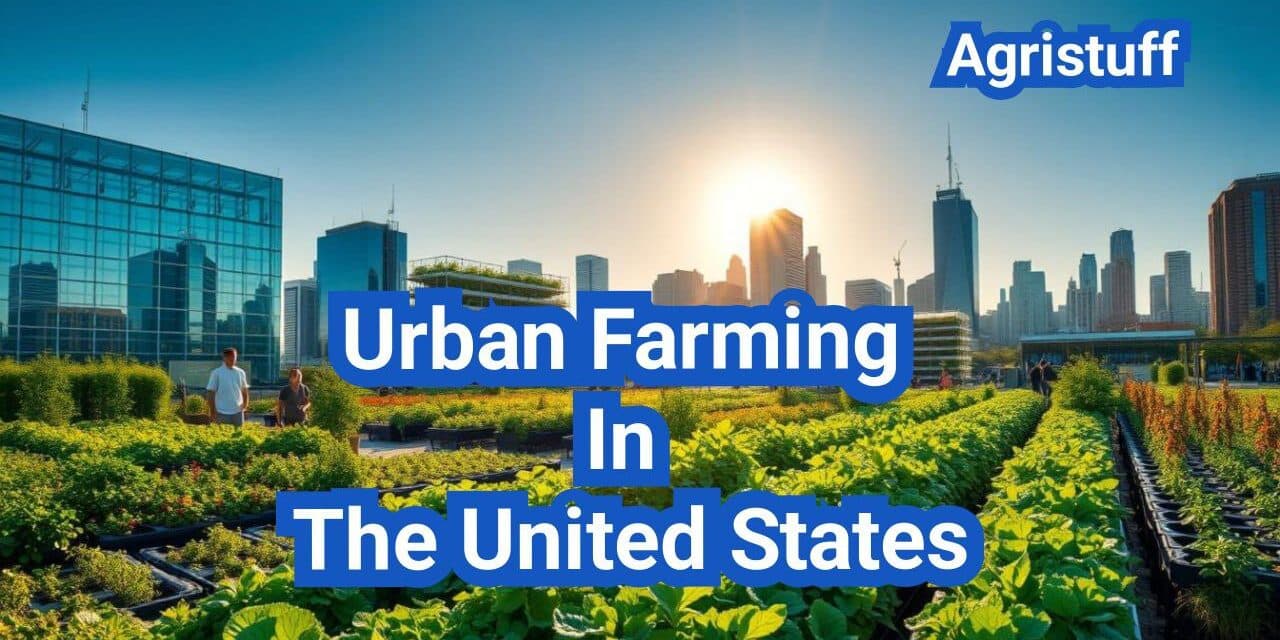
Quick Answer: The most practical sustainable urban farming practices in the U.S. are site and soil testing, compost-based soil improvement, drip irrigation and mulching, resource-efficient crop selection, integrated pest management, local organic-waste recycling, energy management for indoor systems, and compliance with state and local rules. The best mix depends on climate, soil safety, water availability, growing system, and production goals.
Sustainable urban farming practices in the U.S. must solve several problems at once: limited space, uncertain soil quality, water constraints, pest pressure, local regulations, and—in indoor farms—high energy demand. A practice is not sustainable simply because it is used inside a city.
The right approach depends on the site, climate, crop, and production model. This guide focuses on eight practical methods that help U.S. urban farms protect resources, produce safe crops, reduce avoidable waste, and measure whether their operations are genuinely becoming more sustainable.
Key Takeaways
- Urban location alone does not make a farm sustainable; soil, water, energy, pest, and waste impacts must be managed.
- Site history and appropriate contaminant testing should come before food production on an urban lot.
- Drip irrigation, mulch, compost, cover crops, and integrated pest management are practical conservation tools for many outdoor urban farms.
- Indoor and hydroponic systems can conserve land and water, but their electricity and climate-control demands must also be measured.
- Zoning, rainwater use, composting, structures, and produce-selling requirements vary by state and municipality.
- A sustainable urban farm tracks resource use, crop losses, and production results instead of relying only on the labels “urban” or “local.”
What Are Sustainable Urban Farming Practices in the U.S.?
Sustainable urban farming practices are operational choices that allow a city farm to produce safe food while protecting soil and water, reducing unnecessary inputs and waste, and keeping energy and pest-control impacts proportionate to the harvest. USDA Natural Resources Conservation Service programs for urban producers address soil health, irrigation, composting, weed and pest management, and season-extension practices.
An urban farm is not sustainable simply because it is local or located inside a city. A raised-bed farm can overuse water or compost, while an indoor farm may conserve land and water but require substantial electricity for lighting and climate control. A sustainable operation selects practices that fit the site and then measures safety, resource use, crop loss, and marketable production over time.
Sustainable Urban Farm Planning Checklist
Before buying equipment or selecting a growing system, evaluate the urban site as one connected resource system. The farm’s purpose, land tenure, soil safety, sunlight, water access, energy requirements, labor, crop demand, and local regulations should be reviewed together rather than treated as separate decisions.
- Define whether the farm is intended for household use, community access, education, donation, or commercial sales.
- Confirm that the site will remain available long enough to justify permanent improvements.
- Review previous land uses and arrange soil or growing-media tests appropriate to the site’s risks.
- Record sunlight, shade, drainage, wind exposure, roof-load limits, and access for workers and deliveries.
- Identify a safe and dependable irrigation source before choosing crops.
- Estimate water and electricity use instead of comparing systems by purchase price alone.
- Check zoning, structures, composting, rainwater, signage, and produce-selling requirements.
- Choose measurable sustainability indicators before production begins.
A written baseline makes later improvement measurable. Record expected water use, energy demand, soil conditions, input costs, anticipated yield, and likely crop losses. These records allow the farm to determine whether a new practice actually improves efficiency or only transfers costs from one resource to another.
Soil Testing and Soil Health for Sustainable Urban Farms
Review Site History Before Testing
Urban soil management should begin with the site’s history. Former industrial properties, demolition lots, areas near older painted structures, and land beside heavily traveled roads may require more investigation than a residential backyard with a documented history. Previous land use helps determine which contaminants should be evaluated and whether food production is appropriate at the site.
Use the Right Soil Test
A routine fertility test generally measures factors such as pH, organic matter, and plant nutrients; it does not automatically analyze lead, arsenic, pesticides, or other contaminants. Urban growers should describe the site history to a qualified laboratory, Extension office, or state environmental agency and request the specific analyses appropriate to the suspected risks. EPA answers about brownfields and urban agriculture.
Reduce Exposure on Questionable Sites
When existing soil is unsuitable or its safety remains uncertain, growers may use raised beds filled with clean soil, containers, ground covers, mulch, or properly isolated soilless systems. Walkways can be covered to reduce dust and soil splash, and beds can be positioned away from roads, railways, deteriorating structures, and other potential contamination sources. These controls reduce exposure but do not remove the underlying contaminant from the property. EPA urban gardening risk-reduction practices.
Build Soil Health Without Overloading Nutrients
Healthy soil supports water infiltration, nutrient cycling, biological activity, and crop resilience. Appropriate practices may include keeping the soil covered, minimizing unnecessary disturbance, maintaining living roots where practical, rotating crops, using cover crops, and adding tested compost according to soil and crop needs. These practices should be adjusted for small beds, high tunnels, containers, and intensive production areas rather than copied directly from large field systems. USDA NRCS soil-health practices for urban and small-scale agriculture.
Water-Saving Irrigation and Rainwater Planning
Deliver Water Near the Root Zone
Water conservation is one of the most practical sustainable urban farming practices in the U.S. Drip or microirrigation can deliver water close to plant roots, while mulch can reduce evaporation, weed competition, and soil splash. Growers should group crops with similar water needs, inspect irrigation lines for leaks, and avoid watering paths or unused areas.
Schedule Irrigation From Actual Conditions
A fixed daily watering schedule can waste water because crop demand changes with temperature, wind, rainfall, plant size, container volume, and growth stage. Check moisture in the active root zone and adjust irrigation duration accordingly. Containers and rooftop beds may dry rapidly, while poorly drained raised beds can remain wet long enough to create root and disease problems. University of Minnesota Extension vegetable-production resources.
Use Collected Rainwater Carefully
Rainwater collection may reduce demand on municipal supplies, but roof material, animal contamination, storage design, crop contact, and local rules must be considered. Untreated roof runoff should not automatically be treated as safe water for direct contact with edible plant parts. Verify local requirements and determine the intended use before installing a rain barrel or cistern. EPA rain-barrel and roof-runoff guidance.
Composting and Urban Food-Waste Reduction
Create a Clean Compost Feedstock Stream
Composting can connect local food-waste reduction with urban soil improvement when feedstocks are clean and the process is managed correctly. Small farms may use enclosed bins or vermicomposting, while community projects may coordinate neighborhood collection and processing. Materials contaminated with chemicals, persistent herbicides, plastics, or other unsuitable substances should not be added simply because they are organic in origin. EPA community composting guidance.
Manage Odor, Moisture, and Pests
A well-managed composting system balances carbon-rich and nitrogen-rich materials, maintains suitable moisture, and receives enough aeration for decomposition. Enclosed systems may be particularly useful where space is limited or rodents and neighborhood concerns are significant. Local rules may regulate the quantity of material, processing location, accepted food scraps, setbacks, and whether material can be collected from other properties. USDA composting and food-waste reduction resources.
Avoid Excessive Compost Applications
More compost is not always better. Applications should respond to soil-test results and crop requirements because repeated or heavy additions can raise phosphorus or soluble-salt levels and increase nutrient-loss risks. Urban farmers should use finished compost from a known source, document application rates, and monitor soil conditions over time. USDA NRCS urban soil-health technical guidance.
Choosing Resource-Efficient Crops and Growing Systems
Choose Crops for the Site, Not Popularity Alone
Resource-efficient crop selection considers climate suitability, days to harvest, usable yield per square foot, water demand, pest pressure, labor, storage life, and the intended use or market. High selling price alone does not make a crop sustainable if it requires excessive lighting, heating, cooling, irrigation, packaging, or repeated pest treatments. SARE sustainable urban crop-planning guidance.
Leafy greens, herbs, seedlings, microgreens, and selected compact vegetables can use limited space efficiently, but the best crop mix varies by climate and production model. Outdoor farms should favor crops that match the local season, while commercial growers should also confirm demand before dedicating scarce space to a crop that must be sold immediately after harvest. USDA Urban Agriculture Tool Kit.
Match the Growing System to the Actual Limitation
Clean and suitable soil may support in-ground production, while raised beds can separate food crops from questionable soil and improve control over drainage and growing media. Containers fit small or temporary spaces, and high tunnels can extend outdoor production. A more complicated system should solve a documented site problem rather than being selected only because it appears modern.
Consider the Full Cost of Soilless Production
Recirculating hydroponic systems may use water efficiently and provide production where usable soil is unavailable. However, pumps, nutrient management, replacement materials, lighting, heating, cooling, and dehumidification affect the system’s environmental and financial performance. Hydroponics should therefore be evaluated by total inputs and marketable output rather than being labeled sustainable automatically.
Integrated Pest Management for Urban Farms
Prevent Pest Problems Before Treating Them
Integrated pest management, or IPM, begins with prevention. Suitable crop varieties, clean planting material, crop rotation, sanitation, appropriate spacing, balanced fertility, irrigation timing, and removal of diseased debris can reduce the conditions that allow pests and diseases to spread. Physical barriers may also protect crops without routine pesticide applications. EPA Integrated Pest Management principles.
Identify and Monitor Before Taking Action
Not every insect found on a crop requires treatment. Growers should identify the organism correctly, inspect plants regularly, record where damage occurs, and determine whether natural enemies or environmental changes are already limiting the problem. Monitoring reduces unnecessary treatments and helps the farm respond before damage becomes widespread. EPA guidance on how IPM programs work.
Use the Least-Disruptive Effective Control
When action is necessary, begin with cultural, mechanical, physical, or biological controls appropriate to the identified pest. Examples include removing infected plants, adjusting irrigation, excluding insects with netting, trapping, managing weeds, or protecting beneficial organisms. If a pesticide is required, use a product legally labeled for the crop and pest and follow all label directions, harvest intervals, and local requirements. EPA guidance on deciding whether pesticide use is necessary.
Energy-Smart Indoor and Controlled-Environment Growing
Measure Energy Against Marketable Production
Indoor and controlled-environment agriculture can conserve land, recirculate water, and provide production near consumers, but sustainability depends heavily on electricity and climate-control demand. Growers should track kilowatt-hours per pound of marketable crop rather than examining the electric bill alone. This reveals whether a change in lighting or HVAC improves output enough to justify its energy use.
Reduce Lighting and Climate-Control Loads
Practical energy improvements include selecting efficient crop-appropriate LEDs, avoiding unnecessary light intensity, matching photoperiods to crop needs, insulating and sealing growing areas, maintaining pumps and filters, and coordinating cooling with dehumidification. Sensors and controls are valuable when they reduce a measured loss or input rather than adding complexity without a clear production benefit.
Select Crops That Justify Controlled Production
Indoor space is generally better reserved for crops that suit dense production, short cycles, consistent demand, and the available light environment. Growing a crop indoors may be technically possible without being financially or environmentally practical. Renewable electricity can improve the energy profile, but it does not remove the need to reduce avoidable demand and maintain realistic production targets.
How Do Sustainable Urban Farming Practices Vary by State and City?
The core conservation principles are similar across the United States, but their implementation changes with climate, water availability, growing season, site history, and local law. Practices should be adapted to the region rather than applied through one national formula.
- Urban farms in arid western areas may prioritize water budgeting, drip irrigation, mulch, heat protection, and careful evaluation of rainwater use.
- Farms in humid southeastern areas may need stronger drainage, airflow, disease monitoring, and storm preparation.
- Northern and Upper Midwest farms may emphasize season extension, freeze protection, winter planning, and structural snow loads.
- Farms in densely built coastal cities may face high land costs, rooftop-load requirements, shade, salt exposure, and complex building permits.
Legal requirements often vary at the municipal or county level rather than simply by state. Zoning can affect whether crop production, greenhouses, farm stands, signs, composting, structures, or animals are permitted at a specific property. Building, electrical, fire, stormwater, and food-selling rules may also apply depending on the operation. Cornell Small Farms zoning guidance.
State Extension services and departments of agriculture can provide climate, crop, pesticide, and production guidance, but the city or county planning office should confirm what is permitted at the exact site. Commercial growers should also verify applicable food-safety, business, market, and insurance requirements before investing in permanent infrastructure. USDA resources for urban growers.
Low-Waste Harvesting and Local Distribution
Harvest for Quality and Shelf Life
Low-waste harvesting begins with crop maturity, suitable weather conditions, clean tools, and gentle handling. Produce that is bruised, cut, overheated, or left in direct sun may lose quality more quickly. Harvest containers should be clean, suitable for produce, and protected from soil, animals, fuel, chemicals, and other contamination sources. University of Minnesota Extension harvesting and storage guidance.
Match Storage Conditions to the Crop
Different crops require different temperature, humidity, ventilation, and handling conditions. A single storage environment is unlikely to be suitable for leafy greens, herbs, onions, tomatoes, and root crops at the same time. Organize harvests by crop requirement, remove damaged produce, and avoid washing crops unnecessarily when the operation cannot dry or cool them correctly afterward. University of Minnesota Extension postharvest guidance.
Use a Clean and Efficient Packing Area
A dedicated packing area can reduce handling losses while improving food safety and workflow. It should provide shade or cover, cleanable food-contact surfaces, organized storage for harvest tools and containers, suitable drainage, and separation from animals, soil, chemicals, and waste. The design can be simple as long as it supports clean movement from incoming produce to finished packages. University of Minnesota Extension wash-and-pack design guidance.
Coordinate Production With Local Demand
Short travel distance does not prevent waste if the farm grows more than buyers can use or lacks suitable harvest and storage capacity. Planting schedules should reflect confirmed demand from households, farmers markets, community programs, restaurants, or other outlets. Surplus plans may include secondary buyers, donations, preservation, or composting when the produce can no longer be distributed safely. SARE guidance on urban farm production and markets.
How to Measure Whether an Urban Farm Is Sustainable
A sustainable urban farm should demonstrate improvement through measurements rather than relying on the words “local,” “green,” or “urban.” Select indicators that reflect the farm’s most important resource constraints and record a baseline before changing equipment, crops, or management practices.
- Irrigation water used per bed, crop cycle, or pound of marketable produce.
- Electricity used per pound of produce in indoor and controlled environments.
- Soil pH, organic matter, nutrients, and relevant contaminants over time.
- Compost and fertilizer inputs compared with crop requirements.
- Number of pest interventions and the reason for each treatment.
- Harvest losses, unsold produce, donations, and organic material diverted from disposal.
- Marketable yield per square foot and per labor hour.
- Operating costs compared with sales, donations, or other stated production goals.
Review the indicators after each crop cycle or season. Retain a practice when it improves safety, resource efficiency, usable output, or resilience without creating a larger burden elsewhere. A method that saves water but causes an excessive increase in electricity, or adds nutrients while increasing runoff risk, should be adjusted rather than automatically described as sustainable. SARE sustainable urban farm practices.
Sustainable Urban Farming FAQ
What are the most sustainable urban farming practices in the U.S.?
The most practical options include site and soil testing, compost and cover crops, water-efficient irrigation, appropriate crop selection, integrated pest management, organic-waste recycling, energy management, and compliance with local rules. The best combination depends on the farm’s climate, site, production system, and goals. USDA NRCS urban agriculture guidance.
Which urban farming method uses the least water?
No single method uses the least water in every situation. Recirculating hydroponics can use water efficiently, while soil-based farms can reduce consumption through drip irrigation, mulch, healthy soil, leak control, and climate-appropriate crops. Water should be measured against marketable yield rather than compared only by system name.
Is hydroponic urban farming always sustainable?
No. Hydroponics can recirculate water and operate where usable soil is unavailable, but pumps, lighting, heating, cooling, nutrients, equipment life, and the electricity source affect its overall performance. An outdoor or greenhouse system may sometimes require fewer total resources than a fully indoor farm.
Should every urban farm test its soil for contaminants?
Testing decisions should reflect the site’s history and likely hazards. A routine fertility test does not automatically screen for contaminants, so growers using former industrial, demolition, or traffic-exposed sites should ask a qualified laboratory or environmental agency which analyses are appropriate before planting food crops. EPA urban soil and safe gardening guidance.
Do sustainable urban farming practices vary by state?
The basic principles remain similar, but climate, water availability, growing seasons, pesticide requirements, zoning, rainwater collection, structures, composting, and produce sales can vary by state and municipality. Growers should consult state Extension resources and confirm site-specific requirements with their city or county. Cornell Small Farms zoning guidance.
How can an urban farm prove that it is becoming more sustainable?
An urban farm can track water and electricity per unit of marketable produce, soil-test trends, fertilizer and compost inputs, pest interventions, crop losses, waste diversion, usable yield, and operating costs. Comparing the same indicators over multiple crop cycles reveals whether a management change produced a real improvement. SARE sustainable urban farm guidance.
Final Thought
Sustainable urban farming in the U.S. is not one technology or a fixed national formula. It begins with a safe site, continues with practices that fit local soil, water, climate, energy, and legal conditions, and improves through measurement. The strongest approach is the least resource-intensive system capable of meeting the farm’s production goal without transferring an environmental or financial burden from one resource to another. SARE best practices for the sustainable urban farm.
Sources & References
- USDA NRCS – Urban Agriculture
- SARE – Best Practices for the Sustainable Urban Farm
- USDA NRCS – Soil Health in Urban and Small-Scale Agriculture
- U.S. EPA – Brownfields and Urban Agriculture Safe Gardening Practices
- U.S. EPA – Brownfields and Urban Agriculture Questions
- U.S. EPA – Integrated Pest Management Principles
- U.S. EPA – Rain Barrels and Roof Runoff
- U.S. EPA – Community Composting
- USDA – Composting and Food Waste Reduction
- USDA – Urban Agriculture Tool Kit
- Cornell Small Farms – Zoning Regulations and Farming
- University of Minnesota Extension – Harvesting and Storing Vegetables