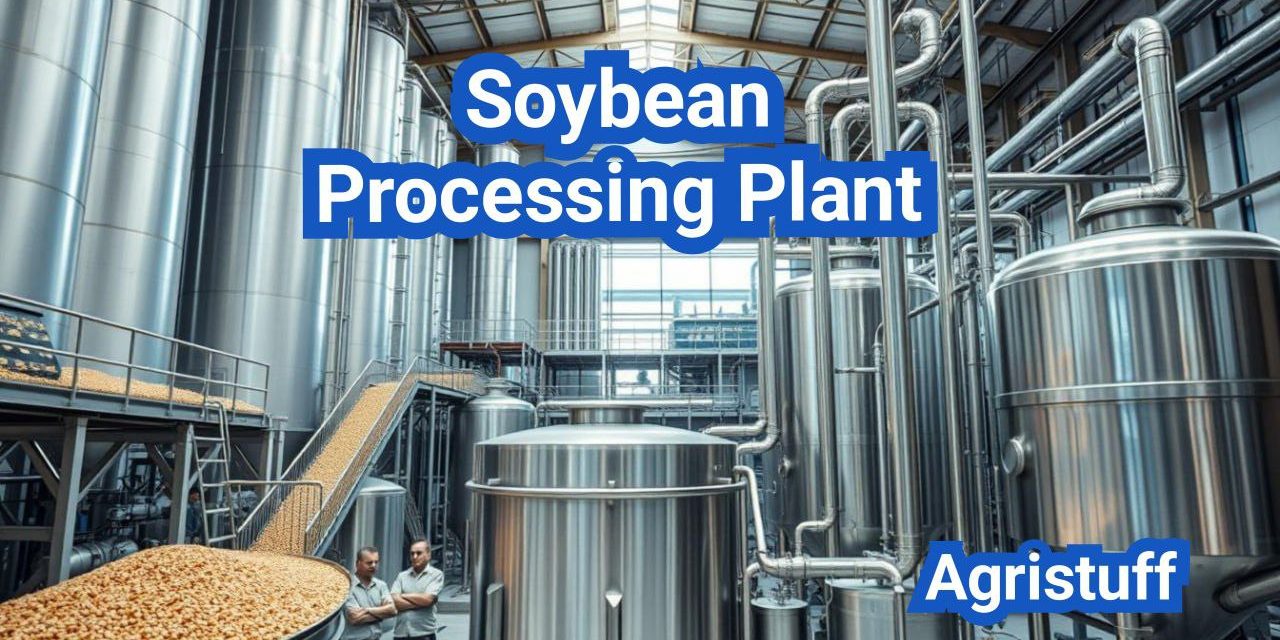
Quick answer: A soybean processing plant grades and prepares whole beans, then removes the oil by solvent extraction or mechanical pressing. The remaining flakes are desolventized, toasted, dried, cooled, and ground into meal; the crude oil is degummed, neutralized, bleached, and deodorized, while hulls and gums become marketable secondary products.
A soybean processing plant is built around a controlled material flow, not a single crushing step. Small changes in bean moisture, flake thickness, solvent recovery, or heat treatment can affect oil yield, meal protein quality, safety, and operating efficiency.
This guide follows soybeans through a soybean processing plant from receiving and preparation to oil extraction, meal finishing, refining, and by-product recovery. It also explains the equipment choices, quality controls, and U.S. regulations that shape commercial operations.
Key Takeaways
- Soybean oil and soybean meal are the two principal co-products produced by commercial processing plants.
- Large plants commonly use solvent extraction, while mechanical expeller pressing is another option for smaller or specialized operations.
- A conventional 60-pound bushel is estimated to produce about 11 pounds of oil, 44 pounds of 48% protein meal, 4 pounds of hulls, and 1 pound of processing loss.
- Desolventizing and controlled toasting remove solvent and reduce antinutritional factors without excessively damaging meal protein.
- Lecithin, hulls, soapstock, and deodorizer distillate can provide additional product streams when properly recovered and marketed.
How Does a Soybean Processing Plant Work?
A soybean processing plant converts whole beans into separate oil, meal, and secondary product streams through a controlled sequence of preparation, extraction, and finishing operations.
- Receiving and grading: Each load is sampled for moisture, damage, foreign material, and other quality factors before storage or processing.
- Cleaning: Screens, aspirators, and magnets remove dust, stones, plant material, and metal that could reduce product quality or damage equipment.
- Cracking and dehulling: The beans are broken into smaller pieces and most hulls are separated to improve extractor performance and raise meal protein concentration.
- Conditioning and flaking: Heat and moisture soften the soybean pieces before flaking rolls create thin layers that expose more oil to the extraction process.
- Oil extraction: Oil is removed from the prepared flakes using a solvent extractor or a mechanical expeller press.
- Meal finishing: Extracted flakes are desolventized, toasted, dried, cooled, ground, and tested before becoming commercial soybean meal.
- Oil refining: Crude soybean oil is degummed, neutralized, bleached, and deodorized according to its intended market.
- By-product recovery: Hulls, gums, lecithin, soapstock, and other streams may be recovered and marketed where the plant has suitable equipment and buyers.
The oil and meal streams are finished separately after extraction, but their yields remain connected through the plant’s overall mass balance. NOPA’s soybean processing overview.
What Does One Bushel of Soybeans Produce?
A standard 60-pound U.S. bushel is conventionally estimated to produce about 11 pounds of soybean oil, 44 pounds of 48% protein soybean meal, 4 pounds of hulls, and 1 pound of processing loss or waste. Actual yields vary with soybean composition, moisture, dehulling, extraction efficiency, and the commercial meal specification.
- Soybean oil: approximately 11 pounds
- 48% protein soybean meal: approximately 44 pounds
- Soybean hulls: approximately 4 pounds
- Processing loss or waste: approximately 1 pound
These conventional figures show why soybean meal is a principal co-product rather than a minor by-product. Meal represents most of the physical output, although changing oil and meal prices determine how much each stream contributes to crush value. CME Group’s soybean oilshare explanation.
Soybean Oil Extraction Methods: Solvent vs. Mechanical

A soybean processing plant generally uses solvent extraction, mechanical pressing, or a combination of both. The best method depends on plant capacity, desired oil recovery, meal specifications, capital resources, safety systems, and target markets.
Solvent extraction
A large soybean processing plant commonly washes prepared flakes with a recycled solvent, typically commercial hexane. The resulting oil-solvent mixture is distilled to recover crude oil, while the solvent is condensed and returned to the process. This method supports high throughput and leaves relatively little residual oil in the meal. AOCS solvent extraction guidance.
Mechanical extraction
A mechanically operated soybean processing plant uses an expeller press to force oil from conditioned beans without a solvent-extraction loop. The system can be simpler and may suit smaller or specialized processors, but more oil normally remains in the meal and total oil recovery is lower.
Which extraction method is better?
For a high-throughput commodity soybean processing plant, solvent extraction is usually the more efficient option. Mechanical pressing can be practical when the business values simpler operation, solvent-free positioning, smaller capacity, or higher-fat meal more than maximum oil recovery.
How Desolventizing and Toasting Produce Soybean Meal
Direct answer: In a soybean processing plant, heat during desolventizing and toasting removes residual solvent and reduces antinutritional factors in the meal. Too little treatment can leave the meal underprocessed, while excessive heat can damage protein quality, so operators control steam, temperature, moisture, residence time, drying, and cooling. AOCS guidance on meal desolventizing and toasting.
Effective operation of the desolventizer toaster (DT) is essential for removing solvents from soybean meal, ensuring the final product meets industry standards. The DT is a critical component in soybean processing plants, responsible for the desolventizing and toasting of soybean meal.
Equipment Selection and Installation
Selecting the right DT equipment is crucial for efficient operation. Factors to consider include capacity, material compatibility, and ease of maintenance. Proper installation is also vital, ensuring that the DT is integrated correctly with other processing equipment.
Key considerations for DT equipment selection include:
- Capacity to handle the required throughput
- Material construction that withstands corrosive environments
- Ease of cleaning and maintenance
Optimizing Process Parameters
Optimizing the DT process parameters is critical for achieving efficient solvent removal and producing high-quality soybean meal. Parameters to be controlled include temperature, pressure, and residence time.
Adjusting these parameters can significantly impact the final product quality. For instance, increasing the temperature can enhance solvent removal but may risk damaging the meal if not carefully controlled.
Meal Quality Monitoring
Continuous monitoring of the soybean meal quality is essential to ensure it meets the required standards. This involves checking for residual solvent levels, moisture content, and nutritional quality.
Quality control measures include:
- Regular sampling and analysis of the meal
- Adjusting DT process parameters based on analysis results
- Maintaining detailed records of quality control checks
Troubleshooting Common DT Issues
Despite careful operation, issues can arise with the DT. Common problems include inconsistent meal quality, equipment fouling, and solvent leakage.
Troubleshooting these issues requires a systematic approach, starting with identifying the root cause, whether it’s related to equipment, process parameters, or maintenance practices.
By following these guidelines and maintaining a proactive approach to DT operation, soybean processing plants can ensure the production of high-quality soybean meal while minimizing operational challenges.
Producing 48% Protein Soybean Meal

Producing soybean meal with 48% protein involves several key steps, from desolventizing to quality control. This high-protein meal is a valuable commodity in the animal feed industry, serving as a critical source of nutrition for livestock.
Meal Processing After Desolventizing
After the desolventizing process, soybean meal undergoes further processing to enhance its quality and protein content. This involves grinding and sifting the meal to achieve the desired consistency and texture.
Grinding and Sifting: The meal is ground to a specific particle size to ensure uniformity. Sifting removes any lumps or oversized particles, resulting in a consistent product.
Protein Content Optimization
Optimizing the protein content of soybean meal to 48% requires careful control of the processing parameters. Factors such as temperature, moisture, and processing time are adjusted to achieve the desired protein level.
Process Adjustments: Adjusting the desolventizing temperature and the drying process can significantly impact the final protein content. Monitoring these parameters ensures that the meal meets the required specifications.
Quality Control Testing Protocols
Implementing rigorous quality control testing is crucial to ensure that the soybean meal meets the 48% protein standard. This involves regular sampling and analysis of the meal.
- Protein content analysis
- Moisture content testing
- Contaminant screening
Storage and Handling Best Practices
Proper storage and handling of soybean meal are essential to maintain its quality and nutritional value. This includes storing the meal in a dry, cool environment and protecting it from pests and contaminants.
Storage Conditions: The storage area should be well-ventilated and maintained at a consistent temperature. Regular inspections help prevent spoilage and ensure the meal remains suitable for use.
Soybean Oil Refining Steps and Procedures

Soybean oil refining is a multi-step process crucial for producing high-quality edible oil. The refining process involves several key steps that work together to remove impurities, improve the oil’s color and texture, and enhance its overall quality.
Degumming Process
The degumming process is the first step in soybean oil refining. It involves the removal of impurities such as phospholipids, proteins, and other contaminants that can affect the oil’s quality and stability. Degumming is typically achieved through the addition of water or acid to the crude oil, causing the impurities to precipitate out and be removed.
Key aspects of degumming include:
- Hydration degumming using water
- Acid degumming using phosphoric or citric acid
- Enzymatic degumming using specific enzymes
Neutralization Techniques
Neutralization is a critical step that follows degumming. It involves the removal of free fatty acids (FFAs) from the oil through a process known as alkali neutralization. This step is essential for improving the oil’s flavor, odor, and color.
Neutralization techniques include:
- Alkali neutralization using sodium hydroxide
- Physical refining as an alternative for high FFA oils
Bleaching Operations
Bleaching is the process of removing color bodies and other impurities from the oil using bleaching earth or activated carbon. This step significantly improves the oil’s color and texture, making it more appealing to consumers.
Bleaching process considerations:
- Type and amount of bleaching earth used
- Temperature and contact time during bleaching
- Filtration techniques for removing spent bleaching earth
Deodorization Methods
Deodorization is the final step in the soybean oil refining process. It involves the removal of unwanted odors and flavors from the oil through a high-temperature vacuum distillation process. This step is crucial for producing a neutral-tasting oil that meets consumer expectations.
Deodorization techniques include:
- High-temperature vacuum distillation
- Steam injection for enhanced odor removal
In conclusion, soybean oil refining is a complex process that involves several critical steps: degumming, neutralization, bleaching, and deodorization. Each step plays a vital role in producing high-quality edible oil that meets consumer demands for taste, quality, and safety.
Soybean By-Products: Lecithin, Hulls, Soapstock, and Distillates

A soybean processing plant produces soybean oil and meal as its two principal co-products, but several secondary streams can also have commercial value when they are recovered, processed, and sold to suitable markets.
- Soybean hulls: Removed during dehulling and commonly sold as a fiber-rich feed ingredient or added back when producing lower-protein meal grades.
- Lecithin and gums: Separated during oil degumming and further processed for use as emulsifying ingredients.
- Soapstock or acidulated products: Generated during alkali refining and directed to approved feed or industrial markets after suitable processing and specification checks.
- Deodorizer distillate: A refining stream that may contain recoverable tocopherols, sterols, and fatty materials.
Not every soybean processing plant recovers or markets every stream. Commercial value depends on product purity, processing equipment, regulations, transportation costs, and access to buyers; experimental uses such as molded products made from hull fiber should not be presented as standard plant outputs.
Planning a Soybean Processing Plant: Site, Capacity, Equipment, and Feasibility
Planning a soybean processing plant should begin with a stated daily capacity, a reliable soybean supply, a product mass balance, and confirmed markets for oil, meal, and secondary products. The extraction method should be selected before final equipment sizing because it affects utilities, safety systems, staffing, permitting, and meal characteristics.
- Reliable access to soybeans with suitable moisture, oil, and protein characteristics
- Truck and rail access for receiving beans and shipping meal and oil
- Storage capacity for raw beans, finished meal, crude or refined oil, and hulls
- Electricity, steam, natural gas, water, cooling, and fire-protection capacity
- Safe separation of receiving, preparation, solvent extraction, meal finishing, and refining areas
- Laboratory space for moisture, oil, protein, fiber, free-fatty-acid, and quality testing
- Environmental, food-safety, animal-food, zoning, and occupational-safety requirements
A soybean processing plant should not be assigned one generic construction or operating cost. A defensible estimate must state the processing capacity, extraction technology, greenfield or brownfield scope, storage and refining included, location, utility requirements, and year of pricing. The feasibility model should also test changes in soybean prices, oil and meal values, freight, energy, solvent loss, labor, maintenance, and downtime.
U.S. Soybean Processing Regulations and Safety Requirements
Ensuring regulatory compliance is a top priority for soybean processing facilities. The industry is subject to a complex set of regulations that govern various aspects of production, from edible oil extraction to animal feed manufacturing.
Implementing FSMA21 CFR117 for Edible Oil Production
The Food Safety Modernization Act (FSMA) has introduced stringent regulations for edible oil production, encapsulated in 21 CFR 117. This regulation mandates that soybean processing facilities implement Good Manufacturing Practices (GMPs) and Hazard Analysis and Risk-Based Preventive Controls. Compliance involves:
- Conducting a thorough hazard analysis
- Implementing preventive controls
- Establishing a recall plan
- Providing training for personnel
FSMA21 CFR507 Compliance for Animal Feed Products
For facilities producing animal feed from soybean by-products, compliance with 21 CFR 507 is crucial. This regulation focuses on the safe production and distribution of animal feed, requiring:
- Implementation of GMPs specific to animal feed
- Conducting a hazard analysis for animal feed
- Establishing preventive controls for identified hazards
- Maintaining detailed records of production and distribution
Environmental Permits and Monitoring
Soybean processing facilities must also comply with environmental regulations, obtaining necessary permits and implementing monitoring systems. This includes:
- Air quality permits
- Water discharge permits
- Waste management plans
- Regular monitoring and reporting
Quality Certification Programs
To enhance product quality and marketability, many soybean processing facilities participate in quality certification programs. These programs, such as ISO 9001 for quality management, help facilities demonstrate their commitment to quality and regulatory compliance.
By adhering to these regulatory requirements and certification programs, soybean processing facilities can ensure the production of high-quality products while minimizing environmental impact and maintaining compliance with industry standards.
Automation, Energy Efficiency, and Process Control

Technological advancements are transforming the soybean processing landscape, with a focus on automation, process control, and sustainable practices. Modern soybean processing plants are increasingly adopting innovative technologies to enhance efficiency, reduce operational costs, and minimize environmental impact.
Automation and Process Control Systems
The integration of automation and advanced process control systems is revolutionizing soybean processing. These technologies enable real-time monitoring and control of processing parameters, ensuring optimal performance and consistency in product quality. Automation not only improves efficiency but also reduces the risk of human error, leading to safer and more reliable operations.
Advanced process control systems utilize sophisticated algorithms and data analytics to optimize processing conditions. This includes precise control over temperature, pressure, and flow rates, which are critical in various stages of soybean processing, from extraction to refining.
Energy Efficiency Optimization
Energy efficiency is a critical aspect of modern soybean processing plants. Technological innovations in this area focus on reducing energy consumption while maintaining or improving production capacity. Heat recovery systems and energy-efficient equipment are being implemented to minimize energy waste and lower operational costs.
Moreover, the adoption of renewable energy sources, such as biomass and solar power, is becoming increasingly prevalent. These sustainable energy solutions not only reduce the carbon footprint of soybean processing but also contribute to long-term cost savings.
Sustainable Processing Technologies
Sustainability is a key driver in the adoption of new technologies in soybean processing. Innovative processing technologies aim to minimize environmental impact by reducing water consumption, waste generation, and emissions. For instance, water recycling systems and waste-to-value strategies are being implemented to enhance sustainability.
Additionally, the development of more efficient extraction methods and the use of environmentally friendly solvents are areas of ongoing research and development. These advancements are crucial for reducing the ecological footprint of soybean processing operations.
Future Trends in Soybean Processing
Looking ahead, the soybean processing industry is expected to continue its technological evolution. Emerging trends include the adoption of artificial intelligence (AI) and machine learning (ML) for predictive maintenance and process optimization. These technologies have the potential to further enhance efficiency, reduce costs, and improve product quality.
Furthermore, the integration of Internet of Things (IoT) devices will enable more comprehensive monitoring and control of processing operations, facilitating data-driven decision-making and driving innovation in the industry.
U.S. Soybean Processing Industry: Scale and Major Plant Operators
The soybean processing industry in the United States is a vital component of the country’s agricultural economy, driven by key players and global demand. This industry is characterized by large-scale soybean processing plants operated by major companies such as Cargill, ADM, Bunge, and AG Processing Inc.
Current Market Trends in the US Soybean Sector
The US soybean sector is influenced by various market trends, including global demand fluctuations, trade policies, and weather conditions. According to recent market analyses, the demand for soybean products, particularly soybean oil and meal, has been on the rise due to increasing applications in food processing and animal feed industries.
Some of the key trends shaping the US soybean processing market include:
- Increasing demand for sustainable and environmentally friendly processing practices
- Advancements in processing technologies to improve efficiency and product quality
- Fluctuations in global soybean prices affecting profitability
- Growing export opportunities due to trade agreements
Major Players: Cargill, ADM, Bunge, and AG Processing Inc.
The US soybean processing industry is dominated by a few major players who operate large-scale processing facilities across the country. These companies are:
- Cargill: Known for its extensive global reach and diversified product portfolio
- ADM (Archer Daniels Midland): A leading player in the global soybean processing market with significant operations in the US
- Bunge: A global agribusiness company with a strong presence in soybean processing
- AG Processing Inc.: A cooperative-owned company specializing in soybean processing and other agricultural products
These companies have a significant impact on the industry, driving innovation, and setting market standards.
“The soybean processing industry is a critical component of the US agricultural economy, providing essential products for both domestic consumption and international trade.”
— Industry Expert
Economic Impact and Growth Opportunities
The soybean processing industry contributes substantially to the US economy through job creation, GDP generation, and tax revenues. The industry’s growth is influenced by factors such as global demand, technological advancements, and regulatory environments.
Some of the growth opportunities in the US soybean processing industry include:
| Opportunity | Description | Potential Impact |
|---|---|---|
| Expansion into new markets | Exploring emerging markets for soybean products | Increased revenue and market share |
| Technological innovation | Adopting advanced processing technologies | Improved efficiency and product quality |
| Sustainability initiatives | Implementing environmentally friendly practices | Enhanced brand reputation and compliance with regulations |
Soybean Processing Plant FAQ
What is the primary function of a soybean processing plant?
The primary function of a soybean processing plant is to extract oil and produce soybean meal, which is used as a protein-rich feed supplement in the animal feed industry.
What are the major players in the US soybean processing industry?
The major players in the US soybean processing industry are Cargill, ADM, Bunge, and AG Processing Inc.
What are the key components and equipment required for a soybean processing plant?
The key components and equipment required for a soybean processing plant include extractors, desolventizers, refining equipment, and other machinery necessary for cleaning, cracking, dehulling, and extraction.
What is the significance of hexane extraction in soybean processing?
Hexane extraction is a solvent extraction process that involves using hexane to extract oil from soybeans, and it is a critical step in the production of high-quality soybean oil.
How is soybean meal processed to achieve 48% protein content?
Soybean meal is processed to achieve 48% protein content through careful processing and quality control, including meal processing after desolventizing, protein content optimization, and quality control testing protocols.
What are the regulatory requirements for soybean processing plants in the US?
Soybean processing plants in the US must comply with FSMA21 CFR117 for edible oil production and FSMA21 CFR507 for animal feed products, as well as obtain environmental permits and monitoring, and participate in quality certification programs.
What are the benefits of utilizing soybean hulls and fiber by-products?
Soybean hulls and fiber by-products can be utilized in various applications, including animal feed, biofuel, and industrial products, providing additional revenue streams for soybean processing plants.
How is lecithin extracted from soybean oil?
Lecithin is extracted from soybean oil through lecithin separation techniques, drying and standardization, and quality grading systems, resulting in a valuable by-product with various commercial applications.
What are the current market trends in the US soybean sector?
The current market trends in the US soybean sector are influenced by factors like global demand, trade policies, and weather conditions, and understanding these trends is crucial for stakeholders to make informed decisions.
What are the technological innovations in modern soybean processing plants?
Modern soybean processing plants are adopting technological innovations, including automation and process control systems, energy efficiency optimization, and sustainable processing technologies, to improve efficiency and reduce environmental impact.
What is the significance of desolventizer toaster (DT) operation in soybean processing?
The desolventizer toaster (DT) operation is critical in soybean processing, as it is responsible for removing the solvent from the meal, and optimizing process parameters, monitoring meal quality, and troubleshooting common issues are essential for ensuring the production of high-quality soybean meal.
How is soybean oil refined to produce high-quality edible oil?
Soybean oil is refined through a series of steps, including degumming, neutralization, bleaching, and deodorization, to produce high-quality edible oil.
Final Thought
A successful soybean processing plant depends on disciplined bean handling, consistent preparation, efficient oil recovery, controlled meal heat treatment, reliable refining, and strong safety and quality programs. When these stages operate as one balanced system, the plant can produce consistent oil and meal while recovering additional value from hulls, lecithin, and other secondary streams.
Sources & References
- NOPA — Soybean Composition and Processing
- NOPA — U.S. Soybean Processing Plant Locations
- EPA AP-42 — Vegetable Oil Processing
- AOCS — Solvent Extraction
- AOCS — Meal Desolventizing, Toasting, Drying and Cooling
- AOCS — Edible Oil Processing
- CME Group — Soybean Oilshare and Bushel Outputs
- FDA — Preventive Controls for Human Food
- FDA — Preventive Controls for Animal Food
- OSHA — n-Hexane Safety Data
- USDA ERS — Soybeans and Oil Crops