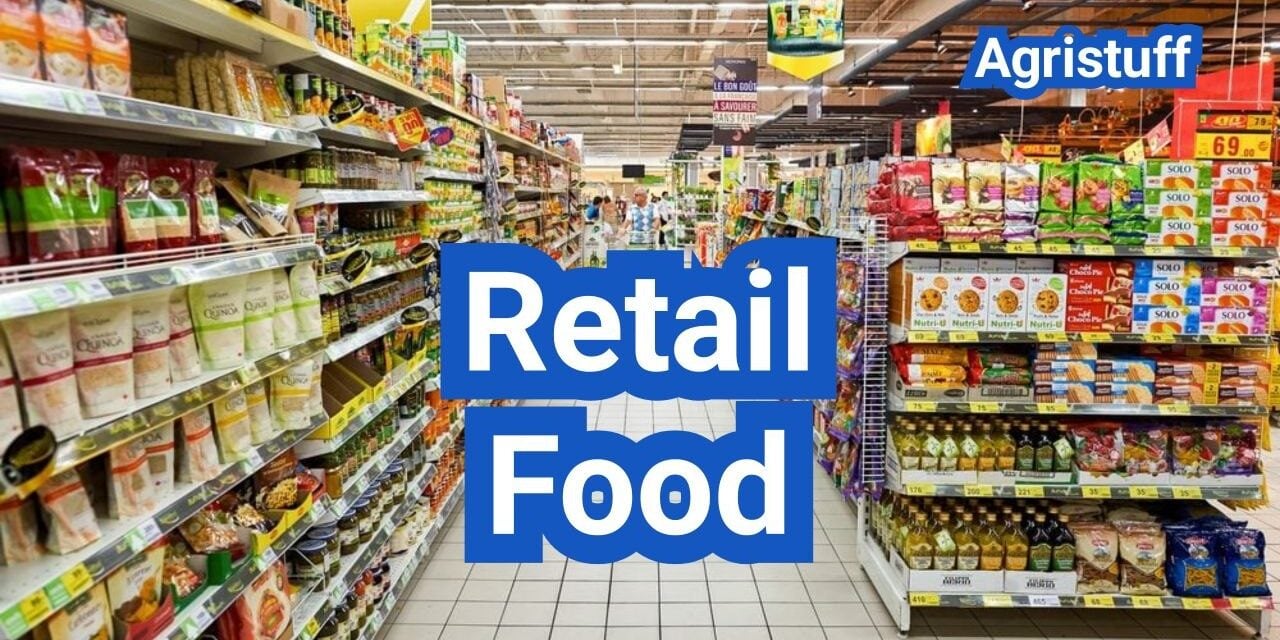
The U.S. food retail industry is a complex and dynamic market, involving a multitude of stakeholders from suppliers to consumers.
Getting products approved, listed, and reordered by retailers is a critical process that requires a deep understanding of the industry’s intricacies, including retail food distribution and the requirements for retail food establishment licenses.
The process involves navigating a network of suppliers, wholesalers, distributors, and retailers, making effective inventory control crucial for success in kitchen management and beyond.
Key Takeaways
- The U.S. food and retail industry is complex and involves multiple stakeholders.
- Understanding retail food distribution is key to success.
- Retail food establishment licenses are a critical requirement.
- Effective inventory control is crucial for retailers.
- Navigating the supply chain is essential for product approval and listing.
The U.S. Retail Food Industry Overview
The U.S. retail food industry is a vast and dynamic market, influenced by changing consumer preferences and trends. It encompasses various store formats and key players, making it a complex system.
Market Size and Growth Trends
The U.S. retail food industry has shown significant growth over the years, driven by increasing demand for diverse food products. According to recent data, the market size is substantial, with sales figures reaching into the trillions of dollars annually.
Market Size: The total sales in the U.S. retail food industry were approximately $844 billion in 2022.
Growth Rate: The industry has seen a steady annual growth rate of about 3-4% over the past few years.
Major Retail Food Store Formats
Retail food stores come in various formats, including supermarkets, supercenters, and specialty food stores. Each format caters to different consumer needs.
- Supermarkets: Traditional grocery stores offering a wide range of products.
- Supercenters: Large stores combining grocery and general merchandise.
- Specialty Food Stores: Stores focusing on specific types of food or gourmet products.
Key Players in the U.S. Food Retail Landscape
Major retailers dominate the market, with companies like Walmart, Kroger, and Whole Foods Market being prominent players.
| Retailer | Market Share (%) | Sales ($ Billion) |
|---|---|---|
| Walmart | 25 | 341 |
| Kroger | 10 | 137 |
| Whole Foods Market | 2 | 16 |
Retail Food Distribution Channels

The journey of retail food products from production to consumption involves multiple distribution channels, each with its unique characteristics and challenges. Understanding these channels is crucial for manufacturers aiming to effectively reach their target markets.
Direct-to-Retailer Distribution Model
The direct-to-retailer distribution model involves manufacturers delivering products directly to retail stores, bypassing intermediaries. This approach allows for greater control over the distribution process and can lead to improved product freshness and reduced costs. However, it requires significant logistical capabilities and strong relationships with retailers.
Many large food manufacturers opt for this model to maintain direct contact with retailers, enabling them to negotiate better terms and ensure timely deliveries. For instance, companies like Coca-Cola and PepsiCo have well-established direct-to-retailer distribution networks.
Working with Food Distributors and Brokers
For many food manufacturers, especially smaller ones, working with food distributors and brokers is a more feasible option. These intermediaries specialize in logistics and have established networks of retailers, making it easier for manufacturers to reach a wider audience.
Food distributors act as warehouses, storing products and delivering them to retailers as needed. Brokers, on the other hand, facilitate transactions between manufacturers and retailers or distributors without taking ownership of the products. They play a crucial role in connecting suppliers with buyers and negotiating deals.
E-commerce and Omnichannel Considerations
The rise of e-commerce has introduced new dynamics to retail food distribution. Manufacturers must now consider how to effectively distribute products through online channels, which often require different logistics and fulfillment strategies.
An omnichannel approach integrates online and offline channels to provide a seamless shopping experience. This involves coordinating distribution efforts across various platforms, including online grocery stores, meal kit delivery services, and traditional brick-and-mortar stores.
To succeed in this complex environment, manufacturers need to invest in robust e-commerce platforms and logistics infrastructure, ensuring that they can meet the demands of online shoppers while maintaining a strong presence in physical stores.
Regulatory Requirements for Retail Food Products

Navigating the complex landscape of regulatory requirements is crucial for retail food products to succeed in the U.S. market. The retail food industry is subject to a myriad of regulations designed to ensure consumer safety, product quality, and environmental sustainability.
FDA and USDA Regulatory Framework
The FDA and USDA play pivotal roles in regulating retail food products. The FDA regulates most food products, including dairy, seafood, and all other foods not under the USDA’s jurisdiction. The USDA, on the other hand, is responsible for the regulation of meat, poultry, and egg products. Understanding the division of responsibilities between these agencies is crucial for compliance.
Retail food manufacturers must comply with regulations related to food safety, labeling, and packaging. This includes adhering to the Food Safety Modernization Act (FSMA), which mandates preventive controls for food production and processing.
Retail Food Establishment Licenses and Permits
To operate legally, retail food establishments must obtain the necessary licenses and permits. These requirements vary by state and locality but generally include food establishment permits, sales tax permits, and potentially other local licenses.
It’s essential for businesses to research and comply with all relevant licensing requirements to avoid fines and potential closure.
Food Safety Plans and Preventive Controls
A critical component of regulatory compliance is the development and implementation of food safety plans. These plans outline the procedures for handling, preparing, and storing food to prevent contamination and ensure consumer safety.
Under FSMA, many food facilities are required to implement preventive controls as part of their food safety plans. This includes identifying potential hazards and implementing controls to mitigate these risks.
By understanding and adhering to these regulatory requirements, retail food businesses can ensure compliance, maintain consumer trust, and contribute to a safer food supply chain.
Product Development for Retail Success

The journey to retail success begins with effective product development, which hinges on market research, category analysis, and innovative product formulation. In today’s competitive retail landscape, understanding consumer needs and preferences is crucial for creating products that resonate with the target audience.
Market Research and Category Analysis
Conducting thorough market research and category analysis is the foundation of successful product development. This involves gathering data on consumer behavior, preferences, and trends within the specific category. According to a report by Nielsen, understanding the category landscape is essential for identifying opportunities and challenges.
“Understanding the nuances of your category is key to developing products that meet consumer needs and stand out in a crowded market.”
Market research can be conducted through various methods, including surveys, focus groups, and analysis of market data. Category analysis involves examining the competitive landscape, identifying gaps in the market, and understanding the dynamics of the category.
| Research Method | Description | Benefits |
|---|---|---|
| Surveys | Collecting data through questionnaires | Provides direct consumer feedback |
| Focus Groups | Group discussions on product concepts | Offers qualitative insights into consumer opinions |
| Market Data Analysis | Analyzing sales data and market trends | Provides quantitative data on market dynamics |
Product Formulation and Packaging Design
Once market research and category analysis are complete, the next step is product formulation and packaging design. This stage involves creating a product that meets consumer needs and is appealing in terms of taste, texture, and appearance. Packaging design should be both functional and visually appealing, conveying the brand’s message and values.
Effective packaging can significantly impact a product’s success on the retail shelf. It should be designed to stand out among competitors, comply with regulatory requirements, and provide a clear brand identity.
Pricing Strategy and Margin Structure
Determining the right pricing strategy and margin structure is critical for the commercial success of a product. Pricing must balance the need for profitability with consumer affordability and perceived value. A well-structured pricing strategy considers production costs, market conditions, and competitor pricing.
- Cost-plus pricing
- Value-based pricing
- Competitive pricing
By carefully considering these elements, businesses can develop products that not only meet consumer needs but also achieve retail success.
Product Identification and Data Standards

Accurate product identification is crucial for retail success in the U.S. food industry. With millions of products on store shelves, a standardized system is necessary to ensure efficient inventory management, checkout processes, and data analysis.
Product identification involves assigning unique identifiers to products, enabling retailers, distributors, and manufacturers to track and manage inventory effectively. In the retail food sector, this is primarily achieved through the use of barcodes and Global Trade Item Numbers (GTINs).
UPC vs. GTIN for Food Products
The Universal Product Code (UPC) and Global Trade Item Number (GTIN) are often used interchangeably, but there are key differences. A UPC is a type of GTIN used in North America, while GTIN is a broader term that encompasses various barcode standards used globally.
The main differences between UPC and GTIN for food products are:
- Geographic usage: UPC is primarily used in the United States and Canada, while GTIN is used worldwide.
- Barcode structure: UPC-A (12 digits) vs. GTIN-13 (13 digits) or GTIN-14 (14 digits).
- Product identification: Both UPC and GTIN serve as unique identifiers, but GTIN offers more flexibility for global trade.
Obtaining GS1 Barcodes for Retail Food Items
To sell products in major U.S. retailers, manufacturers typically need to obtain GS1 barcodes. GS1 US is the official provider of UPCs and other GS1 identification numbers used in the United States.
The process of obtaining GS1 barcodes involves:
- Registering with GS1 US.
- Obtaining a GS1 Company Prefix.
- Assigning unique GTINs to each product.
- Encoding the GTIN in a barcode symbol.
It’s essential to note that while retailers may accept products with manufacturer-assigned barcodes, using GS1 barcodes ensures compatibility with most retail systems.
GDSN Product Data Synchronization Process
The Global Data Synchronization Network (GDSN) is a network that enables companies to share and synchronize product data with trading partners. For retail food products, GDSN plays a crucial role in ensuring that product information is accurate and consistent across the supply chain.
The GDSN process involves:
- Data creation: Manufacturers create and maintain accurate product data.
- Data publication: Data is published to a GDSN-certified data pool.
- Data synchronization: Data is synchronized with trading partners’ systems.
- Data validation: Continuous validation ensures data accuracy.
By implementing GDSN, manufacturers can improve data accuracy, reduce costs associated with manual data entry, and enhance supply chain efficiency.
Preparing Your Retail Food Product for Market

Preparing your retail food product for market involves several strategic steps that can make or break its success. A well-executed market preparation strategy is crucial for capturing the attention of retailers and consumers alike.
Creating Compelling Sell Sheets and Sales Materials
Developing effective sales materials is a critical step in preparing your product for the market. A compelling sell sheet should clearly communicate your product’s unique selling points, benefits, and value proposition. It should be concise, visually appealing, and tailored to your target audience.
Key elements of a sell sheet include a product image, detailed product information, and sales data or projections. Ensuring that your sell sheet is professional and informative will help you make a strong impression on potential buyers.
Developing Sales Projections and Category Data
To effectively prepare your product for market, you need to develop accurate sales projections and understand the category landscape. This involves analyzing market trends, consumer behavior, and competitor activity.
By leveraging this data, you can create a robust sales strategy that is grounded in reality. Category data will also help you identify opportunities for growth and potential challenges.
Product Samples and Demonstration Strategy
Providing product samples is an effective way to introduce your product to retailers and consumers. A well-planned demonstration strategy can help generate buzz and drive sales.
Consider the logistics of sampling, such as cost, distribution, and staffing. Ensure that your product samples are easily accessible and that your demonstration strategy is aligned with your overall marketing goals.
Building Your Retail Sales Pitch
A strong retail sales pitch is essential for convincing retailers to stock your product. Your pitch should be clear, concise, and focused on the benefits of your product.
Practice your pitch to ensure that you can deliver it confidently and effectively. Be prepared to address any questions or concerns that retailers may have, and be flexible enough to adapt your pitch as needed.
By following these steps and preparing your retail food product effectively for the market, you can increase your chances of success and build a strong foundation for long-term growth.
The Retail Buyer Line Review Process

Understanding the intricacies of the retail buyer line review process can make or break a product’s success in the market. This critical process involves several key steps that suppliers must navigate to successfully list their products with major retailers.
Understanding Category Resets and Timing
Category resets are significant events in the retail calendar, marking periods when retailers reassess their product offerings. Suppliers must be aware of the timing of these resets to plan their product submissions effectively.
- Category Review Cycles: Different retailers have different category review cycles, ranging from quarterly to annually.
- Reset Timing: Knowing when a category reset is scheduled allows suppliers to prepare their product pitches and materials in advance.
Preparing for Buyer Meetings
Preparation is key when meeting with retail buyers. Suppliers should have a thorough understanding of their product’s benefits, market trends, and competitive landscape.
Key Preparation Steps:
- Develop a compelling sales pitch that highlights the product’s unique selling points.
- Gather relevant market data and sales projections to support the product’s potential.
- Prepare professional sales materials, including sell sheets and product samples.
Key Metrics Retailers Evaluate
Retailers assess products based on various metrics, including sales data, category performance, and product uniqueness. Suppliers must understand these metrics to tailor their pitches effectively.
- Sales Performance: Historical sales data and projected sales growth are critical in demonstrating a product’s potential.
- Category Contribution: How the product contributes to the overall category performance, including market share and growth.
- Product Uniqueness: The degree to which the product stands out from competitors, including unique features and benefits.
Following Up After Presentations
After presenting to retail buyers, suppliers should follow up to reiterate their product’s benefits and address any additional questions or concerns.
Effective Follow-up Strategies:
- Send a thank-you note or email to the buyer, reiterating interest in listing the product.
- Provide any additional information or data requested during the meeting.
- Schedule a follow-up meeting if necessary, to further discuss the product’s potential.
Navigating Slotting Fees and Trade Spend
Understanding the complexities of slotting fees and trade spend is crucial for manufacturers looking to get their products on U.S. retail shelves. Slotting fees, in particular, are payments made to retailers to secure shelf space for new products, representing a significant financial consideration in the retail food industry.
Understanding Slotting Fee Structures
Slotting fees vary widely among retailers and can depend on the category, product type, and the retailer’s policies. For instance, a retailer might charge higher slotting fees for products placed in high-traffic areas or for products within competitive categories.
Key Factors Influencing Slotting Fees:
- Category competitiveness
- Product novelty and uniqueness
- Retailer’s market share and influence
- Product placement preferences
Negotiating Favorable Terms
Negotiating slotting fees and trade spend requires a deep understanding of the retail landscape and the value proposition of the product. Manufacturers must be prepared to demonstrate the potential of their product to drive sales and contribute to the retailer’s profitability.
Effective Negotiation Strategies:
- Conduct thorough market research
- Prepare compelling sales data and projections
- Highlight product uniqueness and consumer demand
Developing Effective Trade Promotions
Trade promotions are an essential component of the marketing mix for retail food products. These promotions can help drive sales, increase product visibility, and foster retailer loyalty.
| Promotion Type | Description | Potential Impact |
|---|---|---|
| Discounts and Allowances | Price reductions or allowances for retailers | Increased sales volume, improved retailer margins |
| In-store Displays | Special displays to showcase products | Enhanced product visibility, increased impulse purchases |
| Cooperative Advertising | Shared advertising costs with retailers | Increased brand awareness, driven sales |
Marketing Support Requirements
To complement trade promotions, manufacturers must also provide marketing support. This includes in-store demonstrations, sampling events, and digital marketing campaigns to create buzz around new products.
By understanding slotting fee structures, negotiating favorable terms, developing effective trade promotions, and providing robust marketing support, manufacturers can successfully navigate the complexities of the U.S. retail food industry.
Grocery Distributor and Retailer Compliance Requirements

To successfully navigate the U.S. retail food industry, manufacturers must adhere to various compliance requirements set by grocery distributors and retailers. These requirements are designed to ensure smooth operations, maintain product integrity, and comply with regulatory standards.
Vendor Onboarding Processes
The first step towards compliance is completing the vendor onboarding process. This involves providing detailed information about the company, its products, and its operational practices. Distributors and retailers require this information to assess the risk and compatibility of new vendors.
- Business registration and licensing
- Product information and labeling
- Insurance and liability coverage
- Supply chain and logistics details
Insurance and Liability Requirements
Grocery distributors and retailers often mandate that suppliers have appropriate insurance coverage. This typically includes general liability insurance, product liability insurance, and sometimes specific coverage for product recalls.
| Insurance Type | Description | Typical Coverage Limit |
|---|---|---|
| General Liability | Covers bodily injury and property damage | $1 million per occurrence |
| Product Liability | Covers damages caused by products | $1 million to $5 million |
| Product Recall | Covers costs associated with product recalls | $100,000 to $1 million |
Case Pack and Pallet Labeling Standards
Proper labeling of case packs and pallets is crucial for efficient handling and tracking throughout the supply chain. GS1 standards are commonly adopted for labeling, ensuring that products can be accurately identified and tracked.
Sanitary Transportation Requirements under FSMA
The Food Safety Modernization Act (FSMA) includes regulations for sanitary transportation practices. Suppliers must ensure that their transportation practices prevent contamination and maintain product integrity during transit.
- Use of clean and sanitary vehicles
- Proper temperature control for perishable goods
- Separation of products during transport
- Documentation of transportation practices
EDI and Order Management Systems
The adoption of EDI and sophisticated order management systems is essential for retailers aiming to enhance their operational efficiency. In today’s fast-paced retail environment, the ability to process orders accurately and manage inventory effectively is crucial for maintaining a competitive edge.
Implementing EDI 850, 856, and 810 for Retail
EDI (Electronic Data Interchange) is a critical component of modern retail operations, enabling the electronic exchange of business documents between retailers and their suppliers. Implementing EDI 850 (Purchase Order), EDI 856 (Shipment Notice/Manifest), and EDI 810 (Invoice) is fundamental for streamlining retail operations.
EDI 850 facilitates the transmission of purchase orders from retailers to suppliers, reducing errors associated with manual order processing. EDI 856 enables suppliers to provide retailers with detailed shipment information, improving inventory management and reducing the likelihood of stockouts or overstocking. EDI 810 streamlines the invoicing process, ensuring that retailers receive accurate invoices in a timely manner.
Order Processing Workflows
Effective order processing workflows are vital for ensuring that customer orders are fulfilled accurately and on time. Retailers must implement robust order management systems that can handle the complexities of modern retail, including multiple sales channels and varied product offerings.
Key elements of efficient order processing workflows include:
- Automated order routing to optimize fulfillment
- Real-time inventory updates to prevent overselling
- Integration with shipping carriers for timely delivery
Inventory Management Best Practices
Inventory management is a critical aspect of retail operations, directly impacting profitability and customer satisfaction. Implementing best practices in inventory management can help retailers maintain optimal stock levels, reduce waste, and improve cash flow.
| Best Practice | Description | Benefit |
|---|---|---|
| Just-In-Time (JIT) Inventory | Ordering inventory just in time to meet customer demand | Reduces inventory holding costs |
| Drop Shipping | Shipping products directly from suppliers to customers | Reduces inventory storage needs |
| Inventory Forecasting | Using data analytics to predict future demand | Improves stock level accuracy |
By adopting these best practices and leveraging EDI and order management systems, retailers can significantly enhance their operational efficiency and improve customer satisfaction.
Delivery Performance and Compliance

In the competitive retail landscape, delivery performance can make or break a business. Ensuring that products are delivered on time and in full is crucial for maintaining strong relationships with retailers and avoiding costly penalties.
Meeting On Time In Full (OTIF) Requirements
Meeting OTIF requirements is a critical aspect of delivery performance. Retailers expect suppliers to deliver products within the specified time frame and in the agreed-upon quantities. To achieve this, suppliers must have robust logistics and supply chain management systems in place.
- Implementing advanced inventory management systems to track stock levels accurately.
- Utilizing real-time tracking and monitoring to ensure timely deliveries.
- Developing contingency plans to address potential disruptions in the supply chain.
Avoiding Retail Chargebacks and Compliance Fees
Retail chargebacks and compliance fees can significantly impact a supplier’s bottom line. These fees are often levied when suppliers fail to meet delivery requirements or comply with retailer-specific regulations.
To avoid these fees, suppliers should:
- Understand the retailer’s compliance requirements and ensure adherence to these standards.
- Maintain accurate records of deliveries and receipts.
- Communicate proactively with retailers regarding any potential issues or discrepancies.
Managing Delivery Schedules and Logistics
Effective management of delivery schedules and logistics is vital for ensuring compliance with retailer requirements. Suppliers must be able to plan and execute deliveries efficiently.
Key strategies include:
- Investing in transportation management systems to optimize routes and reduce costs.
- Coordinating with logistics partners to ensure smooth and timely deliveries.
- Regularly reviewing and adjusting delivery schedules to accommodate changing retailer demands.
Quality Control and Returns Management
Maintaining high-quality products and managing returns effectively are also critical components of delivery performance and compliance. Suppliers must ensure that products are not damaged during transit and that returns are handled promptly.
Best practices for quality control and returns management include:
- Implementing rigorous quality control measures during packaging and shipping.
- Establishing a clear returns policy and communicating it to retailers.
- Processing returns efficiently and issuing credits or replacements as needed.
Driving Reorders and Category Growth
To drive reorders and category growth, manufacturers must adopt a multi-faceted approach that includes sales performance monitoring, promotional strategies, and strong retailer relationships. This comprehensive strategy is crucial for the long-term success of retail food products.
Sales Performance Monitoring Tools
Effective sales performance monitoring is the foundation of driving reorders and category growth. Manufacturers can utilize various tools to track sales data, including:
- Point-of-Sale (POS) data analytics
- Inventory management software
- Sales reporting and forecasting tools
These tools provide valuable insights into sales trends, product velocity, and customer purchasing behavior, enabling manufacturers to make informed decisions about production, inventory, and promotional strategies.
Promotional Strategies to Drive Velocity
Promotional strategies play a vital role in driving product velocity and category growth. Some effective promotional tactics include:
- In-store demonstrations and sampling
- Targeted advertising and social media campaigns
- Trade promotions and loyalty programs
By implementing these strategies, manufacturers can increase product visibility, drive sales, and foster customer loyalty.
Building Strong Retailer Relationships
Building strong relationships with retailers is essential for driving reorders and category growth. Manufacturers can achieve this by:
- Providing excellent customer service and support
- Offering competitive pricing and margin structures
- Collaborating on category management and joint business planning
Strong retailer relationships can lead to increased product listings, better in-store positioning, and improved sales performance.
Category Management Collaboration
Category management collaboration is a critical aspect of driving category growth. By working closely with retailers, manufacturers can:
- Analyze category sales data and trends
- Develop joint business plans and category strategies
- Optimize product assortments and shelf space allocation
This collaborative approach enables manufacturers and retailers to make data-driven decisions, driving category growth and profitability.
Keys to Long-term Retail Food Success
Achieving long-term success in the retail food industry requires a multifaceted approach that encompasses effective inventory control, innovative product development, and strict compliance with regulations. As retail industry trends continue to evolve, staying ahead of the curve is crucial for sustained growth and profitability.
By understanding the intricacies of the U.S. retail food industry, including distribution channels, regulatory requirements, and product identification standards, food manufacturers can better navigate the complexities of getting their products listed and reordered by retailers. Effective product development, coupled with a deep understanding of market trends and consumer preferences, is essential for creating products that resonate with consumers and drive sales.
Moreover, is avoided, so rephrase the sentence: Compliance with regulations, including FDA and USDA guidelines, is critical for avoiding costly fines and reputational damage. By prioritizing these key areas, food manufacturers can position themselves for retail food success and long-term success in a competitive market.
Ultimately, long-term retail food success hinges on a company’s ability to adapt to changing retail industry trends, innovate its product offerings, and maintain a strong compliance posture. By focusing on these core elements, food manufacturers can achieve sustained growth and profitability in the ever-evolving retail landscape.
FAQ
What is the retail food industry?
The retail food industry encompasses businesses that sell food products directly to consumers through various channels, including grocery stores, supermarkets, convenience stores, and online platforms.
What are the major store formats in the U.S. retail food industry?
The major store formats include conventional supermarkets, specialty food stores, warehouse clubs, supercenters, and online grocery retailers.
What is the difference between a UPC and a GTIN?
A UPC (Universal Product Code) is a type of GTIN (Global Trade Item Number) used to identify products. While UPC is primarily used in North America, GTIN is a global standard.
What is GDSN product data synchronization?
GDSN (Global Data Synchronization Network) is a process that enables suppliers to share accurate and up-to-date product information with retailers, improving data quality and reducing errors.
What are slotting fees, and how do they work?
Slotting fees are payments made by suppliers to retailers to secure shelf space for their products. The fees can vary depending on the retailer, product category, and other factors.
What is On Time In Full (OTIF) delivery, and why is it important?
OTIF is a delivery performance metric that measures a supplier’s ability to deliver products on time and in full. Retailers use OTIF to evaluate supplier performance and compliance.
How can suppliers avoid retail chargebacks and compliance fees?
Suppliers can avoid chargebacks and fees by complying with retailer requirements, ensuring accurate labeling and packaging, and maintaining high delivery performance standards.
What is the role of EDI in retail food operations?
EDI (Electronic Data Interchange) is used to exchange business documents, such as purchase orders and invoices, between suppliers and retailers, improving efficiency and reducing errors.
How can suppliers drive reorders and category growth?
Suppliers can drive reorders and category growth by monitoring sales performance, developing effective promotional strategies, and building strong relationships with retailers.
What are the key regulatory requirements for retail food products?
Key regulatory requirements include compliance with FDA and USDA regulations, obtaining necessary licenses and permits, and implementing food safety plans and preventive controls.
What is the importance of product development in retail food success?
Product development is crucial for retail food success, as it enables suppliers to create innovative products that meet consumer needs and preferences, driving sales and category growth.
How can suppliers ensure compliance with retailer requirements?
Suppliers can ensure compliance by understanding retailer requirements, maintaining accurate records, and implementing quality control measures to prevent errors and non-compliance.
How long does it take to get into retail?
It depends on category review timing, compliance readiness, and onboarding speed, but planning for several months is common when portals, item data, and packaging specs are involved.
Do I need barcodes and standardized item IDs?
Most retailers and distributors expect standardized identification for retail units and cases so ordering, receiving, and inventory systems work reliably.
Can I sell to retail using a co-packer?
Yes, but you still need control over labeling, traceability, specifications, and change control so the retailer sees one accountable supplier.
What makes retailers reorder consistently?
Strong sales plus strong execution: in-stock performance, accurate shipments, clean documentation, and fast resolution when issues appear.
Conclusion of: Retail Food In The U.S.
How the Retail Food pipeline works
Retail Food looks simple from the outside—make a product, get it on a shelf, and watch it sell—but U.S. retailers run on structured systems that decide what gets in, where it goes, and whether it stays. Your product has to fit legal rules, operational constraints, and category strategy, all at the same time. If you plan for those gates upfront, you can move faster and avoid expensive rework later. USDA ERS overview of retailing and wholesaling
Retail Food decisions also affect farms and processors because modern retailers expect consistent specs, reliable supply windows, and documentation that ties back to how food was grown, handled, and made. Even “local” items are typically judged using the same scorecards as national brands: safety readiness, labeling accuracy, fill rate, and buyer confidence. Treat retail readiness like a production system, not a one-time sales pitch. USDA NASS Local Food Marketing Practices briefing
Retail Food usually has three internal gates: (1) “approved” for legal and safety readiness, (2) “listed” as an item in the retailer’s catalog and supply chain, and (3) “reordered” based on performance and execution. The fastest brands design traceability, labeling, packaging, and data exchange as one integrated plan so every department—food safety, merchandising, supply chain, and finance—can say yes. FDA New Era blueprint on tech-enabled traceability
Step 1: Get legally sellable before you chase a listing
Retail Food approval starts with meeting U.S. food safety law and proving you can control hazards consistently, not just “making a clean product.” Retailers often ask for written programs because they need confidence you can scale without creating recall risk. Your first goal is to build a compliance baseline that stands up to audits, inspections, and customer questions.
Retail Food compliance also depends on which regulator applies to your product, because rules differ for FDA-regulated foods versus USDA-FSIS-regulated meat, poultry, and some egg products. Before you spend on packaging, confirm where your product sits and what labeling pathway you’re in, especially if you use claims like “smoked,” “uncured,” or origin statements. That single decision affects timelines and documentation. USDA-FSIS basics of labeling
Retail Food readiness usually includes facility registration and account setup for regulated operations, because retailers want traceable facility identifiers and accountable points of contact. Even if you co-pack, you should understand how registrations and renewals work so your buyer isn’t surprised by compliance gaps. Build a simple compliance folder with your registrations, licenses, and responsible person details. FDA food facility registration user guide
Retail Food buyers may never read the fine print of the regulations, but their food safety teams care deeply about whether you follow preventive controls and good manufacturing practices where required. The practical takeaway is to document what you do, why you do it, and how you verify it—sanitation, allergen controls, supplier approval, and corrective actions should be repeatable and auditable. If you’re unsure what applies, start by mapping your operation to the relevant rule requirements. 21 CFR Part 117 (Preventive Controls for Human Food)
Retail Food moves faster when you can hand a retailer a clear, organized safety plan instead of a pile of scattered SOPs. A good plan links hazards to controls, defines monitoring, and shows what happens when something goes wrong—because retailers assume problems will happen and want to see your response system. Keep the plan simple enough that a new supervisor can follow it on a busy shift. FDA Food Safety Plan Builder
Retail Food suppliers in fresh produce should plan for on-farm and packinghouse expectations like water risk management, worker hygiene, equipment sanitation, and recordkeeping. Even if you’re exempt from certain provisions, retailers often request the same best practices as part of their supplier standards. Make your field-to-pack flow visible with checklists and logs that match how your product actually moves. FDA FSMA Produce Safety Rule
Retail Food programs increasingly emphasize traceability because retailers want faster containment when an issue appears in a specific lot, shift, or supplier. Build lot coding and recordkeeping that can answer four questions quickly: what you made, when you made it, what went into it, and where it shipped. The better your traceability, the more confident a retailer becomes about keeping you listed during category reviews. FDA Food Traceability Final Rule overview
Step 2: Make the label and package retail-ready
Retail Food packaging is more than marketing—it’s a functional part of safety and operations, including material suitability, seal integrity, and the ability to survive distribution without leaking, crushing, or contaminating the product. If you change packaging materials, adhesives, or inks, validate that your choices are appropriate for food contact and storage conditions. Treat packaging as a controlled input, not a last-minute design task.
Retail Food labeling failures can kill a listing even when the product tastes great, because retailers do not want compliance risk sitting on a shelf. Build your label from the legal basics: statement of identity, net quantity, ingredient list, manufacturer/distributor line, and any required handling or storage statements. Then review your artwork like a regulator would: what is implied, what is claimed, and what must be supported. FDA labeling and nutrition guidance hub
Retail Food products that require a Nutrition Facts label should treat serving size, format, and nutrient declarations as non-negotiable technical specifications. A common retail delay is fixing nutrition panels after packaging is printed, which wastes money and time. Coordinate your formulation, lab data, and label design early so your first production run is shelf-ready. 21 CFR 101.9 (Nutrition Facts requirements)
Retail Food items must handle allergens with extreme precision because undeclared allergens are a major driver of recalls and retailer distrust. Your label and your plant controls must match—if you run shared lines, you need changeover verification and clear “contains” statements when required. Avoid vague language and make sure your ingredient suppliers provide allergen statements that are current and complete. FDA food allergies and labeling information
Retail Food claims like “eco-friendly,” “compostable,” “natural,” or “sustainably sourced” can trigger deeper scrutiny because they influence shopper trust and can create legal exposure. Only use claims you can substantiate with documentation, and align your packaging copy with how the product is actually made and verified. When in doubt, simplify your front-of-pack story and keep the strongest proof in your supplier file.
Retail Food suppliers who sell USDA-regulated items or use meat/poultry ingredients should understand that labeling and claims can have different pathways than standard FDA foods. Even if you don’t need formal pre-approval for every label, retailers may ask how you ensure your claims are accurate and consistent with policy. Build a label change-control process so your catalog data and physical label never drift apart. USDA-FSIS Labeling Policy Book
Retail Food products with organic positioning should treat certification and labeling categories as operational requirements, not branding choices. Retailers often verify whether your organic claim matches certification scope, ingredient percentages, and correct seal usage. If you plan to scale, confirm your supply chain can maintain organic integrity during sourcing, storage, and transportation. USDA National Organic Program labeling rules
Step 3: Win the retailer’s internal review
Retail Food listing decisions are rarely made by one person, even if you present to a single buyer. Merchandising asks “does it sell,” supply chain asks “can it flow,” and compliance asks “can we defend it,” so your pitch should answer all three. Bring a clear target shopper, shelf set logic, pack sizes, and a launch plan that includes promotions and replenishment support. Example of retailer supplier requirements framework
Retail Food approval often includes audits, certifications, or testing expectations that vary by product type and risk level. This is where many small brands stall: they treat audits as optional until a retailer requires them, then scramble and miss the line review window. If you expect to sell at scale, plan your audit calendar like you plan planting or production cycles. Example of compliance areas retailers may evaluate
Retail Food economics can include trade spend, introductory deals, and sometimes slotting-related costs tied to shelf resets and assortment changes. Even when a retailer doesn’t use formal slotting fees, there are still costs in discounts, ad features, and operational onboarding that function similarly. Model your first-year margins with conservative volumes so you don’t “win the shelf” and lose money on every case. FTC staff report on slotting allowances and shelf practices
Retail Food onboarding usually requires supplier setup steps beyond food safety—business profiles, contacts, banking, logistics capabilities, and proof you can meet retailer operational standards. Treat onboarding like a project with milestones: supplier application, document upload, item setup, distribution decisions, and first shipment. The more complete your documentation, the fewer “stuck in review” delays you’ll face. Example supplier onboarding overview
Retail Food setup almost always touches tax and business identity documents because retailers need accurate vendor records before they can pay you. Keep your legal business name, EIN, remittance address, and contacts consistent across all portals and paperwork to avoid invoice holds. If you change entities or addresses, update it everywhere before you ship. IRS Form W-9 information
Step 4: Item setup and data exchange
Retail Food item setup starts with consistent product identification, because retailers rely on standardized IDs to order, receive, count, and sell your product. Your retail unit, case pack, and sometimes pallet need clearly defined identifiers and attributes (size, weight, allergens, storage, and country-of-origin style fields where relevant). If your IDs are messy, everything downstream—POs, receiving, replenishment, and reporting—gets messy too. GS1 overview of GTIN identification
Retail Food data headaches often come from change events: reformulations, size changes, new pack counts, or updated claims that require updated item data and sometimes new IDs. Retailers want predictable rules for when an item changes “enough” to require a new GTIN, because they need accurate scanning and inventory history. Build a change-control checklist so you don’t accidentally break reordering or create shelf label mismatches.
Retail Food listings also depend on clean product attribute data, including dimensions, weights, shelf-life fields, and hierarchy relationships between each packaging level. Many retailers use data synchronization to reduce errors, so incomplete or inconsistent attributes can delay “activation” even after a buyer says yes. Treat your item data like a regulated document: versioned, reviewed, and owned by someone accountable. GS1 Global Data Synchronization Network (GDSN)
Retail Food operations usually require electronic documents so orders, shipments, and invoices can move fast and match automatically. Even if you start small, plan for how purchase orders will arrive, how you’ll confirm quantities, and how you’ll transmit shipping details that receiving teams trust. A simple early win is to map your order-to-cash flow and confirm what transaction standards a retailer or distributor expects.
Step 5: How reorders happen and how to keep them coming
Retail Food reordering becomes reliable when your shipments arrive with the right paperwork and the right physical markings, because distribution centers prioritize speed and accuracy. Shipping notices help retailers match what they ordered to what they received, which reduces disputes and improves payment speed. If you want fast reorders, focus on “easy to receive” as much as “easy to sell.”
Retail Food distribution also depends on correct case labeling, pallet configuration, and scannable logistics identifiers so products move through DC conveyors, cross-docks, and store backrooms without manual fixes. Your case pack must protect the product while staying compatible with retailer handling, and your labels must be positioned so scanners can read them quickly. Small improvements here can reduce chargebacks and keep your reorder rate steady.
Retail Food items that require refrigeration or tight temperature control should align shipping practices with sanitary transportation expectations, because a temperature abuse event can create both safety risk and total loss of product value. Define ship temperatures, loading practices, trailer sanitation checks, and what happens if a receiver rejects a load. The goal is to prevent “mystery shrink” that kills profitability and buyer confidence. 21 CFR Part 1 Subpart O (Sanitary transportation)
Retail Food retailers increasingly publish their own traceability expectations, and meeting them can be the difference between staying in distribution or getting delisted after one execution failure. Treat retailer programs as operational requirements: define what data you must capture, when you must transmit it, and who owns compliance. When you consistently hit requirements and your product turns on shelf, reorders become a predictable system rather than a lucky streak. Example of retailer traceability requirements
Quick checklist
Retail Food moves faster when you treat readiness as a checklist you can verify in order, rather than a set of vague goals. Use the list below before you pitch a buyer so you don’t win a “yes” and then lose months in onboarding. If your product is on a higher-traceability list, elevate recordkeeping and lot controls to the top of your plan. FDA Food Traceability List
- Confirm whether your product is regulated by FDA or USDA-FSIS and document why.
- Organize registrations, licenses, and facility identifiers in one shared folder.
- Write a practical food safety plan with monitoring, corrective actions, and verification.
- Document allergen controls, sanitation schedules, and supplier approval steps.
- Validate label basics: identity, net quantity, ingredients, allergens, and responsible firm.
- Confirm Nutrition Facts needs, serving size logic, and supporting data.
- Lock packaging specs: materials, seals, durability, and distribution survivability.
- Standardize item data: dimensions, weights, case packs, and storage requirements.
- Plan electronic order flow: PO receipt, ship notice, invoice, and dispute handling.
- Create a first-year profitability model that includes trade spend and launch discounts.
Common mistakes to avoid
Retail Food setbacks often come from preventable mistakes that force re-labeling, re-packaging, or re-onboarding, which can miss a retailer’s line review window. The best defense is to design for compliance and operations early, then keep changes controlled and documented. If you ever face a quality issue, respond fast and transparently to protect the relationship and limit consumer risk. FDA recalls and safety alerts
- Printing packaging before confirming labeling requirements and allergen statements (finalize compliance review first).
- Using broad claims like “eco-friendly” or “natural” without substantiation (keep claims specific and documented).
- Underestimating case-pack durability and DC handling (test packaging under realistic transport conditions).
- Ignoring item data quality (assign an owner and validate dimensions/weights before activation).
- Changing formula, pack size, or claims without change control (create a “what changed” approval workflow).
- Pricing without modeling trade spend and launch discounts (build a conservative year-one margin plan).
- Shipping without consistent lot coding and records (make traceability fast, not “possible eventually”).
- Assuming reorders happen automatically (monitor on-shelf availability and fix execution issues quickly).
Costs and ROI snapshot
Retail Food costs are driven by compliance work, packaging, data systems, and operational execution, and they vary by product risk, temperature needs, and how widely you distribute. Common cost buckets include label design and regulatory review, nutrition testing, packaging trials, third-party audits, EDI or portal fees, and freight/cold-chain premiums. Treat these as launch infrastructure—costly upfront, but they reduce failure rates as you scale. FDA FSMA rules and program hub
Retail Food ROI tends to improve when you reduce shrink, avoid chargebacks, and keep item data and packaging stable so reorders are frictionless. For farms and small processors, ROI can also come from moving up the value chain—capturing branded margins instead of commodity pricing—when the product has a clear shelf role and repeat purchase behavior. If you need help funding packaging, processing, or marketing upgrades, explore programs that support value-added development and market expansion. USDA Value-Added Producer Grants
Final thought
Retail Food success is less about “getting a yes” from a buyer and more about building a system that makes it easy for a retailer to buy, receive, sell, and reorder your product with low risk. When your safety documentation, label accuracy, item data, and shipping execution work together, you earn trust—and trust is what keeps you listed through resets, seasonality, and competition. FDA New Era blueprint on food safety culture
Sources & References
- FDA Final Produce Safety Rule (PDF)
- FDA Sanitary Transportation Final Rule (PDF)
- eCFR: 21 CFR Part 101 (Food labeling)
- USDA-FSIS recalls and public health alerts
- CDC foodborne outbreak investigations
- USDA AMS grades and standards
- USDA organic certification overview
- GS1 SSCC (Serial Shipping Container Code)
- GS1 EPCIS standard (event-based traceability)
- ASC X12 EDI standards