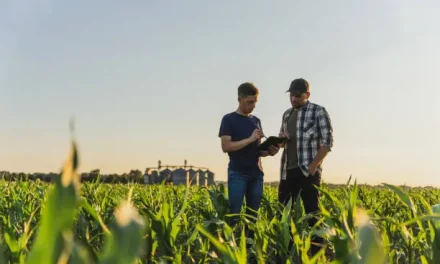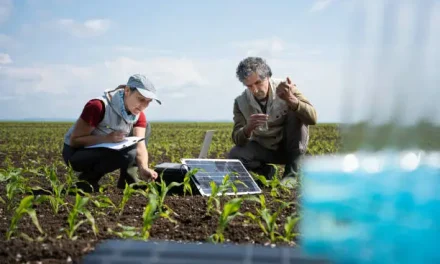
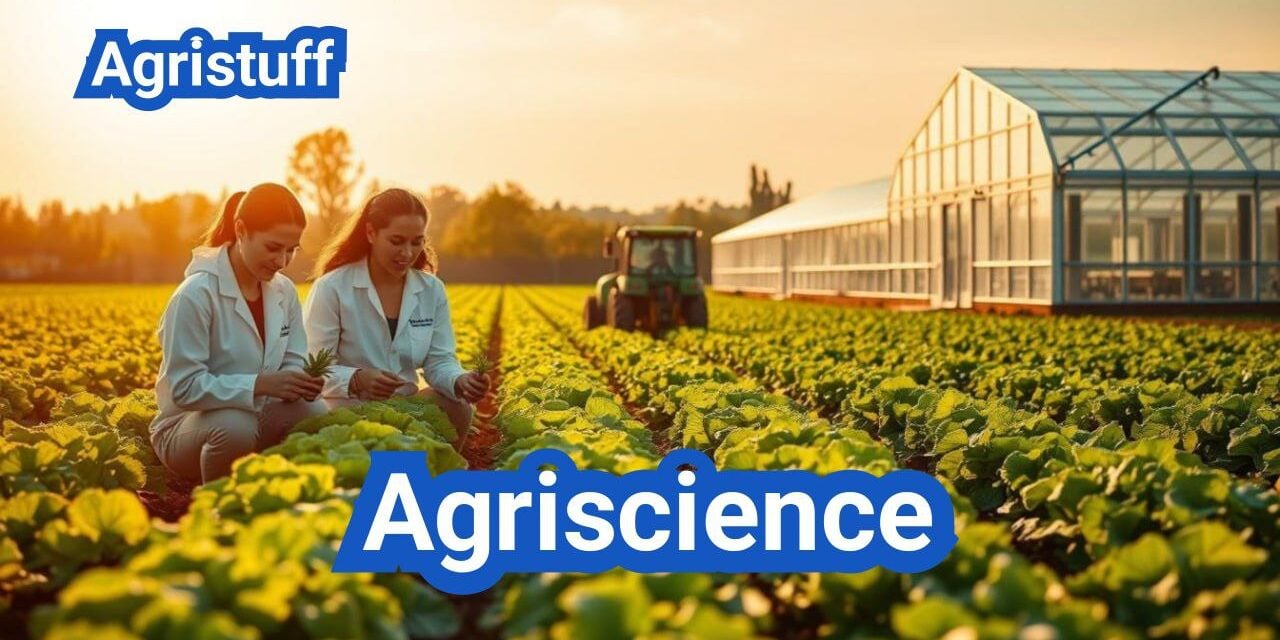
Quick Answer: Agriscience in practice includes U.S. student projects that test soil, compare crop treatments, investigate animal nutrition, monitor water quality, or use sensors and data to improve farm decisions. Through supervised agricultural experiences (SAE) and FFA activities, this work spans food safety, biotechnology, agricultural engineering, conservation, and precision agriculture.
Although agriscience and agricultural science overlap, the terms are not always used in exactly the same way. This guide clarifies that distinction, then explores the field’s scope, U.S. programs and projects, education pathways, career options, and real-world applications.
Key Takeaways
- Agriscience means applying science to agriculture, food, and natural resources.
- The scope of agriscience includes plants, animals, soil, food systems, biotechnology, environmental science, and agricultural technology.
- Agriscience is commonly taught through classroom lessons, lab work, FFA activities, SAE projects, and real-world agricultural problem solving.
- Agriscience differs from agriculture because it focuses more on the scientific reasons behind farming practices.
- For students, agriscience builds science, career, leadership, and problem-solving skills connected to the agriculture industry.
What Is Agriscience?
Agriscience is a practical field that uses scientific knowledge to understand and improve agriculture. Instead of looking at farming only as fieldwork, agriscience looks at the biology of plants and animals, the chemistry of soil and food, the technology behind modern production, and the environmental decisions that affect natural resources.
In the United States, agriscience is often connected to agricultural education, career and technical education, classroom laboratories, FFA activities, and supervised agricultural experiences. This makes agriscience especially useful for students who want to connect science lessons with real agricultural problems and future career pathways.
The field of agriscience represents a crucial intersection of agriculture and scientific principles. Agriscience applies scientific knowledge to improve agricultural practices, enhancing productivity and sustainability. This interdisciplinary field combines biology, chemistry, physics, and earth science to develop innovative solutions for food production and environmental conservation.
Definition and Core Concepts
Agriscience is defined as the application of scientific principles to agricultural practices. It encompasses a broad range of disciplines, including agricultural biology, soil science, and agricultural engineering. The core concepts of agriscience involve understanding the biological, chemical, and physical processes that underpin agricultural systems.
Key components of agriscience include:
- Crop and animal improvement through genetic research
- Soil health management and conservation
- Precision agriculture technologies
- Pest and disease management strategies
- Environmental impact assessment and mitigation
Companies like Corteva Agriscience are at the forefront of agriscience innovation, developing new products and technologies that improve crop yields and reduce environmental impact. For instance, Corteva Agriscience has been involved in various agricultural innovations, including seed treatments and pest management solutions.
Historical Development of Agriscience
The historical development of agriscience has been shaped by advances in technology, biology, and environmental science. The evolution of agriscience can be traced back to the early 20th century when scientific methods began to be applied to agricultural practices.
| Period | Key Developments | Impact on Agriculture |
|---|---|---|
| Early 20th Century | Introduction of synthetic fertilizers and pesticides | Increased crop yields and reduced labor |
| Mid-20th Century | Development of hybrid crops and irrigation technologies | Improved crop resilience and water management |
| Late 20th Century | Advances in genetic engineering and biotechnology | Enhanced crop traits and pest resistance |
| 21st Century | Precision agriculture and digital farming technologies | Increased efficiency and reduced environmental impact |
As noted by Norman Borlaug, known as the “Father of the Green Revolution,” “Agriculture is the foundation of civilization and any stable economy.” This quote underscores the importance of agriscience in ensuring global food security and sustainable development.
The future of agriscience holds much promise, with ongoing research and innovation aimed at addressing the challenges of climate change, food security, and environmental sustainability. As the field continues to evolve, it is likely to have a profound impact on the way we produce food and manage natural resources.
Define Agriscience and Explain Its Diversity and Scope
To define agriscience clearly, it is the use of scientific principles to study and solve problems in agriculture, food, and natural resources. Its diversity comes from the many areas it connects, including plant science, animal science, soil science, food science, biotechnology, environmental systems, agricultural mechanics, and digital farming tools.
The scope of agriscience is broad because agriculture itself is connected to food production, land use, water quality, climate, business, technology, and community needs. A student of agriscience may study how crops grow, how livestock stay healthy, how food is processed safely, or how new technology helps farmers make better decisions.
Why Is Agriscience Important for Students?
Agriscience is important for students because it connects science with real-life agriculture instead of teaching biology, chemistry, and technology as separate subjects. Students can use agriscience to understand how food is grown, how natural resources are protected, how animals are managed, and how technology changes modern farming.
For high school and career-ready students, agriscience can also build useful skills such as observation, research, communication, safety, teamwork, and problem solving. This is why many agricultural education programs connect agriscience with classroom learning, laboratory practice, FFA participation, and work-based learning experiences.
Agriscience vs. Agriculture vs. Agricultural Science

Agriculture is the practice of producing crops, raising animals, and managing land for food, fiber, and other needs. Agriscience focuses on the scientific principles behind those practices, such as plant growth, animal health, soil chemistry, food safety, and agricultural technology.
Agricultural science is usually the broader academic field that studies agriculture across many disciplines, while agriscience is often used in education and student-centered programs to describe hands-on science applied to agriculture. This difference helps readers understand why agriscience is strongly connected to classroom learning, lab work, projects, and career preparation.
Traditional Agricultural Practices
Traditional agriculture often relies on established methods and techniques passed down through generations. These practices have been effective but may not be optimized for modern challenges such as climate change, soil degradation, and water scarcity.
“The traditional farming practices have been the backbone of agriculture for centuries, but they need to be adapted to meet the demands of a growing population and environmental challenges.”
A comparison of traditional and modern agricultural practices reveals significant differences in approach and outcome. The following table highlights some key differences:
| Aspect | Traditional Agriculture | Agriscience |
|---|---|---|
| Methods | Rely on established techniques | Uses modern technology and research |
| Productivity | Limited by traditional methods | Improved through scientific interventions |
| Sustainability | May not prioritize environmental sustainability | Focuses on sustainable practices |
The Scientific Approach to Agriculture
Agriscience, on the other hand, applies modern scientific knowledge and technology to improve agricultural productivity and sustainability. This approach includes the use of genetic engineering, precision agriculture, and advanced irrigation systems.
The scientific approach to agriculture is not just about increasing yield; it’s also about ensuring sustainability and environmental stewardship. By leveraging technology and research, agriscience can help address some of the most pressing issues in agriculture today.
For instance, precision agriculture allows farmers to optimize crop yields and reduce waste by using data-driven insights. This not only improves productivity but also minimizes the environmental impact of farming practices.
What Is an Agriscience Program?
An agriscience program is usually an educational pathway that teaches students how science, technology, and agriculture work together. It may include classroom instruction, laboratory activities, plant and animal science lessons, environmental topics, agricultural mechanics, leadership development, and supervised projects.
In many U.S. agricultural education programs, agriscience is connected to career and technical education because it helps students explore agriculture, food, and natural resource careers while building academic and practical skills. The strongest programs combine science content with hands-on learning, career exploration, and real-world agricultural problem solving.
Agriscience Projects and FFA Examples
Agriscience projects help students apply scientific thinking to real agricultural questions. A project may test seed germination, compare soil treatments, study animal nutrition, examine food safety, evaluate water quality, or explore how technology improves farming decisions.
FFA agriscience activities are a strong example of how students can move from classroom learning to research and presentation. Through agriscience projects, students learn how to ask a question, design an experiment, collect data, explain results, and connect their findings to agriculture, food, or natural resources.
Agriscience Education Pathways
Students interested in agriscience have various educational pathways to choose from, ranging from high school programs to advanced degrees. These pathways provide a foundation for careers in the agricultural sector and beyond.
High School Agriscience Programs
High school agriscience programs offer students an introduction to the principles of agriculture and science. These programs often include hands-on experiences such as:
- Supervised Agricultural Experiences (SAE)
- Laboratory experiments
- Field trips to agricultural facilities
Such programs not only educate students about agriscience but also prepare them for further education or entry-level positions in the agricultural industry.
Technical Certificates and Associate Degrees
For those looking to further their education beyond high school, technical certificates and associate degrees in agriscience are viable options. These programs provide specialized training in areas such as:
- Agricultural technology
- Sustainable agriculture practices
- Animal science
Technical certificates can be completed in a shorter timeframe and focus on specific skills, while associate degrees offer a more comprehensive education, typically taking two years to complete.
The AgriScience Program’s support for research activities and collaborative research underscores the importance of education and training in driving innovation in agriscience. By providing students with the knowledge and skills necessary for careers in the agricultural sector, these educational pathways play a crucial role in shaping the future of agriculture.
Career Paths in Agricultural Production

With the increasing demand for sustainable farming practices, careers in agricultural production are becoming more diverse and in-demand. Professionals in this field are crucial for improving the efficiency and productivity of agricultural operations.
Agriscience graduates can explore various career opportunities in agricultural production, including roles that involve managing farms, consulting on agricultural practices, and specializing in specific crops or livestock. The use of precision agriculture technologies is becoming increasingly prevalent, enabling more efficient use of resources and better decision-making.
Farm Management and Consulting
Farm management involves overseeing the daily operations of farms, including planning, budgeting, and supervising farm workers. Agricultural consultants work with farmers to improve their practices, often providing expertise on soil management, irrigation systems, and crop rotation.
Key responsibilities of farm managers and consultants include:
- Developing and implementing farm plans to improve productivity
- Analyzing soil and crop data to inform management decisions
- Advising on the adoption of new technologies and practices
Crop and Livestock Specialists
Crop specialists focus on improving crop yields and quality, often working on the development and implementation of new crop varieties and management practices. Livestock specialists are concerned with the health, nutrition, and welfare of farm animals, working to improve breeding programs and animal husbandry practices.
Precision agriculture plays a significant role in the work of crop and livestock specialists, enabling them to monitor and manage crops and animals more effectively. Technologies such as GPS, drones, and sensor systems are used to collect data, which is then analyzed to make informed decisions.
As the agricultural sector continues to evolve, the demand for skilled professionals in agricultural production is expected to grow. Agriscience graduates who pursue careers in this field can contribute to the development of more sustainable and productive farming practices.
Real-World Applications of Agriscience

The impact of agriscience on modern farming is profound, with far-reaching benefits for the environment and food production. Agriscience integrates scientific principles and agricultural practices to address global challenges such as food security, sustainability, and environmental conservation.
Sustainable Farming Practices
Sustainable farming practices are a cornerstone of agriscience, focusing on methods that preserve the environment while maintaining productivity. Techniques such as crop rotation, organic farming, and conservation tillage are promoted to reduce soil erosion, improve soil health, and minimize the use of chemical inputs.
Precision agriculture is another key aspect, utilizing technology like GPS and drones to optimize crop yields and reduce waste. This approach not only enhances efficiency but also contributes to environmental sustainability by minimizing the overuse of resources.
Food Security and Production
Agriscience plays a critical role in ensuring food security by improving crop yields and disease resistance. Through genetic research and biotechnology, scientists develop crops that are more resilient to environmental stresses and pests, thereby increasing food production.
Additionally, agriscience addresses the issue of food waste by developing technologies that extend the shelf life of produce. This not only helps in reducing post-harvest losses but also ensures a more stable food supply.
Environmental Conservation
Environmental conservation is a significant benefit of agriscience, as it promotes practices that protect natural resources. For instance, the use of cover crops and conservation buffers helps in reducing soil erosion and improving water quality.
Agriscience also contributes to biodiversity conservation by developing farming practices that support a wider range of ecosystems. This includes the preservation of natural habitats within agricultural landscapes.
How Agriscience Supports Modern Agricultural Technology

Precision agriculture is transforming the agricultural sector by combining technology and farming practices. This approach enables farmers to optimize crop yields, reduce waste, and improve resource allocation. By leveraging advanced technologies, precision agriculture addresses the challenges faced by modern farming.
GPS and Mapping Technologies
One of the key technologies driving precision agriculture is GPS and mapping. These systems allow farmers to accurately navigate their fields, track crop health, and apply inputs such as fertilizers and pesticides with precision.
GPS technology provides real-time data on field conditions, enabling farmers to make informed decisions. Mapping technologies create detailed field maps, highlighting areas that require attention.
Sensors and Monitoring Systems
Sensors and monitoring systems play a crucial role in precision agriculture. These technologies monitor soil moisture, temperature, and crop health, providing valuable insights that help farmers optimize their practices.
- Soil moisture sensors help determine the optimal irrigation schedule.
- Crop health monitoring systems detect early signs of disease or pest infestations.
- Weather stations provide real-time weather data, enabling farmers to plan accordingly.
Data-Driven Decision Making
The data collected from various precision agriculture technologies is used to make data-driven decisions. By analyzing this data, farmers can identify trends, predict outcomes, and adjust their strategies accordingly.
| Technology | Application | Benefit |
|---|---|---|
| GPS and Mapping | Field navigation, crop tracking | Improved accuracy, reduced input waste |
| Sensors and Monitoring | Soil moisture, crop health monitoring | Optimized irrigation, early disease detection |
| Data Analytics | Trend analysis, predictive modeling | Informed decision-making, improved yields |
By embracing precision agriculture, farmers can enhance their productivity while minimizing their environmental footprint. As the global population continues to grow, the adoption of these technologies will be crucial in meeting the increasing demand for food.
FAQ
What is agriscience?
Agriscience is the application of science to agriculture, food, and natural resources. It helps explain how crops, animals, soil, technology, and environmental systems work together in modern agriculture.
What is the difference between agriculture and agriscience?
Agriculture is the practice of producing crops and livestock, while agriscience studies the scientific principles behind those practices. Agriscience explains why agricultural methods work and how they can be improved.
What is the scope of agriscience?
The scope of agriscience includes plant science, animal science, soil science, food science, biotechnology, environmental systems, agricultural mechanics, and modern farming technology.
Why is agriscience important for students?
Agriscience is important for students because it connects science lessons with real-world agricultural problems. It also supports career readiness, lab skills, research thinking, leadership, and hands-on learning.
What are the key disciplines within agriscience?
The key disciplines within agriscience include agricultural biology and genetics, soil science and environmental studies, and agricultural engineering and technology.
What education pathways are available for students interested in agriscience?
Students can pursue high school agriscience programs, technical certificates, associate degrees, bachelor’s degrees, master’s programs, and doctoral studies in agriscience.
What career opportunities are available in agriscience?
Agriscience graduates can pursue careers in agricultural production, research and development, technology, and consulting, among other sectors.
What is precision agriculture, and how is it used in agriscience?
Precision agriculture involves the use of technologies like GPS, sensors, and data analysis to optimize crop yields, reduce waste, and improve resource allocation.
What is the role of biotechnology in modern agriscience?
Biotechnology is used in agriscience to improve crop yields, disease resistance, and nutritional content, as well as to develop biofuels and biomaterials.
What is controlled environment agriculture, and how does it work?
Controlled environment agriculture involves the use of indoor growing systems, hydroponics, and aeroponics to produce crops in controlled environments, reducing the need for land, water, and other resources.
What is climate-smart agriculture, and why is it important?
Climate-smart agriculture aims to promote agricultural practices that are resilient to climate change, improve productivity, and reduce environmental impact.
What are the future trends and innovations in agriscience?
The future of agriscience is expected to be shaped by advancements in precision agriculture, biotechnology, and climate-smart agriculture, among other areas.
What is the AgriScience Program, and what does it support?
The AgriScience Program supports pre-commercial science activities and research that benefits the agriculture and agri-food sector.
What is the significance of land-grant universities in agricultural education and research?
Land-grant universities play a significant role in agricultural education and research, providing students with hands-on experience and access to cutting-edge knowledge.
What companies are at the forefront of agriscience innovation?
Companies like Corteva Agriscience are at the forefront of agriscience innovation, developing new products and technologies that improve crop yields and reduce environmental impact.
Conclusion of: Agriscience
What is agriscience, in plain terms?
At its core, agriscience is the application of biology, chemistry, physics, engineering, and data science to produce safe, abundant food, fiber, and bio-based products while protecting natural resources. In U.S. context, agriscience spans lab research, on-farm trials, processing plants, and community outreach so discoveries become everyday practice. Think of agriscience as the bridge between theory and the real-world results America’s farms and food companies need. USDA NIFA: About agricultural sciences
Why agriscience matters to the U.S. economy
The agriscience ecosystem helps drive jobs and GDP well beyond the farm gate—covering inputs, transportation, processing, retail, and food services. Recent USDA analyses show agriculture, food, and related industries contributed about 5.5% to U.S. GDP in 2023, supporting more than 22 million jobs. Those numbers underscore how agriscience innovations ripple through payrolls, exports, and grocery baskets nationwide. ERS: Ag & food sectors and the economy
The agriscience value chain at a glance
From seed genetics to grain elevators, agriscience runs through the entire value chain: inputs (seed, fertilizer, machinery), primary production, storage and logistics, processing and packaging, distribution, retail, and food service. Each segment relies on research and standards to stay efficient and safe, and on data to coordinate decisions amid weather and market volatility.
Agriscience degrees: common majors and pathways
Most U.S. universities offer agriscience pathways such as agronomy, animal science, horticulture, soil science, agricultural & biological engineering, food science, ag economics, and environmental science. Programs blend STEM coursework with labs, fieldwork, and internships. Land-grant universities are a particularly strong option because they pair research with Extension education that serves producers directly. NIFA: Land-grant university directory
Engineering-focused agriscience programs (accreditation)
When agriscience leans into systems design—irrigation, machinery, controlled environments, post-harvest lines—look for ABET-accredited Agricultural or Biological Engineering programs. Accreditation signals a rigorous curriculum in math, science, and engineering fundamentals aligned to industry needs. ABET: Find accredited programs
Food science programs (quality, safety, product development)
Food science is a central pillar of agriscience, turning raw commodities into safe, consistent, and desirable products. In the U.S., the Institute of Food Technologists (IFT) maintains a rigorous approval process for undergraduate programs, which can help students and employers gauge program quality. IFT: HERB-approved undergraduate programs
Land-grant & Extension: the unique U.S. advantage
A hallmark of U.S. agriscience is the land-grant and Cooperative Extension network—researchers and educators who translate lab findings into field results through demos, bulletins, and on-farm trials. This “bench-to-acre” system accelerates adoption, especially for conservation, precision ag, and food safety practices. USDA NIFA: What is Extension?
Careers: agricultural & food scientists
Graduates in agriscience can pursue roles such as plant, soil, animal, or food scientists. According to the U.S. Bureau of Labor Statistics, median pay for agricultural and food scientists was about $78,770 in May 2024, with opportunities across R&D labs, QA/QC, product development, and regulatory affairs. BLS: Agricultural & Food Scientists
Careers: agricultural engineers
For students who enjoy both design and biology, agriscience in engineering roles covers machinery, sensors, energy systems, structures, water resources, and sustainability analytics. BLS reports a May 2024 median wage of about $84,630 and a projected 6% growth (2024–2034), faster than average. BLS: Agricultural Engineers
Careers: technicians & entry-level roles
Hands-on agriscience jobs include lab, field, and processing-plant technicians who keep experiments, trials, and monitoring programs running. Technician roles provide excellent entry points and on-ramps to further study; in May 2024, agricultural technicians’ median pay was about $46,790. BLS: Ag & Food Science Technicians
Precision agriculture: sensors, maps, and smarter decisions
Modern agriscience uses GPS guidance, yield monitors, soil mapping, and variable-rate applications to boost efficiency. USDA reports show strong adoption—especially on larger farms—with technologies like yield maps and soil maps used on well over half of large-scale crop farms. ERS: Precision ag adoption (Chart of Note)
Biotechnology: breeding, traits, and gene editing
Another vital arm of agriscience is biotechnology—breeding and gene technologies that improve yield, quality, or resilience. In recent years, more than 90% of U.S. corn, cotton, and soy acres were planted to GE varieties, and public labs are exploring gene editing to enhance crops and livestock health. ERS: Recent trends in GE adoption
Real research examples: gene editing in USDA labs
Public-sector agriscience is active in gene editing research—from improving tomato stress tolerance to exploring traits relevant to livestock and pest control. These projects follow ethical and regulatory frameworks while building foundational knowledge. USDA ARS: Gene editing project (crops)
Controlled environment agriculture (CEA) & vertical farming
Agriscience is rapidly advancing CEA—greenhouses and indoor farms that fine-tune light, humidity, nutrients, and varieties for year-round production near consumers. USDA ARS highlights the potential of vertical farming for leafy greens and herbs where markets and energy costs align. USDA ARS: Vertical farming explainer
Soils & water: the foundation of agriscience decisions
Healthy soils and efficient water use are pillars of agriscience. Farmers, consultants, and students rely on the USDA NRCS Web Soil Survey to explore soils by field, evaluate limitations, and guide rotations, irrigation, and conservation practices. NRCS: Web Soil Survey
Nutrient stewardship & cover crops
Two everyday agriscience tools for soil health are nutrient management (right source, rate, time, place) and cover crops to protect soil, cycle nutrients, and suppress weeds. Both are supported by NRCS conservation practice standards used by planners nationwide. NRCS: Cover Crop Standard (Code 340)
Integrated Pest Management (IPM)
In agriscience, IPM combines monitoring, thresholds, cultural controls, biologicals, and carefully targeted chemistries to manage pests cost-effectively with minimal environmental impact. It’s prevention-first science in action across fields, greenhouses, and food facilities. EPA: IPM principles
Food safety: from farm to facility
Downstream, agriscience shapes hazard analysis, sanitation, allergen control, and traceability. Under the Food Safety Modernization Act (FSMA), many food facilities must implement risk-based preventive controls, turning science into everyday procedures that protect consumers. FDA: FSMA Preventive Controls rule
Climate-smart agriscience
Climate resilience is a growing agriscience focus—testing practices that reduce emissions, build soil carbon, and improve drought tolerance. USDA’s Partnerships for Climate-Smart Commodities invests in projects that measure, verify, and scale these practices with producers. USDA: Climate-Smart Commodities
Data fluency: the new core skill
Across labs and fields, agriscience depends on clean data and reproducible analysis: geospatial layers, sensor streams, imaging, and statistical design. USDA ERS provides an array of data products and charts that students can practice with—and that employers value. ERS: Data products hub
How to choose the right agriscience program
To tailor your agriscience path, explore curricula (engineering vs. life science), look for ABET in engineering and IFT approval in food science, and prioritize programs with strong internships, Extension ties, and undergraduate research. Land-grant colleges often check all three boxes. NIFA: Land-grant directory
Early experience: competitions, labs, and internships
For high-schoolers and early undergrads, agriscience fairs, campus labs, and Extension internships build practical résumés. National FFA’s Agriscience Fair is a well-known gateway to research-style projects and national-level recognition. National FFA: Agriscience Fair
Where agriscience meets consumers
Ultimately, agriscience shows up on the shelf as safer, better-tasting, more consistent foods, plus transparent labeling, nutrition insights, and stable prices. Macro statistics and charts illuminate how these gains accumulate over time and across the country. ERS: Ag & food statistics portal
Final thought
The U.S. agriscience engine is collaborative—public agencies, universities, startups, growers, and processors solving practical problems with rigorous science. If you like making an impact you can measure in fields, factories, and families’ kitchens, this is a rewarding, future-proof direction to study and work in. USDA NIFA: Programs & funding
Sources & References
- ERS – Ag & Food Sectors and the Economy
- BLS – Agricultural & Food Scientists
- BLS – Agricultural Engineers
- ERS – Precision Ag Adoption (Chart of Note)
- ERS – Recent Trends in GE Adoption
- FDA – FSMA Preventive Controls Rule
- EPA – Integrated Pest Management
- NRCS – Web Soil Survey
- USDA NIFA – What We Do: Extension
- ABET – Find Programs
- IFT – Approved Undergraduate Programs
- USDA – Climate-Smart Commodities
- USDA ARS – Vertical Farming Q&A
- NRCS – Cover Crop Standard (Code 340)