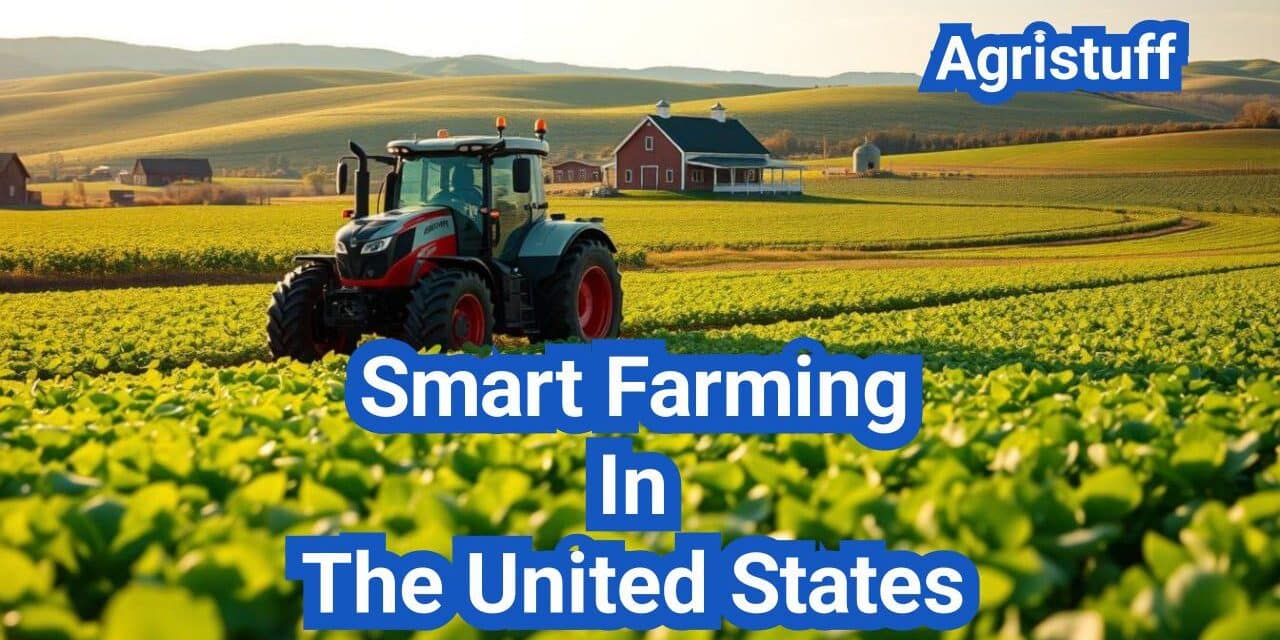
As the agricultural sector faces the challenges of climate change and environmental degradation, precision agriculture is emerging as a vital solution. By leveraging agricultural technology, farmers and ranchers can enhance operational resilience while benefiting the environment.
Smart Farming In The United States involves the use of advanced technology to optimize crop yields and reduce waste. This approach is revolutionizing agricultural practices, enabling farmers to make data-driven decisions and improve resource allocation.
Key Takeaways
- Precision agriculture is crucial for building resilience in agricultural operations.
- Agricultural technology enhances environmental sustainability.
- Smart farming optimizes crop yields and reduces waste.
- Data-driven decision-making improves resource allocation.
- Agricultural innovation is key to addressing climate change.
The Evolution of Agriculture in America

American agriculture has undergone significant transformations since its inception, evolving from traditional farming practices to modern digital farming methods. This evolution has been driven by technological advancements, economic factors, and the need for increased productivity.
From Traditional to Digital Farming
The journey of American agriculture began with traditional farming methods, where manual labor and simple tools were the norm. Over time, the introduction of mechanized farming equipment marked a significant shift, increasing efficiency and productivity.
Key Historical Milestones
Several key milestones have defined the evolution of agriculture in America:
- Introduction of mechanized farming equipment in the 19th century
- Adoption of irrigation systems in the early 20th century
- Use of pesticides and fertilizers post-World War II
- Introduction of genetically modified crops in the late 20th century
The Digital Transformation Timeline
The digital transformation in agriculture began with the advent of computer technology and has continued with the integration of advanced technologies such as GPS, drones, and artificial intelligence.
| Decade | Technological Advancements | Impact on Agriculture |
|---|---|---|
| 1980s | Introduction of computer technology | Improved record-keeping and farm management |
| 1990s | Adoption of GPS technology | Precision farming became more feasible |
| 2010s | Integration of drones and AI | Enhanced crop monitoring and predictive analytics |
The Agricultural Technology Revolution
The agricultural technology revolution has transformed farming practices, making them more efficient and productive. Technologies such as drones, robots, and artificial intelligence are being increasingly adopted.
Impact on Farm Productivity
The use of advanced technologies has significantly improved farm productivity. For instance, precision farming techniques enabled by GPS and sensor technologies have allowed farmers to optimize crop yields and reduce waste.
Changing Farm Economics
The adoption of agricultural technology has also had a profound impact on farm economics. While initial investments can be high, the long-term benefits include reduced labor costs and increased profitability.
What Is Smart Farming In The United States

Smart farming is revolutionizing the agricultural landscape in the United States by integrating advanced technology into farming practices. This approach is not just about enhancing crop yields or livestock production; it’s about helping crops and livestock not only survive but also thrive in the face of challenges such as climate change, thereby contributing to global food security.
Definition and Core Components
Smart farming, also known as precision agriculture, involves the use of advanced technology, including IoT devices, drones, and data analytics, to optimize farming operations. At its core, smart farming is about making data-driven decisions and implementing automation and precision control.
Data-Driven Decision Making
Data-driven decision making is a cornerstone of smart farming. By collecting and analyzing data on soil conditions, weather patterns, crop health, and more, farmers can make informed decisions that improve crop yields and reduce waste. This approach enables farmers to respond quickly to changes in the field, ensuring optimal growing conditions.
Automation and Precision Control
Automation and precision control are also critical components of smart farming. Technologies such as automated irrigation systems and precision planting equipment allow farmers to optimize resource use and minimize environmental impact. These technologies not only improve efficiency but also reduce the labor required for farming operations.
How It Differs from Conventional Farming
Smart farming differs significantly from conventional farming practices, primarily in its use of technology to enhance efficiency and productivity. Two key areas where this difference is evident are resource utilization and productivity/yield.
Resource Utilization Comparison
Smart farming optimizes the use of resources such as water, fertilizers, and pesticides through precision application technologies. In contrast, conventional farming often relies on a more uniform application approach, which can lead to waste and environmental degradation. By using resources more efficiently, smart farming reduces its environmental footprint.
Productivity and Yield Differences
The use of data analytics and precision agriculture techniques in smart farming leads to higher productivity and better crop yields compared to conventional farming methods. By closely monitoring and managing factors that affect crop growth, farmers can maximize their output while minimizing inputs.
In conclusion, smart farming represents a significant advancement in agricultural practices, offering numerous benefits over conventional farming methods. As technology continues to evolve, the potential for smart farming to transform the U.S. agricultural landscape is vast.
Key Technologies Driving Smart Farming

Innovative technologies are at the forefront of smart farming, transforming traditional agricultural practices into efficient, data-driven operations. The integration of these technologies enables farmers to make informed decisions, optimize resource use, and improve crop yields.
Internet of Things (IoT) in Agriculture
The Internet of Things (IoT) plays a crucial role in smart farming by connecting various devices and sensors to collect and exchange data. This connectivity allows for real-time monitoring and management of farm operations.
Sensor Networks and Applications
Sensor networks are a vital component of IoT in agriculture. These sensors measure physical conditions such as soil moisture, temperature, and humidity, providing valuable data for farmers to optimize irrigation, fertilization, and pest control.
Connectivity Solutions for Rural Areas
Connectivity is a significant challenge in rural areas. Technologies like cellular networks, satellite communications, and LoRaWAN provide reliable connectivity solutions, enabling seamless data transfer between farm equipment and central management systems.
Artificial Intelligence and Machine Learning
Artificial Intelligence (AI) and Machine Learning (ML) are revolutionizing farm management by analyzing vast amounts of data to predict outcomes and provide insights. These technologies help farmers make data-driven decisions.
Predictive Analytics for Crop Management
Predictive analytics uses historical data, weather forecasts, and soil conditions to predict crop yields, detect potential issues, and recommend optimal farming practices.
Automated Decision Support Systems
Automated decision support systems use AI algorithms to analyze data from various sources and provide actionable recommendations to farmers, enhancing efficiency and reducing manual intervention.
Drones and Remote Sensing
Drones equipped with sensors and cameras are increasingly used in agriculture for aerial imaging, crop monitoring, and field analysis.
Aerial Imaging and Mapping
Aerial imaging provides detailed maps of farm fields, helping farmers identify issues such as crop stress, soil variability, and irrigation problems.
Crop Health Monitoring
Crop health monitoring using drones enables early detection of pests, diseases, and nutrient deficiencies, allowing for timely intervention.
Automated Machinery and Robotics
Automated machinery and robotics are transforming farm operations by increasing efficiency and reducing labor costs.
Autonomous Tractors and Harvesters
Autonomous tractors and harvesters use GPS and sensor technologies to navigate and perform tasks with precision, minimizing overlap and reducing input waste.
Robotic Weeding and Harvesting
Robotic systems are being developed for weeding and harvesting, reducing the need for manual labor and herbicides.
| Technology | Application | Benefits |
|---|---|---|
| IoT Sensors | Soil Moisture Monitoring | Optimized Irrigation |
| AI/ML | Predictive Analytics | Data-Driven Decisions |
| Drones | Aerial Imaging | Early Issue Detection |
| Automated Machinery | Precision Farming | Increased Efficiency |
Data Collection and Analysis in Smart Farming

The backbone of smart farming is the ability to collect and analyze vast amounts of agricultural data. This data-driven approach enables farmers to make informed decisions, optimize resources, and improve crop yields.
Types of Agricultural Data
Agricultural data encompasses various types, including field-level data and environmental data. Field-level data is collected directly from the fields using sensors and other monitoring devices.
Field-Level Data Sources
These include soil moisture sensors, temperature sensors, and crop health monitors. Such data helps farmers understand the current condition of their crops and soil.
Environmental and Climate Data
Weather stations and climate monitoring systems provide crucial data on temperature, humidity, rainfall, and other environmental factors that affect crop growth.
Data Management Systems
Effective data management systems are crucial for handling the vast amounts of data generated in smart farming. These systems help in organizing, storing, and analyzing the data.
Farm Management Software Options
Various farm management software options are available, offering features like data integration, analytics, and reporting. Examples include FarmLogs and Granular.
Data Storage and Security Considerations
With the increasing amount of data being collected, ensuring data security and choosing the right storage solutions are critical considerations for farmers.
Turning Farm Data into Actionable Insights
The true value of collected data lies in its analysis and interpretation. Data visualization tools and decision support frameworks help farmers turn data into actionable insights.
Visualization Tools and Dashboards
Visualization tools present complex data in an easily understandable format, such as dashboards that display key performance indicators (KPIs) for farm operations.
Decision Support Frameworks
These frameworks use analyzed data to provide recommendations on optimal farming practices, such as the best time to irrigate or fertilize.
Implementing Precision Agriculture Techniques

Precision agriculture techniques offer a new paradigm for farming, focusing on precision and data-driven decisions. This approach enables farmers to optimize crop yields, reduce waste, and promote sustainable farming practices.
Variable Rate Technology
Variable Rate Technology (VRT) is a key component of precision agriculture, allowing farmers to apply inputs such as fertilizers, pesticides, and seeds at varying rates across a field. This technique ensures that crops receive exactly what they need, reducing waste and environmental impact.
Fertilizer and Pesticide Application
By using VRT for fertilizer and pesticide application, farmers can optimize the use of these inputs based on soil conditions, crop health, and pest presence. This not only reduces the environmental footprint but also improves crop yields.
Seeding Rate Optimization
VRT also enables the optimization of seeding rates. By analyzing soil type, moisture levels, and other factors, farmers can determine the optimal seeding rate for different areas of the field, maximizing yield potential.
GPS Guidance Systems
GPS guidance systems are another crucial element of precision agriculture. These systems enable farmers to navigate their equipment with precision, reducing overlap and improving efficiency.
Auto-Steering Implementation
Auto-steering systems, guided by GPS, allow for precise control of farming equipment. This technology reduces operator fatigue and improves accuracy, leading to more efficient farming operations.
Reducing Overlap and Waste
By minimizing overlap through GPS guidance, farmers can reduce waste and lower input costs. This precision also contributes to more accurate record-keeping and farm management.
Field Mapping and Zone Management
Field mapping and zone management are critical for effective precision agriculture. By dividing fields into management zones based on factors like soil type and moisture levels, farmers can tailor their farming practices to specific areas.
Creating Management Zones
Management zones are created by analyzing various data points, including soil surveys, yield data, and remote sensing information. This allows farmers to identify areas that require different management strategies.
Soil Sampling Strategies
Soil sampling is a vital component of zone management. By collecting and analyzing soil samples from different zones, farmers can determine the specific needs of each area, enabling targeted application of fertilizers and other inputs.
| Precision Agriculture Technique | Description | Benefits |
|---|---|---|
| Variable Rate Technology | Applies inputs at varying rates across a field | Reduces waste, improves crop yields |
| GPS Guidance Systems | Enables precise navigation of farming equipment | Reduces overlap, improves efficiency |
| Field Mapping and Zone Management | Divides fields into management zones for tailored practices | Improves resource allocation, enhances crop management |
By implementing these precision agriculture techniques, farmers can significantly enhance their farming practices, leading to improved efficiency, reduced environmental impact, and increased profitability.
Smart Irrigation and Water Management

As drought remains a significant risk to agricultural production, smart irrigation offers a viable solution. Effective water management is crucial for sustainable farming practices, and smart irrigation systems are at the forefront of this effort.
Soil Moisture Sensors
Soil moisture sensors play a critical role in optimizing irrigation. By accurately measuring soil moisture levels, farmers can avoid both under and over-irrigation.
Installation and Placement Guide
Proper installation and placement of soil moisture sensors are essential for accurate data collection. Sensors should be placed at various depths and locations within the field to capture a comprehensive picture of soil moisture conditions.
Interpreting Moisture Data
Interpreting the data from soil moisture sensors requires understanding the soil type, crop water requirements, and weather forecasts. This information helps farmers make informed decisions about irrigation scheduling.
Weather-Based Irrigation Controllers
Weather-based irrigation controllers adjust irrigation schedules based on real-time weather data, ensuring that crops receive the right amount of water at the right time.
Setting Up Automated Systems
Setting up automated irrigation systems involves integrating weather data with irrigation controllers. This integration enables farmers to automate irrigation scheduling, reducing manual labor and improving water efficiency.
Integrating weather forecasts into irrigation management allows farmers to anticipate and prepare for weather conditions, further optimizing water use.
Water Conservation Strategies
Water conservation is a key benefit of smart irrigation. Strategies such as drip irrigation and optimized scheduling help minimize water waste.
Drip Irrigation Implementation
Drip irrigation delivers water directly to the roots of plants, reducing evaporation and runoff. Implementing drip irrigation requires careful planning and installation.
Scheduling for Maximum Efficiency
Scheduling irrigation for maximum efficiency involves considering factors such as soil type, crop water requirements, and weather conditions. By optimizing irrigation schedules, farmers can conserve water while maintaining crop health.
“The future of farming is not just about the technology we use, but how we use it to sustain our resources.”
Unknown
By adopting smart irrigation practices, farmers can significantly reduce their water usage while maintaining or even increasing crop yields. This approach not only benefits the environment but also improves the bottom line for farmers.
Livestock Monitoring and Management Systems
Smart farming techniques are now being applied to livestock management, enhancing efficiency and animal welfare. The use of advanced technologies is revolutionizing the way farmers care for their animals, leading to improved health outcomes and increased productivity.
Wearable Technology for Animals
Wearable technology is being increasingly adopted in livestock management. Devices such as health and activity trackers allow farmers to monitor the well-being of their animals in real-time.
Health and Activity Trackers
These trackers provide valuable insights into the health and behavior of livestock, enabling early detection of illness or stress. For instance, companies like Soracom offer technologies that help detect illness in cattle and monitor mating conditions.
Location and Movement Monitoring
GPS tracking devices enable farmers to monitor the movement and location of their livestock, reducing the risk of loss and improving grazing management.
Automated Feeding Systems
Automated feeding systems are another crucial component of modern livestock management. These systems allow for precision feeding, optimizing feed efficiency and reducing waste.
Setting Up Precision Feeding
Precision feeding involves tailoring the nutritional content of feed to the specific needs of the animals, improving growth rates and overall health.
Feed Efficiency Optimization
By optimizing feed efficiency, farmers can reduce costs and minimize the environmental impact of their operations.
Health Monitoring Solutions
Health monitoring solutions are critical for maintaining the health and productivity of livestock. These solutions include early disease detection systems and reproductive cycle management tools.
Early Disease Detection
Early disease detection is crucial for preventing the spread of disease within a herd. Advanced health monitoring systems can identify potential health issues before they become apparent.
Reproductive Cycle Management
Reproductive cycle management tools help farmers optimize breeding programs, improving fertility rates and reducing the risk of reproductive issues.
As stated by industry experts, “The integration of technology in livestock management is not just a trend, but a necessity for the future of sustainable agriculture.”
“The future of livestock management lies in the adoption of smart technologies that enhance animal welfare and farm productivity.”
Steps to Transition to Smart Farming

The journey to smart farming begins with understanding the current state of your farm and identifying areas for improvement. This process involves several key steps that help farmers modernize their agricultural practices and take advantage of the latest technologies.
Assessment of Current Farm Operations
Before implementing smart farming techniques, it’s crucial to assess the current state of farm operations. This assessment includes evaluating technology readiness and identifying priority areas for improvement.
Technology Readiness Evaluation
Farmers should evaluate their current technology infrastructure to determine its compatibility with smart farming solutions. This includes assessing the availability of internet connectivity, hardware, and software.
Identifying Priority Areas for Improvement
Identifying areas that can benefit most from smart farming technologies is crucial. This involves analyzing farm data to pinpoint inefficiencies and opportunities for optimization.
Creating a Smart Farm Implementation Plan
Once the current state of farm operations is assessed, the next step is to create a comprehensive implementation plan. This plan should include setting clear goals and metrics, as well as developing a phased approach to integration.
Setting Clear Goals and Metrics
Establishing clear goals and metrics is essential for measuring the success of smart farming initiatives. This could include targets for increased productivity, reduced water usage, or improved crop yields.
Developing a Phased Approach
A phased approach allows farmers to gradually implement smart farming technologies, starting with the most critical areas. This helps in managing costs and minimizing disruptions to existing operations.
Selecting the Right Technologies
Choosing the appropriate technologies is vital for the success of smart farming initiatives. This involves evaluating vendors based on specific criteria and considering compatibility and integration factors.
Vendor Evaluation Criteria
When selecting vendors, farmers should consider factors such as product reliability, customer support, and scalability. A thorough evaluation helps in making informed decisions.
Compatibility and Integration Considerations
Ensuring that new technologies are compatible with existing systems is crucial for seamless integration. This helps in avoiding data silos and ensuring that all systems work together effectively.
| Technology | Compatibility Consideration | Integration Benefit |
|---|---|---|
| Precision Agriculture Tools | Compatibility with existing farm equipment | Enhanced data collection and analysis |
| IoT Devices | Integration with farm management software | Real-time monitoring and control |
| Drones and Satellite Imagery | Compatibility with data analytics platforms | Improved crop health monitoring |
Training and Skill Development
Finally, developing the necessary skills is crucial for the successful adoption of smart farming technologies. This involves building technical capacity and creating a learning culture within the organization.
Building Technical Capacity
Farmers and their staff need training to effectively use new technologies. This includes understanding data analysis, operating new equipment, and troubleshooting technical issues.
Creating a Learning Culture
Encouraging a culture of continuous learning helps in staying updated with the latest technologies and best practices. This involves ongoing education and knowledge sharing among team members.
Overcoming Challenges in Smart Farming Adoption

The shift towards smart farming is not without its obstacles, including financial, technical, and infrastructural hurdles. As farmers increasingly adopt these advanced technologies, understanding and addressing these challenges becomes crucial for successful implementation.
Cost and Financial Considerations
One of the primary barriers to smart farming adoption is the initial investment cost. The expense of purchasing and installing advanced technologies such as precision agriculture equipment, IoT devices, and data analytics software can be substantial.
Calculating Return on Investment
Farmers must carefully calculate the potential return on investment (ROI) for these technologies. This involves assessing how improvements in efficiency, yield, and resource management can translate into financial savings and increased profitability over time.
Financing Options and Strategies
Exploring various financing options is essential. This can include loans, grants, and government programs designed to support agricultural innovation. Farmers may also consider leasing equipment or partnering with technology providers to reduce upfront costs.
Technical Knowledge Barriers
Adopting smart farming technologies requires a certain level of technical expertise. Farmers must be able to understand and effectively use these new tools, which can be a challenge, especially for those with limited experience with digital technologies.
Finding Expert Support
To overcome this, farmers can seek out expert support. This might involve hiring staff with the necessary technical skills, attending training workshops, or consulting with technology providers who offer support services.
Continuous Learning Resources
Engaging in continuous learning is also vital. Farmers can leverage online resources, industry conferences, and peer networks to stay updated on the latest technologies and best practices in smart farming.
Connectivity Issues in Rural Areas
Reliable internet connectivity is a critical component of smart farming, yet many rural areas lack sufficient connectivity. This can hinder the effective use of cloud-based services, real-time data collection, and remote monitoring.
Alternative Connection Methods
Farmers in areas with poor internet connectivity may need to explore alternative connection methods. This could include satellite internet services or mobile networks with extended coverage.
Working with Limited Bandwidth
In some cases, optimizing data transfer and management practices can help mitigate the impact of limited bandwidth. This might involve prioritizing critical data, using data compression techniques, or scheduling data transfers during off-peak hours.
Government Programs and Funding for Smart Farming

The United States government has been proactive in supporting smart farming through various initiatives and funding programs. These efforts are designed to encourage the adoption of advanced technologies and sustainable practices in agriculture.
USDA Smart Agriculture Initiatives
The USDA plays a pivotal role in promoting smart agriculture through several initiatives. These programs are aimed at enhancing the productivity and sustainability of American farms.
Conservation Innovation Grants | Smart Farming In The United States
The Conservation Innovation Grants (CIG) program is a key initiative that funds innovative projects that conserve natural resources while enhancing agricultural productivity. This program is crucial for the development and implementation of new conservation technologies and approaches.
Rural Development Programs
Rural Development Programs by the USDA focus on improving the quality of life in rural areas by supporting infrastructure, business, and community development. These programs are vital for ensuring that rural areas have the necessary resources to adopt and benefit from smart farming practices.
State-Level Support Programs
In addition to federal initiatives, many states offer their own support programs for smart farming. These programs are tailored to address the specific needs and challenges of farming within each state.
Extension Services and Resources
Extension services provide critical support to farmers by offering technical assistance, educational programs, and resources on best practices. These services are essential for helping farmers navigate the complexities of smart farming technologies.
State-Specific Incentives
Some states offer specific incentives for adopting smart farming practices, such as tax credits, subsidies, or grants. These incentives can significantly reduce the financial burden associated with implementing new technologies.
Grant Opportunities for Technology Adoption
Various grant opportunities are available to support the adoption of smart farming technologies. These grants can be used to fund a wide range of projects, from precision agriculture to livestock monitoring systems.
Application Process Guide | Smart Farming In The United States
Applying for grants involves a detailed process, including submitting project proposals, budget plans, and demonstrating the potential impact of the project. Understanding the application process is crucial for securing funding.
Qualifying Project Examples
Projects that qualify for grant funding include those that implement innovative irrigation systems, adopt precision agriculture techniques, or integrate AI and IoT technologies into farming practices.
| Program | Description | Benefits |
|---|---|---|
| Conservation Innovation Grants | Funds innovative conservation projects | Enhances productivity and conservation |
| Rural Development Programs | Supports rural infrastructure and development | Improves quality of life in rural areas |
| State-Specific Incentives | Offers tax credits, subsidies, or grants for smart farming | Reduces financial burden on farmers |
By leveraging these government programs and funding opportunities, farmers and agricultural businesses can access the resources they need to adopt smart farming practices, enhancing their productivity, sustainability, and competitiveness in the global market.
Case Studies: Successful Smart Farms in America

From large-scale commercial operations to small specialty crop producers, American farms are leveraging smart farming techniques to improve efficiency, productivity, and sustainability. This section highlights successful case studies that demonstrate the practical application and benefits of smart farming across different types of agricultural operations.
Large-Scale Commercial Operations
Large commercial farms have been at the forefront of adopting smart farming technologies, integrating advanced systems to manage vast tracts of land and complex agricultural operations.
Technology Integration Examples | Smart Farming In The United States
One notable example is a large corn and soybean farm in the Midwest that has implemented a comprehensive precision agriculture system. This includes GPS-guided tractors, drones for crop monitoring, and soil sensors to optimize irrigation and fertilizer application.
Measured Results and Outcomes
The farm reported a 15% increase in crop yields and a 10% reduction in water usage within the first two years of implementing these technologies. The data collected from various sources is analyzed using advanced software to provide actionable insights, enabling the farm to make data-driven decisions.
Medium-Sized Family Farms
Medium-sized family farms are also benefiting from smart farming practices, adopting technologies that are scalable and cost-effective.
Practical Implementation Approaches
A family-owned vegetable farm in California has successfully integrated smart irrigation systems, using soil moisture sensors and weather data to optimize watering schedules. This approach has not only reduced water consumption but also improved crop quality.
Cost-Effective Solutions
The farm utilized government grants and subsidies to offset the initial costs of implementing smart irrigation systems. As a result, they achieved a significant return on investment through reduced water bills and increased produce quality.
Small Specialty Crop Producers
Small specialty crop producers are leveraging niche applications of smart technology to gain a market advantage.
Niche Applications of Smart Technology
A small organic herb farm in Oregon uses a combination of IoT devices and manual monitoring to maintain optimal growing conditions. This includes using sensors to monitor temperature, humidity, and light levels in their greenhouses.
Market Advantage Creation
By adopting smart farming practices, the farm was able to differentiate its products in a competitive market, commanding a premium price for its high-quality, sustainably grown herbs. The farm’s commitment to technology and sustainability has also enhanced its brand reputation.
Environmental and Economic Benefits of Smart Farming

The adoption of smart farming techniques is leading to significant sustainability improvements and resource efficiency gains in American agriculture. By leveraging advanced technologies such as IoT devices, drones, and data analytics, farmers can optimize their operations, reduce waste, and promote environmental stewardship.
Sustainability Improvements
Smart farming practices contribute to a more sustainable agricultural sector in several ways:
Reduced Chemical Usage
Precision application of fertilizers and pesticides minimizes excess chemical runoff into waterways, protecting ecosystems and biodiversity.
Conservation of Natural Resources
Advanced irrigation systems and soil moisture monitoring help conserve water, a critical resource in agriculture.
Resource Efficiency Gains
In addition to sustainability benefits, smart farming enhances resource efficiency:
Labor Optimization Strategies
Automation and data-driven insights enable farmers to streamline labor-intensive processes, improving productivity and reducing costs.
Energy and Water Savings
Optimized irrigation scheduling and energy-efficient equipment reduce the overall energy consumption and water usage on farms.
Profitability and ROI Analysis
The economic benefits of smart farming are substantial, with potential for significant returns on investment:
Short-Term vs. Long-Term Returns
While initial investments in smart farming technologies can be substantial, the long-term benefits often outweigh the costs, leading to increased profitability.
Case-Based Financial Projections | Smart Farming In The United States
Analyzing case studies of farms that have adopted smart farming practices provides valuable insights into potential financial returns.
| Smart Farming Practice | Environmental Benefit | Economic Benefit |
|---|---|---|
| Precision Irrigation | Water Conservation | Reduced Water Costs |
| Crop Monitoring | Reduced Chemical Usage | Increased Crop Yield |
| Automated Farming Equipment | Labor Optimization | Increased Productivity |
The Future of Smart Farming in the United States
The future of smart farming in the United States is poised for significant growth, driven by technological advancements and the increasing demand for food production. With global farming production expected to rise by 69% between 2010 and 2050, the adoption of smart agriculture trends will be crucial in meeting this challenge.
As discussed in the previous sections, smart farming encompasses a range of technologies, including IoT, AI, and precision agriculture. These innovations have the potential to transform the agricultural landscape, enhancing efficiency, productivity, and sustainability.
The future of smart farming will be shaped by emerging trends, such as the integration of AI and machine learning, the expansion of IoT networks, and the development of more sophisticated precision agriculture techniques. As the industry continues to evolve, it is likely that smart farming will become increasingly prevalent, enabling farmers to produce more with less.
By embracing smart agriculture trends and leveraging the latest technologies, the United States can maintain its position as a global leader in agricultural production, while also addressing the environmental and economic challenges associated with traditional farming practices.
FAQ
What is smart farming, and how does it differ from traditional farming methods?
Smart farming is an agricultural practice that uses advanced technology, such as IoT, AI, and data analytics, to optimize crop yields, reduce waste, and promote sustainability. It differs from traditional farming methods by leveraging data-driven decision making and automation to improve resource utilization and productivity.
What are the key technologies driving smart farming in the United States?
The key technologies driving smart farming include IoT, AI, drones, automated machinery, and data management systems. These technologies enable farmers to collect and analyze data, automate tasks, and make informed decisions to improve farm productivity and efficiency.
How can farmers implement precision agriculture techniques on their farms?
Farmers can implement precision agriculture techniques by using variable rate technology, GPS guidance systems, and field mapping to optimize fertilizer application, seeding rates, and soil sampling. This can help reduce waste, improve crop yields, and promote sustainability.
What are the benefits of smart irrigation and water management systems?
Smart irrigation and water management systems can help farmers conserve water, reduce energy consumption, and improve crop yields. These systems use soil moisture sensors, weather-based irrigation controllers, and other technologies to optimize irrigation practices.
How can farmers overcome the challenges of adopting smart farming technologies?
Farmers can overcome the challenges of adopting smart farming technologies by assessing their current operations, creating an implementation plan, selecting the right technologies, and developing necessary skills. They can also leverage government programs and funding opportunities to support their transition to smart farming.
What government programs and funding opportunities are available to support smart farming in the United States?
The USDA offers various initiatives and programs to support smart farming, including grants and funding opportunities for technology adoption. Additionally, state-level support programs and other organizations provide resources and funding to help farmers adopt smart farming practices.
What are the environmental and economic benefits of smart farming?
Smart farming can promote sustainability improvements, resource efficiency gains, and profitability. By leveraging data-driven decision making and automation, farmers can reduce waste, improve crop yields, and promote environmental stewardship, leading to increased profitability and ROI.
How can farmers measure the ROI of their smart farming investments?
Farmers can measure the ROI of their smart farming investments by tracking key performance indicators, such as crop yields, input costs, and energy consumption. They can also conduct profitability and ROI analysis to determine the financial benefits of their smart farming practices.
What are some examples of successful smart farms in America?
There are various examples of successful smart farms in America, including large-scale commercial operations, medium-sized family farms, and small specialty crop producers. These farms have leveraged smart farming technologies to improve productivity, efficiency, and sustainability.
What is the future of smart farming in the United States?
The future of smart farming in the United States is promising, with emerging trends and technologies expected to continue to drive innovation and adoption. As the agricultural industry continues to evolve, smart farming is likely to play a critical role in promoting sustainability, productivity, and profitability.
Conclusion of: Smart Farming In The United States
Introduction to Smart Farming In The United States
Smart Farming In The United States is reshaping how American farmers grow crops, raise livestock, and manage resources in a highly competitive global market. Instead of relying only on intuition and past experience, farmers now combine sensors, GPS-guided machinery, artificial intelligence, and cloud-based platforms to make decisions in real time.
Over the past two decades, adoption of digital tools such as guidance systems and variable-rate technology has grown rapidly, especially on mid-size and large farms, showing how central Smart Farming In The United States has become to modern agriculture. At the same time, the majority of U.S. farms now have internet access, which makes it easier for producers to use online tools, marketplaces, and data services that support Smart Farming In The United States. (USDA ERS chart on precision agriculture adoption in the United States)
What Smart Farming In The United States Means Today
In practical terms, Smart Farming In The United States refers to a data-driven, connected approach to managing crops, livestock, machinery, and farm finances. It brings together the Internet of Things (IoT), cloud computing, automation, and decision-support software to monitor fields and animals continuously and respond quickly. Under Smart Farming In The United States, sensors track soil moisture, temperature, plant health, and weather conditions, while software analyzes this data and turns it into simple recommendations a farmer can act on.
This approach helps farmers in Smart Farming In The United States reduce waste, use fertilizers and pesticides more efficiently, and improve yields without necessarily expanding acreage. By integrating these tools into everyday operations, Smart Farming In The United States turns the farm into a more predictable, manageable, and resilient system. (Peer-reviewed overview of IoT-based smart farming systems)
Core Technologies in Smart Farming In The United States
Several categories of technology power Smart Farming In The United States, starting with smart sensors distributed across fields, barns, and storage facilities. Soil sensors report moisture, salinity, and nutrient levels; plant sensors detect stress before the human eye can see it; and environmental sensors measure wind, rainfall, and temperature around the clock.
In Smart Farming In The United States, these devices are connected through IoT networks so that data flows to farm management platforms on a tablet or phone. Drones and satellites add another layer of information by providing detailed imagery to spot variability in crop growth, while GPS-guided tractors, sprayers, and harvesters execute precise field operations. When combined, these technologies allow Smart Farming In The United States to move from blanket treatments to site-specific management, saving inputs and protecting the environment. (Review of smart sensors and IoT for precision agriculture)
Precision Agriculture as the Backbone of Smart Farming In The United States
Precision agriculture is often described as the backbone of Smart Farming In The United States because it uses digital data to decide exactly where, when, and how much to plant, irrigate, or apply inputs. With Smart Farming In The United States, yield maps, soil maps, and machine logs help farmers understand variability within each field and target problem zones instead of treating everything the same.
GPS and guidance systems keep equipment on exact paths, reducing overlap and fuel use, while variable-rate controllers adjust seeding rates and fertilizer doses on the go. Research by federal scientists has shown that precision practices associated with Smart Farming In The United States can maintain or increase yields while reducing nutrient runoff and improving water and soil quality. That means Smart Farming In The United States is not only about productivity and profit, but also about sustainability and long-term resource protection. (USDA ARS overview of precision agriculture benefits and evolution)
Data, Artificial Intelligence, and Decision Support in Smart Farming In The United States
The real power of Smart Farming In The United States appears when large volumes of farm data are combined with artificial intelligence and advanced analytics. On many farms, machinery logs, sensor readings, satellite images, and financial records are aggregated into a single platform that supports Smart Farming In The United States with field-by-field insights. AI models can detect patterns in pest pressure, yield trends, or soil response that humans might miss, and then recommend actions such as adjusting nitrogen rates or changing planting dates.
National initiatives like AI institutes for agriculture show how AI is being designed specifically for Smart Farming In The United States, with a focus on low-cost autonomous systems, improved resilience, and reduced environmental impact. As these tools become more affordable and user-friendly, smaller farms will also be able to use AI-driven decision support as part of Smart Farming In The United States. (USDA-funded AIFARMS institute on AI for agriculture)
Connectivity and Rural Broadband for Smart Farming In The United States
Reliable internet connections are essential for Smart Farming In The United States because data needs to move between fields, equipment, farm offices, and cloud servers. Many rural counties still struggle with slow or unreliable broadband, which can limit the adoption of Smart Farming In The United States even when farmers are interested in new tools. Federal programs, including broadband loan and grant initiatives, aim to close this digital divide so that Smart Farming In The United States is possible in remote areas as well as regions near major cities.
These programs support the construction of fiber, fixed wireless, and other infrastructure that bring high-speed connections directly to farms. As coverage improves and more acres are connected, Smart Farming In The United States can fully leverage real-time data, remote equipment monitoring, and online marketplaces. (USDA ReConnect Program overview for rural broadband)
Smart Farming In The United States for Water and Soil Conservation
Conserving water and protecting soil health are central goals of Smart Farming In The United States, especially in regions facing drought, erosion, or nutrient runoff issues. With Smart Farming In The United States, moisture sensors trigger irrigation only when and where crops need it, while weather-aware systems automatically adjust schedules to avoid watering during rain or high evaporation periods.
Precision application of fertilizers and pesticides reduces excess nutrients that can wash into streams, and controlled traffic patterns keep heavy machinery on permanent lanes to protect soil structure. Federal conservation agencies encourage Smart Farming In The United States by helping producers design conservation systems that integrate digital tools while improving soil health and long-term productivity. Through these programs, Smart Farming In The United States connects environmental stewardship with farm profitability. (USDA NRCS soil health and conservation resource)
Climate and Environmental Dimensions of Smart Farming In The United States
Smart Farming In The United States also plays a key role in climate and environmental strategies by helping farmers reduce emissions and adapt to increasingly volatile weather. By optimizing fertilizer use, Smart Farming In The United States can lower nitrous oxide emissions, while improved manure management and feed efficiency reduce methane from livestock.
Climate-smart initiatives and conservation programs have offered funding and technical assistance for practices such as cover crops, reduced tillage, and improved nutrient management that fit naturally within Smart Farming In The United States. Although the structure and funding of certain climate-related programs are evolving, the underlying goal of using data-driven practices to cut emissions and increase resilience remains central to Smart Farming In The United States. For many producers, this means adopting tools that both protect the environment and strengthen their farm’s long-term viability through Smart Farming In The United States. (USDA Farmers.gov climate-smart agriculture resources)
Economic Benefits and Barriers to Smart Farming In The United States
From an economic perspective, Smart Farming In The United States offers both opportunities and challenges. On the positive side, farmers often report lower input costs, better yields, and higher labor efficiency after adopting Smart Farming In The United States tools such as guidance systems, automated irrigation, or variable-rate application. However, the up-front cost of equipment, software subscriptions, and connectivity can be a barrier, especially on smaller operations.
Federal reviews of precision agriculture adoption show that Smart Farming In The United States is supported through loans, cost-share programs, and conservation payments, but also highlight issues such as data privacy, interoperability, and lack of technical support. Addressing these concerns will be essential so that Smart Farming In The United States delivers broad, long-term economic benefits across diverse farm sizes, regions, and commodities. (U.S. GAO report on benefits and challenges of precision agriculture technologies)
Smart Farming In The United States for Small and Medium-Sized Farms
A key question is how Smart Farming In The United States can work not just for large operations but also for small and medium-sized family farms. Many land-grant universities and extension services now run demonstration farms, training sessions, and on-farm trials that show how Smart Farming In The United States can be scaled to a few hundred acres or less.
These projects help farmers test low-cost sensors, smartphone-based scouting tools, and simplified dashboards that fit their budgets and management styles. In Missouri and other states, new digital agriculture centers are dedicated to turning cutting-edge research into practical tools for everyday producers, making Smart Farming In The United States more approachable. As more farmers see relatable examples close to home, adoption of Smart Farming In The United States among smaller operations is likely to accelerate. (University of Missouri article on smart agriculture and digital tools)
Policy, Research, and Partnerships Enabling Smart Farming In The United States
Behind the scenes, Smart Farming In The United States is supported by a broad research and policy ecosystem. The U.S. Department of Agriculture coordinates scientific priorities through offices that align research, education, and extension, ensuring that investments in digital tools and Smart Farming In The United States address real-world producer needs. Federal in-house research agencies and competitive grants fund work on robotics, digital twins, climate-resilient cropping systems, and precision livestock farming that will feed into next-generation Smart Farming In The United States tools.
At the same time, partnerships among universities, private companies, and farmer organizations help turn prototypes into commercial services and equipment. These collaborations ensure that Smart Farming In The United States continues to evolve based on sound science, economic realities, and feedback from producers on the ground. (USDA Office of the Chief Scientist overview)
Future Outlook for Smart Farming In The United States
Looking ahead, Smart Farming In The United States is expected to become even more autonomous, interconnected, and predictive. Researchers are working on digital twin models that simulate crops, soils, and entire farm systems, allowing farmers to test management scenarios virtually before making expensive decisions in the field. As Smart Farming In The United States integrates edge computing and 5G connectivity, more analysis will happen directly on machines and sensors, reducing delays and dependence on distant servers.
Robotics and small autonomous vehicles may take over labor-intensive tasks such as scouting, spot-spraying, or precision weeding, further expanding what Smart Farming In The United States can accomplish. For U.S. agriculture, the challenge will be to ensure that these innovations remain accessible, secure, and aligned with the long-term health of rural communities, so that Smart Farming In The United States strengthens the entire food system. (USDA ARS project on digital twin decision-support systems for agriculture)
Final thought
Smart Farming In The United States is not a single product or app; it is an ongoing transition in how American agriculture thinks, measures, and acts. When grounded in good science, supported by fair policies, and adapted to real farm conditions, Smart Farming In The United States can help farmers stay profitable while protecting soil, water, and rural livelihoods.
Success will depend on inclusive access to broadband, training, and finance so that farms of every size can participate in Smart Farming In The United States, not just those with the largest budgets. By leveraging the strengths of land-grant universities, farmer organizations, and public research, Smart Farming In The United States can continue to evolve as a practical, people-centered approach to feeding the country. (Land-grant university impacts in U.S. agriculture and digital innovation)
Sources & References
- USDA ERS – Precision agriculture use increases with farm size and varies by crop (Charts of Note)
- USDA NASS – Technology Use (Farm Computer Usage and Ownership) biennial report
- Dhanaraju et al. – Smart Farming: IoT-Based Sustainable Agriculture (Agriculture journal)
- Mansoor et al. – Integration of smart sensors and IoT in precision agriculture (Frontiers in Plant Science)
- USDA ARS – Benefits and Evolution of Precision Agriculture
- AIFARMS – Artificial Intelligence for Future Agricultural Resilience, Management, and Sustainability Institute
- USDA – ReConnect Loan and Grant Program Overview for Rural Broadband
- USDA NRCS – Soil health and natural resource concerns
- USDA – Climate-Smart Agriculture and Forestry resources on Farmers.gov
- U.S. Government Accountability Office – Benefits and Challenges for Technology Adoption and Use in Precision Agriculture
- University of Missouri – Smart agriculture: farming in the digital age
- USDA – Office of the Chief Scientist
- USDA ARS – Development of a Digital Twin Agricultural Modeling System
- AgIsAmerica – Land-Grant University Impact and digital agriculture highlights