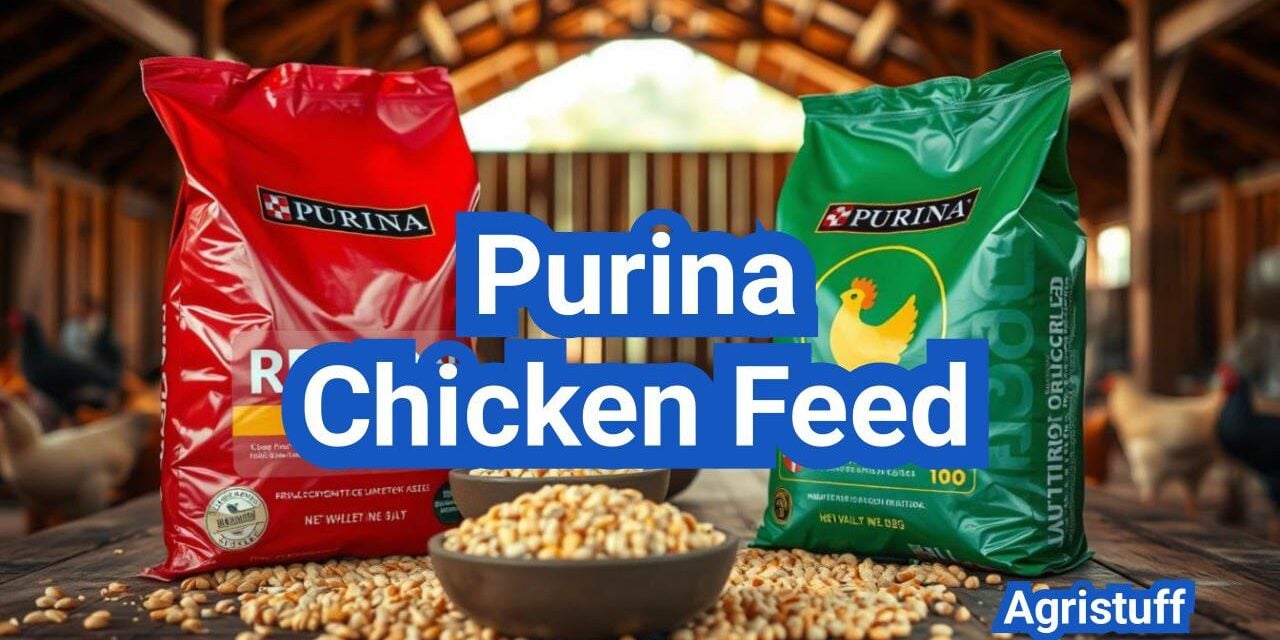
This guide helps shoppers compare options and pick the best bag for their flock. It explains how nutrition supports egg output, what makes a complete diet different from supplements, and how to weigh product choices by need and budget.
Expect clear, practical advice on protein targets, shell-support nutrients, and what to read on a label. We also cover the shopping reality of store inventory and online “See Price in Cart” displays so you know when to buy.
This is a commercial-intent guide for real buying decisions as a review for Purina Chicken Feed Products . You will learn what matters most for eggs, when to use a supplement, and how flock age and laying status change your choice. Simple checklists and selection tips mean less guessing and more consistent feeding.
Key Takeaways
- Match the bag to flock age and laying status for best results.
- Look for protein and shell-support nutrients on the label.
- Understand complete rations vs. supplements before buying.
- Compare product price and availability, including cart pricing online.
- Use the checklist to pick the right bag today and feed consistently.
Why Purina Chicken Feed Works for Laying Hens, Eggs, and Flock Health

A truly complete layer diet supplies the steady nutrients hens need when production ramps up.
Complete nutrition vs. supplements
Balanced and complete means a ration formulated to meet daily needs without constant add-ons. A true complete ration delivers vitamins, minerals, amino acids, and energy so poultry stay steady through a laying cycle.
Supplements can fill gaps, but they don’t replace a consistent base. Relying on treats causes uneven egg quality.
Protein and egg production
Matching protein to demand matters. Purina Layena+ High Protein Layer Feed provides 19% protein to support an active laying lifestyle and steady egg output.
Protein is part of a broader nutrition profile that preserves body condition while hens produce almost daily.
Strong shells matter
The Oyster Strong System blends oyster shell, vitamin D, and manganese to build durable shells. Good shells mean fewer cracks and fewer losses.
“Shell quality affects both egg usability and flock resilience.”
- Consistent base diet keeps eggs predictable.
- 19% protein aids peak production.
- Oyster + minerals support strong shells and hen health.
Purina chicken feed product lines and standout features to compare

Compare product lines by what they solve: egg quality, protein level, shell support, or convenience for mixed flocks.
Layena+ High Protein Layer Feed overview
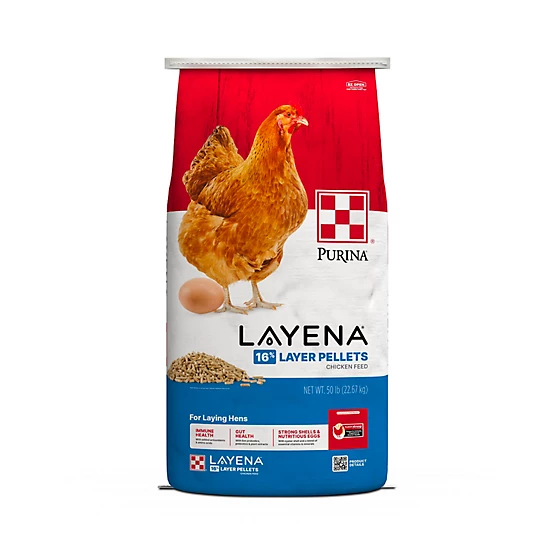
Layena+ is a dedicated layer product designed as a balanced, complete ration. It targets laying birds with steady nutrients so eggs remain consistent.
Why 19% protein helps active layers
At 19% protein, this layer option supports high daily output and helps hens keep body condition during peak cycles. That level reduces nutrient shortfalls when production rises.
Black soldier fly larvae in the pellet
Pellets include black soldier fly larvae as a practical protein source. Larvae offer a “bug” taste chickens seek and use less land per pound of protein than some traditional sources.
Oyster Strong System | Purina Chicken Feed
The Oyster Strong System blends oyster shell, vitamin D, and manganese. Together they promote strong shells and fewer cracked eggs, improving overall flock health.
No added antibiotics or hormones
Labels stating no added antibiotics or hormones reflect formulation choices buyers want. Note: federal rules already prohibit added hormones in poultry products.
Organic layer feed considerations | Purina Chicken Feed
Organic layer products include antioxidants for immune health and meet USDA organic rules—no synthetic pesticides, fertilizers, or GMOs—while still offering shell support.
All-flock (20% “flock raiser”) approach | Purina Chicken Feed
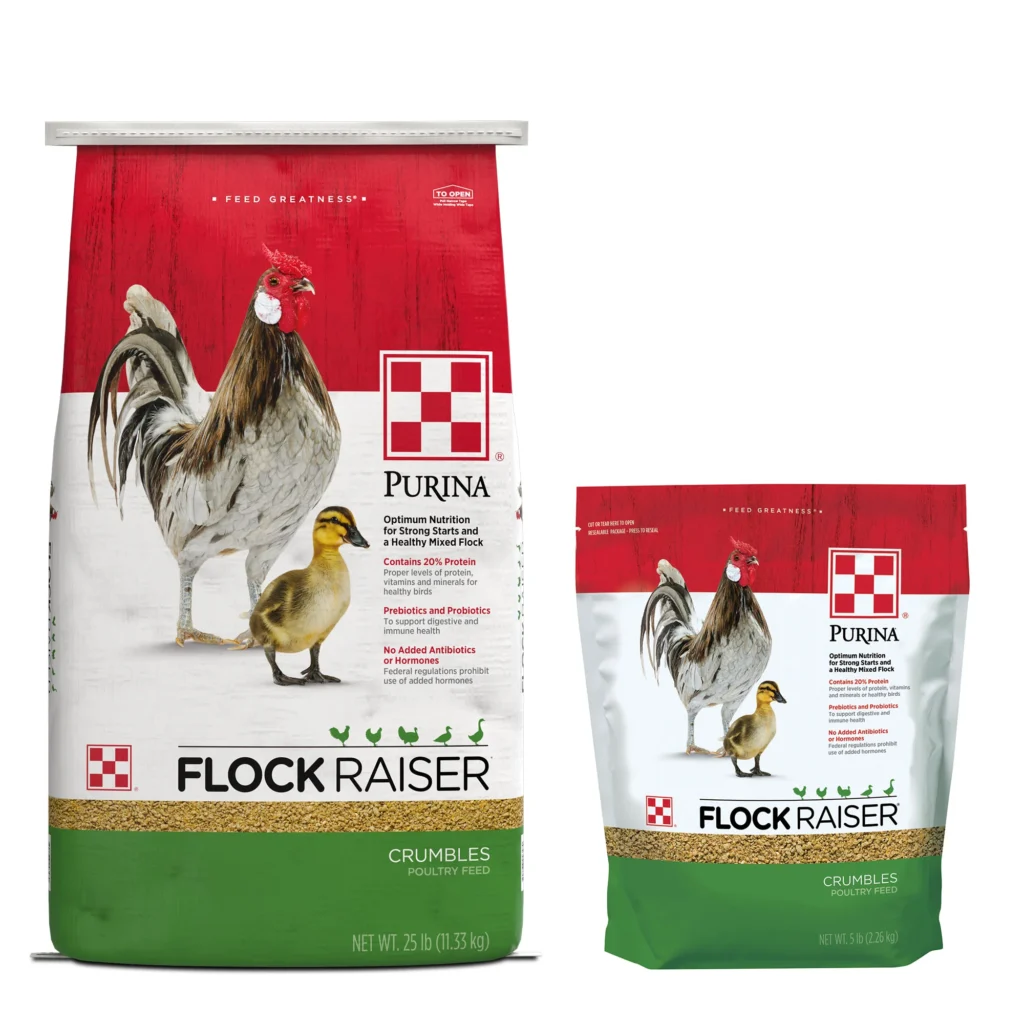
A 20% all-flock ration suits mixed-age or mixed-purpose poultry where one bag simplifies management. Offer free-choice oyster shell for layers so only birds needing extra calcium take it.
- Compare by purpose: layers vs. all-flock.
- Check protein target to match production goals.
- Verify shell support (Oyster Strong or separate oyster shell).
How to choose the right bag: age, laying status, freshness, and your store’s stock

Start with life stage—match starter vs. adult rations to avoid nutrient gaps. Chicks and pullets need higher protein and different vitamins than mature layers.
If hens are actively laying, pick a layer product that supports egg output and shell strength. For mixed-age flocks, a 20% all‑flock option plus free-choice oyster shell keeps management simple.
Freshness checklist: look for a mill date and aim for bags milled within about two months. Avoid sacks stored in damp sheds or hot areas; poor storage degrades nutrition and invites pests.
If the product you want is old on the shelf, choose the freshest acceptable product available. A short-term option can be an unmedicated chick starter while you wait for restock.
- Confirm life stage: starter for young birds, adult layer for laying hens.
- Match protein and mineral levels to your production goals.
- Check mill date and storage; avoid visibly degraded bags.
- Verify online signals: add to cart to reveal price or call the store for local pricing.
| Situation | Recommended product | Key nutrition point | Shopping tip |
|---|---|---|---|
| Pullets (growing) | Starter/grower | Higher protein, balanced vitamins | Check mill date; choose freshest bag |
| Active layers | Layer formula | Calcium & shell support plus 16–19% protein | Prioritize layer product in stock |
| Mixed-age flock | All‑flock 20% protein | Moderate protein; offer oyster shell separately | Buy freshest available, confirm price in cart |
| Preferred product out of stock/old | Unmedicated chick starter (short term) | Provides nutrition while awaiting restock | Use temporarily; transition gradually |
Decoding online signals: “See Price in Cart” or “See Price in Checkout” means the final price appears later. “Call Store for Price” is store-specific. Always confirm the selected store in your cart before completing checkout.
Quick pick-the-bag rule: Match product to life stage, verify freshness, confirm price in cart, and buy the freshest in-stock option that meets your protein and laying needs.
At The End of: Purina Chicken Feed Review

The best bag is the one matched to bird age, laying intensity, and freshness at purchase.
Choose a product that fits your flock’s life stage, supports strong shells, and was milled recently. That alignment gives the most predictable egg results and saves time troubleshooting.
Compare protein level to production goals. Decide if a dedicated layer ration or a 20% all‑flock option is right, and confirm whether shell‑support nutrients are included or need to be offered separately.
Stick with a complete ration and make diet changes slowly to protect bird health and keep egg quality steady. Check mill dates, storage condition, and online pricing or store availability before you buy.
Next step: pick the best‑fit bag available today, confirm details at checkout, and watch shell quality and production to adjust as needed.
FAQ
What does “balanced and complete feed” mean for laying hens?
A balanced and complete ration supplies all essential nutrients—protein, vitamins, minerals, and energy—so hens meet daily needs without extra supplements. This simplifies feeding, supports steady egg production, and reduces the risk of nutrient gaps that cause poor shell quality or lowered lay rates.
How much protein do active layers need for consistent egg production?
Active layers typically do best on feed around 16–19% protein depending on age and production level. Higher protein supports egg formation and body maintenance during heavy lay, while lower levels suit less active or mature flocks. Match protein to your flock’s stage to avoid excess weight gain or nutrient shortfalls.
What role does oyster shell play in shell strength?
Oyster shell supplies coarse calcium that mature hens need to form strong shells. It’s offered free-choice or mixed depending on the program. Combined with vitamin D and trace minerals like manganese, it helps produce firm shells and reduces thin or misshapen eggs.
Can I use an all-flock or flock raiser feed for laying hens?
All-flock feeds at about 20% protein can work short term but may lack targeted calcium levels that layers need for optimal shell strength. If using an all-flock product, provide free-choice oyster shell and monitor egg quality closely.
Why check mill dates and storage conditions when buying feed?
Freshness affects nutrient stability and palatability. Mill dates show production timing; choose the most recent. Avoid bags stored in damp or hot areas because heat and moisture degrade vitamins, promote mold, and reduce feed value.
What does “no added antibiotics or hormones” mean on a label?
That claim means the manufacturer did not include antibiotics or growth hormones as ingredients. It does not guarantee absence of cross-contamination from other operations or that the diet lacks other medications unless a medicated label is present. Always read the full ingredient list and guaranteed analysis.
Are organic layer feeds worth considering for flock health?
Organic rations follow USDA organic rules and often include plant-based proteins, no synthetic additives, and added antioxidants for immune support. They can be beneficial, but cost, availability, and verifying organic certification are important factors.
What if the bag I want is older—what short-term alternative is safe?
If your preferred layer bag is older or unavailable, an unmedicated starter or grower feed can serve briefly, but you should transition hens to a proper layer diet quickly and provide supplemental calcium. Avoid prolonged use of non-layer feeds for high-producing hens.
How do online shopping signals like “See Price in Cart” affect purchasing?
Phrases such as “See Price in Cart” or “Call Store for Price” indicate final pricing or availability is confirmed at checkout or by the retailer. Expect possible price adjustments, limited stock, or regional differences. Calling the store can save time and confirm freshness and bag sizes.
What are the benefits of insect-based ingredients like black soldier fly larvae in pellets?
Insect meals offer high-quality protein and mimic hens’ natural foraging diet. They can improve palatability and amino acid balance. Check the product label for inclusion rate and consistent sourcing to ensure reliable nutrition.
How often should I offer oyster shell separately versus mixing it into the ration?
Offer coarse oyster shell free-choice for adult laying flocks so hens self-regulate calcium intake. Mixing it into the ration can work but risks over- or under-supplying individuals. Free-choice helps meet varying needs through the lay cycle.
What trace minerals besides calcium help shell quality?
Trace elements like manganese, zinc, and copper, along with vitamin D3, play key roles in shell formation and eggshell membrane integrity. A complete layer diet will include these at levels proven to support strong shells and overall reproductive health.
Can one bag work for a mixed flock?
In many backyard setups, purina chicken feed formulated for mixed poultry can simplify feeding when you have growers, roosters, and multiple poultry types sharing space. The tradeoff is that you may still need a separate calcium source for active layers, because “one bag” rarely covers every life-stage perfectly without supplements and smart feeder management. Mixed-flock feed positioning (Purina Flock Raiser)
Do I need a medicated starter feed?
Whether purina chicken feed should be medicated depends on your risk factors: wet litter, crowding, repeated exposure in the same brooder space, and stress events can raise coccidiosis pressure. If you use medicated starter, follow the label directions precisely and pair it with dry bedding and good sanitation so medication isn’t doing all the work. Medicated starter product information
What should I do if eggshells are thin?
If you see thin shells while using purina chicken feed, first confirm that layers are eating enough complete layer ration and not filling up on scratch, kitchen scraps, or pasture alone. Next, provide a separate calcium source (like oyster shell) for laying hens and check that water access and daylight routine support steady intake. Shell quality support practices for layers
How long can I store feed safely?
As a rule of thumb, purina chicken feed should be stored cool, dry, sealed, and rotated so you’re not feeding stale or moisture-damaged product. If you can smell rancidity or mustiness, see clumping, or notice reduced appetite, treat it as a storage failure and tighten your container, humidity control, and purchase size. Feed storage and pest prevention basics
Conclusion of: Purina Chicken Feed
Why choosing the right bag matters
If you’re shopping for purina chicken feed, the “best” bag depends less on brand loyalty and more on matching life stage, purpose (eggs vs. growth), and how you manage treats and supplements. The right match supports steady intake and reduces the risk of thin shells, slow growth, or wasted feed from picky eating and spillage. Purina Chicken Feed overview
This guide is built for U.S. backyard and small-farm flocks, where a single coop might include mixed breeds, mixed ages, and sometimes mixed species, all with different nutrient priorities. With purina chicken feed, you can get very specific, but you’ll get the best results when your feeder setup, water access, and storage habits support consistent daily eating. Penn State small-scale egg production basics
Start with the feed tag (not the front of the bag)
Before you compare purina chicken feed products, read the feed tag like you would a “nutrition facts” panel: it tells you what’s guaranteed, what species and life stage it’s intended for, and how it should be fed. That matters because animal feed labels and claims must align with how the product is intended to be used.
When you’re evaluating purina chicken feed, focus on the guaranteed analysis (especially protein and, for layers, calcium) and the feeding directions, then treat “extras” as secondary. A simple way to stay objective is to use a feed-label guide that explains common terms and how guarantees appear on tags.
Purina product lines explained (plain English)
For day-old chicks through the grow-out period, purina chicken feed often starts with a complete chick ration that’s designed to be the only feed you need (besides clean water). A starter/grower style product works best when you want steady, predictable development without having to “mix your own” nutrients. Purina Start & Grow product details
If you’re considering medicated starter options, purina chicken feed with an approved coccidiosis-prevention ingredient can be useful in higher-risk situations (stress, wet litter, high stocking density), but it still requires label-following and clean management. In most backyard settings, you’ll get the best outcome by pairing medicated choices with dry bedding, good ventilation, and not over-crowding. Purina Start & Grow Medicated details
Some keepers prefer a different “starter/grower” line for laying-type chicks, especially when they want a straightforward feed that bridges from hatch to near laying age. In that case, purina chicken feed marketed as a starter/grower for future layers can be a clean fit, as long as you don’t jump to high-calcium layer feed too early. Purina Home Grown Starter/Grower details
For a single-bag approach that can cover mixed backyard poultry, purina chicken feed designed for “all flock” use is commonly chosen when you have roosters, growers, and multiple poultry types together. This approach can simplify feeding stations and reduce accidental over-calcium exposure to non-layers when managed thoughtfully. Purina Flock Raiser Crumbles details
One of the biggest “right bag” moments with purina chicken feed is the transition to lay, when pullets shift from growth to egg production and their nutrient needs change quickly. A smart transition is less about an exact birthday and more about being ready 2–4 weeks before first eggs, so the body has time to build calcium reserves and adapt to a layer routine. Penn State guidance on transition to lay
For active layers, purina chicken feed in a dedicated layer formula is the “home base” that should make up the vast majority of what the bird eats each day. If your flock free-ranges, you still want the layer ration to be the anchor so scavenging stays a supplement, not the main diet. Purina Layena 16% Layer Crumbles details
If you’re choosing a specialty layer bag, purina chicken feed options with added features (like omega-3 positioning or higher protein) can make sense when your flock’s goals are specific and your management supports consistent intake. The key is to treat “specialty” as a targeted choice, not a blanket upgrade, and to track results (shell quality, body condition, lay rate) for 2–4 weeks before deciding it’s working. Purina Layena +Omega-3 details
High-energy growth rations are a different category, and purina chicken feed formulated for broilers is built around fast gain, muscle development, and efficient conversion when you’re raising meat birds. If you feed a broiler ration to a laying flock long-term, you can end up with birds that are over-conditioned, so keep “meat bird” bags tied to that specific goal. Purina Meat Bird Crumbles details
How to pick the right bag (a practical decision process)
Step 1 is to define what success looks like for your flock, because purina chicken feed choices change if you’re optimizing for peak eggs, slow-and-steady growth, show birds, or broiler efficiency. Write down your bird types, ages, and whether you need “one ration for all” or separate feeders for different groups. Feeding chickens for egg production (PDF)
Step 2 is to match life stage, because the biggest avoidable mistake with purina chicken feed is giving high-calcium layer feed to birds that aren’t laying (young pullets, roosters, many meat birds). If you keep mixed ages, use physical separation (two feeders, different heights, or timed access) so each group reliably eats the right ration. Penn State management requirements for laying flocks
Step 3 is to choose the feed form that your birds actually eat well, because purina chicken feed can perform differently in the real world depending on whether you use crumbles, pellets, or mash. Crumbles often reduce selective eating compared with mash, while pellets can reduce fines and spillage if your feeder is set up correctly. Purina Flock Raiser Pellets details
Step 4 is to plan for the season, since purina chicken feed results can change in hot weather when birds eat less and drink more. Heat-stress management is often the difference between “the feed didn’t work” and “the flock wasn’t comfortable enough to eat,” so shade, airflow, and cool water access matter as much as the bag choice. Penn State hot weather poultry management
Step 5 is storage and handling, because purina chicken feed is only as good as its freshness when it reaches the feeder. Keep feed dry, sealed, and rotated (first-in, first-out), and treat any musty smell, clumping, or visible mold as a reason to stop feeding that batch. FDA overview of mycotoxins
Quick checklist of Purina Chicken Feed
- Confirm each group’s life stage (chicks, growers, layers, broilers) before you buy.
- Pick “complete feed” as the base; treats should stay a small percentage of intake.
- Use a dedicated layer ration only for birds actively laying eggs.
- If you have mixed ages, set up two feeders or controlled access so no group is “wrong-fed.”
- Choose crumbles or pellets if mash leads to picky eating or wasted fines.
- Keep water constant, clean, and easy to access; intake drives feed intake.
- In hot weather, prioritize airflow and cool water so birds keep eating.
- Store feed sealed and dry; rotate bags and avoid buying more than you can keep fresh.
- Track results for 2–4 weeks: shell quality, body condition, and consistent lay.
- Adjust treats first before switching bags if eggs or growth dip unexpectedly.
Common mistakes to avoid for Purina Chicken Feed
Most “feed problems” are really management problems, so purina chicken feed works best when you remove the usual sabotages like excess treats, poor storage, and inconsistent access. Use this list as a quick troubleshooting sequence before you blame the bag. UMaine guidance on vermin control around feed
- Switching feeds too often: Give any change 10–14 days unless there’s a safety issue.
- Overfeeding scratch/treats: Keep treats limited so complete feed stays the nutrient anchor.
- Feeding layer ration to non-layers: Separate roosters, pullets, and broilers from high-calcium rations.
- Letting birds “run out” daily: Inconsistent access can reduce lay and increase bullying at feeders.
- Storing feed in humid areas: Moisture increases spoilage risk and reduces palatability.
- Ignoring feeder height and design: Poor setup increases waste and makes your cost-per-egg worse.
- Blaming protein for every problem: Thin shells are often calcium, vitamin D, or intake consistency issues.
- Not adjusting for heat: Comfort and water access often determine whether birds eat enough.
Costs and ROI snapshot of Purina Chicken Feed
When people compare purina chicken feed costs, the most useful number isn’t the bag price—it’s the cost per pound of complete feed actually consumed after waste. Feed costs track grain markets, so your local price can swing by region, season, and retailer, especially for specialty or smaller-bag formats. USDA ERS feed grains overview
A practical way to budget purina chicken feed is to calculate “bag-days”: estimate how many pounds your flock eats daily, then divide the bag’s pounds by that number to get how long it should last. Your real ROI comes from reducing waste (better feeders, fewer fines, less scratch) and protecting production (consistent lay, fewer shell issues) more than chasing a “magic” formulation. FDA overview of chemical contaminants in animal food
Final thought
The simplest way to win with purina chicken feed is to pick the bag that matches your birds’ life stage and your real-world management, then make intake easy: clean water, comfortable housing, and a feeder setup that reduces waste. Track one change at a time, and you’ll know quickly whether to adjust treats, feeding access, or the bag itself. Transition-to-lay reminder checklist
Sources & References
- Purinamills Website
- Purina Flock Raiser Pellets (product details)
- Purina Farm to Flock 18% Grower Feed (product details)
- Purina Farm to Flock 18% Layer Hen Food (product details)
- Purina Layena High Protein 19% (product details)
- Purina Layena +Omega-3 (product details)
- FDA: Mycotoxins overview
- FDA: Chemical contaminants in animal food
- Penn State Extension: Management requirements for laying flocks
- Penn State Extension: Hot weather management of poultry
- Penn State Extension: Small-scale egg production (organic and conventional)
- UMaine Extension: Vermin control around livestock feed
- USDA ERS: Feed grains sector at a glance
- Feeding chickens for egg production (eXtension PDF)