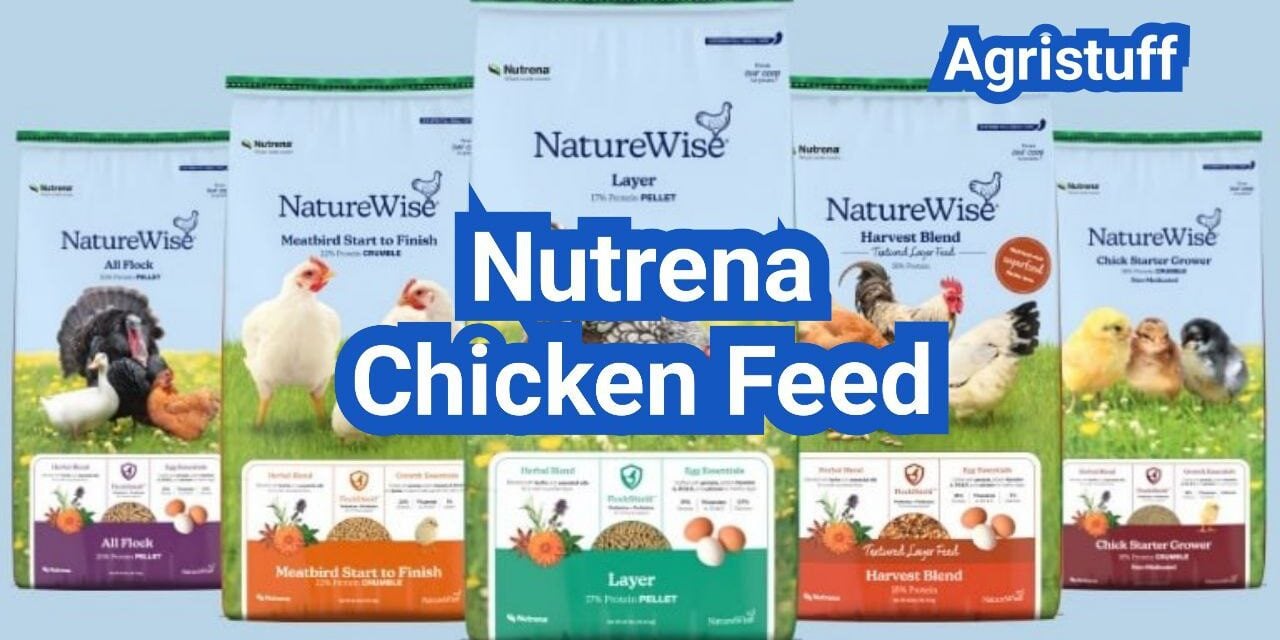
This practical guide walks U.S. backyard keepers through the main NatureWise formulas and explains what’s in the bag. We focus on real choices: which product to buy, when to switch, and how to use each ration for best results.
Readers will get clear buying paths: start birds on a chick starter ( Chicken Feed ) , move through starter grower stages, then pick a layer or all-flock option as birds mature. We compare life-stage feeds versus mixed-flock approaches and cover common backyard habits like treats, scratch, and mixed-species coops.
This is a commercial, day-to-day guide — not a deep nutrition textbook. We translate Nutrena’s field test notes and real keeper feedback into simple steps you can use in your coop. Early nutrition sets the foundation for growth, egg production and quality, and long-term productivity, so those first choices matter.
By the end you will know how to read labels, weigh protein and form factor (crumble vs pellet), manage calcium around lay, and choose the right chick starter grower for your flock’s goals.
Key Takeaways
- Nutrena Chicken Feed Review: We review NatureWise formulas and practical use cases for U.S. flocks.
- Follow life-stage feeds: chick starter → starter grower → layer/all-flock.
- Early nutrition influences growth, shell strength, and egg output.
- Learn label basics: protein targets, crumble vs pellet, and calcium timing.
- We translate field tests and keeper reports into simple feeding steps.
What to Expect From Nutrena NatureWise Poultry Feed in Today’s Backyard Flocks

When backyard keepers move to a higher-quality ration, the results tend to be steady growth and better eggs rather than instant miracles.
Realistic gains include more consistent intake, steadier weight gains, and improved egg traits — firmer shells, more consistent size, and often deeper yolk color. These outcomes show best when the product is used as a sole diet or close to it, rather than heavily diluted with scratch and random treats.
Early on, chicks often show brighter activity, cleaner plumage, and predictable weekly gains. As birds hit key laying chickens weeks milestones, expect a steadier laying cadence and fewer shell problems.
- Mixed flocks: an all-flock option simplifies feeding, but calcium timing matters for layers.
- Hidden wins: better digestive consistency and a strong immune system often translate to less mess and more vigor.
- Timeline reality check: measure changes across several chickens weeks age, not days.
This section sets the stage for the rest of the article, which maps specific formulas to flock age, goals, and the practical steps for a smooth diet beginning or sole diet beginning strategy.
Nutrena Chicken Feed Formulas by Life Stage and Goal

Pick a formula that matches bird age and the goal. That choice keeps growth predictable and protects egg quality later on.
Foundational option for chicks and pullets
NatureWise Chick Starter Grower is the base for new birds. A proper chick starter grower supplies higher protein and key amino acids for tissue building and steady gains.
At this stage, consistency matters more than treats. Too much calcium or random snacks dilutes nutrients and can harm young kidneys.
Formats and starter grower protein choices
Starter grower protein supports muscle and organ development. Keep protein levels steady to improve feed efficiency and uniform growth.
Protein crumble is easier for very young birds. Older pullets often accept a protein pellet depending on your feeder style and waste control needs.
Layer and mixed-flock options
Switch to a 16% layer feed at the onset lay—signs include comb color, squat behavior, and first eggs. Timing avoids excess calcium when birds are still growing.
All Flock 20% works for mixed-age or multi-species households, but layers still need separate calcium access to meet laying needs.
| Keeper Situation | Recommended Product | Why It Works | Notes |
|---|---|---|---|
| I have chicks | NatureWise Chick Starter Grower | Higher protein, balanced amino acids | Limit scratch; avoid extra calcium |
| Pullets nearing lay | Starter grower → 16% layer feed | Support tissue build, then production | Switch at age onset lay cues (~18+ weeks) |
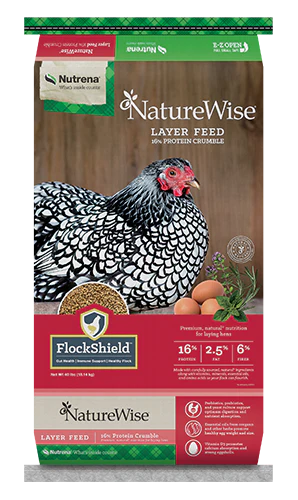
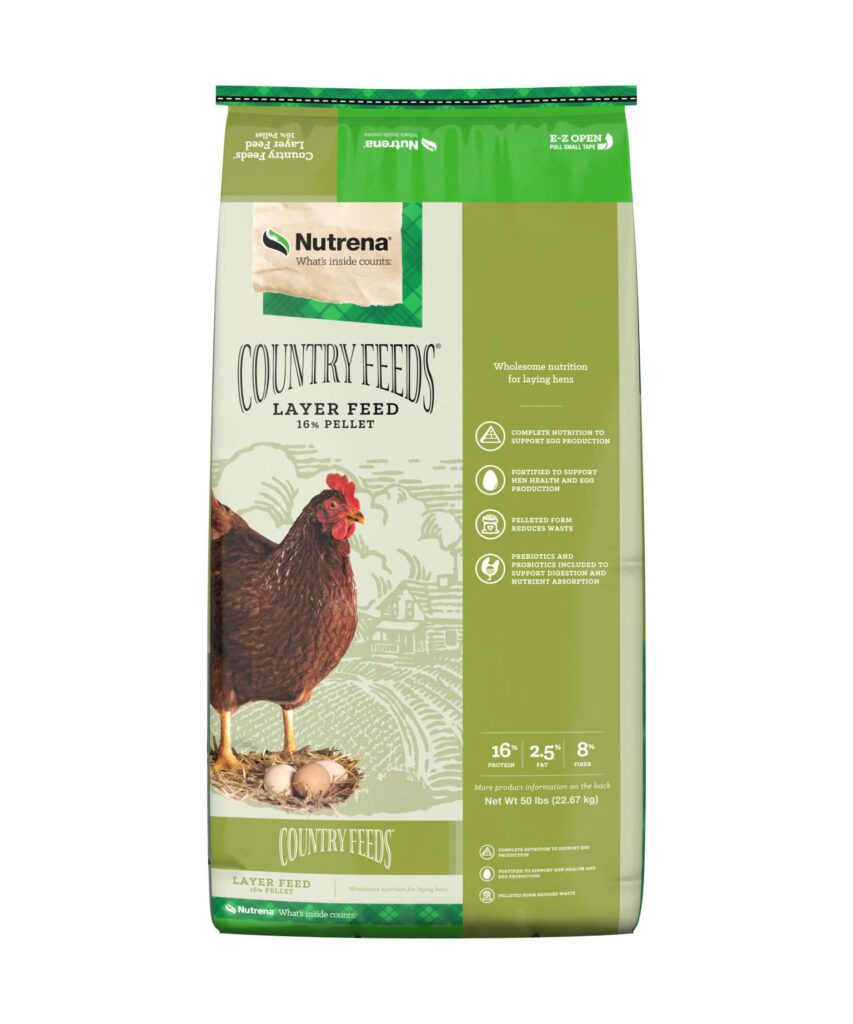
| Laying hens | 16% layer feed | Added calcium for shell strength | Offer grit and extra calcium if needed |
| Mixed flock | All Flock 20% | Flexible protein for varied ages | Give layers separate calcium source |
Sole diet beginning works when the bag is the primary ration. Limit treats so vitamins, minerals, and protein stay consistent and deliver predictable results.
Ingredients and Nutrition Profile: What’s Inside Counts

Understanding the ingredient mix helps you translate a bag label into real-world results for your flock.
Protein and amino acids
Protein and amino acids build muscle, feathers, and organs. They also power metabolic function so birds convert rations into steady growth and good body condition.
Carbohydrates from grains
Grains supply most daily energy. Carbohydrates fuel activity, thermoregulation, and routine growth—critical when birds forage or face temperature swings.
Vitamins minerals and supporting ingredients
Vitamins minerals form bones, blood cells, and support muscle and energy use. Look beyond crude protein: the ingredients along vitamins tell you whether birds can use that protein efficiently.
FlockShield™ add-ins and herbal components
This proprietary mix blends pre- and probiotics, yeast culture, and herbs essential oils. The herbal blend and essential oils aim to support gut balance and resilience without medical claims.
- Why it matters: amino acids = steady feathering and tissue repair.
- Carbohydrates = fuel for daily work and growth.
- Vitamins minerals + herbal blend = superior nutrient absorption and optimal digestion.
Choose a formula that pairs macro nutrition with digestion-supporting systems if you want to support strong immune system function and consistent output.
Performance Proof From Nutrena’s Field Test Data

Real-world trial data give a clear picture of how early rations affect egg output. An independent farm-style comparison followed pullets from hatch through their first 14 weeks of lay to show practical differences shoppers can use.
Study setup and timeline | Nutrena Chicken Feed
The trial started with 84 Speckled Sussex pullets from one hatchery. Two groups of 42 were raised under identical conditions at an innovation campus. One group received the chick starter grower, the other a leading national starter.
Birds were reared through the 18 weeks age mark and then moved to a Wisconsin farm. All hens were placed on the same 16% layer ration at lay onset and monitored for 14 weeks.
Key results that matter
Starting on the NatureWise starter grower was associated with a clear production advantage: 499 eggs vs. 205 eggs over the 14-week laying trial. That equals 34.3 eggs/week compared with 11.6 eggs/week.
Report highlights included larger eggs, stronger shells, fewer deaths, and heavier birds in the group started on the chick starter grower.
Value and label context | Nutrena Chicken Feed
Over the 18-week starter period, the NatureWise group cost $1.35 less per bird than the competitor. Remember that tags list figures like %max crude and specific lines such as crude protein6.0 or protein6.0 %max, but real performance comes from the full formula and management.
“A controlled comparison offers practical proof, but correct transitions at weeks age onset still matter.”
- Same breed, same hatch, split groups — a clean comparison.
- Starter period through 18 weeks age; laying observed for 14 weeks after production began.
- More than double the eggs and better quality metrics for the starters started on the optimized chick starter grower.
Next: learn how to use those results in your coop with correct transitions around weeks age onset and calcium management.
Best Use Cases and Feeding Transitions for Real-World Coops

The key to smooth transitions is matching diet changes to clear biological cues, not calendar pressure. “Weeks age” refers to the bird’s age in weeks and signals digestive readiness and intake shifts. Use that cue to decide when to alter a starter grower regimen.
Practical starter timeline
Keep a consistent chick starter or chick starter grower base through early growth. Only adjust when the flock’s behavior and weight gains match expected milestones for their weeks age.
Low-stress transition strategy
Mix new ration slowly over 7–10 days. Start with 10–25% new product and raise the share every 2–3 days. This reduces refusals and digestive upset.
Mixing All Flock at 2–3 weeks
Some keepers begin blending an All Flock 20% into starter at 2–3 weeks as a gradual adaptation. This works in mixed-age or multi-species setups but use it sparingly and monitor intake.
Calcium and age onset lay management
Too much calcium can harm young kidneys, so delay high-calcium layer rations until clear age onset lay signs. If you run an all-flock base, offer oyster shell free-choice only to layers so growers avoid excess calcium exposure.
When grower protein crumble helps
Grower protein crumble often boosts early appetite and reduces selective eating. It fits feeders that waste pellets and helps uniform intake in pullets learning to eat solid rations.
| Situation | Action | Why it works |
|---|---|---|
| 2–3 weeks mixed-age flock | Blend All Flock 20% with starter (10–25%) | Gradual adaptation; eases social dietary shifts |
| Age onset lay approaching | Switch to layer ration or offer calcium free-choice | Prevents kidney stress from excess calcium |
| Messy feeders that reject pellets | Use grower protein crumble | Less waste, better early intake |
Read the tag for lines like crude fiber 2.5 or fiber 2.5 crude when predicting droppings during changeovers. Finally, favor a sole diet beginning during transitions—fewer treats make it easier to spot what works and avoid setbacks.
How to Choose the Right Bag: Comparing Labels, Proteins, and Practical Fit

Pick a bag that matches your birds’ biology and your daily routine — that simple match prevents most problems.
Reading the tag is faster than it seems. Look first for crude protein6.0 %max, crude fiber, and crude fata. Protein supports growth; fiber affects droppings and gut flow; fat supplies energy and satiety.
Quick label scan
- Match life stage (starter grower protein vs layer feed) first.
- Compare protein targets like 18.0 crude protein6.0 or protein6.0 %max crude next.
- Check fiber (look for fiber 2.5 crude or crude fiber 2.5) and crude fata numbers for handling and droppings.
Format and goals | Nutrena Chicken Feed
Choose protein crumble for very young or picky eaters and some feeder types. Pick protein pellet to cut scatter and waste for adults. For growth, favor starter grower protein; at onset lay switch to a proper layer feed.
Safety and mixed-barn notes
A veterinarian review of an All Flock tag showed no obvious hazards for horses or most other animals, but prevent cross-feeding and consult your vet for special cases.
| Decision | When to choose | Key tag values to check | Practical tip |
|---|---|---|---|
| Growth focus | Pullets, pre-onset lay | High protein, moderate fat | Pick starter grower protein and avoid high-calcium bags |
| Onset lay | Signs of lay within weeks | Balanced protein, added calcium | Switch to layer feed at onset lay cues |
| Mixed barn | Multi-species or multi-age | Moderate protein, check crude fata and crude fiber | Use all-flock plus separate calcium for layers |
Buying tip: buy the bag that matches the flock stage for the next 4–8 weeks to avoid mid-bag switches that upset intake.
At The End of: Nutrena Chicken Feed Review
A clear timeline tied to weeks age helps you pick the right bag and avoid mid-batch surprises. Start with a chick starter and move through the starter grower phase as birds reach development milestones.
NatureWise chick starter and the NatureWise chick starter grower showed strong lay gains in trials, with better shells and larger eggs tied to formula balance and FlockShield™ supports.
Choose a ration that promotes optimal digestion and superior nutrient absorption, limit treats during diet beginning, and keep transitions gradual. For mixed flocks, manage calcium separately so the immune system and gut stay steady.
Practical nudge: buy the bag that matches your flock’s current stage, run it consistently for several weeks age intervals, and judge results by steady intake and output.
FAQ
What age should I start a NatureWise chick starter grower as a sole diet?
Begin feeding a NatureWise chick starter grower from day one through the pullet phase. The starter formula provides balanced amino acids, vitamins, and minerals needed for early growth and strong immune system development. Monitor birds and switch when they reach the recommended weeks age for your chosen follow-up formula.
What’s the difference between a starter grower protein crumble and a pellet?
Crumbles are broken pellets that are easier for small beaks to eat and often reduce waste for young birds. Pellets suit older pullets and layers because they encourage slower consumption and can be more convenient in automatic feeders. Choose crumble for chicks and pellets for larger birds or when feed handling favors pellets.
How does crude protein and crude fat on the label affect growth and lay onset?
Crude protein supports tissue growth, feather development, and egg production; crude fat supplies energy. For starters, higher protein supports rapid growth, while layer formulas balance protein and calcium to support the age onset lay window. Read labels for crude protein and crude fat percentages to match life stage and goals.
Can I feed All Flock 20% protein across multiple ages and species?
All Flock 20% protein provides flexibility for mixed flocks and backyard keepers. It works well as a transitional or maintenance diet for many birds, but for peak laying performance or very young chicks, stage-specific options—like a chick starter or 16% layer—deliver optimal nutrients for those goals.
How do added pre- and probiotics, herbs, and essential oils benefit digestion and immunity?
Pre- and probiotics support a healthy gut microbiome, improving nutrient absorption and reducing digestive upsets. Herbal blends and essential oils can provide antioxidant and antimicrobial support, helping birds develop a stronger immune response and better feed conversion when included alongside balanced vitamins and minerals.
When should I mix feeds during a transition, and what ratio works best?
Start mixing a new feed at a low ratio (about 25% new to 75% old) over several days, increasing the new feed each day until fully switched. For transitions that begin at 2–3 weeks age, a gradual mix helps avoid digestive upset and encourages acceptance of the new formula.
How do I manage calcium around the onset of lay to protect young birds’ kidneys?
Avoid high-calcium layer rations before birds reach the appropriate weeks age for laying. Use a grower formula low in extra calcium until pullets approach the onset of lay, then transition to a layer feed and provide grit or oyster shell free-choice once laying begins to meet calcium needs safely.
What label numbers should I watch: crude protein, crude fiber, and crude fat?
Key numbers include crude protein (for growth and egg production), crude fat (energy content), and crude fiber (digestive efficiency). Lower crude fiber helps young birds digest nutrients better; appropriate fat levels support energy without excess. Compare these to life-stage recommendations when choosing a bag.
Will a NatureWise 16% layer formula improve egg size and shell strength?
A balanced 16% layer formula with correct calcium and phosphorus supports consistent egg size and shell quality. Combined with proper management—lighting, grit, and water—this formula helps hens reach and maintain productive laying performance during the onset lay window and beyond.
How does starter protein percentage affect long-term flock outcomes measured in trials?
Trials show that properly balanced starter proteins and nutrient blends can produce earlier productivity, larger eggs, stronger shells, and healthier birds with lower mortality. Adequate starter nutrition sets a foundation that often yields better feed conversion and value per bird over growth and laying periods.
Does nutrena chicken feed have a good option for baby chicks?
Yes—look for a complete starter/grower crumble as the sole diet early on, then change feeds based on development and onset of lay rather than guessing by age alone Overview of poultry feed options for chicks
Can nutrena chicken feed all-flock replace layer feed?
It can as a base ration for a mixed flock, but active layers usually need separate free-choice oyster shell to maintain strong shells and steady production All-flock formula context and calcium level considerations
What’s the practical difference between pellets, crumbles, and textured mixes in nutrena chicken feed?
Pellets reduce sorting, crumbles improve ease-of-eating for smaller birds, and textured feeds can increase palatability but require management to prevent picky eating Nutrena explanation of feed forms and how birds consume them
Is organic nutrena chicken feed worth it for backyard eggs?
It can be if organic inputs match your household priorities, but compare cost-per-pound and availability because organic compliance is a defined standard, not just a label claim Nature Smart Organic/Non-GMO layer crumble details
How long does nutrena chicken feed stay fresh once opened?
Freshness depends on humidity, pests, and storage discipline, so treat opened bags like perishable goods and prioritize sealed bins and fast rotation in warm or damp regions USDA guidance on protecting feed from contamination and pests
Conclusion of: Nutrena Chicken Feed Review
What this Nutrena review covers
If you’re comparing bagged rations for a backyard flock, this nutrena chicken feed review focuses on the practical stuff that affects results: life stage fit, feed form, calcium strategy, and how “extras” like probiotics or essential oils actually matter on a U.S. coop schedule Nutrena NatureWise overview and product lineup
Instead of treating any brand as “one-size-fits-all,” use this nutrena chicken feed framework to match a formula to your flock’s real constraints—mixed ages, seasonal stress, pasture time, and how much feed gets wasted in your feeder style Colorado State guide to practical feeding methods for small poultry flocks
How to read a chicken feed tag in the U.S.
The fastest way to judge nutrena chicken feed is the Guaranteed Analysis panel: protein, fat, fiber, and especially calcium range, because “layer” performance is often a calcium and intake issue more than a brand issue.
Next, scan ingredients for what your birds can’t sort around, because nutrena chicken feed in pellet or crumble usually reduces selective eating compared with textured mixes that encourage picking out the fun stuff first AAFCO explanation of “natural” as used on feed and food labels
Nutrena formula families at a glance
Most nutrena chicken feed decisions come down to whether you want a standard complete ration (often the simplest route) or a specialized line that targets a specific scenario like mixed flocks, free-range, soy-free, or feather recovery Nutrena product catalog for poultry feeds
If you prefer certified-organic inputs or need a Non-GMO option for household preference, nutrena chicken feed in the Nature Smart line is positioned for that use case, but the tradeoff is usually cost per pound and local availability Nature Smart Organic/Non-GMO layer pellet details
Starter and grower formulas: best fit by brooding setup
For brooder-to-coop growth, nutrena chicken feed in an 18% starter/grower crumble is designed to be the sole diet early on, which matters most when chicks can’t reliably balance grains, kitchen scraps, and “treats” NatureWise Chick Starter Grower 18% Protein Crumble (non-medicated)
If you’re raising unvaccinated chicks in a higher-risk environment (shared soil, older birds nearby, damp litter), nutrena chicken feed in a medicated starter can be a targeted tool—but only when you follow label directions and don’t stack multiple coccidiosis strategies blindly NatureWise Chick Starter Grower 18% Protein Crumble (medicated)
When you’re unsure whether medicated starter makes sense, look at your management first—dry litter, clean waterers, and avoiding crowding often lowers coccidia pressure more than switching nutrena chicken feed formulas alone Nutrena overview of chick feeds and medicated starter context
Layer formulas: protein, calcium, and egg quality
A common mistake is switching too early to a “layer” ration, so nutrena chicken feed works best when pullets move to layer feed around onset of lay rather than by calendar alone, with steady intake and consistent light exposure Mississippi State guidance on raising chicks and timing feed changes
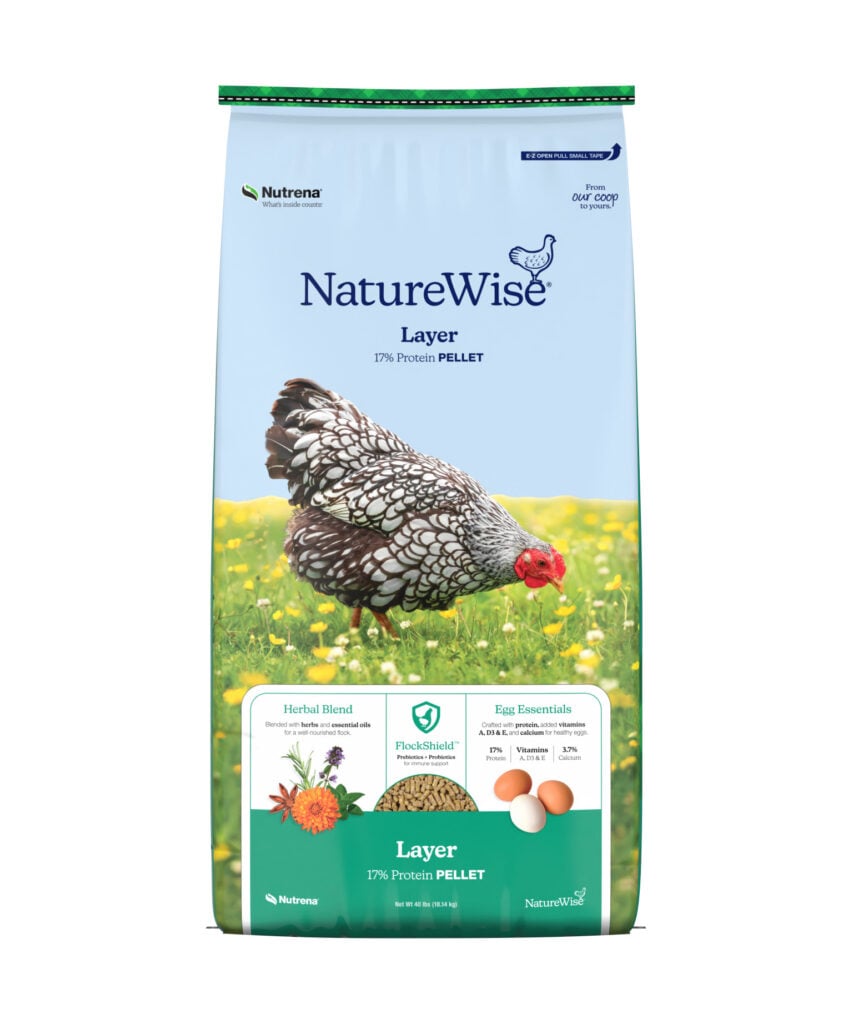
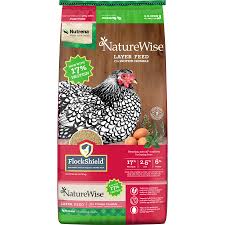
If your flock is mostly standard laying breeds and you want less sorting and less mess, nutrena chicken feed in a layer pellet is typically the cleanest “set it and forget it” option for daily production consistency NatureWise Layer 17% Protein Pellet product information
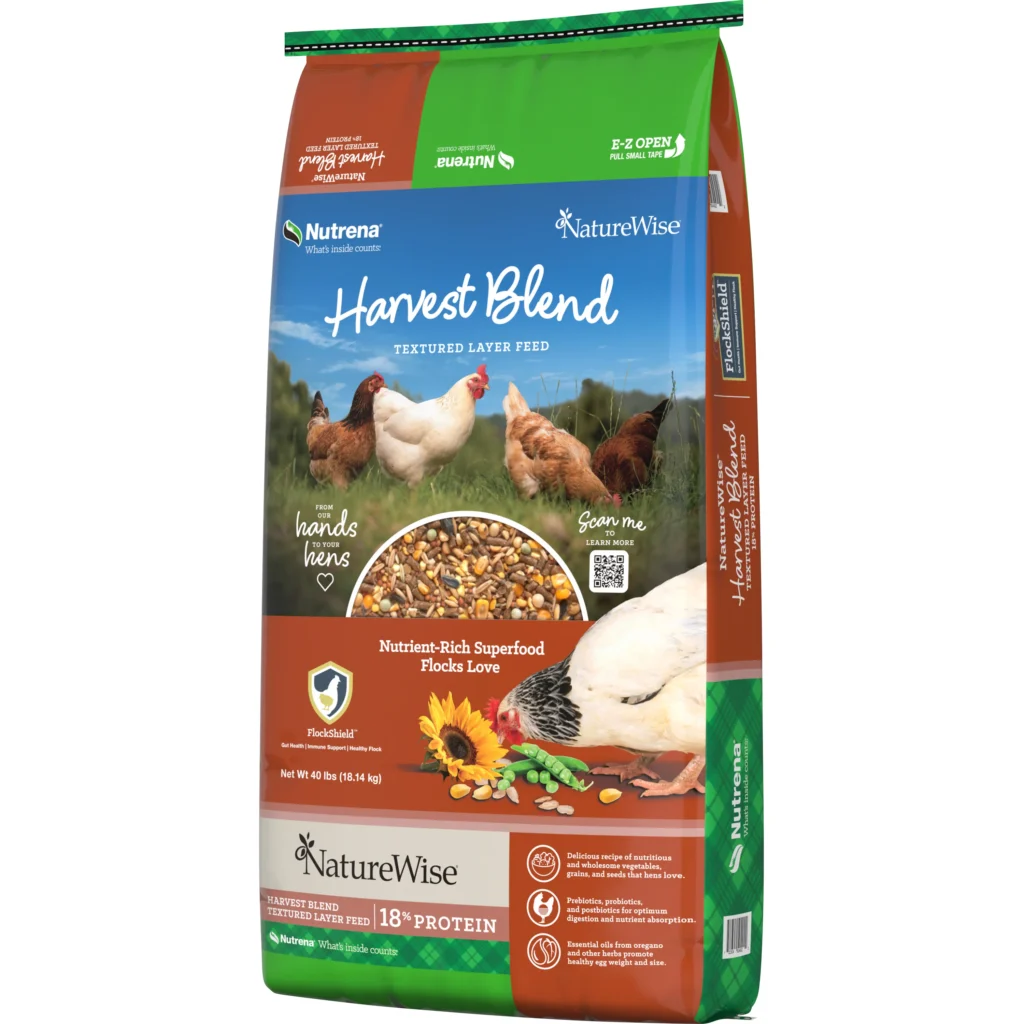
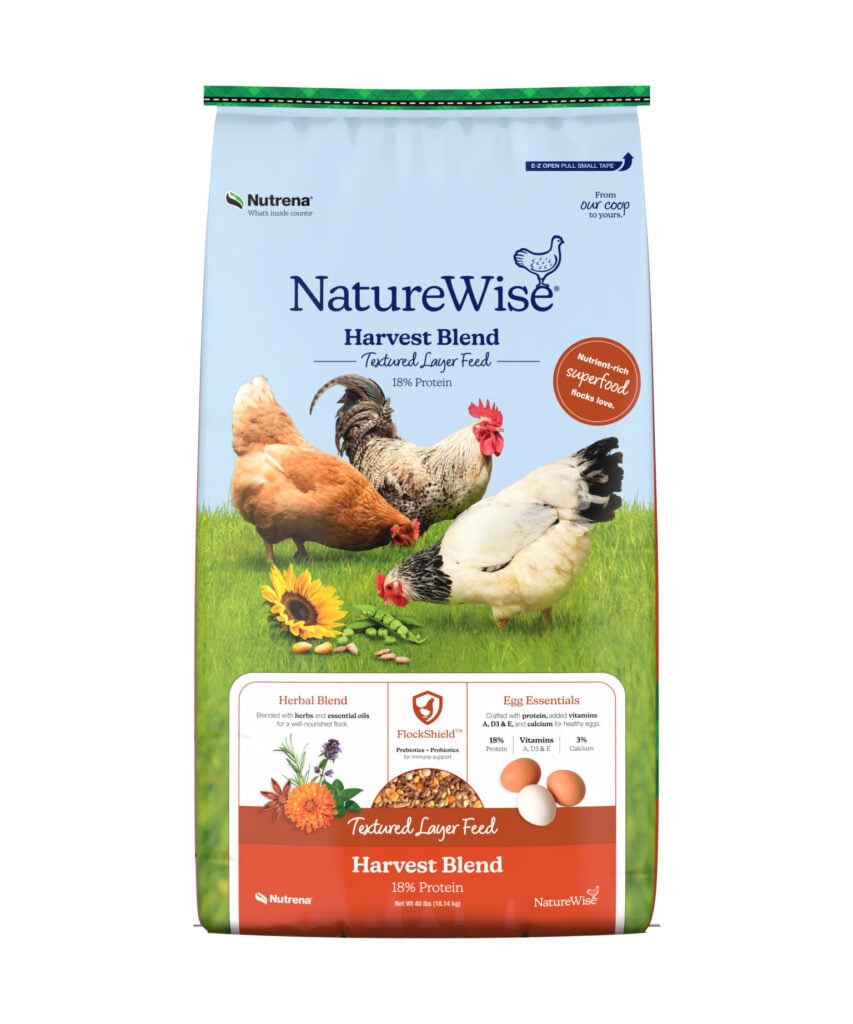
If you have picky eaters or you’re trying to keep birds eating through cold snaps or mild stress, nutrena chicken feed in a textured layer option can improve interest, but you’ll want to manage feeder depth so they don’t cherry-pick grains and leave the nutrient-dense pieces behind NatureWise Harvest Blend 18% Textured Layer feed details
Eggshell quality is where your calcium plan shows up fast, so nutrena chicken feed should be paired with a simple “shell check” routine and optional free-choice oyster shell if you see thin shells, rough shells, or frequent cracks Oregon State guidance on feeding layers and using oyster shell
Treats and scratch can quietly lower performance, so nutrena chicken feed usually does best when scratch is treated like a small training tool (limited and timed) rather than a daily replacement for a balanced ration
All-flock and mixed flocks: avoiding accidental high-calcium diets
For mixed species or mixed ages, nutrena chicken feed in an all-flock formula can simplify the routine, but the big decision point is whether your layers will get enough calcium without you providing it separately NatureWise All Flock 20% Protein Crumble (notably lower calcium)
A practical mixed-flock setup is to feed nutrena chicken feed all-flock as the base ration, then offer oyster shell in a separate container for active layers, because birds regulate extra calcium better when it’s free-choice than when it’s forced on the whole flock Alabama Cooperative Extension notes on layer feeding and daily intake
Feathering, stress, and molt: when “extra protein” helps
When feathers look ragged, don’t assume a magic bag fixes it, because nutrena chicken feed works best after you rule out parasites, overcrowding, and boredom-driven pecking that can outpace any nutrition tweak Peer-reviewed review on feed additives and management pressures in poultry nutrition
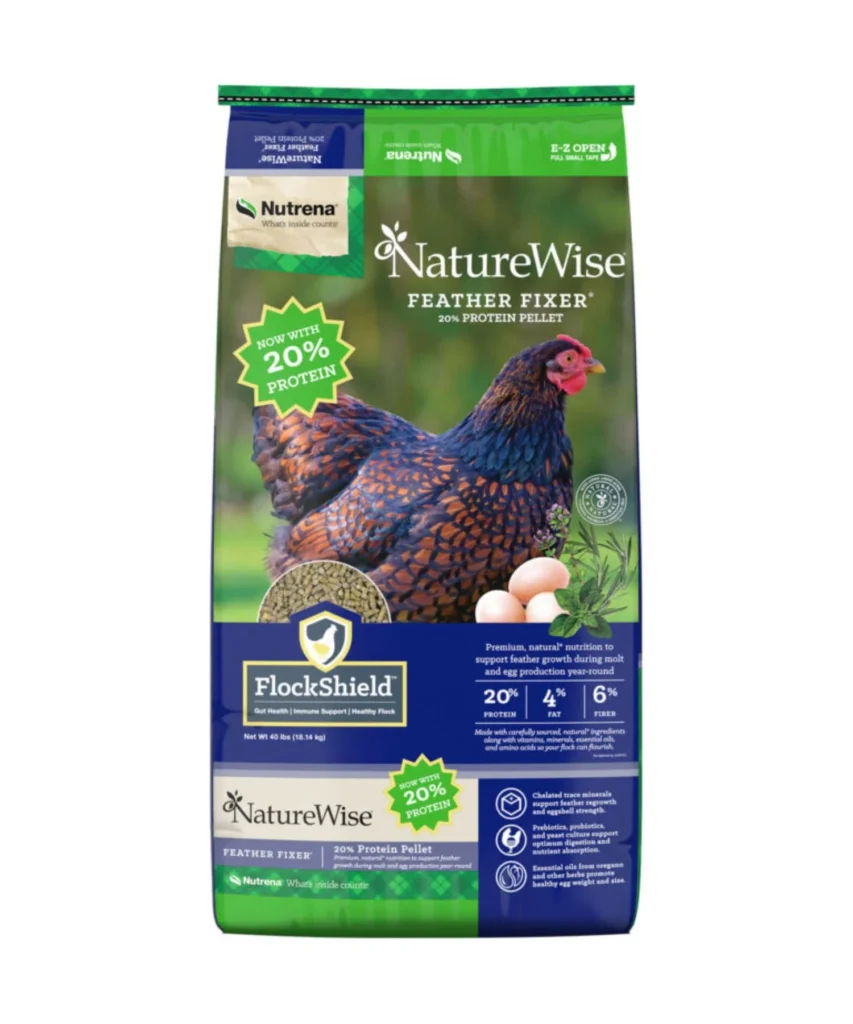
If your main issue is molt recovery or repeated feather breakage, nutrena chicken feed in a higher-protein feather-support formula can help when paired with stress reduction, steady protein intake, and consistent access to feed (not empty feeders) NatureWise Feather Fixer 20% Protein Pellet product information
Meat birds and fast growth: what to look for
For broilers, the goal is efficient growth with fewer nutrition gaps, so nutrena chicken feed in a start-to-finish meatbird crumble can simplify the schedule when you don’t want to manage multiple phase bags NatureWise Meatbird Start to Finish 22% Protein Crumble details
If you’re balancing growth with pasture access, nutrena chicken feed should remain the “complete” anchor while pasture and grains act as supplements, because growth rate, body condition, and processing weights shift quickly when birds fill up on lower-protein extras UC Agriculture & Natural Resources overview of poultry rations by stage
Ingredients and additives: what matters and what’s marketing
Most nutrena chicken feed formulas rely on familiar building blocks—grains for energy, plant protein for amino acids, fats for calories, and a vitamin/mineral premix—so your real “ingredient win” is consistent intake and minimal waste, not chasing exotic buzzwords.
When a bag lists lysine and methionine, it’s a clue that nutrena chicken feed is thinking beyond crude protein, because birds need specific amino acids for muscle, feathering, and production even when the protein percentage looks “high enough” Example feed tag showing amino acids on a poultry formula
Probiotics can be a meaningful add-on in nutrena chicken feed when birds are under stress (moves, heat, ration changes), but expectations should be practical—think “support digestion consistency,” not “instantly fixes health issues” Peer-reviewed review of spore-forming probiotics in poultry
Essential oils and plant extracts in nutrena chicken feed are best viewed as supportive tools that may influence gut environment and feed acceptance, but results vary by dose, bird age, and overall management, so they can’t replace sanitation and good brooding Peer-reviewed review on essential oils as alternatives in poultry nutrition
For organic shoppers, nutrena chicken feed that carries USDA Certified Organic claims matters most when the whole system aligns (organic feed inputs, sourcing, and handling), because “organic” is a defined standard—not a vibe USDA organic livestock feed requirements (7 CFR 205.237)
Feed form and management: pellets vs crumbles vs textured
Pellets usually deliver the most consistent bite-to-bite nutrition, so nutrena chicken feed in pellet form is often the best choice when you see sorting, uneven body condition, or wasted feed under the feeder Colorado State comparison of feeding methods and uniformity
Crumbles can be easier for small beaks and younger birds, so nutrena chicken feed in crumble form is a smart middle ground when you want less waste than textured feed but more ease-of-eating than full pellets Example of a crumble-based complete ration for early growth
A simple waste-reduction routine makes nutrena chicken feed go further: raise feeders to back height, keep litter dry, and remove spills quickly so you’re not feeding rodents and wild birds instead of your flock USDA APHIS biosecurity workbook section on protecting feed from pests
Storage and feed safety: freshness, mold, and biosecurity
The quickest way to ruin nutrena chicken feed value is poor storage, so treat feed like a perishable input: sealed bins, cool/dry placement, and a “first in, first out” rotation to keep bags from aging out in a humid shed Oklahoma State guidance on rodent control around poultry housing
Mold and mycotoxins can appear even when feed looks “mostly fine,” so nutrena chicken feed should never be fed if it smells musty, clumps from moisture, or shows visible mold, especially during wet harvest years or storage in high humidity Extension overview of mycotoxins in poultry feed
If you suspect aflatoxin exposure, stop that nutrena chicken feed batch immediately, isolate the bag, and reset your storage controls, because aflatoxins are a serious safety and performance risk that isn’t solved by “mixing it with fresh feed” NC State overview of aflatoxin risks in animal feeds
Finally, keep medicated and non-medicated bags physically separated so nutrena chicken feed doesn’t get accidentally cross-contaminated in scoops, bins, or shared buckets—especially if you keep multiple species with different sensitivities Guidance emphasizing safe handling, storage, and use of medicated feeds
Quick checklist
Use this nutrena chicken feed checklist to make a fast, high-confidence pick without overthinking marketing language, then fine-tune after two weeks of consistent feeding and observation Oklahoma State budgeting notes that include practical feed intake rules of thumb
- Match the bag to life stage: starter/grower for chicks, layer for active layers, meatbird for broilers.
- Confirm calcium strategy: layer feed for layers, or all-flock + separate oyster shell.
- Choose a feed form your birds won’t waste (pellet/crumbles for less sorting; textured only if you manage it).
- Decide if you truly need medicated starter based on your brooding and sanitation risk.
- Check protein level for your goal (maintenance vs heavy lay vs molt recovery vs meat growth).
- Watch for labeled amino acids (lysine/methionine) when feathering or growth is a priority.
- Buy the smallest bag size you can use within a reasonable freshness window.
- Store feed sealed, off the floor, and away from humidity swings.
- Limit scratch/treats so the complete ration stays the main calorie source.
- Measure results: body condition, eggshell quality, droppings consistency, and feeder waste.
Common mistakes to avoid
Most “feed problems” blamed on nutrena chicken feed are actually consistency problems—too many extras, poor storage, or switching bags too often before birds adapt Oregon State practical cautions on supplements, medications, and layer performance
- Switching feeds too fast: Transition over several days so intake stays steady.
- Overfeeding scratch: Keep it small and timed so birds don’t dilute nutrients.
- Feeding layer feed to young birds: Excess calcium can harm non-layers.
- Using all-flock without adding calcium: Layers may lay thin shells without free-choice oyster shell.
- Letting bags sit in humidity: Clumping and mold risk rise fast in damp storage.
- Assuming “higher protein” is always better: Use it for molt/stress or growth, not as a default.
- Ignoring feeder waste: Feed on the ground is feed for rodents and wild birds.
- Stacking medications: Don’t combine vaccination strategies and medicated feed without clear intent and label guidance.
Costs and ROI snapshot
In the U.S., nutrena chicken feed cost per month is driven mainly by intake (bird size and production level), waste (feeder design and spillage), and your formula choice (organic/soy-free/specialty feeds often cost more per pound) Oklahoma State budgeting framework for estimating backyard hen feed costs
A quick ROI way to think about nutrena chicken feed is “eggs per pound of feed”: if a hen eats about a quarter-pound daily, your savings usually come from reduced waste and fewer shell-quality issues rather than chasing tiny differences in label protein Alabama Cooperative Extension estimate of typical layer daily feed intake
Final thought
The best nutrena chicken feed choice is the one your birds eat consistently, that matches life stage and calcium needs, and that you can store and manage without waste—because daily consistency beats “perfect on paper” nutrition every time Colorado State guidance on consistent feeding systems for small flocks
Sources & References
- NatureWise Layer 17% Protein Pellet (product reference)
- NatureWise Harvest Blend 18% Textured Layer Feed (product reference)
- NatureWise All Flock 20% Protein Crumble (product reference)
- NatureWise Feather Fixer 20% Protein Pellet (product reference)
- NatureWise Meatbird Start to Finish 22% Protein Crumble (product reference)
- NatureWise Chick Starter Grower 18% Protein Crumble Non-Medicated (product reference)
- NatureWise Chick Starter Grower 18% Protein Crumble Medicated (product reference)
- Nature Smart Organic/Non-GMO Layer Pellet (product reference)
- Nature Smart Organic/Non-GMO Layer Crumble (product reference)
- Oregon State: How to feed laying hens (calcium, medications, supplements)
- Colorado State: Practical feeding methods for small poultry flocks
- Extension: Mycotoxins in poultry feed (risk and prevention)
- NC State: Aflatoxin overview (feed safety)
- Peer-reviewed: Spore-forming probiotics in poultry (review)
- Peer-reviewed: Essential oils in poultry nutrition (review)