In the world of food manufacturing, few products are as tricky to handle as the humble biscuit. Its delicate structure makes it easy to break during transport or handling. Yet, customers expect every piece to look perfect and stay fresh upon opening.
Selecting a reliable biscuit packaging machine in USA is vital for maintaining consistent quality. Many American business owners seek a smart food processing unit for small business growth and scalability.
Effective cookie-focused wrap systems reduce waste and improve long-term shelf life. This guide explores how to protect your treats while hitting your specific daily production goals in a competitive market.
Key Takeaways
- Protect fragile biscuits from breakage during the wrapping process.
- Choose flow-wrap or tray systems based on your specific product type.
- Boost production speed to achieve much higher daily output.
- Ensure long-term freshness with airtight protective seals.
- Optimize efficiency for small businesses operating in the U.S.
- Reduce material waste through precise automated handling.
Understanding Cookie Packaging Machine Options in the U.S. Market

Understanding the cookie packaging machine landscape in the U.S. is crucial for businesses aiming to optimize their packaging processes. The U.S. market offers a wide range of cookie packaging solutions, catering to diverse business needs and production scales.
Types of Cookie Packaging Machines Available
The U.S. market features various types of cookie packaging machines, including flow-wrap machines, tray packaging systems, and vertical form fill seal machines. Each type is designed to handle different packaging requirements and product types.
For instance, flow-wrap machines are ideal for packaging cookies in a continuous wrapping motion, providing a tight seal around the product. Tray packaging systems, on the other hand, are used for packaging cookies in trays, often used for premium or specialty products.
Food Packaging Machines for Small Business vs. Industrial Operations
The scale of operation significantly influences the choice of cookie packaging machine. Small businesses often require semi-automatic or manual packaging machines that are more affordable and flexible. In contrast, industrial operations demand high-speed, fully automatic packaging lines capable of handling large volumes.
According to industry experts, “The key to successful packaging lies in matching the machine’s capabilities with the production needs of the business.” (
)
| Operation Scale | Machine Type | Production Capacity |
|---|---|---|
| Small Business | Semi-automatic/Manual | Up to 100 packs/min |
| Industrial | Fully Automatic | Up to 500 packs/min |
Key Food Packaging Machine Manufacturers in the USA
The U.S. is home to several leading manufacturers of food packaging machines, including ILAPAK, Heat and Control, and ProMach. These companies offer a range of packaging solutions tailored to different industry needs.
- ILAPAK: Known for their flow-wrap technology
- Heat and Control: Offers a broad portfolio of packaging equipment
- ProMach: Provides integrated packaging solutions for various industries
What Food Packaging Machine Operators Need to Know
Operators of food packaging machines need to be aware of the importance of regular maintenance, proper machine calibration, and quality control measures to ensure efficient and safe packaging operations.
By understanding these aspects, businesses can optimize their packaging processes, reduce waste, and improve product quality.
Flow-Wrap vs. Tray Packaging: How to Choose the Right Method

The choice between flow-wrap and tray packaging is crucial for cookie producers, impacting both efficiency and product presentation. Both methods have their advantages and are suited to different types of cookie products and production scales.
How Horizontal Flow Wrapper for Cookies Works
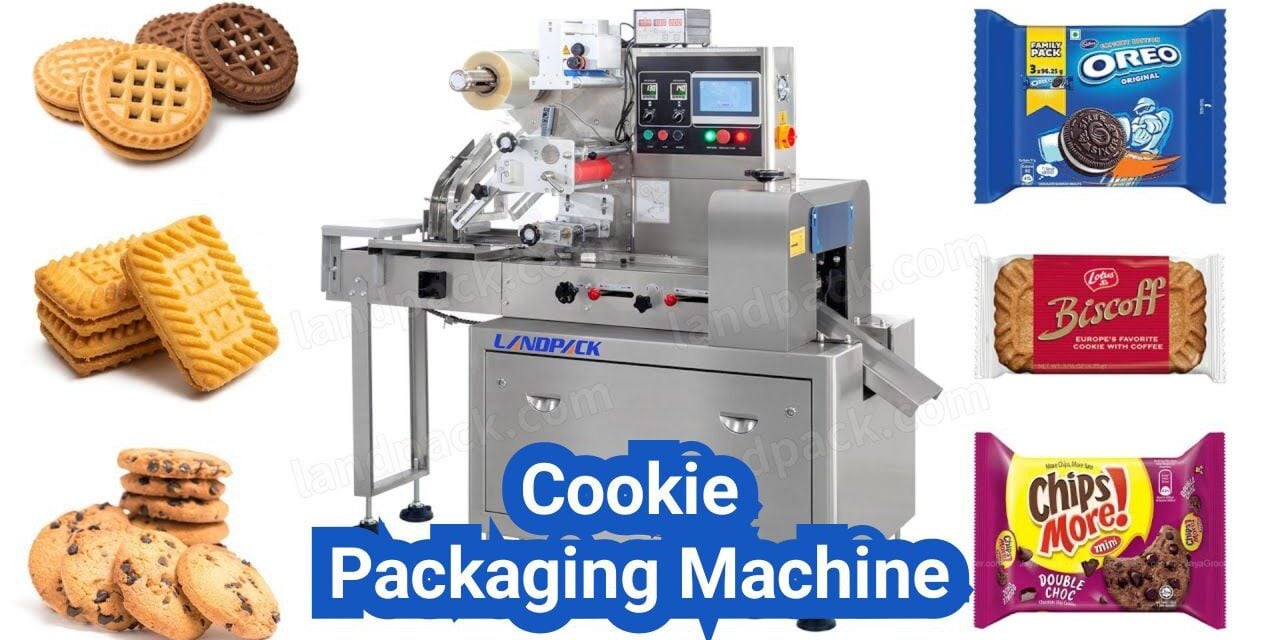
A horizontal flow wrapper for cookies is a versatile packaging machine that forms, fills, and seals packages in a continuous motion. It operates by taking flat rolls of film, forming them into a tube around the product, and then sealing the package at both ends and along the back. This method is particularly popular in the biscuit industry due to its high speed and efficiency.
The process involves several key steps: product placement on the conveyor, film wrapping around the product, sealing the package, and cutting it to the desired size. This method is highly adaptable and can be used for a variety of cookie types and sizes.
Understanding Cookie Tray Packaging Systems
Cookie tray packaging involves placing cookies into trays, which are then wrapped or sealed. This method is often used for more delicate or specialty cookies that require additional protection or presentation.
Tray packaging systems can vary significantly in complexity, from simple manual operations to fully automated lines. The choice of tray material, wrapping film, and sealing method depends on the product requirements and desired packaging appearance.
Step-by-Step Guide to Selecting Flow-Wrap for Your Products | Cookie Packaging Machine
To select the appropriate flow-wrap packaging for your cookies, follow these steps:
- Assess your product size and shape to determine the required packaging dimensions.
- Consider the packaging material and its compatibility with your product and the flow-wrapper machine.
- Evaluate the production speed and volume to ensure the machine can meet your needs.
- Check the machine’s flexibility in handling different products and packaging formats.
Step-by-Step Guide to Selecting Tray Packaging for Your Products
For tray packaging, consider the following steps:
| Step | Description |
|---|---|
| 1 | Determine the tray size and material based on cookie type and protection needs. |
| 2 | Choose the appropriate wrapping or sealing method for the trays. |
| 3 | Assess the need for automated or manual tray loading and unloading. |
| 4 | Consider the integration of tray packaging with your existing production line. |
By carefully evaluating these factors, cookie manufacturers can choose the most suitable packaging method for their products, balancing efficiency, product protection, and presentation.
How to Implement On-Edge Cookie Packaging vs. Flat-on-Pile Cookie Packaging

When it comes to cookie packaging, the decision between on-edge and flat-on-pile orientations is crucial for optimizing packaging operations. Cookie packaging machines can be configured to handle both methods, but understanding the benefits and applications of each is essential for making an informed decision.
Benefits and Applications of On-Edge Cookie Packaging
On-edge cookie packaging involves stacking biscuits vertically on their side in a “slug” or row. This method is particularly beneficial for certain types of cookies and packaging requirements.
- Efficient Use of Space: On-edge packaging can be more space-efficient, allowing for more cookies to be packaged in a single row.
- Unique Product Display: The vertical orientation can create an attractive display, showcasing the cookies in a distinct manner.
- Specific Product Requirements: Certain cookie types or brands may benefit from the on-edge orientation for branding or marketing reasons.
Benefits and Applications of Flat-on-Pile Cookie Packaging
Flat-on-pile packaging, on the other hand, involves stacking cookies flat on top of each other. This traditional method has its own set of advantages.
- Traditional Presentation: Flat-on-pile packaging provides a familiar and often preferred presentation style for many consumers.
- Ease of Handling: This method can be less prone to cookie breakage, as the cookies are stacked flat and are less likely to be damaged during packaging.
- Compatibility with Various Cookie Types: Flat-on-pile packaging is versatile and can accommodate a wide range of cookie shapes and sizes.
Decision Framework for Choosing Cookie Orientation
Choosing between on-edge and flat-on-pile cookie packaging depends on several factors, including product type, packaging line capabilities, and marketing considerations.
- Product Type and Fragility: Assess the type of cookie and its fragility to determine the most suitable packaging orientation.
- Packaging Line Capabilities: Evaluate the capabilities of your cookie packaging machine to handle different orientations.
- Marketing and Branding: Consider how the packaging orientation aligns with your brand’s image and marketing strategy.
By carefully considering these factors and understanding the benefits and applications of each packaging orientation, businesses can make informed decisions that optimize their cookie packaging operations.
How to Reduce Cookie Breakage in Packaging Operations

Reducing cookie breakage is crucial for maintaining product quality and minimizing losses during packaging operations. Cookie breakage can occur due to various reasons, including improper machine settings, inadequate packaging materials, and inefficient handling practices.
Identifying and Diagnosing Common Causes of Cookie Breakage
To minimize cookie breakage, it is essential to identify and diagnose its common causes. Some of the most common causes include:
- Insufficient or excessive machine pressure
- Incorrect cookie alignment
- Inadequate packaging material protection
- Excessive handling or rough handling practices
By understanding these causes, manufacturers can take corrective actions to minimize breakage.
Adjusting Machine Settings and Speeds to Minimize Breakage
Adjusting machine settings and speeds is critical to minimizing cookie breakage. This includes:
- Optimizing machine pressure and alignment
- Adjusting conveyor belt speeds to match production requirements
- Ensuring proper cookie orientation and alignment
By fine-tuning machine settings, manufacturers can significantly reduce cookie breakage.
Cookie Packaging Material Selection for Maximum Protection
The right packaging materials can provide maximum protection to cookies during handling and transportation. Some of the key considerations include:
- Using cushioning materials to absorb shocks and impacts
- Selecting packaging materials that are gentle on cookies
- Ensuring packaging materials are clean and free from contaminants
| Packaging Material | Description | Benefits |
|---|---|---|
| Corrugated Cartons | Sturdy, foldable cartons made from corrugated paper | Provides excellent protection, customizable |
| Plastic Wrapping | Flexible plastic wrapping for individual cookies or packs | Moisture-proof, tamper-evident |
| Paper Pads | Soft, cushioning pads made from paper | Gentle on cookies, eco-friendly |
Using Cookie Tray Loader Machines to Reduce Handling Damage
Cookie tray loader machines can significantly reduce handling damage by automating the loading process. These machines use gentle, controlled movements to place cookies onto trays, minimizing the risk of breakage.
By implementing cookie tray loader machines, manufacturers can:
- Reduce labor costs associated with manual loading
- Minimize cookie breakage and damage
- Increase production efficiency and throughput
Setting and Achieving Cookie Packaging Line Speed Targets

Achieving optimal cookie packaging line speed is crucial for maximizing production efficiency. As the demand for cookies continues to rise, manufacturers are under pressure to increase their output while maintaining quality and reducing costs.
The transition from manual packaging to automated systems can significantly boost production rates. For instance, a worker may pack 20–30 packs per minute, whereas a mid-range biscuit packaging machine can reach 150–200 packs per minute, representing a potential increase of 400% or more in output.
Industry Benchmarks for Cookie Packaging Line Speed
Understanding industry benchmarks is essential for setting realistic packaging line speed targets. The average packaging speed can vary widely depending on the type of cookie, packaging material, and machinery used.
| Packaging Machine Type | Average Speed (packs per minute) |
|---|---|
| Manual Packaging | 20-30 |
| Mid-range Biscuit Packaging Machine | 150-200 |
| High-speed Cookie Packaging Machine | 300-400 |
Factors That Impact Your Packaging Speed Performance
Several factors can influence packaging line speed, including machine design, product characteristics, and operator expertise. Efficient machine design and regular maintenance are critical for achieving optimal speeds.
Product characteristics, such as cookie size and fragility, also play a significant role. For example, more delicate cookies may require slower packaging speeds to prevent breakage.
How to Optimize Your Cookie Flow Wrap Machine for Maximum Throughput
Optimizing a cookie flow wrap machine involves adjusting settings to match product specifications and ensuring that the machine is well-maintained. Regular cleaning and lubrication can help prevent downtime and maintain high speeds.
Balancing Speed with Quality and Breakage Prevention | Cookie Packaging Machine
While increasing packaging line speed is important, it’s equally crucial to balance speed with quality and breakage prevention. Implementing quality control measures and using appropriate packaging materials can help minimize breakage and ensure product integrity.
How to Evaluate Food Packaging Machine Price and Calculate ROI

Evaluating the price of a food packaging machine is a critical step in determining the overall cost-effectiveness of your cookie packaging operation. The cost of these machines can vary significantly based on factors such as production capacity, automation level, and manufacturer reputation.
To make an informed decision, it’s essential to understand the different components that contribute to the overall cost of a cookie packaging machine. This includes not only the initial purchase price but also ongoing expenses such as maintenance, energy consumption, and labor costs.
Understanding Food Packaging Machinery Price Ranges
Food packaging machinery prices can range from tens of thousands to hundreds of thousands of dollars, depending on the complexity and capabilities of the machine. For example, a basic semi-automatic cookie packaging machine might start at around $20,000, while a high-speed, fully automated system could cost upwards of $200,000.
Key factors influencing the price include:
- Production speed and capacity
- Level of automation
- Machine flexibility and changeover ease
- Integration capabilities with existing production lines
- Manufacturer reputation and after-sales support
| Machine Type | Price Range | Production Capacity |
|---|---|---|
| Semi-Automatic | $20,000 – $50,000 | Up to 100 packages per minute |
| Fully Automated | $100,000 – $250,000 | Up to 500 packages per minute |
| High-Speed Automated | $250,000 – $500,000 | Up to 1000 packages per minute |
Cookie Packaging ROI Calculation Methods and Formulas
Calculating the return on investment (ROI) for a cookie packaging machine involves comparing the costs of the machine to the benefits it provides. A basic ROI formula is: ROI = (Net Benefit / Cost) * 100.
For instance, if a new cookie packaging machine costs $150,000 and is expected to increase production efficiency by $30,000 annually while reducing labor costs by $20,000, the net benefit would be $50,000 per year.
Using the ROI formula: ROI = ($50,000 / $150,000) * 100 = 33.33%. This means the investment would pay for itself in approximately three years.
“The ROI calculation is crucial for justifying the investment in new packaging machinery. It’s not just about the initial cost; it’s about the long-term savings and efficiency gains.”
— John Smith, Packaging Industry Expert
Hidden Costs and Long-Term Expenses to Consider | Cookie Packaging Machine
Beyond the initial purchase price, there are several hidden costs and long-term expenses to consider when evaluating a cookie packaging machine. These include maintenance and repair costs, energy consumption, and potential downtime due to mechanical failures or changeovers.
Key long-term expenses to factor into your ROI calculation include:
- Maintenance and repair costs
- Energy and utility expenses
- Labor costs for operation and training
- Potential costs associated with machine upgrades or modifications
A modern, high-end machine that integrates seamlessly with upstream and downstream equipment can significantly reduce long-term costs and improve overall efficiency.
Selecting the Right Cookie Packaging Machine for Your Operation

Choosing the right cookie packaging machine is a pivotal decision that can significantly impact your production efficiency and product quality. As stated by industry experts, “The packaging machine is the backbone of any cookie production line, and its selection should be based on thorough analysis and planning.” A well-chosen machine can enhance productivity, reduce waste, and improve product presentation.
How to Assess Your Production Volume and Product Requirements
To select the appropriate cookie packaging machine, you first need to assess your production volume and product requirements. This involves analyzing your current production capacity, product types, and packaging needs. Consider factors such as cookie size, shape, and fragility to determine the most suitable packaging solution.
Production volume is a critical factor in determining the type of packaging machine you need. High-volume producers may require high-speed cookie packaging machines that can handle large quantities efficiently.
Comparing Automatic vs. Semi-Automatic Cookie Packaging Systems
The next step is to compare automatic and semi-automatic cookie packaging systems. Automatic machines offer higher efficiency and lower labor costs but are typically more expensive. Semi-automatic systems, on the other hand, provide more flexibility and are often more affordable but require more manual intervention.
- Automatic cookie packaging machines are ideal for high-volume production and can significantly reduce labor costs.
- Semi-automatic systems are suitable for smaller operations or those with variable production needs.
Determining High-Speed Cookie Packaging Machine Requirements
If you require high-speed packaging, you’ll need to determine the specific requirements for your operation. This includes assessing the machine’s speed, accuracy, and compatibility with your products. High-speed cookie packaging machines are designed to handle large volumes quickly and efficiently.
Consider the following factors when evaluating high-speed machines:
- Machine speed and throughput
- Product handling and gentleness
- Packaging material compatibility
Working Effectively with Food Packaging Machine Manufacturers
Finally, it’s crucial to work effectively with food packaging machine manufacturers to ensure you get the right machine for your needs. This involves clear communication of your requirements, thorough testing of the machine, and negotiation of a comprehensive service agreement.
“A good manufacturer will not only provide a reliable machine but also offer support and service to ensure your operation runs smoothly.”
By following these guidelines and working closely with manufacturers, you can select a cookie packaging machine that meets your needs and enhances your production efficiency.
How to Implement Bakery Product Inspection Systems

Implementing a robust bakery product inspection system is crucial for ensuring the quality and safety of cookie products. A well-designed inspection system helps bakeries maintain high standards, reduce waste, and comply with regulatory requirements.
To achieve this, bakeries can leverage various types of inspection systems tailored to their specific needs. Effective inspection systems can significantly enhance the overall efficiency and reliability of cookie packaging lines.
Types of Inspection Systems for Cookie Packaging Lines
Cookie packaging lines can benefit from several types of inspection systems, including:
- Vision inspection systems that check for packaging defects and product integrity
- Weight checkers that ensure accurate product weight
- Metal detectors that identify potential contaminants
- Seal inspection systems that verify the integrity of package seals
These inspection systems can be integrated into existing packaging lines to enhance quality control and minimize the risk of defective products reaching consumers.
Implementing Cookie Package Seal Strength Testing Procedures
Cookie package seal strength is a critical factor in maintaining product freshness and preventing contamination. Implementing seal strength testing procedures involves:
- Regularly testing seal strength using appropriate equipment
- Adjusting packaging machine settings based on test results
- Training personnel to conduct seal strength tests and interpret results
By doing so, bakeries can ensure that their packaging maintains the required seal strength, thereby protecting the product and complying with industry standards.
Integrating Quality Control into Automated Packaging Solutions
Integrating quality control into automated packaging solutions is essential for maintaining high-quality products. This can be achieved by:
- Implementing automated inspection systems that detect defects and anomalies
- Using data analytics to monitor packaging line performance and identify areas for improvement
- Ensuring that all packaging equipment is properly maintained and calibrated
A well-maintained biscuit packaging machine stays fast, stable, and profitable. When you take care of your equipment, you reduce downtime and protect your investment. By integrating quality control measures into automated packaging solutions, bakeries can enhance efficiency, reduce waste, and improve overall product quality.
Creating and Using a Cookie Packaging QA Checklist

Implementing a comprehensive cookie packaging QA checklist is crucial for ensuring the quality and consistency of packaged cookies. Clean, uniform packs stand out on the shelf, and automated machines play a significant role in maintaining size, shape, and seal quality from one pack to the next.
A well-designed QA checklist helps in identifying potential issues before they become major problems, thereby reducing waste and improving overall efficiency. It covers various aspects of the packaging process, from pre-production to post-production stages.
Essential Pre-Production Quality Checks | Cookie Packaging Machine
Before starting the packaging operation, several pre-production quality checks are essential. These include:
- Verifying the condition and calibration of the cookie packaging machine to ensure it is functioning correctly.
- Checking the quality and integrity of packaging materials to prevent issues during the packaging process.
- Confirming that the product meets the required specifications and quality standards.
In-Process Monitoring for Cookie Packaging Operations
During the packaging operation, continuous monitoring is necessary to catch any deviations from the set quality standards. This includes:
- Regularly inspecting the packaged cookies for proper sealing, labeling, and overall packaging quality.
- Monitoring the cookie packaging machine for any signs of malfunction or wear and tear.
- Adjusting machine settings as necessary to maintain optimal packaging quality.
Post-Production Quality Verification Steps
After the packaging operation is complete, a series of post-production quality verification steps should be undertaken. These include:
- Conducting random sampling of packaged cookies to check for quality and consistency.
- Verifying that the packaging meets the required standards for seal strength, label accuracy, and overall appearance.
- Documenting the results of quality checks for future reference and compliance purposes.
Documentation and Compliance Requirements | Cookie Packaging Machine
Maintaining detailed documentation of the QA checklist and its outcomes is crucial for compliance with regulatory requirements and for internal quality control purposes. This includes:
- Keeping records of quality checks performed during pre-production, in-process, and post-production stages.
- Ensuring that all documentation is accurate, up-to-date, and accessible for audits and inspections.
- Using the data collected to continually improve the packaging process and QA checklist.
By creating and using a comprehensive cookie packaging QA checklist, manufacturers can ensure high-quality packaging, reduce waste, and improve customer satisfaction.
How to Optimize Cookie Line Changeover for Multiple Products

The ability to quickly change over cookie packaging lines is a significant competitive advantage in the baking industry. As consumer preferences continue to evolve, bakeries must be able to adapt their production lines efficiently to accommodate various products. Optimizing cookie line changeovers involves a combination of strategic planning, technological investment, and operator training.
Cookie Line Changeover Optimization Strategies and Techniques
Effective cookie line changeover optimization begins with a thorough analysis of the current changeover process. This involves identifying bottlenecks, documenting every step, and measuring the time taken for each task. By understanding the existing process, bakeries can pinpoint areas for improvement and implement targeted strategies.
One key strategy is to standardize changeover procedures as much as possible. This can involve creating detailed checklists and ensuring that all necessary tools and parts are readily available. By standardizing the process, bakeries can reduce variability and make the changeover process more predictable and efficient.
Implementing Quick-Change Tooling and Adjustments
Quick-change tooling is a critical component of efficient cookie line changeovers. This involves designing and implementing tooling systems that can be easily and rapidly adjusted or replaced. For example, using modular forming systems or quick-change cutting tools can significantly reduce the time required for changeovers.
EverSmart’s high-speed packaging solution is a prime example of how quick-change tooling and adjustments can enhance production flexibility. By incorporating modular designs and easy-to-adjust components, EverSmart’s solution not only delivered a leap in production capacity but also ensured that product breakage remained extremely low, even at speeds of 300 packs/minute.
Training Food Packaging Machine Operators for Efficient Changeovers
Even with the best technology and processes in place, the success of cookie line changeovers ultimately depends on the skills and knowledge of the food packaging machine operators. Providing comprehensive training is essential to ensure that operators can efficiently perform changeovers and troubleshoot any issues that may arise.
Training programs should cover not only the technical aspects of operating the machinery but also the principles of lean manufacturing and continuous improvement. By empowering operators with the knowledge and skills to optimize changeovers, bakeries can achieve significant gains in productivity and flexibility.
Integrating Biscuit Packaging Machines into Existing Bakery Operations
The successful integration of biscuit packaging machines into bakery operations hinges on understanding the intricacies of packaging line layout and workflow. This integration is crucial for enhancing productivity, reducing operational costs, and maintaining product quality.
Planning Your Packaging Line Layout and Workflow | Cookie Packaging Machine
Effective planning of the packaging line layout is essential for maximizing efficiency. This involves assessing the available space, determining the optimal machinery configuration, and ensuring a smooth workflow from baking to packaging.
A well-designed packaging line layout can significantly reduce bottlenecks and improve overall production speed. It’s also important to consider the scalability of the layout to accommodate future production needs.
Connecting Upstream Baking with Downstream Packaging
Connecting the upstream baking process with downstream packaging requires a synchronized approach. This involves integrating the baking and packaging lines to ensure a continuous flow of products.
By implementing a synchronized system, bakeries can reduce the risk of product damage and improve overall efficiency. This synchronization also enables real-time monitoring and adjustments, further enhancing production quality.
“The key to successful integration lies in understanding the interplay between different components of the packaging line and optimizing them for maximum efficiency.”
— Industry Expert
Automated Packaging System Integration Best Practices | Cookie Packaging Machine
Integrating automated packaging systems into existing bakery operations requires adherence to best practices. This includes selecting machinery that is compatible with existing equipment and ensuring that operators are adequately trained.
- Conduct thorough assessments of existing operations to identify integration points.
- Select machinery with compatible interfaces and communication protocols.
- Implement robust training programs for operators.
| Best Practice | Description | Benefit |
|---|---|---|
| Compatibility Assessment | Ensure machinery compatibility | Smooth Integration |
| Operator Training | Train operators on new equipment | Reduced Downtime |
| System Monitoring | Implement real-time monitoring | Improved Quality Control |
Secondary Packaging Considerations for Cookie Products
Secondary packaging plays a critical role in protecting cookie products during transportation and storage. Considerations include selecting appropriate packaging materials and designing packaging that is both functional and visually appealing.
The system features an integrated HMI (Human-Machine Interface) with a 10.1-inch color touchscreen and a real-time data monitoring system, enhancing the efficiency of secondary packaging operations.
Key considerations for secondary packaging include:
- Material selection for durability and protection.
- Designing packaging for ease of use and branding.
- Ensuring compliance with regulatory requirements.
Advanced Cookie Packaging Solutions and Automation Technology

With the advent of Industry 4.0, cookie packaging has become more sophisticated, incorporating smart technologies and automation. This transformation is driven by the need for increased efficiency, reduced costs, and improved product quality.
The integration of advanced automation technologies in cookie packaging lines has revolutionized the industry. Manufacturers are now able to produce high-quality packaged cookies at a faster rate, meeting the growing demand for these products.
State-of-the-Art Cookie Packaging Equipment Features
Modern cookie packaging machines are equipped with advanced features that enhance their performance and efficiency. Some of these features include:
- High-speed packaging capabilities
- Advanced vision inspection systems for quality control
- Automated changeover systems for reduced downtime
- Integration with upstream and downstream equipment for seamless operation
For instance, EverSmart is dedicated to providing integrated automation solutions that perfectly address the challenges of Oreo packaging, showcasing the potential of advanced cookie packaging solutions.
Industry 4.0 and Smart Packaging Automation Technologies
The adoption of Industry 4.0 principles in cookie packaging has led to the development of smart packaging automation technologies. These technologies include:
- Predictive maintenance to minimize equipment downtime
- Real-time monitoring and control systems for improved quality and efficiency
- Data analytics for informed decision-making
These advancements are transforming the cookie packaging landscape, enabling manufacturers to achieve higher levels of productivity and product quality.
Custom Solutions for Specialty and Artisan Cookie Products
The growing demand for specialty and artisan cookie products has led to the development of custom packaging solutions. These solutions cater to the unique requirements of these products, such as:
- Flexible packaging formats
- Specialized handling systems
- Customized packaging designs
By leveraging advanced automation technologies, manufacturers can efficiently package these specialty products while maintaining their unique characteristics.
Emerging Trends in Cookie Packaging Machinery
The cookie packaging industry is witnessing several emerging trends, including:
- Increased adoption of smart packaging technologies
- Growing demand for sustainable and eco-friendly packaging solutions
- Integration of artificial intelligence and machine learning in packaging machinery
These trends are expected to shape the future of cookie packaging, driving innovation and efficiency in the industry.
At The End of: Cookie Packaging Machine
Efficient cookie packaging is crucial for bakeries and manufacturers to maintain product quality, reduce waste, and increase profitability. The right cookie packaging machine plays a vital role in achieving these goals. By understanding the different types of cookie packaging machines available, such as flow-wrap and tray packaging systems, businesses can make informed decisions to optimize their packaging operations.
Implementing packaging automation, including biscuit packaging machines, can significantly enhance production efficiency and reduce labor costs. Automated Oreo packaging, for instance, is a critical factor in enhancing brand value, efficiency, and overall profitability. By integrating advanced cookie packaging solutions and automation technology, manufacturers can improve their competitiveness in the market.
When selecting a cookie packaging machine, it is essential to consider factors such as production volume, product requirements, and packaging line speed targets. By doing so, businesses can ensure that their packaging operations are streamlined, efficient, and cost-effective. Ultimately, the right cookie packaging solutions can help manufacturers achieve their goals and succeed in the competitive cookie market.
FAQ
What are the primary differences between a cookie packaging machine for small business and industrial operations?
A food packaging machine for small business is typically designed for lower volumes, offering versatility for manual or semi-automatic feeding, such as a biscotti packaging machine or a small cookie packaging machine. In contrast, industrial packaging systems used by large-scale bakeries utilize an automatic cookie packaging machine capable of high-speed throughput, often integrated into a comprehensive range of cookie packing machines that handle everything from dough to final palletizing.
When should a bakery choose a horizontal flow wrapper for cookies over tray packaging?
A horizontal flow wrapper for cookies is the ideal choice for individual cookie packaging or biscuit pouch packing where high speed and lower material costs are priorities. Cookie tray packaging is better suited for premium assortments or fragile biscuits that require the structural protection of a plastic or cardboard tray to prevent damage during transit.
How can manufacturers achieve significant cookie breakage reduction in packaging?
To achieve cookie breakage reduction in packaging, bakeries should implement a cookie tray loader machine to minimize manual handling. Additionally, optimizing the cookie flow wrap machine timing and selecting the correct cookie packaging material with appropriate barrier properties can significantly reduce physical impact and product degradation.
What factors influence the food packaging machine price and the eventual ROI?
The food packaging machine price is influenced by the level of automation, speed capabilities, and brand reputation, such as systems from Syntegon or Wolf-packing. A precise cookie packaging ROI calculation should account for labor savings, increased cookie packaging line speed, and reduced product waste provided by advanced cookie packaging solutions.
What are the benefits of on-edge cookie packaging compared to flat-on-pile methods?
On-edge cookie packaging is highly efficient for maximizing shelf space and is commonly used for round biscuits in slugs. Flat-on-pile cookie packaging is more traditional for crackers or large cookies, offering a clear view of the product through the film, which is often preferred for biscuit packaging machine configurations in the snack food sector.
How does a vertical form fill seal machine (vffs) differ from a doypack packing machine for bakery products?
A vertical form fill seal machine (vffs) is typically used for high-speed bagging of small cookies or mini-biscuits in a pillow-pack style. A doypack packing machine is used for premium stand-up pouches with zippers, which are increasingly popular for cookie dough packaging equipment and gourmet treats.
Why is cookie package seal strength testing essential for automated packaging solutions?
Cookie package seal strength testing ensures the airtight integrity of the packaging material, preventing staling and contamination. This is a critical component of a cookie packaging QA checklist, especially when using a high-speed cookie packaging machine where minor temperature fluctuations can affect the seal quality.
How can a food packaging machine operator optimize cookie line changeover for multiple products?
To optimize cookie line changeover, bakeries should invest in packaging machinery featuring quick-change tooling and digital recipe storage. Leading food packaging machine manufacturers in the USA now design equipment that allows an operator to switch from a biscuit box packing machine setup to a different format in minutes rather than hours.
What role does Industry 4.0 play in advanced cookie packaging technology?
Industry 4.0 packaging technologies involve integrating sensors and data analytics into the automatic packaging system. This allows for real-time monitoring of cookie packaging line speed, predictive maintenance of the cookie sealing machine, and seamless communication between the production line packaging machine and the bakery’s ERP system.
What are the requirements for an automatic single cookie packaging machine high speed?
An automatic single cookie packaging machine high speed requires precision timing and a robust cookie packaging system that can handle delicate items at rates exceeding 100-200 packs per minute. Brands like Syntegon offer state-of-the-art cookie packaging equipment that balances these high speeds with gentle handling to ensure no loss in product quality.
How do you integrate a multi lanes packing machine into a cookie packaging line?
Integrating a multi lanes packing machine requires careful planning of the automated cookie packaging workflow to ensure even product distribution. This setup is common in industrial cookie packaging for high-volume products like crackers or small biscuits, where multiple rows of product are wrapped simultaneously to maximize high-speed cookie packaging efficiency.
What should be included in a bakery product inspection system for food safety?
A comprehensive bakery product inspection system should include metal detection, X-ray for foreign body contamination, and vision systems to verify the correct orientation for the biscuit wrapping machine. These automated packaging solutions are vital for maintaining the high standards of food packaging machinery in the U.S. market.
Conclusion of: Cookie Packaging Machine
Why this decision matters on a U.S. line
A cookie packaging machine is not just a wrapping station; it is where product quality, throughput, labor efficiency, and retail-ready appearance all meet. For U.S. bakeries, the packaging choice can directly affect breakage claims, shelf-life consistency, and how reliably the line hits daily shipment targets. Syntegon cookie and cracker packaging solutions
When teams scope a cookie packaging machine, they should evaluate the full line from product infeed to case packing instead of comparing wrapper speeds in isolation. In practice, many performance losses come from unstable transfers, poor grouping, or weak downstream synchronization rather than the wrapper itself. LoeschPack wafer and biscuit packaging solutions
Flow-wrap vs. trays in real production
A cookie packaging machine built around horizontal flow wrapping is usually the strongest option for uniform, durable products that can be grouped and wrapped without support. This setup is often favored for mainstream SKUs because it can reduce packaging component count, simplify material handling, and support high sustained output when the infeed is stable. Syntegon horizontal flow wrapper overview
A cookie packaging machine that uses trays before overwrap or cartoning is often the better choice for fragile, coated, premium, or irregular products that chip easily. Trays can protect edges, preserve presentation, and reduce product-to-product contact during acceleration, turning, and stacking. Syntegon flat-on-pile cookie handling solutions
For many bakeries, the best cookie packaging machine is a hybrid design that combines gentle counting or pick-and-place, selective tray loading for fragile formats, and flow wrapping for other SKUs on the same line architecture. This approach may raise capital cost, but it improves flexibility when the plant runs a mixed schedule of value packs, family packs, and premium assortments. Syntegon on-edge cookie packaging line example
How to choose the right format for your SKU mix
A cookie packaging machine decision should start with product behavior testing, not brochure speed claims. Teams should evaluate thickness variation, edge fragility, filling sensitivity, coating tackiness, and whether the product remains stable during counting, lane merging, and transfer at realistic line accelerations. LoeschPack TBS-2 tray loader overview
When sizing capacity, a cookie packaging machine must be matched to the true line bottleneck across counting, loading, wrapping, cartoning, and case packing. A wrapper that can run faster on paper will not improve shipments if tray loading, code verification, or carton feed reliability limits sustainable output. Syntegon Pack 403 flow wrapper page
In purchasing discussions, a cookie packaging machine should be compared using sustainable shift rate, not only maximum test speed. U.S. plants usually gain more value from stable OEE, faster recovery from minor stops, and repeatable changeovers than from a high top-end speed that only appears during short demos. Syntegon cookies and crackers packaging page
Breakage reduction starts before sealing
A cookie packaging machine can only protect product quality if the infeed delivers consistent spacing, orientation, and support. Gentle conveyors, controlled accumulation, and synchronized lane merges reduce micro-cracks that later become visible breakage inside the finished pack. LoeschPack wafer and biscuit system concepts
For delicate products, a cookie packaging machine often performs better with tray loading or supported transfer because direct grouping can create repeated impacts between pieces. Even small improvements in handling can reduce visible edge chips, which matters for premium retail packs and e-commerce shipments where appearance affects customer ratings and returns. Syntegon flat-handling technology options
Seal setup also affects product protection because a cookie packaging machine with poor temperature, pressure, or dwell settings can create packs that are too tight or inconsistent. Packaging teams should validate seal strength with a defined method instead of relying on visual checks alone, especially when switching film structures or suppliers. ASTM F88/F88M seal strength standard
Moisture management matters because a cookie packaging machine cannot restore crispness after water activity drift has already changed texture. Crisp baked products can lose eating quality and may become more fragile or stale-feeling if barrier performance and ambient humidity control are not managed as one system. Scientific study abstract on water activity and biscuit crispness
Sanitation, allergens, and U.S. compliance requirements
A cookie packaging machine for ready-to-eat products should be integrated into the plant’s sanitation and preventive-controls framework from the design phase. This is especially important on dry-product lines, where sanitation routines, access for cleaning, and corrective-action planning affect both food safety readiness and uptime. FDA draft guidance for low-moisture ready-to-eat sanitation programs
If one cookie packaging machine runs multiple formulas, allergen changeover discipline and label verification become as critical as mechanical speed. U.S. bakeries should build line-clearance steps, component controls, and QA checks into the operating procedure so fast changeovers do not create mislabeled product risk. FDA food allergies and labeling overview
Traceability should be designed into a cookie packaging machine specification from the start, including coder location, code verification, and reject confirmation for unreadable marks. Strong lot code discipline improves complaint investigations and recall readiness, even when a SKU is not subject to the most detailed traceability requirements. FDA traceability lot code explanation
Net contents control also belongs in the project scope because a cookie packaging machine must align with counting strategy, package checks, and documented tolerances. In the U.S., weights-and-measures inspections commonly reference NIST package-control procedures, so repeatable count or weight performance should be verified during launch. NIST Handbook 133 current edition page
Material selection for a cookie packaging machine should be reviewed for both performance and regulatory suitability when changing films, trays, coatings, inks, or adhesives. FDA food-contact resources help procurement and QA teams confirm documentation pathways and reduce delays during packaging material qualification. FDA packaging and food contact substances resource page
Inspection, safety, and distribution readiness
A cookie packaging machine project usually delivers better results when checkweighing, metal detection, and inspection strategy are engineered into the line layout instead of added later. The right inspection combination depends on package format, product characteristics, line speed, retailer expectations, and how rejects are handled without damaging good product. METTLER TOLEDO bakery product inspection solutions
Dust control should not be treated as a side issue because a cookie packaging machine installed near crumb, flour, or sugar dust generation can increase fire and explosion risk if housekeeping and containment are weak. OSHA notes that finely divided combustible materials may become explosible when suspended in air under the right conditions, which is highly relevant in bakery operations. OSHA combustible dust overview
Guarding is a non-negotiable part of commissioning because a cookie packaging machine includes moving belts, pinch points, and rotating components that can injure operators during normal running or jam clearing. Safety reviews should be completed before startup, not after installation, so access, interlocks, and safe clearances are built into the line. OSHA interpretation on guarding packaging and pelletizing machines
Ergonomics still matters on automated lines because a cookie packaging machine depends on people for film changes, tray loading, carton replenishment, and rework handling. Workstation height, reach distance, diverters, and lift-assist tools can reduce strain and help maintain reliable output across long shifts. OSHA ergonomics hazard-control solutions
Lockout and tagout planning should be part of the FAT/SAT package because a cookie packaging machine will require maintenance access and safe jam recovery procedures. Reviewing hazardous-energy isolation points early with the integrator helps prevent retrofits and reduces startup delays. OSHA lockout/tagout overview
Speed targets: practical numbers vs. brochure math
A cookie packaging machine speed target should be defined in layers: OEM maximum, validated trial rate, and sustainable shift rate after minor stops and changeovers. For example, Syntegon’s on-edge line example lists capacities such as up to 3,600 cookies per minute at the count feeder and up to 350 packs per minute at the flow wrapper, but actual results depend on format and SKU behavior. Syntegon on-edge capacity example
For tray-supported formats, a cookie packaging machine may be limited by loader motion and product settling rather than wrapper jaw speed. LoeschPack’s TBS-2 data sheet highlights tray loading rates up to 800 products per minute, which is useful for planning expectations on fragile or premium formats. LoeschPack TBS-2 tray loader data sheet (PDF)
Quick checklist
Before approving a cookie packaging machine, use this checklist to verify that the line is sized for the real SKU mix, the real shift schedule, and the real compliance needs of your U.S. operation. The strongest projects remove uncertainty before the purchase order is signed. FDA Nutrition Facts label resource
- Define pack styles by SKU: direct flow-wrap, tray + overwrap, tray + carton, or mixed strategy.
- Measure baseline breakage by SKU before trials (pre-pack and post-pack).
- Set three speed targets: OEM max, validated trial rate, and sustainable shift rate.
- Document changeover expectations across your top formats and allergen transitions.
- Specify coding and vision checks for lot/date code readability and label verification.
- Confirm inspection technology (checkweighing/metal detection/X-ray) by retailer requirement.
- Review cleanability, sanitation access, and maintenance access points before purchase.
- Confirm food-contact documentation for films, trays, inks, and adhesives.
- Include guarding, LOTO points, and jam-clear procedures in FAT/SAT documentation.
- Write acceptance criteria for seal quality, breakage rate, and reject verification.
Common mistakes to avoid
Many teams miss ROI because a cookie packaging machine is chosen by wrapper speed alone instead of total line behavior. The mistakes below are common in bakery projects and can be prevented with better trials, documentation, and launch planning. FDA overview on how food-contact substances are regulated
- Buying for one “hero” SKU only: Validate the full SKU mix, especially fragile and low-volume formats.
- Ignoring upstream variability: Unstable spacing and stacks often cause breakage before sealing begins.
- Skipping package transit testing: Test real packs for vibration, drop, and compression before launch.
- Underestimating changeovers: Demo changeovers may not include sanitation and QA checks.
- Weak film qualification: Sealability and stiffness differences can change performance dramatically.
- No reject-code analysis: Track failures by cause (seal, code, weight, breakage) to find the true bottleneck.
- Late safety review: Retrofitting guards and access points after installation adds cost and delay.
- No operator recovery training: Fast restart procedures are essential for stable throughput.
Costs and ROI snapshot
Budgeting a cookie packaging machine requires separating machine price from total project cost because conveyors, coding, inspection, guarding, utilities, and integration can materially change the final investment. U.S. labor rates, installation windows, and sanitation-validation work also affect the budget more than many first-time buyers expect. OSHA combustible dust guidance publication
As a practical planning range, a cookie packaging machine project may start in the low six figures for a simpler mid-speed wrapper cell and move into high six or seven figures for integrated counting, tray loading, wrapping, cartoning, case packing, and advanced inspection. Premium assortments, robotic handling, and multi-format flexibility usually increase cost faster than raw speed alone. Syntegon cookies and crackers packaging systems
The ROI case for a cookie packaging machine is often strongest when you combine breakage reduction, labor reallocation, giveaway control, and uptime improvement in one model. A line that runs slightly slower but consistently can outperform a faster line that creates more defects, rework, and retailer complaints. Syntegon horizontal flow wrapper benefits and OEE focus
To build a credible payback estimate, a cookie packaging machine business case should use plant-specific assumptions for annual pack volume, sellable yield, scrap cost, downtime hours, film waste at startup, and maintenance parts. This keeps the ROI model realistic and prevents overpromising during capital approval. METTLER TOLEDO Safeline metal detection overview
Validation and launch plan
After purchase, a cookie packaging machine should go through a structured FAT and SAT with written acceptance criteria for speed, seal quality, breakage rate, code readability, and reject verification. Transit simulation or package testing should also be part of launch validation so hidden distribution damage is caught before full-scale shipments. ISTA test procedures
During startup, a cookie packaging machine usually needs a short optimization window where operators and engineers tune infeed timing, film tension, handling settings, and reject logic using real production data. This phase often delivers the biggest gains in breakage reduction and sustainable speed once the team compares results across multiple SKUs. ASTM D4169 distribution testing overview (Smithers)
Final thought
The right cookie packaging machine is the one that protects product quality at the speed your plant can sustain every day while meeting U.S. safety, labeling, and packaging expectations. If you compare flow-wrap and tray options using real breakage data, balanced line capacity, and disciplined validation criteria, you will make a better investment and avoid expensive surprises after startup.
Sources & References
- Bakery Packing Machines | Weigh Filling, Bagging, & Wrapping
- Automatic Single Cookie Packaging Machine High Speed
- Cookie Packaging Machine Solutions: Precision & Efficiency for Bak
- Cookies Packaging Machine | Innovative Packaging Systems
- 21 CFR Part 117 (eCFR)
- FDA Draft Guidance: Low-Moisture Ready-to-Eat Human Foods (PDF)
- FDA Food Allergen Labeling Guidance FAQ
- FDA Preventive Controls for Human Food, Chapter 11 (Food Allergen Programs) Draft Guidance (PDF)
- FDA Compliance Policy Guide: Major Food Allergen Labeling and Cross-Contact (PDF)
- FDA Inventory of Food Contact Substances Listed in 21 CFR
- NIST Handbook 133 (PDF)
- OSHA 1910.147 Lockout/Tagout Standard
- OSHA 1910.147 Appendix A (Typical Minimal LOTO Procedures)
- OSHA Combustible Dust Standards Page
- NFPA 652 Standard Development Page
- ASTM F88/F88M Seal Strength Standard
- Westpak Food & Beverage Packaging Testing
- Codex Code of Practice on Food Allergen Management (PDF)
- LoeschPack TBS-2 Tray Loader Data Sheet (PDF)
- Syntegon On-edge Cookies Packaging Machine Line
- NIST Handbook 133 Current Edition
- OSHA Materials Handling and Storage (PDF)