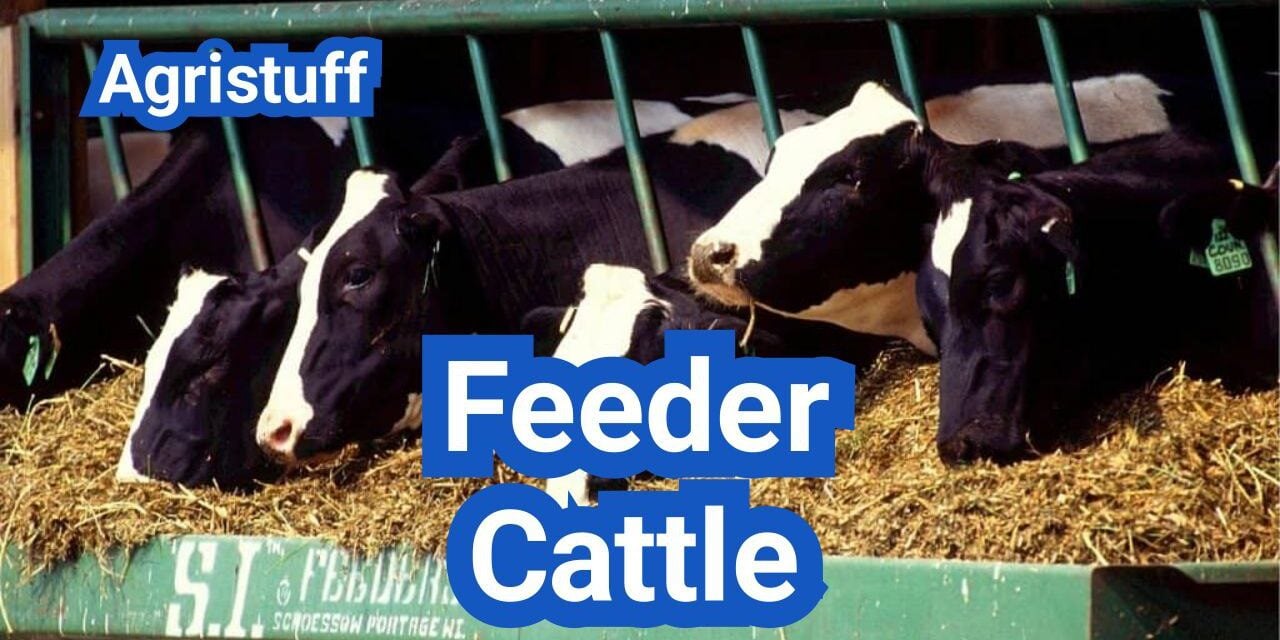
The beef supply chain relies heavily on feeder cattle, young animals raised to maturity for meat production. Understanding their weights, grades, and pricing is crucial for industry stakeholders.
Feeder cattle play a vital role in the cattle industry, as their growth and development directly impact beef prices. Factors such as breed, weight, and health influence their pricing, making it essential to comprehend these elements.
Key Takeaways
- Feeder cattle are young animals raised for meat production.
- Their weights and grades significantly impact pricing.
- Understanding feeder cattle is crucial for industry stakeholders.
- Beef prices are directly influenced by feeder cattle growth and development.
- Factors like breed, weight, and health affect feeder cattle pricing.
What Are Feeder Cattle?
Feeder cattle are young cattle intended for further feeding before being sent to slaughter. They play a vital role in the beef supply chain, serving as the link between cow-calf operations and feedlots.
Definition and Purpose in the Beef Supply Chain
Feeder cattle are typically calves that have been weaned from their mothers and are ready to be moved to a feedlot for finishing. Their purpose is to be raised to maturity, at which point they will be harvested for beef production. The feeder cattle segment is crucial as it involves the growth phase where cattle are fed to gain weight and improve their quality.
Typical Age and Weight Ranges
Feeder cattle usually range in age from 6 to 18 months and weigh between 600 to 800 pounds, although these can vary based on factors like breed and production practices. The weight range is a critical factor as it determines their readiness for the feedlot. Cattle that are too light may not be as profitable, while those that are too heavy may be considered too mature for the feeder market.
The classification of feeder cattle by weight and age helps producers and buyers assess their quality and potential for growth, facilitating transactions in the cattle market.
Feeder Cattle in the U.S. Market

The U.S. is one of the world’s largest producers of feeder cattle, playing a significant role in the global beef market. The feeder cattle industry is a vital component of the U.S. agricultural economy, contributing to the country’s GDP and providing employment opportunities in rural areas.
Industry Size and Economic Impact
The U.S. feeder cattle market is substantial, with the industry generating billions of dollars in revenue each year. According to the USDA, the total value of cattle and calves in the U.S. was over $66 billion in 2020. The industry’s economic impact extends beyond the farm gate, supporting related businesses such as feed suppliers, veterinarians, and transportation services.
Major Production Regions
The Great Plains region is a major hub for feeder cattle production, with states like Texas, Nebraska, and Kansas leading the way. Other significant production areas include the Corn Belt and the western United States. These regions offer favorable climate conditions, abundant feed resources, and well-established infrastructure for cattle production.
Key production regions have a significant impact on the overall feeder cattle market, influencing prices and supply chains.
Feeder Cattle vs. Live Cattle: Understanding the Difference
Feeder cattle and live cattle represent different stages in the beef production process, each with its unique characteristics and market dynamics. Understanding these differences is crucial for producers, investors, and consumers to navigate the cattle market effectively.
Production Stage Distinctions
Feeder cattle are typically young cattle that are being raised to be finished into slaughter cattle. They are usually weaned and are in the process of being backgrounded or fed to gain weight before being sent to a feedlot for finishing. In contrast, live cattle, often referred to as fed cattle or slaughter cattle, are those that have reached maturity and are ready for slaughter.
Market Classification Differences
The market classification for feeder cattle is based on factors like weight, frame size, and muscle score, which determine their potential for growth and the cost of gain. Live cattle, on the other hand, are classified based on their readiness for slaughter, with factors such as marbling, yield grade, and weight being critical.
Futures Market Separation
In the futures market, feeder cattle and live cattle are traded on separate contracts. The CME Feeder Cattle Index and the CME Live Cattle Index are used as settlement prices for their respective futures contracts. This separation allows for more precise hedging and speculation opportunities for market participants.
| Category | Feeder Cattle | Live Cattle |
|---|---|---|
| Production Stage | Young, being raised | Mature, ready for slaughter |
| Market Classification | Weight, frame size, muscle score | Marbling, yield grade, weight |
| Futures Market | CME Feeder Cattle Index | CME Live Cattle Index |
Feeder Cattle Weight Categories and Their Importance
Feeder cattle weight categories are a critical factor in the beef supply chain, influencing both pricing and production decisions. The weight of feeder cattle is a key determinant of their value and feed efficiency, making it essential for producers to understand the different weight categories and their implications.
Standard Weight Breaks in the Industry
The industry typically categorizes feeder cattle into various weight ranges. Common weight breaks include:
- Lightweight calves (300-500 pounds)
- Medium-weight calves (500-700 pounds)
- Heavyweight calves (700-900 pounds)
These categories help producers and buyers assess the cattle’s potential for growth and profitability.
How Weight Affects Feed Efficiency
The weight of feeder cattle significantly impacts their feed efficiency. Generally, lighter cattle are more efficient at converting feed into weight gain compared to heavier cattle. This is because younger, lighter animals are typically in a more rapid growth phase. Producers need to consider the optimal weight range for their cattle to achieve the best feed efficiency.
Weight Considerations for Different Production Systems
Different production systems have varying requirements for feeder cattle weight. For instance, backgrounding operations might prefer lighter cattle that can be grown out to heavier weights, while finishing operations might focus on heavier cattle ready for slaughter. Understanding these requirements helps producers tailor their production strategies to meet market demands.
In conclusion, feeder cattle weight categories play a vital role in determining their market value and production potential. By understanding standard weight breaks, the impact of weight on feed efficiency, and the specific needs of different production systems, producers can make informed decisions to maximize their returns.
The Complete Guide to Feeder Cattle Grades
Understanding feeder cattle grades is crucial for producers and buyers in the cattle industry. Feeder cattle are graded based on two primary factors: frame size and muscle score. These grades help determine the cattle’s potential for growth and their market value.
Frame Size Classifications: Large vs. Medium
Frame size is a critical factor in grading feeder cattle. It refers to the animal’s skeletal size and its potential to grow and finish at a certain weight. The two main frame size classifications are large and medium.
Large Frame: Cattle with a large frame are typically taller and longer-bodied. They have a higher growth potential and are often preferred for feedlot operations because they can efficiently convert feed into weight gain.
Medium Frame: Medium-framed cattle are more moderate in size. They may reach market weight sooner than larger-framed cattle but might not achieve the same level of finish.
| Frame Size | Characteristics | Market Preference |
|---|---|---|
| Large | Taller, longer-bodied, higher growth potential | Preferred for feedlot operations |
| Medium | Moderate size, reaches market weight sooner | Suitable for various production systems |
Muscle Score Evaluation: No. 1 vs. No. 2
The muscle score is another vital factor in grading feeder cattle. It assesses the animal’s muscular development, which affects its overall value.
No. 1 Muscle Score: Cattle with a No. 1 muscle score have a higher degree of muscular development. They are generally more valuable because they yield more desirable cuts of meat.
No. 2 Muscle Score: No. 2 muscle score cattle have less muscular development compared to No. 1. While they may not be as valuable, they still have their place in the market, depending on the production goals.
“The grading of feeder cattle is essential for establishing a fair market price. It provides a standardized way to evaluate cattle based on their potential for growth and meat production.”
In conclusion, understanding feeder cattle grades is essential for both producers and buyers. By evaluating frame size and muscle score, industry professionals can make informed decisions about cattle production and pricing.
How Feeder Cattle Pricing Works
Understanding feeder cattle pricing is crucial for producers and buyers in the cattle industry. The pricing mechanism is based on the weight of the cattle, typically quoted per hundredweight (CWT).
Price Per CWT Explained
The price per CWT is a fundamental concept in feeder cattle pricing. It represents the cost per 100 pounds of cattle. For instance, if the price per CWT is $150, a 600-pound steer would cost $900. This pricing method allows for easy comparison across different weights and lots.
Key factors influencing price per CWT include:
- Weight and age of the cattle
- Market demand and supply
- Regional production costs
- Quality and grade of the cattle
Calculating Total Value from Per CWT Prices
To calculate the total value of a lot of feeder cattle, you multiply the weight in CWT by the price per CWT. For example, a lot weighing 700 pounds (7 CWT) at $140 per CWT would be valued at $980.
Regional and Seasonal Price Variations
Feeder cattle prices vary significantly across regions due to factors like local supply and demand, transportation costs, and production practices. Seasonality also plays a role, with prices often higher during certain times of the year due to changes in demand or supply.
Regional price differences can be attributed to:
- Proximity to feed sources
- Availability of grazing land
- Local market conditions
Understanding these variations is essential for making informed decisions in the feeder cattle market.
Understanding Price Slides in Feeder Cattle Markets
Price slides are a crucial component in feeder cattle contracts, allowing for adjustments based on the actual weight of cattle delivered. This mechanism is essential in the feeder cattle market as it provides a fair pricing structure for both buyers and sellers by accounting for weight variations at delivery.
What Is a Price Slide and Why It’s Used
A price slide is a pricing mechanism used in feeder cattle contracts that adjusts the price per head based on the actual delivered weight of the cattle. This adjustment is necessary because the value of feeder cattle can significantly change with weight, due to factors like feed efficiency and market demand.
How to Calculate and Apply Price Slides
To calculate a price slide, one must first establish a base price and weight. The price slide is then applied as a adjustment to this base price for every unit of weight (e.g., per pound) that the delivered cattle deviate from the base weight. For instance, if the base price is $150 per cwt for cattle weighing 750 pounds, a price slide might adjust this price by $0.05 for every pound over or under 750 pounds.
| Delivered Weight (lbs) | Price Adjustment ($/cwt) | Final Price ($/head) |
|---|---|---|
| 700 | -2.50 | 147.50 |
| 750 | 0 | 150.00 |
| 800 | +2.50 | 152.50 |
Weight Gain Considerations During Contract Period
During the contract period, the weight gain of feeder cattle is a critical factor that affects the final price. Producers must manage the health and nutrition of their cattle to optimize weight gain, as this directly impacts the profitability of the sale. A well-managed weight gain strategy can help producers maximize their returns by ensuring that the cattle meet the optimal weight criteria set forth in the contract.
Feeder Cattle Basis: A Key Pricing Concept
The basis in feeder cattle markets represents the difference between local cash prices and futures prices, a critical concept for producers and buyers alike. Understanding basis is essential for making informed marketing decisions and managing price risk.
Basis Definition and Calculation Methods
Basis is calculated as the difference between the local cash price and the futures price for feeder cattle. For example, if the local cash price is $150 per hundredweight and the futures price is $145 per hundredweight, the basis is $5 per hundredweight. This calculation method provides a straightforward way to understand the relationship between local and futures markets.
Key factors influencing basis include:
- Local supply and demand conditions
- Transportation costs
- Storage costs
- Regional market characteristics
Historical Basis Patterns
Analyzing historical basis patterns can help producers and buyers identify trends and make more informed decisions. Basis can vary significantly over time due to changes in market conditions. For instance, basis may strengthen during periods of high demand or weaken during times of oversupply.
Using Basis for Marketing Decisions
Understanding basis is crucial for developing effective marketing strategies. By analyzing basis levels, producers can determine the best times to sell their cattle, potentially maximizing their returns. Buyers can also use basis to identify favorable purchase opportunities.
Key considerations when using basis for marketing decisions include:
- Monitoring basis levels over time to identify trends
- Comparing basis across different locations to find the most favorable markets
- Using basis in conjunction with other market indicators to make informed decisions
The CME Feeder Cattle Index: How It Works

Understanding the CME Feeder Cattle Index is essential for producers and traders looking to navigate the complexities of feeder cattle pricing. This index serves as a benchmark for feeder cattle prices, providing a reliable indicator that influences trading decisions in the futures market.
Index Calculation Methodology
The CME Feeder Cattle Index is calculated based on a comprehensive methodology that takes into account various cash market transactions. This involves aggregating data from multiple sources to determine the prevailing market price for feeder cattle.
- Data collection from various cash markets
- Weighted average calculation based on transaction volumes
- Adjustments for regional and quality differences
Relationship to Cash Markets
The CME Feeder Cattle Index is closely tied to cash market transactions, reflecting the actual prices paid for feeder cattle. This relationship ensures that the index remains a relevant and accurate benchmark.
Key aspects of this relationship include:
- Direct correlation with cash prices
- Regional cash market data incorporation
- Adjustments for market fluctuations
Using the Index for Price Discovery
The CME Feeder Cattle Index plays a crucial role in price discovery for feeder cattle. By providing a transparent and reliable benchmark, it helps market participants make informed decisions.
The index’s role in price discovery is multifaceted:
- Provides a basis for futures contract settlement
- Influences cash market pricing
- Enhances market transparency
Navigating Feeder Cattle Futures Markets
Navigating the feeder cattle futures market demands knowledge of its intricacies. The feeder cattle futures market is a vital component of the agricultural commodities market, allowing producers and investors to hedge against price fluctuations or speculate on future price movements.
Contract Specifications and Size
Feeder cattle futures contracts are traded on the CME (Chicago Mercantile Exchange), with a standard contract size of 50,000 pounds. This standardization facilitates liquidity and ease of trading. Understanding the contract specifications is crucial for participants to effectively manage their positions.
Delivery vs. Cash Settlement
Feeder cattle futures contracts are cash-settled, meaning that the settlement is made in cash rather than through the physical delivery of feeder cattle. This cash settlement is based on the CME Feeder Cattle Index, which reflects the average price of feeder cattle in the cash market. Cash settlement simplifies the process for traders, as it eliminates the need for physical delivery and storage.
Seasonal Trading Patterns
Feeder cattle futures exhibit seasonal trading patterns influenced by factors such as cattle supply cycles, feed costs, and demand for beef. Understanding these patterns can help traders make more informed decisions. For instance, prices may be affected by the seasonal availability of feed and the cyclical nature of cattle production.
| Month | Average Price | Seasonal Index |
|---|---|---|
| January | $120 | 0.95 |
| June | $125 | 1.02 |
| December | $128 | 1.05 |
By understanding contract specifications, the nature of cash settlement, and seasonal trading patterns, market participants can better navigate the feeder cattle futures market and make more informed trading decisions.
Step-by-Step Guide to Reading Feeder Cattle Auction Reports
The ability to interpret feeder cattle auction reports is essential for navigating the cattle market. These reports provide a snapshot of current market conditions, including prices and trends. To make informed decisions, producers and buyers must understand how to read and analyze these reports effectively.
Decoding Market Terminology
Feeder cattle auction reports are filled with industry-specific terminology. Understanding terms such as “CWT” (hundredweight), “basis,” and “price slide” is crucial. For instance, CWT refers to the price per 100 pounds of cattle. Familiarity with these terms enables readers to grasp the nuances of the market data presented in the reports.
Interpreting Weight and Price Data
Auction reports typically include detailed information on the weight and price of cattle sold. This data is critical for understanding market dynamics. The table below illustrates how to organize and interpret this information.
| Weight Range (lbs) | Average Price ($/CWT) | Total Head Sold |
|---|---|---|
| 400-500 | 120 | 200 |
| 500-600 | 115 | 300 |
| 600-700 | 110 | 250 |
By analyzing this data, market participants can identify trends and make informed decisions about their operations.
Analyzing USDA Market News Reports
The USDA releases market news reports that provide additional context to feeder cattle auction data. These reports include information on market trends, price movements, and supply and demand factors. By combining auction reports with USDA market news, producers and buyers can gain a comprehensive understanding of the market.
Effective analysis of feeder cattle auction reports requires a combination of understanding market terminology, interpreting weight and price data, and staying informed through USDA market news reports. By following these steps, market participants can enhance their decision-making capabilities.
Transportation and Shrinkage Considerations
The transportation of feeder cattle significantly impacts their weight and overall condition, making it a crucial consideration for producers. Effective management during this phase is essential to minimize losses and maintain the animals’ health.
Standard Truckload Lot Sizes
Standard truckload lot sizes for feeder cattle typically range from 40,000 to 50,000 pounds, depending on the cattle’s size and the transport vehicle’s capacity. Understanding these standards is vital for producers to plan and execute transportation efficiently.
| Cattle Type | Average Weight (lbs) | Typical Lot Size (head) | Total Weight (lbs) |
|---|---|---|---|
| Weaned Calves | 400-600 | 80-100 | 32,000-50,000 |
| Yearlings | 700-900 | 50-70 | 35,000-49,000 |
Calculating and Managing Shrink Percentage
Shrinkage refers to the weight loss that occurs during transportation due to factors like feed and water loss. Calculating shrink percentage involves comparing the cattle’s weight before and after transport. Producers can manage shrinkage by ensuring cattle are well-fed and hydrated before transport and by minimizing transit times.
Shrinkage Calculation: ((Pre-transit weight – Post-transit weight) / Pre-transit weight) * 100
Minimizing Stress and Weight Loss During Transport
To minimize stress and weight loss, producers should consider strategies like gentle handling, avoiding overcrowding, and providing adequate ventilation during transport. These practices not only improve animal welfare but also help in maintaining the cattle’s weight and overall condition.
Value-Added Management Practices

Implementing value-added management practices is crucial for maximizing profits in the feeder cattle industry. These practices not only enhance the quality of the cattle but also increase their market value.
Preconditioning Programs and Premium Opportunities
Preconditioning programs are a key value-added management practice. By preconditioning feeder cattle, producers can reduce stress and improve health, making the cattle more attractive to buyers. This can lead to premium prices at auction.
Preconditioned feeder cattle are those that have been weaned, vaccinated, and adapted to a feedlot diet before being sold. This process can significantly increase their value.
Health Protocols That Increase Value
Implementing robust health protocols is another critical aspect of value-added management. This includes vaccinations, parasite control, and nutritional management. By maintaining the health of the cattle, producers can command higher prices.
Effective health protocols not only improve the immediate health of the cattle but also enhance their long-term productivity and value.
Certification and Verification Systems
Certification and verification systems provide a way for producers to demonstrate the value-added practices they have implemented. Programs such as age and source verification can increase buyer confidence and lead to higher prices.
By adopting these systems, producers can differentiate their products in a competitive market and attract premium prices for their value-added cattle.
Backgrounding vs. Stocker Operations: Production Strategies
Understanding the differences between backgrounding and stocker operations is essential for developing an effective cattle production strategy. Both approaches play critical roles in the cattle industry, but they serve different purposes and are suited to different operational requirements and market conditions.
Operational Differences and Requirements
Backgrounding operations typically involve the growth and development of cattle after weaning and before they are sent to a feedlot for finishing. This stage is crucial for ensuring that the cattle are healthy and well-prepared for the next stage of production. Stocker operations, on the other hand, focus on grazing cattle on pasture or range land, allowing them to gain weight before being moved to a feedlot.
Economic Considerations for Each System
The economic viability of backgrounding versus stocker operations depends on several factors, including feed costs, market prices, and the availability of grazing land. A key economic consideration is the cost of feed and the potential for weight gain.
| Operation | Primary Feed Source | Average Daily Gain | Cost per Pound of Gain |
|---|---|---|---|
| Backgrounding | Drylot feeding | 2-3 lbs | $0.80-$1.20 |
| Stocker | Grazing | 1-2 lbs | $0.60-$1.00 |
Matching Production Strategy to Market Conditions
Producers must carefully consider market conditions when deciding between backgrounding and stocker operations. Factors such as cattle prices, feed costs, and weather conditions can significantly impact the profitability of each approach.
Risk Management Strategies for Feeder Cattle Producers
Effective risk management is crucial for feeder cattle producers to navigate the complexities of the market. Various strategies can be employed to mitigate risks associated with price fluctuations, production uncertainties, and market dynamics.
Hedging Techniques Using Futures and Options
Hedging is a key risk management strategy that involves using futures and options contracts to lock in prices or protect against adverse price movements. By taking a position in the futures market that is opposite to their physical market position, producers can stabilize their revenue. For instance, a producer expecting to sell cattle in the future can sell futures contracts to hedge against potential price drops.
Forward Contracting Approaches
Forward contracting allows producers to agree on a price for their cattle with buyers before the cattle are ready for sale, providing price certainty. This approach helps in budgeting and planning. Producers can negotiate prices based on their expectations of future market conditions, thereby managing price risk effectively.
Livestock Risk Protection Insurance Programs
Insurance programs designed for livestock can provide protection against specific risks such as disease outbreaks or natural disasters. These programs can help producers recover from unforeseen events that impact their operations. By transferring some of the risk to insurance providers, producers can focus on their core business activities with greater confidence.
By combining these strategies, feeder cattle producers can develop a comprehensive risk management plan tailored to their specific needs and market conditions. This proactive approach enables them to mitigate potential losses and capitalize on opportunities as they arise.
Succeeding in the Feeder Cattle Market
Succeeding in the feeder cattle market requires a deep understanding of the complex factors that influence prices and production strategies. By grasping the fundamentals of feeder cattle weights, grades, and pricing mechanisms, producers can make informed decisions that maximize their returns.
Effective risk management is critical in the volatile feeder cattle market. Producers can utilize tools like futures contracts, options, and livestock risk protection insurance to mitigate potential losses. Understanding the CME Feeder Cattle Index and basis pricing can also help producers make more informed marketing decisions.
To thrive in this market, producers must stay adaptable and responsive to changing market conditions. By combining knowledge of feeder cattle production with savvy marketing strategies, producers can position themselves for success in the feeder cattle market.
FAQ
What are feeder cattle?
Feeder cattle are young cattle that are raised to be fed and fattened for beef production. They are typically weaned calves that are purchased by feedlots or backgrounding operations to be grown and finished for slaughter.
What is the difference between feeder cattle and live cattle?
Feeder cattle are young cattle that are being raised for beef production, while live cattle are typically older and closer to slaughter weight. Feeder cattle are traded on the futures market as a separate entity from live cattle.
How are feeder cattle graded?
Feeder cattle are graded based on their frame size and muscle score. Frame size refers to the animal’s skeletal size and potential for growth, while muscle score evaluates the animal’s muscular development.
What is the significance of weight categories in feeder cattle?
Weight categories are important in feeder cattle as they affect feed efficiency and production system decisions. Different weight categories are used to determine the optimal feeding and management strategies.
How is feeder cattle pricing determined?
Feeder cattle pricing is determined by the price per hundredweight (CWT), which is calculated based on the animal’s weight and grade. Regional and seasonal price variations also impact feeder cattle pricing.
What is a price slide in feeder cattle markets?
A price slide is a pricing mechanism used in feeder cattle contracts that adjusts the price based on the animal’s weight gain during the contract period.
What is the CME Feeder Cattle Index?
The CME Feeder Cattle Index is a benchmark price index that tracks the cash price of feeder cattle. It is used as a reference point for pricing feeder cattle futures contracts.
How do I read a feeder cattle auction report?
To read a feeder cattle auction report, you need to understand market terminology, interpret weight and price data, and analyze USDA market news reports.
What are the considerations for transporting feeder cattle?
When transporting feeder cattle, considerations include standard truckload lot sizes, calculating and managing shrink percentage, and minimizing stress and weight loss during transport.
What are value-added management practices for feeder cattle?
Value-added management practices for feeder cattle include preconditioning programs, health protocols, and certification systems that increase their value.
What is the difference between backgrounding and stocker operations?
Backgrounding and stocker operations are production strategies that differ in their operational requirements, economic considerations, and suitability to market conditions.
How can feeder cattle producers manage risk?
Feeder cattle producers can manage risk using hedging techniques, forward contracting, and livestock risk protection insurance programs.
Conclusion of: Feeder Cattle 101
Feeder cattle in plain terms: what you’re buying (or selling)
Feeder cattle are the “middle step” in the U.S. beef pipeline—animals that have been weaned (or are close to it) and are being sold to be grown and finished for beef, either through a stocker/backgrounding phase or straight into a feedlot. Feeder cattle value is less about one perfect number and more about expected performance: how efficiently the animal can convert feed to gain, how it will finish, and how much risk (health, stress, variability) the buyer is taking on. When you understand how feeder cattle are described (weights and grades) and how price is quoted ($/cwt), you can compare lots apples-to-apples and spot where premiums and discounts come from. USDA AMS Feeder and Replacement Cattle Auctions
Why feeder cattle “type” matters as much as the scale weight
Feeder cattle are often marketed as calves or yearlings, but those labels are really shorthand for how the cattle have been managed and how they’re expected to perform next. Feeder cattle that are freshly weaned, recently hauled, or “green” off pasture may require more careful transition and health management, which adds cost and risk for the buyer. Feeder cattle that are bunk-broke, preconditioned, and used to feed/water systems usually bring stronger bids because they’re more predictable in the first 30 days after arrival. Knowing the management story behind feeder cattle helps you understand why two identical-weight lots can sell at very different prices.
Feeder cattle weights: the common ranges buyers talk about
In most U.S. auction barns and video markets, feeder cattle are grouped by weight because weight influences “days on feed,” feed costs ahead, and what the buyer can do with the cattle next. You’ll commonly see feeder cattle broken into practical ranges like 400–550 lb, 550–700 lb, 700–900 lb, and 900+ lb. Lighter feeder cattle are often priced with more “value-added gain” potential (but usually higher health and management risk), while heavier feeder cattle can fit finishing programs sooner (but may have less upside per pound). Weight is the first filter, then the market applies grade, condition, and program details. USDA MyMarketNews
Sex classes in feeder cattle: steers vs heifers and how it changes bids
Feeder cattle sold as steers often command a premium over comparable heifers because steers typically gain faster and finish heavier, while many buyers manage heifers more carefully due to reproductive considerations and different performance profiles. In feeder cattle reporting, you’ll see steers and heifers listed separately because the market values them differently even when frame, muscle, and weight are similar. If you’re comparing feeder cattle prices, always match the same sex class first, then compare weight and grade, because mixing steers and heifers can make the market look “inconsistent” when it’s actually being very consistent.
How USDA defines feeder cattle grades (and why it matters for price)
USDA’s feeder cattle grading standards explain what determines a feeder cattle grade: the standards apply to cattle that have not reached 36 months of age, and the grade is determined by evaluating frame size, thickness, and thriftiness. Those three factors directly translate into buyer expectations about growth, finish potential, and risk. When a report says “Medium & Large Frame No. 1-2,” it’s summarizing performance expectations buyers use to compare lots and assign premiums or discounts. Learning the USDA language helps you describe feeder cattle in a way the market already understands. USDA Feeder Cattle Grade Standards (PDF)
Frame size in feeder cattle: Large, Medium, and Small—what it signals
Frame size in feeder cattle is basically skeletal size relative to age, and it signals expected finishing weight at a given level of fatness. Large-frame feeder cattle generally need heavier weights to reach a comparable finish, while medium- and small-frame feeder cattle can finish at lighter weights. This matters because a buyer’s target (grid specs, packer preferences, or program endpoints) may reward one frame type over another. Frame size isn’t “better” by itself—feeder cattle value increases when frame size matches the feeding plan, local demand, and the expected marketing window. USDA Feeder Cattle Grades & Standards
Thickness grades No. 1 to No. 4: what buyers see in the pen
Thickness in feeder cattle refers to muscling relative to skeletal size, evaluated in a way that avoids confusing fat with muscle. No. 1 feeder cattle are typically more heavily muscled and desirable for yield potential, while No. 2 and No. 3 feeder cattle can be progressively lighter muscled, and No. 4 represents cattle thinner than the minimum for No. 3. These thickness descriptions influence expected dressing percentage and how efficiently feeder cattle may convert feed into saleable beef, so buyers build thickness-based premiums and discounts directly into bids. USDA Live Feeder Cattle Grade Standards (PDF)
Thriftiness: the feeder cattle “health risk” factor hidden in plain sight
Thriftiness is a feeder cattle factor that often decides whether a buyer pays a premium or protects themselves with a discount. In USDA terms, unthrifty feeder cattle are those not expected to perform normally in their present state due to issues that must be corrected first (such as disease or severe condition problems). In practical buying language, thriftiness connects to weaning status, vaccination history, parasite control, and low-stress handling—all of which reduce uncertainty and improve early performance. When feeder cattle are “ready for the next step,” the market often rewards them because sickness and poor gain can destroy a cheap purchase price quickly.
Reading a USDA sale report: how feeder cattle lots get summarized
If you want to understand feeder cattle pricing without guessing, spend time with USDA Market News reports because they show how the market is recorded. USDA reports commonly list cattle by class (steers/heifers), frame and muscle, weight ranges, head counts, and prices in a standardized format designed for price discovery. Once you can read those lines, you can compare your feeder cattle (or a lot you want to buy) to the market quickly and consistently. This also helps you identify which factor is moving price—weight, grade, lot size, or a special program claim—because the report structure forces the market to be specific. Example USDA MyMarketNews Auction Summary Report
How feeder cattle are priced: the $/cwt math that drives every bid
Feeder cattle are usually quoted in dollars per hundredweight ($/cwt), and the core math is simple: price per head equals (price $/cwt ÷ 100) × weight in pounds. So 700 lb feeder cattle at $240/cwt equal $1,680 per head (2.40 × 700). But accurate comparisons require you to match similar feeder cattle types: same sex, similar weight range, similar grade, and similar health/management story. Most confusion happens when people compare higher $/cwt on lighter feeder cattle to lower $/cwt on heavier feeder cattle without considering how the market’s “slide” works. USDA Glossary: Cattle Pricing Terms
The feeder cattle price slide: why heavier cattle often bring less $/cwt
One of the most consistent patterns in feeder cattle markets is the “price slide”: as weight increases, the price per hundredweight often declines even when the price per head rises. This happens because heavier feeder cattle have fewer pounds left to sell as “value-added gain,” and buyers adjust bids based on expected cost of gain and the remaining time/value they can add before the next sale point. When you understand the feeder cattle slide, you can evaluate whether adding weight through backgrounding is likely to add net value after feed, interest, death loss risk, and shrink. UNL Extension: Feeder Cattle Price Slides (PDF)
Cost of gain: the quiet driver behind feeder cattle bidding
In real-world buying, feeder cattle bids are anchored to expected cost of gain—what it will cost to add the next 100–300 pounds—because that determines whether the buyer can profit later. If feed prices rise, buyers often become more cautious on feeder cattle that require many days of gain to reach a target weight, and they may shift preference toward feeder cattle that fit an efficient program. Even without doing advanced spreadsheets, you can think like the market: expected purchase cost + expected feed/health costs + expected selling value later. When you frame feeder cattle pricing this way, market moves become more predictable.
Shrink and “fill”: small details that change feeder cattle checks
Even when two lots of feeder cattle look similar, shrink and fill can change the net outcome because cattle lose weight in transport and stress, and buyers price that risk. Many buyers apply “pencil shrink” assumptions based on hauling distance, weather, time off feed/water, and how cattle were handled before sale, and they may adjust bids if feeder cattle appear overly full or unusually gaunt. Consistent handling and honest descriptions reduce uncertainty, and feeder cattle often sell better when the buyer believes the payweight will reflect real performance rather than temporary fill. UNL Extension: Shrink and Slide Concepts (PDF)
Lot size and uniformity: why “easy-to-feed” feeder cattle bring premiums
Feeder cattle prices move with how easy the cattle are to sort, ship, and manage. Bigger, more uniform lots often sell better because they fit trucking and feedlot pen sizes and reduce performance variation within a group. Buyers commonly prefer feeder cattle that are consistent in breed type, weight range, and management background because it simplifies health protocols and feeding decisions. When feeder cattle are uniform, fewer surprises happen after arrival, so the buyer can bid more confidently—especially in competitive markets where predictability is worth real money. USDA AMS Feeder Cattle Market News
Value-added programs: what “weaned,” “preconditioned,” and “vaccinated” can mean
Some of the biggest feeder cattle premiums come from risk reduction programs, but only when the claims are clear and credible. “Weaned” should mean more than just “not on the cow today,” and buyers often look for defined weaning periods plus health records. “Preconditioned” typically implies a structured program including vaccinations, parasite control, and management to reduce stress and disease risk. When feeder cattle come with documentation and a consistent reputation, buyers may pay more because early sickness and poor gain are expensive. The key is matching the claim to what the market recognizes and trusts. ACES: What Preconditioning Involves
Feeder cattle futures: how pricing connects to the CME Feeder Cattle Index
Even if you never trade, feeder cattle futures matter because they influence expectations and provide a reference for risk management and contracting. The CME feeder cattle contract is based on 50,000 pounds and is cash-settled to the CME Feeder Cattle Index, which is built from USDA-AMS reported feeder cattle transactions in defined categories. Understanding this helps you see why local feeder cattle prices may track futures—but not perfectly—because your cattle may differ from the index “spec” in weight, grade, location, and timing. CME Rulebook: Feeder Cattle Futures (PDF)
Basis: the missing link between local feeder cattle cash prices and futures
Basis is simply the difference between a local cash price and the relevant futures price, and it’s the bridge that turns a national quote into a local feeder cattle decision. Basis varies by region, season, weight class, quality, and even weather disruptions that affect movement. When you hear “basis is strong” or “basis is weak,” people mean the local feeder cattle market is priced over or under futures more than normal. For producers using hedges or forward contracts, understanding basis is critical because futures tools cover the futures component while basis remains local. Iowa State Ag Decision Maker: Understanding Basis
Seasonality: why feeder cattle prices often move with the calendar
Feeder cattle markets often show seasonal patterns because the supply of calves tends to increase during traditional weaning and marketing periods, while feed costs and placement demand shift throughout the year. When more feeder cattle hit the market at once, prices can soften if buyer capacity doesn’t expand at the same speed, and when supplies tighten, prices can strengthen. Seasonality doesn’t guarantee price direction every year, but it helps you interpret whether a feeder cattle move is a one-week event, a seasonal flow, or a broader change in cattle cycle fundamentals. USDA ERS: Cattle Market Overview
Key U.S. reports that shape feeder cattle expectations
Feeder cattle markets react quickly to signals about beef supply, feed costs, and placement pace, and several USDA data streams are widely watched for that reason. The USDA NASS Cattle on Feed program tracks cattle being fed for slaughter across major feeding states and provides data on placements and marketings that help forecast near-term supply. When you pair that with USDA-AMS feeder cattle market summaries and your local auction reports, you can separate local basis shifts from wider feeder cattle fundamentals—making price changes easier to explain and plan around. USDA NASS: Cattle on Feed Survey Guide
Practical pricing example: comparing two feeder cattle lots the “market” way
Imagine two feeder cattle lots: Lot A is 60 steers averaging 550 lb, and Lot B is 60 steers averaging 800 lb, both described as Medium & Large Frame No. 1-2 and apparently thrifty. Lot A sells at a higher $/cwt because buyers have more pounds to add and more “value-added gain” potential, while Lot B sells at a lower $/cwt but higher $/head because it’s already closer to finishing. If you compare only $/cwt, you might think the market is irrational, but if you compare expected cost of gain and remaining timeline, the feeder cattle bids often make sense. USDA MyMarketNews (Reports & Price Discovery)
Final thought
Feeder cattle pricing becomes much clearer when you break bids into the same building blocks the market uses: weight group, USDA grade language (frame, thickness, thriftiness), management risk, and a market reference (local reports plus broader expectations). If you train yourself to read USDA sale reports, do the $/cwt math quickly, and describe feeder cattle consistently, you’ll make better decisions and communicate more clearly with buyers and auction staff. The goal isn’t to “beat the market” every week—it’s to reduce surprises and make feeder cattle decisions that stay profitable after shrink, health, and feed costs. USDA AMS Feeder Cattle Reports
Sources & References
- Feeder cattle – Wikipedia
- For official standards that define feeder cattle grade language (frame, thickness, thriftiness), use USDA’s published feeder cattle standards as your baseline reference. USDA AMS Grades & Standards
- For the full USDA document that lays out feeder cattle grading definitions in detail, consult the official PDF used by graders and market reporters. USDA United States Standards for Grades of Feeder Cattle (PDF)
- For ongoing price discovery and region-by-region feeder cattle market reporting, use USDA’s Market News feeder and replacement cattle page. USDA AMS Feeder & Replacement Cattle Auctions
- For a searchable database of feeder cattle auction summaries and report formats, use the USDA MyMarketNews portal. USDA MyMarketNews
- For a university-level explanation of feeder cattle price slides (weight vs $/cwt patterns) that helps interpret auction results, use the UNL Extension reference. UNL Extension Feeder Cattle Price Slides (PDF)
- For the contract details behind feeder cattle futures and how settlement connects to the index, use the official CME rulebook chapter. CME Feeder Cattle Futures Rulebook (PDF)
- For a clear explanation of basis and how it affects feeder cattle pricing decisions when futures are involved, use Iowa State’s Ag Decision Maker guide. Iowa State: Understanding Cattle Basis
- For the USDA’s official guide describing the Cattle on Feed survey and what it signals for feeder cattle demand and placements, use the NASS survey overview. USDA NASS Cattle on Feed Survey Guide