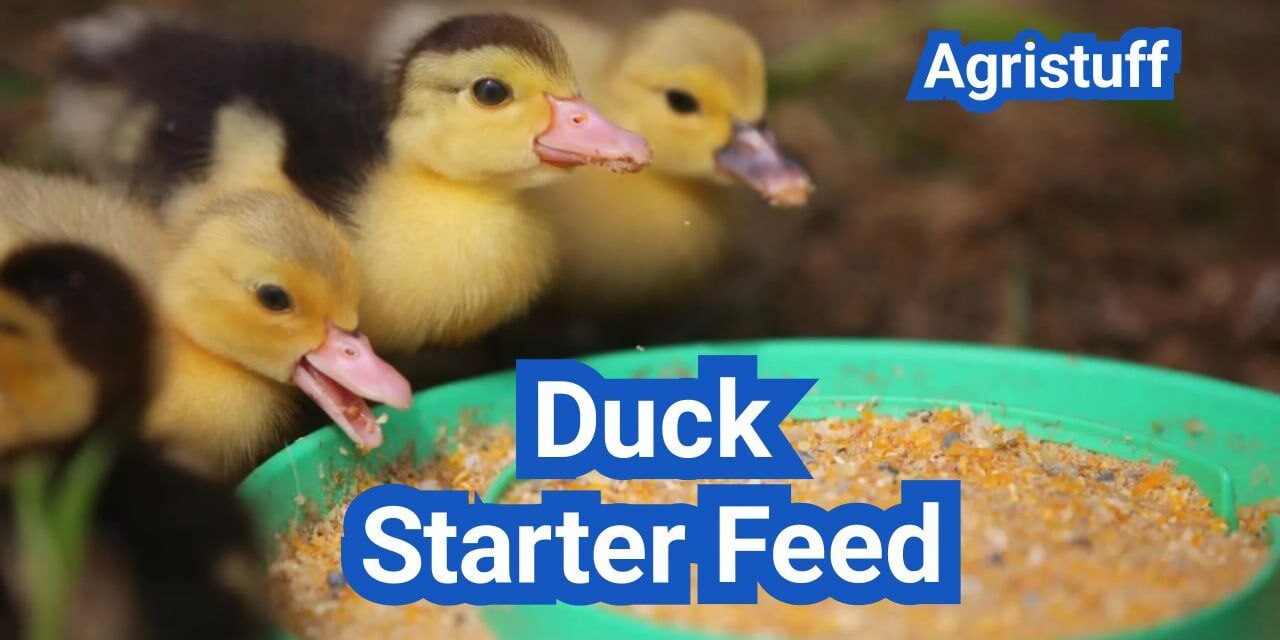
Raising ducklings requires careful attention to their dietary needs, particularly when it comes to duck starter feed. Unlike chicks, ducklings have different nutritional requirements that are crucial for their healthy growth and development.
One of the key differences between duckling starter feed and chick starter is the level of niacin, a vital nutrient for ducklings. Niacin deficiency can lead to health issues, making it essential to choose a starter feed that is formulated specifically for ducklings.
Understanding the differences between duck feed and chick feed is vital for providing your ducklings with the best possible start in life.
Key Takeaways
- Ducklings require a specific diet that includes niacin for healthy growth.
- Duck starter feed is formulated differently than chick starter.
- Niacin is a crucial nutrient for ducklings.
- Choosing the right starter feed is essential for duckling health.
- Duck feed and chick feed have distinct nutritional profiles.
Understanding Duck Nutritional Needs

Understanding the nutritional requirements of ducklings is vital for ensuring they receive the necessary nutrients for optimal health. Ducklings require a diet rich in specific nutrients to support their rapid growth and development.
Essential Nutrients for Healthy Ducklings
Ducklings need a balanced diet that includes essential nutrients such as proteins, vitamins, and minerals. Proteins are particularly important as they provide the building blocks for growth and development.
- Essential amino acids are crucial for growth
- Vitamins support various bodily functions
- Minerals are necessary for bone development and other physiological processes
The Critical Role of Niacin for Ducklings
Niacin, or Vitamin B3, plays a crucial role in the health of ducklings. It is essential for energy metabolism and maintaining healthy skin and feathers. A deficiency in niacin can lead to serious health issues, including bowed legs and poor growth.
Niacin is so critical for ducklings that their starter feed is often supplemented with this vitamin to prevent deficiencies.
Protein Requirements for Optimal Growth
Ducklings have high protein requirements to support their rapid growth rate. A diet with adequate protein is essential for ensuring they develop strong muscles and feathers.
| Nutrient | Importance |
|---|---|
| Protein | Essential for muscle and feather development |
| Niacin | Critical for energy metabolism and preventing bowed legs |
By understanding and meeting the nutritional needs of ducklings, breeders can ensure their ducks grow into healthy adults.
Duck Starter Feed vs. Chick Starter: Key Differences

The nutritional needs of ducklings are unique, necessitating a different starter feed compared to chicks. While both ducklings and chicks require a balanced diet for optimal growth, their specific nutritional requirements vary.
Nutritional Content Comparison
Duck starter feed and chick starter have different formulations to meet the specific needs of each species. Duck starter feed typically contains higher levels of niacin, an essential nutrient for ducklings to prevent leg problems and ensure proper growth.
A comparison of the nutritional content reveals that duck starter feed often has a different protein profile and may include additional supplements not found in chick starter.
Niacin Levels: Why It Matters
Niacin, or Vitamin B3, is crucial for ducklings as it plays a significant role in their growth and development. A deficiency in niacin can lead to bowed legs and other health issues in ducklings. Duck starter feed is formulated to provide adequate niacin levels, typically higher than those found in chick starter.
Medication Concerns in Chick Feed
Another critical difference between duck starter feed and chick starter is the potential presence of medications in chick feed. Some chick starters are medicated to prevent coccidiosis in chickens, but these medications can be harmful to ducklings. Therefore, it’s essential to choose a non-medicated starter feed when raising ducks.
When selecting a duck starter feed, it’s crucial to read the label carefully to ensure it meets the nutritional needs of your ducklings and does not contain harmful medications.
Can Ducklings Eat Chick Starter?

Ducklings can consume chick starter, but it’s crucial to understand the potential risks involved. While chick starter is formulated to meet the nutritional needs of chicken chicks, ducklings have different requirements, particularly when it comes to certain nutrients like niacin.
Using Non-Medicated Chick Starter for Ducklings
If you decide to feed your ducklings chick starter, it’s essential to use a non-medicated formula. Medicated chick starter contains drugs like amprolium, which can be harmful to ducklings. Non-medicated chick starter reduces the risk of adverse reactions and ensures that your ducklings receive the nutrients they need without the potential harm caused by medications intended for chickens.
When selecting a non-medicated chick starter, ensure it is fresh and stored properly to maintain its nutritional value. It’s also crucial to check the ingredient list and guaranteed analysis on the feed tag to understand what you’re providing to your ducklings.
Supplementing Chick Starter with Niacin
Ducklings require higher levels of niacin (Vitamin B3) than chicks. Niacin is crucial for the healthy development of ducklings, particularly for their bone growth and overall health. Chick starter, even if non-medicated, may not provide sufficient niacin for ducklings. Therefore, supplementing with niacin is often necessary.
You can supplement niacin by adding brewer’s yeast or niacin-rich foods to their diet. Brewer’s yeast is a natural source of niacin and can be mixed with their feed. The recommended dosage varies, but a common approach is to add 1-2% brewer’s yeast to their feed. However, it’s always best to consult with a veterinarian for specific guidance tailored to your ducklings’ needs.
Warning Signs of Nutritional Deficiency
Nutritional deficiencies, particularly in niacin, can lead to serious health issues in ducklings, such as bowed legs. Monitoring your ducklings for signs of nutritional deficiency is crucial. Symptoms can include:
- Lethargy
- Poor growth rate
- Bowed or deformed legs
- Weakness
If you notice any of these symptoms, it’s essential to adjust their diet promptly. Increasing niacin through supplementation or switching to a more appropriate duck starter feed can help alleviate these issues.
Here’s a comparison of the nutritional content in chick starter versus the needs of ducklings, focusing on key nutrients like niacin:
| Nutrient | Chick Starter | Duckling Needs |
|---|---|---|
| Niacin (mg/lb) | 30-40 | 50-70 |
| Protein (%) | 20-22 | 18-20 |
| Energy (kcal/lb) | 1100-1200 | 1000-1200 |
Understanding these nutritional differences is key to making informed decisions about feeding your ducklings. While chick starter can be used in a pinch, it’s clear that ducklings have unique needs that are best met with a diet formulated specifically for them, or careful supplementation to address deficiencies.
Duckling Bowed Legs: The Niacin Connection

The connection between niacin deficiency and bowed legs in ducklings is well-documented, and addressing this issue is vital for healthy duckling development. Niacin, or vitamin B3, plays a crucial role in the metabolic processes of ducklings, affecting their overall health and development.
Recognizing Symptoms of Niacin Deficiency
Niacin deficiency can manifest in several ways, with bowed legs being one of the most noticeable symptoms. Ducklings suffering from niacin deficiency may exhibit:
- Leg deformities or bowed legs
- Poor growth rate
- Weakness or lethargy
- Reduced feather quality
It’s essential to recognize these symptoms early to provide timely intervention.
How to Supplement Niacin for Ducklings
Supplementing niacin for ducklings can be achieved through dietary adjustments and additions. Here are some strategies:
- Niacin-rich feed: Ensure that the duck starter feed is rich in niacin. Some feeds are specifically formulated for waterfowl and contain higher levels of niacin.
- Niacin supplements: In cases where the feed is not sufficient, niacin supplements can be added to the ducklings’ diet. It’s crucial to follow the recommended dosage to avoid over-supplementation.
- Brewer’s yeast: Brewer’s yeast is a natural source of niacin and can be added to the ducklings’ feed as a supplement.
Treatment and Prevention Strategies
Treating niacin deficiency involves addressing the symptoms and preventing further deficiency. Prevention is key and can be achieved by:
- Providing a balanced diet that includes niacin-rich foods
- Ensuring access to clean water and a healthy environment
- Monitoring ducklings regularly for signs of niacin deficiency
By understanding the connection between niacin deficiency and bowed legs, breeders can take proactive steps to ensure the health and well-being of their ducklings.
Types of Duck Starter Feed

Understanding the different types of duck starter feed available is essential for providing your ducklings with the best start in life. Duck starter feeds come in various forms, each designed to meet the specific nutritional needs of ducklings.
Duck Starter Crumble vs. Pellets
Duck starter feed is commonly available in two forms: crumbles and pellets. Crumbles are smaller, easier to digest, and often recommended for young ducklings. Pellets, on the other hand, are larger and can be introduced as the ducklings grow older.
The choice between crumbles and pellets depends on the age and size of your ducklings. Crumbles are generally preferred for younger ducklings due to their ease of consumption and digestion.
Waterfowl Starter Feed Crumble Benefits
Waterfowl starter feed crumble is specifically formulated for ducklings and other waterfowl. The benefits of using a crumble include:
- Easy to eat for young ducklings
- Less waste compared to larger feed forms
- Encourages natural foraging behavior
These benefits make crumble an ideal choice for duckling starter feed, especially during the early stages of growth.
Organic vs. Conventional Options
When selecting a duck starter feed, you may also have the option between organic and conventional feeds. Organic duck starter feeds are made from ingredients that are free from pesticides, synthetic fertilizers, and genetically modified organisms (GMOs).
Conventional duck starter feeds may contain these elements but are often more affordable and still provide a balanced diet for ducklings. The choice between organic and conventional depends on your personal preference, budget, and the specific needs of your ducklings.
Top Duck Starter Feed Brands in the U.S.

Duckling owners in the U.S. have several excellent options when it comes to starter feeds, with brands like Manna Pro and Mazuri leading the way. These brands have established themselves as trusted names in poultry care, offering products that cater specifically to the nutritional needs of ducklings.
Manna Pro Duck Starter
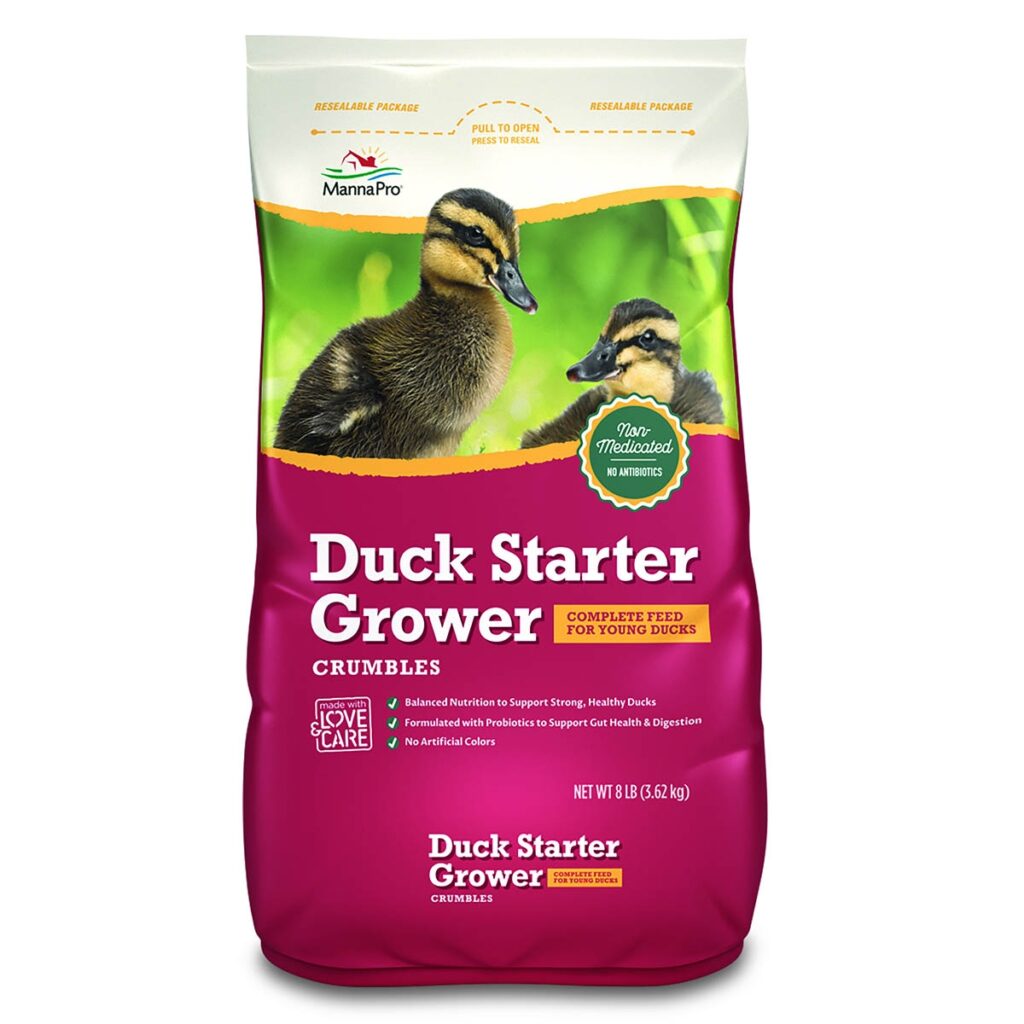
Manna Pro Duck Starter is a well-regarded choice among duck owners. It is formulated to provide the necessary nutrients for healthy growth, including a balanced mix of proteins, vitamins, and minerals. This feed is designed to support the development of strong, healthy ducklings.
Mazuri Waterfowl Starter
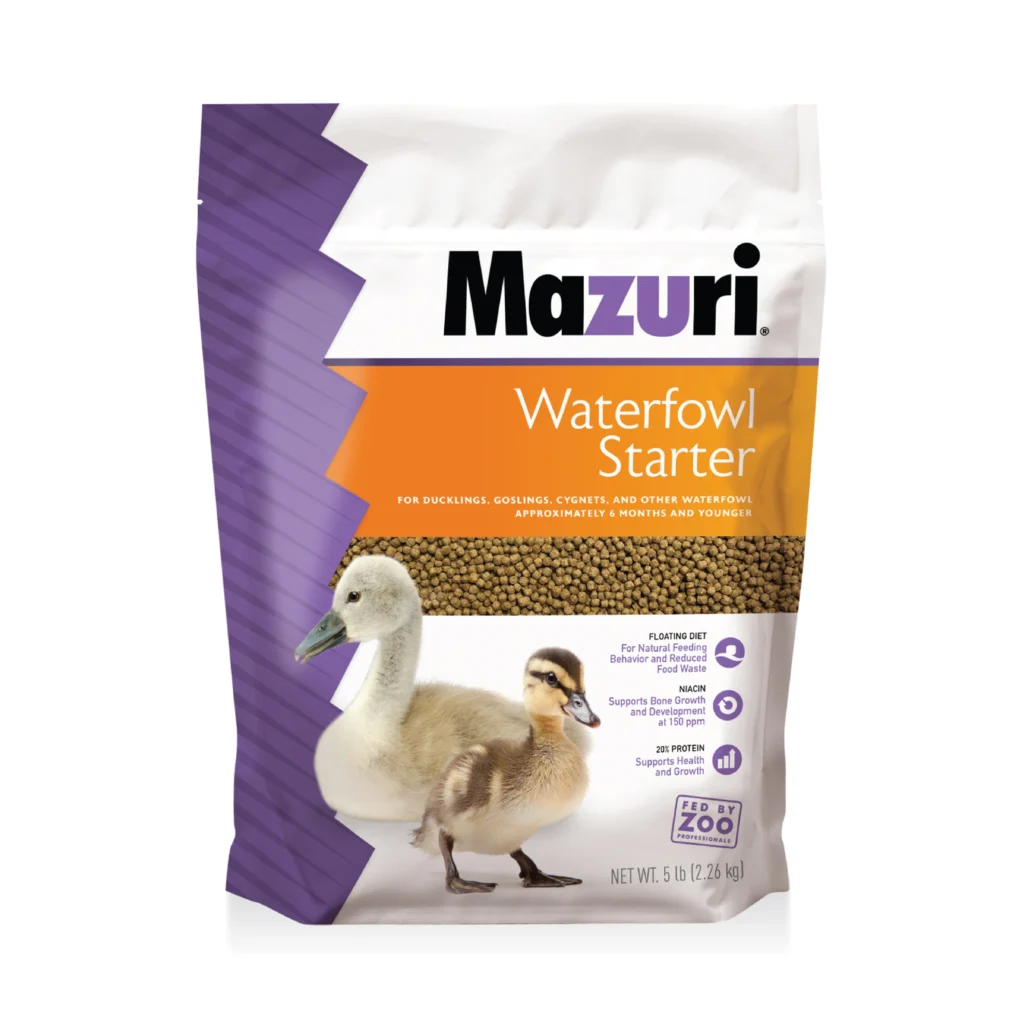
The Mazuri Waterfowl Starter is another highly recommended option. It is specifically designed for waterfowl, including ducks, and is known for its high-quality ingredients and nutritional profile. Mazuri is a brand that is often praised for its commitment to producing feed that meets the specific dietary needs of various bird species.
NatureServe Duck Starter
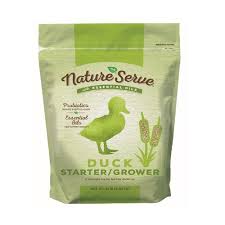
NatureServe Duck Starter offers a nutrient-rich feed that is designed to support the healthy development of ducklings. This feed is formulated to meet the unique nutritional requirements of ducks, promoting healthy growth and development.
Purina Duck Feed Options
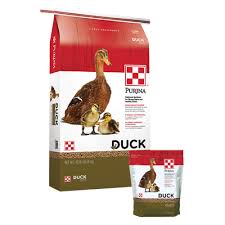
Purina is a well-known brand in the animal feed industry, and its duck feed options are no exception. Purina Duck Feed is designed to provide ducklings with the nutrients they need to grow strong and healthy. The brand offers a range of products that cater to different stages of a duck’s life, ensuring that owners can provide the best possible care.
When choosing a duck starter feed, it’s essential to consider the nutritional content, the reputation of the brand, and the specific needs of your ducklings. By selecting a high-quality feed from one of these top brands, you can help ensure your ducklings get the best possible start in life.
Where to Buy Duck Starter Feed

Duck starter feed is a vital component in raising healthy ducklings, and knowing where to buy it is essential. Several retailers, both online and in-store, carry duck starter feed, making it accessible to duck owners across the United States.
Rural King and Farm Supply Stores
Rural King is a popular destination for farm supplies, including duck starter feed. Many local farm supply stores also carry a variety of poultry feeds, making them a good option for those looking for duck starter feed.
Tractor Supply Company Options
Tractor Supply Company is another major retailer that carries a range of poultry feeds, including duck starter feed. They offer both in-store and online shopping options, making it convenient for customers to purchase the feed they need.
Online Retailers and Pricing Comparison
For those who prefer shopping online, several retailers offer duck starter feed on their websites. Online retailers like Amazon, Chewy, and Drs. Foster & Smith often carry a variety of duck starter feeds. It’s a good idea to compare prices across different retailers to find the best deal.
| Retailer | Price per Pound | Shipping |
|---|---|---|
| Rural King | $0.50 | In-store pickup |
| Tractor Supply Company | $0.55 | Free shipping on orders over $35 |
| Amazon | $0.60 | Free shipping with Prime |
When purchasing duck starter feed, it’s essential to consider not only the price but also the nutritional content and any additional costs, such as shipping. By comparing options across different retailers, duck owners can ensure they’re providing the best possible start for their ducklings.
How to Read a Poultry Feed Tag

Reading poultry feed tags is crucial for ensuring your ducklings receive the right nutrients for healthy growth. The feed tag provides detailed information about the feed’s nutritional content, ingredients, and any additives or medications. Understanding this information is key to making informed decisions about your ducklings’ diet.
Understanding Guaranteed Analysis
The Guaranteed Analysis section on the feed tag provides crucial information about the feed’s nutritional content. It typically includes the minimum or maximum percentages of crude protein, crude fat, crude fiber, and moisture. For ducklings, it’s essential to look for feeds with adequate protein levels (usually around 20-22%) to support their rapid growth.
Crude Protein: This indicates the protein content, which is vital for duckling growth. Ensure the feed has a sufficient protein level.
Crude Fat: This shows the fat content, which provides energy. Ducklings require a certain level of fat for optimal growth.
Crude Fiber: This represents the fiber content. While ducklings need some fiber, too much can be detrimental.
Deciphering Ingredient Lists
The ingredient list on the feed tag reveals what goes into the feed. It might include grains like corn and wheat, protein sources such as soybean meal, and supplements like vitamins and minerals. For ducklings, it’s crucial that the feed contains high-quality protein sources and is free from harmful additives.
- Look for named protein sources like “soybean meal” or “fish meal.”
- Avoid feeds with vague terms like “meat and bone meal.”
- Check for added vitamins and minerals essential for duckling health.
Identifying Additives and Medications
Some poultry feeds contain additives or medications to promote growth or prevent disease. It’s critical to identify these components, especially if you’re raising ducklings. Medicated feeds, often used for chickens, can be harmful to ducklings.
Common additives to watch for:
- Antibiotics: Some feeds contain antibiotics to promote growth or prevent disease.
- Coccidiostats: These are used to prevent coccidiosis, a common issue in poultry.
- Probiotics: Beneficial bacteria that can aid digestion.
Always check the feed tag for any medications or additives and consult with a veterinarian if you’re unsure about their impact on your ducklings.
Duckling Feeding Schedule Week by Week

Establishing a proper feeding schedule is crucial for the healthy development of ducklings. A well-structured feeding plan ensures that ducklings receive the necessary nutrients at each stage of their growth.
Weeks 1-2: Getting Started
During the first two weeks, ducklings require a starter feed that is rich in protein and niacin. Duck starter feed is specifically formulated to meet these needs. It’s essential to provide a nutrient-dense feed to support their rapid growth during this period.
- Provide starter feed with at least 20% protein.
- Ensure access to fresh water at all times.
- Feed should be provided in a clean, dry environment.
Weeks 3-8: Growth Phase
As ducklings grow, their nutritional needs evolve. From weeks 3 to 8, they continue to require a high-protein diet, although the protein content can be slightly reduced.
| Week | Feed Type | Protein Content |
|---|---|---|
| 3-4 | Starter/Grower Transition | 18-20% |
| 5-8 | Grower Feed | 16-18% |
When to Switch from Starter to Grower
The transition from starter to grower feed typically occurs around 3-4 weeks of age, depending on the breed and growth rate. It’s crucial to monitor the ducklings’ development and adjust their feed accordingly.
- Observe the ducklings’ size and activity level.
- Gradually introduce grower feed while phasing out starter feed.
- Ensure a smooth transition to avoid digestive upset.
DIY Duck Starter Feed Solutions

In emergency situations, homemade duck feed recipes can be a lifesaver for your ducklings. While commercial duck starter feed is always recommended, there are instances where a DIY approach might be necessary or preferred.
Emergency Homemade Duck Feed Recipes
Creating a homemade duck starter feed requires careful consideration of the nutritional needs of ducklings. A simple recipe can include a mix of grains, proteins, and supplements. For instance, you can combine oats, wheat, and corn as the grain component, add mealworms or finely chopped hard-boiled eggs for protein, and include crushed eggshells or oyster shells for calcium.
Here’s a basic recipe to get you started:
- 2 cups of oats
- 1 cup of wheat
- 1 cup of corn
- 1/2 cup of mealworms or chopped eggs
- 1 tablespoon of crushed eggshells or oyster shells
Mix these ingredients thoroughly and provide fresh water at all times. It’s crucial to note that this is a temporary solution and not a replacement for commercially formulated duck starter feed.
Safe Kitchen Scraps for Ducklings
While ducklings should primarily be fed a balanced starter feed, certain kitchen scraps can be safely offered in moderation. Leafy greens like kale and spinach are nutritious and can be given in small amounts. However, avoid giving them onions, garlic, or any moldy foods, as these can be harmful.
“Ducklings can have finely chopped, cooked vegetables like carrots or peas, but these should not make up more than 10% of their diet.”
Balancing Homemade Feed Nutrition
Balancing the nutrition in homemade duck feed is challenging but crucial. Ducklings require a diet rich in protein (around 20-22%) and adequate levels of niacin. You can achieve this by including protein-rich ingredients like mealworms or fish meal in your mix.
| Nutrient | Required Level | Sample Ingredients |
|---|---|---|
| Protein | 20-22% | Mealworms, fish meal |
| Niacin | Adequate levels | Brewer’s yeast, niacin supplements |
| Calcium | 1-2% | Crushed eggshells, oyster shells |
To ensure your ducklings are getting the nutrients they need, consider consulting with a poultry nutritionist or veterinarian for guidance on creating a balanced homemade feed.
Medicated vs. Non-Medicated Feed for Ducklings

Understanding the difference between medicated and non-medicated feed is essential for raising healthy ducklings. The choice between these two types of feed can significantly impact the health and well-being of your ducklings.
Why Medicated Chick Feed Can Harm Ducklings
Medicated chick feed, which is commonly used for chickens, contains medications like amprolium that can be harmful to ducklings. These medications are designed to prevent coccidiosis in chickens, but they can be toxic to ducks. Feeding medicated chick feed to ducklings can lead to health issues, including niacin deficiency, which is critical for their growth.
When Medication Might Be Necessary
While medicated feed is generally not recommended for ducklings, there may be situations where a veterinarian advises its use to prevent or treat a specific health issue. It’s crucial to follow professional advice in such cases. Always consult with a veterinarian before making any decisions about medicated feed for your ducklings.
Safe Alternatives to Medicated Feed
For most duckling owners, non-medicated feed is the safest choice. There are several high-quality, non-medicated starter feeds available that are specifically formulated for waterfowl like ducks. Look for feeds that are labeled as safe for ducks and contain adequate niacin levels. Some popular brands offer non-medicated duck starter feeds that are both nutritious and safe.
When choosing a feed, it’s also important to read the label carefully. Ensure that the feed is appropriate for your ducklings’ age and nutritional needs. A well-balanced, non-medicated feed can provide your ducklings with the best start in life.
Common Mistakes When Feeding Ducklings

Feeding ducklings requires careful attention to detail to avoid common mistakes that can impact their health and growth. Many new duckling owners are unaware of the critical errors that can occur during feeding, which can lead to serious health issues and even mortality.
Improper Feed Storage Issues
One of the most significant mistakes in duckling care is improper feed storage. Feed should be stored in a cool, dry place to prevent mold growth and nutrient degradation. Exposure to moisture can cause feed to become stale or develop mold, which can be toxic to ducklings. It’s essential to use airtight containers and keep them away from direct sunlight and humidity.
Water and Feed Management Errors
Proper water and feed management is crucial for duckling health. Inadequate water supply can lead to dehydration, while contaminated water can cause illness. Feeders and waterers should be cleaned regularly to prevent bacterial growth. Additionally, ensuring that ducklings have access to fresh water at all times is vital for their digestive health and overall well-being.
- Clean waterers daily to prevent bacterial contamination.
- Use feeders that minimize waste and prevent feed from getting wet.
- Monitor water levels to ensure ducklings always have access to fresh water.
Transitioning Mistakes to Avoid
Transitioning ducklings from starter feed to grower or layer feed requires careful planning. Abrupt changes in feed can cause digestive upset, so it’s crucial to gradually introduce new feeds over a period of 7-10 days. Mixing the new feed with the current feed in increasing proportions helps the ducklings’ digestive systems adjust.
By avoiding these common mistakes, duckling owners can significantly improve the health and survival rates of their birds. Proper feed storage, water and feed management, and careful transitioning are key to raising healthy ducklings.
Ensuring Your Ducklings Thrive
Providing a nutritious diet and proper care is crucial for the health and well-being of ducklings. As discussed, duck starter feed plays a vital role in their growth and development. Understanding the nutritional needs of ducklings and the differences between duck and chick starter feed is essential for ensuring they receive the necessary nutrients for optimal growth.
A well-balanced diet that includes the right levels of niacin, protein, and other essential nutrients is critical for healthy ducklings. By choosing the right duck starter feed and following a proper feeding schedule, you can help prevent nutritional deficiencies and promote healthy growth. Brands like Manna Pro, Mazuri, and Purina offer high-quality duck starter feed options that cater to the specific needs of ducklings.
Ensuring ducklings thrive requires attention to detail and a commitment to providing the best possible care. By following the guidelines outlined in this article, you can give your ducklings the best start in life. With proper care and nutrition, your ducklings will grow into healthy, happy ducks.
FAQ
What is duck starter feed, and why is it different from chick starter?
Duck starter feed is a specialized feed designed for ducklings, differing from chick starter in nutritional content, particularly in niacin levels, to meet the unique needs of ducklings.
Can ducklings eat chick starter feed?
While ducklings can eat chick starter, it’s crucial to use non-medicated chick starter and supplement with niacin to prevent deficiency, as chick starter may not provide adequate niacin for ducklings.
What is the importance of niacin in a duckling’s diet?
Niacin is essential for ducklings as it prevents conditions like bowed legs, supports healthy growth, and is crucial for overall development.
How do I know if my ducklings are getting enough niacin?
Monitor your ducklings for signs of niacin deficiency, such as bowed legs, and ensure their feed is supplemented with niacin or use a duck starter feed that contains adequate niacin levels.
What are the differences between crumbles and pellets for duck starter feed?
Crumbles are often preferred for ducklings as they are easier to eat, reducing waste, while pellets can be used but may require more careful feeding to avoid waste.
Where can I buy duck starter feed?
Duck starter feed can be purchased at farm supply stores like Rural King, Tractor Supply Company, and online retailers, offering various brands and types.
How do I read a poultry feed tag?
Understanding a poultry feed tag involves looking at the guaranteed analysis for nutritional content, the ingredient list for components, and identifying any additives or medications.
What is the feeding schedule for ducklings?
Ducklings require starter feed for the first few weeks, typically up to 8 weeks, before transitioning to grower feed, with the exact timing depending on breed and growth rate.
Can I make my own duck starter feed at home?
Yes, you can make a homemade duck starter feed using a mix of grains, proteins, and supplements, but it requires careful balancing to ensure nutritional adequacy.
Should I use medicated or non-medicated feed for my ducklings?
Non-medicated feed is generally recommended for ducklings unless specific health issues require medication, as medicated feed can pose risks.
What are common mistakes to avoid when feeding ducklings?
Common mistakes include improper feed storage, poor water and feed management, and transitioning too quickly or slowly between feed types.
How can I ensure my ducklings are thriving on their feed?
Monitor their health, growth, and adjust their feed as necessary, ensuring access to fresh water and a balanced diet that meets their nutritional needs.
Can I use chick starter instead?
Yes short-term, but you must choose nonmedicated and have a consistent niacin plan so ducklings don’t develop leg weakness.
Do ducklings need “medicated” feed for coccidiosis?
Often no for typical backyard setups; clean, dry bedding and sanitation usually matter more than medicated rations for ducklings.
When do I switch from starter to grower?
Follow your program and bird type; many plans step down after the early starter window to match duck growth and reduce waste.
Do I need grit?
Not for complete pellets/crumbles alone, but add grit when you feed whole grains, lots of greens, or other non-pelleted extras.
What’s the #1 sign the starter isn’t working?
Early leg weakness, bowed posture, or reluctance to walk—fix environment first, then verify niacin coverage and label match.
Conclusion of: Duck Starter Feed
Ducklings grow fast, but they don’t grow like chicks, and duck starter feed is the simplest way to avoid leg issues, poor feathering, and messy brooder problems in the first weeks. The goal is a balanced start that supports bones, joints, and steady weight gain without “overheating” growth or creating wet litter. If you choose the right bag early, everything after that—brooding, cleaning, and health checks—gets easier. Extension guidance on feeding young ducks.
Most confusion happens when people assume duck starter feed should match chick starter, because the bags look similar and the feeding habits seem the same at a glance. In reality, ducklings drink more, splash more, and have different vitamin needs, so small nutrition gaps show up quickly as weakness, wobble, or slow growth. The good news is you don’t need fancy supplements if you buy with clear criteria and set up feed and water correctly from day one. University of Wisconsin duck care overview.
What “starter” means for ducklings
In practical backyard terms, duck starter feed is the complete ration you use from hatch until the duckling is strong, feathering well, and ready to shift to a grower formula. For many common breeds, that starter window is short—think the first couple of weeks—because ducks transition faster than chicks when management is solid. Starting with the right pellet size or crumble also reduces waste and helps you monitor appetite and droppings more accurately. NC State feeding ducks recommendations.
Because birds adjust feed intake based on energy density, duck starter feed should be consistent and complete, not a rotating mix of “whatever is available” plus treats. When you keep the ration stable, changes in appetite, thirst, or stool are more meaningful signals of brooder temperature problems, waterer placement issues, or early illness. That stability is also how you prevent nutrient dilution—one of the biggest hidden causes of slow early growth. MSD Vet Manual overview of poultry nutrient needs.
Duck starter vs chick starter: the key differences
The biggest functional difference is that duck starter feed must cover higher niacin needs while still keeping protein, minerals, and pellet size in a “duck-friendly” range. Chick diets are usually engineered for chick genetics, chick water behavior, and chick disease-prevention choices, which is why a bag can be “great for chicks” yet still be a poor match for ducklings unless you modify your setup. Understanding these differences lets you confidently buy locally without chasing niche brands or online-only feeds. eXtension/4-H duck feeding PDF.
Niacin: the #1 reason ducks need a different starter
Niacin is the nutrient most likely to be short when duck starter feed is replaced with standard chick starter, and deficiency shows up as leg weakness, bowed legs, poor growth, and reluctance to walk. Ducklings put on mass quickly, so a marginal niacin level can become a visible mobility problem within days under real-world brooder conditions. If you remember only one “duck vs chick” fact, make it this one. MSD Vet Manual on vitamin deficiencies in poultry.
To stay out of trouble, duck starter feed should align with established waterfowl requirement tables rather than layer-chick targets, especially for fast-growing meat-type ducks. You don’t need to memorize numbers, but you should know that ducks generally require more niacin than chickens and that the gap is big enough to matter at backyard feeding rates. If a tag doesn’t list niacin, you’ll want a plan (either a duck-specific feed or a proven supplementation method). Nutrient requirement table for Pekin ducks.
If your feed store only has chick bags, duck starter feed can still be “built” safely by choosing a nonmedicated base and adding a reliable niacin source in water or as a measured supplement, not as random kitchen scraps. A practical approach is using a water-soluble B-complex/niacin supplement or a controlled amount of brewer’s yeast when you must use chicken feed temporarily. Keep it simple, consistent, and easy to repeat so you don’t accidentally under-dose or stop too early. UC Davis avian care and feeding guide (duck notes).
Protein and amino acids: enough early, not excessive later
Even when niacin is covered, duck starter feed should match the bird’s growth curve so you’re not pushing high protein longer than needed. Many duck programs start higher and then step down after the early growth burst, which is why “starter” and “grower” are not just marketing terms—they’re a practical way to reduce waste, reduce litter moisture, and keep growth steady instead of spiky. If you keep the ration age-appropriate, you also reduce the temptation to “fix” problems with extra supplements later. Raising meat ducks (protein/program discussion).
A common trap is buying the highest-protein bag on the shelf and assuming it’s automatically better, but duck starter feed should balance growth with skeletal development and management realities like limited space and wet bedding. Game bird or some turkey starters can run much higher protein than many ducklings need beyond the earliest phase, which can contribute to leg strain in a backyard setting where birds don’t roam on pasture all day. When in doubt, choose a duck/waterfowl-labeled starter or a moderate-protein plan with correct niacin rather than “max protein.” OSU market duck guidebook PDF.
Beyond crude protein, duck starter feed quality shows up in amino acid balance, because birds don’t build muscle from “protein percent” alone. Practical feed buying means you compare similar product types (starter to starter), then pick the one that fits your goals: meat growth, replacement pullets, or mixed backyard birds. If you’re raising multiple species together, you’ll also want a plan for keeping ducklings on their ration without letting chicks dominate feeders. University of Kentucky poultry nutrition resources.
Form matters: crumbles beat fine mash for most backyards
In most brooders, duck starter feed works best as crumbles or small pellets because ducklings grab, spill, and “mouth” feed more aggressively than chicks. Fine mash can become paste when splashed, which drives wet litter, ammonia odor, and dirty bills—then people misread the mess as a health problem. A crumble also makes it easier to track consumption and reduces sorting behavior. University of Minnesota duck resource (PDF).
Equipment choices make the bag work, so duck starter feed should be paired with a feeder style that reduces “shovel eating” and a water setup that limits dunking the entire head into the feed tray. Use a wider, stable feeder lip (not a tiny chick trough) and consider elevating feeders slightly as birds grow to keep bedding out. This is where many backyard set-ups fail—not because the feed is wrong, but because the feed can’t stay clean and dry long enough to be eaten properly. Cornell duck housing and management notes.
Water management: ducklings eat and drink as a system
Because ducklings need to rinse their bills and clear their nostrils, duck starter feed performance depends on providing water deep enough for a quick bill dunk—but not so deep that tiny ducklings can fall in and chill. A good rule is “deep enough to rinse, shallow enough to be safe,” and it should be stable so it can’t be tipped into bedding. If you solve water access early, you prevent many “mystery” issues that look like nutrition problems. K-State waterfowl FAQ (vitamins/leg weakness).
Wet bedding is the silent enemy of duck starter feed success because chilling and dampness reduce appetite and increase stress, which then magnifies minor nutrition gaps. In the brooder, keep water on a grate or tray, change wet spots fast, and prioritize ventilation without drafts at duckling level. If ducklings are huddling, panting, or constantly damp, fix the environment before you change the ration. Brooding and early management basics.
Medicated chick starter: when to avoid it and why
Many keepers choose nonmedicated duck starter feed because ducks and geese are often less susceptible to some common chicken diseases and because medicated rations can create unnecessary risk in waterfowl management. Ducklings also tend to eat more aggressively, which can complicate “dose by feed intake” assumptions that are designed around chicks. If you’re running a clean brooder with dry bedding and good sanitation, nonmedicated feed is usually the simpler choice. Feeding ducks in small flocks (medicated-feed cautions).
If you’re tempted to use medicated products, remember that duck starter feed choices should stay aligned with labeled directions and approved use, not internet rules of thumb. Medicated feeds contain specific drugs at specific concentrations, and “safe for one species” does not automatically mean “ideal for another,” especially when intake differs. When disease risk is real, the best move is to improve hygiene and consult a vet rather than guessing with a medicated bag. FDA overview of medicated feeds.
From a compliance standpoint, duck starter feed becomes more complicated when drugs and prescriptions enter the picture, because some medically important antimicrobials require a Veterinary Feed Directive (VFD). That matters even for small farms because buying, storing, and feeding medicated products can create recordkeeping obligations and residue concerns. If you’re not sure whether a product is under VFD, treat that uncertainty as a reason to pause and verify before feeding. FDA VFD requirements explained.
How to read a feed tag and compare bags
When you’re comparing bags, duck starter feed selection gets easier if you know what the label is legally required to show: product name, intended species/class, guaranteed analysis, ingredient statement, and feeding directions. Start with the intended use statement—if it’s clearly for ducks/waterfowl starter, that’s a strong green flag. Then use the guaranteed analysis to compare apples to apples (starter vs starter), not starter vs layer pellets. Animal feed labeling guide (state regulator PDF).
A high-quality duck starter feed tag also helps you avoid surprises like excessive salt, unclear medication statements, or missing feeding directions that leave you guessing on intake. Don’t overthink the ingredient list, but do look for consistency: recognizable grains/protein sources plus a vitamin/mineral premix, and clear directions for the age group you’re raising. If the tag looks vague or “marketing heavy” without specifics, choose a different mill or brand when possible. UK Extension: how to read a feed tag (PDF).
What to buy: a practical decision tree
If your local store carries a true waterfowl product, duck starter feed should usually be your first pick because it reduces the need for extra steps, mixing, or supplementation. If you only see chick bags, you can still succeed by choosing a nonmedicated starter and using a consistent niacin plan rather than guessing day to day. The “best” option is the one you can buy reliably every time, because switching formulas weekly is harder on your management than it is on the feed company. MSU duck production guide (PDF).
- Best: Waterfowl/duck starter crumble or small pellet labeled for ducklings (then switch to waterfowl grower as directed).
- Good: All-flock starter with clear vitamin/mineral info, used with a niacin plan if niacin isn’t stated.
- Fallback: Nonmedicated chick starter used short-term, plus a measured niacin supplement (water-soluble) and tight brooder hygiene.
- Avoid as a default: Very high-protein game bird/turkey starters unless you understand the program and you’re stepping down protein at the right time.
For meat birds, duck starter feed decisions should also consider your endpoint—market weight or long-term backyard flock—because the “perfect” starter is different if you’re finishing quickly versus raising replacements. Many market-duck programs push strong early growth, but they still rely on clean water, dry bedding, and enough feeder space so birds don’t binge then crash. If you’re raising mixed ages, plan separation so the smallest ducklings aren’t forced to compete with larger birds. OSU duck resource (PDF).
When you’re stuck between two similar options, duck starter feed freshness and consistency can matter as much as the nutrient numbers. Check for intact bags, minimal dust, and storage conditions at the store (dry pallets, not next to wet fertilizer or open doors). If you can buy from a local mill with strong labeling and predictable batches, that often beats chasing a niche product that’s frequently out of stock. AAFCO feed inspection and labeling reference (PDF).
Feeding plan: week-by-week starter strategy
In week 0–2, the simplest approach is duck starter feed offered free-choice, kept dry, and refreshed often so you’re not feeding damp crumbs that sour quickly. Keep treats off the menu early because even “healthy” extras dilute vitamins and minerals and can hide whether the ducklings are actually eating the complete ration. Watch legs, posture, and activity daily—early correction is far easier than fixing a deficiency after it becomes a mobility problem. Brooding and rearing ducklings guidance.
After that early phase, duck starter feed should transition to a grower or all-flock grower that matches your goal, with gradual changes over several days to avoid stress and sudden stool changes. As you add pasture time or greens, keep the complete ration as the “main” and treat extras as small add-ons, not meal replacements. If you feed whole grains or lots of rough greens, provide appropriate grit so the gizzard can do its job efficiently. MSU raising waterfowl (PDF).
Feed storage and safety: keep nutrients in, keep toxins out
Even the best duck starter feed can fail if it’s stored poorly, because moisture, heat, and pests reduce vitamin potency and increase mold risk. Use a sealed bin, keep it off concrete, and avoid “long open bag” habits in humid climates or unconditioned barns. If feed smells musty, feels clumpy, or looks dusty with discoloration, don’t gamble—replace it. Mycotoxins in poultry feed (overview).
When you’re troubleshooting unexplained poor growth, duck starter feed should be evaluated for contamination as well as nutrition, especially if multiple birds show reduced appetite at the same time. Chemical contaminants and spoilage risks are part of why reputable mills emphasize quality control and why you should avoid “mystery grain” sources with unknown storage history. A small savings on feed isn’t worth a setback in health, losses, or slow growth. FDA information on chemical contaminants in animal food.
Quick checklist
- Choose a waterfowl/duck-labeled starter when available; otherwise use a nonmedicated starter plus a clear niacin plan.
- Use crumbles or small pellets to reduce wet mash and improve intake tracking.
- Provide water deep enough for bill rinsing, but safely shallow and stable for tiny ducklings.
- Keep water on a grate/tray to protect bedding from constant soaking.
- Offer starter free-choice and refresh often; remove damp feed immediately.
- Limit treats in the first weeks; don’t dilute the complete ration.
- Watch legs daily: posture, gait, willingness to walk, and joint swelling.
- Plan a slow transition to grower after the early starter window (mix old/new for several days).
- Provide grit only when feeding non-pelleted extras (greens/whole grains), not as a default for pelleted rations.
- Store feed sealed, dry, cool, and off the floor to prevent mold and nutrient loss.
Common mistakes to avoid
- Using medicated chick starter by default: prioritize hygiene and nonmedicated options unless a vet advises otherwise.
- Skipping niacin planning: if the bag isn’t duck-specific, assume you must verify niacin coverage.
- Feeding too many treats early: it dilutes vitamins/minerals and masks real intake problems.
- Letting feed get wet: wet feed quickly becomes waste and can drive dirty bills and wet litter.
- Deep water too early: increases chilling and drowning risk for very young ducklings.
- Overcrowding feeders: causes uneven growth as timid birds eat last.
- Fast formula changes: sudden switches increase stress and messy droppings.
- Poor storage: moldy/clumpy feed can mimic “nutrient deficiency” with reduced appetite.
Costs and ROI snapshot
In the U.S., duck starter feed cost is driven by formulation (waterfowl-specific vs general), protein level, ingredient volatility (corn/soy), and whether the product is non-GMO or organic. A practical backyard way to budget is “bag economics”: compare cost per pound, then estimate how fast you go through a 40–50 lb bag based on flock size and waste control (feeder design and wet-litter prevention are major cost levers). The fastest ROI often comes from reducing losses and feed waste rather than finding the absolute cheapest bag. FSMA preventive controls for animal food (context for quality control).
For small farms, duck starter feed ROI also shows up in uniformity—birds that start evenly are easier to manage, easier to market, and less likely to need “special care” later. If you’re raising meat ducks, early nutrition and dry bedding reduce setbacks that slow growth and increase time to finish, which is a real cost in labor, utilities, and space. If you’re keeping layers or breeders, a strong start supports better long-term structure and fewer chronic leg problems. USDA ARS note on fungal toxins and poultry risk.
Final thought
The best duck starter feed is the one that reliably covers niacin, fits your ducklings’ age and goals, and stays clean and dry long enough for them to actually eat it. If you buy with a label-first mindset and set up water and feeders to control mess, you’ll prevent most early problems before they start and you’ll spend far less time “troubleshooting” later.
Sources & References
- Niacin requirement research (PubMed record)
- Review: nutritional requirements of meat-type and egg-type ducks (PMC)
- Example FDA medicated feed label (amprolium Type C PDF)
- FDA FOI summary for amprolium oral solution (PDF)
- State regulator overview: medicated feed
- FDA overview: mycotoxins
- Storage guidance for mycotoxin-affected grain
- University extension: mycotoxin overview
- Penn State Extension: FSMA preventive controls for animal feed
- MSD Vet Manual: mineral deficiencies in poultry
- Classic study: niacin deficiency and bowed legs in ducklings (PDF)
- Cornell Cooperative Extension: backyard ducks discussion
- Industry guide: raising backyard ducks (PDF)
- Waterfowl nutrition overview (PDF)