Great livestock judging starts with fast observation, clear priorities, and confident decisions. The contestants who score well are usually the ones who can place a class logically and explain that placing with strong oral reasons.
In this guide, you will learn how livestock judging works in the U.S., how scoring is applied in real contests, what judges look for across common classes, and how 4-H and FFA beginners can practice smarter and improve faster.
Key Takeaways
- Understanding the criteria for livestock evaluation is crucial.
- Giving oral reasons is a key component of livestock judging contests.
- Effective note-taking is essential for success in 4-H and FFA competitions.
- Livestock judging teaches critical thinking and decision-making skills.
- Mastering livestock judging can enhance a student’s understanding of animal science.
What Is Livestock Judging?

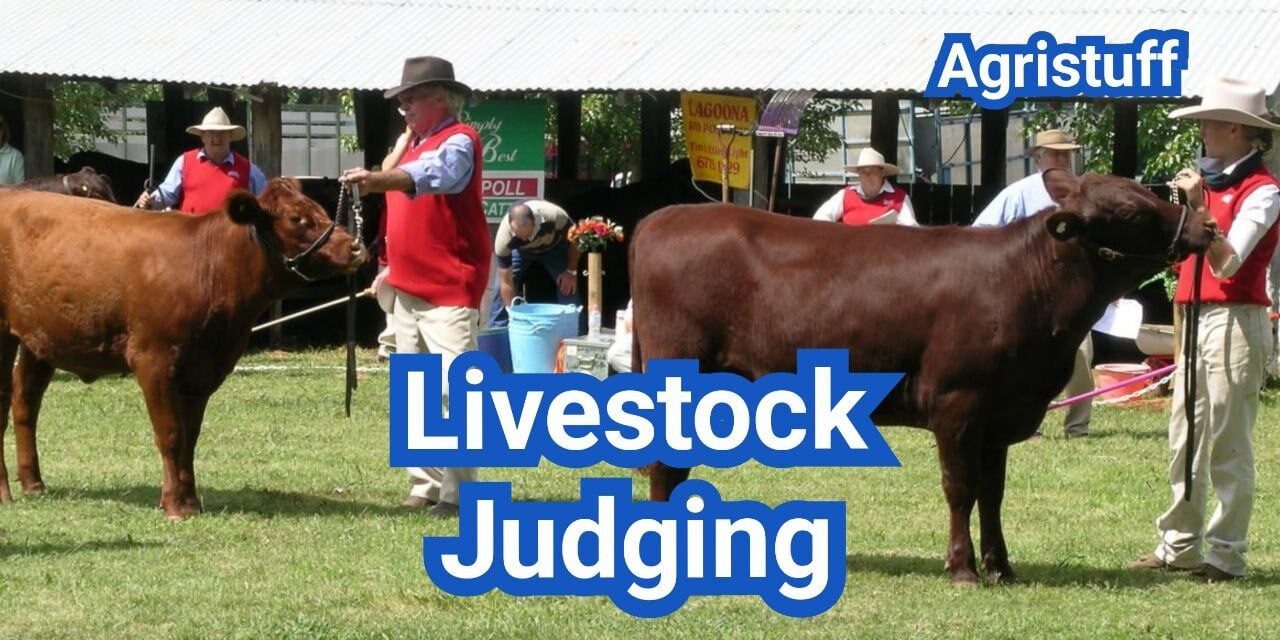
Understanding the fundamentals of livestock judging is essential for anyone involved in agricultural education or the livestock industry. Livestock judging is a critical skill that involves evaluating animals based on their breed characteristics, conformation, and other factors.
What Is Livestock Judging?
Livestock judging is the process of evaluating livestock to determine which animal best represents the ideal characteristics of its breed or species. This evaluation involves assessing various traits such as conformation, muscling, and structural correctness. Judges use these criteria to compare animals within a class and decide on a placing.
The History and Importance in American Agriculture
The history of livestock judging in the U.S. is closely tied to the development of agricultural education and organizations such as 4-H and FFA. Livestock judging contests have been a staple of these programs, providing students with hands-on experience in evaluating livestock and developing critical thinking skills. The importance of livestock judging lies in its ability to teach students about livestock handling techniques, animal health, and breed characteristics.
Key Skills Developed Through Livestock Evaluation
Through livestock evaluation, students develop a range of valuable skills, including:
- Critical thinking and decision-making
- Effective communication through oral reasons
- Attention to detail and observation skills
- Knowledge of breed characteristics and livestock handling techniques
These skills are not only essential for success in livestock judging contests but also beneficial for careers in agriculture and related fields.
How Livestock Judging Competitions Work

Understanding the structure and format of livestock judging competitions is essential for participants to excel. Livestock judging competitions provide a platform for individuals to demonstrate their knowledge and skills in evaluating livestock based on specific criteria.
Types of Contests: Local to National Level
Livestock judging competitions are available at various levels, from local fairs and exhibitions to state and national events. Local competitions often serve as a starting point for beginners, while national events attract experienced competitors. The University of Arkansas – Division of Arkansas Horse Judging – Giving Reasons provides valuable insights into the format and structure of these competitions.
At the local level, competitions may focus on specific breeds or species, while national events typically encompass a broader range of livestock. Competitors must be prepared to adapt to different contest formats and judging criteria as they progress from local to national levels.
4-H vs. FFA Competition Structures
Both 4-H and FFA organizations offer livestock judging competitions, each with its unique structure and format. 4-H livestock judging events often focus on hands-on learning and skill development, while FFA competitions may emphasize career development and technical skills.
Understanding the differences between 4-H and FFA competition structures is crucial for participants to prepare effectively. Competitors should familiarize themselves with the specific rules, formats, and judging criteria used in each type of competition.
Typical Contest Format and Timeline
A typical livestock judging competition involves several classes of livestock, with competitors evaluating and ranking animals based on specific criteria. The contest format usually includes:
- Introduction and explanation of the contest rules
- Evaluation of livestock classes
- Oral reasons or written justifications for the competitor’s placings
- Judging and scoring by officials
Competitors must manage their time effectively to complete all classes within the allotted timeframe. Familiarity with the contest format and timeline is essential for success in livestock judging competitions.
How Livestock Judging Scoring Works

To excel in livestock judging, one must grasp the intricacies of the scoring system used in these events. Livestock judging competitions, whether at the local, state, or national level, rely on a structured scoring system to evaluate participants’ skills accurately.
Understanding Placing Cards and Scorecards
At the heart of the livestock judging scoring system are placing cards and scorecards. Placing cards are used by judges to rank the livestock from first to last place within a class. These cards are then used to generate scorecards, which detail how many points a contestant earned for their placing decisions.
Livestock judging scorecards typically include information such as the class number, the contestant’s placing, and the official placing. They also show the “cuts,” which are the point deductions for incorrect placings.
How Cuts Are Determined and Applied
Cuts are a critical component of the scoring system, as they determine the point deductions for incorrect placings. The size of the cut depends on the difference in quality between the animals. For instance, a larger cut might be applied if the contestant placed a significantly inferior animal over a superior one.
Understanding how cuts are determined and applied is essential for contestants to strategize their placings and for coaches to develop effective training programs.
Using Livestock Judging Calculators
In modern livestock judging, technology plays a significant role in simplifying the scoring process. Livestock judging calculators are online tools that help contestants, coaches, and judges quickly calculate scores based on placings and cuts. Websites like Livestockjudging.com provide such calculators, making it easier for participants to understand their scores and identify areas for improvement.
By utilizing these calculators, contestants can practice with real data, enhancing their understanding of the scoring system and improving their performance in competitions.
The Art of Giving Oral Reasons

In the world of livestock judging, presenting oral reasons is an essential skill that showcases a competitor’s knowledge and confidence. Giving oral reasons involves clearly articulating why you placed a class of livestock in a particular order, demonstrating your understanding of the evaluation criteria and your ability to communicate effectively.
Structure and Format of Oral Reasons
A well-structured oral reason follows a logical format, typically starting with a clear statement of the animals’ placing, followed by comparisons between the top and bottom pairs. When comparing animals, it’s essential to focus on the key factors that influenced your decision, such as structural correctness, muscle mass, or breed characteristics.
Effective oral reasons are concise, yet comprehensive. They should highlight the most critical differences between the animals, using specific terminology related to livestock evaluation. For instance, when discussing beef cattle, you might comment on the “depth of rib” or “width of loin,” demonstrating your knowledge of the species and your ability to apply that knowledge.
Developing Proper Terminology
Developing a robust vocabulary related to livestock judging is crucial for delivering compelling oral reasons. This involves familiarizing yourself with species-specific terms, as well as general evaluation criteria. Practice using these terms in context, so you can confidently incorporate them into your oral reasons.
To enhance your terminology, consider maintaining a notebook or digital document where you record new terms and their definitions. Regularly reviewing and practicing these terms will help you become more comfortable and confident in your oral presentations.
Confidence and Delivery Techniques
Confidence is key when delivering oral reasons. To project confidence, focus on maintaining eye contact with the judge or audience, speaking clearly and at a moderate pace, and using assertive body language. Practice is essential to develop these skills, so consider recording yourself or presenting to friends or family.
Delivery techniques can also enhance the impact of your oral reasons. Varying your tone and pace can help keep your audience engaged, while pausing for emphasis can draw attention to critical points. Remember, the goal is to communicate your decisions clearly and persuasively, so focus on being articulate and confident.
Mastering Note-Taking for Livestock Judging

Note-taking is a vital skill for livestock judges, enabling them to record and compare animal characteristics effectively. In the fast-paced environment of a livestock judging competition, judges must quickly and accurately capture key information about each animal.
Developing an effective note-taking system is crucial for success. This involves creating a method that works for you, allowing you to efficiently record observations about the animals. Effective note-taking systems should be clear, concise, and organized.
Effective Note-Taking Systems
An effective note-taking system in livestock judging involves several key components. First, it’s essential to have a standardized format for recording information. This could include using a specific template or judging card that prompts you to note important characteristics such as muscle score, structural correctness, and overall condition.
Judges often use shorthand techniques to quickly capture essential information. Developing a personal shorthand that is consistent and understandable is vital. This might include abbreviations for common terms used in livestock evaluation.
| Term | Abbreviation | Description |
|---|---|---|
| Muscle Score | MS | Evaluation of an animal’s muscular development |
| Structural Correctness | SC | Assessment of an animal’s skeletal structure and overall conformation |
| Overall Condition | OC | General evaluation of an animal’s health and fitness |
Shorthand Techniques and Terminology
Shorthand techniques are essential for quickly capturing information during livestock judging. Judges use various abbreviations and symbols to represent common terms and concepts. For example, using “MS” for muscle score or “SC” for structural correctness can save time and improve the clarity of notes.
It’s also important to be familiar with livestock judging terminology. Understanding the specific vocabulary used in evaluating different species and classes of livestock is crucial for effective note-taking.
Using Judging Cards Efficiently
Judging cards are a critical tool for livestock judges, providing a structured format for recording observations. To use judging cards efficiently, judges should be familiar with the layout and know how to quickly fill in the required information.
Best practices for using judging cards include ensuring that all relevant information is captured, using clear and legible handwriting, and double-checking entries for accuracy. By mastering the use of judging cards, judges can improve their overall performance and confidence in competitions.
Classes in Livestock Judging

Livestock judging contests feature a variety of classes, including market animals, breeding animals, and those that incorporate performance data. These classes are designed to test participants’ ability to evaluate different types of livestock based on specific criteria.
Market Animal Classes
Market animal classes require participants to evaluate animals based on their potential for meat production. Judges look for characteristics such as muscling, fat distribution, and overall structural correctness. Market animal judging is a critical component of livestock judging competitions, as it assesses a participant’s ability to identify animals with desirable traits for the meat industry.
Breeding Animal Classes
In breeding animal classes, participants evaluate animals based on their potential to produce high-quality offspring. This involves assessing traits such as reproductive soundness, maternal characteristics, and breed-specific characteristics. Breeding heifer judging, for example, requires a deep understanding of the characteristics that make a heifer suitable for breeding.
Performance Data Classes
Performance data classes incorporate information about an animal’s performance, such as growth rate, feed efficiency, and other production metrics. Participants must use this data, along with visual appraisal, to make informed decisions about the animals. The use of performance data in livestock judging adds a layer of complexity to the evaluation process, as participants must integrate numerical data with their visual assessments.
By mastering these different classes, participants in livestock judging competitions can develop a comprehensive understanding of livestock evaluation. Whether it’s market animals, breeding animals, or performance data classes, each type of class presents unique challenges and opportunities for growth.
Species-Specific Judging Criteria

The art of livestock judging hinges on understanding the specific criteria for each species being evaluated. Different species have unique characteristics that judges must consider to make accurate assessments.
According to experts, “Understanding the breed characteristics, growth patterns, and performance data of each species is crucial for effective livestock judging” (The University of Arkansas – Division of Arkansas Horse Judging – Giving Reasons). This knowledge enables judges to evaluate animals based on their potential for production, breeding, or other purposes.
Beef Cattle Judging
Beef cattle judging involves evaluating animals based on their muscling, skeletal structure, and overall conformation. Judges look for cattle that exhibit desirable traits such as proper weight, body condition, and structural correctness. Muscling and fat distribution are critical factors, as they indicate the animal’s potential for meat production.
Judges also consider factors like breed characteristics, age, and sex when evaluating beef cattle. For instance, certain breeds are known for their marbling ability, which is a desirable trait in beef production.
Sheep Judging
Sheep judging places emphasis on evaluating the animal’s body condition, wool quality, and overall conformation. Judges assess the sheep’s muscling, skeletal structure, and fat distribution to determine its potential for meat or wool production.
Wool quality is a significant factor in sheep judging, with judges looking for characteristics like staple length, strength, and uniformity. The overall health and condition of the sheep are also critical considerations.
Meat Goat Judging
Meat goat judging involves evaluating the animal’s muscling, body condition, and overall conformation. Judges look for goats that exhibit desirable traits like proper weight, structural correctness, and muscle distribution.
Meat goat judges also consider factors like breed characteristics, age, and sex. The ability of the goat to efficiently convert feed into muscle is a key consideration, as is its overall health and condition.
In conclusion, understanding the species-specific judging criteria is essential for effective livestock evaluation. By considering the unique characteristics of each species, judges can make informed decisions that reflect the animals’ potential for various purposes.
Essential Livestock Judging Terminology

Mastering livestock judging terminology is crucial for effective evaluation and communication in agricultural competitions. Livestock judging involves a specialized vocabulary that competitors must understand to succeed in 4-H and FFA events.
General Evaluation Terms
General evaluation terms are used across various livestock species to describe an animal’s overall quality and characteristics. Terms such as “structurally correct”, “deep-bodied”, and “smoothly muscled” are commonly used to evaluate the overall conformation and quality of livestock.
Other general terms include “length of body”, “width of loin”, and “depth of rib”, which help judges assess the animal’s skeletal structure and muscle distribution.
Species-Specific Terminology
Different livestock species have their own specific terminology. For example, in beef cattle judging, terms like “level top line” and “well-sprung ribs” are used. In sheep judging, terms such as “uniform fleece” and “correct leg conformation” are common.
Understanding these species-specific terms is vital for competitors to effectively evaluate and compare animals within each species.
Comparative Terms for Oral Reasons
When giving oral reasons, competitors must use comparative terms to justify their placing of animals. Terms like “more structurally sound”, “superior muscling”, and “better overall balance” are used to compare the relative merits of different animals.
Effective use of comparative terms helps competitors clearly communicate their reasoning and demonstrates their understanding of livestock evaluation principles.
Preparing for 4-H Livestock Judging Success
Achieving success in 4-H livestock judging competitions demands a thorough grasp of the program’s organization and developmental goals. The 4-H program is designed to provide a supportive environment where young people can develop valuable life skills through hands-on experiences with livestock.
4-H Program Structure and Opportunities
The 4-H program is structured to cater to different age groups and skill levels, offering a variety of opportunities for participants to engage in livestock judging. The program is divided into different divisions based on age, allowing participants to compete against peers of similar experience and skill.
- Cloverbud Program: For younger participants, focusing on introductory experiences.
- Junior Division: For those in the early stages of their 4-H journey, providing foundational knowledge and skills.
- Senior Division: For more experienced participants, offering advanced challenges and opportunities.
Participants in 4-H livestock judging programs have the opportunity to develop critical skills such as decision-making, public speaking, and critical thinking. These skills are fostered through a combination of hands-on livestock evaluation, note-taking, and oral reasons.
Age-Appropriate Expectations and Development
The 4-H program is designed to progressively develop participants’ skills and knowledge. Expectations and developmental goals are tailored to the age and experience level of the participants.
- Younger participants are introduced to basic livestock evaluation techniques and terminology.
- As participants progress, they are expected to refine their skills, incorporating more complex evaluation criteria and developing their oral reasoning abilities.
- Advanced participants are challenged to apply their knowledge in competitive settings, preparing them for higher levels of competition.
Resources Available Through 4-H
The 4-H organization provides a wealth of resources to support participants in livestock judging, including educational materials, judging guides, and access to experienced mentors.
Judging guides and educational resources are available to help participants understand the criteria used in livestock evaluation, including species-specific characteristics and performance data.
By leveraging these resources and understanding the structure and opportunities provided by the 4-H program, participants can enhance their skills and achieve success in livestock judging competitions.
Excelling in FFA Livestock Judging
The key to success in FFA livestock judging lies in comprehending the Career Development Event guidelines and effective team dynamics. To excel, participants must be well-versed in the rules and formats of the competitions.
FFA Career Development Event Guidelines
FFA Career Development Events (CDEs) are designed to test participants’ knowledge and skills in specific areas, including livestock judging. Understanding the guidelines and rules of these events is crucial. The guidelines typically cover contest formats, scoring systems, and the types of classes participants will encounter.
For instance, the livestock judging CDE often includes classes for market animals, breeding animals, and sometimes performance data classes. Familiarity with these formats helps teams prepare effectively.
Team Dynamics and Preparation
Teamwork is a vital component of FFA livestock judging competitions. Teams that work well together, sharing knowledge and insights, often perform better. Effective communication and collaborative problem-solving are key to success.
Preparation involves not just understanding the rules and formats but also practicing judging techniques, developing a consistent evaluation system, and honing oral reasoning skills. Teams should also make use of available resources, such as online materials and practice contests, to enhance their preparation.
Advancing to Higher Levels of Competition
For teams looking to advance to higher levels of competition, consistent practice and a deep understanding of livestock evaluation are essential. Teams should focus on refining their judging skills, improving their oral reasons, and staying updated on the latest trends and developments in livestock production.
Additionally, studying past contest results, attending livestock judging clinics, and seeking guidance from experienced coaches can provide valuable insights and strategies for advancing in the competitions.
Effective Practice Strategies for Livestock Judging

To excel in livestock judging, it’s crucial to develop a structured practice strategy that encompasses various aspects of the competition. A comprehensive approach to practice will help participants build confidence, improve their decision-making skills, and stay competitive.
Creating a Progressive Practice Plan
Developing a progressive practice plan is essential for livestock judging success. This involves setting clear goals, identifying areas for improvement, and creating a schedule that allows for consistent practice. Start by assessing your current skills and knowledge, then outline specific objectives for improvement. Break down larger goals into smaller, manageable tasks to track progress effectively.
A well-structured practice plan should include a mix of activities, such as:
- Studying livestock evaluation techniques
- Practicing judging classes
- Giving oral reasons
- Reviewing performance data
Online Resources and Practice Tools
In today’s digital age, numerous online resources are available to support livestock judging practice. Websites like LivestockJudging.com offer a wealth of information, including practice contests, judging tutorials, and study materials. Utilize these resources to supplement your practice plan and gain access to a broader range of judging scenarios and livestock types.
Some key online resources include:
- Virtual judging contests
- Interactive tutorials on livestock evaluation
- Databases of livestock performance records
Livestock Judging Camps and Clinics
In addition to online resources, attending livestock judging camps and clinics provides invaluable hands-on experience. These events offer participants the chance to work with experienced judges, learn new techniques, and gain exposure to different livestock breeds and classes.
When selecting a camp or clinic, consider factors such as:
- The expertise of the instructors
- The variety of livestock presented
- Opportunities for hands-on practice
By combining a progressive practice plan, online resources, and live training opportunities, livestock judging participants can significantly enhance their skills and competitiveness.
Developing Your Livestock Evaluation System

To excel in livestock judging, it’s essential to develop a systematic approach to evaluating livestock. This involves creating a consistent methodology that can be applied across various judging scenarios. A well-developed livestock evaluation system is the backbone of successful livestock judging practices.
Creating a Consistent Approach
Consistency is key in livestock judging. Developing a consistent approach involves establishing clear criteria for evaluation and sticking to it. This can be achieved by familiarizing yourself with the judging guidelines and practicing regularly. According to experts, “A consistent approach helps in making fair comparisons between different animals”
Livestock Judging Expert.
To create a consistent approach, start by understanding the key traits that judges look for in livestock. These traits often include muscling, skeletal structure, and overall health. By focusing on these critical factors, you can develop a robust evaluation system.
Prioritizing Traits by Importance
Different classes and species may require different priorities when it comes to evaluation traits. For instance, in beef cattle judging, muscling and marbling are crucial, while in sheep judging, wool quality and body conformation are more important. Prioritizing traits effectively is vital for making accurate judgments.
- Identify the key traits for the specific species or class.
- Understand the relative importance of each trait.
- Practice evaluating livestock based on these prioritized traits.
Balancing Visual Appraisal with Performance Data
In modern livestock judging, both visual appraisal and performance data play critical roles. Visual appraisal involves evaluating the animal’s physical characteristics, while performance data provides insights into the animal’s productivity and genetic potential. Balancing these two aspects is essential for making informed decisions.
Performance data, such as growth rates and breeding values, can significantly enhance your evaluation. Tools like livestock judging calculators can help in incorporating this data into your judging decisions. As noted by Livestockjudging.com, “Using performance data can give you a competitive edge in livestock judging competitions.”
By combining visual appraisal skills with performance data analysis, you can develop a comprehensive livestock evaluation system that is both effective and reliable.
Building a Lifelong Skill Through Livestock Judging
Livestock judging is a valuable skill that extends beyond the show ring, developing critical thinking, decision-making, and communication skills. Through 4-H and FFA programs, participants can gain hands-on experience in livestock evaluation, preparing them for careers in agriculture and related fields.
The University of Arkansas – Division of Arkansas Horse Judging emphasizes the importance of giving reasons in livestock judging, a skill that enhances competitors’ ability to articulate their decisions. By mastering livestock judging practices and understanding contest rules, individuals can excel in competitions and build a lifelong skill.
As participants progress through local, state, and national competitions, they refine their livestock judging skills, developing a keen eye for detail and a deep understanding of animal evaluation. By incorporating 4-H/FFA tips and best practices, competitors can maximize their potential and achieve success in the livestock judging arena.
FAQ
What is livestock judging?
Livestock judging is the process of evaluating livestock based on specific criteria to determine their quality and potential for showing or breeding. It involves assessing breed characteristics, conformation, and other factors to make informed decisions.
What are the key skills developed through livestock evaluation?
Livestock judging helps develop critical skills such as decision-making, communication, and critical thinking. These skills are essential for success in agricultural education and beyond.
What are the different types of livestock judging classes?
Livestock judging classes include market animal classes, breeding animal classes, and performance data classes. Each type of class requires specific evaluation criteria and skills.
How do I develop a consistent approach to livestock evaluation?
To develop a consistent approach, prioritize traits by importance and balance visual appraisal with performance data. This involves understanding the key characteristics of each species and breed.
What is the importance of note-taking in livestock judging?
Effective note-taking is essential for livestock judging, involving the use of shorthand techniques and terminology, as well as efficient use of judging cards. This helps to record important information and make informed decisions.
How do I give effective oral reasons?
Giving oral reasons involves the clear and confident presentation of judging decisions. Developing proper terminology and delivery techniques is essential for success.
What is the livestock judging scoring system?
The livestock judging scoring system involves the use of placing cards, scorecards, and livestock judging calculators. Understanding how cuts are determined and applied is essential for competitors.
What are the age-appropriate expectations for 4-H livestock judging?
The 4-H program structure and opportunities vary by age group. Understanding these expectations and development stages is essential for success in 4-H livestock judging.
How can I prepare for FFA livestock judging competitions?
To excel in FFA livestock judging, understand FFA career development event guidelines, team dynamics, and preparation. Advancing to higher levels of competition requires dedication and practice.
What are effective practice strategies for livestock judging?
Creating a progressive practice plan, utilizing online resources and practice tools, and attending livestock judging camps and clinics are essential for improving livestock judging skills.
What is the importance of livestock judging terminology?
Understanding livestock judging terminology is critical for effective evaluation and communication. This includes general evaluation terms, species-specific terminology, and comparative terms for oral reasons.
Conclusion of: Livestock Judging in the U.S.
What Livestock Judging is (and why it matters in the U.S.)
Livestock Judging in the U.S. is a practical, real-world skill that teaches you how animals are evaluated for production, function, and market value—not just “looks.” In most contests, you compare four animals in a class, place them 1–2–3–4, and learn to defend your decision with clear, industry-style logic, which is why Livestock Judging remains a core activity in ag education and youth development programs. National FFA Livestock Evaluation CDE overview
Where Livestock Judging shows up: 4-H, FFA, fairs, and beyond
Livestock Judging is common in 4-H, FFA, county and state fairs, judging camps, and many school or college ag programs because it builds observation, comparison, and communication under time pressure. In the U.S., Livestock Judging also mirrors how producers, buyers, and industry professionals talk about animals for different goals (market vs. breeding), which makes it a strong bridge between youth competitions and real agricultural decision-making. University of Nebraska–Lincoln Extension: Livestock Judging
A typical contest flow (so you don’t get surprised on contest day)
Most Livestock Judging contests follow a predictable rhythm: orientation, multiple placing classes, a short break, then oral reasons for selected classes, followed by officials’ placings and critiques. If you’re new, the biggest advantage is practicing Livestock Judging with a timer so your routine becomes automatic—walk the class, view each animal, compare pairs, make a decision, mark the card, then reset calmly for the next class. Purdue Extension livestock judging guidelines (PDF)
How scoring usually works (placings, cuts, and points lost)
In Livestock Judging, your placing is compared to the official placing, and your score reflects how costly your mistakes are based on “cuts” (the separation between animals in the official judge’s mind). The big scoring lesson in Livestock Judging is that swapping a close pair may cost fewer points than busting a wide-cut pair, so you want to identify major differences first instead of chasing tiny details. K-State Research and Extension: Livestock Judging Guide (S92)
The four-step mindset that keeps your placings consistent
A reliable Livestock Judging process is simple and repeatable: understand the class goal, observe each animal carefully, compare them head-to-head, then commit to a logical conclusion you can defend. When people struggle in Livestock Judging, it’s often because they skip steps—especially the compare step—so treating each class like a consistent system (not a quick gut feeling) is what builds accuracy over time. University of Missouri Extension: Livestock Judging Techniques
Market beef classes: what “wins” in Livestock Judging (in plain English)
In Livestock Judging for market beef, you’re typically sorting cattle based on muscle expression, volume and capacity, correctness of structure, and the right amount of finish for the endpoint—without rewarding wasteful fat. A strong Livestock Judging placing usually favors an animal that is sound on its feet and legs, expressive in muscle, and designed to turn feed into valuable carcass merit, and your reasons should explain those priorities clearly. Mississippi State Extension: 4-H Livestock Judging Manual (PDF)
Breeding cattle classes: how Livestock Judging shifts the priorities
In Livestock Judging for breeding heifers or cows, the priorities shift toward longevity and future productivity, which is why structural correctness, balance, capacity, and functional design often matter more than extreme muscle or showy traits. Many U.S. Livestock Judging programs also teach you to connect your visual appraisal to how the animal is likely to hold up and perform over time in a breeding herd. Oklahoma State University Extension: 4-H Animal Science resources
Swine classes: a simple checklist for better placings
In Livestock Judging for market swine, contestants commonly focus on muscle shape (especially through the top and ham), structural correctness, body design, and leanness while avoiding animals that look too soft or inefficient. A fast way to improve Livestock Judging is to keep a consistent viewing order—profile, top, rear, then feet and legs—so you don’t miss the big, defendable differences. Penn State Extension: Youth Swine Project resources
Sheep and goats: what judges reward across most U.S. contests
In Livestock Judging for market lambs and meat goats, you’re usually balancing muscle shape, base width, structural correctness, and appropriate finish for the class goal. Good Livestock Judging notes should capture the largest differences first—power, width, correctness—then add clean supporting details, because judges typically reward the animals that combine real muscle with sound, functional structure. University of Georgia Extension: Judging Meat Goats
Using performance data (without letting it ruin your Livestock Judging)
Some Livestock Judging events include performance data—especially in breeding-oriented classes—so you learn to use records alongside visual appraisal. The key in Livestock Judging is to treat numbers as decision support: when two animals are close visually, performance information can break ties, but your final story still needs to match the class goal and what the animal physically is. South Dakota State University Extension: Livestock Judging resources
Note-taking that turns into high-scoring reasons
The best Livestock Judging reasons usually come from disciplined notes, not from hoping you’ll remember everything later. A strong Livestock Judging note style is organized by pairs (top pair, middle pair, bottom pair) with big-picture claims first and short proof phrases underneath, so you walk into the reasons room with a clean outline instead of a scattered memory. Mississippi State Extension: 4-H Livestock Judging Manual (web page)
The classic oral reasons structure (that judges can follow easily)
A dependable Livestock Judging oral reasons outline is: state the class and placing, then talk through the top pair (reasons plus grants), the middle pair, and the bottom pair, ending with a short close. This structure works in Livestock Judging because clarity is scored along with correctness, and judges reward speakers who sound organized and confident from start to finish. Texas A&M AgriLife Extension: Oral Reasons guide (PDF)
Comparatives, grants, and criticisms: the language that earns points
Strong Livestock Judging speakers use comparatives (“wider,” “more correct,” “heavier muscled”), grant appropriate advantages to the lower-placed animal, and deliver criticism carefully without sounding random or overly negative. The goal of Livestock Judging reasons is not a long description—it’s a persuasive explanation of why one animal beats another, based on the biggest differences that matter for the class goal. University of Minnesota Extension: Communication & public speaking resources
Reasons-room delivery: confidence beats speed (but time still matters)
In Livestock Judging, reasons are often delivered in a short window, so you want a steady pace, clear transitions, and a strong voice more than you want “fast talking.” Practicing Livestock Judging reasons standing up, with eyes up, and with a clean opening line helps you sound confident, and confidence often improves your score even when a class is tight. Official FFA resources (manual & FAQs)
Professionalism and animal care still matter in Livestock Judging
Even though Livestock Judging is competitive, it’s built around respect for animals, safe handling, and responsible management—values most programs emphasize strongly. Great Livestock Judging habits include calm movement, not crowding pens, and understanding welfare-focused handling, because the best evaluators think about animal function and care alongside performance. Beef Quality Assurance: Cattle Care & Handling Guidelines (PDF)
Dress and safety: the simple rules that keep you “contest-ready”
Livestock Judging events connected to fairs and youth programs commonly expect closed-toe footwear and practical, neat clothing because barns and show rings are real safety environments. Treat Livestock Judging like a job interview in boots: follow posted rules, avoid anything distracting, and prioritize safe footing and awareness around animals. University of Illinois Extension: Livestock showmanship & safety (PDF)
A 30-day practice plan that improves Livestock Judging fast
If you have one month, build Livestock Judging skill in layers: Week 1 learn parts and terminology, Week 2 place easier classes and refine your note format, Week 3 add oral reasons every practice, Week 4 simulate contest day with multiple classes plus timed reasons. This works because Livestock Judging is a repetition skill—small daily habits produce big gains in consistency. Minnesota Extension: 4-H animal judging contests
The most common Livestock Judging mistakes (and how to fix them)
Common Livestock Judging mistakes include overvaluing one trait, ignoring structural soundness, changing priorities mid-class, or giving reasons that don’t match your notes. The best fix in Livestock Judging is to set a clear priority order for the class goal, write notes that prove your main claims, and focus your reasons on major differences the official is most likely using. University of Missouri Extension: Livestock Judging Techniques
Understanding “cuts” and why a small bust can still hurt
In Livestock Judging scoring, a single wide-cut bust can cost a lot of points even if the rest of your placing is close, which is why top contestants hunt major separations first. A smart Livestock Judging habit is doing a quick self-critique after each class: identify your major differences, then check whether you accidentally treated a minor point like a big one. K-State Research and Extension: Livestock Judging Guide (PDF)
Carcass and meat evaluation: a smart extension of Livestock Judging
Many Livestock Judging pathways lead into carcass evaluation or meat judging, where you connect live-animal decisions to product outcomes like yield and quality. Understanding basic carcass standards helps explain why Livestock Judging often rewards muscle, balance, and appropriate finish, since those traits can influence value all the way to the consumer product. USDA AMS: Carcass beef grades and standards
Turning Livestock Judging into scholarships, careers, and confidence
In the U.S., Livestock Judging builds transferable career skills: decision-making, communication, teamwork, and industry vocabulary that matters in animal science, extension, genetics, feed industries, meat processing, and farm management. If you stay with Livestock Judging long enough to become consistent and articulate, you’re not just learning contests—you’re learning to think and speak like a livestock professional. USDA NIFA: Cooperative Extension (about Extension)
Final thought
Livestock Judging is one of the clearest “learn-by-doing” skills in U.S. agriculture: you train your eye, organize your thinking, and communicate decisions with confidence under pressure, and that combination pays off far beyond a ribbon. If you practice Livestock Judging with a simple system (observe, compare, decide, defend) and get comfortable giving reasons, you’ll see steady improvement week after week. Mississippi State Extension: Livestock Judging manual
Sources & References
These Sources & References support the Livestock Judging guidance above with authoritative U.S. education and government resources.
- livestock judging Website
- National FFA Livestock Evaluation CDE
- National FFA Livestock Evaluation CDE
- Mississippi State Extension: 4-H Livestock Judging Manual
- Mississippi State Extension: 4-H Livestock Judging Manual (PDF)
- K-State Research and Extension: Livestock Judging Guide (S92)
- University of Missouri Extension: Livestock Judging Techniques
- Beef Quality Assurance: Cattle Care & Handling Guidelines (PDF)
- USDA AMS: Carcass beef grades and standards
- University of Minnesota Extension: 4-H animal judging contests
- Purdue Extension livestock judging guidelines (PDF)
- University of Nebraska–Lincoln Extension: Livestock Judging
- USDA NIFA: Cooperative Extension (about Extension)