The U.S. food production industry is a vital component of the country’s economy, with a growing demand for diverse food products. From 1948 to 2021, U.S. agricultural productivity increased at an annual rate of 1.49 percent, indicating a steady growth trajectory.
This growth is driven by technological advancements, shifting consumer preferences, and significant investments in infrastructure. As a result, the U.S. food manufacturing sector is experiencing significant expansion, contributing to the overall development of the food and beverage industry.
Key Takeaways
- The U.S. food production industry is a significant economic contributor.
- Technological advancements drive industry growth.
- Changing consumer preferences influence production trends.
- Infrastructure investments support industry expansion.
- The U.S. food manufacturing sector is experiencing notable growth.
The Current State of the U.S. Food Production Industry

As a major contributor to the U.S. economy, the food production industry is a vital sector that warrants examination. The industry encompasses a wide range of activities, from food manufacturing to processing, and plays a crucial role in meeting consumer demand.
Key Statistics and Market Size
The U.S. food manufacturing sector is substantial, comprising over 21,000 companies nationwide. According to recent statistics, the industry employs approximately 1.6 million workers, making it a significant employer in the country.
| Category | Number of Companies | Employment |
|---|---|---|
| Food Manufacturing | 21,000+ | 1.6 million |
| Beverage Production | 2,000+ | 200,000+ |
Major Players and Market Share
The U.S. food production industry is characterized by the presence of both large and small players. Major companies such as PepsiCo and General Mills dominate certain segments, while smaller, regional players also contribute to the industry’s diversity.
“The food and beverage industry is a complex and dynamic market, with companies constantly adapting to changing consumer preferences and trends.”
Economic Impact and Employment
The economic impact of the food production industry is substantial, contributing significantly to the country’s GDP. With 1.6 million workers employed in the sector, it is also a vital source of employment opportunities.
The industry’s influence extends beyond its immediate economic contributions, supporting related sectors such as agriculture and logistics.
Regional Hotspots: Where Food Processing Is Thriving

Regional hotspots across the United States are driving innovation in food processing. The U.S. food production industry is a vast and diverse sector, with various regions contributing significantly to its growth.
Midwest Agricultural Processing Expansion
The Midwest is a significant hub for agricultural processing, with states like Illinois, Iowa, and Nebraska leading in employment concentration within the food and beverage sector. Companies in this region are leveraging advanced agricultural production techniques to enhance efficiency and output.
California’s Specialty Food Production
California is renowned for its specialty food production, with a focus on innovative and artisanal products. The state’s diverse agricultural landscape allows for a wide range of products, from organic fruits to specialty nuts.
Southern States’ Emerging Food Manufacturing Hubs
The Southern United States is emerging as a significant player in food manufacturing, with states like Georgia and Tennessee attracting new facilities. This growth is driven by favorable business conditions and a skilled workforce.
Northeast Artisanal and Specialty Production
The Northeast is known for its artisanal and specialty food production, with a strong focus on quality and local sourcing. Food manufacturing companies in this region are capitalizing on consumer demand for unique, locally-produced products.
These regional hotspots are crucial to the overall growth and innovation in the U.S. food production industry, each bringing their unique strengths to the table.
Understanding the Food Industry Production Process

Understanding the intricacies of food manufacturing is essential for industry stakeholders. The food industry production process is a multifaceted operation that transforms raw materials into finished products, ready for consumer consumption.
Raw Material Sourcing and Preparation
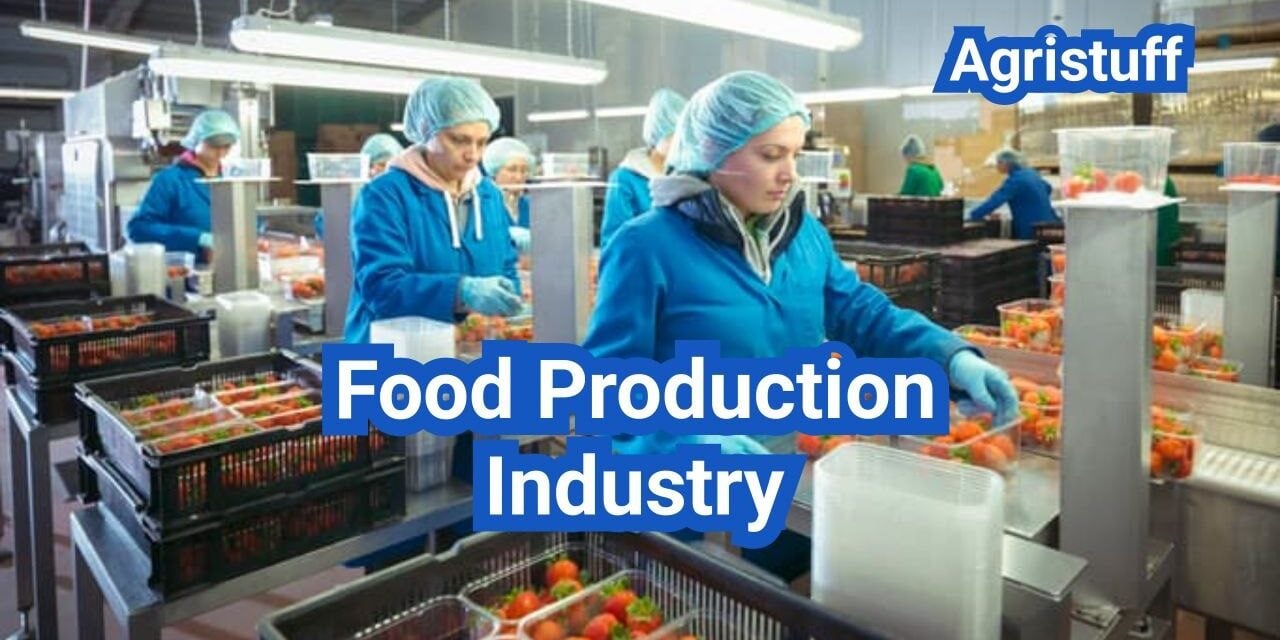
The journey begins with raw material sourcing, where food production companies procure ingredients and supplies from farmers, suppliers, or distributors. This stage is critical as it sets the foundation for the quality of the final product. Preparation involves cleaning, sorting, and grading to ensure that only the best materials are used.
Processing and Manufacturing Stages
Once raw materials are prepared, they undergo various processing and manufacturing stages. This can include cooking, mixing, fermenting, or other techniques to create the desired product. Food processing industry operations are designed to be efficient while maintaining product integrity.
Packaging and Distribution Systems
After processing, products are packaged using specialized equipment and materials to preserve freshness and safety. Food packaging companies play a vital role in this stage, providing innovative solutions that meet consumer demands and regulatory requirements. Distribution systems then transport the products to retailers and consumers.
Quality Control and Safety Measures
Throughout the production process, quality control and safety measures are implemented to ensure compliance with food safety regulations. This includes regular inspections, testing, and adherence to Good Manufacturing Practices (GMPs) to safeguard consumer health.
The food industry production process is a complex, interconnected system that requires careful planning, execution, and monitoring. By understanding each stage, food production companies can optimize their operations, improve efficiency, and deliver high-quality products to the market.
Technology Driving Growth in Food Processing

Advancements in technology are reshaping the landscape of food processing, introducing new efficiencies and capabilities. The industry is witnessing a significant transformation with the integration of automation, artificial intelligence (AI), and the Internet of Things (IoT).
Automation and Robotics Implementation | U.S. Food Production Industry
Automation and robotics are being increasingly adopted in food manufacturing to improve efficiency and reduce labor costs. These technologies enable precise and consistent production, minimizing human error and enhancing product quality. For instance, robotic systems are being used for tasks such as packaging, palletizing, and inspection, streamlining operations and increasing throughput.
- Improved precision and consistency
- Reduced labor costs and enhanced safety
- Increased production speed and efficiency
Case Study: Companies like Tyson Foods are investing heavily in automation, deploying robotic systems to handle tasks such as chicken processing. This not only improves efficiency but also enhances worker safety by reducing the need for manual labor in hazardous environments.
AI and Machine Learning Applications | U.S. Food Production Industry
AI and machine learning are being applied in various aspects of food processing, from predictive maintenance to quality control. AI algorithms can analyze data from sensors and machines to predict potential equipment failures, reducing downtime and maintenance costs. Machine learning models are also used to detect anomalies in production, ensuring consistent product quality.
According to industry experts, “AI and machine learning are revolutionizing food processing by enabling predictive maintenance, improving quality control, and optimizing production processes.”
“The use of AI in food processing is not just about automation; it’s about creating a more efficient, safe, and sustainable production environment.”
— Food Processing Industry Expert
IoT and Smart Factory Solutions | U.S. Food Production Industry
The IoT is transforming food processing facilities into smart factories, where interconnected devices and systems enable real-time monitoring and control. IoT sensors can track temperature, humidity, and other critical parameters, ensuring optimal production conditions. Smart factory solutions also facilitate data-driven decision-making, allowing manufacturers to optimize production processes and respond quickly to changes in demand.
By embracing these technologies, food processors can achieve significant gains in efficiency, quality, and flexibility, driving growth and competitiveness in a rapidly evolving market.
Cold Chain Expansion Across the U.S.
As the demand for fresh and frozen products rises, the cold chain infrastructure in the U.S. is expanding rapidly. The cold chain is a critical component of the food industry, enabling the transportation and storage of perishable products. Recent investments in cold storage facilities have been driven by the need for efficient logistics and supply chain management.
Infrastructure Development and Investment
The development of cold chain infrastructure is crucial for supporting the growing demand for perishable goods. Significant investments are being made in cold storage facilities, including state-of-the-art warehouses equipped with advanced refrigeration systems. These facilities are strategically located near major transportation hubs to facilitate efficient distribution.
Key trends in cold chain infrastructure development include:
- Increased use of automation and robotics in cold storage facilities
- Adoption of advanced refrigeration technologies to reduce energy consumption
- Expansion of cold storage capacity in key markets
Last-Mile Cold Chain Solutions | U.S. Food Production Industry
Last-mile delivery is a critical component of the cold chain, as it ensures that perishable products are delivered to consumers in a timely and efficient manner. Companies are investing in specialized last-mile delivery solutions, including refrigerated vehicles and insulated packaging.
Farm Cold Storage Financing Options
Farmers and producers are also benefiting from the expansion of cold chain infrastructure, with various financing options available for cold storage facilities on farms. These options enable farmers to store their products for longer periods, reducing waste and improving supply chain efficiency.
The growth of the cold chain industry is expected to continue, driven by increasing demand for fresh and frozen products. As the industry evolves, we can expect to see further innovations in cold chain technology and infrastructure.
Value-Added Agriculture in the United States

Value-added agriculture is transforming the way farmers operate in the United States. By enhancing the value of their products through processing, packaging, and marketing, farmers can significantly increase their profitability and competitiveness in the market.
The United States Department of Agriculture (USDA) plays a crucial role in supporting value-added agriculture through various initiatives, including the Value-Added Producer Grants (VAPG) program. This program provides financial assistance to farmers and ranchers to develop new products, create new markets, and expand their businesses.
USDA Value-Added Producer Grants | U.S. Food Production Industry
The USDA’s VAPG program is designed to help agricultural producers generate new products, create new markets, and expand their businesses. The grants can be used for a variety of purposes, including product development, marketing, and business planning. Since its inception, the VAPG program has supported numerous projects across the country, enabling farmers to tap into new markets and increase their revenue.
For instance, a farmer might use a VAPG to develop a new value-added product, such as artisanal cheese or specialty jams, and then market these products to high-end retailers or directly to consumers through online platforms or farmers’ markets.
Processing Agricultural Products for Premium Markets
Processing agricultural products is a key aspect of value-added agriculture. By transforming raw commodities into higher-value products, farmers can tap into premium markets that offer better prices and greater profitability. This can involve a range of activities, from simple processing like washing and packaging to more complex processes like manufacturing specialty foods.
For example, a wheat farmer might partner with a local bakery to produce artisanal breads, or a dairy farmer might develop a line of gourmet cheeses. These value-added products can then be sold through various channels, including online marketplaces, specialty food stores, and directly to consumers.
Success Stories in Value-Added Processing | U.S. Food Production Industry
There are numerous success stories in value-added processing across the United States. For instance, a group of organic farmers in California used VAPG funds to develop a line of organic, value-added products, including jams, sauces, and dried fruits. They were able to successfully market these products to high-end retailers, significantly increasing their revenue.
| State | Value-Added Product | Market Channel |
|---|---|---|
| California | Organic Jams and Sauces | Specialty Food Stores |
| Oregon | Artisanal Hazelnuts | Online Marketplaces |
| Vermont | Maple Syrup Products | Farmers’ Markets |
These success stories demonstrate the potential of value-added agriculture to enhance the profitability and sustainability of farming operations across the United States.
Co-Manufacturing and Co-Packing in the U.S. Market

Co-manufacturing and co-packing are revolutionizing the U.S. food production landscape. These strategies enable companies to leverage the expertise and capacity of other manufacturers, improving efficiency and reducing costs. By partnering with experienced co-manufacturers or co-packers, food companies can focus on their core competencies while scaling production to meet growing demands.
Finding the Right Manufacturing Partner | U.S. Food Production Industry
Identifying the right manufacturing partner is crucial for successful co-manufacturing and co-packing. Companies should look for partners with expertise in their specific product category, as well as a proven track record of quality and reliability. It’s also essential to assess the partner’s production capacity, flexibility, and ability to meet regulatory requirements.
Contract Terms and Considerations | U.S. Food Production Industry
When entering into a co-manufacturing or co-packing agreement, it’s vital to carefully negotiate contract terms. Key considerations include pricing structures, production volumes, quality control measures, and termination clauses. Companies should also ensure that the contract clearly outlines responsibilities for regulatory compliance and liability.
Scaling Production Through Partnerships | U.S. Food Production Industry
Co-manufacturing and co-packing enable food companies to scale production quickly and efficiently. By leveraging their partners’ capacity, companies can meet sudden increases in demand without significant capital investments. This scalability is particularly valuable in the U.S. market, where consumer preferences and demand can shift rapidly.
Quality Control in Co-Manufacturing Relationships | U.S. Food Production Industry
Maintaining quality control is paramount in co-manufacturing and co-packing relationships. Companies should establish clear quality standards and conduct regular audits to ensure compliance. Effective communication channels and collaborative relationships with manufacturing partners are also essential for maintaining consistent quality across production runs.
Navigating FSMA Compliance for Food Processors
Navigating the complexities of FSMA compliance is crucial for food processors to ensure the safety of their products and maintain consumer trust. The Food Safety Modernization Act (FSMA) has introduced stringent regulations to prevent food safety hazards, and compliance is mandatory for all food processing facilities in the United States.
Developing a Preventive Controls Food Safety Plan
A key requirement of FSMA is the development and implementation of a Preventive Controls Food Safety Plan. This plan must identify and control hazards in the food production process. Food processors must conduct a thorough hazard analysis to identify potential risks and implement preventive controls to mitigate these risks.
The plan should include:
- Process controls to prevent contamination
- Sanitation controls to maintain a clean environment
- Supply chain controls to ensure raw material safety
Meeting Produce Safety Rule Requirements | U.S. Food Production Industry
The Produce Safety Rule under FSMA sets standards for the safe growing, harvesting, packing, and holding of produce. Food processors handling produce must comply with these regulations, which include standards for water quality, soil amendments, and worker hygiene.
| Produce Safety Rule Requirements | Description |
|---|---|
| Water Quality Standards | Regular testing of water used in produce handling |
| Soil Amendments | Proper handling and application of manure and other soil amendments |
| Worker Hygiene | Training and facilities for maintaining worker hygiene |
Implementing Food Traceability Rule Compliance
FSMA’s Food Traceability Rule requires food processors to maintain records that allow for the tracing of food products through the supply chain. This involves implementing a robust tracking system that can quickly identify the source of contaminated products in case of a recall.
Ensuring Sanitary Transportation of Food
The Sanitary Transportation of Food Rule under FSMA aims to prevent contamination during the transportation of food products. Food processors must ensure that their transportation practices meet these regulations, including maintaining clean vehicles and equipment, and ensuring that food is properly packaged and secured during transport.
By understanding and implementing these FSMA requirements, food processors can ensure compliance, enhance food safety, and protect consumer health. Regular training and updates on FSMA regulations are crucial for maintaining compliance and adapting to any changes in the regulatory landscape.
Growth Trends in the Food Production Industry

Consumer demand is reshaping the food production landscape, driving innovation and growth. The industry is responding with new products and processes that cater to changing consumer preferences.
Plant-Based and Alternative Proteins | U.S. Food Production Industry
The demand for plant-based proteins is on the rise, driven by consumers seeking healthier and more sustainable options. This trend is leading to increased investment in alternative protein sources, including pea, rice, and hemp proteins.
Clean Label and Transparency Initiatives
Clean label initiatives are gaining traction as consumers become more health-conscious and demand greater transparency in food labeling. Manufacturers are responding by simplifying ingredient lists and reducing the use of artificial additives.
| Clean Label Initiatives | Benefits | Examples |
|---|---|---|
| Simplified ingredient lists | Enhanced consumer trust | Removing artificial preservatives |
| Natural flavorings | Improved product perception | Using real fruit in flavorings |
| Label transparency | Increased consumer confidence | Clear labeling of allergens |
Functional Foods and Nutraceuticals | U.S. Food Production Industry
The market for functional foods and nutraceuticals is expanding as consumers seek products that offer additional health benefits. This includes foods fortified with vitamins, minerals, and probiotics.
Ethnic and Global Flavor Expansion
There’s a growing interest in ethnic and global flavors, driven by consumers’ desire for new culinary experiences. Food manufacturers are incorporating diverse flavors and ingredients from around the world into their products.
By understanding and adapting to these growth trends, businesses in the food production industry can capitalize on emerging opportunities and stay competitive in a rapidly evolving market.
Controlled Environment Agriculture Expansion

Controlled environment agriculture is revolutionizing the way crops are grown in the United States. This innovative approach to farming involves growing crops in controlled environments, such as indoor facilities, to optimize yields and reduce environmental impact.
Vertical Farming Operations | U.S. Food Production Industry
Vertical farming is a key component of controlled environment agriculture. By stacking crops vertically, farmers can maximize space while minimizing land use. This method also allows for precise control over temperature, humidity, and light, resulting in improved crop quality and increased yields.
Benefits of Vertical Farming:
- Increased crop density
- Year-round production
- Reduced water consumption
- Improved crop quality
Indoor Growing Technologies and Innovations
Indoor growing technologies play a crucial role in controlled environment agriculture. Advances in LED lighting, climate control systems, and hydroponics have made it possible to grow a wide variety of crops indoors. These technologies enable farmers to optimize growing conditions, reduce energy consumption, and increase productivity.
Innovations in indoor growing include:
- Advanced LED lighting systems
- Precision climate control
- Hydroponic and aeroponic systems
Investment Landscape and Opportunities | U.S. Food Production Industry
The investment landscape for controlled environment agriculture is rapidly evolving. As the industry grows, investors are increasingly looking to support innovative companies and projects. Opportunities exist in various areas, including technology development, infrastructure investment, and operational scaling.
Key areas for investment:
- Technology innovation
- Infrastructure development
- Operational scaling
Sustainable Practices in Food Manufacturing

The shift towards sustainability in food manufacturing is driven by both consumer demand and the need for operational efficiency. As the industry continues to grow, companies are implementing various sustainable practices to reduce their environmental impact while improving their bottom line.
Food Waste Reduction Strategies | U.S. Food Production Industry
One of the key areas of focus for sustainable food manufacturing is reducing food waste. This can be achieved through improved inventory management, optimizing production processes, and repurposing waste materials. For instance, companies can use food waste to produce animal feed or bioenergy.
| Strategy | Description | Benefits |
|---|---|---|
| Inventory Management | Accurate forecasting and stock control | Reduced waste, lower costs |
| Production Optimization | Streamlining manufacturing processes | Increased efficiency, reduced waste |
| Waste Repurposing | Converting waste into valuable products | Additional revenue streams, reduced landfill waste |
Energy Efficiency Measures | U.S. Food Production Industry
Implementing energy-efficient technologies and practices is another crucial aspect of sustainable food manufacturing. This includes using energy-efficient equipment, optimizing heating and cooling systems, and leveraging renewable energy sources.
For example, a food processing plant might install solar panels to reduce its reliance on non-renewable energy sources, thereby lowering its carbon footprint and energy costs.
Water Conservation Techniques | U.S. Food Production Industry
Water conservation is also vital in food manufacturing, where water is often used for cleaning, processing, and cooling. Techniques such as water recycling, using water-efficient equipment, and implementing water-saving cleaning practices can significantly reduce water usage.
Packaging Sustainability Initiatives | U.S. Food Production Industry
Sustainable packaging is becoming increasingly important as consumers become more environmentally conscious. Food manufacturers are adopting eco-friendly packaging materials, reducing packaging sizes, and designing packaging for recyclability or biodegradability.
By adopting these sustainable practices, food manufacturers can not only reduce their environmental impact but also improve their operational efficiency and appeal to eco-conscious consumers.
How to Enter the U.S. Food Production Industry
Entering the U.S. food production industry requires a strategic approach, starting with thorough market research. Understanding consumer trends, preferences, and the competitive landscape is crucial for developing a successful business plan.
Market Research and Product Development
Conducting market research helps identify gaps in the market and opportunities for innovation. This research informs product development, ensuring that new products meet consumer demands and stand out from existing offerings.
- Analyze consumer trends and preferences
- Assess the competitive landscape
- Identify market gaps and opportunities
Regulatory Pathways and Certifications | U.S. Food Production Industry
Navigating the regulatory environment is critical for new entrants. This includes obtaining necessary certifications and complying with food safety regulations.
- Understand FDA regulations and compliance
- Obtain necessary certifications (e.g., USDA Organic)
- Implement food safety protocols
Distribution Channels and Retail Partnerships
Establishing effective distribution channels and forming retail partnerships are vital for getting products to consumers. This involves understanding the logistics of food distribution and building relationships with retailers.
| Distribution Channel | Characteristics | Benefits |
|---|---|---|
| Direct-to-Consumer | Online sales, farmers’ markets | Higher margins, direct customer feedback |
| Retail Partnerships | Supermarkets, specialty stores | Broad reach, brand visibility |
| Foodservice | Restaurants, cafes | Large volume sales, brand loyalty |
Financing and Capital Acquisition | U.S. Food Production Industry
Securing financing is a significant challenge for new entrants. Exploring various capital acquisition strategies can help businesses overcome this hurdle.
Options include:
- Investors and venture capital
- Grants and government programs
- Crowdfunding and community support
Case Studies: Success Stories in U.S. Food Manufacturing Growth
The landscape of U.S. food production is changing, with regional processing facilities and innovative product categories leading the way. The industry is characterized by innovation and entrepreneurship, with companies leveraging new trends and technologies to drive growth.
Small-Scale Producers Scaling Nationally
Small-scale producers are making a significant impact in the U.S. food manufacturing industry. By leveraging local flavors and ingredients, these producers are scaling their operations nationally. For instance, a small artisanal food producer in California successfully expanded its distribution to major retailers across the country, increasing its revenue by over 300%.
According to a report, small-scale producers are driving growth in the specialty food sector, with sales reaching $148 billion in the U.S. market. This growth is attributed to consumer demand for unique, locally sourced products.
Innovative Product Categories Creating New Markets
Innovative product categories are emerging as a key driver of growth in the U.S. food manufacturing industry. Categories such as plant-based proteins and functional foods are creating new markets and opportunities for manufacturers. A notable example is a company that developed a line of plant-based meat alternatives, which quickly gained traction in the market and achieved significant sales growth.
“The plant-based trend is not just a fad; it’s a fundamental shift in consumer behavior. Companies that adapt to this trend are poised for significant growth.” –
Industry Expert
Traditional Manufacturers Pivoting to New Trends
Traditional food manufacturers are also adapting to changing consumer preferences by pivoting to new trends. For example, a well-established snack food manufacturer successfully transitioned to producing healthier snack options, capitalizing on the trend towards healthier eating.
This pivot not only helped the company stay relevant but also opened up new revenue streams. It demonstrates the importance of innovation and adaptability in the food manufacturing industry.
Regional Processing Facilities Driving Local Economies
Regional processing facilities are playing a crucial role in driving local economies. By creating jobs and stimulating local agricultural production, these facilities are contributing to the economic vitality of their regions. A case in point is a regional processing facility in the Midwest that has become a major employer and economic driver in its local community.
The success of regional processing facilities highlights the importance of localized food production and processing. It also underscores the potential for food manufacturing to contribute to regional economic development.
The Future of U.S. Food Production Industry
The U.S. food production industry is poised for continued growth, driven by technological advancements and evolving consumer preferences. As highlighted in the previous sections, trends such as plant-based and alternative proteins, clean label initiatives, and controlled environment agriculture are shaping the industry’s future.
The future of food production will be characterized by increased adoption of sustainable practices, including food waste reduction and energy efficiency measures. Companies that prioritize sustainability and transparency are likely to thrive in this landscape.
U.S. food production industry trends indicate a shift towards more localized and specialized production, with regional processing facilities driving local economies. As the industry continues to evolve, it is essential for stakeholders to stay informed about the latest developments and innovations.
By embracing technological advancements and adapting to changing consumer demands, the U.S. food production industry can ensure a sustainable and prosperous future. This will involve ongoing investment in areas such as automation, AI, and IoT, as well as a commitment to sustainable food production practices.
FAQ
What is the current state of the U.S. food production industry?
The U.S. food production industry is a significant contributor to the economy, with a growing demand for food products driven by technological advancements, changing consumer preferences, and investments in infrastructure.
What are the key drivers of growth in the U.S. food production industry?
The industry is driven by technological advancements, changing consumer preferences, and investments in infrastructure, including automation, AI, and IoT, as well as the expansion of cold chain infrastructure.
What are the major regional hotspots in the U.S. food production industry?
The Midwest, California, Southern states, and Northeast are key regional hotspots, each with unique characteristics and strengths driving growth and innovation in the industry.
What is the role of technology in driving growth in food processing?
Technology is transforming the industry, enabling companies to improve efficiency, reduce costs, and enhance product quality through automation, AI, and IoT.
What is value-added agriculture, and how is it contributing to the U.S. food production industry?
Value-added agriculture enables farmers to increase the value of their products, improving profitability and competitiveness, with USDA grants supporting this growth.
What is co-manufacturing and co-packing, and how is it used in the U.S. food production industry?
Co-manufacturing and co-packing enable companies to leverage the expertise and capacity of other manufacturers, improving efficiency and reducing costs.
What are the key trends driving growth in the food production industry?
Plant-based proteins, clean label initiatives, and controlled environment agriculture are driving growth, responding to changing consumer preferences.
How can companies ensure FSMA compliance in the U.S. food production industry?
Companies must develop a preventive controls food safety plan, meet produce safety rule requirements, and ensure sanitary transportation of food to comply with regulations.
What are the opportunities for entering the U.S. food production industry?
Companies can enter the industry by conducting market research, complying with regulations, and establishing distribution channels and retail partnerships.
What are the sustainable practices being adopted in food manufacturing?
The industry is adopting sustainable practices, including food waste reduction, energy efficiency measures, water conservation techniques, and packaging sustainability initiatives.
What is controlled environment agriculture, and how is it expanding in the U.S.?
Controlled environment agriculture enables the production of crops in controlled environments, improving yields and reducing environmental impact, with vertical farming and indoor growing technologies driving expansion.
Where is “growth” most visible right now?
Look for expansion in regional processing, cold storage, and operations that standardize specs for retailers, brands, and institutions.
Is compliance only a cost center?
Not anymore—documented controls and traceability increasingly function as a market-access requirement.
What’s the fastest way to reduce risk when scaling?
Standardize the product spec, then standardize the process (SOPs, training, monitoring, corrective actions).
Do small operators have a real advantage?
Yes—when they focus on a narrow lane, serve regional buyers well, and execute reliably with shorter lead times.
What should I measure weekly?
Throughput vs. plan, defect/claim rates, shrink, downtime, labor hours per unit, and on-time-in-full performance.
Conclusion of: U.S. Food Production Industry
How to think about “growth” in the U.S. food system
The U.S. food production industry is growing in a very specific way: not just “more volume,” but more value created per pound through processing, packaging, cold-chain expansion, and tighter safety controls that open new buyers and channels. If you want to spot where growth is happening, follow the money: which steps in the chain are capturing margin, reducing waste, and meeting retailer and foodservice requirements faster than competitors. This guide breaks down the fastest-moving segments and the practical signals to watch so you can make decisions that hold up in real operating conditions USDA ERS: Ag and food sectors and the economy
At the industry level, “growth” usually shows up in manufacturing output and value added—especially in categories where products are differentiated (ingredients, ready-to-eat, specialized packaging, and branded or private-label lines). It also shows up in investment: new lines, expanded storage, automation, and compliance systems that enable reliable on-time delivery at scale. The key is to treat growth like a map: identify which nodes are bottlenecks, then watch who is building capacity there.
It helps to define scope so you don’t chase the wrong signals: farming and ranching produce raw commodities, while food manufacturing turns inputs into shelf-stable, refrigerated, or frozen products that meet buyer specs and regulatory requirements. Many operators now sit “in between,” adding wash/pack, minimal processing, milling, fermenting, co-packing, or frozen prep to move from price-taking to price-making. That middle layer is where many of today’s most durable opportunities are forming BLS: Food manufacturing (NAICS 311) overview
A practical way to see the flow of value is to look at how consumer food spending is distributed across the supply chain, because it highlights where labor, transportation, packaging, and marketing costs accumulate. When those costs rise or requirements tighten, buyers push for fewer failures, better documentation, and more predictable throughput—creating space for operators who can deliver consistency. In other words, growth often rewards operational discipline as much as new product ideas USDA ERS: Food Dollar Series documentation
Where growth is happening in the food supply chain
One of the clearest growth areas in the food production industry is regional processing and “missing middle” infrastructure—facilities that can aggregate, process, store, and move food efficiently between farms and large buyers. When distribution networks are stretched or weather disrupts supply, buyers value regional redundancy and shorter lead times, which increases demand for modern packinghouses, cut-and-pack operations, and local co-manufacturing capacity. The operators who win here build repeatable processes, not one-off heroics.
Another high-growth lane in the food production industry is value-added production that starts on-farm or near the farm gate: cleaning, sorting, bagging, freezing, pressing, roasting, milling, or turning surplus into shelf-stable products. This works best when you pick a narrow product/market fit (for example: diced onions for foodservice, frozen berries for smoothie brands, or specialty grains for bakers) and then design a spec that a buyer can reorder without re-negotiation. The upside is real, but it depends on disciplined costing and consistent quality—not just a great story USDA Rural Development: Value-Added Producer Grants
Cold chain is a third growth engine in the food production industry because it protects quality, reduces shrink, and enables longer selling windows for fresh and minimally processed products. Farms that add pre-cooling, controlled-atmosphere storage, or frozen capacity can often sell into higher-paying windows and ship farther with fewer claims. The big insight is that cold storage isn’t just “a building”—it’s a system (airflow, loading, sanitation, monitoring, and backup power) that must match your product and your throughput USDA FSA: Farm Storage Facility Loan program
Controlled-environment production is also expanding within the food production industry, especially where buyers need predictable volume, consistent specs, and year-round supply. You see this in leafy greens, herbs, seedlings, and specialty crops that benefit from tighter control of temperature, humidity, and pests. The growth isn’t only in high-tech vertical farms; it also includes greenhouses and protected culture that “de-risks” weather variability and labor peaks when designed around a clear buyer spec University of Arizona: Controlled Environment Agriculture Center
Energy and efficiency upgrades are quietly becoming a competitive differentiator in the food production industry because refrigeration, compressed air, steam, and hot water are major operating costs. Plants that optimize insulation, heat recovery, motor systems, and process controls can improve margins without changing the product at all, and those savings can be reinvested into capacity or quality systems. For rural processors and farms, pairing efficiency with renewables can also reduce exposure to energy price volatility USDA Rural Development: REAP energy and efficiency financing
What’s driving demand for new capacity and better data
Food safety requirements are a major structural driver in the food production industry, because large buyers increasingly require preventive systems, documented controls, and rapid traceability—not just “we’ve always done it this way.” FSMA accelerated the shift toward prevention, and that has ripple effects: more environmental monitoring, stronger supplier programs, tighter sanitation expectations, and better training. Operators who build compliance into daily routines (instead of “paperwork season”) tend to scale faster and face fewer disruptions.
For many processors, the biggest operational change in the food production industry is the expectation of a written food safety plan with hazard analysis and risk-based preventive controls, supported by records that stand up to audits and inspections. Even smaller brands and co-packers feel this through customer requirements: retailers and national distributors often align vendor onboarding with these preventive principles. In practice, this pushes investment into training, validation, calibration, supplier verification, and corrective-action systems FDA: Preventive Controls for Human Food rule
On the produce side, the food production industry is being reshaped by expectations around water, soil amendments, worker hygiene, and post-harvest handling, because contamination risk can travel fast across a national distribution network. Even when a farm is exempt or partially covered, many buyers still request produce-safety-aligned practices and documentation as a condition of doing business. That makes “food safety as a market access tool” just as important as food safety as a regulatory requirement FDA: FSMA Produce Safety rule
Traceability is another pressure point changing the food production industry, especially for higher-risk foods and complex supply chains. A key practical detail: the FDA has indicated it does not intend to enforce the Food Traceability Rule before July 20, 2028, which gives businesses more runway—but also more time for leading suppliers to build systems and become “easy vendors” for buyers. The smartest operators use the runway to standardize lot coding, receiving procedures, and record flows now, rather than scrambling close to the deadline FDA: Food Traceability Rule requirements
Logistics rules and buyer expectations are also tightening in the food production industry, particularly for temperature control, cleaning, and documentation across transport. Even when you outsource freight, you still own the outcome in the eyes of the customer, so your shipping specs, carrier requirements, and receiving checks need to be explicit. This is why “operational paperwork” (load checklists, seal protocols, temp logs) increasingly determines whether a supplier gets repeat orders FDA: Sanitary transportation rule
Sustainability is moving from marketing to operations in the food production industry, because waste, water use, and energy intensity directly affect cost and buyer perception. You see this in food waste reduction programs, packaging changes, and pressure to measure and reduce losses across storage and processing. The practical takeaway is simple: if you can quantify waste (shrink, trim loss, returns, spoilage) you can usually find an ROI-backed project that improves margins and reliability EPA: Sustainable management of food
How U.S. farms and processors can position for the next wave
Start by choosing a single “lane” inside the food production industry: a buyer type (brand, retailer, broadline distributor, school district), a product form (fresh, frozen, shelf-stable), and a spec that can be repeated. This sounds basic, but it prevents the most common trap—building a facility around “anything we can sell” and then discovering every customer wants different packaging, labels, pallets, and documentation. Your lane should be narrow enough to standardize, and broad enough to keep the line full.
Next, match your lane to a demand pattern that supports consistent orders in the food production industry, because capacity utilization often matters more than peak pricing. Institutions can be especially stabilizing when you meet their requirements, since they plan menus and purchases on cycles and often value reliable deliveries. If you’re considering this route, design packaging sizes, case packs, and delivery windows around how kitchens actually use the product.
Then translate your lane into a “quote-ready” spec in the food production industry: ingredients and tolerances, yield assumptions, packaging format, label claims, shelf life, and critical quality attributes. The fastest way to lose money is to price a product before you’ve locked the spec, because tiny changes (film type, case count, label claims, allergen controls) can swing your true cost. A solid spec turns selling into execution—exactly what buyers want when they reorder.
Build compliance into your workflow early, especially if you touch animal products or plan to scale, because requirements can shape your facility design and staffing model in the food production industry. The point isn’t to overbuild; it’s to avoid retrofits that interrupt production and burn cash. If you’re evaluating processing, prioritize hygienic design, clear traffic flows, and documentation habits that can survive turnover and busy seasons USDA FSIS: Guidance for small and very small plants
To win larger customers, expect third-party verification in the food production industry, even if you’re doing everything right operationally. Audits and standardized checklists reduce buyer risk, but they also help you find weak points before a failure becomes a recall, claim, or delisting. Treat audits as a management tool: align your SOPs, training, and records to a standard your target customers already recognize USDA AMS: Harmonized GAP audit program
Finally, use U.S. programs strategically in the food production industry to reduce risk and improve payback—especially for conservation practices, season extension, and system upgrades tied to measurable outcomes. The best operators don’t rely on grants to “make the project work”; they use programs to accelerate a plan that already pencils out and to add resilience (water efficiency, soil health, improved handling) that protects supply. A short conversation with local offices can clarify eligibility and timing before you lock a budget USDA NRCS: Environmental Quality Incentives Program (EQIP)
Quick checklist
Use this checklist to pressure-test a growth idea in the food production industry before you spend heavily on equipment, packaging, or a building USDA NASS: Quick Stats data tool
- Define one primary buyer type and one primary product form (fresh, frozen, shelf-stable).
- Write a quote-ready spec: packaging, case pack, shelf life, label claims, and quality tolerances.
- Confirm minimum order quantities, reorder cadence, and lead-time expectations.
- Map your critical control points (food safety, allergen, sanitation, temperature control).
- Build a simple capacity model: units/hour, shift plan, and realistic downtime assumptions.
- Create a landed-cost worksheet (materials, labor, packaging, freight, shrink, overhead).
- Validate your cold chain plan from harvest through customer receiving.
- Decide what documentation you will standardize (lot coding, COAs, temp logs, training records).
- Plan staffing and training for peak season and turnover, not ideal conditions.
- Run a pilot batch or limited launch, then revise the spec based on real yields and defects.
Common mistakes to avoid
These are the mistakes that most often derail a project in the food production industry, along with the prevention mindset that keeps your operation stable
- Building for “any customer” → Pick a lane and standardize specs to avoid constant changeovers.
- Pricing before the spec is locked → Freeze packaging, label claims, and case count before quoting.
- Underestimating sanitation and downtime → Model clean-in-place, allergen changeovers, and maintenance realistically.
- Skipping traceability discipline → Standardize lot codes, receiving logs, and finished-goods records from day one.
- Overbuying equipment → Solve the bottleneck first; avoid capex that doesn’t raise throughput or quality.
- Ignoring the receiving side → Align pallets, labeling, appointment windows, and documentation with customer SOPs.
- Assuming labor will “figure it out” → Write simple SOPs and train for consistency, not individual heroics.
- Letting waste stay invisible → Track shrink, trim loss, and returns so improvement projects have measurable targets.
Costs and ROI snapshot
Costs in the food production industry vary by product risk, automation level, and cold-chain needs, but the biggest drivers are usually facility build-out (floors, drains, walls, refrigeration), packaging and labeling systems, and labor required to hit consistent throughput. As a practical range, many small-to-mid projects see meaningful capex in the tens of thousands for basic handling upgrades, while more complex processing lines and compliant cold storage can push into the hundreds of thousands or beyond depending on capacity and engineering requirements. Treat every quote as a system quote (installation, utilities, controls, maintenance, validation), not an equipment-only number USDA Rural Development: Business & Industry Loan Guarantees
ROI in the food production industry is most reliable when it comes from measurable outcomes: reduced shrink and claims, higher pack-out, longer selling windows, fewer line stoppages, and lower energy intensity per unit produced. The highest-confidence projects often improve process stability first (temperature control, sanitation flow, monitoring, preventive maintenance) and then scale volume, because stable processes create repeat customers and protect cash flow. If you’re choosing between two upgrades, favor the one that improves consistency and reduces variability—buyers reward that with reorders.
Final thought
The most durable opportunities in the food production industry come from solving the problems buyers complain about quietly: inconsistent specs, unpredictable lead times, weak documentation, temperature failures, and avoidable waste. If you build a repeatable system—one lane, one spec, one workflow that holds up under stress—you will often outgrow competitors who chase trends without operational discipline USDA ERS: Food Dollar Series insights
Sources & References
- USDA ERS: Food Dollar Series
- USDA NASS: Census of Agriculture
- U.S. Census Bureau: NAICS 311 (Food Manufacturing)
- FDA: FSMA rules and guidance for industry
- FDA: New Era of Smarter Food Safety
- FDA: Food Traceability List
- USDA FSIS: Guidelines and compliance guides
- USDA FSIS: HACCP plan preparation guidebook (PDF)
- USDA AMS: National Organic Program
- EPA: Food Recovery Hierarchy
- USDA Climate Hubs
- OSHA: Meatpacking safety resources
- CDC: Food safety