Freshness is the main goal for every food producer in the industry. If the products get soft or lose their flavor, the brand will lose its good name. High-end systems must treat these items with great care to maintain their original quality from the plant to the home.
A primary method for preservation involves nitrogen flushing in snack packaging. This process displaces oxygen with inert gas to stop food from going stale too quickly. It is a critical step for anyone looking to extend the time a product stays delicious on store shelves.
Beyond gas levels, seal integrity testing stops air from leaking back into the bag. Companies must also meet specific shelf life targets to ensure safety and taste. These technical details help salty treats stay perfect for every buyer in the United States.
Key Takeaways
- Displacing oxygen helps maintain the ideal crunch of salty treats.
- Airtight seals are essential to prevent moisture from entering the bag.
- Gas flushing significantly extends the duration products stay fresh.
- Rigorous testing reduces the risk of leaks during transport.
- Meeting storage goals ensures a better experience for every consumer.
- High-quality equipment protects the flavor of various bagged goods.
Understanding Snack Packaging Machine Technology and Applications

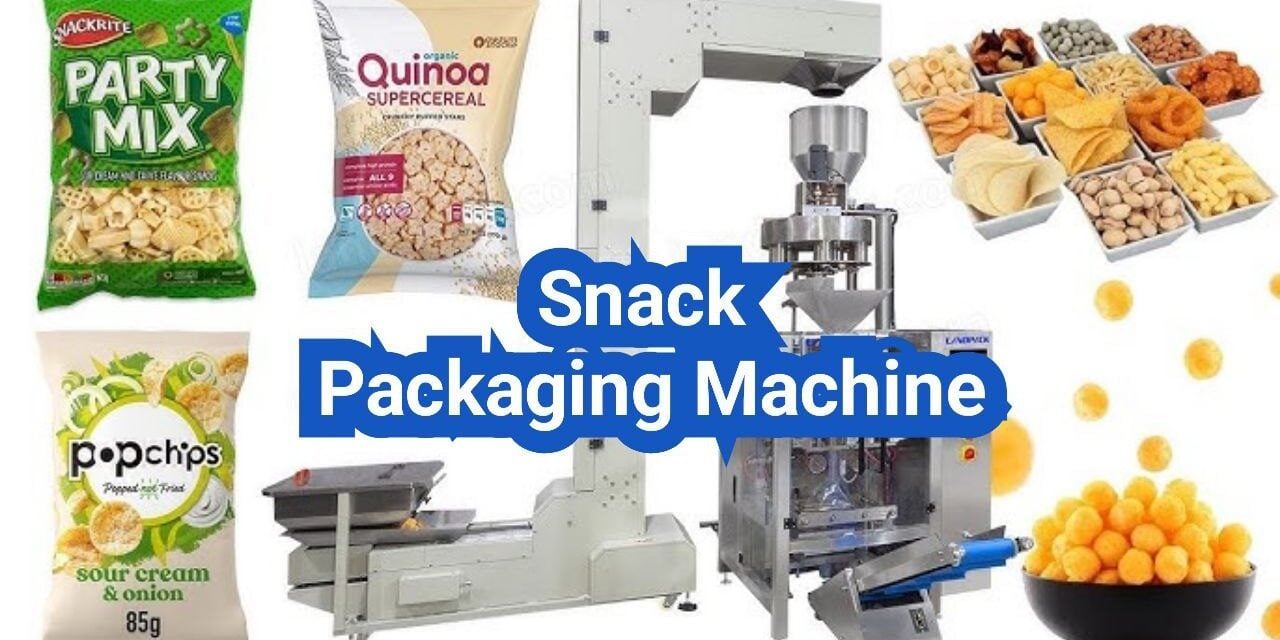
The snack packaging industry has witnessed significant advancements in machine technology, enhancing efficiency and product quality. Modern snack packaging machines are equipped with sophisticated technology to handle various snack products, including chips, popcorn, granola bars, and dry snacks.
Core Components of Modern Snack Packaging Systems
Modern snack packaging systems consist of several core components that work together to ensure efficient packaging. These include:
- Forming and filling machinery: These machines form the packaging material into the desired shape and fill it with the snack product.
- Sealing and closing systems: These systems ensure that the packaging is sealed properly to maintain freshness and prevent leakage.
- Control and inspection systems: Advanced sensors and inspection systems monitor the packaging process, detecting any defects or irregularities.
Primary Applications: Chips, Popcorn, Granola Bars, and Dry Snacks
Snack packaging machines are designed to handle a variety of snack products. Some of the primary applications include:
| Snack Product | Packaging Requirements | Machine Type |
|---|---|---|
| Potato Chips | Air-tight seal, nitrogen flushing | Vertical Form Fill Seal (VFFS) |
| Popcorn | Flexible packaging, easy tear | Horizontal Flow Wrap |
| Granola Bars | Individual wrapping, high-speed packaging | Horizontal Flow Wrap or Premade Pouch Filling |
| Dry Snacks | Moisture barrier, resealable packaging | VFFS or Premade Pouch Filling |
As noted by a packaging industry expert,
“The key to successful snack packaging is understanding the specific needs of each product and selecting the right machine technology to meet those needs.”
How Automated Container Filling Works for Snack Foods
Automated container filling is a critical component of snack packaging machines. The process involves:
- Product feeding: Snack products are fed into the machine through a hopper or conveyor system.
- Container formation: The packaging material is formed into containers or bags.
- Filling: The snack products are filled into the containers or bags.
- Sealing: The containers or bags are sealed to prevent leakage and maintain freshness.
Automated container filling ensures efficient and accurate filling of snack products, reducing labor costs and improving product quality.
Types of Snack Packaging Machines Available in the U.S. Market

The U.S. food market offers a wide array of snack packaging machines to suit different production scales and product characteristics. These machines are designed to efficiently package a variety of snack foods, including chips, popcorn, granola bars, and dry snacks, while maintaining product freshness and quality.
Vertical Form Fill Seal VFFS Snack Packaging Machine
The VFFS snack packaging machine is a popular choice for packaging snack foods due to its versatility and efficiency. It forms bags from a roll of film, fills them with the product, and seals them in a continuous process. This machine is ideal for packaging products like potato chips, nuts, and dried fruits.
Horizontal Flow Pack Wrappers for Snack Products
Horizontal flow pack wrappers are used for packaging snack products like granola bars, crackers, and cookies. These machines wrap products in a film wrapper, providing a tight seal around the product. They are known for their high-speed packaging capabilities and are often used in large-scale production facilities.
Premade Pouch Filling Equipment and Doypack Systems
Premade pouch filling equipment and Doypack systems are designed for packaging snack foods in pre-formed pouches. These systems offer flexibility in terms of pouch size and style, making them suitable for a wide range of snack products. Doypack pouches, in particular, are known for their stand-up feature, which enhances shelf visibility.
High-Speed Form and Seal Pouch Filling Machines
High-speed form and seal pouch filling machines are designed for high-volume production environments. They can form, fill, and seal pouches at high speeds while maintaining accuracy and product integrity. These machines are ideal for large snack food manufacturers looking to maximize their production efficiency.
| Machine Type | Product Suitability | Key Features |
|---|---|---|
| VFFS Snack Packaging Machine | Potato chips, nuts, dried fruits | Forms bags from film roll, fills, and seals |
| Horizontal Flow Pack Wrappers | Granola bars, crackers, cookies | Wraps products in film, high-speed capability |
| Premade Pouch Filling Equipment | Various snack foods | Flexible pouch size and style options |
| High-Speed Form and Seal Machines | High-volume snack products | High-speed forming, filling, and sealing |
Step 1: Selecting the Right Snack Packaging Machine for Your Production Needs

To ensure optimal packaging, understanding your snack product’s characteristics is essential. The right snack packaging machine can significantly impact production efficiency, product freshness, and overall customer satisfaction.
Assessing Your Snack Product Characteristics and Fragility
When selecting a snack packaging machine, it’s crucial to assess your product’s characteristics and fragility. Different snack foods have unique requirements that affect packaging machine selection.
Product Density and Free-Flowing Properties
Snack products vary in density and flow characteristics. For instance:
- Free-flowing snacks like potato chips require machines that can handle their flowability without causing breakage.
- Denser snacks like granola bars need machines that can accommodate their weight and texture.
Package Size Range and Format Requirements
The size and format of packaging are critical factors. Consider:
- The range of package sizes you need to accommodate.
- The type of packaging format (e.g., bags, pouches, or wrappers).
Evaluating Production Volume and Speed Requirements
Production volume and speed are vital considerations. Evaluate:
- Your current production capacity.
- Future growth projections.
Matching Machine Type to Specific Snack Food Applications
Different snack foods require specific packaging solutions. For example:
- Vertical Form Fill Seal (VFFS) machines are ideal for snacks like chips and popcorn.
- Horizontal Flow Wrappers are better suited for products like candy bars or snack cakes.
By carefully assessing these factors, snack food manufacturers can select a packaging machine that meets their specific needs, enhancing efficiency and product quality.
Step 2: Implementing Nitrogen Flushing in Snack Packaging Systems

Implementing nitrogen flushing in snack packaging systems is a crucial step in maintaining product freshness and extending shelf life. Nitrogen flushing is a process where nitrogen gas is used to displace oxygen in the packaging, thereby preventing the staleness and degradation of snack products.
Why Nitrogen Flushing is Critical for Snack Shelf Life Extension
Nitrogen flushing is critical because it removes oxygen from the packaging, which is a primary cause of snack spoilage. Oxygen can lead to the oxidation of fats, resulting in off-flavors and rancidity. By displacing oxygen with nitrogen, snack manufacturers can significantly extend the shelf life of their products.
Key benefits of nitrogen flushing include:
- Extended shelf life due to reduced oxidation
- Preservation of flavor and texture
- Prevention of staleness and rancidity
Setting Up Nitrogen Flush on Chips Packaging Machine with VFFS Systems
Vertical Form Fill Seal (VFFS) systems are widely used in snack packaging for their efficiency and versatility. Setting up nitrogen flushing on a chips packaging machine with VFFS involves several critical steps.
Gas Flow Rate Calibration and Pressure Settings
Proper calibration of the nitrogen gas flow rate and pressure settings is essential for effective flushing. The flow rate must be sufficient to displace oxygen without causing packaging distortion or excessive nitrogen usage.
Timing and Injection Point Optimization for Maximum Displacement
The timing and injection point of nitrogen flushing are critical for maximizing oxygen displacement. The nitrogen should be injected at the right moment during the packaging process to ensure that the packaging is adequately flushed.
Nitrogen Flushing Configuration for Different Snack Types
Different snack types may require different nitrogen flushing configurations. For example, delicate snacks may require a gentler flushing process to prevent damage, while more robust snacks can withstand more vigorous flushing.
Examples of snack types and their flushing requirements:
- Potato chips: Require careful flushing to prevent breakage
- Extruded snacks: Can often withstand more vigorous flushing
- Delicate snacks: Need gentle flushing to maintain integrity
Target Residual Oxygen Levels by Snack Category
The target residual oxygen level varies by snack category. Generally, lower residual oxygen levels are required for snacks that are more sensitive to oxygen.
| Snack Category | Target Residual Oxygen Level (%) |
|---|---|
| Potato Chips | <2% |
| Extruded Snacks | <3% |
| Nuts and Seeds | <1% |
Step 3: Optimizing Seal Quality and Packaging Integrity

To maintain the freshness and quality of snacks, it’s essential to focus on optimizing seal quality and packaging integrity. The seal quality of snack packaging plays a critical role in preventing moisture and air from entering the package, thereby extending the product’s shelf life.
Understanding Critical Seal Parameters: Temperature, Pressure, and Dwell Time
The quality of a seal is determined by three critical parameters: temperature, pressure, and dwell time. Temperature affects the melting and fusion of the sealant layer, pressure ensures intimate contact between the film surfaces, and dwell time allows for the heat to penetrate and the seal to form.
Adjusting these parameters requires a thorough understanding of the packaging film’s properties and the specific requirements of the snack product being packaged. For instance, a product that is sensitive to heat may require a lower sealing temperature and a shorter dwell time.
Adjusting Seal Settings for Different Film Structures
Different film structures have unique sealing characteristics. For example, films with a higher melt point require higher sealing temperatures, while films with a lower melt point may seal at lower temperatures but might be more prone to seal defects if the temperature is too high.
Understanding the type of sealant used in the film, such as ionomer or metallocene, is also crucial as it affects the seal strength and the temperature range over which the seal can be formed.
Common Seal Defects and Prevention Strategies | Snack Packaging Machine
Seal defects can compromise the integrity of the packaging and lead to product spoilage. Common seal defects include weak seals, delamination, and incomplete fusion, as well as wrinkles, channel leaks, and contamination issues.
Weak Seals, Delamination, and Incomplete Fusion | Snack Packaging Machine
Weak seals occur when the sealing parameters are not optimized, resulting in a seal that is not strong enough to withstand the rigors of handling and distribution. Delamination happens when the layers of the packaging film separate, often due to improper sealing or incompatible film structures. Incomplete fusion is characterized by a lack of complete bonding between the film surfaces.
To prevent these defects, it’s crucial to optimize the sealing parameters and ensure that the film is compatible with the sealing process.
Wrinkles, Channel Leaks, and Contamination Issues | Snack Packaging Machine
Wrinkles in the seal area can create pathways for contaminants to enter the package or for the product to escape. Channel leaks occur when there are unsealed areas within the seal, often due to contamination or improper sealing. Contamination issues arise when foreign particles interfere with the sealing process.
Preventing these issues involves maintaining a clean packaging environment, ensuring proper film tension, and optimizing the sealing process to minimize wrinkles and ensure complete fusion of the seal.
Snack Packaging Seal Integrity Testing Methods and Standards
Snack packaging seal integrity testing is a critical quality control measure that ensures the packaging performs as expected. Ensuring the integrity of seals is vital for preventing leakage, maintaining product freshness, and complying with regulatory standards.
Destructive Testing Methods: Peel Strength and Burst Tests | Snack Packaging Machine
Destructive testing involves physically compromising the seal to assess its strength and integrity. Two common methods are:
- Peel Strength Tests: These tests measure the force required to separate the sealed layers of packaging material. A higher peel strength indicates a more robust seal.
- Burst Tests: Burst tests involve applying pressure to the sealed package until it ruptures. This method evaluates the seal’s ability to withstand internal pressure.
Both methods provide valuable insights into the seal’s quality but render the packages unusable for sale.
Non-Destructive Testing: Vacuum Decay and Pressure Decay Systems
Non-destructive testing methods allow for the evaluation of seal integrity without damaging the packaging. Key techniques include:
- Vacuum Decay: This method involves placing the package in a vacuum chamber and monitoring the pressure change. A significant change indicates a leak.
- Pressure Decay: Similar to vacuum decay, but the package is pressurized, and the decay in pressure is measured.
These methods are highly effective for detecting leaks and assessing seal quality without compromising the product.
Online Snack Bag Leak Testing Methods for Production Lines
For high-speed production lines, online leak testing is essential. Techniques include:
- Inline Vacuum Testing: Packages are tested for leaks as they move along the production line using vacuum chambers.
- Automated Inspection Systems: These systems use cameras and sensors to detect defects and leaks in real-time.
Implementing these systems helps maintain high-quality standards and reduces waste.
Establishing Testing Frequency and Acceptance Criteria | Snack Packaging Machine
To ensure consistent quality, manufacturers must establish a regular testing schedule and clear acceptance criteria. This involves:
| Testing Frequency | Acceptance Criteria | Corrective Action |
|---|---|---|
| Every 1000 units | No leaks detected; seal strength within specified range | Adjust sealing parameters; inspect equipment |
| Every 500 units during startup | Peel strength > 1 N/15mm; No burst failures | Review and adjust sealing jaw alignment |
Regular testing and clear criteria help in maintaining high seal integrity and reducing production issues.
Headspace Oxygen Testing for Chips and Snack Products

Accurate headspace oxygen testing is essential for snack manufacturers to achieve their shelf-life targets. Headspace oxygen testing is critical for ensuring the quality and shelf life of snack products, particularly for sensitive items like potato chips, tortilla chips, and extruded snacks.
How Headspace Oxygen Analyzers Function in Production Environments
Headspace oxygen analyzers are sophisticated devices designed to measure the oxygen levels within packaged snack products. These analyzers are crucial in production environments as they help ensure that the packaging process is effectively removing oxygen, thereby preventing spoilage and maintaining product freshness. The analyzers work by extracting a sample of the headspace gas from the package and analyzing it for oxygen content using advanced sensors.
Key features of headspace oxygen analyzers include:
- High accuracy and precision in measuring oxygen levels
- Ability to integrate with production line systems for real-time monitoring
- Compatibility with various packaging formats and sizes
Setting Up In-Line versus Off-Line Testing Protocols
The decision to use in-line or off-line testing protocols for headspace oxygen analysis depends on several factors, including production volume, packaging speed, and quality control requirements. In-line testing involves integrating the oxygen analyzer directly into the production line, allowing for real-time monitoring and immediate corrective action if necessary. Off-line testing, on the other hand, involves sampling packages from the production line and analyzing them in a separate area.
In-line testing is beneficial for high-speed production lines where continuous monitoring is crucial. Off-line testing can be more suitable for smaller production runs or when detailed analysis is required.
Target Oxygen Levels for Potato Chips, Tortilla Chips, and Extruded Snacks
Different snack products have varying requirements for headspace oxygen levels to maintain their quality and shelf life. For instance, potato chips typically require very low oxygen levels, often below 2%, to prevent staling and rancidity. Tortilla chips and extruded snacks may have slightly different requirements based on their specific formulation and packaging.
| Snack Type | Target Oxygen Level (%) |
|---|---|
| Potato Chips | <2% |
| Tortilla Chips | <3% |
| Extruded Snacks | <2.5% |
Correlating Residual Oxygen Levels with Shelf-Life Performance
Understanding the correlation between residual oxygen levels and shelf-life performance is crucial for snack manufacturers. By establishing this correlation, manufacturers can set appropriate oxygen level targets for their products, ensuring they meet shelf-life requirements. This involves conducting shelf-life studies and correlating the findings with headspace oxygen data.
Factors influencing this correlation include:
- Product formulation and sensitivity to oxygen
- Packaging material barrier properties
- Storage conditions and distribution environment
Step 4: Snack Packaging Film Barrier Selection and Material Optimization

Effective material optimization for snack packaging requires a deep understanding of film barrier properties. The right packaging film barrier can significantly impact the quality and longevity of snack products. Selecting the appropriate film barrier is crucial for maintaining product freshness and extending shelf life.
Understanding Film Barrier Properties: Oxygen Transmission Rate and WVTR
Film barrier properties play a critical role in determining the effectiveness of snack packaging. Two key properties to consider are Oxygen Transmission Rate (OTR) and Water Vapor Transmission Rate (WVTR). OTR measures the amount of oxygen that passes through the packaging material, while WVTR measures the amount of moisture that penetrates the packaging.
Oxygen Transmission Rate (OTR) is particularly important for snack products that are sensitive to oxygen, such as potato chips and nuts. A lower OTR indicates better barrier properties against oxygen.
Water Vapor Transmission Rate (WVTR) is crucial for products that are sensitive to moisture, such as crackers and dried fruits. A lower WVTR indicates better protection against moisture.
Common Laminate Structures for Extended Snack Shelf Life
Various laminate structures are used in snack packaging to achieve the desired barrier properties. These structures can include metallized films, transparent barrier coatings, and multi-layer coextruded films.
Metallized Films versus Transparent Barrier Coatings | Snack Packaging Machine
Metallized films offer excellent barrier properties against oxygen and moisture. They are created by depositing a thin layer of metal, usually aluminum, onto the film. Transparent barrier coatings, on the other hand, provide a clear alternative while still offering good barrier properties.
Multi-Layer Coextruded Film Options | Snack Packaging Machine
Multi-layer coextruded films are produced by combining multiple layers of different materials. This allows for the creation of films with tailored barrier properties, such as high oxygen barrier or high moisture barrier.
Matching Film Barriers to Product Moisture Sensitivity
Different snack products have varying levels of sensitivity to moisture. For example, products like potato chips require high barrier protection against moisture to maintain crispiness.
| Snack Product | Moisture Sensitivity | Recommended WVTR |
|---|---|---|
| Potato Chips | High | <0.5 g/m²/day |
| Dried Fruits | Medium | <1.0 g/m²/day |
| Nuts | Low | <2.0 g/m²/day |
Balancing Material Cost and Performance Requirements
When selecting a film barrier, it’s essential to balance material cost with performance requirements. While high-barrier films offer superior protection, they can be more expensive.
By understanding the specific needs of your snack product and evaluating the available film barrier options, you can make an informed decision that meets both your quality and budget requirements.
Oxygen and Moisture Control in Snack Packaging Throughout Production

Effective oxygen and moisture control strategies are essential for snack manufacturers to ensure product quality throughout the production process. Controlling these factors is critical for maintaining the freshness, texture, and flavor of snack products.
Controlling Environmental Conditions in Packaging Areas
Environmental conditions in packaging areas significantly impact the quality of the final packaged product. Temperature and humidity control are crucial to prevent moisture accumulation and minimize the risk of product degradation.
Maintaining a controlled environment helps in reducing the introduction of moisture and oxygen into the packaging process. This can be achieved through the use of climate-controlled packaging rooms and air handling systems that regulate temperature and humidity levels.
“The packaging environment plays a critical role in determining the final product quality. By controlling temperature and humidity, manufacturers can significantly reduce the risk of product spoilage.”
Product Preparation: Cooling and Equilibration Requirements | Snack Packaging Machine
Before packaging, snack products often require cooling and equilibration to prevent moisture accumulation inside the package. Cooling tunnels or ambient cooling are used to bring the product temperature down to a level that minimizes condensation.
Equilibration is also essential, especially for products with varying moisture content. Allowing products to equilibrate ensures that the moisture content is uniform, reducing the risk of packaging defects and maintaining product quality.
| Product Type | Cooling Method | Equilibration Time |
|---|---|---|
| Potato Chips | Cooling Tunnel | 30 minutes |
| Extruded Snacks | Ambient Cooling | 1 hour |
| Popcorn | Cooling Tunnel | 20 minutes |
Integrating Desiccants and Oxygen Absorbers for Challenging Applications
For products with high sensitivity to moisture or oxygen, integrating desiccants and oxygen absorbers into the packaging can provide an additional layer of protection. Desiccants absorb moisture, while oxygen absorbers remove oxygen from the package headspace.
These technologies are particularly useful for products that are prone to staling or have a high risk of oxidation. By incorporating these elements, manufacturers can significantly extend the shelf life of their products.
Monitoring Systems and Documentation for Quality Control | Snack Packaging Machine
To ensure the effectiveness of oxygen and moisture control measures, monitoring systems are essential. These systems track environmental conditions, product temperature, and package headspace composition in real-time.
Documentation of these parameters is critical for quality control and regulatory compliance. Manufacturers must maintain detailed records of their monitoring activities to demonstrate their commitment to product quality and safety.
By implementing these strategies, snack manufacturers can ensure that their products remain fresh and of high quality throughout the production and distribution process.
Meeting Snack Shelf Life Packaging Requirements and Validation

Ensuring snack products meet shelf life packaging requirements is crucial for maintaining quality and customer satisfaction. Snack manufacturers must consider various factors to achieve the desired shelf life for their products.
Shelf-Life Targets by Snack Category and Distribution Channel
Different snack categories have varying shelf-life targets based on their composition and distribution channels. For instance, potato chips typically require a longer shelf life compared to extruded snacks due to their higher moisture sensitivity.
| Snack Category | Typical Shelf Life | Distribution Channel |
|---|---|---|
| Potato Chips | 6-9 months | Retail Stores |
| Extruded Snacks | 3-6 months | Online Sales |
| Granola Bars | 9-12 months | Mass Merchandisers |
Accelerated Shelf-Life Testing Protocols and Predictive Models | Snack Packaging Machine
Accelerated shelf-life testing is a critical method for predicting the shelf life of snack products under various storage conditions. This involves exposing the product to elevated temperatures and humidity levels to accelerate degradation.
Key factors in accelerated shelf-life testing include:
- Temperature control
- Humidity management
- Sampling frequency
Critical Variables Affecting Shelf Life Beyond Packaging Design | Snack Packaging Machine
Several factors beyond packaging design can significantly impact the shelf life of snack products. These include:
Product formulation: Ingredients and their proportions can affect the product’s susceptibility to spoilage.
Storage conditions: Temperature, humidity, and light exposure during storage and transportation can influence shelf life.
Creating a Comprehensive Shelf-Life Validation Program
A comprehensive shelf-life validation program involves multiple steps to ensure that snack products meet their shelf-life targets. This includes:
- Defining shelf-life requirements based on product characteristics and distribution channels
- Conducting accelerated shelf-life testing
- Monitoring and analyzing product quality over time
Snack Packaging Machine Price, Market Trends, and ROI Considerations

Investing in a snack packaging machine is a significant decision that requires careful consideration of various factors, including price, ROI, and total cost of ownership. The snack packaging industry is witnessing significant growth due to the increasing demand for packaged snacks. As a result, understanding the financial implications of purchasing a snack packaging machine is crucial for businesses aiming to optimize their packaging operations.
Typical Snack Packaging Machine Price Ranges in the USA Market
The price of snack packaging machines in the USA market varies widely based on factors such as machine type, production capacity, and level of automation. Generally, prices can range from a few thousand dollars for basic models to hundreds of thousands of dollars for high-speed, fully automated systems.
Entry-Level Systems for Small Business Food Packaging Operations | Snack Packaging Machine
Entry-level snack packaging machines are designed for small businesses or startups. These machines typically offer basic functionality and lower production speeds. Prices for entry-level systems can start as low as $5,000 to $20,000. They are ideal for businesses with limited initial investment capacity but looking to scale up production in the future.
Mid-Range and High-Speed Production Equipment Investment | Snack Packaging Machine
Mid-range and high-speed snack packaging machines are designed for larger businesses or those with higher production demands. These machines offer advanced features such as higher production speeds, greater automation, and more flexible packaging options. The prices for these machines can range from $50,000 to over $200,000, depending on the specifications and capabilities.
Calculating ROI: Labor Savings, Waste Reduction, and Efficiency Gains | Snack Packaging Machine
Calculating the return on investment (ROI) for a snack packaging machine involves considering several key factors, including labor savings, waste reduction, and efficiency gains. Businesses can achieve significant cost savings by reducing manual labor through automation. Additionally, advanced machines can minimize packaging waste and optimize material usage, further contributing to cost savings.
To calculate ROI, companies should consider the initial investment cost, ongoing operational costs, and the expected savings or revenue increases resulting from the new equipment. A thorough ROI analysis helps businesses make informed decisions about their investments in snack packaging machinery.
Total Cost of Ownership: Maintenance, Film, and Nitrogen Costs | Snack Packaging Machine
Beyond the initial purchase price, the total cost of ownership for a snack packaging machine includes several ongoing expenses. Maintenance costs are a significant consideration, as regular servicing is necessary to ensure optimal machine performance and longevity. The cost of packaging materials, such as film, and consumables like nitrogen for flushing, also contribute to the total cost of ownership.
Businesses should factor these costs into their overall budget to accurately assess the financial implications of their snack packaging machine investment. By understanding the total cost of ownership, companies can better manage their expenses and optimize their packaging operations for profitability.
Choosing Snacks Packaging Machine Manufacturers and Equipment Suppliers

Snacks packaging machine manufacturers play a vital role in providing equipment that ensures product freshness and packaging integrity. The selection of a reliable manufacturer is crucial for snack food companies aiming to maintain high production standards and efficiency.
Leading Snack Packaging Machine Manufacturers Serving the U.S. Market
The U.S. market is served by a variety of leading snack packaging machine manufacturers, each offering unique solutions tailored to different snack food applications. Some of the prominent players include:
- Companies specializing in vertical form fill seal (VFFS) machines
- Manufacturers of horizontal flow pack wrappers
- Suppliers of premade pouch filling equipment and doypack systems
These manufacturers offer a range of machines that cater to various snack types, from chips and popcorn to granola bars and dry snacks.
Evaluating Technical Support, Training, and Service Networks
When selecting a snack packaging machine manufacturer, it’s essential to evaluate their technical support, training programs, and service networks. A manufacturer that provides comprehensive support can significantly reduce downtime and improve overall equipment effectiveness.
Key considerations include:
- Adequate training for operators and maintenance personnel
- Responsive technical support for troubleshooting and repairs
- Availability of spare parts and consumables
Customization Capabilities and Turnkey System Integration Options
Snack food manufacturers often require customized packaging solutions to meet specific product needs. Leading manufacturers offer customization capabilities and turnkey system integration options to provide tailored packaging solutions.
“Customization is key in the snack food industry, where product variety and packaging flexibility are increasingly important.”
Scalable Solutions for Snack Companies of All Sizes
Whether you’re a small snack food producer or a large manufacturer, scalable solutions are available to meet your packaging needs. Manufacturers offer a range of machines with varying production capacities, allowing companies to scale their operations as needed.
By choosing a manufacturer that offers scalable solutions, snack companies can ensure that their packaging equipment grows with their business.
At The End of: Snack Packaging Machine
Effective snack packaging is crucial for maintaining product freshness and quality. A well-designed snack packaging machine plays a vital role in this process, incorporating features such as nitrogen flushing to remove oxygen and prevent spoilage.
By optimizing seal quality, manufacturers can prevent moisture and air from entering the package, thereby extending the product’s shelf life. Achieving the right balance between packaging material, machine settings, and product characteristics is essential for meeting shelf-life targets.
The integration of advanced technologies, such as in-line oxygen testing and seal integrity verification, further enhances packaging reliability. As the snack food industry continues to evolve, investing in a high-quality snack packaging machine is essential for ensuring product quality and reducing waste.
By understanding the interplay between packaging machine capabilities, nitrogen flushing, and seal quality, manufacturers can create robust packaging solutions that protect their products and meet consumer expectations.
FAQ
What residual oxygen target should I use for snack packs?
It depends on product fat level, film barrier, headspace volume, and shelf-life target, so validate by SKU instead of using one number for every product.
Does nitrogen flushing make snacks safer?
It mainly helps preserve quality and slow oxidation; it does not replace preventive controls, sanitation, or validated food-safety steps.
Which matters more for shelf life: gas flushing or seals?
Seal quality usually comes first because weak seals can erase the benefits of a good flush.
How often should I test package integrity?
Set a documented frequency based on risk, speed, customer requirements, and include extra checks at startups, restarts, and changeovers.
Can one line run chips, nuts, and snack mixes?
Yes, if recipes, settings, handling, and verification routines are validated for each product family and changeovers are tightly controlled.
What are the primary benefits of using a VFFS snack packaging machine for potato chips and extruded snacks?
A vertical form fill seal (VFFS) snack packaging machine offers high-speed efficiency and versatility. When integrated with a vertical form fill seal machine with multihead weigher, it ensures precise portion control, which is vital for maintaining profit margins. These systems are designed for snack food vertical form fill & seal bagging, allowing for high-speed production while minimizing product breakage through controlled drop heights.
How does nitrogen flushing in snack packaging extend the shelf life of oily snacks?
Nitrogen flushing in snack packaging involves replacing the oxygen inside the bag with food-grade nitrogen. This process is essential for chips packaging machines with nitrogen flush because it prevents oxidative rancidity of fats and oils. By maintaining low target residual oxygen levels, typically under 2%, manufacturers can meet strict snack shelf life packaging requirements and ensure the product remains crisp and fresh for the consumer.
What is the difference between a snacks food doypack packing machine and a horizontal flow pack wrapper?
A snacks food doypack packing machine or rotating premade snack pouch packing machine is used for filling pre-fabricated bags that can stand upright on retail shelves, often used for premium nuts or jerky. In contrast, horizontal flow pack wrappers for snacks are typically utilized for single-unit items like granola bar packaging machines or crackers, where the product is fed horizontally through the wrapping film.
What factors influence the snack packaging machine price in the U.S. market?
The snack packaging machine price varies significantly based on automation levels, speed requirements, and technical features. A turnkey system that includes a case erector with tape or glue and robotic palletizing will have a higher upfront cost but offers a better snack packaging machine ROI through reduced labor costs and improved automated snack packaging efficiency. Prices for a basic automatic snack packaging machine start much lower than high-speed, multi-lane snack food high-speed form & seal pouch filling lines.
How can I ensure snack packaging seal integrity and prevent leaks in production?
Maintaining seal integrity requires precise control over three parameters: temperature, pressure, and dwell time. Utilizing snack packaging seal integrity testing, such as vacuum decay or peel strength tests, helps identify defects early. Many modern snack food packaging machines feature advanced snack sealing equipment that monitors these parameters in real-time to prevent common issues like “leakers” caused by product trapped in the seal area.
Why is headspace oxygen testing for chips considered a critical quality control step?
Headspace oxygen testing for chips is the most accurate way to verify that your nitrogen flushing system is functioning correctly. Using a headspace oxygen analyzer, quality control teams can confirm that the oxygen levels remain within the narrow window required to prevent spoilage. This is a core component of food packaging solutions designed to validate that the snack packaging film barrier selection is performing as expected over the product’s lifespan.
What should I look for when evaluating snacks packaging machine manufacturers in the USA?
When choosing snacks packaging machine manufacturers, prioritize those that offer scalable solutions for snack companies of all sizes and robust technical support. Leading providers like Heat and Control or Paxiom Group provide flexible and customizable equipment that can handle high SKU counts. Ensure the supplier has experience in snack food applications and can provide a complete popcorn packing solution or specialized systems like the VF210GF for pork rinds.
Can I use the same machine for different snack types, such as popcorn and candy?
Yes, many snack food packaging solutions are designed for a wide range of applications. A vertical form snack fill & seal packing machine can often be adjusted to switch between popcorn filling machines and pouch packing machines and candy packing solutions. However, you must ensure the feeding system, such as vibratory fillers, is compatible with the product’s flow characteristics and fragility.
What is the role of OTR and WVTR in snack packaging film barrier selection?
Oxygen Transmission Rate (OTR) and Water Vapor Transmission Rate (WVTR) are the two most important metrics in snack packaging film barrier selection. For products sensitive to moisture, such as pretzels, a film with a low WVTR is essential. For nitrogen-flushed chips, a film with a high oxygen barrier (low OTR) is required to keep the nitrogen in and the oxygen out, directly impacting oxygen and moisture control in snack packaging.
What are the benefits of integrating end-of-line equipment like robotic palletizing?
End-of-line equipment & systems integration, including robotic palletizing and end-of-line packing, significantly improves throughput and worker safety. By automating the transition from the snack bagging machine to the shipping pallet, companies can achieve improved efficiency and reduce the physical strain on employees, which is a major factor in calculating the total cost of ownership for a snack packaging line.
How does a jar filling packaging machine differ from pouch filling for snacks?
A jar filling packaging machine or snack food container filling system is designed for rigid packaging rather than flexible film. These are often used for bulk nuts, pretzels, or snack mixes. These systems frequently utilize vibratory fillers to settle the product and ensure the container is filled to the correct volume without damaging the contents, which is different from the seal bagging chips process used in flexible film machines.
Conclusion of: Snack Packaging Machine
Why this matters for U.S. snack brands and co-packers
A snack packaging machine can make or break product quality because it directly affects freshness retention, breakage, customer complaints, and how well a snack survives warehousing and distribution across the United States. For chips, crackers, puffs, nuts, and seasoned mixes, packaging performance often determines whether consumers experience crisp texture and clean flavor or stale, damaged product PMMI
A snack packaging machine should be managed as part of a full manufacturing control system, not as an isolated end-of-line asset, because packaging outcomes depend on sanitation, documented procedures, trained operators, and controlled changeovers. A line with excellent hardware can still deliver poor shelf life if settings drift, startup checks are weak, or product handling creates fines and seal contamination before bags are closed 21 CFR Part 117 (eCFR)
What nitrogen flushing really does in snack packaging
A snack packaging machine is often used on low-moisture foods, and that creates a common misconception that “dry” automatically means low risk and easy shelf life. In reality, many snacks are low-water-activity products that still require strong process controls and packaging discipline because contamination and quality failures can occur even when microbial growth is limited IFT low-moisture foods article
A snack packaging machine with nitrogen flushing reduces oxygen in the package headspace, which helps slow oxidation and preserve flavor in products that contain oils and sensitive seasonings. Nitrogen is widely used in food applications, but the actual result depends on residual oxygen after sealing, film barrier, and package integrity rather than the gas setting alone 21 CFR 184.1540 Nitrogen (eCFR)
A snack packaging machine usually gains the most from nitrogen flushing when the product is oxidation-sensitive, such as fried potato chips, tortilla chips, roasted nuts, and seed-based snacks with higher fat content. Research on oil-rich products shows that nitrogen-modified storage can delay oxidation-related quality decline, which is why gas flushing should be tied to product chemistry and target shelf life instead of being treated as a one-size-fits-all feature PMC study on nitrogen-modified storage and lipid oxidation
A snack packaging machine cannot overcome poor seals, weak film barriers, or hot distribution conditions, so nitrogen flushing works best when it is part of a complete package system design. Even when oxygen is reduced initially, temperature exposure and package performance during storage and transport still influence oxidation rate, sensory acceptance, and the time at which consumers reject the product ScienceDirect MAP and storage-temperature example
Seal quality is the foundation of shelf life
A snack packaging machine can produce attractive bags while still creating intermittent seal defects that are invisible during routine visual checks but large enough to damage shelf life. Seal quality should be defined by measurable standards such as seal strength consistency, repeatability across the jaw width, and performance after handling stress instead of appearance alone ASTM F88/F88M seal strength testing
A snack packaging machine should run inside a validated seal window for each film structure, bag format, and product family, including temperature, pressure, and dwell-time ranges that remain stable during startups and restarts. Without a documented seal window, teams often chase defects by changing multiple parameters at once and accidentally create more variation than they remove ASTM F1929 dye penetration test
A snack packaging machine quality plan should include integrity tests in addition to seal peel tests because visual inspection misses many defects that show up later as stale bags or collapsed packs in distribution. Bubble leak methods are especially useful for comparing films, checking setup changes, and investigating return patterns tied to leakers and handling damage ASTM D3078 bubble emission leak test
How to set shelf-life targets that are actually useful
A snack packaging machine should be specified against a shelf-life target that clearly defines failure, not just a date printed on the package artwork. A useful target combines sensory acceptance, texture retention, oxidation control, package integrity, and realistic storage/distribution conditions so operations and QA teams know exactly what success looks like IFT shelf-life testing overview
A snack packaging machine program works better when shelf-life targets are segmented by route and channel because e-commerce fulfillment, club stores, regional warehouse networks, and direct-store-delivery models expose products to different handling intensity and dwell times. U.S. producers that use one shelf-life assumption for every channel often discover quality complaints in only one route type and misdiagnose the packaging line as the sole cause OMAC Packaging Work Group
A snack packaging machine improvement project should begin with baseline data for giveaway, breakage, seal defects, headspace oxygen (if applicable), and complaint categories before any optimization work starts. Baselines prevent false conclusions, such as attributing gains to higher nitrogen flow when the real improvement came from better weighing consistency or fewer seal contaminations after housekeeping changes NIST Handbook 133
Choosing the right machine configuration for the product
A snack packaging machine selection should start with product behavior and damage risk, not brochure speed, because fragile chips, dusty extruded snacks, sticky-seasoned products, and mixed-component snacks place very different demands on feeding and weighing. The best fit is the configuration that protects product quality while delivering stable throughput and acceptable giveaway under real production conditions PMMI packaging resources
A snack packaging machine for multi-SKU operations should be evaluated for changeover speed, recipe repeatability, operator access, and verification routines after each product switch, especially for co-packers and regional brands with frequent scheduling changes. In many U.S. plants, startup scrap, line clearance delays, and unstable first-run minutes cost more than modest differences in steady-state speed PMMI OpX OEE Benefits Calculator
Film, package design, and barrier strategy
A snack packaging machine can preserve freshness only as well as the package materials allow, so barrier selection should match the snack’s real failure mode such as oxidation, moisture pickup, aroma loss, or a combination. Oxygen and moisture barriers matter differently for different products, and the right decision usually comes from shelf-life testing plus production machinability data rather than film price alone FDA Packaging & Food Contact Substances (FCS)
A snack packaging machine setup should also account for puncture resistance, seal contamination tolerance, slip, and package geometry because these properties affect uptime and defect rates in daily operation. Material decisions become even more important when teams change suppliers or evaluate sustainability options, since a compliant food-contact material still has to run reliably on the line and maintain target quality FDA recycled plastics in food packaging
Nitrogen delivery, headspace control, and practical safety
A snack packaging machine with gas flushing should be designed around stable gas delivery, nozzle placement, purge timing, and seal closure sequence, because “nitrogen on” does not guarantee low residual oxygen at line speed. Headspace control must be verified on the finished package and reviewed during startups, restarts, and SKU changes where drift is most likely to appear ASTM F2054 burst/creep testing
A snack packaging machine validation routine should include product quality checks that match the snack type, and for many products that means monitoring texture, sensory changes, and moisture-related indicators alongside packaging performance. Water activity and moisture behavior influence shelf-life outcomes and can help explain why two packs with similar seals and oxygen readings still age differently in storage FDA water activity inspection technical guide
A snack packaging machine area using nitrogen must be evaluated as part of the plant’s safety program because nitrogen can displace oxygen in enclosed or poorly ventilated areas even though it is commonly used and nonflammable. Utility spaces, gas-supply areas, and equipment enclosures should be reviewed for ventilation, access, and monitoring needs based on the actual installation and maintenance tasks performed OSHA confined spaces
A snack packaging machine maintenance and troubleshooting work should follow permit and atmospheric-safety practices when applicable, especially during modifications, sensor replacement, or gas-system service when normal airflow conditions may change. Treating gas-system work as routine can create unnecessary risk if teams skip hazard assessment and assume packaging utilities are harmless simply because they support food production OSHA 1910.146 permit-required confined spaces
Quality control tests that prevent costly surprises
A snack packaging machine QC plan should tie each in-process check to a customer-facing failure mode, including net contents, code readability, package integrity, and product freshness complaints. Weight-control discipline matters for both regulatory and commercial reasons, and consistent verification prevents underfill risk while also reducing giveaway that quietly erodes margins at scale NIST Handbook 133 (legacy PDF reference)
A snack packaging machine shelf-life program for oil-rich snacks should combine packaging checks with product-quality data because no single metric reliably predicts consumer rejection across every SKU. Sensory testing, complaint trends, and selected lab methods should be reviewed together to support realistic “best by” decisions during product launches, reformulations, and packaging changes FDA Bacteriological Analytical Manual (BAM)
Labeling, coding, and U.S. market readiness
A snack packaging machine must support reliable coding and artwork control because excellent freshness means little if the package fails labeling expectations or traceability needs in the U.S. market. Teams should verify lot/date coding legibility, correct film usage, obsolete-material removal after changeovers, and documented line clearance steps before releasing finished product FDA Food Labeling Guide
A snack packaging machine output should be reviewed whenever artwork or pack size changes affect consumer-facing information, including nutrition panel layouts and print zones on film rolls. Packaging, regulatory, and scheduling teams need a clear handoff process so label revisions are synchronized with production planning and old inventory is controlled before the next run starts FDA Nutrition Facts Label resources
A snack packaging machine changeover process deserves extra attention in facilities handling major allergens because dry seasoning dust and shared contact surfaces can create cross-contact risk faster than teams expect. Packaging verification should include material checks, line clearance, and startup confirmation steps so the right film and the right allergen statements are used for the right SKU every time FDA food allergies information
Quick checklist
- Define the shelf-life failure point first (texture, flavor, oxidation, seal failure, appearance, or a combination).
- Set SKU-specific residual oxygen targets for nitrogen-flushed products.
- Validate a seal window for every film structure and bag format.
- Use package integrity testing in addition to visual seal checks.
- Match film barrier priorities to the snack’s actual failure mode.
- Track giveaway, breakage, fines, startup scrap, and leak rejects as packaging KPIs.
- Document startup/restart verification checks (not just mid-run checks).
- Control code legibility, lot traceability, and obsolete film removal during changeovers.
- Trigger revalidation after film, supplier, recipe, or environmental changes.
- Include nitrogen safety and ventilation reviews in packaging-area EHS routines.
Common mistakes to avoid
- Chasing speed before stability: stabilize seals and residual oxygen first, then increase throughput.
- Using one oxygen target for every product: fatty snacks and low-fat baked snacks can age differently.
- Relying on visual checks only: invisible leaks often become “stale product” complaints later.
- Skipping startup and restart checks: many defects occur during transitions, not steady-state running.
- Buying film on price only: machinability and contamination tolerance affect total cost of ownership.
- Not revalidating after small changes: a new film lot or jaw condition can shift performance.
- Weak line clearance during changeovers: this can create labeling and allergen errors.
- Treating nitrogen as a kill step: gas flushing helps quality preservation but does not replace food-safety controls.
Costs and ROI snapshot
A snack packaging machine budget in the U.S. can range from modest semi-automatic systems to integrated high-speed lines, and the biggest cost jumps usually come from weigh systems, gas-flush hardware, inspection devices, coding/vision, and line integration work. Practical planning is stronger when teams estimate total installed cost and ramp-up losses instead of comparing purchase prices alone PMMI OpX OEE Benefits Calculator
A snack packaging machine operating cost is often driven by hidden variables such as film waste, startup scrap, compressed air demand, nitrogen use, changeover labor, maintenance parts, and unplanned downtime rather than nameplate speed. Plants that ignore utility efficiency and downtime losses can underestimate true ownership cost and approve equipment that looks cheaper only on paper DOE compressed air system sourcebook
A snack packaging machine ROI is strongest when the project targets measurable losses such as giveaway reduction, leak reject reduction, faster changeovers, or shelf-life extension that supports wider distribution without quality complaints. Build the ROI model using your own SKU mix, labor rates, scrap percentages, complaint costs, and line utilization so management can compare scenarios using realistic assumptions instead of generic payback promises OMAC OEE implementation guide
U.S. plant safety and maintenance discipline around packaging equipment
A snack packaging machine should be maintained with strict guarding and documented service boundaries because packaging systems combine hot seal jaws, moving belts, pinch points, rotating parts, and electrical controls in fast repetitive motion. Supervisors should clearly separate operator cleaning tasks from maintenance tasks and enforce safe access practices during troubleshooting and setup changes OSHA machine guarding
Troubleshooting by symptom instead of guessing
A snack packaging machine troubleshooting routine works best when teams start with the visible failure symptom and trace backward to likely causes, such as stale taste (oxygen ingress or heat exposure), loss of crunch (moisture pickup), collapsed bags (leaks or poor gas retention), or greasy appearance (material compatibility and product migration). A structured troubleshooting log with shelf-life and packaging data helps teams improve decisions over time instead of repeating trial-and-error adjustments IFT review on shelf-life prediction models
Final thought
A snack packaging machine delivers the best results when nitrogen flushing, seal quality, film selection, and shelf-life targets are engineered as one system with validation data and disciplined daily checks. When teams design around product-specific failure modes and track packaging KPIs consistently, they improve freshness reliability, reduce waste, and scale distribution with fewer surprises FDA CGMP resources for food
Sources & References
- Snack Food Packaging Machines | Product Solutions
- Snack Packaging Machines | All-Fill Inc.
- Snacks Packing Machine – Smartpack
- FDA Food Code
- FDA Food Ingredients & Packaging
- FDA Guidance: Recycled Plastics in Food Packaging (Chemistry Considerations)
- FDA FASTER Act (Sesame Allergen)
- FDA: What’s on the Nutrition Facts Label
- FDA: Changes to the Nutrition Facts Label
- OSHA: Control of Hazardous Energy (LOTO)
- OSHA 1910.147 (Lockout/Tagout)
- U.S. Chemical Safety Board: Nitrogen Asphyxiation Safety Bulletin
- Kansas State Research and Extension: Vacuum and Reduced Oxygen Packaging
- ASTM Packaging Standards Portal
- NIH: Oxygen Monitoring Devices Protocol
- USDA FSIS: Food Product Dating
- FDA Bacteriological Analytical Manual (BAM)