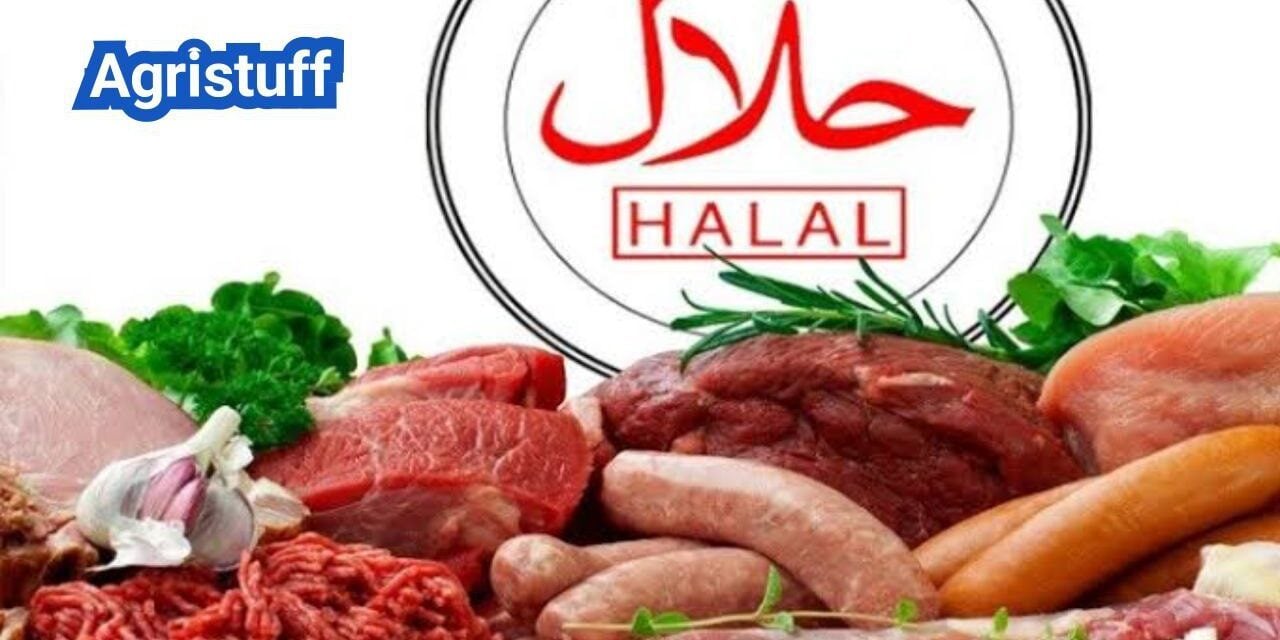
The demand for products and services that comply with Islamic law is on the rise, driving significant growth in the halal market size and halal market value. The halal food market, in particular, is expanding rapidly, presenting opportunities for U.S. brands to tap into this lucrative consumer base.
To capitalize on this trend, U.S. brands must understand the demand drivers behind the halal market. This includes recognizing the importance of halal certification and the growing demand for halal products beyond food, such as cosmetics and pharmaceuticals.
Key Takeaways
- The global halal market is expected to grow significantly.
- U.S. brands need to understand halal certification to tap into this market.
- The halal food market is a major driver of this growth.
- Halal products extend beyond food to cosmetics and pharmaceuticals.
- Understanding demand drivers is crucial for U.S. brands.
Understanding the Global Halal Market Opportunity for U.S. Brands

With a projected value of $4 trillion by 2028, the global halal market represents a lucrative opportunity for U.S. companies. The global halal market is not just a religious or cultural phenomenon; it’s a significant economic force driven by a growing Muslim population and increasing demand for halal products.
What the Global Halal Market Represents
The global halal market encompasses a wide range of products and services, including food, beverages, cosmetics, and pharmaceuticals, that comply with Islamic law. It represents a substantial market that is driven by the needs of Muslim consumers worldwide. However, it’s also attracting non-Muslim consumers who are drawn to the perceived quality, ethical production, and transparency associated with halal certification.
Halal certification is becoming a global standard for quality assurance, extending its appeal beyond Muslim consumers. This broader appeal is driving growth in the halal market, making it an attractive opportunity for U.S. brands.
Why U.S. Food Companies Should Pay Attention
U.S. food companies should pay attention to the global halal market for several reasons. Firstly, the market is growing rapidly, with a CAGR of 11.25%. Secondly, halal certification is becoming a competitive advantage, as it not only opens doors to Muslim-majority countries but also appeals to a broader consumer base seeking ethical and high-quality products.
By understanding and catering to the halal market, U.S. food companies can:
- Expand their customer base beyond traditional markets
- Enhance their brand reputation through halal certification
- Tap into the growing demand for ethical and transparent food production
The Muslim Consumer and Growing Non-Muslim Appeal
The Muslim consumer is a significant driver of the global halal market. With the Muslim population projected to grow, the demand for halal products is expected to increase. However, what’s also noteworthy is the growing appeal of halal products among non-Muslim consumers. This trend is driven by the perception that halal products are of higher quality, more ethical, and safer.
Non-Muslim consumers are increasingly seeking out halal products, not just for their quality but also for the values they represent, such as animal welfare and environmental sustainability. This crossover appeal is turning the halal market into a mainstream phenomenon, further expanding its potential for U.S. brands.
Global Halal Market Size, Value, and Growth Statistics

As the global halal market continues to expand, understanding its size, value, and growth statistics becomes increasingly important. The global halal food market, in particular, has seen significant growth, driven by increasing demand from Muslim consumers worldwide.
Current Global Halal Market Value and Economic Impact
The global halal food market is valued at around $2,614 billion in 2025, showcasing its substantial economic impact. This market is not only significant in terms of its size but also in its potential for growth, driven by the increasing global Muslim population and the rising demand for halal products among non-Muslim consumers.
The economic impact of the halal market extends beyond its direct value, influencing various sectors such as food production, logistics, and retail. As a result, understanding the current market value and its economic implications is crucial for businesses looking to tap into this growing industry.
Global Halal Foods Market Size Projections Through 2030
Projections indicate that the global halal food market is expected to reach $3,219 billion by 2032, demonstrating a promising growth trajectory. This growth is driven by factors such as increasing health consciousness, the rising number of Muslim consumers worldwide, and the growing appeal of halal food products among non-Muslim consumers.
To capitalize on this growth, businesses must be aware of the market trends and consumer preferences that are shaping the industry. By understanding these factors, companies can develop effective strategies to tap into the growing demand for halal products.
Regional Market Analysis: Europe, Americas, and Key Growth Markets
The global halal market is diverse, with different regions presenting unique opportunities and challenges. In Europe, for example, the halal market is driven by the significant Muslim population in countries such as the UK, France, and Germany.
In the Americas, the halal market is growing, particularly in the United States, where there is a substantial and diverse Muslim population. Other key growth markets include countries in Southeast Asia and the Middle East, where the demand for halal products is increasing rapidly.
U.S. Halal Market Presence: Starkville, Lewiston Maine, and Beyond
The U.S. halal market is characterized by diverse consumer demographics and growing demand for halal products. Cities such as Starkville and Lewiston, Maine, are examples of areas with significant Muslim populations, contributing to the growth of the halal market in the country.
As the U.S. halal market continues to evolve, businesses must be aware of the local consumer preferences and market trends. By understanding these factors, companies can develop targeted strategies to effectively serve the growing demand for halal products in the U.S. and beyond.
Key Demand Drivers Fueling the Booming Industry’s Growth

Multiple demand drivers are fueling the rapid expansion of the halal industry. The growth is attributed to a combination of factors that are not only limited to the Muslim consumer market but are also increasingly appealing to a broader audience.
Rising Health Consciousness and Clean Eating Trends
The rising health consciousness among consumers globally has led to an increased demand for products that are perceived as healthier and more natural. Halal products, by virtue of their strict production and sourcing standards, are often seen as aligning with these clean eating trends. The emphasis on avoiding harmful additives and ensuring that products are permissible under Islamic law resonates with health-conscious consumers.
Growing Non-Muslim Appeal for Halal Food Products
Halal food products are no longer just for Muslim consumers. The perception of halal products as being of higher quality and more ethically produced has led to a growing appeal among non-Muslim consumers. This crossover appeal is driven by the rigorous standards applied to halal certification, which includes aspects such as animal welfare and the absence of certain harmful substances.
Rising Number of Muslim Consumers Worldwide
The global Muslim population is projected to continue growing, driving demand for halal products. As this demographic expands, so too does the market for halal-certified goods. Companies are recognizing the potential of catering to this growing consumer base by ensuring their products meet halal standards.
Ethical and Transparency Considerations in Food Production
Consumers are increasingly demanding more transparency and ethical practices in food production. Halal certification, with its stringent requirements for sourcing and production, is seen as a benchmark for ethical food production. This aspect of halal certification is attracting consumers who prioritize ethical considerations when making purchasing decisions.
| Demand Driver | Description | Impact on Halal Industry |
|---|---|---|
| Rising Health Consciousness | Increased demand for healthier and natural products | Aligns with halal standards, boosting demand |
| Growing Non-Muslim Appeal | Perception of halal products as higher quality and ethical | Expands market beyond Muslim consumers |
| Rising Muslim Consumer Base | Growing global Muslim population | Increases demand for halal-certified products |
| Ethical and Transparency Considerations | Demand for more transparent and ethical food production | Halal certification seen as a benchmark for ethical production |
Step 1: Obtaining Halal Certification for Food Companies
Obtaining halal certification is a multi-step process that requires careful planning, understanding of halal standards, and compliance with halal certification requirements. For U.S. food companies, this process is crucial not only for ensuring compliance with Islamic law but also for tapping into the growing global halal market.
Understanding Halal Certification Requirements
Halal certification requirements are designed to ensure that products comply with Islamic dietary laws. This involves a thorough examination of the production process, from sourcing ingredients to the final product. Key aspects include the avoidance of pork and alcohol, proper slaughtering practices for meat products, and segregation of halal products from non-halal ones throughout the supply chain.
To begin the certification process, companies must understand these requirements in detail. This includes familiarizing themselves with the standards set by the halal certification body they intend to work with, as different bodies may have slightly varying requirements.
Selecting an Accredited Halal Certification Body
The selection of a halal certification body is a critical decision. The chosen body must be accredited and recognized by relevant authorities, both locally and internationally, to ensure the certification’s credibility and acceptance in target markets.
When selecting a halal certification body, companies should consider factors such as the body’s reputation, the scope of their certification services, and their understanding of the specific needs of the company’s products and target markets.
| Certification Body | Accreditation Status | Recognition |
|---|---|---|
| Halal Certification Institute (HCI) | Accredited by ANSI | Globally recognized |
| Islamic Society of North America (ISNA) | Accredited by IAS | Recognized in North America and beyond |
Implementing the Halal Assurance System (HAS)
The Halal Assurance System (HAS) is a critical component of the halal certification process. It involves implementing procedures and controls to ensure that all aspects of the production process comply with halal requirements. This includes training for staff, regular audits, and maintaining detailed records.
“The implementation of a robust Halal Assurance System is key to maintaining halal integrity throughout the supply chain.” – Dr. Abdul Aziz, Halal Expert
Completing the Halal Audit Checklist for Manufacturers
The halal audit checklist is a tool used by manufacturers to ensure they are meeting all the necessary halal certification requirements. It covers various aspects, including ingredient sourcing, production processes, and packaging.
By systematically going through the checklist, manufacturers can identify and address any potential issues before the formal audit, ensuring a smoother certification process.
Obtaining halal certification is a significant step for U.S. food companies looking to expand into the global halal market. By understanding the requirements, selecting the right certification body, implementing the Halal Assurance System, and completing the halal audit checklist, companies can successfully navigate this process and benefit from the growing demand for halal products.
Step 2: Navigating Halal Labeling Requirements in the USA

Navigating the complex landscape of halal labeling requirements in the USA is crucial for U.S. brands looking to tap into the growing halal market. Compliance with these regulations not only ensures legal adherence but also builds trust with Muslim consumers and expands market opportunities.
Federal Halal Labeling Regulations and Guidelines
At the federal level, the U.S. Department of Agriculture (USDA) and the Food and Drug Administration (FDA) play significant roles in regulating food labeling, including halal products. While there are no specific federal laws governing halal labeling, companies must comply with general food labeling regulations.
The USDA’s Food Safety and Inspection Service (FSIS) requires that all meat and poultry products be labeled truthfully. For halal products, this means that any claims regarding halal certification must be substantiated.
State-Level Halal Labeling Laws
Halal labeling requirements can vary significantly at the state level. Some states have enacted laws to regulate halal labeling to prevent fraud and ensure compliance with halal standards. For instance, certain states require halal certification for products labeled as halal.
Companies must be aware of these state-level regulations to ensure compliance across different markets within the USA.
Required Label Information and Certification Marks
For a product to be labeled as halal, it typically needs to carry a halal certification mark from an accredited certification body. The label must also include other required information such as the product name, ingredients, and the name and address of the manufacturer or distributor.
Ensuring that the label complies with both federal and state regulations is crucial for avoiding mislabeling issues.
Avoiding Mislabeling and False Claims | Global Halal Market
Mislabeling or making false claims about halal certification can lead to legal repercussions, damage to brand reputation, and loss of consumer trust. Companies must implement rigorous controls to ensure the accuracy of their labeling and advertising claims.
Regular audits and compliance checks are essential components of maintaining halal certification and avoiding potential pitfalls.
Step 3: Building Your Halal Ingredients List and Sourcing Strategy

To successfully navigate the halal market, companies must first establish a robust halal ingredients list and sourcing strategy. This step is crucial for ensuring compliance with halal standards and for maintaining the integrity of halal-certified products.
Creating a Comprehensive Halal Ingredients List
Developing a comprehensive halal ingredients list involves identifying all the ingredients used in your products and verifying their halal status. This process requires a thorough review of your supply chain and product formulations.
- Review product formulations to identify all ingredients.
- Verify the halal status of each ingredient.
- Document the sources of all ingredients.
Critical Ingredients Requiring Special Attention | Global Halal Market
Certain ingredients require special attention due to their potential non-halal status or the risk of contamination. These include gelatin, enzymes, and emulsifiers, among others.
Manufacturers should work closely with their suppliers to ensure that these critical ingredients are halal-certified.
Supplier Certification and Ingredient Verification | Global Halal Market
Supplier certification is a critical component of a successful halal sourcing strategy. Companies must verify that their suppliers adhere to halal standards.
- Require suppliers to provide halal certification for their products.
- Conduct regular audits to ensure compliance.
- Maintain detailed records of supplier certifications and ingredient verifications.
By following these steps, U.S. food companies can build a reliable halal ingredients list and sourcing strategy, enabling them to capitalize on the growing demand for halal products.
Step 4: Implementing Halal Traceability and Segregation Protocols

Halal traceability is not just a regulatory requirement; it’s a business imperative for companies seeking to tap into the global halal market. Ensuring the integrity of halal products from sourcing to delivery is crucial for maintaining consumer trust and complying with halal standards.
Why Halal Traceability is Non-Negotiable | Global Halal Market
Halal traceability involves tracking the movement of halal products through the supply chain to prevent cross-contamination with non-halal items. This is critical because even accidental contamination can render a product non-halal, potentially damaging a company’s reputation and bottom line.
The importance of halal traceability can be seen in several areas:
- Ensuring compliance with halal certification requirements
- Preventing cross-contamination with non-halal products
- Maintaining transparency throughout the supply chain
- Building consumer trust in halal products
Designing Effective Segregation Systems | Global Halal Market
Effective segregation systems are vital for maintaining the integrity of halal products. This involves separating halal and non-halal products at every stage of production, storage, and transportation.
Key considerations for designing segregation systems include:
| Segregation Aspect | Description | Best Practice |
|---|---|---|
| Production | Separating halal and non-halal production lines | Use dedicated equipment for halal products |
| Storage | Storing halal and non-halal products in separate areas | Clearly label storage areas and use separate warehouses if necessary |
| Transportation | Ensuring halal products are not contaminated during transport | Use dedicated vehicles for halal products or thoroughly clean vehicles between uses |
Record-Keeping and Documentation Requirements | Global Halal Market
Accurate record-keeping is essential for halal traceability. This includes documenting the sourcing of halal ingredients, production processes, storage, and transportation.
Key documentation includes:
- Halal certification documents for ingredients and products
- Production batch records
- Storage and inventory logs
- Transportation records
Digital Traceability Solutions for Halal Products
Digital traceability solutions, such as blockchain technology, are increasingly being adopted to enhance halal traceability. These solutions provide real-time tracking and transparent documentation throughout the supply chain.
By implementing these measures, companies can ensure the integrity of their halal products, maintain compliance with halal standards, and build trust with consumers.
Step 5: Establishing Halal-Ready Supply Chain Management
To effectively cater to the growing demand for halal products, companies must prioritize halal-ready supply chain management. This involves ensuring that every stage of the supply chain, from sourcing to delivery, complies with Islamic law.
Principles of Halal-Ready Supply Chain Management | Global Halal Market
A halal-ready supply chain is built on several key principles: transparency, accountability, and the segregation of halal and non-halal products. Transparency is crucial for building trust with consumers and certifying bodies. Accountability ensures that all stakeholders are responsible for maintaining halal standards.
According to a report by the Islamic Financial Services Board, “The halal industry is not just about food; it’s about creating a lifestyle that adheres to Islamic principles.”
“The halal industry is evolving rapidly, and companies must adapt to changing consumer demands while maintaining compliance with halal standards.”
Evaluating and Selecting Halal Co-Manufacturing Partners
When selecting co-manufacturing partners, it’s essential to evaluate their halal certification status, production processes, and cross-contamination prevention measures. Companies should look for partners who have a robust halal assurance system in place.
| Evaluation Criteria | Description | Importance Level |
|---|---|---|
| Halal Certification | Valid halal certification from recognized bodies | High |
| Production Processes | Segregation of halal and non-halal products | High |
| Cross-Contamination Prevention | Measures in place to prevent cross-contamination | High |
Transportation and Storage Best Practices | Global Halal Market
Transportation and storage are critical components of the supply chain. Best practices include using dedicated halal transportation, proper labeling, and maintaining appropriate storage conditions to prevent contamination.
Dedicated halal transportation helps prevent cross-contamination with non-halal products. Proper labeling ensures that products are easily identifiable as halal.
Managing Cross-Contamination Risks Throughout the Supply Chain
Managing cross-contamination risks is vital to maintaining the integrity of halal products. This involves implementing segregation protocols, regular cleaning and sanitizing, and training personnel on halal procedures.
- Implement segregation protocols for halal and non-halal products.
- Conduct regular cleaning and sanitizing of equipment and storage facilities.
- Train personnel on halal procedures and the importance of maintaining halal standards.
Step 6: Ensuring Halal Export Compliance for U.S. Brands

Ensuring halal export compliance is crucial for U.S. brands seeking to tap into the global halal market. As the demand for halal products continues to grow, U.S. companies must navigate the complex landscape of halal export regulations to remain competitive.
Understanding Halal Export Compliance Requirements | Global Halal Market
Halal export compliance involves adhering to the regulations and standards set by the importing countries. U.S. brands must familiarize themselves with these requirements to avoid costly mistakes and ensure smooth exports.
Key aspects of halal export compliance include:
- Understanding the halal certification requirements of the destination country
- Complying with labeling and packaging regulations
- Ensuring product ingredients and manufacturing processes meet halal standards
Country-Specific Halal Import Standards and Regulations | Global Halal Market
Different countries have varying halal import standards and regulations. For instance, countries like Malaysia and Indonesia have stringent halal certification requirements, while others may have more lenient regulations.
| Country | Halal Certification Requirement | Labeling Requirements |
|---|---|---|
| Malaysia | Mandatory halal certification | Halal logo and certification number |
| Indonesia | Mandatory halal certification | Halal logo and MUI certification number |
| Saudi Arabia | Recommended halal certification | No specific labeling requirements |
Export Documentation and Health Certificates | Global Halal Market
In addition to complying with halal regulations, U.S. brands must also ensure they have the necessary export documentation and health certificates.
Required export documents may include:
- Commercial invoice
- Packing list
- Certificate of origin
- Health certificate
U.S. brands should work closely with their export partners and relevant authorities to ensure all necessary documentation is in order.
Protecting Your Brand: Halal Food Fraud Prevention
The global halal market’s growth presents opportunities for U.S. brands, but it also raises concerns about halal food fraud. Ensuring the authenticity of halal products is crucial for maintaining consumer trust and avoiding reputational damage.
Understanding Halal Food Fraud Risks | Global Halal Market
Halal food fraud involves the mislabeling or misrepresentation of products as halal when they do not meet the required standards. This can occur due to various factors, including lack of proper certification, contamination, or intentional adulteration.
Common Types of Halal Food Fraud | Global Halal Market
Common types of halal food fraud include the substitution of halal ingredients with non-halal alternatives, mislabeling of products, and failure to comply with halal slaughtering practices. Such practices not only harm consumers but also undermine the integrity of the halal market.
Halal Food Fraud Prevention Strategies for Manufacturers
To prevent halal food fraud, manufacturers should implement robust halal assurance systems, including regular audits and testing. They should also ensure that their suppliers are halal-certified and adhere to halal standards. By taking these measures, manufacturers can protect their brand reputation and maintain consumer trust in the global halal market.
FAQ
What is the global halal market, and what products does it encompass?
The global halal market includes a wide range of products and services that comply with Islamic law, such as food, cosmetics, and pharmaceuticals.
What is the current global halal market value, and what is its economic impact?
The global halal market has significant economic value, driven by the growing Muslim population and increasing demand for halal products, with a substantial impact on the global economy.
What are the key demand drivers fueling the growth of the global halal market?
Rising health consciousness, growing non-Muslim appeal, and the increasing number of Muslim consumers worldwide are driving the growth of the global halal market.
What steps are required to obtain halal certification for food companies?
To obtain halal certification, food companies must understand certification requirements, select an accredited certification body, and implement the Halal Assurance System (HAS).
What are the halal labeling requirements in the USA, and what information is required on labels?
Halal labeling requirements in the USA involve federal regulations, state-level laws, and required label information, including certification marks to ensure compliance.
How can companies create a comprehensive halal ingredients list and sourcing strategy?
Companies can create a comprehensive halal ingredients list by identifying critical ingredients, verifying supplier certification, and implementing ingredient verification processes.
Why is halal traceability and segregation important, and how can it be implemented?
Halal traceability and segregation are crucial to prevent cross-contamination and ensure compliance; this can be achieved by designing effective segregation systems and maintaining accurate records.
What are the principles of halal-ready supply chain management, and how can companies evaluate co-manufacturing partners?
Halal-ready supply chain management involves evaluating and selecting co-manufacturing partners, managing cross-contamination risks, and implementing best practices for transportation and storage.
What are the halal export compliance requirements for U.S. brands, and what documentation is necessary?
U.S. brands must comply with country-specific halal import standards, obtain necessary export documentation, and secure health certificates to ensure halal export compliance.
What are the risks associated with halal food fraud, and how can manufacturers prevent it?
Halal food fraud risks include mislabeling and false claims; manufacturers can prevent this by understanding the risks, identifying common types of fraud, and implementing prevention strategies.
Is halal only about meat?
No—halal can apply to ingredients, processing aids, and finished foods (including dairy, snacks, and supplements), so programs often focus on supplier controls and documentation.
Does the U.S. government “certify” halal?
Halal is typically verified by third-party certification bodies; U.S. regulators focus on whether your label claim is truthful and not misleading within the product’s jurisdiction.
Can a co-manufactured product be halal?
Yes, but you need contract language, segregation/sanitation controls, training, and audit rights that ensure the co-man executes halal control points consistently.
Do I need lab testing to sell halal?
Not always—many programs rely on supplier certification and process controls, but risk-based testing can help for high-risk categories (e.g., gelatin-heavy or highly processed items).
What’s the fastest first step for a U.S. brand?
Pick the target buyer/market, confirm certificate acceptance, then build a halal risk map of ingredients and shared equipment before you touch packaging.
Conclusion of: Global Halal Market
Why the Global Halal Market is on every U.S. brand’s radar
The Global Halal Market is no longer a niche aisle—it’s a mainstream buying pattern shaped by population growth, international trade, and retailer expectations for verified claims. For U.S. agricultural and food brands, halal is both a market-access requirement in many destinations and a trust signal at home when executed correctly. The winners treat it as an operating system (procurement, process controls, labeling), not a last-minute logo decision Pew Research Center: global religious landscape 2010–2020
One reason the Global Halal Market keeps expanding is simple math: more consumers will be seeking halal-compliant options over time, and that demand shows up across proteins, dairy, snacks, and ingredients that flow from U.S. farms into packaged foods. If your supply chain feeds into exporters, co-manufacturers, or private label, halal readiness can become a differentiator even before you sell a branded SKU overseas. Planning early helps you avoid expensive reformulation and relabeling loops later Pew Research Center: religious projections 2010–2050
The Global Halal Market is also “multi-local,” meaning acceptance can vary by country, retailer, and certification body, even when products look similar on the shelf. A U.S. brand may succeed in one export channel and fail in another if documentation, accreditation, or ingredient risk isn’t aligned with what that specific buyer recognizes. Understanding where Muslim consumers live—and how diverse communities and standards can be—helps you choose the right compliance path
What “halal” really means for agriculture and food supply chains
At its core, the Global Halal Market is about meeting religious requirements for what is permitted (and how it is produced), then proving it with documentation buyers can trust. That proof typically covers inputs (ingredients and processing aids), segregation (preventing cross-contact with non-halal materials), and verification (audits, records, and sometimes lab testing). In many countries, halal assurance is supported by law or formal government structures, which increases enforcement and buyer scrutiny Indonesia BPJPH: Law No. 33/2014 on halal product assurance
For U.S. farms and agribusinesses, the Global Halal Market often begins upstream with ingredient integrity: animal-derived inputs, flavors carried in alcohol, enzymes, emulsifiers, gelatin, or shared equipment that also handles pork-based items. That’s why many mature halal programs look a lot like an internal control system—supplier approvals, halal control points, traceability, and internal audits—built to prevent “silent” contamination risks. If you treat halal as a controlled process, you reduce both compliance risk and recall-like disruptions Malaysian Halal Management System (MHMS) 2020
Because the Global Halal Market can be derailed by tiny ingredient details, verification sometimes goes beyond paperwork when risk is high. Brands may use targeted lab methods to confirm absence of porcine material in gelatin-heavy or highly processed products where conventional checks are weaker. You don’t need to test everything, but you do need a defensible risk-based plan that matches your product type and exposure points NIH/PubMed Central: ddPCR methods used in halal-related gelatin detection (2025)
Demand drivers shaping the Global Halal Market
A major driver of the Global Halal Market is the global shift toward “verified consumption,” where consumers expect claims to be backed by systems, not slogans. Halal buyers often ask the same questions quality managers ask: Who certified it, what standard did they follow, how do you manage changes, and how do you prevent mix-ups in shared facilities? When you can answer those questions clearly, you become easier to list, easier to re-order, and easier to audit FDA: general food labeling requirements and labeling controls (CPG)
Regulatory momentum is another driver of the Global Halal Market, especially in countries that are strengthening halal governance and market surveillance. That means U.S. exporters can’t rely on “one-time certification” thinking; they need ongoing compliance, rapid documentation retrieval, and disciplined change control (new suppliers, new flavors, new packaging). The more formal the local system, the less tolerance there is for gaps in records or undocumented substitutions Malaysia: Halal Certification Procedure Manual (Domestic) 2020
Where U.S. rules meet halal requirements
In the U.S., the Global Halal Market intersects with labeling law first: claims must be truthful, not misleading, and managed through an approval pathway that matches your product category. For meat, poultry, and certain egg products, FSIS labeling expectations and review pathways matter, and “halal” can become part of a broader label-approval and documentation workflow. Treat labeling as a controlled system with evidence on file, not as a marketing task USDA FSIS: Guideline for Label Approval (FSIS-GD-2025-0006)
For FDA-regulated foods, the Global Halal Market still depends on a core principle: labeling that is false or misleading can be considered misbranding, and enforcement doesn’t require the government to define halal theology to evaluate whether the claim is supported. The practical takeaway is that your internal documentation—supplier certs, specs, risk assessments, and audit trails—must justify what you print on-pack. If you can’t defend it, don’t claim it FDA: FD&C Act (Food) misbranding framework
Ingredient transparency is where many Global Halal Market programs succeed or fail, because halal risk often hides in compound ingredients (flavors, carriers, emulsifiers) and in the “small print” of class names. Your compliance team should confirm that your ingredient declaration practices meet FDA rules while your halal team verifies the halal status behind each declared ingredient or class. Aligning regulatory labeling with halal risk management prevents contradictions that trigger buyer audits eCFR: 21 CFR Part 101 (Food Labeling)
Choosing certification that your target market will accept
The Global Halal Market runs on third-party certification, but not all certificates are equally recognized across borders. Start with the buyer and destination: ask what standard they accept, whether they require an accredited certification body, and whether the cert must be issued under a specific scheme. When acceptance is unclear, you can lose a deal even with a “valid” certificate—so choose certification strategically, not conveniently ISO/IEC 17065 overview (product/process certification bodies)
Accreditation adds confidence in the Global Halal Market because it reduces “paper-only” certification risk and improves cross-border recognition of conformity assessment. Many importers and governments care whether the certification ecosystem is aligned with international accreditation practices, especially for high-volume commodities and sensitive categories like meat, infant foods, or supplements. If you’re exporting, ask whether your cert body and its accreditation are recognized by the customer’s authorities IAF: information on halal accreditation cooperation (IHAF/IAF/ILAC)
For U.S. agricultural brands, the Global Halal Market can also benefit from adjacent verification tools that strengthen trust with retailers and distributors, such as documented process claims, audited supply chains, and verified operations registries. While these tools aren’t a substitute for halal certification, they can reinforce your credibility when buyers evaluate overall compliance maturity. The more “audit-ready” your operation is, the easier halal adoption becomes USDA AMS: Verified Operations Registry (VOR)
Building a halal-ready operation (farm, processor, or co-man)
A strong Global Halal Market program starts with a written halal risk assessment that maps ingredients, processing aids, shared equipment, sanitation changeovers, storage, and shipping lanes. Then it translates risk into control points: supplier approval rules, segregation, cleaning verification, and documented training so execution doesn’t depend on one person’s memory. If you already run HACCP or preventive controls, embed halal hazards into the same disciplined thinking and validation culture USDA FSIS: HACCP systems validation compliance guideline (PDF)
Food safety fundamentals still matter in the Global Halal Market, because many buyers use halal as an additional “gate” on top of microbiological and sanitation expectations. For meat and poultry, that means you should be able to explain lethality and cooling controls, sanitation programs, and process verification, not just religious compliance. A buyer who trusts your safety system is more likely to trust your halal system too USDA FSIS: Appendix A cooking guideline (RTE lethality)
When the Global Halal Market risk is highest—think gelatin, emulsified meats, supplements, or complex multi-ingredient SKUs—verification may include targeted authenticity testing. This is especially relevant when you rely on global suppliers where documentation quality varies, or when your product could be economically adulterated. Use testing as a risk-based tool (not a marketing gimmick) to verify what your paper trail claims PubMed: porcine trace detection methods in gelatin-based products
Allergen management is a frequent audit topic in the Global Halal Market because many halal-heavy categories also contain major allergens (sesame, dairy, wheat, nuts) and are sold into strict retail environments. Your halal program should not conflict with allergen declarations; it should complement them with disciplined supplier specs and change control. If you swap a spice blend or flavor, you must re-check both allergen status and halal status before release FDA: Food allergen labeling Q&A (Edition 5)
Label execution is where many Global Halal Market launches stumble, especially in co-manufacturing. You need a controlled “label governance” process: who approves artwork, where supporting documents are stored, how revisions are tracked, and how line changes are managed across plants. For FSIS-regulated products, having a clear submission and approval workflow helps prevent delays that can miss seasonal windows or retail resets USDA FSIS: Label Submission and Approval System (LSAS)
Traceability is becoming a competitive requirement inside the Global Halal Market because buyers increasingly expect fast, granular recall capability and strong lot genealogy across suppliers. Even when rules differ by product category, the operational direction is clear: better records, faster retrieval, and fewer “unknowns” when incidents happen. If you already invest in traceability, align it to halal segregation and supplier certification so one system supports both goals NC State Extension: FDA Food Traceability Rule compliance timing update
Quick checklist
Use this Global Halal Market checklist as a pre-launch gate before you print packaging or pitch retailers, because most costly mistakes happen after artwork is finalized and inventory is produced. The goal is to confirm you can defend the claim with controls that survive supplier changes, staff turnover, and growth into new plants. Treat this like a readiness audit you run on yourself International HACCP Alliance: food safety program resources
- Define your target buyer/market first (domestic retailer, GCC importer, Southeast Asia distributor) and confirm their certificate acceptance criteria.
- Map every ingredient and processing aid (including carriers and flavors) and classify halal risk by source (animal vs plant vs synthetic).
- Lock supplier approval rules: require current halal certificates, specs, and change notifications for high-risk inputs.
- Set segregation rules for storage, rework, utensils, and packaging—especially in shared warehouses and co-mans.
- Document sanitation changeovers and verify effectiveness where non-halal materials are handled on the same equipment.
- Train receiving, QA, production, and warehousing teams on halal control points and “stop-the-line” triggers.
- Build a change-control checklist (new supplier, new ingredient, new line, new packaging) that forces halal review before approval.
- Plan labeling governance: who approves the claim, what evidence is required, and where records are stored.
- Decide whether risk-based lab testing is needed for your product category (gelatin, emulsified meats, supplements, etc.).
- Run a mock trace/recall that includes halal segregation proof (not just food safety lots) and fix gaps before launch.
Common mistakes to avoid
These Global Halal Market mistakes show up repeatedly in audits and label reviews because teams treat halal as a one-time certificate instead of a living system. Each mistake is preventable with simple controls: written rules, change management, and evidence organized for fast retrieval. Fixing them early is cheaper than fixing them after a retailer rejection or a border hold USDA FSIS: common reasons labels are modified/returned (PDF)
- Choosing a cert body without buyer acceptance: Ask the buyer for accepted bodies/schemes before contracting, then document it.
- Ignoring “hidden” ingredients: Require full sub-ingredient breakdowns for flavors, enzymes, processing aids, and carriers.
- No change control: Treat supplier swaps, reformulations, and new co-mans as mandatory halal re-approval events.
- Shared equipment with weak sanitation proof: Write changeover procedures and keep verification records tied to lots.
- Over-claiming on packaging: Don’t imply government endorsement or make broad claims you can’t substantiate.
- Inconsistent documents across sites: Standardize specs, training, and receiving checks across every plant and warehouse.
- Retailer-ready traceability not tested: Run mock recalls that show halal segregation evidence, not just lot numbers.
- Co-man misalignment: Put halal control points in the contract and audit the co-man like a critical supplier.
Costs and ROI snapshot
The Global Halal Market cost picture depends on what you sell and where you sell it, so think in “cost drivers” rather than a single price tag. The biggest costs usually come from (1) certification and audits, (2) reformulation or ingredient replacement, (3) segregation and sanitation upgrades, and (4) labeling changes and inventory management. For high-risk products, verification testing can add an extra layer of expense but also reduces buyer disputes Europe PMC: research on porcine DNA detection in gelatin and processed foods
For U.S. farms entering the Global Halal Market through livestock, ROI is often linked to access—being eligible to supply a halal-certified processor, winning a contract with a distributor serving Muslim communities, or qualifying for export pipelines that pay for reliability. Typical cost buckets can include additional documentation at the farm level, transport to approved slaughter facilities, premiums paid to certified processors, and occasional audit participation when the program extends upstream. If you operate in multiple categories, standardizing your verification approach reduces per-SKU overhead USDA AMS: Process Verified Programs directory
- Certification and annual surveillance: often driven by facility size, product complexity, and number of sites (plan for a few thousand dollars up to tens of thousands annually).
- Reformulation: replacing high-risk inputs (gelatin, enzymes, flavors) can range from minor spec swaps to full R&D cycles.
- Segregation and sanitation: racking, bins, dedicated tools, scheduling changes, and validation activities can be modest or significant depending on sharing intensity.
- Labeling and packaging: artwork, plate changes, inventory write-offs, and label governance systems can add one-time and ongoing costs.
- Testing (risk-based): targeted authenticity testing is usually episodic, triggered by risk category or supplier history rather than every batch.
- Sales enablement: buyer questionnaires, documentation packets, and audit support time should be budgeted like a real operational cost.
To estimate ROI in the Global Halal Market without overpromising, connect investments to measurable outcomes: (1) incremental distribution (new doors, new regions), (2) incremental revenue per SKU tied to halal-eligible buyers, and (3) risk reduction (fewer rejections, fewer reworks, faster onboarding with co-mans and retailers). A practical approach is to model best/base/worst cases using conservative conversion rates and to treat “time-to-listing” as a key KPI, because delays can erase expected gains. Strong labeling control and documentation discipline typically improve ROI even beyond halal by reducing compliance friction overall NIH/NLM: overview of food labeling compliance concepts
Final thought
The Global Halal Market rewards brands that operationalize trust: clear standards, disciplined supplier control, documented processes, and labeling governance that holds up under audit pressure. If you build halal readiness into your everyday QA and change-control routines, you reduce friction for retail onboarding and exports while protecting your reputation from avoidable claim disputes. Start small, document everything, and expand only when your system is stable USDA FSIS: label approval documentation form (FSIS 7234-1)
Sources & References
- FDA: food allergens and gluten-free regulatory information
- FDA: guidance on misbranding concepts under FD&C Act (Section 403)
- Cornell Law: 21 U.S.C. § 343 (Misbranded food)
- Cornell Law: 21 CFR Part 101 (Food labeling)
- USDA FSIS: directive on prior labeling approval (PDF)
- USDA FSIS: generic labeling approval webinar (PDF)
- USDA FSIS: guidelines library
- Federal Register: FSIS guidance notice for cooking/cooling control (background)
- Regulations.gov: FDA front-of-package nutrition information docket
- FDA: CFR database and references
- NIH/PubMed Central: review of DNA-based pork detection methods
- PubMed: recent duplex-PCR approach relevant to porcine/bovine authentication