The global DTC food market is expected to reach $195.39 billion by 2031, growing at a CAGR of 18.7%. In this booming industry, supply chain efficiency is crucial for businesses to stay competitive.
Food ingredient distributors play a vital role in this supply chain, offering a range of benefits, including convenience, flexibility, and cost savings. However, the decision to use distributors or opt for direct sourcing depends on various factors, including the type of ingredient, quantity, and quality requirements.
Understanding the advantages and disadvantages of each approach is essential for businesses to make informed decisions and optimize their procurement processes.
Key Takeaways
- The global DTC food market is projected to reach $195.39 billion by 2031.
- Food ingredient distributors offer convenience, flexibility, and cost savings.
- Direct sourcing can provide better quality control and lower costs for large quantities.
- The choice between distributors and direct sourcing depends on ingredient type, quantity, and quality requirements.
- Businesses must weigh the benefits and drawbacks of each approach to optimize procurement.
Understanding the Food Ingredient Supply Chain

The journey of food ingredients from producers to manufacturers involves several key players. This complex network is crucial for ensuring that ingredients are sourced, processed, and delivered efficiently.
Key Players in the Ingredient Ecosystem
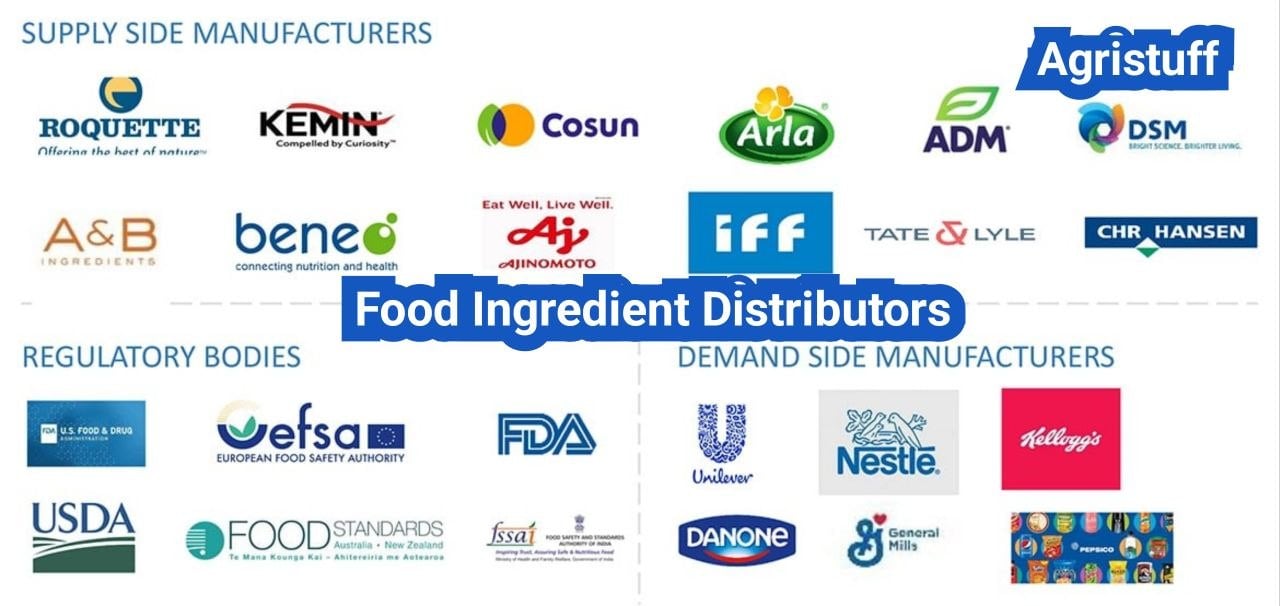
The food ingredient supply chain includes various stakeholders, from farmers and producers to manufacturers and distributors. Food ingredient distributors play a pivotal role in connecting producers with manufacturers, especially for bulk ingredient purchasing. These distributors often have extensive networks, enabling them to source ingredients from multiple suppliers.
In the U.S., food ingredient distributors are critical in managing the flow of ingredients, ensuring that manufacturers receive the necessary components for production. Their role involves not just distribution but also providing value-added services such as storage, handling, and quality control.
The Flow from Producers to Manufacturers
The supply chain begins with producers who cultivate or manufacture raw ingredients. These ingredients are then sold to manufacturers, either directly or through distributors. The choice between direct purchasing and using distributors depends on factors like volume requirements, ingredient specificity, and logistical considerations.
Wholesale food ingredients suppliers often act as intermediaries, providing manufacturers with the ingredients they need in the required quantities. This intermediation is crucial for bulk ingredient purchasing, where economies of scale can significantly impact production costs.
Value Addition at Each Supply Chain Stage
At each stage of the supply chain, value is added through various processes. Producers cultivate and harvest raw ingredients, while distributors handle storage, transportation, and sometimes repackaging. Manufacturers then use these ingredients to create finished products.
The ingredient sourcing strategy adopted by manufacturers can significantly impact their operations. By understanding the supply chain and leveraging the expertise of distributors, manufacturers can optimize their sourcing processes, ensuring a stable supply of high-quality ingredients.
Food Ingredient Distributors in the Modern Market

In the complex world of food manufacturing, distributors of ingredients are key facilitators, connecting producers with manufacturers and enabling the creation of a diverse range of products. As the industry evolves, these distributors are adapting to new demands and technologies.
Major Food Ingredient Distributors in the USA
The USA is home to several major food ingredient distributors, including Brenntag Swank, which has established itself as a significant player in the culinary ingredients distribution market. Other notable distributors have also made their mark by providing a wide range of ingredients to food manufacturers.
“The role of distributors is not just about delivering products; it’s about providing solutions that meet the evolving needs of food manufacturers,” said a leading industry expert. This sentiment is echoed by the growth and diversification seen in the services offered by these distributors.
Services Offered Beyond Simple Distribution
Modern food ingredient distributors offer a variety of services that go beyond mere distribution. These include:
- Technical support for product formulation
- Regulatory compliance assistance
- Supply chain management solutions
- Inventory management services
By providing these value-added services, distributors help manufacturers streamline their operations and focus on product development and quality.
The Food Ingredient Distributors Association and Industry Standards
The Food Ingredient Distributors Association plays a crucial role in setting industry standards and advocating for the interests of its members. By promoting best practices and facilitating dialogue among stakeholders, the association contributes to a more efficient and transparent supply chain.
As the industry continues to evolve, the role of food ingredient distributors will remain vital. Their ability to adapt to changing demands, coupled with their commitment to quality and service, positions them as essential partners for food manufacturers.
Direct Sourcing vs. Distributor Purchasing: Core Differences

Direct sourcing and distributor purchasing represent two distinct approaches to acquiring food ingredients, each with its own set of advantages and disadvantages. Understanding these differences is crucial for food manufacturers to make informed decisions that impact their bottom line and supply chain efficiency.
Price Structures and Volume Considerations
When considering direct sourcing, manufacturers often face lower purchase prices due to the elimination of distributor markups. However, this approach typically requires larger volume commitments, which can be challenging for smaller or medium-sized manufacturers. In contrast, distributor purchasing allows for more flexibility in terms of volume, as distributors can supply smaller quantities, albeit at a potentially higher cost per unit.
The price structure in direct sourcing can be more transparent, with costs directly tied to the production and procurement of the ingredients. Distributors, on the other hand, add their margin to the products, which can increase the cost. However, distributors often provide value-added services that can offset these additional costs.
Lead Times and Supply Chain Flexibility
Lead times are another critical factor in the decision-making process. Direct sourcing often involves longer lead times due to the direct communication and production scheduling with suppliers. This can be mitigated by establishing strong relationships and planning ahead. Distributor purchasing typically offers shorter lead times because distributors usually maintain inventory levels, allowing for quicker turnaround.
Supply chain flexibility is also enhanced through distributor purchasing, as distributors can often provide a wider range of products and can adapt more quickly to changes in demand. Direct sourcing, while potentially more rigid, can be optimized through strategic partnerships and flexible contractual agreements.
Relationship Management Requirements
The relationship management requirements differ significantly between the two sourcing strategies. Direct sourcing demands more intensive relationship management with suppliers, including negotiations, quality control, and logistics management. This can be resource-intensive but allows for a more tailored approach to sourcing.
In contrast, distributor purchasing simplifies relationship management, as the onus is on the distributor to manage the supplier relationships and logistics. However, manufacturers still need to maintain a good relationship with their distributors to ensure smooth operations.
In conclusion, the choice between direct sourcing and distributor purchasing depends on a manufacturer’s specific needs, including volume requirements, lead time sensitivities, and relationship management capabilities. By understanding the core differences between these two approaches, food manufacturers can develop a sourcing strategy that best aligns with their operational goals and market demands.
When Distributors Have the Edge: 5 Scenarios

While direct sourcing has its advantages, there are particular scenarios where food ingredient distributors prove to be more beneficial. Understanding these scenarios can help food manufacturers make informed decisions about their ingredient sourcing strategies.
Small to Medium Volume Requirements
For manufacturers with small to medium volume requirements, distributors can offer a more economical and practical solution. They provide the necessary flexibility and can supply smaller quantities without the high minimum order quantities often associated with direct sourcing.
Diverse Ingredient Portfolio Management
Managing a diverse portfolio of ingredients can be challenging, especially when dealing with multiple suppliers. Distributors can simplify this process by offering a wide range of ingredients from various suppliers, thus streamlining procurement and inventory management.
Benefits of Using Distributors for Diverse Ingredients:
- Simplified procurement process
- Reduced number of supplier relationships to manage
- Potential for cost savings through consolidated purchasing
Limited Storage Capacity Situations
Manufacturers with limited storage capacity can benefit from distributors’ just-in-time delivery capabilities. This approach reduces the need for large storage facilities and minimizes inventory holding costs.
Specialty and Hard-to-Source Ingredients
For specialty or hard-to-source ingredients, distributors often have established relationships with suppliers, making it easier to procure these ingredients. They can also provide valuable insights and recommendations based on their market expertise.
| Scenario | Distributor Advantage | Benefit to Manufacturer |
|---|---|---|
| Small to Medium Volumes | Flexible quantity supply | Economical sourcing |
| Diverse Ingredient Portfolio | One-stop sourcing | Simplified procurement |
| Limited Storage Capacity | Just-in-time delivery | Reduced inventory costs |
| Specialty Ingredients | Established supplier relationships | Ease of procurement |
When Direct Buying Makes More Sense: 4 Scenarios

While distributors offer convenience, there are specific situations where direct buying proves to be the more advantageous choice for food manufacturers. Direct buying can provide greater control over the sourcing process, potentially leading to cost savings and improved quality.
Let’s explore four scenarios where direct buying makes more sense:
High-Volume Single Ingredient Purchasing
For manufacturers that require large quantities of a single ingredient, direct buying can be more cost-effective. By eliminating the distributor’s markup, companies can significantly reduce their ingredient costs. This approach is particularly beneficial for bulk ingredient purchasing, where economies of scale come into play.
- Negotiating directly with suppliers can lead to better pricing.
- Large orders can be tailored to specific needs, reducing waste.
- Direct communication with suppliers can improve quality control.
Custom Formulation Requirements
When manufacturers need ingredients with specific formulations or custom specifications, direct buying allows for closer collaboration with suppliers. This can result in a product that better meets the manufacturer’s needs, potentially improving the final product’s quality and uniqueness.
Direct buying facilitates:
- Tighter control over ingredient specifications.
- Collaboration on product development.
- Potential for proprietary ingredient formulations.
Vertical Integration Opportunities
Some manufacturers may find opportunities for vertical integration by purchasing ingredients directly from suppliers. This can lead to greater control over the supply chain, potentially reducing costs and improving efficiency.
Benefits of vertical integration include:
- Increased control over supply chain operations.
- Potential for cost savings through reduced intermediary costs.
- Improved ability to respond to market changes.
Long-term Strategic Partnerships
Direct buying can pave the way for long-term strategic partnerships between manufacturers and suppliers. By establishing direct relationships, companies can work together more closely, potentially leading to innovations and mutual benefits.
Such partnerships can result in:
- Improved supply chain stability.
- Collaborative product development.
- Shared knowledge and resources.
When considering direct buying, manufacturers should also be aware of the importance of supplier approval processes in food manufacturing and ensuring FSMA compliance for ingredient buyers. A thorough food ingredient procurement checklist can help guide the decision-making process.
Developing an Effective Ingredient Sourcing Strategy
Crafting a robust ingredient sourcing strategy is crucial for food manufacturers to navigate the complexities of the supply chain. As the food industry continues to evolve, companies must adapt their sourcing practices to meet changing consumer demands, regulatory requirements, and market fluctuations.
Assessing Your Ingredient Portfolio
The first step in developing an effective ingredient sourcing strategy is to conduct a thorough assessment of your ingredient portfolio. This involves analyzing the types of ingredients used, their sources, and the volume requirements. By understanding your ingredient needs, you can identify opportunities for consolidation, cost savings, and quality improvements. Data analysis plays a critical role in this process, enabling food brands to make informed decisions about their product development and sourcing.
Balancing Cost, Quality, and Reliability
A successful ingredient sourcing strategy must balance three key factors: cost, quality, and reliability. While cost is an important consideration, it should not come at the expense of quality or reliability. Food manufacturers must work closely with their suppliers to ensure that ingredients meet the required standards and are delivered on time. This balance is crucial for maintaining product integrity and customer satisfaction.
Creating a Hybrid Sourcing Approach
In many cases, a hybrid sourcing approach that combines direct buying and distributor purchasing offers the most flexibility and resilience. By diversifying their sourcing channels, food manufacturers can mitigate risks associated with supply chain disruptions and fluctuations in demand. A hybrid approach allows companies to take advantage of the benefits offered by both direct and indirect sourcing methods, such as cost savings, improved quality, and enhanced supply chain visibility.
Adapting to Seasonal and Market Fluctuations
The food industry is subject to various seasonal and market fluctuations that can impact ingredient availability and pricing. An effective ingredient sourcing strategy must be able to adapt to these changes. This can involve developing relationships with multiple suppliers, implementing flexible pricing agreements, and maintaining a buffer stock of critical ingredients. By being proactive and responsive to market dynamics, food manufacturers can minimize the impact of fluctuations on their operations.
The Financial Impact: Analyzing Total Cost of Ownership

Analyzing the total cost of ownership is essential for food manufacturers to make informed sourcing decisions. The average gross profit margin for food-processing retailers is around 30%, indicating the need for careful financial management in ingredient sourcing.
Beyond Purchase Price: Hidden Costs in Direct Sourcing
When food manufacturers opt for direct sourcing, they often overlook several hidden costs. These include:
- Supplier qualification and auditing expenses
- Quality control and testing costs
- Logistics and transportation expenses
- Inventory management and storage costs
These costs can significantly impact the overall cost of ingredients, making what initially seemed like a cost-effective decision more expensive.
Inventory Carrying Costs in Food Manufacturing
Inventory carrying costs are a crucial aspect of the total cost of ownership. These costs include:
- Storage and warehousing expenses
- Inventory insurance
- Inventory obsolescence and spoilage
- Opportunity costs of capital tied up in inventory
For food manufacturers, managing inventory levels is critical to minimize these costs while ensuring a steady supply of ingredients.
Distributor Markup vs. Internal Management Costs
When comparing distributor purchasing to direct sourcing, it’s essential to weigh the distributor’s markup against the internal management costs associated with direct sourcing. Distributors often provide value-added services such as:
- Technical support
- Inventory management
- Quality assurance
These services can justify a distributor’s markup, potentially leading to overall cost savings for the manufacturer.
ROI Calculation for Sourcing Decisions
To make informed sourcing decisions, food manufacturers must calculate the Return on Investment (ROI) for different sourcing strategies. This involves:
- Identifying all relevant costs associated with each sourcing option
- Quantifying the benefits of each option, such as cost savings or improved quality
- Comparing the ROI of different sourcing strategies to determine the most financially viable option
By conducting a thorough ROI analysis, manufacturers can optimize their sourcing decisions and improve their bottom line.
Quality Assurance in the Distributor Model

Distributors in the food industry are not just middlemen; they are vital for maintaining quality assurance across the supply chain. Ensuring the integrity of ingredients from source to end-product is a complex task that involves several critical steps.
COA Verification for Ingredients
A fundamental aspect of quality assurance is the verification of Certificates of Analysis (COA) for ingredients. COAs provide detailed information about the composition, purity, and quality of ingredients. Distributors must ensure that COAs are accurate and accompany the ingredients throughout the supply chain.
- Verify COA authenticity with suppliers
- Cross-check COA details with ingredient specifications
- Maintain records of COAs for traceability
Supplier Approval Process in Food Manufacturing
The supplier approval process is crucial for ensuring that ingredients are sourced from reliable and compliant suppliers. This process involves evaluating potential suppliers based on their quality control measures, compliance with regulations, and historical performance.
Key steps in the supplier approval process include:
- Initial assessment of supplier qualifications
- Audit and inspection of supplier facilities
- Ongoing monitoring of supplier performance
Traceability and Lot Tracking Systems
Effective traceability and lot tracking systems are essential for quickly identifying and isolating quality issues. These systems enable manufacturers to track ingredients from their origin through to the finished product.
- Assigning unique identifiers to ingredient lots
- Maintaining detailed records of ingredient movement
- Utilizing technology for real-time tracking
Managing Repack and Relabel Controls
Repack and relabel operations are critical points in the supply chain where quality can be compromised if not managed properly. Controls must be in place to ensure that repackaging and relabeling are done accurately and in compliance with regulations.
Best practices for managing repack and relabel controls include:
- Training personnel on proper repack and relabel procedures
- Using approved packaging materials and labels
- Conducting regular audits of repack and relabel operations
Specialty Ingredient Considerations

The growing demand for healthier and more sustainable food options has led to an increased interest in specialty ingredients. As consumers become more discerning about what they eat, manufacturers are turning to specialty ingredients to meet these new demands.
Organic and Natural Ingredient Sourcing
Consumers are increasingly seeking products that are labeled as organic or natural, driving the demand for these types of ingredients. Sourcing organic and natural ingredients requires careful consideration of supply chains and certification processes.
According to a report by the Organic Trade Association, the organic food market has seen significant growth over the past decade, with sales reaching $55.8 billion in 2020. This trend underscores the importance of having a reliable supply of organic ingredients.
“The organic market continues to grow, driven by consumer demand for healthier and more sustainable options.” –
Organic Trade Association
Sourcing organic ingredients involves working with suppliers who adhere to strict organic farming practices and obtaining the necessary certifications.
Allergen Control and Segregation Practices
Allergen control is a critical aspect of ingredient sourcing, particularly for consumers with severe food allergies. Effective allergen control requires segregation practices that prevent cross-contamination.
| Allergen Control Measure | Description | Benefits |
|---|---|---|
| Segregation | Separating allergenic ingredients from non-allergenic ones | Prevents cross-contamination |
| Cleaning and Sanitation | Regular cleaning and sanitizing of equipment and storage facilities | Reduces risk of allergen presence |
| Labeling and Documentation | Accurate labeling and documentation of ingredients and products | Enhances traceability and consumer safety |
Functional and Innovative Ingredient Procurement
The demand for functional foods is on the rise, driven by consumers looking for products that offer additional health benefits. Sourcing functional and innovative ingredients is crucial for manufacturers looking to stay competitive.
Examples of functional ingredients include probiotics, prebiotics, and omega-3 fatty acids. These ingredients are often sourced from specialized suppliers who can provide the necessary documentation and certification.
International vs. Domestic Sourcing Dynamics
Deciding between international and domestic sourcing for specialty ingredients depends on several factors, including cost, quality, and reliability.
Domestic sourcing offers advantages such as shorter lead times and better control over quality, while international sourcing can provide access to unique ingredients and potentially lower costs.
A balanced approach that considers both domestic and international options can help manufacturers optimize their supply chains.
Regulatory Compliance and Documentation
Regulatory compliance stands as a cornerstone for food ingredient distributors, influencing every aspect of their operations. Ensuring adherence to various regulations is not only a legal necessity but also crucial for maintaining consumer trust and avoiding costly penalties.
FSMA Compliance for Ingredient Buyers | Food Ingredient Distributors
The Food Safety Modernization Act (FSMA) has significantly impacted how food ingredient distributors operate. FSMA compliance involves implementing rigorous food safety practices, including:
- Preventive controls for human food
- Supply chain program requirements
- Foreign supplier verification programs
Distributors must work closely with suppliers to ensure compliance, verifying that ingredients meet FSMA standards.
U.S. Organic Ingredient Documentation | Food Ingredient Distributors
For distributors dealing with organic ingredients, maintaining proper U.S. organic ingredient documentation is essential. This includes:
- Certification from USDA-accredited certifying agents
- Detailed record-keeping of organic ingredient sourcing
- Annual inspections to maintain organic status
Proper documentation ensures transparency and compliance with USDA organic regulations.
Import Regulations and Requirements | Food Ingredient Distributors
When importing ingredients, distributors must navigate complex import regulations and requirements. Key considerations include:
- Compliance with FDA Prior Notice requirements
- Adherence to country-of-origin labeling
- Ensuring ingredients meet U.S. safety standards
Understanding these regulations helps prevent delays and ensures a smooth import process.
GS1 GTIN and Lot Identification Standards | Food Ingredient Distributors
Implementing GS1 GTIN and lot identification standards is crucial for traceability and supply chain efficiency. Benefits include:
- Enhanced product tracking capabilities
- Improved inventory management
- Simplified recall processes if necessary
By adopting these standards, distributors can improve overall supply chain visibility.
In conclusion, regulatory compliance and proper documentation are vital for food ingredient distributors. By staying informed about FSMA compliance, organic documentation, import regulations, and GS1 standards, distributors can maintain a competitive edge while ensuring consumer safety.
Technology Integration in Ingredient Procurement
Food brands are increasingly leveraging technology to enhance their supply chain management and quality control. The integration of various technological solutions is transforming the way food manufacturers procure ingredients, making the process more efficient, transparent, and reliable.
EDI Purchase Orders for Suppliers | Food Ingredient Distributors
Electronic Data Interchange (EDI) purchase orders have become a standard in the food industry for communicating with suppliers. EDI enables the seamless exchange of purchase orders, invoices, and other business documents between manufacturers and suppliers. This technology reduces manual errors, accelerates the procurement process, and improves overall supply chain efficiency.
Key benefits of EDI purchase orders include:
- Faster order processing and fulfillment
- Reduced paperwork and administrative costs
- Improved accuracy in order details
- Enhanced visibility into order status
Inventory Management Systems | Food Ingredient Distributors
Effective inventory management is crucial for food manufacturers to maintain optimal stock levels and minimize waste. Advanced inventory management systems utilize real-time data and analytics to track inventory levels, monitor product shelf life, and automate replenishment processes.
Features of modern inventory management systems:
- Real-time inventory tracking
- Automated low-stock alerts and replenishment triggers
- Integration with sales data and forecasting tools
- Barcode scanning and RFID technology for accurate tracking
Forecasting Tools for Ingredient Needs | Food Ingredient Distributors
Accurate forecasting is essential for food manufacturers to anticipate ingredient needs and plan procurement strategies. Advanced forecasting tools use historical sales data, market trends, and seasonal patterns to predict future demand.
Benefits of using forecasting tools:
- Improved accuracy in demand forecasting
- Better alignment between production and demand
- Reduced risk of overstocking or stockouts
- Enhanced ability to respond to market changes
Blockchain and Advanced Traceability Solutions | Food Ingredient Distributors
Blockchain technology is increasingly being adopted in the food industry to enhance traceability and transparency in ingredient sourcing. By creating an immutable record of transactions, blockchain enables real-time tracking of ingredients from origin to final product.
Advantages of blockchain in ingredient procurement:
- Enhanced traceability and transparency
- Improved food safety through quick identification of contamination sources
- Reduced risk of fraud and mislabeling
- Increased consumer trust through verifiable claims
The integration of these technologies is revolutionizing the way food manufacturers approach ingredient procurement. By leveraging EDI purchase orders, advanced inventory management systems, sophisticated forecasting tools, and blockchain-based traceability solutions, companies can create a more efficient, transparent, and responsive supply chain.
Food Ingredient Procurement Checklist: A Practical Guide

A well-structured food ingredient procurement checklist can significantly streamline the sourcing process, ensuring that manufacturers obtain high-quality ingredients while maintaining compliance with regulatory standards.
Evaluating Potential Suppliers and Distributors | Food Ingredient Distributors
When evaluating potential suppliers and distributors, food manufacturers should consider several key factors, including:
- Reliability and consistency of supply
- Quality of ingredients provided
- Compliance with food safety regulations
- Ability to meet volume requirements
- Price competitiveness
Documentation and Qualification Requirements
Proper documentation is crucial in food ingredient procurement. Manufacturers should ensure that all suppliers provide necessary documentation, such as:
- Certificates of Analysis (COA)
- Food Safety certifications (e.g., FDA, USDA)
- Allergen and contaminant testing reports
- Compliance with FSMA regulations
Quality Testing and Acceptance Criteria | Food Ingredient Distributors
Establishing clear quality testing and acceptance criteria is vital to ensure that ingredients meet the required standards. This includes:
- Specifications for ingredient quality
- Testing protocols for contaminants and allergens
- Acceptance criteria for ingredient lots
Contingency Planning for Supply Disruptions | Food Ingredient Distributors
Food manufacturers must be prepared for potential supply disruptions. A robust contingency plan should include:
- Identification of alternative suppliers
- Inventory management strategies
- Communication protocols with stakeholders
By following this practical guide, food manufacturers can develop a comprehensive food ingredient procurement checklist that enhances their sourcing processes, mitigates risks, and ensures compliance with regulatory requirements.
Crafting Your Optimal Ingredient Sourcing Mix
Food manufacturers must strike a balance between cost, quality, and reliability when sourcing ingredients. The decision to use food ingredient distributors or opt for direct sourcing depends on various factors, including volume requirements, ingredient diversity, and storage capacity.
An effective ingredient sourcing strategy involves assessing your ingredient portfolio, balancing cost, quality, and reliability, and creating a hybrid sourcing approach. By understanding the pros and cons of distributor vs direct sourcing, food manufacturers can make informed decisions that meet their specific needs.
Utilizing a food ingredient procurement checklist can help streamline the sourcing process, ensuring that all necessary steps are taken to secure high-quality ingredients. By crafting an optimal ingredient sourcing mix, food manufacturers can improve their bottom line, reduce supply chain risks, and maintain product consistency.
By considering these factors and developing a tailored sourcing strategy, food brands can navigate the complex ingredient sourcing landscape with confidence.
FAQ
What is the role of food ingredient distributors in the supply chain?
Food ingredient distributors play a crucial role in the supply chain by providing a link between producers and manufacturers, offering a wide range of ingredients, and handling logistics, storage, and delivery.
What are the benefits of using food ingredient distributors?
The benefits of using food ingredient distributors include access to a broad range of ingredients, reduced inventory costs, faster lead times, and improved supply chain flexibility.
What are the differences between direct sourcing and using distributors?
Direct sourcing involves purchasing ingredients directly from producers, while using distributors involves purchasing through intermediaries. Direct sourcing can offer cost savings and greater control, but may require more resources and infrastructure.
When is it better to use distributors for ingredient sourcing?
Distributors are often the better choice for small to medium volume requirements, diverse ingredient portfolio management, limited storage capacity situations, and specialty or hard-to-source ingredients.
What are the advantages of direct buying for ingredient sourcing?
Direct buying is often preferred for high-volume single ingredient purchasing, custom formulation requirements, vertical integration opportunities, and long-term strategic partnerships.
How can food manufacturers develop an effective ingredient sourcing strategy?
To develop an effective ingredient sourcing strategy, manufacturers should assess their ingredient portfolio, balance cost, quality, and reliability, consider a hybrid sourcing approach, and adapt to seasonal and market fluctuations.
What are the key factors to consider when analyzing the total cost of ownership for sourcing decisions?
When analyzing the total cost of ownership, manufacturers should consider hidden costs in direct sourcing, inventory carrying costs, distributor markup, and internal management costs.
How can manufacturers ensure quality assurance when using distributors?
Manufacturers can ensure quality assurance by verifying COAs, implementing supplier approval processes, using traceability and lot tracking systems, and managing repack and relabel controls.
What are the considerations for specialty ingredient sourcing?
Specialty ingredient sourcing requires consideration of organic and natural ingredient sourcing, allergen control and segregation practices, functional and innovative ingredient procurement, and international vs. domestic sourcing dynamics.
What are the regulatory compliance and documentation requirements for food ingredient distributors?
Food ingredient distributors must comply with regulations such as FSMA, maintain U.S. organic ingredient documentation, adhere to import regulations, and follow GS1 GTIN and lot identification standards.
How can technology integration improve ingredient procurement?
Technology integration can improve ingredient procurement through EDI purchase orders, inventory management systems, forecasting tools, and blockchain and advanced traceability solutions.
What are the key steps in evaluating potential suppliers and distributors?
Evaluating potential suppliers and distributors involves assessing their qualifications, documentation, quality testing and acceptance criteria, and contingency planning for supply disruptions.
Do food ingredient distributors usually provide COAs?
Food ingredient distributors often provide COAs, but you should decide which attributes are critical enough to verify independently and which you can accept based on supplier history, method credibility, and risk level FDA: LAAF program (food testing reliability)
Can food ingredient distributors help with traceability compliance?
Food ingredient distributors can help if they consistently provide lot-linked records and can map incoming lots to outgoing shipments, which is essential when you need rapid identification and removal of potentially contaminated food FDA: Additional traceability records rule
What should I watch for when buying imported ingredients?
Food ingredient distributors may act as the importer or sell you imported goods, but someone must run the foreign supplier verification program, maintain records, and respond when a hazard is identified, so clarify responsibilities before the first shipment arrives FDA: FSVP at a glance
How do food ingredient distributors affect organic integrity?
Food ingredient distributors can support organic integrity if documentation stays clean through storage, repack, and shipping, but the burden is on you to require appropriate records and verify that organic handling expectations are met across the chain eCFR: 7 CFR Part 205 (National Organic Program)
Conclusion of: Food Ingredient Distributors
Why this decision matters more than it looks
Food ingredient distributors can either be a quiet competitive advantage or an expensive habit, depending on what you buy, how you store it, and how tight your specs are. In the U.S., the same ingredient can travel through very different channels before it reaches your plant, test kitchen, farmstead facility, or co-packer, and those channel choices affect cash flow, risk, and quality consistency USDA ERS: Retailing & Wholesaling overview
Food ingredient distributors also sit directly in the blast radius of food safety expectations, because a single lot problem can turn into customer claims, rework, or a recall that wipes out a season’s margin. When you’re deciding between distributor buying and direct buying, you’re really deciding how you’ll prevent mistakes, detect them fast, and prove what happened with records CDC: Food safety basics and quick facts
What distributors actually do (beyond “selling you ingredients”)
Food ingredient distributors earn their keep when they reduce friction: they assemble SKUs from multiple manufacturers, hold inventory close to you, break bulk into manageable quantities, and keep product moving when your demand is lumpy. That sounds basic, but it’s a real operational service—especially when you need to buy “a little of many things” instead of “a lot of one thing” USDA ERS: What food wholesaling does
Food ingredient distributors can also function like an extension of your receiving dock by bundling deliveries, standardizing paperwork, and managing substitutions when an upstream manufacturer allocates product. The best ones don’t just ship; they help you protect specifications, maintain lot control, and keep compliant documentation aligned with the way U.S. food rules are written eCFR: 21 CFR Part 117 (cGMP & preventive controls)
Distributor vs. broker vs. 3PL: know who owns the risk
Food ingredient distributors typically take title to the goods and resell them, which means they can be responsible for certain warranty and performance expectations tied to “merchantability” and fit for ordinary use. That matters because your legal and operational remedies differ depending on whether you bought from a reseller or directly from the manufacturer Cornell Law (LII): UCC 2-314 (merchantability)
Food ingredient distributors are not the same as brokers (who may arrange a sale without owning inventory) or a 3PL (who may store and ship goods you already own). If a shipment arrives warm, short, or damaged, your exposure can hinge on when risk of loss transfers and what your purchase terms say in plain English Cornell Law (LII): UCC 2-509 (risk of loss)
When distributors beat direct buying
Food ingredient distributors usually win when your demand is variable and you can’t justify full truckloads or manufacturer minimums for every item you use. If you run seasonal products, limited-time flavors, or small-batch farmstead lines, distributors let you buy closer to need and avoid tying up cash in slow-moving inventory USDA ERS: How supply chains use different models
Food ingredient distributors also win when delivery reliability matters more than squeezing the last penny of unit cost, because missed production days are brutally expensive. A distributor with local stock can cover backorders, port delays, weather disruptions, or short-notice schedule changes that a distant direct supplier can’t absorb eCFR: 49 CFR Part 395 (hours-of-service context)
Food ingredient distributors can be the better choice when your receiving, storage, or safety capabilities are still scaling up, because they can reduce the operational burden of frequent small inbound shipments from many manufacturers. A warehouse that isn’t set up for safe, consistent material handling tends to create hidden losses—damage, mix-ups, and time waste that never show up in “ingredient cost” eCFR: 29 CFR 1910.178 (powered industrial trucks)
Food ingredient distributors often outperform direct buying when you need strong documentation discipline, especially for allergens, identity preservation, and customer audits. If your customers are sensitive to allergen controls, you want a distributor who can reliably provide the right spec sheets, allergen statements, and lot-linked COAs without you chasing them every week FDA: Food allergies and major allergens
When direct buying usually wins
Food ingredient distributors tend to lose when you have steady, high-volume consumption of a narrow ingredient set and you can take full pallets or full truckloads consistently. In that situation, direct buying can cut out a layer of handling, reduce markups, and give you more influence over production scheduling and allocation USDA ERS: Processing & marketing in the food system
Food ingredient distributors also lose when the “ingredient” is really a proprietary input you must control tightly—think custom blends, patented cultures, or high-value functional ingredients where traceability, test methods, and change control must be manufacturer-to-you. If you need formal supplier verification activity and direct visibility into upstream preventive controls, direct relationships simplify the chain FDA: LAAF program final rule (testing reliability context)
Food ingredient distributors are often the wrong fit when you import specialty ingredients, because the compliance burden still lands on someone in the U.S. supply chain and you need clarity on who is acting as the importer and who is verifying the foreign supplier. Direct import can work, but only if you’re ready to run the verification program, records, and corrective actions like a serious operator FDA: FSVP final rule overview
A practical decision framework (use this before you negotiate)
Food ingredient distributors are the right answer when they solve a specific constraint you can’t solve cheaply yourself, so start by writing down your constraint in one sentence. Is it minimum order quantities, lead times, storage space, audit readiness, cold-chain capacity, or the sheer complexity of managing many suppliers at once USDA ERS: Wholesaling and its role
Food ingredient distributors are easier to evaluate when you ask eight “yes/no-ish” questions, then score your options honestly: (1) Do we consume enough volume to buy full pallets often? (2) Do we have storage for safety stock? (3) Do we need frequent mixed-SKU deliveries? (4) Do we require lot-level traceability for key items? (5) Do we face allergen or identity-preserved risk? (6) Do we need credit terms? (7) Do we have the people to manage direct suppliers? (8) Can we tolerate longer lead times FDA: FSVP key requirements (record discipline reminder)
Quality, documentation, and food safety: where distributors can help—or hurt
Food ingredient distributors should be treated like a critical supplier, which means you need a written receiving routine that matches your risk. For higher-risk ingredients (allergen-heavy, ready-to-eat inclusions, refrigerated items, or high-value functional inputs), define what you check on arrival—temperature, seals, lot numbers, COA presence, and spec match CDC: Foodborne illness burden data and research
Food ingredient distributors often provide a COA, but your job is to decide when a COA is “good enough” and when you need independent verification. If a result matters to safety or label claims—pathogens, allergens, moisture that drives mold risk, or potency that affects performance—ask whether the testing lab follows recognized competence requirements and validated methods ISO: ISO/IEC 17025 overview
Food ingredient distributors become dramatically more valuable when they can support repeatable testing expectations, because consistent methods reduce “false alarms” and bad decisions. When you’re comparing distributors, ask how they handle method references, lab accreditation, retain samples, and lot-to-lot trend visibility for your highest-risk ingredients AOAC: Official Methods of Analysis program
Food ingredient distributors can also create risk if they repack, relabel, or break bulk without tight controls, because mistakes at that stage can cause short-weight issues, wrong-lot shipments, or label confusion. If you buy repacked ingredients, build in a quick net-content verification habit so problems are caught early rather than discovered during production NIST: Handbook 133 (net contents testing)
Traceability and data: the hidden advantage of a good distributor
Food ingredient distributors can beat direct buying when they make traceability easier, not harder, because they can standardize records across many upstream manufacturers. If you supply retail, foodservice, or multi-site customers, faster lot traceability can be the difference between removing a single lot and pulling everything from shelves FDA: Food Traceability Final Rule overview
Food ingredient distributors are especially helpful when your ingredient list includes items that fall on the Food Traceability List, because recordkeeping expectations get more specific and time-sensitive. Even if your products aren’t on that list today, building disciplined lot linking now makes recalls and customer investigations less painful later FDA: Food Traceability List
Contracts and service levels that prevent surprises
Food ingredient distributors should be managed with written expectations, not informal habits, especially around substitutions and spec changes. Your purchase terms should require pre-approval for any substitute item, packaging change, country-of-origin change, or formulation change that could affect labeling, allergens, or functionality Cornell Law (LII): UCC 2-607 (notice of breach)
Food ingredient distributors also need clear language on warranties and limitations, because many sellers try to narrow responsibility unless you negotiate. Read the warranty disclaimers and limitation-of-liability clauses like you’re reading a production schedule—slowly—and align them with your real-world risk for high-impact ingredients Cornell Law (LII): UCC 2-316 (warranty disclaimers)
Two realistic U.S. scenarios (how the “best” choice changes)
Food ingredient distributors are often the smarter option for a farmstead dairy or small value-added operation that needs cultures, rennet, salt, stabilizers, and packaging in smaller lots while still maintaining clean paperwork. If you also sell organic products, you’ll want distributor documentation that supports organic integrity, including clear labeling and chain-of-custody discipline USDA AMS: National Organic Program
Food ingredient distributors can be a strong fit for produce-based processors (fresh salsas, cut produce, meal kit components) when your customers require proof of GAP-aligned practices and clean warehouse handling. In that world, a distributor that understands produce-facing audit expectations and maintains disciplined warehouse records can save you weeks of back-and-forth during customer onboarding USDA AMS: Harmonized GAP program
Quick checklist
Food ingredient distributors are easiest to evaluate when you check the same operational and documentation boxes every time, so use this list as a repeatable “qualification pass.” Treat it like a pre-flight check before you negotiate pricing, because fixing gaps later is always harder GFSI: Recognised certification programme owners
- Can they supply your top 20 ingredients with stable lead times and clear substitution rules?
- Do they provide lot numbers, COAs, spec sheets, and allergen statements without chasing?
- Do they support refrigerated/frozen handling where needed (temps, seals, trailer logs)?
- Can they deliver mixed-SKU orders accurately (pick accuracy and cycle count discipline)?
- Do they have a documented recall/withdrawal process and can they execute it fast?
- Do they support electronic records (EDI, PDFs, portals) that your team will actually use?
- Do they have clear policies for repacking, relabeling, and maintaining identity preservation?
- Can they support your audit needs (GFSI, customer audits, organic documentation if relevant)?
- Do their terms match your cash flow (credit, minimums, freight thresholds, surcharges)?
- Can they provide consistent service metrics (fill rate, on-time delivery, error resolution time)?
Common mistakes to avoid
Food ingredient distributors can look great in a sales meeting and still fail you in daily operations, so the fastest way to “win” is to avoid the mistakes that cause rework and customer complaints. Use the list below to build guardrails that protect your team when things get busy eCFR: 29 CFR 1910.1200 (hazard communication & SDS discipline)
- Buying on unit price only: Compare total landed cost (freight, storage, spoilage, labor, downtime), not just price per pound.
- No written substitution rules: Require pre-approval for substitutions, especially for allergens, organic, and functional ingredients.
- Weak receiving controls: Standardize checks for lot, seal integrity, temperature (when applicable), and paperwork presence.
- COA “blind trust”: Define when you accept COAs and when you require independent verification for high-risk attributes.
- Repack without controls: Confirm how repack lots are traced, labeled, and protected from mix-ups.
- Unclear complaint timelines: Set rules for immediate notification and evidence (photos, retains, hold tags) when issues occur.
- Ignoring change control: Require advance notice for formulation, source, or packaging changes that impact labels or functionality.
- No service-level expectations: Track fill rate, on-time delivery, and error resolution as performance metrics.
Costs and ROI snapshot
Food ingredient distributors add cost through margin and handling, but they can also remove cost by reducing inbound freight complexity, lowering your inventory burden, and preventing downtime. In practice, ROI comes from fewer “production surprises,” fewer emergency shipments, fewer rejected lots, and less labor spent managing dozens of direct suppliers USDA ERS: Food marketing system context
Food ingredient distributors make the most economic sense when your alternative is holding too much inventory or running constant small inbound shipments from many sources, both of which drive hidden costs. Expect your economics to shift based on distance to suppliers, cold-chain needs, audit requirements, minimum order quantities, and whether you can consolidate freight efficiently across product lines USDA AMS: GAP programs as a marketplace tool
Final thought
Food ingredient distributors are “better than direct” when they reduce risk and friction in ways you can’t replicate cheaply—inventory positioning, documentation discipline, reliable fulfillment, and clean traceability—and they’re “worse than direct” when they add handling without adding control. If you define your constraint, negotiate written expectations, and measure service performance, you can use distributors as a strategic tool instead of a default habit FDA: Food additives & petitions (ingredient control mindset)
Sources & References
- GFSI Benchmarking Requirements Implementation Handbook (v2024) – Part II (PDF)
- GFSI: Benchmarking Requirements 2024 update overview
- GS1: Global Trade Item Number (GTIN) standard
- GS1: How to get barcodes
- NIST Handbook 133 (PDF): Checking the Net Contents of Packaged Goods
- NIST: Handbooks 44, 130, and 133 editions announcement
- FDA: Substances Added to Food (food additive status list)
- FDA: GRAS Notice Inventory database
- FDA: FSVP key requirements
- USDA AMS: Organic regulations and rulemaking
- USDA AMS (PDF): About the National Organic Program
- USDA AMS (PDF): Harmonized GAP Standard (Version 3.1)
- FDA: FSMA Produce Safety rule overview
- FDA: LAAF program data dashboard
- ANAB: ISO/IEC 17025 testing laboratory accreditation