In the competitive U.S. food industry, brands are constantly seeking ways to optimize production while maintaining quality and compliance. Food contract manufacturing has emerged as a vital strategy, enabling companies to outsource production to specialized manufacturers.
This comprehensive guide provides an in-depth look at the world of food contract manufacturing in the U.S., covering essential aspects such as Minimum Order Quantities (MOQs), pricing models, lead times, and Intellectual Property (IP) protection.
By understanding the intricacies of contract food manufacturing, businesses can make informed decisions, streamline their operations, and focus on growth. This guide is designed to support food brands in navigating the complexities of outsourcing production in the U.S. market.
Key Takeaways
- Understanding the benefits and challenges of food contract manufacturing.
- Key factors to consider when selecting a contract food manufacturer.
- Strategies for effective MOQs, pricing, and lead time management.
- Best practices for protecting IP in food contract manufacturing.
- Insights into the U.S. food contract manufacturing landscape.
What Is Food Contract Manufacturing in the United States

In the United States, food contract manufacturing plays a crucial role in the production and distribution of food products. This industry has become a vital partner for many food brands, allowing them to outsource their manufacturing needs to specialized companies.
Definition and Core Services
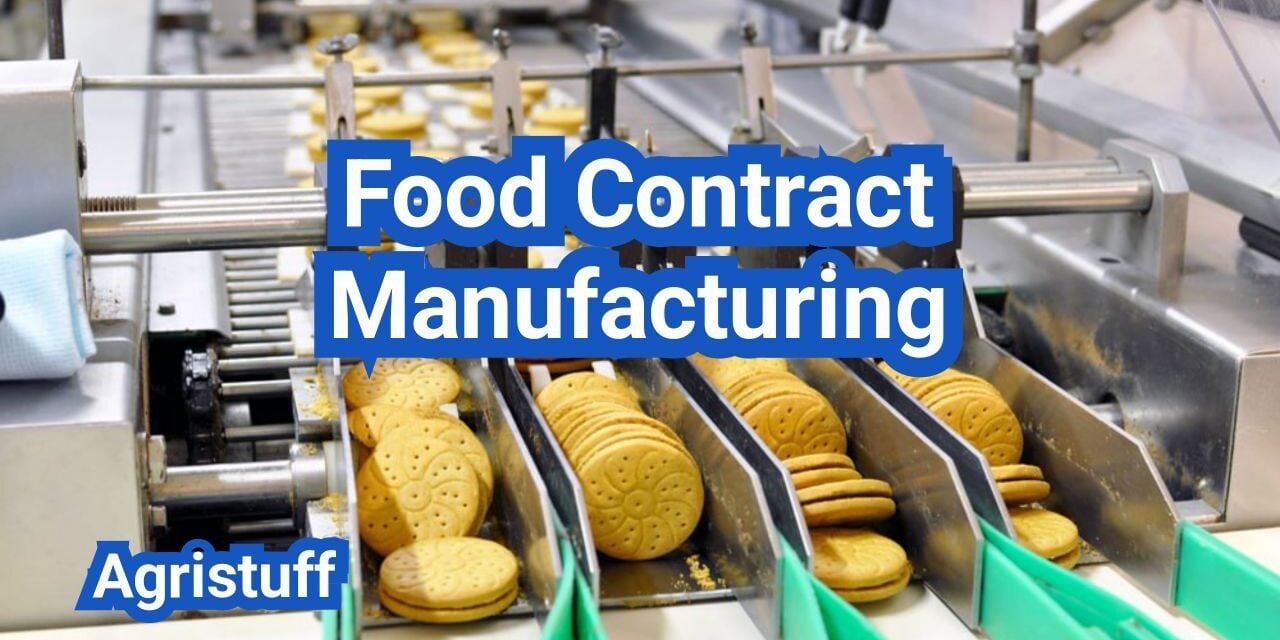
Food contract manufacturing refers to the practice of outsourcing the production of food products to a third-party manufacturer. These contract manufacturers provide a range of services, including product development, production, packaging, and distribution. By leveraging the expertise and resources of contract manufacturers, food brands can focus on their core competencies, such as marketing and sales.
The core services offered by food contract manufacturers typically include:
- Recipe development and product formulation
- Production and processing of food products
- Packaging and labeling
- Quality control and assurance
- Distribution and logistics management
The Size and Scope of the U.S. Food Contract Manufacturing Market
The U.S. food contract manufacturing market is substantial, driven by the growing demand for processed and packaged foods. According to industry reports, the market size is expected to continue growing due to increasing consumer demand for convenience foods and the expansion of existing food brands into new product lines.
The scope of services offered by contract manufacturers can vary widely, from simple co-packing arrangements to full-service manufacturing partnerships. This diversity allows food brands to choose the level of outsourcing that best suits their needs.
Types of Food Manufacturing Partnerships
Food brands can engage in various types of manufacturing partnerships, depending on their specific needs and goals. Some common arrangements include:
| Type of Partnership | Description |
|---|---|
| Co-Manufacturing | A partnership where the contract manufacturer produces products according to the brand’s specifications. |
| Co-Packing | A service where the contract manufacturer packages products produced by the brand or another manufacturer. |
| Private Label Manufacturing | The contract manufacturer produces products sold under the brand’s label, often with customized packaging and formulations. |
| Toll Manufacturing | A service where the contract manufacturer processes raw materials provided by the brand into finished or semi-finished products. |
Each type of partnership offers different benefits and can be tailored to meet the specific needs of food brands, from startups to large corporations.
Benefits of Outsourcing to Food Contract Manufacturers

By partnering with a contract food manufacturer, brands can tap into a range of benefits that enhance their competitiveness in the market. Outsourcing food production to contract manufacturers allows companies to focus on their core competencies while leveraging the expertise and resources of their manufacturing partners.
Cost Efficiency and Reduced Capital Investment
One of the primary advantages of working with food manufacturing companies is the potential for cost efficiency. By outsourcing production, brands can significantly reduce their capital investment in manufacturing infrastructure, equipment, and personnel. This reduction in upfront costs enables companies to allocate resources more effectively, focusing on areas such as product development, marketing, and sales.
Contract manufacturers often have existing production lines and facilities, which means they can absorb the costs associated with equipment maintenance, utilities, and regulatory compliance. This shared cost structure can lead to substantial savings for brands, particularly those that are just starting out or looking to scale their production.
Access to Specialized Equipment and Expertise
Private label food manufacturing and co-packing services provide access to specialized equipment and expertise that might be unaffordable or impractical for individual brands to acquire on their own. Contract manufacturers invest in the latest technology and training to ensure high-quality production, adherence to regulatory standards, and the ability to innovate with new products.
By partnering with a contract manufacturer, brands can benefit from the manufacturer’s expertise in areas such as food safety, packaging, and labeling compliance. This expertise is crucial in navigating the complex regulatory landscape of the food industry, ensuring that products are both compliant and competitive.
Scalability and Speed to Market
The co-packing pricing model and other flexible arrangements offered by contract manufacturers enable brands to scale their production up or down in response to market demands. This scalability is particularly valuable for new product launches or promotional campaigns, where demand can be unpredictable.
Contract manufacturers can also accelerate a brand’s speed to market. With established production processes and a skilled workforce, they can quickly ramp up production to meet demand, reducing the time from product development to shelf availability. This rapid response capability is essential in the fast-paced food industry, where consumer preferences and trends can shift quickly.
Types of Food Contract Manufacturing Arrangements

Food brands can choose from a range of contract manufacturing arrangements, each with its unique benefits and operational focus. The choice of arrangement depends on factors such as production requirements, branding strategies, and business goals.
Co-Manufacturing vs. Co-Packing
Co-manufacturing and co-packing are two distinct contract manufacturing arrangements that serve different purposes. Co-manufacturing involves a contract manufacturer producing goods on behalf of a brand, often using the brand’s recipes and formulations. In contrast, co-packing focuses on packaging services, where a co-packer assembles and packages products that have already been manufactured.
While co-manufacturing requires significant investment in equipment and expertise, co-packing is generally more flexible and can be adapted to various packaging formats and designs. Both arrangements offer benefits such as cost savings and increased efficiency, allowing brands to focus on their core competencies.
“The key to successful co-manufacturing or co-packing lies in selecting a partner that aligns with your brand’s values and production needs.”
Private Label Manufacturing
Private label manufacturing is a popular arrangement where a contract manufacturer produces goods sold under a retailer’s or distributor’s brand name. This model allows retailers to offer products that appear as their own, without the need for in-house manufacturing capabilities.
Private label manufacturing can be an attractive option for brands looking to expand their product offerings without significant capital investment. It also enables retailers to control product formulation, packaging, and pricing, providing a competitive edge in the market.
Toll Manufacturing in the Food Industry
Toll manufacturing, also known as tolling, is a contract manufacturing arrangement where a brand owner provides raw materials to a contract manufacturer, who then processes these materials into finished goods. This model is particularly common in the food industry, where brands may have proprietary ingredients or recipes.
Toll manufacturing allows brands to maintain control over their formulations while leveraging the contract manufacturer’s production capabilities and expertise. It can be an effective way to manage production costs and capacity, especially during peak demand periods.
Finding and Evaluating Food Contract Manufacturers

Identifying the right food contract manufacturer is crucial for businesses looking to outsource their production. The process involves thorough research, evaluation of manufacturing capabilities, and assessment of financial stability and reputation.
Research Methods and Industry Resources
To find potential food contract manufacturers, businesses can utilize various research methods and industry resources. These include:
- Industry directories and databases
- Trade shows and exhibitions
- Referrals from industry peers
- Online search engines and company websites
Using these resources, companies can create a list of potential manufacturers that meet their initial criteria, such as location, product specialization, and capacity.
Evaluating Manufacturing Capabilities and Specializations
Once a list of potential manufacturers is compiled, the next step is to evaluate their manufacturing capabilities and specializations. This includes:
- Assessing their production equipment and technology
- Reviewing their product portfolio and expertise
- Evaluating their quality control processes
- Checking for relevant certifications (e.g., GFSI, FDA compliance)
A detailed evaluation helps ensure that the selected manufacturer can meet the specific needs of the business.
| Capability | Description | Importance Level |
|---|---|---|
| Production Equipment | State-of-the-art machinery and technology | High |
| Product Expertise | Experience in producing similar products | High |
| Quality Control | Robust quality assurance processes | Very High |
| Certifications | GFSI, FDA, and other relevant certifications | Very High |
Assessing Financial Stability and Reputation
Assessing the financial stability and reputation of potential food contract manufacturers is critical. This involves:
- Reviewing financial statements and credit reports
- Checking for any legal or regulatory issues
- Evaluating customer testimonials and references
- Assessing their insurance coverage and liability policies
By thoroughly assessing these factors, businesses can mitigate risks and ensure a successful partnership.
Finding and evaluating food contract manufacturers requires a comprehensive approach. By leveraging industry resources, evaluating manufacturing capabilities, and assessing financial stability, businesses can identify a reliable partner to support their production needs.
Understanding Minimum Order Quantities (MOQs) in Food Manufacturing

MOQs are a critical factor in food contract manufacturing, influencing both cost efficiency and production flexibility. Understanding MOQs is essential for brands looking to outsource their production effectively.
Typical MOQs Across Different Food Categories
MOQs can vary significantly across different food categories, depending on factors such as production complexity, packaging requirements, and market demand. For instance, beverages often have lower MOQs compared to complex, multi-component food products. According to industry insights, MOQs for private label beverages can start as low as 1,000 cases, while complex food products may have MOQs ranging from 5,000 to 50,000 units or more.
A study by the National Food Manufacturers Association highlights that MOQs are also influenced by the type of manufacturing process. For example, co-manufacturing arrangements may have different MOQ requirements than co-packing operations.
Negotiating MOQs as a Small or Growing Brand
For small or growing brands, negotiating MOQs with contract manufacturers can be challenging but crucial. Building a strong relationship with the manufacturer and demonstrating a clear understanding of production needs can help in negotiating more favorable MOQs. Brands can also consider flexible production planning and just-in-time delivery strategies to manage inventory and reduce the impact of high MOQs.
“The key to successful MOQ negotiation lies in understanding the manufacturer’s production capabilities and constraints. By aligning our production schedules with their capacity, we were able to negotiate a more manageable MOQ.” –
A brand manager at a growing food company
Strategies for Meeting MOQ Requirements
Meeting MOQ requirements can be challenging, especially for small or new brands. Several strategies can help brands meet these requirements effectively:
- Product Bundling: Combining multiple products into a single order to meet MOQs.
- Flexible Packaging Options: Offering different packaging sizes or configurations to adjust order quantities.
- Collaborative Forecasting: Working closely with contract manufacturers to forecast demand accurately and plan production accordingly.
By implementing these strategies, brands can better manage MOQ requirements and optimize their production planning. As noted by industry experts, “effective inventory management and demand forecasting are critical in meeting MOQs and ensuring a smooth production process.”
| Food Category | Typical MOQ Range |
|---|---|
| Beverages | 1,000 – 5,000 cases |
| Snacks | 5,000 – 20,000 units |
| Complex Food Products | 5,000 – 50,000 units |
Pricing Models and Cost Structures in Food Contract Manufacturing

Food contract manufacturing involves various pricing models and cost structures that businesses must understand to make informed decisions. The complexity of these pricing models can significantly impact the overall cost and profitability for brands outsourcing their food production.
Common Pricing Structures and Models
Contract manufacturers employ several pricing structures, each with its advantages and considerations. The most common models include:
- Cost-plus pricing: This model involves the contract manufacturer charging the brand the actual cost of production plus a predetermined margin.
- Fixed-price per unit: Here, the contract manufacturer agrees to produce the product at a fixed price per unit, regardless of the actual production costs.
- Toll manufacturing pricing: In this model, the brand supplies the raw materials, and the contract manufacturer charges a fee for processing these materials into the final product.
- Co-packing pricing model: This involves the contract manufacturer handling the packaging of the product, with pricing typically based on the number of units packed.
Understanding Total Cost Components
When evaluating food contract manufacturing options, it’s crucial to understand the total cost components. These include:
- Raw material costs
- Labor costs
- Packaging costs
- Equipment and facility costs
- Quality control and assurance expenses
- Regulatory compliance costs
Understanding these components helps brands identify areas where they can optimize costs without compromising on quality.
Negotiating Favorable Pricing Terms
Negotiating favorable pricing terms with contract manufacturers requires a strategic approach. Brands should:
- Commit to larger volumes: Higher production volumes can lead to better per-unit pricing.
- Build long-term relationships: Contract manufacturers may offer more favorable terms to brands with which they have a long-standing relationship.
- Be flexible with production scheduling: Allowing the contract manufacturer some flexibility in scheduling can help reduce costs.
- Invest in process optimization: Collaborating with the contract manufacturer to optimize production processes can lead to cost savings.
By understanding the pricing models, total cost components, and negotiation strategies, brands can effectively manage their food contract manufacturing costs and improve their bottom line.
Managing Lead Times and Production Planning

Managing lead times and production planning is a vital aspect of food contract manufacturing that can significantly impact a company’s bottom line. Effective production planning ensures that products are delivered on time, while managing lead times helps in maintaining a competitive edge in the market.
Typical Lead Times in Food Manufacturing
Lead times in food manufacturing can vary significantly based on the type of product, production complexity, and the manufacturer’s capacity. Typically, lead times can range from a few weeks for simple products to several months for more complex or specialty items.
For instance, producing a new line of granola bars might have a lead time of 6-8 weeks, while developing a new sauce product could take up to 12 weeks or more, depending on the formulation and packaging requirements.
Factors Affecting Production Schedules
Several factors can impact production schedules in food contract manufacturing, including:
- Raw material availability and sourcing
- Production capacity and equipment maintenance
- Regulatory compliance and quality control measures
- Seasonal demand fluctuations
- Supply chain disruptions
Understanding these factors is crucial for effective production planning and minimizing delays.
Inventory Management and Demand Forecasting
Effective inventory management and demand forecasting are critical components of production planning. Accurate demand forecasting helps manufacturers prepare for production, manage inventory levels, and reduce waste.
Strategies for effective inventory management include:
- Implementing a just-in-time (JIT) inventory system
- Using data analytics for demand forecasting
- Maintaining safety stock for critical ingredients
- Regularly reviewing and adjusting inventory levels based on sales data and market trends
By mastering these aspects, food manufacturers can improve their responsiveness to market demands and maintain a competitive edge.
Crafting Comprehensive Food Contract Manufacturing Agreements
A well-structured contract manufacturing agreement is the backbone of any successful food manufacturing partnership. It provides a clear framework for the relationship between the brand owner and the contract manufacturer, outlining responsibilities, expectations, and legal obligations.
Essential Contract Components
A comprehensive food contract manufacturing agreement should include several key components. Scope of Work is a critical element, detailing the specific products to be manufactured, production volumes, and any customization requirements. Quality and Safety Standards must be clearly defined, ensuring compliance with relevant regulations and industry best practices.
Other essential components include Pricing and Payment Terms, which outline the cost structure and payment schedules, and Intellectual Property Protection clauses, which safeguard proprietary recipes, formulations, and branding.
Term Length and Termination Clauses
The contract should specify its Term Length, whether it’s a fixed term or an ongoing agreement with periodic reviews. Equally important are Termination Clauses, which outline the conditions under which either party can terminate the agreement, including notice periods and any associated penalties.
Performance Metrics and Quality Standards
To ensure the contract manufacturer’s performance meets expectations, the agreement should include Performance Metrics and Quality Standards. These may encompass production yield, defect rates, on-time delivery, and compliance with food safety regulations. Regular audits and quality control checks can be stipulated to monitor adherence to these standards.
Exclusivity and Volume Commitments
The contract may include Exclusivity Clauses, which prevent the contract manufacturer from producing similar products for competitors. Volume Commitments can also be specified, requiring the brand owner to purchase a minimum quantity of products over a certain period, providing the manufacturer with production planning certainty.
By carefully crafting these elements into the contract manufacturing agreement, food brands can establish a strong foundation for their manufacturing partnerships, ensuring clarity, compliance, and mutual benefit.
Intellectual Property Protection in Food Manufacturing

In the competitive world of food manufacturing, safeguarding your intellectual property is paramount. As companies innovate and develop unique recipes, manufacturing processes, and brand identities, protecting these assets becomes crucial for maintaining a competitive edge.
Recipe and Formula Protection Strategies
One of the most significant intellectual properties in food manufacturing is the recipe or formula. To protect these assets, companies can implement several strategies:
- Limit access to sensitive information on a need-to-know basis.
- Use non-disclosure agreements (NDAs) with employees, contractors, and partners.
- Implement robust security measures, including digital encryption and physical safeguards.
Trade secrets can be particularly effective in protecting recipes, as they don’t require public disclosure like patents do. For instance, the formula for Coca-Cola is a closely guarded trade secret that has remained protected for over a century.
Effective Non-Disclosure Agreements (NDAs)
NDAs are a critical tool in protecting intellectual property. When drafting an NDA, it’s essential to:
- Clearly define what constitutes confidential information.
- Specify the obligations of the receiving party.
- Include provisions for the return or destruction of confidential information.
It’s also crucial to ensure that NDAs are signed before any sensitive information is shared. Regularly reviewing and updating NDAs can help maintain their effectiveness in protecting IP.
Trademark and Patent Considerations
While trade secrets protect recipes, trademarks and patents play a vital role in protecting brand identities and innovations. Trademark registration can safeguard brand names, logos, and slogans, preventing consumer confusion and brand dilution.
For novel food products or manufacturing processes, patent protection may be appropriate. Patents provide exclusive rights to the inventor for a limited period, typically 20 years, in exchange for public disclosure of the invention.
Controlling Access to Proprietary Ingredients
Controlling access to proprietary ingredients is another crucial aspect of IP protection in food manufacturing. This can involve:
- Using coded ingredient lists.
- Implementing strict supplier agreements.
- Limiting access to areas where proprietary ingredients are stored or used.
By combining these strategies, food manufacturers can create a robust IP protection framework that safeguards their most valuable assets and maintains their competitive advantage in the market.
Food Safety and Regulatory Compliance Requirements

Food safety and regulatory compliance are foundational elements for successful food contract manufacturing partnerships. Ensuring adherence to these standards is crucial for protecting consumer health and maintaining brand reputation.
FSMA Requirements for Contract Manufacturers
The Food Safety Modernization Act (FSMA) has significantly impacted food contract manufacturing in the United States. Contract manufacturers must comply with FSMA regulations, which focus on preventing food safety hazards rather than just responding to them.
Key FSMA requirements for contract manufacturers include:
- Implementing preventive controls for food safety hazards
- Conducting regular inspections and monitoring
- Maintaining detailed records of food safety processes
- Ensuring supplier verification and approval
GFSI Certifications and Their Importance
Global Food Safety Initiative (GFSI) certifications have become increasingly important in the food industry. GFSI-benchmarked certifications, such as SQF and BRC, demonstrate a commitment to food safety and quality.
Benefits of GFSI certifications for contract manufacturers include:
- Enhanced credibility with retailers and consumers
- Increased market access and competitiveness
- Improved internal processes and quality control
- Reduced risk of food safety incidents
Allergen Control and Cross-Contamination Prevention
Effective allergen control and cross-contamination prevention are critical for ensuring food safety in contract manufacturing environments. Contract manufacturers must implement robust allergen management programs to protect consumers with food allergies.
Key strategies include:
- Segregating allergenic ingredients and products
- Implementing dedicated equipment and utensils for allergenic products
- Conducting regular cleaning and sanitizing procedures
- Training staff on allergen awareness and handling procedures
Traceability Systems and Recall Preparedness
Effective traceability systems are essential for quickly identifying and containing food safety issues. Contract manufacturers must have robust traceability systems in place to facilitate rapid product tracing and recall if necessary.
Key components of traceability systems include:
- Unique product identification and lot tracking
- Detailed records of production and distribution
- Regular testing and validation of traceability systems
- Integration with suppliers’ and customers’ traceability systems
By prioritizing food safety and regulatory compliance, contract manufacturers can build trust with their partners and contribute to a safer food supply chain.
Packaging Compliance and Labeling Requirements
Ensuring packaging compliance and adhering to labeling requirements are crucial steps in food contract manufacturing. These elements not only affect the product’s marketability but also play a significant role in regulatory compliance.
FDA Labeling Regulations
The FDA sets strict guidelines for food labeling, including requirements for nutrition facts, ingredient lists, and allergen warnings. Compliance with these regulations is mandatory to avoid product recalls and legal issues.
- Nutrition Facts Panel: Must include serving size, calories, and percentages of daily values for various nutrients.
- Ingredient List: Ingredients must be listed in descending order by weight, with allergens highlighted.
- Allergen Warnings: Clear identification of common allergens such as nuts, dairy, and soy is required.
Food Contact Material Safety
Food contact materials, including packaging, must be safe for use with food products. This involves ensuring that materials do not leach harmful chemicals into the food.
Key Considerations:
- Material selection: Choosing materials that are compliant with FDA regulations.
- Supplier verification: Ensuring that suppliers of packaging materials adhere to safety standards.
Sustainability Considerations in Packaging
As consumers become more environmentally conscious, the sustainability of packaging is gaining importance. Manufacturers are exploring eco-friendly packaging options that are both compliant with regulations and appealing to consumers.
- Recyclable Materials: Using materials that can be recycled reduces environmental impact.
- Biodegradable Packaging: Biodegradable options offer an alternative to traditional plastics.
- Minimalist Design: Reducing packaging to the minimum necessary can decrease waste and enhance brand image.
By focusing on packaging compliance, labeling requirements, and sustainability, food manufacturers can not only meet regulatory demands but also contribute to a more sustainable future.
Quality Assurance and Control Processes

In the realm of food contract manufacturing, quality assurance stands as a cornerstone of operational excellence. Ensuring the highest quality of products is not just about compliance; it’s about building trust with consumers and maintaining a competitive edge in the market.
Product Specification Sheets
Product specification sheets are foundational documents that outline the requirements for each product, including ingredients, processing parameters, packaging, and labeling. These documents serve as a critical reference point for both the brand owner and the contract manufacturer, ensuring that everyone is aligned on the product’s specifications.
Creating detailed product specification sheets involves several key elements:
- Clear descriptions of the product and its components
- Specific packaging requirements
- Labeling instructions that comply with regulatory standards
- Quality control parameters
By having these elements clearly defined, brands can minimize the risk of errors during production.
Sampling and Testing Protocols
Sampling and testing are integral to quality assurance in food contract manufacturing. These protocols help ensure that products meet the required standards and specifications.
Effective sampling involves:
- Identifying critical control points in the production process
- Establishing a sampling plan that covers all production batches
- Conducting regular testing for quality and safety parameters
Testing protocols may include microbiological analysis, chemical testing, and physical inspections to verify product integrity.
Digital Tools for Quality Management
The adoption of digital tools has revolutionized quality management in food contract manufacturing. These tools enable real-time monitoring, data collection, and analysis, facilitating proactive quality control.
Some of the digital tools used include:
- Quality management software for tracking and managing quality-related data
- Electronic batch recording systems
- Automated testing equipment
These technologies enhance transparency and efficiency in quality assurance processes.
Managing Quality Issues and Deviations
Despite robust quality assurance measures, deviations can occur. Effective management of quality issues is crucial to minimize impact on production and consumer safety.
A structured approach to managing deviations includes:
- Identifying and documenting the deviation
- Conducting a root cause analysis
- Implementing corrective actions
- Reviewing and revising processes to prevent recurrence
By having a clear protocol in place, contract manufacturers can quickly respond to quality issues, ensuring minimal disruption to operations.
| Quality Assurance Aspect | Description | Importance |
|---|---|---|
| Product Specification Sheets | Detailed documents outlining product requirements | High |
| Sampling and Testing Protocols | Regular sampling and testing to ensure compliance | High |
| Digital Tools for Quality Management | Technology used for real-time monitoring and data analysis | Medium |
| Managing Quality Issues and Deviations | Procedures for addressing and correcting quality deviations | High |
Keys to Successful Food Contract Manufacturing Partnerships
Successful food contract manufacturing partnerships are crucial for brands looking to outsource their production needs. By understanding the benefits, types of arrangements, and best practices outlined in this guide, businesses can navigate the complex landscape of food contract manufacturing.
Key to a successful partnership is finding a reliable contract food manufacturer that meets your private label food manufacturing needs. This involves thorough research, evaluation of manufacturing capabilities, and assessment of financial stability and reputation.
Effective food contract manufacturing requires careful consideration of minimum order quantities, pricing models, lead times, and intellectual property protection. By crafting comprehensive agreements and prioritizing quality assurance and control processes, brands can ensure a smooth and successful partnership.
Ultimately, successful contract manufacturing partnerships enable food brands to scale efficiently, improve product quality, and drive business growth. By following the guidelines outlined in this article, businesses can establish strong partnerships with contract food manufacturers and achieve their production goals.
FAQ
What is food contract manufacturing?
Food contract manufacturing is a business arrangement where a food brand outsources its production to a third-party manufacturer, allowing the brand to focus on other aspects of its business.
What are the benefits of food contract manufacturing?
The benefits of food contract manufacturing include reduced capital investment, access to specialized equipment and expertise, and the ability to scale production quickly.
What are the different types of food contract manufacturing arrangements?
The different types of food contract manufacturing arrangements include co-manufacturing, co-packing, private label manufacturing, and toll manufacturing.
How do I find a reliable food contract manufacturer?
To find a reliable food contract manufacturer, you can research industry resources, evaluate manufacturing capabilities and specializations, and assess financial stability and reputation.
What are Minimum Order Quantities (MOQs) in food manufacturing?
MOQs refer to the minimum quantity of a product that a manufacturer is willing to produce in a single production run.
How do I negotiate MOQs with a contract manufacturer?
To negotiate MOQs, you can discuss your production needs with the manufacturer, consider flexible production options, and plan your inventory accordingly.
What are the common pricing models used in food contract manufacturing?
Common pricing models used in food contract manufacturing include cost-plus pricing, fixed-price pricing, and hybrid pricing models.
How do I manage lead times and production planning with a contract manufacturer?
To manage lead times and production planning, you can work closely with the manufacturer to understand their production schedules, plan your inventory, and forecast demand.
What are the essential components of a food contract manufacturing agreement?
Essential components of a food contract manufacturing agreement include contract terms, performance metrics, quality standards, and termination clauses.
How do I protect my intellectual property in food manufacturing?
To protect your intellectual property, you can use non-disclosure agreements, control access to proprietary ingredients, and consider trademark and patent protections.
What are the food safety and regulatory compliance requirements for contract manufacturers?
Contract manufacturers must comply with FSMA requirements, obtain GFSI certifications, implement allergen control measures, and maintain traceability systems.
What are the packaging compliance and labeling requirements for food products?
Food products must comply with FDA labeling regulations, ensure food contact material safety, and consider sustainability in packaging.
How do I ensure quality assurance and control in food contract manufacturing?
To ensure quality assurance and control, you can use product specification sheets, implement sampling and testing protocols, and utilize digital tools for quality management.
What is a “normal” MOQ for Food Contract Manufacturing?
Food Contract Manufacturing MOQs vary widely by process and packaging, but the most reliable way to estimate your MOQ is to ask what minimum run time the line requires plus what minimum packaging purchase the supplier requires. If you’re launching, negotiate by changing what you commit to (quarterly totals, fewer SKUs, standard packaging) rather than only arguing about units. FDA food facility registration guidance (PDF)
Do I need my own facility registration if I use Food Contract Manufacturing?
Food Contract Manufacturing usually means the producing facility handles its own registration and operational compliance, but you still need clarity on roles and on who submits what information and maintains which records. Always confirm responsibilities in writing and ensure you can access the documentation buyers and regulators may request. FDA food facility registration step-by-step
Does a GFSI certificate eliminate my risk in Food Contract Manufacturing?
Food Contract Manufacturing risk never disappears, even with certifications, because issues can still occur through ingredient variability, labeling errors, and distribution temperature abuse. Certifications can reduce risk when they’re current and correctly scoped, but you still need a product-specific spec, change control, and your own oversight rhythm. FSSC public register (verify certification)
How can I protect my formula in Food Contract Manufacturing without a patent?
Food Contract Manufacturing formulas are often best protected as trade secrets if you limit access, document confidentiality, and control how information is stored and shared. Your contract should address who can see the full formula, what gets disclosed to sub-suppliers, and what happens to records and samples when you switch manufacturers. USPTO trade secret policy resources
What if I import ingredients while using Food Contract Manufacturing?
Food Contract Manufacturing with imports requires a clear importer responsibility map, because foreign supplier verification obligations can apply depending on who is legally the importer and how your supply chain is structured. If you’re unsure, get professional guidance and define a single owner for supplier verification records so shipments don’t get delayed or rejected. FDA guidance on FSVP
Conclusion of: Food Contract Manufacturing
Food Contract Manufacturing can turn a great farm-grown or food-business idea into a compliant, shelf-stable (or refrigerated/frozen) product without you building a plant from scratch. In the U.S., the “right way” to do it is less about finding the cheapest co-man and more about aligning safety systems, packaging realities, and commercial terms so your first production run doesn’t become your first crisis.
Food Contract Manufacturing is especially useful for U.S. farms and small brands trying to move up the value chain—think hot sauce from peppers, frozen produce blends, cultured dairy beverages, jerky, sauces, or ready-to-heat proteins—because you can scale seasonally and match capacity to demand. If you plan it well, you can protect your formula, manage cash flow, and build a repeatable supply chain even when harvest windows and regional logistics change. USDA Value-Added Producer Grants
What Food Contract Manufacturing really means in the U.S.
Food Contract Manufacturing is a business relationship where a licensed facility makes your product to your specification, under a defined quality system, with written responsibilities for food safety, labeling, and traceability. Even if you never touch the product, your brand still carries legal and reputational risk—so your contract should clearly define who controls specifications, change approvals, and release of finished goods. FDA registration of food facilities overview
Food Contract Manufacturing is the best fit when you can win on brand, distribution, or ingredient story—but you’d lose time and money building equipment, hiring QA, and passing inspections. It’s usually a poor fit when your product requires highly unique equipment, extremely volatile ingredients, or daily micro-batches that would force constant changeovers and drive fees through the roof.
Regulatory baseline: who regulates what (and why it affects lead time)
Food Contract Manufacturing timelines change depending on whether your product is primarily under FDA oversight or USDA-FSIS inspection (common for many meat, poultry, and certain egg products). If you’re in USDA territory, label review pathways, required statements, and inspection-related documentation can add steps you don’t want to discover after you’ve printed packaging. FSIS Guideline for Label Approval (PDF)
Food Contract Manufacturing partners will typically expect you to provide enough detail for a written food safety plan and documented preventive controls that match the facility’s hazard analysis and process controls. Even when the manufacturer “owns” the plant’s system, your product inputs (ingredients, allergens, packaging, and distribution) must be reflected accurately so the plan is realistic for your SKU. FDA Food Safety Plan Builder
Food Contract Manufacturing for acidified foods, low-acid canned foods, shelf-stable retort, or other “special process” categories can require additional technical controls, documentation, and training—often involving process authorities and specific filing or registration workflows. If your product lives in this world, treat validation and scheduled process documentation as part of the critical path, not an afterthought.
How to shortlist manufacturers without wasting weeks
Food Contract Manufacturing shortlists should start with capability filters (process type, packaging format, allergens handled, cold-chain needs) and then narrow by the buyer requirements you’ll face in the U.S., like GFSI-recognized certification expectations from retailers, distributors, and large foodservice accounts. A manufacturer may be excellent operationally, but if they can’t meet your target channel’s audit expectations, you’ll pay for the mismatch later. GFSI recognized certification programme owners
Food Contract Manufacturing selection should include a “fit check” on QA maturity: how they manage deviations, product holds, rework, supplier approval, and change control. Ask how they document batch records, how they handle customer-owned specs, and whether their certification scope actually matches the processes you need (not just the building address). FSSC 22000 scheme overview
MOQs: what drives them and how to negotiate them
Food Contract Manufacturing MOQs usually come from economics, not attitude: line changeovers, sanitation, warm-up time, minimum kettle fills, minimum run time, and packaging supplier minimums often matter more than your sales forecast. If you understand which constraint is “hard” (equipment physics) versus “soft” (policy), you can propose alternatives like larger but fewer runs, simplified packaging, or fewer SKUs per day. FDA overview of food contact substance review
Food Contract Manufacturing MOQs can often be lowered by changing the unit of commitment: commit to a quarterly total instead of per-run, accept a standard bottle/jar instead of a custom mold, or consolidate flavors using a shared base and late-stage inclusions. Also confirm case pack, pallet pattern, and barcode/traceability requirements early, because downstream distribution standards can quietly force packaging and case quantities that raise your “real” MOQ. GS1 US food safety and traceability standards
Pricing models: how co-mans actually build your quote
Food Contract Manufacturing quotes typically combine pass-through costs (ingredients, packaging, freight) plus conversion costs (labor, line time, overhead), with adders for changeovers, downtime risk, and QA testing. The best way to compare apples-to-apples is to request a line-item quote that separates packaging, ingredients, conversion, and one-time fees so you can see what improves with scale.
Food Contract Manufacturing pricing can jump when label and nutrition requirements change, because artwork revisions, proof approvals, and inventory write-offs become real costs. If you plan multiple sizes or “club” packs, treat those as separate cost models—different labels, different case packs, and different pallet builds can change everything from throughput to warehouse space fees. FDA Nutrition Facts Label resources
Food Contract Manufacturing quotes should also clarify who owns labeling compliance decisions—especially for claims, allergen statements, and handling instructions—because a single claim change can force reprints and rework. If you sell into channels that require stronger substantiation (retailers, large distributors, institutional buyers), build a “claims governance” step into your approval flow before the manufacturer releases packaging to print. FSIS overview of generic label approval (PDF)
Lead times: what’s normal, what’s risky, and what you can control
Food Contract Manufacturing lead time is usually a combination of (1) onboarding and approvals, (2) ingredient and packaging procurement, and (3) production scheduling in the co-man’s queue. To shorten the timeline, lock your specification early, approve artwork faster, avoid exotic packaging with long supply lead times, and align your first run with a production window that matches the plant’s sanitation/allergen schedule. FDA sanitary transportation rule overview
Food Contract Manufacturing lead times also depend on your traceability and recordkeeping expectations, especially if your product falls on the FDA Food Traceability List or if your buyers require deeper lot-level visibility. The “data work” (codes, labels, batch/lot rules, and record formats) is often the hidden critical path, so set it up before the first commercial run. FDA Food Traceability Rule final rule page
Quality and compliance: the issues that create expensive surprises
Food Contract Manufacturing must treat allergen management as a design constraint, not just a label line—because cross-contact controls, scheduling, sanitation validation, and rework rules can make two “similar” products very different operationally. If your product contains major allergens (or you want allergen-free positioning), document your requirements clearly and ask the co-man how they verify controls on shared equipment. FDA food allergy labeling overview
Food Contract Manufacturing quality programs commonly include incoming COA review, in-process checks, finished goods release criteria, and a testing plan tied to product risk and shelf life. You don’t need to “over-test” blindly, but you do need a written rationale for what you test, how often, and what triggers a hold—especially for refrigerated foods, ready-to-eat products, and anything with higher pathogen risk. FDA Bacteriological Analytical Manual (BAM)
Food Contract Manufacturing agreements should spell out recall roles before you ever ship a case: who notifies whom, who drafts customer letters, who manages retrieval and disposition, and how costs are allocated if the root cause is unclear at first. Even if recalls are “voluntary,” your buyers will expect speed, documentation, and consistent communication—so your SOPs and contact lists must be ready in advance. FDA guidance on product recalls
Food Contract Manufacturing also needs a plan for “serious event” reporting and escalation, because certain situations may require rapid internal decisions and regulatory reporting. Clarify who decides whether an incident meets reportable thresholds, who files reports, and how you preserve evidence (samples, records, and photos) so you can investigate quickly and protect the brand responsibly. FDA Reportable Food Registry for industry
Food Contract Manufacturing risk isn’t only microbial—intentional adulteration and food defense expectations can apply based on facility type and size, and many buyers expect a credible food defense posture even when it’s not strictly required for your SKU. Ask how the manufacturer controls facility access, ingredient security, and monitoring of vulnerable steps, and ensure your contract reflects how these controls are maintained. FDA Intentional Adulteration (food defense) rule
Food Contract Manufacturing with imported ingredients introduces another layer: supplier verification, documentation, and importer responsibilities can affect lead times and acceptance of raw materials. If you source internationally, confirm who is the “importer of record,” who maintains supplier verification documents, and what happens when paperwork is incomplete or a shipment fails specifications. FDA FSVP final rule at-a-glance
IP protection: how to keep your formula and brand defensible
Food Contract Manufacturing IP protection starts with deciding what you’re protecting: formula details, process steps, supplier list, sensory targets, and even your cost structure can qualify as trade secrets if you treat them like secrets. Use NDAs, limit access to need-to-know, require written change control, and define what happens to records and samples if the relationship ends. USPTO Trade Secrets IP Toolkit (PDF)
Food Contract Manufacturing IP can also include patentable inventions in certain cases, such as a novel process, a unique ingredient system, or specialized packaging interaction—but patent strategy must align with what you’re willing to disclose publicly. If you suspect patent potential, talk to qualified counsel early, because public disclosure or broad sharing can limit options. USPTO patent basics
Food Contract Manufacturing brand protection is often the fastest win: names, logos, and trade dress can be core assets that carry across SKUs and co-mans. Even if you keep the formula as a trade secret, a protected brand reduces copycat risk and makes retailer conversations easier because your identity is consistent and defensible. USPTO trademark basics
Contracts that prevent “grey zone” conflicts
Food Contract Manufacturing contracts should define specifications, acceptance criteria, ownership of work product, non-substitution rules, deviation handling, dispute process, and payment triggers in plain language. Because goods contracts in the U.S. commonly intersect with UCC concepts, it’s smart to work with counsel who understands how warranties, remedies, and acceptance/rejection mechanics affect real-world outcomes. UCC Article 2 overview (Cornell Law)
How to request quotes that are accurate (and comparable)
Food Contract Manufacturing quote requests should include: target process (hot-fill, refrigerated, frozen), packaging format, ingredient list with allergens, expected annual volume, first-run volume, shelf-life target, distribution channel, and any certification needs. Provide a draft label and claims list early, because “small” label changes can trigger meaningful cost changes in packaging, compliance review, and inventory planning. FDA Nutrition Facts label guidance resources
Food Contract Manufacturing due diligence should include a structured plant review: request the audit certificate (scope and dates), ask for a high-level flow of how your product would run, confirm allergen handling rules, and ask how they manage holds and corrective actions. If you’re evaluating multiple facilities, use a consistent scorecard so you can compare risk and responsiveness—not just cents per unit.
Quick checklist
Food Contract Manufacturing works best when you treat onboarding like a project plan with owners and deadlines, because packaging, approvals, and procurement steps can drift unless you manage them intentionally. Use this checklist before you commit deposits or print packaging so your “first run” is truly production-ready. GFSI recognition overview
- Confirm the process type and packaging format the facility runs every week (not “sometimes”).
- Get a written MOQ and the exact drivers behind it (time, kettle fill, packaging minimums, etc.).
- Request a line-item quote separating ingredients, packaging, conversion, and one-time fees.
- Lock a written product specification (ingredients, allergens, sensory targets, net weight, tolerances).
- Confirm allergen scheduling rules and what “allergen clean” means at that facility.
- Define your testing plan, release rules, and who approves deviations and rework.
- Agree on lot coding and traceability records (what codes, where printed, data format).
- Clarify label ownership: who signs off on claims, nutrition, and required statements.
- Put IP controls in writing (NDA, access control, ownership, end-of-contract obligations).
- Set lead times for artwork approval, purchasing cutoffs, and production scheduling windows.
- Document recall roles, notification timelines, and cost allocation principles.
Common mistakes to avoid
Food Contract Manufacturing failures are often “process mistakes,” not product mistakes—missing documents, unclear specs, late approvals, or unrealistic timelines can cause expensive rework and damaged relationships. Avoid these common traps to keep your launch on schedule and your margins intact. FDA guidance on food facility registration (PDF)
- Choosing by lowest unit price: Prevent it by scoring QA maturity, responsiveness, and channel fit first.
- Underestimating packaging lead times: Prevent it by selecting readily available formats for the first run.
- Vague product specs: Prevent it with a written spec including tolerances, allergens, and acceptance criteria.
- Late label decisions: Prevent it by finalizing claims and required statements before printing.
- Ignoring allergen complexity: Prevent it by aligning flavors/SKUs to the facility’s allergen schedule.
- No documented deviation process: Prevent it by defining holds, rework approvals, and release authority.
- Not budgeting one-time fees: Prevent it by asking about setup, validation, artwork, and tooling upfront.
- Assuming certifications replace your oversight: Prevent it with a site visit, scorecard, and ongoing KPIs.
- Weak IP boundaries: Prevent it with access control, change control, and clear ownership clauses.
- Skipping traceability design: Prevent it by setting lot rules and record formats before the first run.
Costs and ROI snapshot
Food Contract Manufacturing costs usually cluster into one-time launch costs and repeatable run costs, and the fastest way to protect ROI is to identify which costs drop with scale (conversion/unit) versus which persist (testing, storage, freight complexity). Typical U.S. cost drivers include packaging format, changeover time, allergen complexity, finished-goods storage, temperature-controlled freight, wastewater and sanitation demands, and the number of SKUs you insist on running in the first 90 days. EPA NPDES permit basics
Food Contract Manufacturing ROI for U.S. farms often improves when you (1) standardize a few winning SKUs, (2) reduce changeovers, and (3) build a predictable reorder cadence that keeps the co-man’s schedule stable—because stability lowers premiums and unlocks better terms. Plan a realistic “first-year ROI” model that includes chargebacks/returns risk, promotional pricing, and QA overhead, and remember that safety and worker training systems are part of sustainable margins, not optional extras. OSHA hazard communication overview
Final thought
Food Contract Manufacturing is a powerful growth lever in the U.S., but only when you treat MOQ math, pricing structure, lead-time drivers, and IP boundaries as “design inputs” from day one. Build a clean spec, pick a manufacturer that matches your channel, and put traceability and change control into writing so scaling feels boring—in the best possible way. FDA Food Traceability List
Sources & References
- FDA Product Recalls Guidance (PDF)
- FDA FSVP At-A-Glance (PDF)
- FDA Reportable Food Registry At-A-Glance (PDF)
- FDA Food Allergies: What You Need to Know (PDF)
- FDA Food Facility Registration User Guide (PDF)
- FDA constituent update on the Food Traceability Rule
- FDA update on Food Traceability Rule compliance timing
- GFSI recognized certification programme owners (PDF)
- USPTO trade secrets: additional resources
- USPTO guide to applying for patents
- OSHA 1910.1200 Hazard Communication Standard
- EPA overview: about NPDES
- FDA Food Traceability Rule At-A-Glance (PDF)