The United States is the largest global producer of broiler meat, with over 2,979 federally inspected poultry processing plants across the nation. The demand for efficient and hygienic chicken processing machinery has never been higher.
A chicken slaughter machine is just one part of a comprehensive poultry processing line. To meet the needs of the industry, it’s essential to understand the line steps, capacity options, and hygiene must-haves for chicken processing machines.
Key Takeaways
- Efficient poultry processing equipment is crucial for meeting the high demand for broiler meat.
- A comprehensive poultry processing line includes various stages, from live bird handling to packaging.
- Hygiene and sanitation are paramount in chicken processing machinery.
- The U.S. is home to over 2,979 federally inspected poultry processing plants.
- Understanding capacity options is vital for selecting the right chicken processing machine.
Understanding Chicken Processing Machine Operations in the U.S. Market

Understanding the operations of chicken processing machines is crucial for stakeholders in the U.S. poultry market. The poultry processing industry in the United States is a significant sector, with Alabama leading production volumes, followed by Arkansas and Delaware.
Growth of the Poultry Processing Industry in the United States
The U.S. poultry processing industry has experienced steady growth, driven by increasing demand for chicken products both domestically and internationally. Advancements in technology and processing techniques have enabled producers to meet this demand efficiently.
Key factors contributing to the industry’s growth include improvements in poultry breeding, nutrition, and processing technologies. These advancements have resulted in higher production volumes and better product quality.
Essential Components of a Complete Poultry Processing Line | Chicken Processing Machines
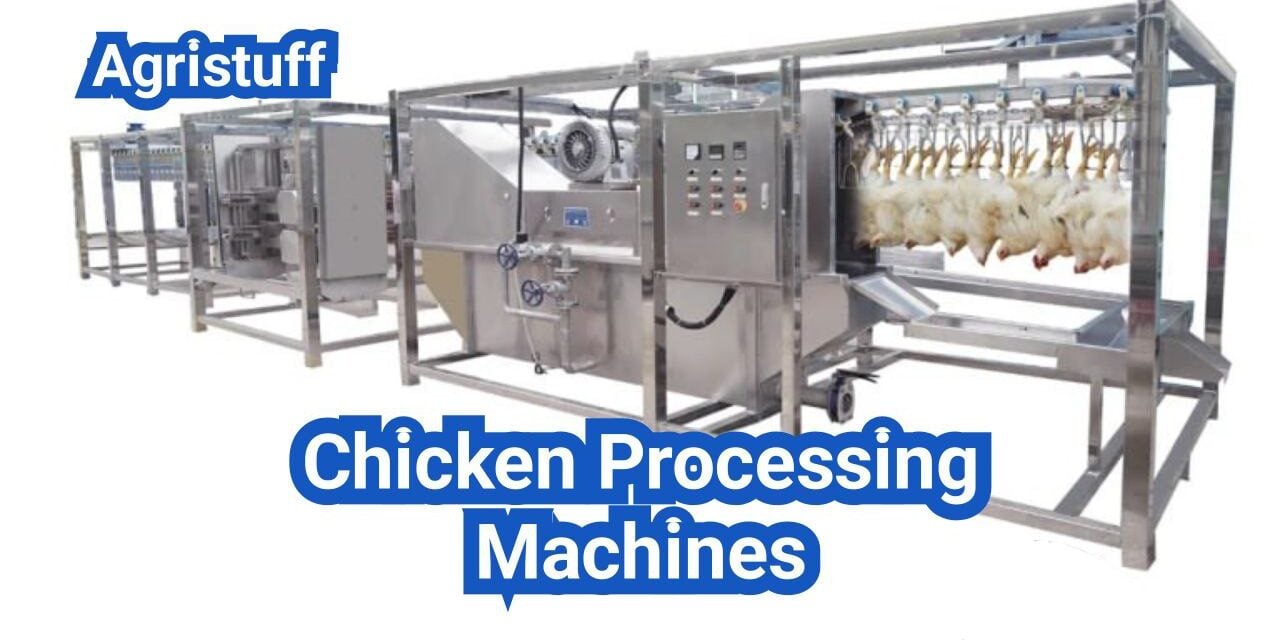
A complete poultry processing line consists of several essential components, including live bird handling and stunning equipment, slaughter machines, scalding and defeathering systems, evisceration machinery, and chilling systems.
Automation plays a crucial role in modern poultry processing lines, enhancing efficiency, reducing labor costs, and improving product safety. Automated systems are used for tasks such as cutting, deboning, and packaging.
Automation in Modern Chicken Processing Machinery
Automation in chicken processing machinery has revolutionized the industry, enabling producers to process large volumes of poultry quickly and safely. Automated processing lines can handle tasks from slaughtering to packaging with minimal human intervention.
The integration of automation technologies, such as robotics and machine learning, is expected to further enhance the efficiency and safety of poultry processing operations.
Step 1: Live Bird Handling and Stunning Equipment
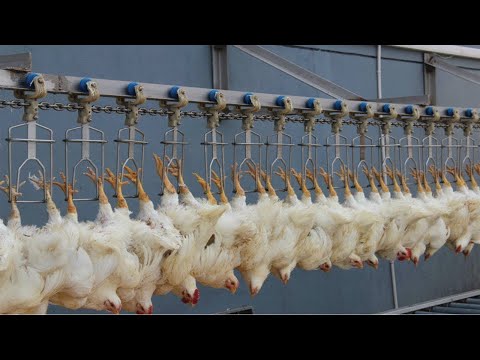
Effective live bird handling and stunning equipment are essential for maintaining bird welfare and producing high-quality poultry products. The initial stage of chicken processing involves careful handling and humane stunning of live birds to minimize stress and ensure optimal product quality.
Electrical Stunning Systems for Poultry | Chicken Processing Machines
Electrical stunning systems are widely used in the poultry industry to render birds unconscious before slaughter. These systems involve the application of a controlled electrical current to the bird’s brain, ensuring immediate insensibility. Proper calibration of electrical stunning systems is crucial to achieve the desired effect without causing unnecessary pain or distress to the birds. The use of electrical stunning systems not only improves animal welfare but also contributes to better product quality by reducing the likelihood of physical damage during the slaughter process.
Live Bird Unloading and Shackling Stations | Chicken Processing Machines
The process of unloading live birds from transport vehicles and shackling them for processing requires careful consideration to minimize stress and injury. Well-designed unloading and shackling stations can significantly reduce the risk of bird injury and improve overall efficiency. Modern facilities often incorporate automated or semi-automated systems for these tasks, reducing labor requirements and enhancing bird handling.
| Feature | Manual Shackling | Automated Shackling |
|---|---|---|
| Labor Requirement | High | Low to Medium |
| Bird Handling Stress | High | Low |
| Efficiency | Low to Medium | High |
Stress Reduction Methods Before Slaughter | Chicken Processing Machines
Reducing stress in birds before slaughter is crucial for improving welfare and product quality. Techniques such as gentle handling, minimizing noise levels, and maintaining comfortable temperatures during holding can significantly reduce bird stress. Implementing these stress reduction methods can lead to improved meat quality and reduced losses during processing.
Step 2: Chicken Slaughter Machine Systems and Blood Collection

Chicken slaughter machine systems play a crucial role in modern poultry processing, ensuring a quick and sanitary slaughter process. These systems are designed to handle the slaughtering and blood collection efficiently, minimizing manual labor and maximizing hygiene.
Automated Neck Cutting and Killing Cone Equipment | Chicken Processing Machines
Automated neck cutting machines are a critical component of chicken slaughter systems. These machines are designed to make precise cuts, ensuring a humane slaughter process. The killing cone equipment works in tandem with neck cutting machines, holding the birds in place during the slaughter process.
Key Features of Automated Neck Cutting Machines:
- Precision cutting for humane slaughter
- Adjustable settings for different bird sizes
- Integration with killing cone equipment for streamlined processing
Blood Drainage Tunnels and Collection Troughs | Chicken Processing Machines
Effective blood collection is crucial for maintaining a clean and sanitary environment in poultry processing plants. Blood drainage tunnels and collection troughs are designed to efficiently collect and manage blood, reducing the risk of contamination.
Chicken Slaughter Machine Price Ranges for Different Scales
The cost of chicken slaughter machines can vary significantly based on the scale of operation, level of automation, and specific features. Understanding the price ranges for different capacities is essential for processors looking to invest in new equipment.
| Scale of Operation | Price Range | Key Features |
|---|---|---|
| Small Scale | $10,000 – $50,000 | Manual or semi-automated, suitable for small farms or local processors |
| Medium Scale | $50,000 – $200,000 | Automated neck cutting, killing cone equipment, and blood collection systems |
| Large Scale | $200,000 – $500,000+ | Highly automated, integrated systems with advanced features for high-volume processing |
Investing in the right chicken slaughter machine system is crucial for maintaining efficiency, hygiene, and compliance with regulatory standards in poultry processing.
Step 3: Scalding Operations with Poultry Scalder Equipment

The scalding process is a crucial step in poultry processing that directly affects feather loosening and skin quality. Scalding involves submerging the birds in hot water to loosen the feathers, making it easier to remove them during the defeathering process.
Setting Scalder Temperature for Optimal Feather Loosening | Chicken Processing Machines
Temperature control is critical in scalding operations. The ideal temperature for scalding poultry typically ranges between 140°F and 150°F (60°C to 65.5°C). Maintaining the correct temperature ensures that the feathers are loosened without damaging the skin.
Different poultry processors may have slightly varying temperature requirements based on the bird type and processing conditions. It’s essential to consult equipment manufacturer guidelines and conduct regular quality checks to determine the optimal scalding temperature for specific operations.
Rotary Chicken Scalder vs. Batch Tank Systems | Chicken Processing Machines
Poultry scalder equipment comes in different configurations, with rotary and batch tank systems being the most common. Rotary scalders are continuous systems where birds move through a rotating drum, ensuring uniform scalding. Batch tank systems, on the other hand, involve scalding birds in batches within a tank.
| Feature | Rotary Scalder | Batch Tank Scalder |
|---|---|---|
| Scalding Method | Continuous | Batch |
| Capacity | High | Variable |
| Uniformity | High | Dependent on operator |
Scalder Maintenance and Water Quality Management | Chicken Processing Machines
Regular maintenance of poultry scalder equipment is vital to ensure consistent performance and hygiene. This includes daily cleaning, checking for wear and tear, and ensuring that all mechanical parts are functioning correctly.
Water quality management is also crucial. The water used for scalding should be clean and maintained at the correct temperature. Regular water changes and monitoring water quality parameters can help prevent contamination and ensure optimal scalding results.
Step 4: Chicken Defeathering Machine and Plucking Technology

Defeathering is a crucial stage in chicken processing, where specialized equipment is used to remove feathers quickly and effectively. The efficiency of this process significantly impacts the overall productivity and quality of the final product.
Drum-Style Automatic Chicken Plucking Machines
Drum-style automatic chicken plucking machines are widely used in the poultry industry due to their high efficiency and ability to handle a large number of birds. These machines consist of a rotating drum with rubber fingers that gently remove feathers from the birds.
Key Features of Drum-Style Machines:
- High capacity processing
- Adjustable speed for different bird sizes
- Easy cleaning and maintenance
Rubber Finger Pluckers and Replacement Kit Requirements | Chicken Processing Machines
Rubber finger pluckers are a critical component of both drum-style and other types of defeathering machines. They are designed to be gentle on the bird’s skin while effectively removing feathers.
The replacement of rubber fingers is essential for maintaining the efficiency of the defeathering process. The frequency of replacement depends on usage and the type of birds being processed.
| Machine Type | Rubber Finger Life | Replacement Frequency |
|---|---|---|
| Drum-Style | 5000 birds | Every 2 weeks |
| Batch Type | 3000 birds | Every week |
Achieving Complete Feather Removal Without Skin Damage
Achieving complete feather removal without damaging the skin is a delicate balance that requires precise adjustment of the defeathering machine. Factors such as the type of rubber fingers used, the speed of the machine, and the temperature of the scalding water all play a role in this process.
“The key to effective defeathering lies in the harmony between machine settings and the condition of the birds being processed.” – Poultry Processing Expert
By understanding and optimizing these factors, poultry processors can significantly improve the quality of their products while reducing waste and increasing efficiency.
Step 5: Poultry Evisceration Machine Operations

Automated poultry evisceration machines have revolutionized the chicken processing industry by enhancing efficiency and hygiene. The evisceration process, which involves the removal of internal organs, is a critical step that requires precision and consistency to ensure the quality of the final product.
Automated Vent Opening and Organ Removal Equipment
Modern poultry evisceration machines are equipped with automated vent opening systems that carefully make an incision to access the internal organs. This is followed by organ removal equipment that gently extracts the organs without causing damage to the surrounding tissue or contaminating the carcass.
The use of automated equipment in evisceration has significantly reduced the risk of human error, improving overall efficiency and product safety. These machines are designed to handle a variety of bird sizes, making them versatile for different processing operations.
Inside-Outside Bird Washers Post-Evisceration | Chicken Processing Machines
After evisceration, inside-outside bird washers play a crucial role in cleaning the poultry. These washers use a combination of water jets and brushes to remove any remaining contaminants from both the inside and outside of the bird, ensuring a high level of cleanliness before further processing.
The effectiveness of inside-outside bird washers is critical in maintaining hygiene standards and preventing cross-contamination. Proper maintenance of these washers is essential to ensure they continue to operate effectively.
Manual Inspection Stations and Quality Control | Chicken Processing Machines
Despite the automation in evisceration and washing, manual inspection stations remain a vital part of the quality control process. Trained inspectors examine the poultry for any signs of contamination or defects, ensuring that only high-quality products proceed to the next stage of processing.
These inspection stations allow for the removal of any birds that do not meet the required standards, further enhancing the overall quality of the final product.
Giblet Harvesting and Processing Systems | Chicken Processing Machines
Giblet harvesting is an important aspect of poultry processing, where giblets such as the heart, liver, and gizzards are removed and processed for consumption. Modern giblet processing systems are designed to handle these organs gently, preserving their quality for packaging and sale.
The integration of giblet harvesting into the evisceration line not only adds value to the processing operation but also provides additional revenue streams through the sale of these products.
Step 6: Poultry Chilling System Technologies
Poultry chilling systems are designed to rapidly cool birds to a safe temperature, preventing bacterial growth and contamination. This critical step in the poultry processing line ensures that the final product is safe for consumption and meets quality standards.
Air Chilling Equipment and Process Benefits | Chicken Processing Machines
Air chilling equipment uses cold air to cool the poultry products. This method is beneficial because it reduces the risk of cross-contamination associated with water immersion chilling. Air chilling also results in a better yield due to less moisture absorption.
Benefits of Air Chilling:
- Reduced risk of cross-contamination
- Improved yield due to less moisture absorption
- Compliance with regulations in regions where water chilling is restricted
Water Immersion Chilling Tanks and Agitation Systems | Chicken Processing Machines
Water immersion chilling tanks are widely used in the poultry industry for their efficiency in cooling large quantities of birds quickly. These systems involve submerging the poultry in cold water or a mixture of water and ice to rapidly lower the temperature.
Key Features of Water Immersion Chilling:
- Rapid cooling of poultry products
- High capacity for large-scale processing
- Agitation systems to ensure uniform cooling
Air Chill vs Water Chill: Yield, Quality, and Cost Comparison
The choice between air chilling and water immersion chilling depends on several factors, including the desired yield, product quality, and operational costs. A comparison of these methods is crucial for determining the most suitable chilling technology for a specific poultry processing operation.
| Chilling Method | Yield Impact | Quality Impact | Operational Cost |
|---|---|---|---|
| Air Chilling | Higher due to less moisture absorption | Better texture and appearance | Generally higher due to energy consumption |
| Water Immersion Chilling | Lower due to moisture absorption | Risk of cross-contamination if not managed properly | Can be lower, especially for large volumes |
Antimicrobial Interventions During the Chilling Phase | Chicken Processing Machines
Antimicrobial interventions during the chilling phase are critical for enhancing food safety. These interventions can include the use of antimicrobial agents in the chilling water or air, as well as other technologies designed to reduce microbial contamination.
By incorporating antimicrobial interventions, poultry processors can significantly reduce the risk of contamination, ensuring a safer product for consumers.
Step 7: Poultry Cut-Up Line Equipment and Portioning
Poultry cut-up line equipment plays a vital role in the chicken processing industry, enabling efficient portioning and packaging. This stage is crucial as it prepares the chicken products for distribution to retailers and consumers. The cut-up process involves various machines designed to accurately and quickly separate chicken into different parts.
Automated Chicken Cutting and Deboning Machines | Chicken Processing Machines
Automated chicken cutting and deboning machines are at the heart of modern poultry cut-up lines. These machines are designed to precisely cut and debone chicken, reducing labor costs and increasing throughput. Advanced models come equipped with sophisticated sensors and cutting tools that can be adjusted to accommodate different sizes and types of poultry.
The use of automated machines in chicken processing not only enhances efficiency but also improves product consistency. By minimizing manual handling, these machines help reduce the risk of contamination, thereby enhancing food safety.
Breast, Thigh, and Wing Separation Equipment | Chicken Processing Machines
Specialized equipment is used to separate chicken into various parts such as breasts, thighs, and wings. Breast separation equipment, for instance, is designed to accurately remove the breast meat from the carcass, while thigh and wing separators work to isolate these parts with minimal waste.
These machines are typically integrated into the cut-up line and can be adjusted to handle different poultry sizes. The precision and speed of these machines are critical in maintaining a high-volume production line.
Chicken Dicing and Slicing Machines for Further Processing
After the initial cut-up, chicken dicing and slicing machines are used for further processing. These machines can produce uniform diced or sliced chicken products, which are essential for various consumer and industrial applications.
Dicing machines are particularly useful for producing chicken pieces used in ready-to-eat meals, while slicing machines are ideal for creating thinly sliced chicken breast or other parts. The uniformity of the output from these machines is crucial for both presentation and cooking consistency.
By incorporating these advanced machines into the poultry cut-up line, processors can meet the diverse demands of the market efficiently. Whether it’s for retail packaging or further processing into value-added products, the right equipment ensures high-quality output and operational efficiency.
Step 8: Poultry Packaging and Labeling Under FSIS Guidelines

Effective poultry packaging and labeling under FSIS guidelines are essential for maintaining food safety and regulatory compliance. The packaging process not only protects the product but also provides critical information to consumers and helps in traceability.
Tray Sealing and Vacuum Packaging Systems | Chicken Processing Machines
Tray sealing and vacuum packaging are widely used in the poultry industry to maintain product freshness and prevent contamination. Tray sealing involves placing the product on a tray and covering it with a film that is then sealed around the edges. This method is particularly useful for products that are intended for retail sale.
Vacuum packaging, on the other hand, removes air from the package before sealing, which helps in preventing the growth of bacteria and other microorganisms. This method is effective for extending the shelf life of poultry products.
A comparison of tray sealing and vacuum packaging systems is provided in the table below:
| Feature | Tray Sealing | Vacuum Packaging |
|---|---|---|
| Product Visibility | High | Low |
| Shelf Life Extension | Moderate | High |
| Cost | Moderate | Low to Moderate |
FSIS-Compliant Labeling Requirements and Equipment | Chicken Processing Machines
Labeling of poultry products must comply with FSIS guidelines, which include requirements for the display of safe handling instructions, nutritional information, and product identification. FSIS-compliant labeling ensures that consumers receive accurate and necessary information about the product.
“The labeling of poultry products is a critical aspect of food safety and consumer information. It is essential that labels comply with FSIS regulations to avoid product detention or recall.”
Labeling equipment used in poultry processing plants must be capable of producing labels that meet these requirements. This includes printers that can produce high-quality labels with the necessary information, as well as applicators that can accurately apply these labels to the packaging.
Traceability and Lot Coding for Food Safety | Chicken Processing Machines
Traceability is a key aspect of food safety, allowing for the quick identification and recall of products in case of contamination or other safety issues. Lot coding is an essential part of traceability, as it enables the tracking of products through the supply chain.
Lot coding involves assigning a unique code to each batch of product, which is then printed on the packaging. This code can be used to trace the product back to its source and production date, facilitating recalls and other safety measures.
Capacity Options: Small-Scale to Industrial Chicken Processing Machinery
The versatility in chicken processing machinery is evident in its capacity options, which span from small to industrial scales. This range allows producers to select equipment that matches their production volume, market demand, and labor availability.
Small-Scale Poultry Processing Equipment for Operations Under 500 Birds Per Day
Small-scale poultry processing equipment is ideal for operations handling fewer than 500 birds per day. These systems are often more manual or semi-automated, making them suitable for small farms or local poultry producers.
- Manual or semi-automatic equipment reduces initial investment costs.
- Ideal for small farms or niche market producers.
- Flexibility in processing different types of poultry.
Medium-Scale Commercial Systems Processing 500 to 5,000 Birds Daily
Medium-scale commercial chicken processing systems are designed for operations processing between 500 to 5,000 birds daily. These systems strike a balance between automation and cost, making them suitable for growing poultry businesses.
Key Features:
- Increased automation for higher efficiency.
- Modular design for future expansion.
- Compliance with food safety regulations.
Large Industrial Poultry Processing Lines Exceeding 5,000 Birds Per Day
Large industrial poultry processing lines are engineered for high-volume production, exceeding 5,000 birds per day. These systems are fully automated, ensuring maximum efficiency and consistency in product quality.
| Capacity | Automation Level | Typical Application |
|---|---|---|
| >5,000 birds/day | Fully Automated | Large-scale commercial poultry production |
| 500-5,000 birds/day | Semi-Automated | Medium-scale poultry businesses |
| Manual/Semi-Automatic | Small farms or local producers |
Matching Equipment Capacity to Market Demand and Labor Availability
Selecting the right capacity for chicken processing machinery is crucial for operational efficiency and profitability. Producers must consider both current market demand and labor availability when choosing equipment.
Key Considerations:
- Scalability of equipment for future growth.
- Labor skills required for operation and maintenance.
- Market trends and demand fluctuations.
Chicken Processing Machine Price Ranges and Investment Planning

Investing in chicken processing machinery requires a thorough understanding of the associated costs and potential return on investment. The poultry processing industry is capital-intensive, and the costs of equipment can vary significantly based on factors such as capacity, technology, and whether the equipment is new or used.
Individual Equipment Costs by Processing Stage | Chicken Processing Machines
The cost of chicken processing machines can be broken down by the stage of processing. For instance, live bird handling and stunning equipment can range from $5,000 to $50,000, depending on the capacity and automation level. Scalding and defeathering equipment can cost between $10,000 and $100,000. Evisceration machines and chilling systems also represent significant investments, with prices ranging from $20,000 to $200,000 or more.
Complete Turnkey Poultry Processing Line Investments
For businesses looking to establish or upgrade a poultry processing facility, turnkey processing lines offer a comprehensive solution. These complete systems can include everything from live bird handling to packaging equipment. The cost of a turnkey poultry processing line can vary widely, from $500,000 for small-scale operations to over $5 million for large industrial lines.
Used Poultry Processing Equipment: Advantages and Risks
Used poultry processing equipment can offer significant cost savings, with prices often 30-50% lower than new equipment. However, buyers must carefully assess the condition and remaining lifespan of used machinery to avoid potential risks, such as increased maintenance costs or obsolescence.
Financing Options and Return on Investment Calculations | Chicken Processing Machines
Financing options for poultry processing equipment include loans, leasing, and investor funding. When evaluating the return on investment (ROI), businesses should consider factors such as increased production capacity, labor savings from automation, and potential improvements in product quality and safety. A detailed ROI analysis can help justify the investment in modern chicken processing machinery.
Poultry Processing Plant Layout and Infrastructure Requirements
The layout and infrastructure of a poultry processing plant play a crucial role in determining its operational efficiency and product quality. A well-designed plant ensures compliance with regulatory standards, reduces operational costs, and enhances overall productivity.
Designing Efficient Workflow | Chicken Processing Machines
An efficient workflow is critical in poultry processing plants, starting from the receipt of live birds to the shipping of final products. The plant layout should be designed to minimize cross-contamination risks and ensure a smooth production flow. This involves segregating areas for different processes, such as slaughtering, evisceration, and packaging, to prevent product contamination.
Key considerations for efficient workflow design include:
- Separating dirty and clean areas to prevent cross-contamination
- Optimizing the sequence of operations to reduce product handling
- Ensuring adequate space for equipment maintenance and personnel movement
Refrigeration System Design and Sizing | Chicken Processing Machines
A properly designed refrigeration system is essential for maintaining the quality and safety of poultry products. The system must be capable of rapidly chilling products to the required temperatures to prevent bacterial growth.
Key factors in refrigeration system design include:
- Calculating the correct refrigeration capacity based on production volume
- Selecting appropriate refrigeration technologies, such as air or water chilling
- Ensuring adequate insulation and temperature control measures
Poultry Processing Wastewater Treatment Systems
Poultry processing plants generate significant amounts of wastewater, which must be treated effectively to comply with environmental regulations. Wastewater treatment systems should be designed to handle the specific contaminants present in poultry processing effluent.
“Effective wastewater treatment is not only a regulatory requirement but also a critical component of sustainable poultry processing operations.” – Industry Expert
Electrical, Plumbing, and Drainage Infrastructure Needs | Chicken Processing Machines
Adequate electrical, plumbing, and drainage infrastructure is vital for the smooth operation of a poultry processing plant. This includes ensuring sufficient power supply, water quality, and drainage capacity to support processing operations.
Key infrastructure considerations include:
- Designing electrical systems to meet the power demands of processing equipment
- Ensuring water supply meets quality and quantity requirements for processing
- Implementing effective drainage systems to manage wastewater and prevent flooding
Hygiene Must-Haves: Poultry Processing Sanitation SOP and HACCP Plans
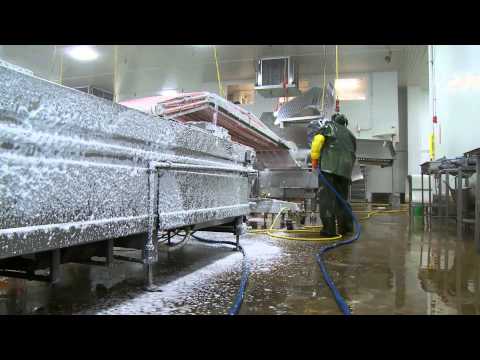
Ensuring food safety in poultry processing necessitates the creation and implementation of comprehensive sanitation SOPs and HACCP plans. These hygiene must-haves are critical for maintaining a clean and safe processing environment.
Implementing Sanitation Standard Operating Procedures for Equipment and Facilities
Effective sanitation SOPs are essential for preventing contamination in poultry processing plants. These procedures should cover all equipment and facilities, including processing machinery, utensils, and storage areas. Regular cleaning and sanitizing schedules must be established and adhered to, with detailed records kept of all sanitation activities.
Key elements of sanitation SOPs include:
- Pre-operational cleaning and sanitizing
- Regular cleaning during operations
- Post-operational cleaning and sanitizing
- Validation of sanitation effectiveness
Developing a Poultry Processing HACCP Plan for Pathogen Control
A HACCP (Hazard Analysis and Critical Control Points) plan is a systematic approach to identifying and controlling hazards in the poultry processing chain. Developing a HACCP plan involves analyzing potential biological, chemical, and physical hazards, and implementing controls at critical points to prevent or minimize these hazards.
Critical steps in HACCP plan development include:
- Conducting a hazard analysis
- Identifying critical control points (CCPs)
- Establishing critical limits for CCPs
- Implementing monitoring procedures
- Establishing corrective actions
Antimicrobial Intervention Strategies Throughout the Processing Line
Antimicrobial interventions are crucial for reducing microbial contamination in poultry processing. These strategies can be applied at various stages of the processing line, including during scalding, chilling, and packaging. Common antimicrobial interventions include the use of chlorine, peracetic acid, and other approved sanitizers.
Daily Equipment Sanitation Protocols and Chemical Selection
Daily sanitation protocols for equipment are vital for maintaining a clean processing environment. The selection of appropriate sanitizing chemicals is critical, with considerations including efficacy against target microorganisms, compatibility with equipment materials, and regulatory compliance.
Best practices for equipment sanitation include:
- Regular inspection and maintenance of equipment
- Use of appropriate cleaning and sanitizing chemicals
- Training of personnel on sanitation procedures
- Validation of sanitation effectiveness
At The End of: Chicken Processing Machines
The poultry processing industry is a significant sector in the United States, driven by growing demand for efficient and safe processing equipment. A comprehensive poultry processing line involves multiple stages, from live bird handling to packaging and labeling under FSIS guidelines.
Efficient chicken processing machines and poultry processing equipment are crucial for maintaining high standards of hygiene and food safety. By understanding the various components of a poultry processing line, businesses can optimize their operations to meet market demands while ensuring compliance with regulatory requirements.
Investing in the right poultry processing equipment, whether for small-scale or industrial operations, is vital for achieving a strong return on investment. As the industry continues to evolve, adopting advanced technologies and sanitation practices will remain essential for success.
FAQ
These quick answers help buyers keep the chicken processing machine decision focused on the main intent—line steps, capacity, and hygiene—without drifting into niche subtopics FSIS: Steps to keep food safe
What are the essential components of a complete poultry processing line?
A complete poultry processing line includes live bird handling and stunning, slaughter and blood collection, scalding, defeathering, evisceration, chilling, cut-up and portioning, and packaging and labeling.
What types of stunning equipment are used in poultry processing?
u003cstrongu003eElectrical stunning systemsu003c/strongu003e are commonly used in poultry processing to render birds unconscious before slaughter.
What is the purpose of scalding in poultry processing?
Scalding is used to loosen feathers, making it easier to remove them during the defeathering process.
What are the different types of chicken defeathering machines?
Drum-style and u003cstrongu003erubber finger pluckersu003c/strongu003e are two common types of chicken defeathering machines used in poultry processing.
What is the importance of proper evisceration in poultry processing?
Proper evisceration is crucial for removing internal organs and preventing contamination, ensuring food safety and quality.
What are the benefits and drawbacks of air chilling versus water immersion chilling?
Air chilling helps preserve yield and quality, while water immersion chilling can be more cost-effective but may result in higher moisture content.
What types of equipment are used for cut-up and portioning in poultry processing?
u003cstrongu003eAutomated chicken cuttingu003c/strongu003e and u003cstrongu003edeboning machinesu003c/strongu003e, as well as breast, thigh, and wing separation equipment, are used for cut-up and portioning.
What are the FSIS guidelines for poultry packaging and labeling?
FSIS guidelines require compliant labeling, including accurate product identification, net weight, and handling instructions, as well as traceability and lot coding for food safety.
What capacity options are available for chicken processing machinery?
Chicken processing machinery is available in various capacities, from small-scale (under 500 birds per day) to industrial (exceeding 5,000 birds per day).
What are the key considerations for poultry processing plant layout and infrastructure?
Efficient workflow design, refrigeration system sizing, wastewater treatment, and electrical, plumbing, and drainage infrastructure are crucial for a well-designed poultry processing plant.
How can poultry processing plants ensure hygiene and sanitation?
Implementing sanitation SOPs, developing a u003cstrongu003eHACCP planu003c/strongu003e, and using antimicrobial interventions throughout the processing line can help ensure hygiene and sanitation.
What are the price ranges for chicken processing machines?
u003cstrongu003eChicken processing machineu003c/strongu003e prices vary depending on the type and capacity of the equipment, with individual equipment costs ranging from a few thousand to hundreds of thousands of dollars.
What financing options are available for poultry processing equipment investments?
Financing options, such as loans and leasing, are available for poultry processing equipment investments, and return on investment calculations can help determine the feasibility of such investments.
What’s the biggest hidden bottleneck?
Chilling and cold-chain capacity are often the true limit, not the slaughter speed.
Is “more automation” always better?
Automation helps most when it reduces variability (alignment, portioning, pack-out) rather than replacing skilled trimming where quality matters.
Should I design for my maximum future volume now?
It’s usually better to phase expansion with “add-on” modules, but oversize utilities and drainage early to avoid rebuilding rooms later.
What hygiene feature gives the fastest operational payoff?
Fast sanitation access—guards, panels, and tools that can be removed and inspected quickly—often reduces downtime more than any single chemical choice.
How do I compare vendors fairly?
Compare them on demonstrated performance at your bird sizes, cleaning time, parts availability, training quality, and how they support commissioning and documentation
Conclusion of: Chicken Processing Machine
Why equipment decisions matter in U.S. poultry
Buying a chicken processing machine is not just a “hardware” decision—your line design affects food safety, staffing, compliance, and whether you can actually hit your target throughput on real production days. In the U.S., poultry operations compete on consistency: repeatable yield, repeatable quality, and repeatable sanitation results across every shift. The best approach is to size and configure equipment around your product plan, your inspection pathway, and your utilities—not around a brochure speed number CDC: Chicken and food safety
Think of a chicken processing machine as a system of modules that move birds from live receiving to chilled carcasses, cut-up parts, or fully packed product while controlling contamination risks at each handoff. In federally inspected environments, the line steps must align with inspection tasks, hygienic handling, and clear separation between “dirty” and “clean” areas. When these basics are planned early, you avoid expensive rework like moving drains, adding extra chill capacity, or rebuilding conveyors after your first audit FSIS: Modernization of poultry slaughter
U.S. producers also have more expansion support than many people realize, but funding and grant programs still require a realistic plan for inspection, HACCP, utilities, and workforce. A chicken processing machine project that includes a documented capacity path (today’s volume, next year’s volume, and a sensible “phase 2”) is easier to finance and easier to operate. If you’re scaling beyond a small crew, build your budget around the full system: wastewater, refrigeration, and compliance documentation—not only the stainless equipment
End-to-end line steps: what happens on a real processing day
Live receiving is where your chicken processing machine workflow starts, even if the first “machine” looks like simple shackles and conveyors. The goal is calm handling, predictable flow, and clear separation between live-bird areas and edible-product areas. Plan for staging space, washable surfaces, and controlled traffic patterns so forklifts, bins, and people do not cross into clean zones. This is also where you set up your “pace” for the day so downstream steps don’t surge and stall FSIS Directive 6110.1: Verification of poultry GCP
Stunning, killing, and bleeding are early bottlenecks that can destabilize the entire chicken processing machine line if timing is inconsistent. If the bleed time is too short, you can create downstream quality issues; if it’s too long, you lose capacity and create crowding at scald/defeather. Practical planning means designing for a steady cadence, easy sanitation access under the line, and a clear method to pause safely when something goes wrong. Build in simple visual controls so operators know when flow is drifting off target FSIS: Slaughter inspection refresher course notebook
Scalding and defeathering determine both appearance and rework rates, so the chicken processing machine selection here should match your bird size range and product expectations. A common “real-world” approach is to treat scald/defeather as a tunable system: temperature, dwell time, agitation, and picker settings that can be adjusted per flock. Plan for easy cleanout—feathers, foam, and water overspray are guaranteed. Also plan for worker access, because quick adjustments during the shift are often the difference between steady flow and endless touch-up
Evisceration is where the chicken processing machine line either protects carcass hygiene or creates a daily firefight. The equipment sequence—opening, venting, evisceration, crop removal, inside-outside bird washing, and reprocessing—must be tuned to bird size and presentation. Your best “must-have” here is adjustment range: shackle spacing, tool alignment, and conveyor height that keep the process stable as weights vary. If your birds vary widely, consider a slower pace with fewer defects rather than chasing theoretical speed FSIS Directive 6100.3
Interventions and reprocessing steps should be planned as part of the chicken processing machine design, not bolted on later. Decide early whether you’ll use inside-outside bird washers, antimicrobial rinses, spray cabinets, or other approved applications, and then design drainage, chemical storage, and ventilation accordingly. What matters operationally is repeatability: consistent pressure, consistent coverage, and a practical way to verify chemical concentration and contact time. If your intervention is “optional” on the floor, it will be skipped during the worst moments—exactly when you need it most FSIS Directive 7120.1: Safe and suitable ingredients
Chilling is often the true capacity limiter, so a chicken processing machine project should size chill systems before anything else. Water chilling and air chilling have different footprints, water needs, energy profiles, and impacts on downstream cut-up. Build your plan around time-temperature control, physical space, and a clear sanitation method for chill tanks, augers, and heat exchange surfaces. If you are adding volume in phases, consider how you will add chill capacity without rebuilding the entire room FSIS: Chilling requirements guidance
Cut-up, deboning, packing, and cold storage convert a carcass into revenue, so the chicken processing machine layout must protect product temperature and avoid cross-contact between raw areas and finished packaging zones. The most practical design uses short, covered transfers from chill to cut-up and from cut-up to pack-out, with temperature monitoring and clear “hold” procedures if something warms up. A strong line keeps product moving in one direction—no backtracking with carts, totes, or people. That one-way flow reduces contamination risk and makes daily sanitation much easier FSIS: Refrigeration basics
Capacity options: how to size a line without guessing
Start capacity planning by defining the output you actually sell, then size the chicken processing machine line backward from that point. “Birds per hour” matters, but so do cut yields, pack styles, and how many SKUs you run in a shift. If you run mixed products (whole birds plus parts), plan for changeovers and downtime, not just peak speed. A useful rule is to build a baseline plan at a comfortable pace, then add optional modules that raise throughput without breaking hygiene or staffing FSIS Directive 6500.1
Next, validate whether your target speed is compatible with your inspection and operating model, because throughput is not only a chicken processing machine issue. If you are pursuing higher line speeds or special operating approaches, you need a realistic plan for monitoring, documentation, and corrective actions. Many plants discover too late that “speed” creates hidden labor needs: more trimmers, more QA checks, more sanitation touch-ups, and more maintenance interruptions. It is often cheaper to build a line that runs steadily at a moderate pace than a line that “sprints” and collapses Federal Register: Line speed waivers discussion
Finally, match labor to equipment reality, because many chicken processing machine projects fail due to staffing assumptions. If your plan requires highly trained knife work at every station, you may be capacity-limited by hiring and retention, not motors and conveyors. Consider semi-automation where it protects consistency (like automatic evisceration alignment or portioning aids), and keep “manual skill” work where it adds value (like trim detail on premium parts). Also plan for breaks, rotation, and fatigue control—because performance drops late in shifts are predictable and preventable
Module choices: selecting machines for your product mix
A practical way to compare chicken processing machine options is to list your “non-negotiables” by product: whole bird, cut-up parts, boneless, giblets, or specialty packs. Whole-bird operations usually prioritize steady defeathering, clean evisceration, and chill performance, while cut-up operations prioritize temperature control and ergonomic workstation design. If you serve local direct-to-consumer demand, you might choose simpler modules with strong cleaning access. If you supply wholesale, you may prioritize standardized packaging and faster pack-out with better traceability
Material choice and hygienic construction should be treated as performance features in a chicken processing machine—not as cosmetic upgrades. Look for weld quality that avoids crevices, surfaces that drain fully, and guards that can be removed quickly for cleaning. Ask whether the design supports wet environments without trapping moisture behind panels or inside hollow members. Also confirm that seals, gaskets, and plastics are appropriate for the chemicals and temperatures you will use, because “cheap” components often become your biggest sanitation downtime driver
Packaging and contact materials are easy to overlook until they become a compliance or quality headache, so keep them inside the chicken processing machine decision process. If you use vacuum packaging, modified atmosphere packaging, or special films, confirm that your suppliers and materials align with U.S. food-contact requirements and that your sealing equipment is sized for your pack rate. From an operations angle, focus on seal integrity, repeatable settings, and a simple calibration routine that your team will actually follow under pressure FDA: Food contact substance inventory
Hygiene must-haves: design, cleaning, and verification
Hygienic design begins with layout: the chicken processing machine should support a clear “dirty-to-clean” progression with physical separation where cross-contamination risks are highest. That means planning floors, drains, and splash control before you install equipment, not after the first week of water everywhere. Design for gravity drainage, minimal standing water, and easy hose access without blasting aerosols across clean areas. If a surface cannot be cleaned and inspected quickly, it will eventually become a chronic problem—no matter how good your sanitizer is 9 CFR Part 416: Sanitation regulations
A sanitation routine only works when it is written for the real machine you own, so your chicken processing machine investment should include time to build usable SSOPs. Good SSOPs specify who does what, what chemicals are used, where concentrations are verified, and what “clean” looks like at key points (like picker housings, evisceration tools, and chill augers). The best SSOPs also define what happens when something is not clean—hold procedures, re-clean steps, and documentation that is quick enough to complete during busy shifts
Verification is where many plants either build confidence or build false comfort, so treat hygiene checks as part of the chicken processing machine workflow. Decide what you will verify daily (visual checks, ATP testing, chemical concentration logs), what you will verify weekly (swab sites, disassembly inspections), and what you will verify after repairs or changeovers. Keep verification practical: choose a small number of high-risk points and measure them consistently. If you add automation, make sure sensors and enclosed areas are still accessible for inspection and re-cleaning
Chemicals and aerosols can undermine your program if you don’t plan for them, so ventilation and worker protection should be part of every chicken processing machine cleaning plan. Many sanitizers are effective, but they can also create respiratory irritation or other hazards when sprayed in enclosed areas. A practical approach is to minimize misting, use controlled application methods, and document training so workers understand what they’re using and why. Build in a routine for measuring concentrations and handling spills safely, because “improvised” chemical use is a common root cause of both safety incidents and sanitation failures NIOSH: Exposure assessment in poultry processing (PDF)
Food safety programs that should “fit” the line
In the U.S., your chicken processing machine must operate inside a documented food safety system that includes hazard analysis, preventive controls, and corrective actions. For federally inspected plants, HACCP is not optional, and your daily decisions—like intervention settings, chill performance, and rework procedures—should map to your written plan. Treat HACCP as an operating system, not a binder: it should tell the floor what to check, how often, and what to do when limits are not met. The best plans are short, specific, and aligned to the way your line actually runs 9 CFR Part 417: HACCP requirements
When you’re building the hazard analysis around a chicken processing machine, start with process flow and identify where hazards can be introduced, controlled, or worsened. Typical decision points include evisceration control (to prevent fecal contamination), antimicrobial application control (to keep settings consistent), chilling control (to manage pathogen growth), and labeling control (to prevent misbranding). Use clear monitoring steps that your team can complete without stopping the line, and define corrective actions that are realistic—like re-chilling, re-cleaning, holding, or reworking product with documentation
Salmonella control is not a single tool—it’s a layered approach that starts with process stability and continues through interventions, sanitation, and verification across the chicken processing machine flow. Plants that improve results usually tighten evisceration performance, maintain consistent antimicrobial settings, and avoid temperature drift that lets organisms grow. The practical goal is to reduce variability: fewer “bad runs,” fewer excursions, and fewer emergency adjustments that create new risks. If you want to outperform competitors, build a written intervention strategy that includes who can change settings, what triggers changes, and how you confirm results FSIS: Guideline for controlling Salmonella (PDF)
Campylobacter control often improves when plants focus on water management and cross-contamination reduction across the chicken processing machine path. Practically, that means controlling overspray, preventing equipment drip onto clean product, and keeping chill systems and transfer points clean and stable. Many improvements are “boring but effective”: better drain placement, better splash control, better sanitation access, and better control of rework or reprocessing traffic. If you treat hygiene and flow control as throughput features, you can raise capacity while also strengthening microbiological performance FSIS: Guideline for controlling Campylobacter (PDF)
Testing and trending turn your chicken processing machine operation from reactive to proactive, especially when you use results to guide maintenance, sanitation, and process control. Build a simple sampling and trend routine: define sample sites, define frequency, and define “what changes when results move.” If you outsource lab work, confirm turnaround time and data format so you can act quickly. The goal is not “perfect numbers”; it is early warning that something has drifted—like a worn evisceration tool, a sanitation gap, or a chill system that is losing performance FSIS: Microbiological testing of raw poultry (PDF)
Worker safety in machine-heavy rooms
Maintenance and changeovers are high-risk moments, so every chicken processing machine plan should include a lockout/tagout program that fits daily reality. The most effective programs standardize isolation points, use clear tags and locks, and train both maintenance and operators on what “zero energy” means. Make LOTO part of the production rhythm, not a special event, because the fastest way to create shortcuts is to schedule maintenance during a rush without a safe stopping method. Include quick checklists for common tasks like belt replacement, guard removal, and jam clearing OSHA: Control of hazardous energy (LOTO)
Guarding is a productivity tool as much as a safety tool, because a well-guarded chicken processing machine reduces stop-start disruptions caused by jams, near misses, and injuries. When evaluating equipment, ask how guards are removed, whether interlocks are reliable in wet conditions, and whether cleaning access requires unsafe workarounds. Design guarding so operators can see what they are doing while still being protected—poor visibility is one reason workers defeat safeguards. Also standardize “jam clearing” tools and procedures so hands don’t become the default tool under pressure OSHA eTool: Machine guarding basics
Chemical communication and training prevent incidents that are easy to avoid, especially in wet environments where chicken processing machine sanitation happens fast. Standardize labels, keep safety data sheets accessible, and train workers on what they’re using and what to do if exposure happens. A practical program also controls “mixing creativity”: one approved chemical list, one concentration verification method, and one storage system that prevents incompatible chemicals from living side-by-side. When you build these habits early, you reduce both safety risk and sanitation variability across shifts OSHA: Hazard Communication standard
Utilities and infrastructure that can limit throughput
Water use and wastewater handling can cap output long before the chicken processing machine reaches its rated speed. If you don’t plan for water supply, pressure, and temperature stability, you’ll see inconsistent performance in washing, sanitation, and chilling. On the back end, wastewater strength and flow affect how you can discharge—either to a municipal system or to surface waters with permits. Practical planning starts with a simple “water map”: where water enters, where it is used, and where it exits, then matching that map to drains, slopes, and cleanout access EPA: Meat and poultry effluent guidelines
Wastewater treatment costs vary widely, but the drivers are predictable, and they should be part of the chicken processing machine budget from day one. Key factors include organic load, fats/oils/grease control, solids separation, chemical use, and whether you are pretreating before a publicly owned treatment works. Many plants reduce costs by preventing waste from entering drains in the first place: better screens, better dry cleanup before hosing, and better collection practices for feathers and offal. Even small changes in solids handling can reduce downstream treatment headaches and permit risk EPA: Technical development document (PDF)
If you discharge to a municipal system, pretreatment rules may apply, so your chicken processing machine expansion plan should include early conversations with your local authority. The practical risk is building capacity that your sewer connection cannot support, or triggering new monitoring requirements after you scale. Treat pretreatment as a design constraint: flow equalization, screening, grease control, and sampling access points that are easy to maintain. The earlier you design for these needs, the fewer “surprise” construction projects you face after commissioning EPA: National Pretreatment Program overview
Refrigeration is central to product safety and shelf life, so the chicken processing machine plan should confirm refrigeration capacity, redundancy, and temperature monitoring strategy before installation. Whether you use ammonia or other systems, design for stable cold room temps, cleanable evaporators, and a defrost plan that doesn’t create condensation drips on exposed product. Also plan for alarms and backup response—because refrigeration failures are often “after-hours” events. If your chill system struggles, the whole line becomes a rework operation with higher safety risk and lower yield EPA: Risk management program guidance
Ammonia systems bring efficiency but also higher safety expectations, so a chicken processing machine facility should build clear procedures for maintenance, leak response, and contractor control. The practical priority is to ensure the right training and controls exist before the system is pushed hard during peak production. If you are new to ammonia, it’s worth investing in documented operating procedures, drills, and a clear chain of responsibility for changes. A disciplined approach reduces downtime and protects the workforce while keeping the cold chain stable during the busiest weeks OSHA: Ammonia refrigeration standards
Installation, commissioning, and training
A chicken processing machine project is successful when commissioning is treated as a process, not a single day. Build a punch list that includes sanitation access checks, drainage checks, safety function checks, and “can we clean it fast enough” trials before you ever run full speed. Validate performance at multiple speeds, because some lines behave well at low speed and fall apart at normal speed. Train to standard work: where to measure, how to document, and how to respond when the line drifts. The fastest plants are usually the ones with the simplest, most repeatable routines ASHRAE: Refrigeration resources
Quick checklist
Use this checklist before you finalize a chicken processing machine purchase, because the most expensive mistakes are usually “missing requirements” rather than bad stainless steel FSIS: Safe temperature chart
- Define your saleable output (whole birds, parts, deboned) and the number of SKUs per shift.
- Map dirty-to-clean flow with physical separation, drains, and one-way traffic.
- Size chilling capacity first, then size upstream steps to feed it steadily.
- Confirm adjustment range for bird size variation (shackles, tools, alignment).
- Confirm sanitation access: can teams disassemble, clean, and inspect quickly?
- Plan intervention strategy (if used): application method, verification, and records.
- Validate utilities: water, power, compressed air, steam/hot water, refrigeration.
- Plan wastewater and solids handling (screens, offal, feathers, grease control).
- Build LOTO and guarding review into equipment acceptance testing.
- Define training, standard work, and maintenance schedules before go-live.
Common mistakes to avoid
Most chicken processing machine projects don’t fail because of one big error—they fail because several small “we’ll fix it later” choices stack up into daily downtime and compliance risk FSIS: Temperature danger zone basics
- Buying for peak speed only: Prevent it by designing for steady flow, changeovers, and realistic staffing.
- Undersizing chilling: Prevent it by modeling chill dwell time and refrigeration capacity before signing equipment quotes.
- Ignoring drains and slope: Prevent it by planning water flow and cleanability as core design requirements.
- Weak adjustment for bird size: Prevent it by requiring demonstrated setup ranges and quick calibration routines.
- Sanitation access as an afterthought: Prevent it by performing mock cleanouts and inspection walkdowns during commissioning.
- Intervention “bolt-ons” with no verification: Prevent it by defining concentration checks, coverage checks, and records up front.
- Unsafe jam clearing: Prevent it by specifying guarding, interlocks, and standard tools for clearing stoppages.
- Wastewater surprises: Prevent it by confirming discharge constraints and pretreatment needs early with local authorities.
Costs and ROI snapshot
Costs for a chicken processing machine system vary by automation, capacity, and infrastructure, but most budgets are driven by a few repeatable items: chilling capacity, refrigeration systems, building and drainage work, wastewater handling, and labor needs for trimming and QA. Small-scale setups may focus on simple modules and strong sanitation access, while mid-scale and high-scale projects often spend heavily on utilities and compliance-ready facility design. A smart estimate includes not only equipment, but also installation, training, spare parts, and the first year of maintenance and sanitation tooling EPA: Industrial wastewater overview
ROI for a chicken processing machine investment usually comes from fewer defects, more consistent yield, lower rework, more predictable labor, and fewer “stop-the-line” sanitation events. A realistic ROI plan avoids promising a fixed payback and instead tracks measurable levers: birds per labor hour, trim loss rate, downtime minutes per shift, chemical and water use per bird, and customer complaint reductions. It’s also smart to consider “risk ROI”—the value of stronger pathogen control, cleaner documentation, and a more resilient cold chain that keeps you selling during peak demand periods FSIS: Proposed approach to reducing Salmonella in poultry
Final thought
The best chicken processing machine is the one that runs steadily with predictable hygiene, not the one that claims the highest speed on paper. Build your decision around end-to-end flow, realistic labor, and utilities that won’t cap you during peak demand, then use commissioning and standard work to lock in consistency. When you treat sanitation access, intervention control, and cold chain stability as throughput features, you earn capacity you can actually keep day after day FSIS: Roadmap to reducing Salmonella (PDF)
Sources & References
- 9 CFR § 381.65 (Good commercial practices)
- 9 CFR § 381.66 (Temperatures and chilling/freezing)
- FSIS Directive 7235.1 (Safe handling statements)
- FSIS Safe Handling Instructions graphic (PDF)
- FSIS Appendix B (Stabilization guideline) (PDF)
- FSIS Guideline page: Stabilization guideline (Appendix B)
- OSHA CPL 02-00-147 (LOTO enforcement policy) (PDF)
- OSHA eTool: Machine guarding standards references
- EPA: NPDES permit basics
- EPA: National Pretreatment Program
- 40 CFR Part 403 (General pretreatment regulations)
- 40 CFR Part 432 (Meat and poultry products effluent limitations)
- CDC: Salmonella infection
- CDC: About Campylobacter infection
- FDA: Refrigerator thermometers and food safety