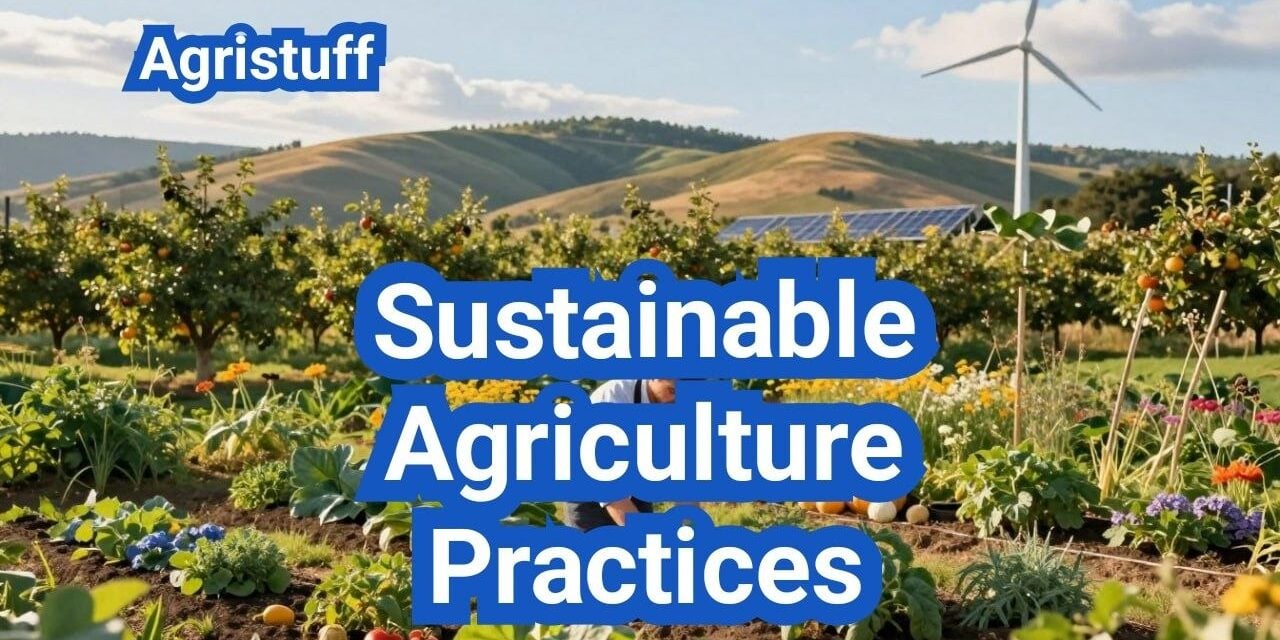
This concise guide maps how NRCS funding moves ideas into on‑farm action. You will find clear paths to adopt crop rotation, agroforestry, improved water use, and other techniques that boost soil health and biodiversity.
We frame funding as a practical tool—cost‑share and stewardship incentives help cover new seed, equipment, and planning time so farmers can try proven steps without taking undue financial risk.
The guide covers both field and livestock systems: cropping, grazing, nutrient and pest management, plus habitat features. Each practice section explains what it is, why it works, where it fits best, and what to track to show results over time.
Throughout, you’ll see why doing more than the baseline matters. EQIP and CSP reward deeper adoption, and the article compares how each program supports stronger soil, better water management, lower input needs, and greater climate resilience for U.S. farms and rural communities.
Key Takeaways
- NRCS programs like EQIP and CSP fund practical steps that improve soil and water outcomes.
- Cost‑share and stewardship payments reduce upfront barriers to adoption.
- Guide covers cropping and livestock systems with clear fit‑for‑use advice.
- Beyond‑baseline actions often yield greater long‑term gains and funding priority.
- Track simple indicators to prove results and access ongoing support.
What Sustainable Agriculture Practices means for U.S. farms today

This section defines what it means to manage U.S. farms for long‑term resource health and practical viability.
Definition: Sustainable agriculture focuses on conserving natural resources while keeping farms economically stable and serving community needs. It emphasizes healthy soil, careful use of water, and lower reliance on synthetic inputs.
Three pillars: economic, environmental, social
- Economic: stable income, risk buffering, and long‑term profitability.
- Environmental: reduced pollution, improved soil health, and richer biodiversity.
- Social: safer working conditions and better local access to nutritious food.
How it differs from input‑heavy systems
Conventional, intensive systems often rely on monocrops, frequent tillage, and heavy fertilizer or pesticide use. That can speed erosion, cause nutrient losses, and raise pest pressure over time.
“On‑farm resilience comes from diversified systems that lower risk and reduce exposure to single markets or weather shocks.”
Why present‑day pressures change the calculus
Today, more volatile weather tied to climate change, tighter irrigation limits, and measurable loss of organic matter make long‑term soil and water stewardship urgent.
| Feature | Input‑heavy system | Resource‑conserving system |
|---|---|---|
| Soil | Frequent disturbance, organic matter declines | Cover, reduced tillage, improving organic matter |
| Water | High withdrawals, runoff risk | Efficient irrigation, better infiltration |
| Risk | Dependent on single crops/markets | Diversified crops and income streams |
Note: Being sustainable does not automatically mean being organic. Organic tools or reduced‑synthetic approaches can be part of a farm’s path depending on goals and needs.
NRCS planning starts with resource concerns—soil, water, air, plants, animals—and then selects measures that fit each farm’s system.
Why farmers are shifting to sustainability: benefits for soil, water, and farm profitability

Farmers nationwide are shifting methods to protect soil, cut costs, and stabilize yields. Changing management delivers clear, measurable benefits that build farm resilience over time.
Soil health gains
Improved structure and aggregation help roots access air and moisture. That reduces erosion and preserves topsoil for future production.
Better nutrient cycling comes from rotations, cover crops, and compost that raise organic matter and steady fertility instead of boom‑bust inputs.
Water quality and efficiency
Actions that cut runoff protect downstream streams and improve water quality. Modern irrigation and smarter scheduling yield more crop per drop and lower waste.
Climate, carbon, and resilience
Soils that store more carbon reduce net emissions. Improved infiltration and biological activity help fields recover from drought and heavy rains.
Market and community impacts
Lower input bills and steadier yields improve profitability. Consumers increasingly favor sustainable food, opening premium markets and strengthening local food access.
“Benefits compound across seasons; tracking soil tests, infiltration rates, and input use shows progress to lenders and partners.”
How NRCS funding supports conservation and climate-smart farming practices

Federal assistance from NRCS helps producers turn conservation goals into stepwise, budgeted actions that fit their operation.
NRCS mission and how financial assistance typically works
NRCS helps identify resource concerns on each farm and links them to tailored management actions. Staff review soil, water, and habitat needs and recommend a sequence of measures that reduce erosion and improve function.
Financial support usually covers planning and partial installation costs. Grants and cost-share lower upfront barriers while documentation and verification show public funds produced results.
Where EQIP and CSP fit into a conservation planning pathway
EQIP commonly funds targeted installations—irrigation upgrades, nutrient plans, or erosion controls. CSP rewards whole-farm advancement and higher performance across a broader system.
| Program | Main focus | Best fit for |
|---|---|---|
| EQIP | Install or adopt specific practices | New projects, single-field needs, retrofit work |
| CSP | Improve system-level performance | Established plans, multi-field management, long-term goals |
| Conservation Plan | Sequenced actions, monitoring, timelines | All farms seeking documented outcomes |
Choosing EQIP or CSP depends on your starting baseline and the outcomes you want to prioritize first. NRCS guidance encourages gradual changes, clear indicators, and aligning support with on-farm needs.
“A conservation plan is the backbone that ties field concerns to a sequenced set of actions and measurable results.”
EQIP vs CSP: choosing the right program for your conservation goals

Deciding between EQIP and CSP starts with a clear view of whether you need help buying and installing new measures or want payments for improving an entire farm system.
When EQIP makes sense
Use EQIP if your priority is a starting investment. EQIP fits one-time installations like new irrigation equipment, fencing and water distribution for grazing, or constructing manure storage.
When CSP makes sense | Sustainable Agriculture Practices
Use CSP if you already have conservation steps in place and want to raise farmwide performance. CSP rewards expanded rotations, added habitat features, advanced monitoring, and coordinated nutrient plans.
Stacking outcomes simply | Sustainable Agriculture Practices
You can pair soil goals (cover crops + less tillage) with water upgrades (better infiltration + timed irrigation) and biodiversity actions (native strips + reduced pesticide use).
Include livestock by using rotational grazing or low‑intensity grass systems to improve cover, spread nutrients, and boost drought resilience.
What “beyond baseline” means | Sustainable Agriculture Practices
Beyond baseline means doing more than common local routines or legal minimums and showing measurable improvement over time.
| Need | EQIP fits | CSP fits |
|---|---|---|
| One-off equipment or structure | New irrigation, manure storage, fencing | Not ideal—better for long-term use changes |
| Whole-farm coordination | Limited—can fund pieces | Best—rewards system-level gains and monitoring |
| Priority outcomes | Installations to reduce runoff or improve use | Multiple outcomes: soil, water, biodiversity, livestock |
- Identify top resource concern (soil, water, or habitat).
- Decide readiness: install now or improve systems over seasons.
- Check labor, equipment, and what you can maintain.
- Match to EQIP for installs or CSP for whole-farm rewards.
Sustainable Agriculture Practices that NRCS may help fund

Use this compact list to spot measures that match your fields, livestock, and local priorities. These options form a practical menu producers can review with their local conservation planner. Eligibility varies by state and resource concerns, but the categories below are widely applicable.
Crop rotation and diversification | Sustainable Agriculture Practices
Rotate crops to break pest cycles and recycle nutrients. A simple sequence is corn followed by a nitrogen‑fixing legume such as beans to reduce synthetic inputs and improve soil fertility.
Cover cropping and winter soil cover | Sustainable Agriculture Practices
Use cover crops like clover or cereal rye to prevent erosion, trap nutrients, and build organic matter over winter. Cover choices depend on goals: nitrogen, weed suppression, or scavenging leftover nutrients.
Conservation tillage and no‑till | Sustainable Agriculture Practices
Reduce disturbance to protect structure and increase residue cover. When paired with good rotation, these methods help store more carbon in the soil over time.
Nutrient and pest management | Sustainable Agriculture Practices
Adopt nutrient plans using the “right source, right rate, right time, right place” approach to cut losses and protect water. For pests, use IPM steps—scouting, thresholds, resistant varieties, and biological controls (for example, releasing ladybugs to reduce aphids).
Water, agroforestry, livestock, and waste | Sustainable Agriculture Practices
Improve irrigation with drip systems and better scheduling to match crop demand and reduce evaporation. Integrate trees with crops or livestock for shade, habitat, and diversified income.
Use rotational grazing for low‑intensity grass systems and manage manure through proper storage and composting to recycle nutrients and reduce pollution.
Building soil health and reducing erosion with conservation agriculture

Healthy topsoil is the single asset on a farm that pays back season after season when protected and built. Conservation approaches focus on keeping the ground covered, feeding soil life, and rotating crops to spread risk and nutrients.
Keeping soil covered: residue, mulch, and cover selection
Leave crop residue after harvest to limit crusting and runoff. In specialty fields, use targeted mulching to protect seedbeds and retain moisture.
Choose cover crops based on goals: grass mixes for erosion control, legumes for nitrogen, or deep-rooted species to relieve compaction.
Improving soil biology: organic matter and reduced disruption
Add compost or well-managed manure to boost organic matter and aggregation. Diverse root systems feed microbes and increase nutrient cycling.
Avoid frequent, intensive disturbance that harms soil life; healthier biology improves infiltration and long-term soil health.
Designing rotations: legumes, cash crops, and risk management
Plan crop rotation to balance legumes and cash crops. Spread planting and harvest timing to reduce pest pressure and manage herbicide modes of action.
Diversified rotations maintain fertility and support on-farm biodiversity while smoothing yield swings across seasons.
Field strategies that reduce erosion

Place windbreaks on prevailing wind edges and buffer strips along waterways to trap sediment. Use terraces or contour strips on slopes to slow runoff.
Topsoil preservation protects water quality and keeps land valuable for decades.
“Protecting the topsoil layer is one of the highest-return steps you can take for long-term farm viability.”
| Strategy | Main benefit | Where to apply |
|---|---|---|
| Residue management | Reduces crusting, increases infiltration | All fields after harvest |
| Cover crops | Erosion control, nitrogen fixation, weed suppression | Between cash crops or over winter |
| Compost additions | Boosts organic matter and biology | Row crops, vegetable beds |
| Windbreaks & buffers | Limits wind/water erosion and improves biodiversity | Field edges, waterways, slopes |
Simple measurements help show progress: estimate residue cover, test aggregate stability, and track soil organic matter trends. Note visible rill erosion after storms to guide adjustments.
Water-smart farming practices that protect resources and boost production

Water-smart choices turn irrigation into a precision tool that protects streams and boosts production. These steps cut costs, lower risk, and build resilience as climate change tightens supply in many regions.
Irrigation methods that save water: drip, precision application, and upgrades
Drip systems deliver moisture to roots and reduce evaporation. Precision nozzle upgrades and regular maintenance improve uniformity and avoid hidden losses.
Managing crop water demand: variety choice, planting dates, and scheduling
Pick drought-tolerant varieties and shift planting dates to avoid peak heat. Use soil moisture probes and evapotranspiration data to schedule irrigation and protect yield during critical windows.
Protecting water quality: nutrient traps, reduced runoff, and soil sampling
Combine better irrigation with nutrient management. Over-irrigation can move nutrients offsite; install vegetated traps, keep residue cover, and run routine soil tests to match fertilizer to need.
- Trackable metrics: water applied per acre, distribution uniformity checks, nitrate test trends, and post-storm runoff observations.
- Simple wins: fix leaks, calibrate pumps, and log irrigation events to show steady improvement.
“Efficient water use protects quality downstream and strengthens farm margins.”
Farming practices that support biodiversity, pollinators, and resilient systems

Designing farms with more species and habitats makes systems more resilient to pests, weather swings, and market shocks.
Polyculture and mixed cropping boost on‑farm resilience by mixing functions in the same field. For example, beans, corn, and squash grown together trade nutrients and suppress weeds while supporting soil structure.
On‑farm habitat like hedgerows, fallow biodiversity areas, and buffer strips provide homes for pollinators and beneficial insects. These non‑productive features reduce pest pressure and cut the need for broad‑spectrum sprays.
Agrobiodiversity is genetic insurance: planting multiple varieties and crop types lowers the odds of a single disease or weather event wiping out yields.
Agroforestry adds trees for shade, habitat, and long‑term carbon storage. Trees also diversify income (timber, nuts, fruit) and improve field‑edge stability against erosion and drift.
“Diversity in crops and habitat acts as a production strategy, not just an environmental add‑on.”
Measure success with pollinator counts, fewer pest flare‑ups, broader revenue streams, and firmer field edges after storms.
How to implement NRCS-supported practices on your farm

Start your on‑farm rollout with a simple conservation plan that ties goals to the realities of each field. A clear plan helps farmers set priorities, minimize risk, and time changes around production needs.
Start with a conservation plan | Sustainable Agriculture Practices
Define goals (erosion control, nutrient loss reduction, drought resilience). Identify resource concerns and assess fields and pastures one by one.
Pick practices by operation type | Sustainable Agriculture Practices
Row crop systems often pair cover crops, no‑till, and nutrient timing. Specialty crops benefit from mulching, drip irrigation, and alley cover. Livestock operations use rotational grazing and improved manure management.
Documentation to prepare | Sustainable Agriculture Practices
Gather field maps, cropping history, irrigation specs, grazing logs, application records, and recent soil tests. These records support credible baselines for funding and verification.
Timing, workflow, and tracking | Sustainable Agriculture Practices
Phase changes over seasons and trial new measures on a subset of acres to reduce risk. Align work with labor availability and avoid stacking many shifts in one year.
- Track soil organic matter, infiltration checks, and compaction.
- Log water applied per acre, input reductions, and yield trends.
- Share results with local networks and NRCS staff for feedback.
| Step | What to record | Why it matters |
|---|---|---|
| Field assessment | Maps, notes, photos | Matches practices to site conditions |
| Practice trial | Acres, dates, materials used | Shows short-term impact and learning |
| Monitoring | Soil tests, water use, yields | Proves benefits and guides next steps |
“Start small, measure often, and let documented results shape wider adoption.”
EQIP fits early installations; CSP aligns with ongoing management, monitoring, and continuous improvement in farm management and environmental impact.
At The End of: Sustainable Agriculture Practices
Practical takeaway: sustainable agriculture links clear actions to measurable benefits. Use EQIP for one‑time installs and CSP to raise whole‑farm performance beyond baseline.
Why act now? Climate change, soil loss, and tighter water supplies are active business risks. Conservation‑focused management lowers exposure and supports steady yields and farm income.
Priorities to pursue: erosion control and soil health, irrigation efficiency and water quality, biodiversity and habitat services, plus smarter nutrient and pest management. Add carbon‑building steps where feasible.
Start small: write a conservation plan, test a few high‑impact practices, document baseline conditions, and track results. Continuous, measured change compounds into lasting impact for farms and the wider food system.
FAQ
What does “sustainable agriculture” mean for U.S. farms today?
It means managing land to produce food while protecting soil, water, and biodiversity, improving farm resilience to climate change, and supporting long-term profitability. Farmers focus on soil health, efficient water use, reduced inputs, and diversified crops or livestock systems to balance production with environmental outcomes.
How does this approach differ from conventional, input-heavy farming?
The contrast is in emphasis: conventional systems often rely on high synthetic fertilizer and pesticide use and frequent tillage. The alternative prioritizes crop rotation, cover crops, reduced tillage, targeted nutrient plans, and integrated pest management to lower chemical reliance and build natural fertility and pest resistance.
Why are present-day pressures like climate change and soil loss important for farm decisions?
Rising temperatures, extreme weather, and increased erosion threaten yields and farm economics. Addressing these pressures via practices that increase soil organic matter, improve water infiltration, and enhance on-farm biodiversity helps farms adapt and reduces greenhouse gas emissions over time.
What soil health benefits can farmers expect from adopting these methods?
Benefits include better soil structure, higher organic matter, improved nutrient cycling, and less erosion. Those changes increase water-holding capacity and root growth, often leading to more stable yields and lower input costs across seasons.
How do water-quality and water-use efficiency improve with conservation measures?
Practices like drip irrigation, irrigation scheduling, buffer strips, and nutrient management cut runoff and leaching. That reduces contamination of downstream water and lowers irrigation demand, saving water while maintaining or improving crop performance.
Can on-farm changes help with climate mitigation and adaptation?
Yes. Increasing soil carbon through cover crops, reduced tillage, and agroforestry sequesters carbon. Diversified rotations and resilient varieties also help farms withstand droughts and heavy rains, improving climate resilience.
What role do markets and communities play in a farm’s transition?
Local markets, consumer demand for quality food, and community support can improve farm income and viability. Direct markets, value-added products, and conservation branding can create premiums while strengthening local food access.
How does the Natural Resources Conservation Service (NRCS) support these efforts?
NRCS offers technical assistance and financial incentives through programs that fund practice installation, planning, and monitoring. They help producers design conservation plans tailored to resource concerns like soil, water, and habitat.
What are EQIP and CSP, and how do they differ?
EQIP (Environmental Quality Incentives Program) helps pay for specific on-farm practices such as irrigation upgrades, cover crops, and nutrient management. CSP (Conservation Stewardship Program) rewards whole-farm systems that exceed baseline conservation activities and fosters continuous improvement across multiple resource areas.
When should a farmer choose EQIP over CSP, or vice versa?
Use EQIP when you need cost-share for installing or adopting particular practices. Choose CSP if you already meet baseline conservation standards and want payments for enhancing and maintaining a comprehensive conservation plan across the operation.
What does “beyond baseline” practice adoption mean for CSP?
It means implementing and maintaining conservation activities that go further than minimal regulatory or common management levels—expanding soil health measures, improving water-quality controls, or enhancing biodiversity across fields and pastures.
Which on-farm practices does NRCS commonly fund?
Eligible practices often include crop rotation and diversification, cover cropping, conservation or no-till, nutrient management planning, integrated pest management, irrigation efficiency upgrades, agroforestry, managed grazing, manure composting, and habitat features like buffer strips.
How do cover crops and crop rotation reduce pests and improve nutrients?
Rotations interrupt pest life cycles and balance nutrient demands. Cover crops protect soil, add organic matter, scavenge residual nutrients, and can support beneficial insects that reduce pest pressure.
What are low-disturbance tillage and no-till benefits?
They reduce soil erosion, increase carbon storage, retain moisture, and preserve soil biology. Over time, these methods can lower fuel and labor costs while improving soil function.
How can farmers optimize nutrient management to cut losses but keep yields?
By using soil tests, timing fertilizer to crop needs, applying the right rates and formulations, and using tools like split applications or variable-rate technology. These steps reduce runoff and increase nutrient-use efficiency.
What is integrated pest management (IPM) and how does it reduce pesticide reliance?
IPM combines monitoring, biological controls, cultural tactics, resistant varieties, and targeted chemical use only when necessary. This reduces overall pesticide applications and promotes beneficial organisms in the system.
Which water management upgrades are cost-effective for farms?
Efficient systems include drip irrigation, improved scheduling with soil moisture sensors, repairing leaks, and precision application equipment. Those investments often cut water use and increase uniformity of crop water delivery.
How does agroforestry fit into farm systems and NRCS support?
Agroforestry integrates trees with crops or livestock to provide shade, habitat, erosion control, and carbon storage. NRCS may cost-share tree planting, alley cropping, and windbreaks as part of conservation plans.
What grazing approaches help livestock systems and pasture health?
Rotational grazing and low-intensity, grass-based systems let pastures recover, improve forage quality, and distribute manure more evenly. These tactics increase pasture resilience and reduce the need for external feeds.
How should a farmer start implementing NRCS-supported practices?
Begin with a conservation plan: identify resource concerns, set goals, and map fields. Work with NRCS or a conservation planner to select appropriate practices, gather records and maps, and schedule phased implementation to manage risk.
What documentation and monitoring will NRCS require?
Expect to provide field maps, cropping and management history, equipment lists, and baseline soil or water data. Track outcomes with soil health indicators, yield records, water use metrics, and practice maintenance logs.
Can farmers combine NRCS funding with other programs or private investment?
Yes. NRCS programs can stack with state, local, or private grants and loans, as long as funding rules are followed. Combining sources can make larger projects like irrigation upgrades or agroforestry more affordable.
How do on-farm habitat and biodiversity features improve ecosystem services?
Hedgerows, buffer strips, and fallow biodiversity zones provide pollinator and beneficial insect habitat, filter runoff, reduce erosion, and increase landscape resilience—benefits that support crop productivity and ecosystem health.
What are practical erosion-control strategies for fields at risk?
Use buffer strips, terraces, windbreaks, cover crops, and reduced tillage. These field-level measures slow runoff, trap sediment, and protect topsoil to sustain long-term productivity.
How can farmers measure progress after adopting new practices?
Track soil organic matter, infiltration rate, compaction, crop yields, input use, and water quality measures. Regular monitoring reveals trends and helps refine management for better results.
Conclusion of: Sustainable Agriculture Practices
What this guide is (and isn’t)
If you’re searching for Sustainable Agriculture Practices that are actually eligible for USDA support, this guide is about the money-and-paperwork side of the equation: how NRCS funding works, how EQIP and CSP differ, and how to move from “good idea” to an approved contract without wasting a season. Farmers.gov conservation overview
This is not a broad explainer of “what sustainable agriculture means” or a list of general Sustainable Agriculture Practices to try; it’s a practical playbook for matching your on-farm goals to NRCS program rules, local priorities, and the documentation NRCS needs to approve and pay for work. NRCS EQIP program page
EQIP vs. CSP: which one fits your project?
Think of Sustainable Agriculture Practices under EQIP as “install or implement specific practices with cost-share,” while CSP is “get paid to maintain and improve a whole-operation stewardship system through enhancements and ongoing management.” Iowa State Extension: EQIP vs CSP overview
If you have one or two concrete Sustainable Agriculture Practices you want to start this year (like a new cover crop schedule, a manure storage upgrade, or an irrigation efficiency change), EQIP often aligns better; if you already do a lot and want to get paid to level up across the operation, CSP is often the better “long game.” NRCS CSP program page
Start local: your USDA Service Center is the real front door
NRCS doesn’t fund Sustainable Agriculture Practices in a vacuum—your county and state priorities, ranking pools, and staffing capacity shape what gets funded—so the fastest path is to start with your local USDA Service Center and ask what they’re actively ranking in the current cycle. USDA Service Center Locator
When you call, describe your Sustainable Agriculture Practices goal in resource terms (erosion, nutrient loss, water efficiency, grazing distribution, wildlife habitat, etc.) and ask which “resource concerns” and ranking pools your project would land in—because that’s how applications are evaluated. Get started at your USDA Service Center
Before you apply: eligibility items that slow people down
The most common delays happen when Sustainable Agriculture Practices planning starts before eligibility paperwork is ready, so treat eligibility like a pre-flight checklist: farm records, identity/entity documents, land control (owned/leased), and any required certifications. NRCS: How to Apply
In practice, many Sustainable Agriculture Practices applicants need help setting up or updating their farm record with FSA and completing the basic USDA forms packet, so it’s normal (and smart) to ask the Service Center staff what forms you’re missing before you invest time in a detailed plan. Common USDA forms (FSA/NRCS)
Another eligibility cornerstone for Sustainable Agriculture Practices funding is conservation compliance: producers participating in most NRCS/FSA programs must certify (via AD-1026) that they will not farm highly erodible land without a conservation system or farm/convert wetlands in prohibited ways. FSA: Conservation Compliance (AD-1026)
Finally, Sustainable Agriculture Practices funding is subject to payment eligibility rules that can include Adjusted Gross Income (AGI) limits and other requirements, so if you operate under an entity or have a complex ownership setup, ask early which forms and determinations apply to you. FSA: Payment eligibility basics
How NRCS decides what gets funded: continuous signup, ranked batches
NRCS accepts applications for Sustainable Agriculture Practices on a continuous basis, but funding decisions are made through competitive ranking at specific cutoff dates—so “I applied” is not the same thing as “I was considered in this cycle.” NRCS ranking dates by state
If you miss a ranking date for Sustainable Agriculture Practices, NRCS can typically roll your application into a future cycle, but you may lose months—so it’s worth planning backward from your state ranking date to leave time for visits, maps, and a realistic schedule of operations. NRCS note on continuous signup + ranking
Because offices “batch” work around cutoffs, Sustainable Agriculture Practices applicants usually get better support when they contact NRCS well before the deadline (even if the formal application is simple), especially in high-demand counties. NCSU Extension: batching and deadlines
Your conservation plan is the backbone of the contract
NRCS doesn’t just pay for Sustainable Agriculture Practices; they pay for practices that are planned, designed, and implemented to a standard, which is why conservation planning and technical assistance are so central—your plan becomes the “why,” “what,” and “how” that ties payments to outcomes. NRCS Conservation Technical Assistance
To keep Sustainable Agriculture Practices on track, your plan should include (1) the resource concerns you’re addressing, (2) the fields/units involved, (3) a schedule of operations, and (4) how you’ll maintain the practice—because NRCS will check implementation against that plan before payment. Farmers.gov: planning step overview
When NRCS talks about “standards” for Sustainable Agriculture Practices, they mean conservation practice standards and specifications, which you can preview through the Field Office Technical Guide (eFOTG) so you understand what documentation, design, or management steps may be required. NRCS eFOTG portal
EQIP mechanics: cost-share, incentive payments, and CAPs
EQIP is built to help you start or upgrade Sustainable Agriculture Practices through a contract that lists the approved practices, payment rates, and timelines; in many cases, NRCS reimburses you after the practice is implemented and certified, so budgeting matters. NRCS: Apply for EQIP
EQIP also supports “Conservation Activity Plans” (CAPs), which can fund the professional planning behind certain Sustainable Agriculture Practices—useful when the barrier is a required plan (like nutrient management planning or organic transition planning) rather than a piece of equipment. NRCS CAP 138: Organic assistance
A high-leverage EQIP move is to use Sustainable Agriculture Practices planning to align multiple related actions in a realistic sequence (example: plan → soil test baseline → implementation → verification), because contracts with clear sequencing and feasible timelines are easier for NRCS to support and for you to complete. NRCS Conservation Planning overview
CSP mechanics: stewardship, enhancements, and getting paid to level up
CSP is designed for producers who already do a lot and want to be paid to maintain and advance Sustainable Agriculture Practices through a five-year stewardship contract, typically by selecting “enhancements” that raise the level of conservation across the operation. NRCS CSP overview
One practical CSP detail that affects budgeting for Sustainable Agriculture Practices is that USDA has set a minimum annual CSP payment (recently updated in FY2024 to $4,000, per Farmers.gov), and payments can include existing activity payments plus enhancement payments depending on what you adopt. Farmers.gov CSP myth busters (payments)
To apply for CSP Sustainable Agriculture Practices support, you generally submit the standard conservation program application (CPA-1200) and mapping/delineation information, and then NRCS works with you to assess your current stewardship and the enhancements that fit your land uses. NRCS: Submitting a CSP application (PDF)
Selecting practices NRCS is likely to fund (without guessing)
The best way to choose Sustainable Agriculture Practices that will rank well is to start with your operation’s “resource concerns” (like soil erosion, nutrient transport, irrigation inefficiency, or grazing distribution) and then pick practices that NRCS explicitly maps to those concerns in your location. Farmers.gov Conservation Concerns Tool
Once you know the concern, you can sanity-check the implementation requirements for Sustainable Agriculture Practices by reviewing the relevant practice standard so you understand what “counts” (timing windows, seeding methods, operation/maintenance, records) before you commit to a contract schedule. NRCS conservation practice standards
If your project involves grazing, water, or infrastructure, Sustainable Agriculture Practices may require engineering/design and ongoing monitoring, so it’s smart to ask NRCS upfront which parts they will provide technical specifications for and which parts you must coordinate (contractors, permits, utility checks, etc.). NRCS example standard: Grazing management (Code 528)
Payment rates, schedules, limits, and advance payments
Payment rates for Sustainable Agriculture Practices are not one national number; NRCS publishes payment schedules by state, and those schedules can change from year to year based on cost data and policy, so always reference the current schedule for your state before you budget. NRCS payment schedules
Even if your Sustainable Agriculture Practices plan is large, USDA payment limitations apply—FSA’s published limits list EQIP at $450,000 and CSP at $200,000 (limits can vary by law and time period), so verify how limits apply to your operation and entity structure. FSA payment limitations table
For historically underserved producers, Sustainable Agriculture Practices under EQIP can be more feasible through the advance payment option, which provides at least 50% of the contracted payment up front for each practice (with requirements on how quickly funds are spent and when the practice is completed). NRCS EQIP advance payment option
From interest to contract: a realistic timeline
A clean, repeatable timeline for Sustainable Agriculture Practices is: call the Service Center → confirm eligibility paperwork → submit CPA-1200 → complete planning visit(s) and mapping → finalize practices/schedule → ranking → contract offer → implementation → certification → payment. Farmers.gov: planning → application → eligibility steps
If you want to speed things up, bring documentation to your first meeting so Sustainable Agriculture Practices planning doesn’t stall: lease terms (if applicable), field/tract info, cropping history, basic maps, and a short written goal statement framed around resource concerns and expected management changes. Farmers.gov: working with USDA Service Centers
For some producers, the easiest way to stay organized during Sustainable Agriculture Practices application is to use Farmers.gov tools to manage interactions and keep documents in one place, especially if you’re coordinating with partners, landlords, or multiple tracts. Farmers.gov My Docs
How to improve your ranking (ethically and effectively)
To strengthen your Sustainable Agriculture Practices ranking, avoid vague “I want to be sustainable” language and instead describe the measurable resource problem, the fields affected, and the practice change NRCS can verify (for example: reduced erosion risk on a specific slope class or reduced nutrient transport risk in a sensitive watershed). NRCS: how ranking cycles work
Another legitimate ranking booster for Sustainable Agriculture Practices is choosing a package that clearly addresses multiple concerns (soil + water + nutrients) with a logical sequence, because NRCS ranking tools are designed to prioritize higher conservation benefit per dollar. NRCS Getting Assistance overview
If you’re on leased land, Sustainable Agriculture Practices should only go on acres you can control for the contract term, and if a lease is uncertain, ask NRCS how to structure your application so you don’t risk a contract you can’t keep. Farmers.gov CSP myth busters (leasing note)
Recordkeeping, verification, and getting paid
Payments for Sustainable Agriculture Practices depend on certification that the practice was installed or implemented to standard, so plan for documentation like seed tags and invoices, as-applied records, grazing movement logs, irrigation run-time notes, or photos—whatever matches the practice requirements. NRCS: Apply for EQIP (implementation + payment context)
It also helps to treat Sustainable Agriculture Practices like a mini-project: set internal deadlines, keep a single folder of receipts and maps, and schedule check-ins with NRCS before you hit a point-of-no-return (like ordering materials) in case specs need adjustment. NRCS: practice standards (why specs matter)
Combining programs and avoiding “double dipping”
You can often layer Sustainable Agriculture Practices support across programs over time (for example, EQIP to start a practice, CSP later to maintain and enhance it), but you generally cannot be paid twice for the same action in the same time window, so coordinate with NRCS before stacking incentives. NRCS programs and initiatives overview
If your area has a partner-led project, Sustainable Agriculture Practices may also be supported through RCPP pathways that coordinate NRCS funding with local partners and targeted resource concerns, so ask your Service Center whether an RCPP project exists in your county and what it changes about ranking pools. NRCS: How to apply to RCPP
Two mini-scenarios you can adapt (hypothetical, not case studies)
Scenario A (row crops): You want Sustainable Agriculture Practices that reduce erosion and nutrient loss on rolling ground, so you apply for EQIP with a simple sequence—baseline soil test, cover crop establishment, and a recordkeeping plan—and you budget for reimbursement timing so you can buy seed and services before payment. SARE cover crop resources
Scenario B (livestock): You already rotate but want Sustainable Agriculture Practices that improve pasture utilization and ground cover, so you explore CSP enhancements tied to grazing planning and monitoring, and you align your documentation (paddock map, moves, residual targets) with what NRCS needs to verify stewardship. NRCS: grazing management standard context
Pre-appointment checklist (use this before you call NRCS)
- Your top 1–2 resource concerns (erosion, nutrient loss, irrigation efficiency, grazing distribution, etc.).
- Tract/field info and a basic map (even a printed aerial is fine to start).
- Land control proof (deed or lease terms) for the acres you want to include.
- Notes on what you already do today (so NRCS can place you in the right EQIP/CSP lane).
- A realistic implementation window (what you can do this spring, this fall, and next year).
- A simple budget outline (where you can front costs vs. where you need cost-share to begin).
Walking in with this checklist keeps Sustainable Agriculture Practices conversations focused on what NRCS can actually contract and rank, instead of spending the first meeting reconstructing basics from memory. Farmers.gov: conservation process steps
Final thought
The fastest wins with Sustainable Agriculture Practices usually come from doing fewer things better: pick one or two high-impact changes, connect them to clear resource concerns, submit early for the next ranking date, and let NRCS technical assistance help you meet the standard so you get paid with minimal friction. NRCS: Getting Assistance