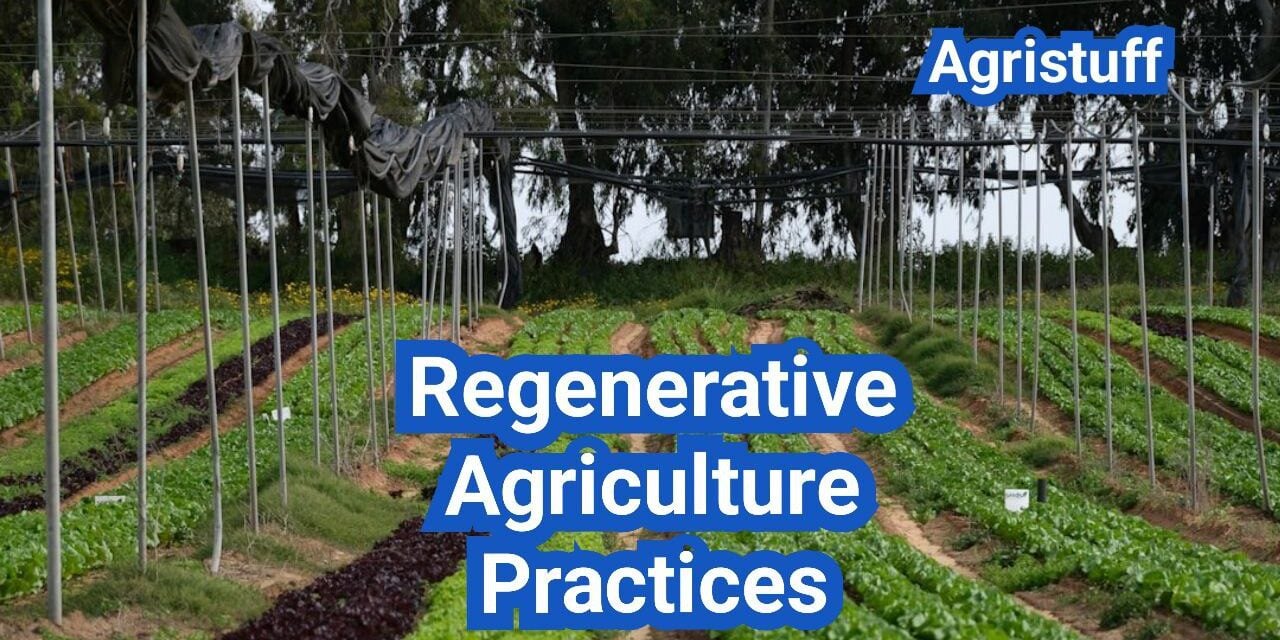
This guide gives farmers a clear, farm-ready plan to adopt Regenerative Agriculture Practices without promising a one-size-fits-all fix.
Think of it as a system change: the focus is on improving ecosystem health and soil function over seasons, not instant results. You will get a stepwise path that starts with goals and baselines, then pilots on one field or pasture before scaling based on local soils, water, markets, labor, and equipment.
Core pillars we will walk through include keeping soil covered, reducing tillage, maintaining living roots, diversifying crops, and integrating livestock where it fits. The plan is grounded in land-grant and conservation concepts, such as NRCS soil health framing, and it reflects current U.S. adoption realities and tradeoffs.
Expect to weigh tradeoffs: cover crops and moisture in drier regions, no-till weed pressure, or grazing stocking limits. The intended outcome is improved soil function and long-term profitability while supporting climate resilience and water quality where feasible.
Key Takeaways
- Follow a step-by-step plan: set goals, measure baselines, pilot, then scale.
- This is a system approach, not a single product or quick fix.
- Core pillars: cover soil, cut tillage, keep living roots, diversify crops, and use livestock thoughtfully.
- Local conditions drive what works; expect tradeoffs and adapt.
- Primary aims: better soil function, improved profitability, and greater resilience to climate and water risks.
What Regenerative Agriculture Means for U.S. Farms Today

On U.S. farms today, this approach centers on actively improving soil and ecosystem function while keeping food production steady. Farmers see it as making things better — not just cutting harm but rebuilding natural systems that support crops and livestock.
Why meanings differ: some groups define it by actions — reduced tillage, cover crops, livestock integration, and leaner fertilizer use. Others define it by outcomes — higher soil organic carbon, richer biodiversity, and cleaner water.
“Definitions vary across academia, NGOs, supply chains, and marketing programs; focus on measurable, on-farm outcomes.”
| Definition Style | Examples | Measured Outcomes | Farmer Focus |
|---|---|---|---|
| Practice-based | Reduced tillage, cover crops, grazing | Adoption rates, inputs used | Practical steps to change management |
| Outcome-based | Soil carbon, biodiversity, water quality | Soil tests, water metrics | Trackable environmental gains |
| Hybrid | Targeted practices for local goals | Multiple co-benefits | Balance of action and measurement |
Expect multiple benefits — better infiltration, less erosion, nutrient retention, and resilience — but also local tradeoffs. Position sustainability as reducing harm and this approach as aiming for net improvement. Later sections show practical ways farmers can measure and pursue those benefits while meeting community and market expectations.
Step Zero: Set Goals, Map Your Land, and Establish a Baseline

Begin by naming the top outcomes you want from your land and use those priorities to guide every decision. Pick 3–5 goals — for example: soil health function, water quality risk reduction, biodiversity gains, profitability, and climate resilience — then rank them so tradeoffs are clear.
Clarify outcomes and rank priorities
Use a simple worksheet: list goals, assign a 1–5 rank, and note one measurable indicator for each. This keeps choices consistent as you change field tactics.
Know your soils before you change your system
Map fields and pastures: mark slopes, drainageways, compaction zones, and yield history. Target treatments where they pay off fastest and avoid forcing high-risk actions onto fragile soils.
Start with measurement
Pull baseline soil tests (pH, organic matter, macro/micronutrients, salinity/sodicity where relevant). Add simple field checks for compaction and infiltration.
Practical indicators to track
- Aggregate stability and crumb structure
- Residue breakdown and earthworm counts
- Infiltration after rain and any surface crusting
- Optional lab biological indicators (CO₂ burst) via extension
Plan for nutrients, water, and local conditions
NRCS defines soil health as the soil’s ability to function as a living ecosystem. OSU Extension advises matching production goals to soil capability and using tests to avoid over- or under-application of nutrients that harm water quality.
Normalize tradeoffs: high cover crop biomass can help carbon but may reduce moisture in dry regions. Build thresholds and adapt as you learn, using local weather, irrigation capacity, and extension resources.
Regenerative Agriculture Practices That Build Soil Health First

Begin with simple, on-farm steps that prioritize soil health before chasing other goals. These “soil-first” building blocks support better water management, crop performance, and longer-term carbon gains when combined thoughtfully.
Minimize soil disturbance with reduced tillage or no-till
Reduced or no-till protects structure and lowers erosion risk. It also cuts the chance of releasing excess carbon dioxide from soil organic matter.
Expect transition issues like residue handling and weed shifts; pair reduced disturbance with targeted tools and monitoring.
Keep the soil covered year-round
Year-round cover reduces raindrop impact, surface runoff, and nutrient loss. More cover improves infiltration and holds moisture for crops and roots.
Maintain living roots
Cash crops, cover crops, and perennials keep roots feeding soil biology. Living roots drive nutrient cycling and help stabilize nitrogen in the root zone.
Reduce excess fertilizer and improve nitrogen efficiency
Use split applications, variable-rate tools, and in-field checks to avoid “too much at the wrong time.” Better timing and rooting diversity cut losses to water and air.
“If erosion is your top problem, start with cover plus disturbance reduction; if nitrogen loss dominates, prioritize timing, rates, and rooting diversity.”
- Decision guide: cover + less tillage for erosion; timing/rates + diverse roots for nutrient loss.
- Pairing matters: reduced tillage + extra carbon inputs (covers) gives stronger soil carbon outcomes.
Cover Crops That Work in U.S. Crop Systems

Picking cover crops for your region and goals
Picking the right cover starts with region, rainfall, and what you want to fix: erosion, nitrogen supply, compaction relief, forage, or weed control.
Use mixes for insurance: grasses for bulk biomass, legumes like vetch for nitrogen, and brassicas for deep rooting. Examples to consider include buckwheat, barley, and vetch.
Managing for biomass and roots to support soil organic carbon
High biomass matters. OSU Extension reports that measurable soil carbon gains are more consistent when cover crops yield >1 ton/acre of biomass.
Choose species and seeding rates that build both surface residue and deep roots to feed biology and increase soil aggregation.
Termination timing: balancing carbon goals with soil moisture
Later termination boosts biomass and carbon but uses more water. In semi-arid zones, terminate earlier to protect moisture and planting windows.
Match species to rainfall timing and favor quick-growing covers where residue is low to avoid moisture penalties.
Weed and pest suppression benefits that can reduce herbicide pressure
Good stands of cover crops suppress weeds and some pests, lowering herbicide need. Results vary by species, planting date, and stand density.
System note: covers give the most benefit when paired with reduced disturbance, diversified rotations, and better nutrient timing.
“When cover crops produce strong biomass and roots, they drive more reliable gains in soil and water function.”
OSU Extension AFS-9412 (Aug 2024)
Reduce Tillage Without Losing Yield: Transition Tactics

Reducing tillage takes planning, not sudden upheaval. Start small and protect yield while you adapt tools, timing, and residue routines.
Why tillage matters: Tillage breaks soil aggregates and speeds decomposition, which can raise carbon dioxide emissions and increase erosion risk. It also damages pore structure that crops depend on.
Stepwise transition playbook
- Test one or two fields; track yields and soil checks.
- Cut passes first—use strip-till or vertical tillage where needed.
- Gradually move to full no-till as residue handling and planter setup improve.
Residue and planting green
Spread residue evenly at harvest and tune openers and closing wheels for consistent seed-to-soil contact.
Planting green into terminated covers helps control erosion and protects young roots, but it can slow warming and compete for moisture in cool or dry springs.
Where no-till fits and troubleshooting
| Best Fit | Needs Adjustment | Common Issues |
|---|---|---|
| Sloped, erosion-prone fields | Heavy clays and poorly drained zones | Compaction, slug pressure |
| Residue-rich corn/soy rotations | Short growing windows | Weed shifts, surface nutrient stratification |
| Fields with cover crops/double cropping | Areas lacking planter calibration | Residue hairpinning, planter blockages |
“No-till performs best when paired with more frequent cropping and living roots.”
Crop Rotation, Intercropping, and On-Farm Biodiversity

Mixing crop types across fields spreads risk and supports more stable yields during extreme weather. Rotation and intercropping are practical tools to manage pests, disease, and variable rainfall.
Diversifying crops to stabilize production under climate stress
Rotate crops to break pest cycles and to spread planting windows. That reduces the chance a single event wipes out all production.
Examples: corn–soy–small grain with a cover crop; add a legume or forage year to improve nitrogen and rooting depth.
Intercropping and “three sisters” thinking | Regenerative Agriculture Practices
Use the three sisters as a model: tall plants give structure, beans fix nitrogen, and groundcover reduces evaporation and weeds.
This pairing shows how complementary plants can boost yield stability and reduce inputs.
Habitat features to support pollinators and wildlife
Field strips, prairie margins, and hedgerows add habitat for beneficial insects and help control erosion near waterways.
Dedicated pollinator areas can lower crop pest pressure and improve long-term production.
Belowground biodiversity and reduced disturbance
Less tillage protects fungi, microbes, and invertebrates that build soil structure and cycle nutrients.
Stronger belowground life leads to better aggregation, infiltration, and more resilient crops over time.
| Strategy | Main Benefit | Example |
|---|---|---|
| Rotation diversity | Risk spread; varied residues | Corn → soy → small grain + cover |
| Intercropping | Complementary functions; reduced weeds | Corn + bean + squash style mixes |
| Habitat strips | Pollinators; erosion control | Prairie margin along stream |
“Start small: pilot a strip or a single field, then scale what fits your equipment, insurance rules, and markets.”
Integrating Livestock and Grazing Management for Regenerative Outcomes

Livestock can turn cover crop costs into feed and cycle nutrients, but integration needs clear goals. Decide when animals fit your rotation and when they don’t.
Good fits include grazing cover crops, perennial pasture use, and residue grazing after harvest. Avoid integration when fencing, water, biosecurity, or labor make control impractical.
Adaptive grazing: a simple stepwise process
Set goals for land and animals, then plan rotations. Monitor forage and soil and set clear move/stop thresholds.
Act, evaluate, and adjust each season. OSU Extension frames this as goal → plan → monitor → act → evaluate → adjust.
Rotational and multi-paddock basics | Regenerative Agriculture Practices
- Size paddocks to match herd intake and rest needs.
- Use rest periods to recover forage and protect soil.
- Target utilization limits rather than continuous heavy grazing to avoid overuse.
| Focus | Practical Tip | Why it matters |
|---|---|---|
| Stocking rate | Match animals to average forage supply | Drives sustainability and profit |
| Soil protection | Avoid grazing when wet; use sacrifice areas | Reduces compaction and erosion |
| Metrics | Track residual height, cover %, and gains | Shows system health year to year |
“System labels matter less than execution; stocking rate is the biggest driver of grazing-land outcomes.”
AFS-9412 (Aug 2024)
Water, Erosion Control, and Nutrient Runoff Reduction

Water loss and nutrient transport often start where soil is bare and frequently disturbed. That cause-and-effect chain moves sediment and fertilizer from fields into ditches, streams, and reservoirs.
How cover and less disturbance protect streams
Residue and living cover break raindrop impact, slow runoff, and trap particles. This keeps nutrients on the land where crops can use them instead of washing downstream.
Aggregation, infiltration, and soil water storage
Roots and minimal disturbance build aggregation. Better structure raises infiltration and stores more water in the root zone. Over seasons, this reduces surface flow and erosion.
Practical checks and dry‑region tactics
After a storm, compare ponding on bare spots versus covered strips to check infiltration. Document changes with photos and a simple depth-to-ponding note.
In the Southern Plains and other dry areas, cover crops can use moisture. Mitigate risk by choosing low‑water species, terminating earlier, or planting covers on parts of a field first.
“Right rate, right time” for fertilizer pairs with cover and less tillage to cut nutrient runoff and improve efficiency.
- Do an infiltration check after storms.
- Prioritize covers on erosion-prone ground.
- Match species and termination to local rainfall.
Carbon, Climate Resilience, and What the Science Supports

Understanding carbon in soil helps farmers balance short-term inputs and long-term gains. Soils hold more carbon than all vegetation and the atmosphere combined, so even small shifts can matter at farm and landscape scale.
Why soils matter | Regenerative Agriculture Practices
Soil is the largest on-farm carbon pool. Small percentage changes in soil organic carbon can influence climate outcomes and farm production over time.
What most reliably raises soil organic carbon
Research summarized by OSU Extension shows that no‑till alone often gives surface gains but not deep gains unless you also increase carbon inputs. That means more continuous cropping, cover crops, or double cropping where feasible.
Carbon footprint vs. sequestration
Sequestration is the soil storing carbon. Carbon footprint counts emissions from fuel, seed, and extra passes. Use lifecycle analysis to compare net effects rather than assuming sequestration nets out all emissions.
Resilience and farmer outcomes | Regenerative Agriculture Practices
Better soil health improves infiltration, residue cover, and aggregation. These traits help buffer drought and reduce erosion after heavy rain.
“97% of surveyed growers reported increased resilience to drought or heavy rain after adopting soil health systems.”
Syngenta summary
| Metric | What to track annually | Why it matters |
|---|---|---|
| SOC trend | Consistent sampling depth and lab method | Shows long-term carbon change |
| Residue & infiltration | Residue cover %, 60‑minute infiltration test | Links to erosion and water storage |
| Yield stability | Compare production across dry/wet years | Measures resilience and profitability |
| Input efficiency | Fuel, seed, fertilizer per acre | Feeds lifecycle carbon accounting |
Implementation Timeline: A Practical First-Year Plan and Ongoing Management
A focused pilot helps farmers convert ideas into workable routines without betting the whole farm. Start with one field or paddock that has manageable problems—erosion, compaction, or low residue—but not your most fragile acreage.
Choosing a pilot field and scaling by learning, not by hype
Pick a field with accessible records and easy logistics. Use that site to test equipment settings, seed mixes, and timing.
Keep notes every week so small wins and failures guide the next season.
In-season checklist: soil cover, compaction, weeds, nutrient timing, and water
- Confirm soil cover each month and compare to baseline photos.
- Scout infiltration and compaction after storms; note ponding locations.
- Track weed shifts and match herbicide timing to crop stages.
- Record nutrient applications and crop growth to refine timing.
Post-harvest actions: cover crop seeding, residue strategy, and grazing decisions
Prioritize even residue distribution, then decide on cover crop species and seeding window based on moisture.
If grazing covers, weigh stocking rate against soil condition, fencing, and water access before allowing animals in.
Annual review: compare results to goals and adapt the system
Each year, compare yield, input costs, and soil indicators to the goals you set in Step Zero.
Decide what to keep, modify, or stop. Use this cycle: plan → monitor → act → evaluate → adjust.
“Adaptive management beats one-size-fits-all change—use data from your pilot to scale what really works.”
| Timing | Action | Key Measure |
|---|---|---|
| Spring (year 1) | Select pilot; baseline sampling; planter tuning | Soil tests; residue photos |
| Growing season | Monthly scouting; nutrient timing checks; water observations | Infiltration, weed notes, growth stage logs |
| Post-harvest | Residue management; cover crop seeding or grazing decision | Biomass estimate; soil moisture at seeding |
| Annual review | Compare to goals; scale or adjust | Yield, input costs, soil indicators |
Costs, Incentives, and Resources to Sustain the Transition
Transitioning systems often carries upfront costs and questions about risk; knowing available support narrows uncertainty.
Upfront costs and risk
Typical initial expenses include cover crop seed and planting, planter or opener upgrades, fencing and water for grazing, and extra time for scouting and termination.
Weather, a learning curve, and short-term yield drag are real risks. A pilot field plus careful cost tracking reduces financial exposure.
Market signals and supply-chain programs
Supply chains and major food companies are creating incentives and sourcing targets. Examples include Nestlé’s 2030 sourcing goal and PepsiCo’s acreage commitments.
Producers should review contract terms, verification steps, and data ownership before signing for premiums or preferred sourcing.
Where to get technical help | Regenerative Agriculture Practices
Use NRCS conservation planning and cost-share, land-grant extension agronomy, and local conservation districts.
Treat technical help as part of annual management—especially when changing nutrient timing, herbicide plans, or grazing routines.
| Cost Category | Typical Item | First-year Range (USD/acre) | Why it matters |
|---|---|---|---|
| Cover crops | Seed + planting | $15–$60 | Biomass builds soil and feed options |
| Equipment | Planter openers, coulters | $10–$40 | Ensures seed placement with residue |
| Grazing setup | Fencing, water systems | $20–$100 | Enables livestock integration and nutrient cycling |
| Labor & time | Scouting, termination | $5–$25 | Management reduces risk and optimizes production |
Practical resource stack: land-grant extension, NRCS Web Soil Survey and soil health materials, local cover crop and grazing networks, and on-farm trials. These resources help farmers and farms find ways to lower costs and boost production while serving community and food markets.
At The End of: Regenerative Agriculture Practices
This guide ends with one clear action: pick a pilot field, implement one change this season, and measure outcomes.
Start by defining goals, taking a baseline soil test, and choosing a soil-first step such as a targeted cover crop or reduced disturbance. Track yield, input costs, and simple water or erosion checks.
Key point: stacking compatible changes as a system outperforms chasing a single silver bullet. Pair reduced disturbance with more living roots and biomass to boost carbon gains most reliably.
Better infiltration, more ground cover, and rotation diversity lower downside risk from drought and intense rain. Revisit goals annually and let measured results guide scaling.
Next step: choose one pilot, commit to a single change, and schedule baseline and post-season assessments.
FAQ
What does regenerative agriculture mean for U.S. farms today?
It’s an approach that aims to improve soil health, water quality, biodiversity, and farm profitability rather than just reducing harm. Farmers focus on building organic matter, enhancing nutrient cycling, and increasing resilience to drought and heavy rain by changing systems—cover crops, reduced tillage, and integrating livestock are common tools.
How should a farm start—what is Step Zero?
Begin by setting clear goals (soil health, water protection, carbon outcomes, or profitability), mapping fields, and establishing a baseline with soil tests and simple field indicators. That baseline helps plan tradeoffs, pick suitable cover crops, and decide on measurement frequency for carbon, nutrients, and biodiversity.
Which practices most reliably build soil health first?
Priorities include minimizing soil disturbance with reduced tillage or no-till, keeping the soil covered year-round, and maintaining living roots through cover crops or diverse rotations. These actions support soil biology, improve aggregation, reduce erosion, and can lower fertilizer needs over time.
How do cover crops help, and how do I pick the right ones?
Cover crops protect soil from erosion, feed soil microbes, scavenge nutrients, and add root carbon. Choose species based on region, goals, and planting windows—grasses for biomass, legumes for nitrogen, and brassicas for rooting and pest suppression. Manage for biomass and timely termination to balance soil carbon and moisture.
Won’t reducing tillage hurt my yield or increase weeds?
Transitioning takes tactics: manage residue, plant into cover crop residues, and adjust herbicide and weed-scouting plans. No-till can work well for many systems, but some fields need tailored solutions like strip-till or additional rotations to maintain yields while lowering erosion and CO2 release.
What role do crop rotation and intercropping play?
Diverse rotations and intercropping stabilize yields, break pest cycles, and build belowground biodiversity. Mixing complementary crops—like legumes with cereals—or adding small grains and forages increases system resilience and supports pollinators and beneficial insects via field margins and habitat strips.
How can livestock and grazing improve outcomes?
Adaptive grazing, rotational or multi-paddock systems, and careful stocking rate management can cycle nutrients, stimulate plant growth, and build soil carbon when matched to forage recovery. Monitoring and adjustments are essential to avoid overgrazing and protect water quality.
What about water, erosion control, and nutrient runoff?
Keeping soil covered and reducing disturbance improve infiltration and soil water storage, reducing runoff and nutrient loss. Practices like cover cropping and improved aggregation lower sediment and nitrate export to waterways while conserving moisture where possible.
Can soil management meaningfully affect carbon and climate resilience?
Soils can store significant carbon compared with vegetation, and practices such as no-till combined with increased cropping frequency and cover crops tend to increase soil organic carbon over time. Lifecycle analysis and measurement are important to differentiate footprint reductions from sequestration.
What is a practical first-year implementation timeline?
Start with a pilot field, set a simple in-season checklist (cover, compaction, weeds, nutrient timing), and plan post-harvest actions like cover crop seeding or targeted grazing. Review annually against goals and scale by learning from outcomes rather than rushing full adoption.
How do costs, incentives, and resources support the transition?
Upfront costs and risk-reduction matter; look for USDA NRCS programs, state cost-share, and supply-chain incentives from companies like General Mills or Land O’Lakes. Land-grant extension, Soil and Water Conservation Districts, and farmer networks offer technical help and practical guidance.
How should farmers measure progress—what indicators work?
Use routine soil tests for organic matter, pH, and nutrient pools, plus practical indicators: aggregate stability, active carbon, crop biomass, and simple field checks for compaction and biodiversity. Remote sensing and farm records help track yields, inputs, and carbon estimates over time.
Are there tradeoffs I should plan for?
Expect management tradeoffs—cover crops can tie up moisture in dry years; reduced tillage may change weed dynamics; grazing needs careful stocking to avoid erosion. Local conditions, crop choices, and market signals all shape workable solutions for each farm.
Conclusion of: Regenerative Agriculture Practices
If you’re looking for a clear, practical roadmap you can apply this season, this guide focuses on Regenerative Agriculture Practices as a step-by-step plan built for real U.S. farm decisions—equipment, timing, rotations, grazing logistics, and measurable outcomes.
Instead of debating buzzwords, Regenerative Agriculture Practices work best when you treat them like a system upgrade: you pick the first changes that fit your soil, climate, labor, and cash flow, then you add layers as your fields respond.
The fastest wins usually come from Regenerative Agriculture Practices that protect soil year-round, reduce unnecessary disturbance, and keep roots and residue working for you—because that’s where moisture, structure, and biology start to improve in practical ways.
How to use this plan without getting overwhelmed
To keep Regenerative Agriculture Practices realistic, commit to a “start small, learn fast” approach: choose one field or one management unit, document everything, and expand only after you see what changes your yields, weeds, and water behavior.
Because Regenerative Agriculture Practices are management-heavy, success often depends more on timing and consistency than on buying new inputs—so the plan below is organized around decisions you control each week and each season.
Step 1: Define your outcomes and constraints (before choosing any practice)
Begin Regenerative Agriculture Practices by writing down three outcomes you want (for example: better infiltration, fewer wet spots, lower nitrogen losses, more grazing days, or stronger drought resilience) and three constraints you cannot break (cash rent, labor limits, equipment, herbicide program, or contract requirements).
When Regenerative Agriculture Practices are tied to a clear outcome, it becomes easier to avoid random “practice collecting” and instead build a system that matches your farm type—row crops, mixed crop-livestock, specialty crops, or pasture-based operations.
Step 2: Build a baseline you can actually compare
To keep Regenerative Agriculture Practices measurable, establish a baseline with a simple soil test and a field walk: note compaction layers, standing water patterns, residue cover, earthworm presence, and where weeds concentrate along headlands or drainage lines.
Good Regenerative Agriculture Practices also track management baselines—planting dates, termination dates, tillage passes, fertilizer timing, and spray records—because you’ll need those notes to understand what changed when a field improves or backslides.
Step 3: Pick your “first two” changes for the first season
For most farms, the safest first Regenerative Agriculture Practices are (1) a cover strategy that keeps soil protected outside the cash-crop window and (2) a disturbance reduction strategy that removes at least one pass or one aggressive operation.
If Regenerative Agriculture Practices feel too big, choose one “biology builder” (like a cover crop that fits your rotation) and one “risk reducer” (like better traffic control or residue management) so you can learn without betting the whole farm.
Step 4: Keep soil covered with residue and smart cover crops
One of the highest-impact Regenerative Agriculture Practices is keeping soil covered through crop residue, mulch, or cover crops, because cover reduces erosion, buffers temperature swings, and improves how rainfall soaks in rather than running off.
To make Regenerative Agriculture Practices work in U.S. rotations, match cover crop species to your cash crop, planting window, and termination method—cereal rye for biomass, oats for winter-kill, legumes for nitrogen contribution, or diverse mixes for broader rooting patterns.
In corn-soy systems, Regenerative Agriculture Practices often succeed when you treat cover crop establishment like a cash-crop operation: prioritize seed-to-soil contact, pick an establishment method you can repeat, and schedule termination with weather and planting goals in mind.
Step 5: Keep living roots for as many days as possible
Another core set of Regenerative Agriculture Practices is extending the time living roots occupy the soil, because roots feed soil biology, improve aggregation, and help cycle nutrients through the profile instead of leaving soil idle for months.
Practical Regenerative Agriculture Practices for living roots include shorter fallow windows, adding small grains or forages where they fit, using relay or double-crop options when climate allows, and letting covers grow long enough to do real work rather than “green paint.”
Step 6: Increase diversity with rotations and functional mixes
Regenerative Agriculture Practices become more resilient when you increase plant diversity, since diverse rotations interrupt pest cycles, spread nutrient demand across seasons, and support a wider range of soil organisms than single-crop repetition.
In practice, Regenerative Agriculture Practices for diversity can mean rotating crop families, adding a small grain, inserting a forage year on suitable acres, or using multi-species covers that combine grasses, legumes, and brassicas for different rooting depths and functions.
Step 7: Reduce disturbance (tillage, traffic, and “invisible” disturbance)
Many Regenerative Agriculture Practices start paying off when you reduce soil disturbance, because less disturbance helps protect aggregates, keeps residue on the surface, and allows soil pores to develop so water moves down instead of sideways.
To apply Regenerative Agriculture Practices without going “all in” overnight, consider a transition path: remove a deep tillage pass first, then shift to strip-till or low-disturbance approaches where needed, and only then evaluate no-till where soils and weed pressure allow.
Traffic control is an overlooked part of Regenerative Agriculture Practices, so map repeatable equipment lanes, avoid field work when soils are plastic and vulnerable, and focus on headlands where compaction and yield drag often concentrate year after year.
Step 8: Feed the soil biology with targeted organic inputs
When used strategically, Regenerative Agriculture Practices can include organic amendments—manure, compost, or carbon-based materials—because these inputs can support microbial activity and help rebuild soil organic matter over time.
To keep Regenerative Agriculture Practices economical, use amendments where they solve a real limitation: low organic matter, poor structure, or nutrient tie-up, and always match applications to soil tests, realistic yield targets, and nutrient-loss risk windows.
Step 9: Integrate livestock where it truly fits (and avoid forcing it)
For mixed operations, Regenerative Agriculture Practices can improve nutrient cycling and ground cover when livestock are integrated thoughtfully, especially through managed grazing that controls timing, rest periods, and residue goals.
Even without owned livestock, Regenerative Agriculture Practices may still include custom grazing on cover crops or crop residues, but only if you can protect soil when wet, prevent overgrazing, and keep fencing, water, and biosecurity manageable.
Step 10: Protect water with edge-of-field and in-field buffering
Strong Regenerative Agriculture Practices also reduce runoff and nutrient loss by using buffers, filter strips, grassed waterways, and better residue management, which helps keep soil in place and protects downstream water quality.
In many U.S. landscapes, Regenerative Agriculture Practices that address drainage realities—like stabilizing concentrated flow areas and managing nutrient timing—deliver benefits even before soil organic matter changes become obvious on test results.
Step 11: Use IPM to manage weeds and pests during transition years
During the first seasons, Regenerative Agriculture Practices often change weed pressure and pest dynamics, so an Integrated Pest Management mindset helps you respond with scouting and thresholds instead of reacting with blanket, late, or redundant interventions.
To keep Regenerative Agriculture Practices from stalling out, build a weed plan that includes clean field edges, competitive crop canopies, cover crop termination timing, and diversified modes of action where herbicides are used, since transition weeds are usually management-timing issues.
Step 12: Align equipment and operations with your new system
You don’t need a shopping spree to start Regenerative Agriculture Practices, but you do need operational alignment: a planter setup that handles residue, consistent seeding depth, calibrated downforce, and closing wheels that match your soil moisture conditions.
As Regenerative Agriculture Practices expand, evaluate equipment changes only after you identify the true bottleneck—cover crop establishment, residue handling, termination, or nutrient placement—because the cheapest “upgrade” is often a better sequence, not a new machine.
Step 13: Build a nutrient plan that matches biology and risk windows
Regenerative Agriculture Practices don’t eliminate nutrient planning; they improve it when you match rates and timing to crop demand, soil tests, and weather risk, since the goal is higher nutrient-use efficiency rather than simply cutting fertilizer blindly.
Many farms find Regenerative Agriculture Practices work best with split applications, stabilized forms where appropriate, and better placement, plus the use of legumes or covers for nitrogen contribution when those fit the rotation and termination timing.
Step 14: Manage economics like a transition project, not a single-season bet
To keep Regenerative Agriculture Practices profitable, treat transition years like a project budget: estimate seed and fuel changes, labor shifts, potential yield variability, and the value of reduced erosion, better trafficability, and more workable days after rain.
Regenerative Agriculture Practices also benefit from risk management habits—start on the most responsive fields first, avoid your worst-draining acres for the earliest experiments, and keep your marketing and crop-insurance decisions aligned with realistic transition expectations.
Step 15: Measure what matters (simple, repeatable indicators)
If you want Regenerative Agriculture Practices to stick, measure a few indicators you can repeat each season: infiltration observations after storms, soil aggregate feel, residue cover percentage, earthworm counts in a shovel slice, and compaction checks at consistent points.
For many producers, Regenerative Agriculture Practices become easier to scale when you keep “field notebooks” with dates, photos, and short notes, because visual proof of better water movement and structure often arrives before big changes show up in lab numbers.
Step 16: Use technical help and cost-share without losing control of your system
Regenerative Agriculture Practices can be accelerated by technical assistance and voluntary conservation programs, especially when you use them to de-risk early adoption while keeping your own goals and operational realities at the center of the plan.
Because Regenerative Agriculture Practices vary by county and resource concerns, work with local experts to select standards and implementation details that match your soils, slopes, drainage, and climate, rather than copying a system from a different region.
A practical 12-month rollout you can follow
In the first 30 days, Regenerative Agriculture Practices should focus on baseline, field selection, seed decisions, and a realistic establishment plan, so your next moves are proactive instead of rushed at the edge of planting windows.
From day 30 to harvest, Regenerative Agriculture Practices should focus on execution and documentation: implement covers where they fit, reduce a disturbance pass, tighten planter performance, and keep weed pressure visible through scouting and timely decisions.
From post-harvest through the off-season, Regenerative Agriculture Practices should focus on learning: review notes, compare fields, identify the biggest bottleneck, and choose the next single improvement that will make your system easier—not more complicated—in the following year.
Common mistakes that slow progress (and how to avoid them)
The most common Regenerative Agriculture Practices failure is weak establishment—covers planted too late, too shallow, or without enough moisture—so make establishment a priority decision with the same seriousness you give your cash crop.
Another common Regenerative Agriculture Practices mistake is changing too many variables at once, which makes it impossible to diagnose what caused yield loss, weed explosions, or stand failures, so limit experiments to a few controllable changes per field per season.
Finally, Regenerative Agriculture Practices often stall when farmers expect instant soil-test miracles, so focus on early, visible wins—less crusting, better infiltration, more workable days—while you build a system that improves year after year.
Closing: Your next best step
The best way to start Regenerative Agriculture Practices is to choose one field, pick your first two changes, document everything, and commit to consistent timing, because repeatable management beats perfect theory every time.
Sources & References
- USDA NRCS: Soil Health (principles & overview)
- USDA NRCS: Soil Health Management (practical framework)
- USDA NRCS: Soil Health Assessment & Indicators
- USDA NRCS Conservation Practice Standard: Cover Crop (Code 340)
- USDA NRCS Conservation Practice Standard: No-Till (Code 329)
- USDA NRCS: Conservation Crop Rotation (Code 328) Overview
- USDA NRCS Conservation Practice Standard: Nutrient Management (Code 590)
- EPA: Nutrient Pollution—Agricultural Sources & Solutions
- USDA Climate Hubs: Cover Cropping to Improve Climate Resilience
- USDA Climate Hubs: Managing Grazing to Improve Climate Resilience
- Cornell Soil Health Program (assessment concepts & indicators)
- EPA: Environmental Value of Applying Compost