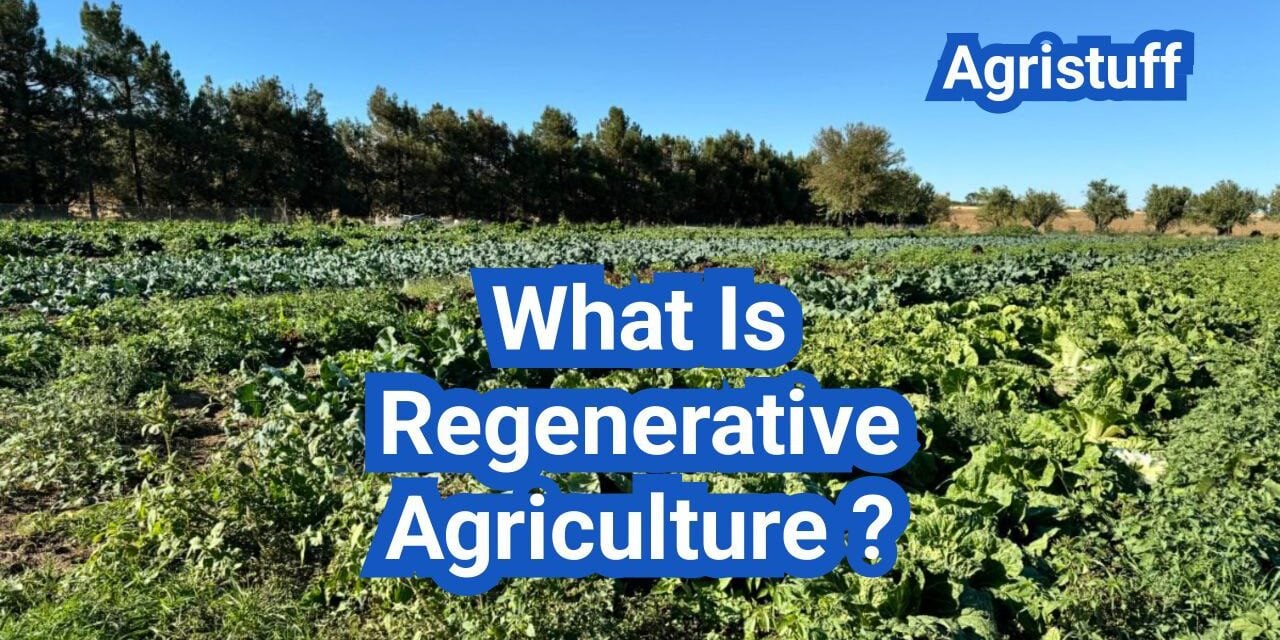
What you will learn: this guide explains the core idea behind Regenerative Agriculture Definition and how it applies to U.S. farms today. It is written for row-crop growers, grazers, and land managers who want practical, outcome-focused steps.
Rather than a checklist of trendy practices, this approach treats the farm as a set of linked systems. The goal is better ecosystem function on the land—healthier soil, cleaner water, richer biodiversity, stronger climate resilience, and more stable farm income.
This is an informational guide, not a sales pitch for certification. You will learn how to evaluate claims, compare this approach with organic methods, and get a realistic start plan for your fields or pasture.
Definitions vary because landscapes and goals differ. That flexibility can help farms, but it also creates marketing confusion as demand for regenerative sourcing rises across the supply chain in the United States.
Key Takeaways
- This guide clarifies the term and its practical aims for modern U.S. farming.
- The focus is on outcomes—soil health, water, biodiversity, climate, and business resilience.
- It frames the approach as a systems strategy, not a fixed checklist of practices.
- Expect comparisons with organic models and methods to measure progress.
- Learn how to assess claims and begin changes that fit your land and goals.
Why Regenerative Agriculture Is Taking Off in Modern Farming

After decades of yield-focused farming, many growers now face limits from worn-out soil and shrinking biodiversity. The Green Revolution boosted production, but it also left erosion, nutrient loss, and simpler field life in its wake.
From the Green Revolution to soil depletion and biodiversity loss
Intensive cropping and short rotations increased output but intensified soil decline. Over time, frequent tillage and bare periods raised erosion risk and cut habitat for pollinators and beneficial insects.
Why extractive practices are increasingly seen as unsustainable
On the ground, extractive management looks like repeated disturbance, blanket input use, and minimal crop diversity. Those tactics can keep yields high short term while raising long-term costs and vulnerability.
How systems respond to climate risk, water stress, and market pressure
Weather swings and volatile input prices make farm economics more precarious. Fields that hold water and rebuild soil organic matter resist droughts and heavy rains better.
“Interest across the food value chain is rising as climate and water risks grow and companies commit to sourcing from regenerative systems.”
— Syngenta Group
- Market demand and corporate sourcing requests now reward farms that lower risk and report outcomes.
- Globally, land use and ecosystem management are central to climate conversations, linking on-farm practice to broader goals.
Regenerative Agriculture Definition: What It Means Today

In current use, the phrase centers on real-world results: rebuilding soil health, improving water function, and boosting biodiversity while producing food.
Outcome-based food production that restores soil, water, climate, and biodiversity
Plain-English: a systems approach that aims for measurable improvement in soil function, water infiltration, and on-farm biodiversity while maintaining or increasing production and profitability.
Why there isn’t a single regulated definition
The term is used by companies, nonprofits, and farmers in different ways. It is not governed like organic certification, so rules and claims vary by program and market.
What “regeneration” implies beyond sustainability
Regeneration means actively restoring ecosystem function, not just reducing harm. Look for evidence—rising soil organic matter, better water cycling, and more habitat—rather than only a list of practices.
“Focus on outcomes: measurable soil and ecosystem gains over time.”
- Ask for monitoring data (soil tests, infiltration rates, biodiversity indicators).
- Expect tools to vary by region and goals; context matters.
Where the Concept Came From: Rodale, Indigenous Roots, and Holistic Thinking

Historical strands shaped how people talk about regenerative agriculture today. Bob Rodale and the Rodale Institute popularized the term in the early 1980s, arguing it should go beyond “sustainable” toward active restoration.
Bob Rodale and early U.S. usage | Regenerative Agriculture Definition
Rodale used publishing and research to push a higher bar for soil and crop systems. His work framed the phrase as outcome-focused, not just a list of techniques.
Indigenous and traditional practices | Regenerative Agriculture Definition
Many modern practices—intercropping, agroforestry, and timed grazing—draw on Indigenous food systems that protect soil cover and match plant choices to local ecology.
Holistic Management and the Savory view
Holistic Management treats the farm as a decision-driven system that balances ecology, economy, and community. The Savory Institute warns that labeling practices alone can be misleading; outcomes depend on context and careful management.
| Origin | Core idea | Practical role on the land |
|---|---|---|
| Rodale Institute | Move beyond sustainment to repair | Research-based practices and farmer outreach |
| Indigenous systems | Local ecology and diversity | Cover, rotations, mixed plantings |
| Holistic Management | Whole-system decision framework | Stocking, timing, socio-economic planning |
“Working with the land means matching stocking rates, timing, and rotations to what the landscape can support.”
Core Principles of Regenerative Agriculture Systems
A clear set of principles separates the goals—healthier soil, better water, and stable yields—from the tools used to reach them. These ideas explain why certain on‑farm choices work together and help you choose the right practices for your land.
Minimize soil disturbance to protect structure and reduce erosion
Reduced tillage keeps aggregates intact, supports underground life, and lowers erosion risk. Limiting soil disturbance preserves pore space and improves infiltration.
Keep the ground covered year-round
Permanent or seasonal cover protects topsoil from rain and wind. A living or residue cover also moderates temperature and feeds soil biology through the year.
Increase plant diversity through rotations and intercropping
Mixing crops and rotating species interrupts pest cycles and spreads nutrient demand. Greater diversity builds more stable yields and strengthens ecosystem function.
Integrate livestock to cycle nutrients and build resilience
When managed to match ecology, livestock return manure and trampling benefits that feed soil and reduce bare ground. Integration is a strategy, not a requirement for every farm.
Optimize inputs with smarter management and targeted applications
Better timing, precise rates, and targeted protection cut waste and costs. Smarter input management ties agronomy to outcomes so you meet goals with fewer resources.
These principles apply across many farm types, but the exact set of actions must fit local soils, weather, and business constraints.
Soil Health and Soil Organic Matter as the Foundation

Healthy topsoil acts like a living filter and bank for nutrients. It shapes crop quality and field resilience through structure, biology, and organic inputs.
How biology supports nutrient cycling and crop quality
Soil biology—microbes, fungi, and soil fauna—breaks down residue and release nutrients plants can use. That process improves nutrient availability and can boost grain and forage quality.
Building organic matter to improve water retention
Adding organic matter and growing roots increases pore space and water-holding capacity. More soil organic matter helps fields withstand dry spells and reduces runoff in heavy rains.
Why reduced tillage protects underground biodiversity
Less tillage preserves aggregates, mycorrhizal networks, and earthworm channels. Avoiding repeated disturbance keeps the underground community intact and supports steady infiltration and trafficability.
What growers can expect season to season: better infiltration, less crusting, and improved field traffic. These results take time and should be tracked with tests and observations rather than assumed.
| Focus | Short-term signs | Measured indicators |
|---|---|---|
| Aggregation & structure | Less crusting, easier planting | Bulk density, aggregate stability |
| Biological activity | More earthworms, quicker residue breakdown | Microbial biomass, enzyme activity |
| Soil organic matter | Improved water retention, drought resilience | Soil organic carbon, SOM percent |
| Water function | Faster infiltration, less runoff | Infiltration rate, available water capacity |
Regenerative Farming Practices That Put Principles Into Action

Farms pick a tailored set of practices that match soil, equipment, and local markets to achieve measurable gains. This practical menu turns principles into field-level choices.
No-till and reduced-till planting into residue
No-till and reduced-till preserve surface cover and protect soil structure. Planting crops directly into residue cuts erosion, keeps moisture, and saves time during busy seasons.
Cover crops and multi-species cover crops | Regenerative Agriculture Definition
Cover crops are used to control erosion, capture excess nitrogen, and feed soil biology. Mixes with grasses, brassicas, and legumes can address compaction, add nitrogen, and support diverse soil life.
Crop rotation and nitrogen-fixing legumes
Diverse rotations break pest cycles and stabilize yields. Including legumes helps supply nitrogen, reduces reliance on synthetic inputs, and fits well with corn, soybean, and small-grain systems.
Compost and recycling farm waste | Regenerative Agriculture Definition
Compost adds targeted organic matter and improves water holding. It differs from fresh manure by being stabilized and safer to apply. Apply compost where it meets yield goals and avoids nutrient runoff.
Agroforestry, biodiversity strips, and field-edge habitat
Trees, buffer strips, and flowered margins boost pollinators and natural enemies. These above-ground practices increase farm biodiversity and can improve on‑farm pest control and pollination.
Integrated pest management and prevention-focused systems
IPM emphasizes scouting, thresholds, crop diversity, and beneficials. Targeted interventions protect crops while supporting soil health and long-term resilience.
Choose a few complementary practices rather than every tool. The best results come from a site-specific set of practices combined into a clear management plan for the season and years ahead.
Regenerative Grazing and Livestock Integration
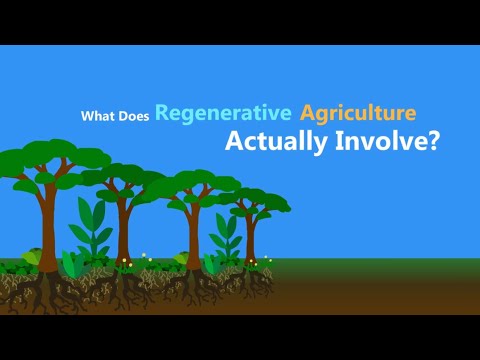
Smart grazing turns animals into tools that help recover cover, cycle nutrients, and build soil resilience. This section explains how managed moves work, what benefits to expect, and when livestock make sense on your land.
How rotational grazing works | Regenerative Agriculture Definition
Rotational grazing uses paddock moves, short grazing events, and longer rest periods. Animals eat a section, then move on while plants recover. That contrasts with continuous grazing where livestock graze one large area without planned recovery.
Benefits for soil, cover, and plant recovery
Well-timed grazing reduces bare ground and stimulates regrowth. Manure and trampling return nutrients and incorporate residue into the surface, aiding building soil and boosting water infiltration.
Trade-offs and practical constraints | Regenerative Agriculture Definition
Success depends on stocking density, water access, fencing, and labor. Management must match forage growth curves; too-heavy use or poor timing harms plants and soil.
When livestock integration fits — and when it may not
Livestock suit mixed operations with forage resources and the ability to move animals regularly. They may not fit land with limited water, high labor constraints, or fragile soils prone to compaction.
Bottom line: livestock can strengthen system resilience and diversify income, but they are a management choice — not a guarantee. Measure outcomes on your fields and adapt your plan accordingly.
| Aspect | Rotational grazing | Continuous grazing |
|---|---|---|
| Plant recovery | Planned rest periods improve root growth | Often limited; plants stay stressed |
| Soil cover | Better maintained with timed moves | Higher risk of bare ground |
| Nutrient cycling | Manure concentrated and incorporated via trampling | Nutrients uneven; more loss risk |
| Management needs | Higher fencing, water, labor | Lower daily labor, less infrastructure |
| Best fit | Mixed farms, active managers, resilient planning | Low-labor operations, limited resources |
Biodiversity Above and Below Ground: What Regeneration Looks Like on a Farm

Biodiversity on a working farm means two linked things: the life in the soil (microbes, fungi, nematodes, and invertebrates) and the life above it (pollinators, birds, and beneficial insects).
Why reduced disturbance and cover support soil life
When fields avoid deep, frequent tillage, underground communities stay intact. Stable moisture and moderate temperature create continuity for microbes and fungal networks.
Consistent plant cover feeds soil food webs through roots and residues. That steady food supply speeds nutrient cycling and helps form stronger soil aggregates.
Creating habitat for pollinators, birds, and beneficial insects
Simple landscape elements — biodiversity strips, hedgerows, and field-edge buffers — give shelter, forage, and nesting sites without removing whole fields from production.
Diverse rotations and lower pesticide use under IPM let beneficial insects thrive and reduce pest pressure naturally.
“Around 25% of the world’s biodiversity lives below ground; protecting that life helps farms hold water, store nutrients, and resist stress.”
- Practical outcomes: better aggregation, faster infiltration, and crops that cope better with drought or heavy rain.
- Habitat tactics: agroforestry rows, flower margins, and staggered cover crops fit many operations.
- Measure it: pitfall traps, visual pollinator counts, and soil respiration tests turn biodiversity into trackable indicators.
| Target | Action | On-farm result |
|---|---|---|
| Soil microbes | Reduce tillage; maintain cover | Improved nutrient cycling; stable structure |
| Pollinators | Plant flower strips; avoid broad insecticide use | Higher pollination rates; pest suppression |
| Birds & small wildlife | Install hedgerows and buffer zones | Natural pest control; greater biodiversity value |
Climate and Carbon: How Regenerative Agriculture Can Turn Soil Into a Carbon Sink

Soil stores large amounts of carbon when managers both add plant matter and limit losses. That balance matters for on‑farm climate action and for steady field performance.
Why tillage speeds carbon loss | Regenerative Agriculture Definition
Tillage breaks aggregates and exposes soil organic matter to oxygen. Microbial activity then converts that organic carbon into carbon dioxide, releasing it to the air.
Building stable carbon on your land | Regenerative Agriculture Definition
A practical carbon sink on a farm means feeding the ground with roots, residues, and cover crops while keeping disturbance low. Those carbon inputs and retained residues can form more persistent soil organic matter.
Why pairing practices matters and what claims mean
Combining cover crops with reduced tillage or no-till gives a better chance that added carbon stays put. Large-scale estimates suggest big potential to cut carbon dioxide in the world, but these are conditional.
- Context matters: soil type, climate, and baseline carbon drive results.
- Watch claims: sequestration estimates are not guarantees and depend on measurement methods.
- Co-benefits: higher organic matter often improves water retention and resilience to extreme weather.
Benefits in the United States: Profitability, Resilience, and Risk Reduction
On many U.S. row-crop farms, changes in soil management are now showing up as hard dollars per acre.
Income results from research on intensive corn and soybean operations show average net gains of $52/acre for corn and $45/acre for soybeans after adopting soil health systems.
These systems commonly paired conservation tillage, cover crops, and precision fertilizer management. Together, those management practices drove better yields, lower input waste, and fewer field passes.
Resilience and measured returns | Regenerative Agriculture Definition
Grower surveys reported stronger resilience: 97% noted improved performance under heavy rain or drought. That resilience comes from better infiltration, more stable organic matter, and diversified crops.
How optimizing inputs lowers long‑term costs | Regenerative Agriculture Definition
Optimize inputs by timing applications, using precision rates, and cutting redundant passes. Over time, this reduces fuel, labor, and erosion-related losses while keeping nutrient dollars working harder.
“When practices work as an integrated system, economic and resilience gains are most consistent.”
| Metric | Corn (avg) | Soybeans (avg) |
|---|---|---|
| Net income gain | $52/acre | $45/acre |
| Common practices | Conservation tillage, cover crops, precision fertilizer | Cover crops, rotations, targeted nutrients |
| Reported resilience | 97% improved under extremes | 97% improved under extremes |
Regenerative Agriculture vs Organic Farming: Key Differences and Overlap

Understanding how a rules-driven label compares with a results-focused approach helps farmers pick a path that fits soil, markets, and risk tolerance.
Organic as prescriptive standards means farmers follow a defined rulebook. Certification requires annual inspections and keeps certain chemical inputs and GMO seeds out of the system. That consistency creates a clear market signal for buyers.
Flexible, site-specific management
Regenerative agriculture emphasizes measurable outcomes and continuous improvement. Managers tailor a set of practices to local soils and climate and may still use some conventional tools where needed. The focus is on results like rising organic matter, better water function, and biodiversity gains.
Where the two overlap | Regenerative Agriculture Definition
- Cover crops: both systems use them to protect soil and feed biology.
- Legumes: nitrogen-fixing crops can reduce fertilizer needs and fit either pathway.
- Livestock integration: planned grazing supports nutrient cycling and ground cover in many operations.
Why the distinction matters: certification brings premiums but more record-keeping and limited input options. Flexible management offers broader tool access and tailored transition ways, but it may lack a single market label.
Quick decision framework: list your goals, test soil, pick a realistic starter set, and match buyer requirements. Choose the approach that aligns with your soils, crops, and business plan.
Measuring Outcomes and Avoiding Greenwashing
Measuring progress on the land means looking for verified changes, not just a list of tactics. Claims that a farm uses certain practices do not guarantee improved field function. Context, timing, and execution determine real results.
Why practice lists can mislead
The Savory Institute warns that defining success by practices alone creates an integrity gap. Saying you plant cover crops or rotate livestock does not prove rising soil health or better water cycling.
What to measure | Regenerative Agriculture Definition
Focus on measurable ecosystem indicators that show trends over time.
- Soil organic matter trends and bulk density tests.
- Water infiltration rates and aggregate stability.
- Erosion markers and visual ground cover checks.
- Above- and below-ground biodiversity counts (pollinators, earthworms).
How labels can be misused | Regenerative Agriculture Definition
Greenwashing happens when terms are applied without baselines, time-bound targets, or full disclosure. Selective data or vague promises mask negative impacts and confuse buyers and consumers.
What credible programs include | Regenerative Agriculture Definition
Look for transparent methodologies, third-party verification, clear metrics, and public reporting. Good programs show baseline data, audit trails, and adaptive management plans.
“Ask not which practices are used, but what changed, by how much, and over what period.”
| Issue | Red flag | Credible response |
|---|---|---|
| Practice-only claims | Lists without data | Documented trend data (soil, water, biodiversity) |
| No baseline | Impossible to track change | Initial soil tests and field records |
| No verification | Self-reported metrics only | Third-party audits and public reports |
| Vague language | Open-ended or timeless promises | Time-bound targets and clear indicators |
Adoption in the US: Policy Tailwinds, Corporate Commitments, and Technology
Public incentives, large-brand sourcing goals, and precision tools are combining to change how many farms manage their land.
Why adoption is accelerating: Federal climate talks and USDA programs increasingly support practices that improve soil carbon and water outcomes. That creates funding and technical help for growers who adopt new methods.
Corporate demand shaping the market
Major buyers set targets that create clear demand signals. PepsiCo has pledged work across roughly 7 million acres by 2030. Nestlé aims to source 50% of key ingredients via similar methods by 2030.
What this means for growers | Regenerative Agriculture Definition
Buyers often offer premiums, program enrollment, and new reporting rules. Expect evolving specs and verification steps that tie payments to measured outcomes rather than practices alone.
Technology and precision tools | Regenerative Agriculture Definition
Digital agronomy platforms, variable-rate application, smart seeding prescriptions, and traceability tools help translate targets into farm-level action.
- Optimize inputs: data lets managers cut needless applications while keeping yields steady.
- Track progress: year-over-year monitoring and records become standard for program eligibility.
| Driver | Example | Grower impact |
|---|---|---|
| Policy incentives | USDA climate programs | Cost-share, technical support |
| Corporate commitments | PepsiCo 7 million acres; Nestlé 50% target | Market demand, reporting requirements |
| Technology | Variable-rate, traceability platforms | Better input targeting, easier verification |
“Programs often measure progress year-over-year, so consistent records and monitoring are now part of modern farm management.”
How to Start Regenerative Management on Your Land
Start by mapping what your land already does well and where it struggles each season. A short, realistic plan reduces overwhelm and keeps spending targeted.
Assess a clear baseline | Regenerative Agriculture Definition
Do soil tests that include organic matter where relevant. Walk fields to note compaction, structure, infiltration, and visible erosion risk.
Review field history and past inputs. That record helps you choose the right starter actions for your system.
Pick a realistic starter set of practices
Match a small set to your cropping type: row crops, mixed crop‑livestock, or specialty. Sequence actions to fix the biggest limiting factor first.
Plan the transition year | Regenerative Agriculture Definition
List equipment needs (drills, planters), estimate short-term costs, and allow time to learn cover crop timing and residue planting. Expect a learning curve and plan cash flow.
Build a feedback loop and adapt
Set targets (soil tests, infiltration rates), monitor each year, and compare fields to learn what gives the best results. Use data and observation to change the next year’s plan.
| System | Starter set | Primary aim |
|---|---|---|
| Row-crop | No/reduced till, single-species cover, targeted fertilizer | Reduce erosion; build soil organic matter |
| Mixed crop‑livestock | Rotations, managed grazing, cover mixes | Cycle nutrients; increase cover |
| Specialty crops | Strip covers, hedgerows, IPM | Protect soils; boost pollinators |
“The best way is the one that improves outcomes on your land over time—measure, then scale.”
At The End of: Regenerative Agriculture Definition
The central idea is simple: restore soil and water function, boost biodiversity, and keep production viable through measurable change in farm systems.
Outcomes matter more than slogans or single practices. Context-specific plans and clear monitoring protect growers and buyers from greenwashing.
Why now? Weather swings, rising input costs, and market demand are pushing U.S. farms toward soil-first management that cuts risk and builds value over time.
Start small: set a baseline, try one or two high-impact changes, and monitor results each season. Credible progress takes time and transparent measurement.
Bottom line: rebuilding soil health supports a stronger food system and a more resilient farm business in a changing world.
FAQ
What does regenerative agriculture mean in practice?
It refers to a set of farming and grazing practices aimed at rebuilding soil health, increasing soil organic matter, improving water infiltration, and restoring biodiversity. Typical practices include reduced or no-till planting, cover crops, diverse rotations, compost additions, and targeted livestock integration to cycle nutrients and support plant recovery.
How does improving soil organic matter help farms?
Higher soil organic matter boosts water retention, reduces erosion, enhances nutrient cycling, and supports a richer soil biology. Those changes improve crop resilience to drought and heavy rain, can raise yields over time, and often reduce the need for synthetic inputs.
Are cover crops necessary, and which types work best?
Cover crops are a core practice because they keep ground covered, protect soil, and add carbon and roots to feed soil life. Multi-species mixes that include grasses, brassicas, and legumes often deliver the broadest benefits by combining root structures and nitrogen-fixing traits.
How does livestock integration support soil health?
Well-managed grazing, especially rotational systems, mimics natural herd movements. Animals graze, trample residue, and deposit manure, which cycles nutrients into the soil and stimulates plant regrowth. Proper timing and stocking rates prevent overgrazing and help build organic matter.
Can no-till planting really reduce carbon loss?
Yes. Less soil disturbance slows oxidation of organic matter and helps retain carbon below ground. Pairing reduced tillage with continuous living roots and cover crops increases carbon inputs and lowers net losses.
How do farmers measure whether practices are working?
Key indicators include soil organic matter, water infiltration rates, aggregate stability, crop health, and biodiversity measures like pollinator presence and microbial activity. Regular soil tests and field observations create a useful feedback loop.
Is there a single certified standard for these systems?
No single, universal certification exists. Organic certification is prescriptive and regulated, while regenerative approaches tend to be outcome-based and site-specific. Several third-party programs and corporate standards have emerged, so look for clear metrics and transparent verification.
Do these practices increase profitability for U.S. row-crop farmers?
Many growers report lower input costs, improved resilience to weather extremes, and stable or higher net returns after transition. Results vary by region, crop, and management choices; careful planning and monitoring matter for financial success.
Can small and large farms both adopt these methods?
Yes. Practices scale across farm sizes. Small farms may emphasize diversified rotations and compost, while large operations often use cover crops, reduced tillage, precision nutrient management, and digital tools to manage complexity.
How does this approach affect pest and disease pressure?
Greater plant diversity, healthier soils, and habitat for beneficial insects tend to reduce pest outbreaks over time. Integrated pest management and prevention-focused strategies remain important tools alongside soil-building measures.
What role do policy and corporate commitments play in adoption?
Public incentives from agencies like the USDA, plus corporate sourcing goals and supply-chain commitments, create financial and market signals that speed adoption. Technical assistance and cost-share programs also help farmers make transitions.
Are claims about large-scale carbon sequestration credible?
Soil carbon potential exists, but outcomes depend on climate, soil type, prior management, and time. Combining increased carbon inputs with reduced losses (e.g., cover crops plus no-till) shows the best potential, but avoid oversimplified, one-size-fits-all claims.
How should a farmer begin a transition on their land?
Start with baseline soil tests and a realistic starter set of practices for your region—cover crops, reduced tillage, and modest rotations. Plan for a transition year, track results, and adjust stocking rates or crop choices based on monitoring data.
Can these practices improve biodiversity on a farm?
Yes. Keeping cover, reducing disturbance, adding field-edge habitat and agroforestry elements supports pollinators, birds, and beneficial insects, while healthier soils host more microbes and soil fauna.
What are common pitfalls to avoid?
Pitfalls include adopting incompatible practices without planning, underestimating short-term costs or equipment needs, and relying on practices alone without monitoring outcomes. Also beware of marketing claims that lack independent verification.
Conclusion of: Regenerative Agriculture Definition
Why this guide starts with a definition
If you search for a clear Regenerative Agriculture Definition, you’ll quickly notice the term is used in many different ways—by farmers, brands, researchers, and policymakers—because it often describes a direction of improvement more than a single fixed recipe Peer-reviewed perspective on the term’s ambiguity.
This page keeps the Regenerative Agriculture Definition focused on meaning, principles, and how to evaluate claims, while separating step-by-step implementation and real-world case outcomes into their own intent-specific articles, so each page can rank cleanly without competing with the others USDA Farmers.gov soil health overview.
What regenerative agriculture is (and isn’t)
A useful Regenerative Agriculture Definition is not “one practice equals regenerative,” and it’s not automatically the same thing as organic; instead, it’s a whole-system management approach aimed at improving soil function and resilience over time while maintaining productive farming and ranching systems USDA NRCS soil health foundation.
Because there is no single legal or universally enforced Regenerative Agriculture Definition in the United States, the most reliable way to judge a regenerative claim is to look for transparent management intent plus measurable outcomes such as soil cover, aggregation, infiltration, erosion risk, biodiversity signals, and nutrient-loss risk Research discussion of definitions and claims.
A practical working definition for modern U.S. farming
Here is a practical Regenerative Agriculture Definition you can use across many production contexts: regenerative agriculture is farm and ranch management that improves soil function over time by increasing living roots, maintaining protective soil cover, minimizing harmful disturbance, maximizing diversity, and—where appropriate—integrating livestock or perennial elements to support nutrient cycling and soil biology USDA NRCS soil health management.
In real decision-making, the Regenerative Agriculture Definition is best treated as a trajectory measured across seasons and years, because meaningful changes often show up first as better soil structure and water behavior before they show up as dramatic shifts in yield averages or input totals USDA NRCS soil health assessment approach.
The core principles behind regenerative systems
Most credible versions of a Regenerative Agriculture Definition align with well-known soil health principles: keep the soil covered, keep living roots present as long as possible, minimize disturbance that breaks structure, and increase diversity in plants and management, then adapt the details to local climate, soils, and markets USDA NRCS soil health principles and context.
Another helpful way to interpret the Regenerative Agriculture Definition is to focus on soil function—water infiltration and storage, nutrient cycling, and biological activity—because those functions explain why some systems handle droughts, heavy rains, and pest pressure more steadily than others USDA NRCS guidance on indicators.
Why “outcomes plus transparency” matters more than labels
Since the Regenerative Agriculture Definition can be used loosely in marketing, a practical filter is to ask whether a claim includes both management transparency (what is being changed) and outcome intent (what is being improved), rather than relying on slogans or vague promises Peer-reviewed discussion of ambiguity.
A farmer-centered Regenerative Agriculture Definition also avoids “all-or-nothing” framing, because many operations make regenerative progress in stages, prioritizing the constraints that drive the biggest losses first—such as erosion, compaction, ponding, or nutrient inefficiency—while keeping the business viable USDA Farmers.gov soil health context.
Common practice categories associated with the definition (quick overview)
Most conversations about a Regenerative Agriculture Definition reference a familiar set of practice categories, but these are not a universal checklist, and the same category can be implemented in ways that either help or hurt outcomes depending on timing, equipment, and local conditions USDA NRCS soil health foundation.
In broad terms, the Regenerative Agriculture Definition is commonly linked to categories such as keeping soil covered (often with cover crops or residue), reducing harmful disturbance (often with reduced tillage approaches), increasing diversity (rotations, mixes, perennials), improving nutrient-and-water stewardship, and sometimes adding livestock integration, habitat, or agroforestry when those truly fit the operation USDA NRCS soil health management.
How regenerative outcomes show up on the ground
One reason the Regenerative Agriculture Definition resonates with producers is that soil improvements can translate into operational benefits, such as fewer crusting problems, more stable infiltration, reduced runoff during intense rain, and better trafficability that protects planting windows USDA Climate Hubs resource on cover crops and resilience.
A grounded Regenerative Agriculture Definition focuses on indicators that explain those benefits, including aggregate stability, surface cover, compaction layers, infiltration behavior, and signs of biological activity, because these indicators link management changes to erosion risk and nutrient loss pathways USDA NRCS soil health indicators and assessment.
At the same time, the Regenerative Agriculture Definition should be realistic about variability, because soil response depends on baseline condition, weather, soil texture, drainage, and management consistency, meaning progress can be uneven across fields even on the same farm Cornell Soil Health program and assessment framework.
Soil carbon and climate: important, but easy to oversimplify
Climate and carbon are often discussed in the Regenerative Agriculture Definition, but it’s important to avoid overselling, because soil carbon change is site-specific and depends on climate, soil type, baseline carbon levels, and whether improvements are maintained over time USDA Climate Hubs explanation of soil carbon and management.
A credible Regenerative Agriculture Definition also recognizes reversibility: gains in soil structure or carbon-related indicators can be reduced if the system returns to intensive disturbance or long bare-soil periods, which is why long-term management consistency matters more than one-time changes USDA Climate Hubs soil carbon guidance.
Profitability belongs inside the definition
Profitability is part of a farmer-centered Regenerative Agriculture Definition because the approach only scales when it supports the economics of production, and many operations pursue regenerative changes to stabilize performance and reduce long-term risk rather than to chase instant input elimination USDA NRCS resource connecting management and soil health.
A practical Regenerative Agriculture Definition also treats “risk reduction” as a real outcome, since fewer erosion repairs, fewer lost days after storms, and more resilient forage or crop stands can be economically meaningful even when yield averages do not jump dramatically USDA Farmers.gov soil health overview.
Measurement and verification: when you need them, and when you don’t
The Regenerative Agriculture Definition does not require complex measurement for every farm decision, but if you are working with a buyer program, incentive initiative, or reporting requirement, then documentation and credible measurement frameworks become more important COMET-Farm whole-farm GHG accounting tool.
For planning and “directional” comparisons aligned with a Regenerative Agriculture Definition, model-based tools can help estimate the likely magnitude of conservation impacts, but they should be used conservatively and interpreted as estimates rather than exact predictions COMET-Planner conservation practice estimates.
Standards, labels, and avoiding confusion with “organic”
A clear Regenerative Agriculture Definition should separate a management approach from a regulated certification, because USDA Organic is a formal standard with defined rules, while “regenerative” programs can vary widely in what they require and how they verify outcomes USDA Organic basics (AMS).
If you consider a regenerative program or label, align it with your Regenerative Agriculture Definition by reading the criteria carefully, checking whether it measures outcomes, and confirming that its required practices and timelines make sense for your region and production system Regenerative Organic Certified program overview.
Where to get technical help and cost-share in the U.S.
Many producers translate a Regenerative Agriculture Definition into practical decisions faster by working with local NRCS and Extension experts, since conservation planning often benefits from local knowledge of soils, erosion risks, and realistic management timelines USDA NRCS soil health and support entry point.
Because incentives and pilot initiatives connected to a Regenerative Agriculture Definition can change over time, it’s smart to check official USDA program pages and local offices for the most current information about conservation, climate, and technical assistance opportunities USDA climate-related commodity and partnership initiatives.
Common misconceptions that confuse the definition
One misconception is that a Regenerative Agriculture Definition automatically means “no synthetic inputs,” but the more accurate view is that regenerative is about improving soil function and reducing harm, while input choices depend on the farm’s system, markets, and constraints Research discussion of definitions.
Another misconception is that a Regenerative Agriculture Definition must include every possible practice category, yet many successful transitions focus on a few high-leverage principles first and then add complexity only when management capacity and results justify it USDA NRCS soil health principles.
A third misconception is that a Regenerative Agriculture Definition promises instant, uniform yield gains, but in reality outcomes often appear first as reduced variability and improved resilience, with yield and profit responses depending on weather patterns and management consistency over time Cornell soil health framework.
Common mistakes to avoid
The most common failure mode with the Regenerative Agriculture Definition is stacking too many changes at once without enough observation time, which makes it hard to identify what is driving weeds, compaction issues, stand problems, or nutrient losses in a complex system USDA NRCS reminder to use multiple indicators over time.
Another common mistake is treating the Regenerative Agriculture Definition as a branding goal rather than a soil-function goal, which can lead to skipping unglamorous fundamentals like residue distribution, consistent cover, and traffic awareness that protect structure and reduce erosion risk USDA NRCS no-till residue and disturbance guidance.
A final mistake is using the Regenerative Agriculture Definition as an excuse to stop measuring, because without even simple monitoring, it’s easy to confuse short-term “feel-good change” with genuine improvements in infiltration, aggregation, and nutrient-use efficiency USDA NRCS soil health assessment.
FAQ: quick answers that keep the meaning clear
Is regenerative agriculture the same as soil health? A Regenerative Agriculture Definition overlaps strongly with soil health principles, but regenerative is usually broader as a whole-farm management approach that includes resilience and reduced off-farm impacts, not just soil indicators USDA NRCS soil health.
Is regenerative agriculture the same as organic? A Regenerative Agriculture Definition is not identical to USDA Organic, because organic is a regulated certification with defined standards, while regenerative programs vary and can be outcome-focused, practice-focused, or a blend USDA Organic basics.
Do you have to be no-till to be regenerative? A Regenerative Agriculture Definition typically encourages minimizing harmful disturbance, but “regenerative” is better judged by whether soil function and outcomes are improving over time rather than by a single rule about tillage USDA NRCS soil health management.
Does regenerative farming always increase soil carbon? A Regenerative Agriculture Definition often includes climate goals, but soil carbon change depends on many factors and should be treated as site-specific and reversible if management changes are not maintained USDA Climate Hubs soil carbon guidance.
How can a consumer or buyer evaluate a regenerative claim? A Regenerative Agriculture Definition is easiest to evaluate when claims include transparency about management intent and credible evidence of outcomes such as reduced erosion risk, improved cover, and measurable soil indicators tracked over time Peer-reviewed discussion.
Where should a farmer go next after understanding the definition? Once the Regenerative Agriculture Definition is clear, the next step is to use an intent-specific Practices guide for implementation and an Examples page for real-world results, while keeping this page focused on meaning, principles, and evaluating claims USDA Farmers.gov soil health overview.
Final thought
The best Regenerative Agriculture Definition is one you can explain, evaluate, and measure over time, because regenerative farming isn’t a single checklist or a one-season fix; it’s a management strategy aimed at improving soil function and resilience while keeping the farm business sustainable USDA NRCS soil health overview.
Sources & References
To support this Regenerative Agriculture Definition guide, here are the primary authoritative references used throughout the page for definitions, principles, indicators, and program context.
Core references for this Regenerative Agriculture Definition include:
- Frontiers in Sustainable Food Systems (peer-reviewed)
- USDA Farmers.gov: Soil health
- USDA NRCS: Soil health
- USDA NRCS: Soil health management
- USDA NRCS: Soil health assessment
- Cornell Soil Health program
- USDA Climate Hubs: Soil carbon
- COMET-Farm and COMET-Planner
- USDA AMS: Organic basics
- Regenerative Organic Certified (program overview)
- USDA climate-related initiatives