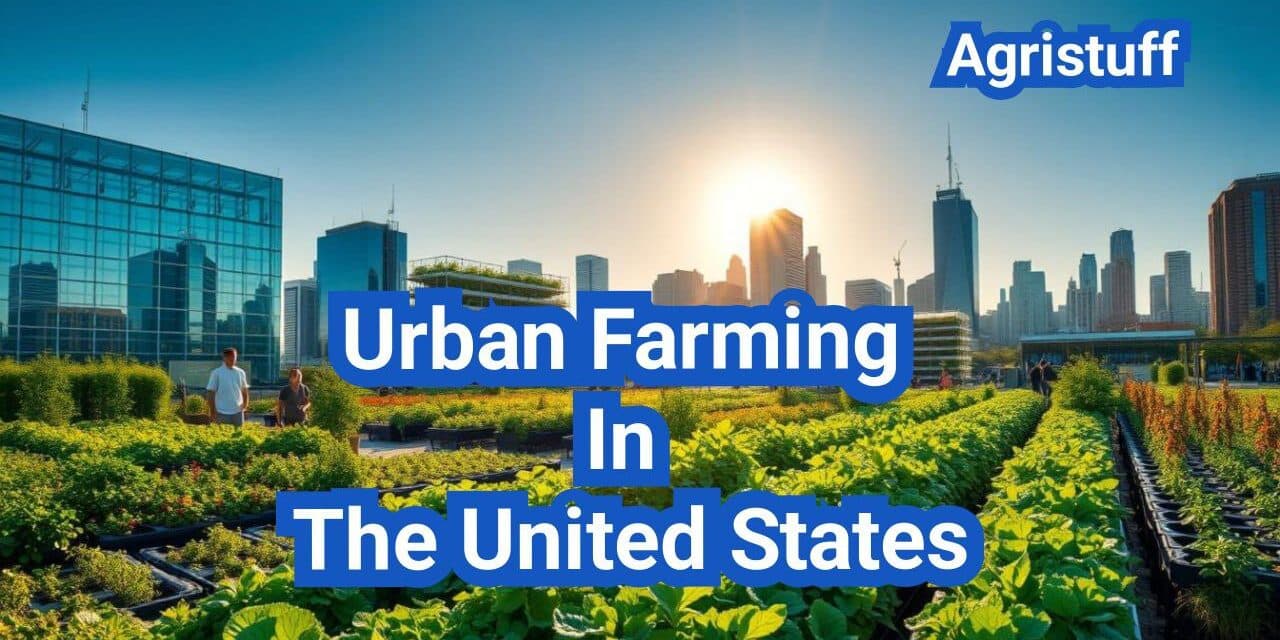
Urban Farming is transforming the way we think about food production and distribution. According to the USDA, urban agriculture includes the cultivation, processing, and distribution of agricultural products in urban and suburban areas.
This growing trend is not only providing fresh produce to communities but also promoting sustainable farming practices. Community gardens and vertical farming are becoming increasingly popular, allowing individuals to participate in food production and connect with their local environment.
Key Takeaways
- Urban agriculture encompasses cultivation, processing, and distribution in urban areas.
- Sustainable farming practices are promoted through urban agriculture.
- Community gardens and vertical farming are on the rise.
- Urban agriculture provides fresh produce to local communities.
- The USDA supports and defines urban agriculture practices.
The Rise of Urban Farming In The United States

Urban agriculture has a rich history in the United States, and its modern iteration is transforming the way Americans think about food production. The practice has evolved significantly over the years, influenced by various social, economic, and environmental factors.
Historical Context of Urban Agriculture
The USDA has a history of supporting urban agriculture as part of local and regional food systems. Urban farming in the US dates back to the 19th century when Liberty Gardens and War Gardens were promoted during World War I. This historical context laid the groundwork for modern urban farming practices.
Current Trends and Statistics
Today, urban farming is experiencing a resurgence, driven by the demand for fresh, locally grown produce. According to recent statistics, the number of urban farms in the US has increased significantly, with many cities reporting a rise in community gardens and rooftop farms.
Environmental and Social Benefits
Urban farming offers numerous environmental and social benefits, including improved food security, reduced carbon footprint, and enhanced community engagement. By growing food in urban areas, communities can have better access to fresh produce, promoting healthier lifestyles.
Understanding Urban Farming In The United States

Urban farming, a practice that involves cultivating and distributing food within urban environments, is becoming increasingly popular in America. According to the USDA, urban agriculture is loosely defined as the production, distribution, and marketing of food and other products within the geographical limits of a metropolitan area.
Definition and Scope
The definition of urban farming encompasses a broad range of activities, from small backyard gardens to large commercial operations. It involves not just growing food, but also the distribution and marketing of these products within urban areas.
Different Types of Urban Farms
Urban farms can take various forms, each with its unique characteristics and benefits.
Community Gardens
These are shared plots of land where community members come together to grow their own fruits, vegetables, and flowers. Community gardens foster a sense of community and provide access to fresh produce.
Rooftop Farms
Rooftop farms utilize the rooftops of buildings for growing crops. This type of farming is particularly beneficial in densely populated urban areas where land is scarce.
Indoor Growing Operations
Indoor growing operations involve growing crops inside controlled environments, such as indoor agriculture facilities or vertical farms. These operations can produce crops year-round, regardless of the external climate.
Regional Variations Across the US
Urban farming practices vary significantly across different regions in the US, influenced by factors like climate, culture, and urban density. For example, rooftop farms are more common in cities like New York, while indoor growing operations are gaining popularity in cities like Chicago.
Assessing Your Urban Farming Potential

Assessing your urban farming potential involves considering several key factors that will determine the success of your agricultural project.
Evaluating Available Space
One of the first steps in assessing your urban farming potential is evaluating the available space. This includes considering the size of your land, the layout, and any existing features that could impact your farming operations. A well-planned space can significantly enhance your farming productivity.
For instance, a small backyard can be utilized effectively by using vertical gardening techniques or container gardening. It’s also essential to test your soil for contaminants, as urban soils can sometimes contain lead or other heavy metals.
Climate Considerations
Climate plays a crucial role in determining the success of your urban farm. Understanding the local climate, including temperature ranges, precipitation patterns, and potential extreme weather conditions, is vital. Microclimates within your urban area can also significantly impact your farming operations.
For example, areas near large bodies of water or urban heat islands can have unique microclimates that affect temperature and precipitation.
Time and Resource Requirements
Urban farming requires a significant investment of time and resources. Evaluating your availability of time, labor, and financial resources is crucial. Creating a detailed plan and budget can help you manage these resources effectively.
| Resource | Description | Estimated Time/ Cost |
|---|---|---|
| Land Preparation | Preparing the soil for farming | 5 hours/ $100 |
| Irrigation System | Setting up an efficient watering system | 3 hours/ $200 |
| Seeds and Supplies | Initial purchase of seeds and farming supplies | 2 hours/ $150 |
Legal Considerations for Urban Farmers

Urban farming is not just about growing crops; it’s also about understanding the laws that govern it. As the urban farming movement continues to expand, navigating the legal landscape becomes increasingly crucial for success.
Zoning Laws and Regulations
Zoning laws dictate what types of activities are allowed on a particular piece of land, including urban farming. These regulations can vary significantly from one city to another, and even within different neighborhoods of the same city. For instance, some areas may permit animal farming, while others may restrict it. According to the Healthy Food Policy Project, zoning is a critical issue in urban agriculture, affecting what growing is allowed and whether animal farming is permitted.
Understanding local zoning laws is essential before starting an urban farm. This involves researching local ordinances and potentially consulting with local government officials or legal experts specializing in land use.
Permits and Licenses
Urban farmers often need to obtain various permits and licenses to operate legally. These can include business licenses, health department permits, and potentially special permits for selling produce at farmers’ markets or through community-supported agriculture (CSA) programs. The specific permits required can depend on the type of farming activity, the scale of the operation, and local regulations.
“The process of obtaining necessary permits can be complex and time-consuming, but it’s a crucial step in establishing a legitimate and successful urban farming operation.”
Insurance and Liability
Insurance and liability are critical considerations for urban farmers. Liability insurance can protect farmers from potential lawsuits if someone is injured on their property or if their products cause harm. Crop insurance can also be important, especially for larger operations or those selling through commercial channels.
| Type of Insurance | Purpose | Benefit |
|---|---|---|
| Liability Insurance | Protects against lawsuits for injuries or damages | Financial protection in case of legal action |
| Crop Insurance | Covers loss of crops due to unforeseen circumstances | Reduces financial risk associated with crop failure |
By understanding and addressing these legal considerations, urban farmers can better navigate the complexities of their profession and focus on what they do best: growing fresh, healthy produce for their communities.
Planning Your Urban Farm

To establish a thriving urban farm, planning is key. Effective planning enables urban farmers to maximize their space, manage resources efficiently, and achieve their goals.
Setting Clear Goals
Setting clear goals is the first step in urban farm planning. It involves defining what you want to achieve with your farm, whether it’s producing a certain quantity of food, creating a community space, or generating income. Clear goals help guide decision-making and ensure that your farm is aligned with your objectives.
- Determine the primary purpose of your urban farm.
- Set specific, measurable targets.
- Consider your resources and constraints.
Creating a Farm Layout
A well-designed farm layout is crucial for maximizing space efficiency and ensuring smooth operations. This involves planning the physical arrangement of your farm, including the placement of crops, paths, and infrastructure.
Maximizing Space Efficiency
To maximize space, consider using vertical growing systems or container gardening. These methods allow you to make the most of limited space and increase crop yields.
Access and Workflow Design
Efficient access and workflow are essential for managing your farm effectively. Ensure that paths are clear and wide enough for easy movement, and that frequently used tools and supplies are easily accessible.
Budgeting and Resource Allocation
Budgeting and resource allocation are critical components of urban farm planning. This involves estimating costs, allocating resources, and managing finances to ensure the sustainability of your farm.
- Estimate initial start-up costs, including infrastructure and equipment.
- Plan for ongoing expenses, such as seeds, fertilizers, and maintenance.
- Consider potential revenue streams, such as sales or grants.
According to the EPA, a concise guide for urban growers addressing “less than perfect” site locations is available, which can be a valuable resource for urban farmers looking to optimize their farm planning.
Essential Equipment and Supplies

To get started with urban farming, it’s crucial to have the right tools and materials. Urban farming requires a variety of essential equipment to ensure a successful harvest. The type of equipment needed can vary depending on the size and type of farm.
Basic Tools and Materials
Every urban farm needs basic tools such as gloves, hand trowels, and pruning shears. These basic tools are essential for planting, maintaining, and harvesting crops. Additionally, materials like soil, seeds, and fertilizers are necessary for crop growth.
Irrigation Systems
Effective irrigation systems are critical for urban farming. There are several types of irrigation systems that can be used, including:
Drip Irrigation
Drip irrigation delivers water directly to the roots of the plants, reducing water waste and improving efficiency.
Rainwater Harvesting
Rainwater harvesting involves collecting and storing rainwater for use in irrigation, reducing the demand on municipal water supplies.
Season Extension Equipment
Season extension equipment allows urban farmers to extend the growing season by protecting crops from extreme weather conditions. This can include cold frames, hoop houses, and greenhouses.
Many states and local governments offer funding programs for urban agriculture, which can help offset the cost of essential equipment and supplies. According to the USDA, these programs can provide valuable resources for urban farmers.
Soil Management for Urban Settings

Soil management is a critical component of urban agriculture, impacting crop health and productivity. Urban soils can be particularly challenging due to potential contamination from past industrial activities, heavy metal deposits, and other pollutants.
Testing for Contaminants
Before starting an urban farm, it’s essential to test the soil for contaminants. The USDA recommends soil testing for all new gardening sites to check for contaminants. This step helps identify potential risks to plant health and human safety. Soil tests typically check for heavy metals, pesticides, and other pollutants.
Key contaminants to test for include lead, arsenic, and mercury. Understanding the soil’s contaminant profile allows farmers to take corrective actions, such as using raised beds or container gardens with fresh soil.
Building Healthy Soil
Building healthy soil is vital for urban farming success. Healthy soil supports plant growth, improves water retention, and enhances biodiversity. Two key strategies for building healthy soil are using organic amendments and cover cropping.
Organic Amendments
Organic amendments, such as compost and manure, improve soil structure and fertility. They provide essential nutrients for plant growth and help maintain a balanced ecosystem. Compost, in particular, is rich in beneficial microbes that aid in nutrient cycling.
Cover Cropping in Small Spaces
Cover cropping involves growing plants that protect and enhance the soil. In small urban spaces, cover crops can be grown in containers or between crop cycles. Legumes, such as clover, are excellent cover crops that fix nitrogen in the soil.
Composting in Limited Spaces
Composting is a valuable practice for urban farmers, as it recycles organic waste into a nutrient-rich resource. In limited spaces, composting can be done using compact bins or vermicomposting (worm composting). This method not only reduces waste but also produces a high-quality soil amendment.
Effective composting requires balancing “green” materials (like food scraps) with “brown” materials (like dried leaves). Regular turning and monitoring moisture levels are also crucial for maintaining a healthy compost pile.
Choosing What to Grow

To thrive, urban farmers need to identify and grow high-value crops that are well-suited to their specific urban environment. The success of an urban farm largely depends on the choice of crops, which should be influenced by market demand, climate, and the farmer’s expertise.
High-Value Crops for Urban Spaces
Urban farmers often focus on growing crops that command a high price in local markets. These can include specialty herbs, microgreens, and exotic vegetables. According to the USDA, some small urban commercial farms are adopting non-traditional growing techniques like vertical or soilless farming to produce these high-value crops.
Seasonal Planning | Urban Farming In The United States
Effective seasonal planning is crucial for maintaining a continuous harvest throughout the year. Urban farmers must consider the climate and growing conditions during different seasons.
Spring and Summer Crops | Urban Farming In The United States
In the spring and summer, urban farmers can grow a variety of crops such as tomatoes, peppers, and leafy greens. These crops thrive in the warmer temperatures and longer daylight hours.
Fall and Winter Production | Urban Farming In The United States
For fall and winter production, farmers can switch to cool-season crops like broccoli, kale, and root vegetables. These crops are more tolerant of cooler temperatures and can be protected from extreme weather conditions using season extension techniques.
Companion Planting Strategies | Urban Farming In The United States
Companion planting is a strategy that involves growing different crops together to improve growth, reduce pests and diseases, and increase biodiversity. For example, planting marigolds with tomatoes can help deter nematodes.
Urban Farming Techniques

The practice of urban farming encompasses a range of techniques tailored to the unique challenges of city environments. As urban areas continue to grow, the need for efficient and productive farming methods becomes increasingly important.
Container Gardening | Urban Farming In The United States
Container gardening is a popular method for urban farming, allowing individuals to grow crops in small or irregularly shaped spaces. This technique involves using containers such as pots, tubs, or even old boots to cultivate a variety of plants.
Container Selection and Preparation | Urban Farming In The United States
Selecting the right containers is crucial for successful container gardening. Containers should have good drainage to prevent waterlogged soil, which can lead to root rot and other problems. It’s also important to choose containers that are large enough to support the mature size of the plants being grown.
Preparation involves cleaning the containers thoroughly before use and filling them with a well-balanced potting mix. Organic matter such as compost can be added to improve soil fertility and structure.
Maintenance Requirements | Urban Farming In The United States
Maintaining container gardens involves regular watering, fertilizing, and monitoring for pests. Containers can dry out quickly, so consistent moisture levels must be maintained. Fertilizing should be done carefully to avoid over-fertilization, which can harm plants.
Vertical Growing Systems | Urban Farming In The United States
Vertical growing systems are another effective technique for urban farming, maximizing space by growing crops upwards. These systems can be particularly useful in areas with limited ground space.
They range from simple trellises to complex hydroponic systems. Vertical growing can increase yield per square foot and reduce water usage.
Hydroponics and Aquaponics | Urban Farming In The United States
Hydroponics and aquaponics are soilless cultivation methods that offer high efficiency and water conservation. Hydroponics involves growing plants in a nutrient-rich solution rather than soil, while aquaponics combines hydroponics with fish or other aquatic animal farming, creating a symbiotic system.
These systems can be highly productive and are well-suited to urban environments where space and soil quality may be limited.
Examples of successful urban farming projects that utilize these techniques include Farm.One in New York City and the Ohio City Farm in Cleveland, demonstrating the potential of urban farming to contribute to local food systems.
Managing Pests and Diseases

Managing pests and diseases is a critical aspect of maintaining a productive urban farm. Urban farmers can adopt various strategies to mitigate these challenges, ensuring a healthy and sustainable farming operation.
Organic Pest Control Methods | Urban Farming In The United States
Urban farmers can utilize several organic pest control methods to manage pests effectively. These include introducing beneficial insects, using physical barriers, and applying organic pesticides.
- Beneficial insects such as ladybugs and lacewings prey on harmful pests.
- Physical barriers like fine mesh can prevent pests from reaching crops.
- Organic pesticides derived from natural sources can be used as a last resort.
Disease Prevention Strategies
Disease prevention is crucial for maintaining crop health. Strategies include crop rotation, sanitation, and the use of disease-resistant varieties.
Key Strategies:
| Strategy | Description | Benefits |
|---|---|---|
| Crop Rotation | Rotating crops to break disease cycles | Reduces disease pressure |
| Sanitation | Removing infected plants and debris | Prevents disease spread |
| Disease-Resistant Varieties | Using crop varieties bred for disease resistance | Minimizes disease impact |
Integrated Pest Management | Urban Farming In The United States
Integrated Pest Management (IPM) involves a holistic approach to managing pests and diseases, combining physical, cultural, biological, and chemical controls.
By adopting IPM, urban farmers can reduce their reliance on chemical pesticides, creating a more sustainable and environmentally friendly farming operation.
Harvesting and Distribution

Urban farming isn’t just about growing crops; it’s also about harvesting and distributing them effectively. The success of an urban farm is significantly determined by how well it manages these final stages.
Optimal Harvesting Techniques
Harvesting at the right time is crucial for maximizing crop quality and yield. Urban farmers should monitor their crops regularly to determine the optimal harvest time. Techniques such as harvesting in the early morning can help reduce water loss and improve crop quality.
Storage Solutions | Urban Farming In The United States
Proper storage is essential for maintaining the quality of harvested produce. Urban farmers can use cool, dry places or refrigerated storage depending on the type of crop. Innovative storage solutions like controlled atmosphere storage can also extend the shelf life of produce.
Selling and Sharing Your Produce
Urban farmers can sell their produce through various channels. According to the USDA, popular options include:
- Farmers Markets: Direct sales to consumers.
- CSA Programs: Community-supported agriculture programs where consumers buy shares of the farm’s produce.
- Restaurant Partnerships: Supplying fresh produce to local restaurants.
Farmers Markets | Urban Farming In The United States
Farmers markets offer a direct-to-consumer sales channel. Urban farmers can benefit from high foot traffic and the ability to connect with customers.
CSA Programs | Urban Farming In The United States
CSA programs provide a stable income stream. Members pay upfront for a season, helping farmers with initial costs.
Restaurant Partnerships | Urban Farming In The United States
Partnering with restaurants can be lucrative, especially for high-demand, specialty crops. Building relationships with chefs and restaurant owners is key.
Building Community Through Urban Farming

Urban farming is not just about growing food; it’s about building community. As urban farming continues to grow in popularity, it’s becoming increasingly clear that these initiatives are playing a vital role in fostering community engagement and social connection.
Educational Opportunities | Urban Farming In The United States
Urban farming provides numerous educational opportunities for individuals of all ages. From workshops on sustainable farming practices to hands-on training in urban agriculture, these programs help build a more informed and engaged community. According to the USDA, urban farming can provide educational opportunities and promote community engagement.
Collaborative Farming Projects | Urban Farming In The United States
Collaborative farming projects are another key aspect of urban community building. By working together on urban farms, individuals can develop a sense of camaraderie and shared purpose. These projects also provide opportunities for knowledge sharing and skill development.
Creating Food Security | Urban Farming In The United States
Urban farming also plays a critical role in creating food security for local communities. By growing fresh produce in urban areas, farmers can provide access to healthy food options, helping to address issues of food insecurity.
| Benefits of Urban Farming | Description |
|---|---|
| Educational Opportunities | Workshops and training programs |
| Community Engagement | Fosters social connection and community building |
| Food Security | Provides access to fresh, healthy produce |
At The End of: Urban Farming In The United States
Urban farming has emerged as a vital component in the pursuit of a more sustainable food system in the United States. As highlighted throughout this article, urban agriculture has the potential to contribute significantly to food security, community engagement, and environmental sustainability.
The data supports this notion, with the USDA acknowledging that urban agriculture can play a crucial role in creating a more sustainable food system. By adopting urban farming practices, individuals can not only produce fresh, locally grown produce but also contribute to a more resilient and environmentally conscious community.
As the world grapples with the challenges of climate change, urban farming stands out as a beacon of hope for a sustainable future. By embracing this practice, we can work towards a future where food production is not only sustainable but also equitable and accessible to all.
In conclusion, urban farming is more than just a trend; it is a movement towards a more sustainable future. As we continue to navigate the complexities of food production and consumption, urban farming will undoubtedly play a critical role in shaping the future of our food systems.
FAQ
What is urban farming?
Urban farming refers to the practice of growing and cultivating crops in urban areas, often using unconventional methods such as rooftop gardens, indoor growing operations, and community gardens.
What are the benefits of urban farming?
Urban farming provides numerous benefits, including improved food security, increased community engagement, and environmental benefits such as reduced carbon emissions and urban heat island mitigation.
What types of crops are suitable for urban farming?
High-value crops such as leafy greens, herbs, and microgreens are well-suited for urban farming, as are a variety of fruits and vegetables that can be grown using container gardening and vertical growing systems.
How do I assess my urban farming potential?
To assess your urban farming potential, consider factors such as available space, climate, and microclimates, as well as your time and resource requirements.
What are the legal considerations for urban farmers?
Urban farmers must comply with zoning laws and regulations, obtain necessary permits and licenses, and consider insurance and liability to protect their operations.
How do I manage pests and diseases in my urban farm?
Effective pest and disease management in urban farming involves using organic pest control methods, implementing disease prevention strategies, and adopting integrated pest management techniques.
What are the essential equipment and supplies needed for urban farming?
Basic tools and materials, irrigation systems, and season extension equipment are essential for urban farming, and the specific needs will vary depending on the type of crops being grown and the scale of the operation.
How do I choose the right crops for my urban farm?
When choosing crops for your urban farm, consider factors such as climate, available space, and market demand, and select crops that are well-suited to your specific conditions.
What are some common urban farming techniques?
Common urban farming techniques include container gardening, vertical growing systems, hydroponics, and aquaponics, each with its own advantages and challenges.
How can I build a community around my urban farm?
Building a community around your urban farm can involve educational opportunities, collaborative farming projects, and creating food security through urban farming, among other strategies.
Conclusion of: Urban Farming In The United States
Urban Farming In The United States: A Modern Definition and Why It Matters
Urban Farming In The United States means producing food inside cities and suburbs—on rooftops, in vacant lots, community plots, greenhouses, and even repurposed warehouses. What makes it different from hobby gardening is intention: urban farms aim to supply real food, improve access, and sometimes build businesses right where people live. With U.S. cities growing and climate pressures rising, Urban Farming In The United States has become a practical way to shorten supply chains, reduce waste, and reconnect communities to fresh produce. It’s also supported by public programs that recognize urban growers as part of the national food system. USDA Urban Agriculture overview.
What Urban Farming In The United States Looks Like on the Ground
Urban Farming In The United States takes many forms, from simple raised-bed gardens to high-tech controlled environments. You might see school gardens teaching kids to grow salad greens, neighborhood farms selling at weekend markets, or hydroponic containers producing lettuce year-round. Indoor vertical farms stack crops under LEDs, while rooftop farms turn unused building space into productive soil or soilless beds. This diversity is a strength: different neighborhoods can choose models that match their climate, budgets, and goals. Together, they create local “micro-food systems” inside metro areas. Examples of innovative urban production.
A Brief History of Urban Farming In The United States
Although today’s Urban Farming In The United States feels new, cities have grown food for generations. In the late 1800s and early 1900s, “vacant-lot” and school garden movements helped families during economic downturns. During both World Wars, Victory Gardens turned backyards and parks into vital food sources, showing how urban spaces could protect national food security. After the 1970s, community gardens expanded again as residents reclaimed idle land. The current wave builds on those roots, adding modern technology and business models to a long tradition of city-based growing. USDA National Agricultural Library on Victory Gardens.
Urban Farming In The United States and Food Access
One of the biggest reasons Urban Farming In The United States is expanding is food access. Many American cities still include “low-access” neighborhoods where residents live far from supermarkets or affordable produce. When farms operate inside these areas—at churches, schools, or converted lots—they can offer fresh vegetables at lower transport cost and often through culturally appropriate crops. Urban farms don’t replace rural agriculture, but they can fill gaps, especially for leafy greens, herbs, and quick-growing vegetables. They also pair well with SNAP markets and local food programs. USDA ERS Food Access Research Atlas.
Environmental Benefits of Urban Farming In The United States
Urban Farming In The United States supports greener cities. More vegetation helps cool neighborhoods affected by heat-island effects, while gardens and farms absorb rainwater and reduce stormwater runoff. Composting food scraps locally can cut landfill methane and improve soil health for future seasons. Pollinator plants around urban fields also boost biodiversity in places that otherwise have little habitat. Even small farms contribute cumulative benefits when spread across a city, turning food production into part of urban resilience planning. USDA Climate Hubs on urban agriculture benefits.
Community Gardens and Nonprofit Models in Urban Farming In The United States
Community-based farms are the most visible face of Urban Farming In The United States. These projects are often run by nonprofits, cooperatives, or neighborhood associations. They grow food, yes—but they also create safe public spaces, teach skills, and build social ties. Many include youth training, senior plots, or donation programs for local food pantries. Cities like Sacramento have backed these efforts through ordinances that reduce barriers for urban growers, proving that local policy can accelerate community farming success. Sacramento’s urban agriculture ordinance story.
Commercial and Indoor Urban Farming In The United States
In addition to gardens, Urban Farming In The United States now includes commercial indoor operations designed for consistent output. Controlled Environment Agriculture (CEA) uses greenhouses or indoor rooms to keep temperature, light, humidity, and nutrients in the ideal range. This allows production in winter climates, on small footprints, and near major consumers. U.S. indoor farms commonly focus on high-value crops like lettuces, basil, microgreens, specialty herbs, and seedlings for transplant. The goal is predictable harvests and local delivery within hours instead of days. Cornell Controlled Environment Agriculture program.
Hydroponics, Aquaponics, and Aeroponics in Urban Farming In The United States
Soilless systems are a backbone of Urban Farming In The United States because they make dense production possible. Hydroponics grows plants in nutrient-rich water; aquaponics combines fish culture with plant production; aeroponics mists roots with nutrients for fast growth. These systems can be stacked vertically, reduce weed pressure, and use water efficiently—often recycling most of it. For U.S. city growers with limited clean soil, soilless setups are a practical path to safe and productive farming. Library of Congress guide to hydroponics & aquaponics.
Technology Powering Urban Farming In The United States
Urban Farming In The United States increasingly relies on technology to stay efficient. LED lighting has improved enough to support dense indoor crops at lower energy per pound than early systems. Sensors monitor pH, EC, temperature, CO₂, and humidity, and automation handles irrigation and nutrient dosing with precision. Software dashboards track yields and costs so urban operators can compete in tight markets. This is especially important for indoor farms where profit margins depend on stable systems and careful energy management. NREL report on controlled-environment agriculture impacts.
Economics and Local Jobs from Urban Farming In The United States
Urban Farming In The United States can create jobs and small businesses in places that need them most. Farms hire growers, educators, distribution staff, and sometimes food-processing workers. Local sales keep more food dollars circulating in the community, and farm sites can catalyze nearby development. Federal support also helps new urban growers launch or expand—covering training, infrastructure, and business start-up needs—so operators aren’t forced to grow on passion alone. USDA Urban Agriculture grant program.
Zoning and Land-Use Challenges for Urban Farming In The United States
No matter how strong the demand is, Urban Farming In The United States still hits real obstacles. Access to land is often temporary, with farms leasing vacant lots that may be sold later. Zoning rules can be unclear about livestock, greenhouses, or farm stands. Some projects also start informally and must later navigate permits, which can stall growth if city codes haven’t caught up. Recent approvals for legal hydroponic sites show progress, but they also highlight how much policy support still matters. Example of zoning and permitting in Hartford.
Soil Safety and Brownfield Risks in Urban Farming In The United States
Urban Farming In The United States must take soil safety seriously. Many city lots sit near old buildings, industry, or heavy traffic, which can leave lead or other contaminants in soil. Best practice is to test soil before planting food crops, especially root vegetables. When contamination is possible, growers can switch to raised beds with clean soil, mulch, ground covers, or fully soilless methods. Federal guidance for safe gardening on former industrial or brownfield sites has become a key resource for urban growers nationwide. EPA urban agriculture & brownfields safety guidance.
Climate Resilience and Resource Efficiency in Urban Farming In The United States
Another advantage of Urban Farming In The United States is resilience. Heat waves, droughts, flooding, and supply-chain shocks all threaten food access in U.S. cities. Urban farms add redundancy to the system: when distant supply lines falter, local growers can still harvest. CEA farms do this even more strongly because they can keep producing regardless of outdoor weather. With efficient recirculating water and integrated pest management, many urban farms also lower chemical and water footprints per unit of produce. USDA ERS trends in U.S. hydroponic/CEA production.
Equity, Education, and Public Health Links to Urban Farming In The United States
Urban Farming In The United States isn’t only about yield—it’s also about people. Many programs focus on nutrition, diabetes prevention, and fresh-food education by pairing produce with cooking classes or school curricula. Youth farms create pathways into agricultural careers, while culturally led farms strengthen food traditions for immigrant communities. Research consistently shows that urban agriculture can improve diet quality and social well-being, especially in neighborhoods facing historic disinvestment. Frontiers review on urban agriculture benefits.
The Future of Urban Farming In The United States: Growth with Real-World Lessons
Looking forward, Urban Farming In The United States is likely to keep growing—especially for indoor greens, herbs, and high-turnover crops. Market reports project continued expansion of U.S. indoor and vertical farms, but the sector also faces volatility when energy costs rise or business models scale too fast. Recent closures of well-known vertical farm facilities show that technical success must be matched by solid economics and local demand. The future belongs to operators who pair smart tech with realistic margins and strong community or retail partnerships. Indoor farming sector outlook for 2025.
Final thought
Urban Farming In The United States is no longer a side story in American agriculture. It’s a practical, flexible set of tools helping cities feed themselves better, waste less, and adapt to climate and economic shocks. From community gardens to high-tech vertical farms, the movement is proving that food can be grown where people live—if safety, policy, and business planning are handled well. For growers, city leaders, and consumers, Urban Farming In The United States offers a hopeful, hands-on path toward healthier and more resilient urban life. USDA urban agriculture support programs.
Sources & References
The following Sources & References informed this article on Urban Farming In The United States, and they are useful for deeper reading.
- EPA Lead in Soil guidance
- USDA: Urban Agriculture & Innovative Production
- USDA: Urban Agriculture programs overview
- USDA: UAIP Grants
- USDA ERS: Food Access Research Atlas
- Cornell University: Controlled Environment Agriculture
- Library of Congress: Hydroponics & Aquaponics resources
- U.S. EPA: Urban Agriculture and Brownfields
- NREL: Controlled Environment Agriculture energy & sustainability review
- Frontiers in Sustainable Food Systems: Urban agriculture thematic review
- USDA NAL: Victory Gardens history
- CapRadio: Sacramento urban agriculture ordinance
- Indoor Ag: U.S. indoor farming sector outlook